The Aging Brain: How Cognition Changes as We Get Older
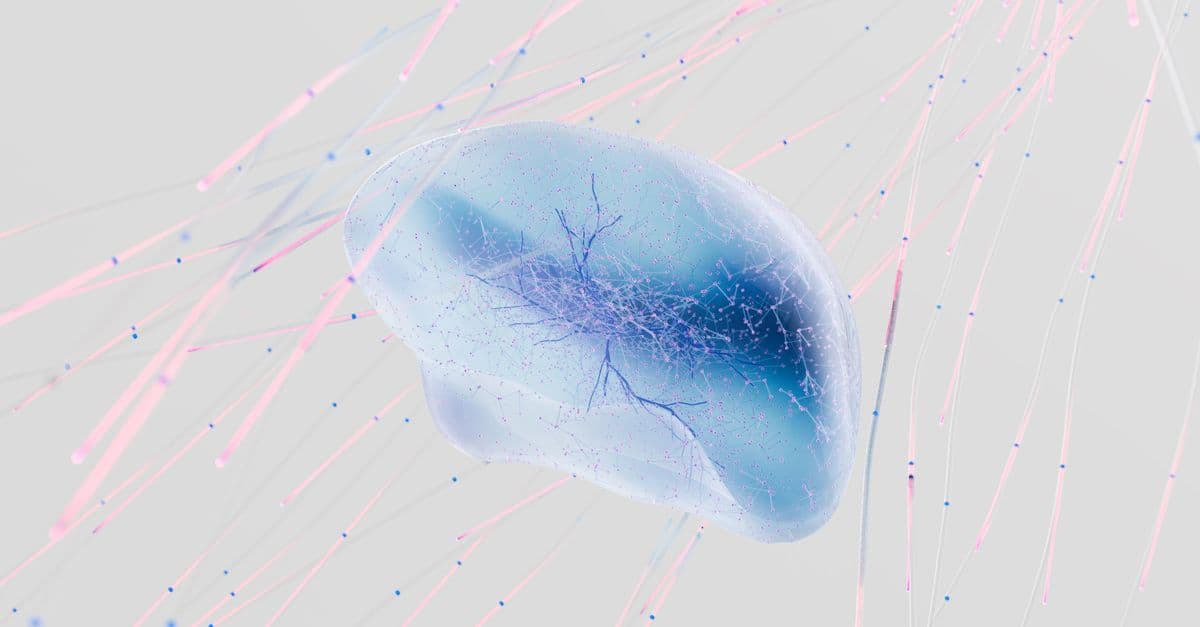
Photo: Google DeepMind / Pexels
Ask when the brain peaks and the honest answer is a list, not a number. Fluid intelligence, the ability to reason through unfamiliar problems, is often placed near age 27, while stored knowledge holds steady until roughly 65. The aging brain also changes physically, with regional shrinkage and weaker dopamine signaling, yet the World Health Organization says dementia is not an inevitable part of ageing. This article separates normal change from disease and shows what research says about slowing it.
Educational content, not medical advice. Talk to your doctor before changing any medication, treatment, or routine. Information here reflects current research but every person's situation differs.
Does the brain really decline with age?
The popular picture is a steady slide from the thirties onward. The research picture is messier and more interesting. Different mental abilities follow different trajectories, individuals vary enormously, and the average curve hides people who defy it in both directions.
The most useful distinction comes from psychologists Raymond Cattell and John Horn, who in 1967 separated two kinds of intelligence. Fluid intelligence is the capacity to reason and solve new problems without relying on prior knowledge. Crystallized intelligence is the accumulated store of facts, vocabulary, and skills. Summaries of the literature put fluid intelligence at a peak around age 27 followed by a gradual decline, while crystallized intelligence rises, stays relatively stable through most of adulthood, and begins to decline only after about 65. The same sources caution that the exact peak age of any cognitive skill remains elusive.
A library analogy captures the difference. Crystallized intelligence is the size and quality of the collection, which keeps growing as you read. Fluid intelligence is the speed of the librarian who fetches a book you have never requested before. Over decades the collection gets bigger while the librarian gets a bit slower, and for many everyday tasks the bigger collection wins.
| Ability | What it means | Typical pattern across adulthood |
|---|---|---|
| Fluid reasoning | Solving unfamiliar problems | Peaks in the late 20s, then declines gradually |
| Processing speed | How fast simple operations run | Among the earliest measurable changes |
| Working memory | Holding and manipulating information | Declines, with strain on multi-step tasks |
| Episodic memory | Remembering specific events | Declines; encoding and retrieval take more effort |
| Vocabulary and knowledge | Stored facts and word meanings | Stable or improving into the 60s |
| Emotional regulation | Managing reactions and stress | Often improves |
These patterns are averages. A cautious reading is that they describe where the middle of a large group tends to land, not what will happen to any one person.
What changes inside the aging brain
Structural change begins earlier than most people expect, and it is not uniform. Some regions shrink at rates of up to about 1% per year in studies summarized by Raz and Rodrigue, while others stay relatively stable until the end of life. The picture is patchy, with some regions holding up and others eroding. Five changes come up repeatedly.
Cortical thinning. The cortex, the folded outer layer of the brain, gradually thins. The frontal and parietal regions tend to show more of this than others. Much of it reflects shrinking neurons and fewer synaptic connections rather than the mass die-off of neurons that older textbooks assumed.
White matter decline. White matter is the brain's wiring, the bundles of axons wrapped in an insulating sheath called myelin. In a classic lifespan study by Sowell and colleagues in 2003, white matter volume increased from about ages 19 to 40 and declined after that. As insulation degrades, signals travel more slowly and coordination between distant regions becomes less efficient. Small patches of damage called white matter hyperintensities, visible on MRI, accumulate with age and are associated with slower thinking. If you want to understand how researchers see these changes, our explainer on how MRI machines work covers the technology.
The analogy here is a road network. Gray matter is the cities, white matter is the highways between them, and aging slowly roughens the road surface. Traffic still gets through, but the same trip takes longer, particularly for long-distance routes.
Hippocampal shrinkage. The hippocampus, a seahorse-shaped structure central to forming new episodic memories, gets smaller in later life. In the words of one often-cited trial, that shrinkage is linked to memory decline and higher dementia risk. It is one reason why recalling a specific event, such as where you parked three days ago, becomes harder before general knowledge does.
Dopamine decline. Positron emission tomography (PET) studies show that dopamine synthesis and the density of dopamine D1, D2, and D3 receptors decrease with age. Dopamine is a chemical messenger involved in motivation, learning, and the flexible control of attention, so lower signaling plausibly contributes to slower processing and reduced cognitive flexibility. For the neurochemistry itself, see our article on the dopamine system.
Dedifferentiation. In younger adults, different brain regions respond more selectively to different kinds of stimuli. In older adults, responses tend to be more diffuse and less specific, a pattern researchers call dedifferentiation. A common way to picture it is a radio that has lost some selectivity, so that neighboring stations bleed into one another and the signal is noisier.
Which abilities slip, which hold, and which improve
Not everything fades at once, and not everything fades.
Abilities that tend to decline
Processing speed is the rate at which basic mental operations run, such as comparing symbols or reacting to a signal. It is one of the earliest changes measured, and because many tasks depend on it, slower processing can masquerade as a broader decline.
Working memory is the mental scratchpad. It holds a handful of items at once while you use them, such as a phone number while you dial. Capacity and efficiency drop with age, which makes multitasking and tasks with many moving parts more taxing. Our piece on how working memory limits thinking explains the constraint.
Episodic memory is memory for events, tied to a time and place. Encoding new events and retrieving their details both become more effortful. This is the kind of forgetting most people notice first, and our article on why we forget things places it in context.
Executive function, which includes switching between tasks, suppressing irrelevant responses, and adapting to new rules, depends heavily on the prefrontal cortex and tends to show age-related slowing.
Abilities that hold or improve
Vocabulary and semantic knowledge are usually stable or still growing in the sixties. Because crystallized intelligence reflects a lifetime of learning, it can stay high well after fluid reasoning has dropped.
Expertise is also resilient. A veteran radiologist, pilot, or chess player may match patterns in their own field with great speed, because years of practice have turned slow reasoning into fast recognition. This is less about brain hardware than about stored, well-organized knowledge.
Social and emotional skills often grow, and they deserve their own section.
Why emotional skills tend to improve
One of the most consistent findings in cognitive aging runs against the stereotype. Older adults often handle emotions better than younger ones. Work by Laura Carstensen and Andrew Reed compiled studies in which older adults purposefully directed their attention away from negative material more than younger adults did, an observation known as the positivity effect.
One explanation, associated with Carstensen's socioemotional selectivity theory, is that people who perceive their remaining time as more limited prioritize emotionally meaningful goals over exploration. Another is that regulation skills, practiced over decades, become more efficient. Both can be true. Either way, the practical consequence is that older adults are not simply younger adults with worse memory. They are a differently tuned system, trading some raw speed for judgment and emotional steadiness.
A caution: these are group averages from laboratory tasks, and stress, loneliness, illness, and depression can erase the advantage. Depression and social isolation also appear on the dementia risk-factor list discussed below.
Normal aging or something else?
Ordinary aging and dementia are not two points on one line. Dementia is a disease process. The World Health Organization estimates that 57 million people were living with dementia in 2021, with nearly 10 million new cases each year and more than 60% of people with dementia living in low- and middle-income countries. It states plainly that, although dementia is more common after age 65, it is not an inevitable part of ageing.
Clinicians typically look at the course of symptoms and their effect on daily life. The comparison below is a general orientation, not a diagnostic tool.
| Pattern | More consistent with typical aging | Reason to ask a clinician |
|---|---|---|
| Names and words | Occasional tip-of-the-tongue moments | Frequent difficulty finding common words |
| Misplaced items | Misplacing keys, then retracing steps | Putting items in odd places and being unable to retrace |
| Memory for events | Forgetting details, remembering later | Forgetting recent events entirely or repeating questions |
| Daily function | Independent, may take longer | New difficulty with familiar tasks such as managing money |
| Course | Stable over years | Progressive worsening |
This table is general orientation only. Anyone worried about their own memory or a relative's should speak with a doctor, who can check for treatable contributors such as medication side effects, thyroid problems, depression, hearing loss, and sleep disorders. Our overview of how memory works in the brain explains the machinery behind these everyday slips.
Cognitive reserve: why similar brains age differently
Here is one of the most important ideas in the field. In 1988, Katzman and colleagues examined the brains of about 137 older people after death and found a small group, about 10 nursing-home residents, whose brains showed Alzheimer's-type pathology despite little or no cognitive impairment in life. The authors suggested that those individuals either avoided neuron loss or began with more neurons and larger brains. That finding helped launch the concept of reserve.
A related line of work came from Yaakov Stern, whose 1992 study compared patients with Alzheimer's disease matched for clinical severity and found that those with more education showed more advanced pathology on brain imaging. Same symptoms, more damage underneath. The authors wrote that education may provide a reserve that compensates for the neuropathological changes. The Nun Study, which tested 678 nuns, similarly found people whose cognitive performance did not track their brain pathology in a simple way.
Brain reserve versus cognitive reserve
Researchers distinguish two ideas that are easy to confuse.
- Brain reserve is passive and structural: the number of neurons, synapses, and overall brain volume. Under this threshold model, symptoms appear only after damage crosses a critical level.
- Cognitive reserve is active and functional: the efficiency of processing, the flexibility to recruit alternative networks, and the use of different strategies when the default one fails.
Think of a city with one bridge versus a city with many. If the single bridge closes, traffic stops. In the second city, drivers reroute and may not notice the closure for a while. Reserve is the network of alternative routes.
What reserve does and does not do
Reserve does not stop the disease. The claim that education protects against Alzheimer's pathology itself is incorrect; cognitive reserve protects against the clinical symptoms, delaying their appearance. There is also a trade-off. People with high reserve often show symptoms later, but once symptoms appear, their decline can be rapid, consistent with compensatory mechanisms having been exhausted.
Whether reserve can be built deliberately is less settled than popular accounts suggest. As of 2010, there was insufficient evidence to recommend any specific way of increasing reserve to prevent dementia. Education, complex work, and social engagement are associated with better outcomes, but association is not the same as proof that adding more of them later in life will change a trajectory.
Alzheimer's disease: when aging goes wrong
Alzheimer's disease is the most common cause of dementia, accounting for roughly 60% to 70% of cases. It has specific pathological hallmarks:
- Amyloid-beta plaques accumulate outside neurons.
- Neurofibrillary tangles form from hyperphosphorylated tau protein inside neurons.
Both proteins misfold into shapes rich in beta sheets and appear to spread through the brain by a prion-like seeding process, in which a misfolded copy induces its neighbors to misfold. The earliest changes occur long before diagnosis. Detailed neuropsychological testing can reveal mild cognitive difficulties up to about eight years before a person meets clinical criteria, and the underlying pathology is thought to start earlier still. The best-known risk factor is age itself. Roughly 6% of people aged 65 and older are affected, and women more often than men.
APOE ε4: a risk gene, not a verdict
The strongest common genetic risk factor for sporadic (non-inherited) Alzheimer's is a variant of the APOE gene called ε4. According to the Alzheimer's Association, an estimated 20% to 30% of Americans have one or two copies, and about 2% have two. Researchers estimate that 40% to 65% of people diagnosed with Alzheimer's carry it. One copy raises risk roughly threefold in published estimates, and two copies raise it considerably more. But it is a risk gene, not a deterministic one. Many carriers never develop the disease, and many people with the disease do not carry it.
Treatments and open questions
The amyloid hypothesis has dominated research for decades, but the picture is unsettled. Some trials of antibodies that clear amyloid have shown little or modest effects on cognition, which has led some researchers to reconsider the amyloid cascade hypothesis and to give more weight to tau, inflammation, and synaptic dysfunction. For the current state of diagnosis and treatment, see Alzheimer's disease in 2026, and for the biology see the biology behind the decline.
Can the adult brain grow new neurons?
Neurogenesis, the birth of new neurons, occurs in the hippocampus of adult rodents. Whether it continues in adult humans is one of the more heated debates in neuroscience.
Evidence on both sides is substantial. A 2013 study by Spalding and colleagues estimated about 700 new hippocampal neurons per day in adult humans. In 2018, Sorrells and colleagues reported in Nature that human hippocampal neurogenesis drops sharply in childhood to undetectable levels in adults, and a 2021 follow-up argued that very few if any new neurons are born in the adult human hippocampus. A key technical dispute concerns cells labeled with doublecortin, a protein long used as a marker of young neurons. In adult human tissue, such cells often have mature shapes, which argues against them being newly generated.
What is not in dispute is synaptic plasticity, the strengthening and weakening of connections between existing neurons, which continues across life. Learning, exercise, and novelty all engage it. Our explainer on neuroplasticity covers how that rewiring works. The cautious summary is that the adult brain remains adaptable even if the extent of adult neuron birth in humans is unresolved.
What the evidence says about protecting the aging brain
No single habit guarantees protection, and anyone promising one should be treated with skepticism. What research offers is a set of risk factors that, on average, are associated with more or less dementia.
The Lancet Commission's 14 factors
The 2024 report of the Lancet standing Commission on dementia prevention, intervention, and care, led by Gill Livingston, concluded that addressing 14 modifiable risk factors could in theory prevent or delay about 45% of dementia cases worldwide. Two factors, vision loss and high LDL cholesterol, were newly supported in that report, while 12 came from earlier ones.
| Life stage | Risk factors identified by the Commission |
|---|---|
| Early life | Less education |
| Midlife | Hearing loss, high LDL cholesterol, depression, traumatic brain injury, physical inactivity, diabetes, smoking, high blood pressure, obesity, excessive alcohol |
| Later life | Social isolation, air pollution, vision loss |
Two caveats are essential. First, the 45% figure is a population-level calculation that assumes the risk factors are causal and could be fully eliminated, which is not realistic for any real person. Second, it describes shares of cases across a population, not the chance that a specific individual will or will not develop dementia. The report also notes the need for more research and for trials testing whether changing these factors changes outcomes.
Exercise and the hippocampus
Among single interventions, aerobic exercise has some of the more specific supporting data. In a 2011 randomized controlled trial of 120 older adults, published in PNAS by Kirk Erickson and colleagues, aerobic training increased the size of the anterior hippocampus by about 2%, which the authors estimated reversed one to two years of age-related volume loss. Larger volume was associated with higher blood levels of BDNF (brain-derived neurotrophic factor), a protein involved in the growth and survival of neurons. Control participants' hippocampal volume declined.
The result comes with a qualification. It is a single trial, and the improvement in memory is less clearly established than the change in hippocampal volume, which is the sturdier part of the finding. Our overview of the science of exercise covers the broader evidence.
Sleep, hearing, and social contact
Several items on the Commission list have a mechanism that makes intuitive sense. Hearing loss and vision loss reduce sensory input and can encourage withdrawal. Social isolation removes the cognitive stimulation of conversation. Sleep is not on the 14-factor list, but it is a major topic in memory research; see how sleep affects the brain. These links are suggestive, and in many cases researchers are still working out which direction the arrow points. For instance, early dementia can cause withdrawal rather than the reverse.
Brain training and "use it or lose it"
Commercial brain-training games reliably improve performance on the trained tasks. Whether those gains carry over to everyday cognition or reduce dementia risk is less settled, and the evidence for broad transfer has generally been weaker than the marketing. Activities that combine novelty, difficulty, and social interaction, such as learning a language or instrument, are plausible candidates, but few have been tested in trials large enough to settle the question. In short, challenge is a reasonable bet, and a game on its own is not a guarantee.
Common misconceptions about the aging brain
"You only use 10% of your brain." Imaging shows activity across the brain over the course of a day. The idea of a dormant 90% has no support.
"Brain cells die off massively with age." The textbook version of mass neuron loss has been revised. Much of the change reflects shrinking cells, fewer synapses, and degraded white matter.
"Memory loss means dementia." Occasional lapses are common at every age. What matters to clinicians is progression and impact on daily function.
"Education prevents Alzheimer's." Education is linked to delayed symptoms, consistent with reserve, but it does not appear to prevent the underlying plaques and tangles.
"Genes decide everything." APOE ε4 raises risk without determining outcome, and the 2024 Lancet analysis estimated that modifiable factors account for a large share of cases across populations.
"Older brains cannot learn." Synaptic plasticity continues through life. Learning is slower and sometimes needs more repetition, but it is not shut off.
What this means
The aging brain is better described as a changing system than a failing one. Speed and raw reasoning ease off, specific memory gets effortful, and the physical hardware shows measurable shrinkage and signaling changes. At the same time, knowledge, vocabulary, expertise, and emotional steadiness often hold or improve, and for many real-world tasks that combination is an advantage.
The most useful distinction is between aging and disease. Typical change is gradual and compatible with independent life, while dementia is a progressive condition that disrupts daily function and deserves medical attention. Between those two sit risk factors that the best available estimates suggest are partly modifiable, from blood pressure and hearing to physical activity and social contact. The research does not promise protection to any individual, but it does make the old story of inevitable decline look too simple.
Key Takeaways
- Brain aging is not uniform: fluid reasoning peaks near 27 and declines gradually, while vocabulary and stored knowledge hold steady until roughly 65.
- Structural changes include regional shrinkage, white matter decline, hippocampal loss, reduced dopamine signaling, and less selective neural responses.
- Older adults often show better emotional regulation, a pattern called the positivity effect.
- Cognitive reserve helps people tolerate more pathology before symptoms appear, though decline may be faster once they do.
- Dementia is not inevitable. A 2024 Lancet Commission estimated that 14 modifiable factors account for about 45% of cases worldwide, under the assumption that they are causal.
- Aerobic exercise raised hippocampal volume by about 2% in one randomized trial, though its memory benefit is less certain.
FAQ
Q: At what age does the brain start declining? A: There is no single age. Summaries of the research place fluid intelligence at a peak near 27 and crystallized intelligence stable until about 65, with the caveat that exact peaks are uncertain. Processing speed and episodic memory tend to slow earlier than vocabulary and emotional regulation, which often improve.
Q: Is it normal to become more forgetful with age? A: Some change is normal. Retrieving names and event details becomes more effortful, and tip-of-the-tongue moments grow more common. Progressive memory problems that interfere with daily life are different and are worth discussing with a doctor.
Q: Can brain training apps prevent cognitive decline? A: They improve performance on the trained tasks. Evidence that those gains transfer to daily function or lower dementia risk is weaker. Novel, demanding, and social activities are plausible alternatives, though few have been tested at scale.
Q: Does education really protect against dementia? A: It appears to delay symptoms by building cognitive reserve rather than preventing plaques and tangles. Education is also on the Lancet Commission's list of modifiable risk factors. In people with high reserve, decline can be faster once symptoms emerge.
Q: What is APOE ε4, and how much does it matter? A: It is a variant of the APOE gene and the strongest common genetic risk factor for sporadic Alzheimer's. About 20% to 30% of Americans carry one or two copies, and one copy raises risk roughly threefold in published estimates. It is a risk factor, not a diagnosis.
Q: Can loneliness damage the brain? A: Social isolation is one of the 14 factors in the 2024 Lancet Commission analysis. Researchers are still sorting out cause and effect, since isolation can raise risk and early dementia can also lead people to withdraw.
Sources
- World Health Organization: Dementia fact sheet
- Alzheimer's Association: Genetics and APOE-e4
- Erickson et al. (2011), PNAS: Exercise training increases size of hippocampus and improves memory
- UPI summary of the 2024 Lancet Commission on dementia
- Cognitive reserve, Wikipedia
- Fluid and crystallized intelligence, Wikipedia
- Aging brain, Wikipedia
- Adult neurogenesis, Wikipedia
- Positivity effect, Wikipedia
- Alzheimer's disease, Wikipedia
Read next:
Follow new articles
Add SciHub101 to your feed reader to see new science and technology stories.
About the Author
SciHub101 is an independent science and technology publication founded and edited by Buğra Sözeri, a software engineer and app developer based in Türkiye. AI tools assist with drafting and research. Source documentation in the existing archive is uneven, and articles are being reviewed and corrected. The Editorial Team byline identifies editorial responsibility; it does not certify specialist or independent human review. Where we compare products, anything built by our own team is labelled as such — see the editorial guidelines and About page for how corrections and disclosures work.
Related Articles

Deep-Sea Creatures and Bioluminescence: Life in the Dark Ocean
Below 200 meters, there is no sunlight — yet roughly 76% of deep-sea animals produce their own light. The deep ocean is full of living lanterns.
Human Evolution: From Primates to Homo Sapiens
Humans and chimpanzees share a common ancestor from roughly 6 to 7 million years ago. Here is how fossils, tools, and ancient DNA reconstruct what happened next.
How the Brain Works — Neuroscience Overview
Neurons, action potentials, brain regions, plasticity, and the science behind consciousness — a clear neuroscience primer.
How Language Works in the Brain
Language is the most complex thing the human brain does. Understanding how neurons transform thought into speech, and speech back into thought, reveals what makes us uniquely human.
Consciousness Explained: The Hard Problem
Why does anything feel like anything at all? The hard problem of consciousness may be the deepest unsolved question in all of science — and neuroscience is just beginning to grapple with it.
How Sleep Affects the Brain: The Science of Why You Need It
Sleep feels passive, but your brain is doing some of its most critical work while you're unconscious — consolidating memories, regulating emotion, and possibly clearing waste.