What Is Neuralink? How Brain-Computer Interfaces Actually Work
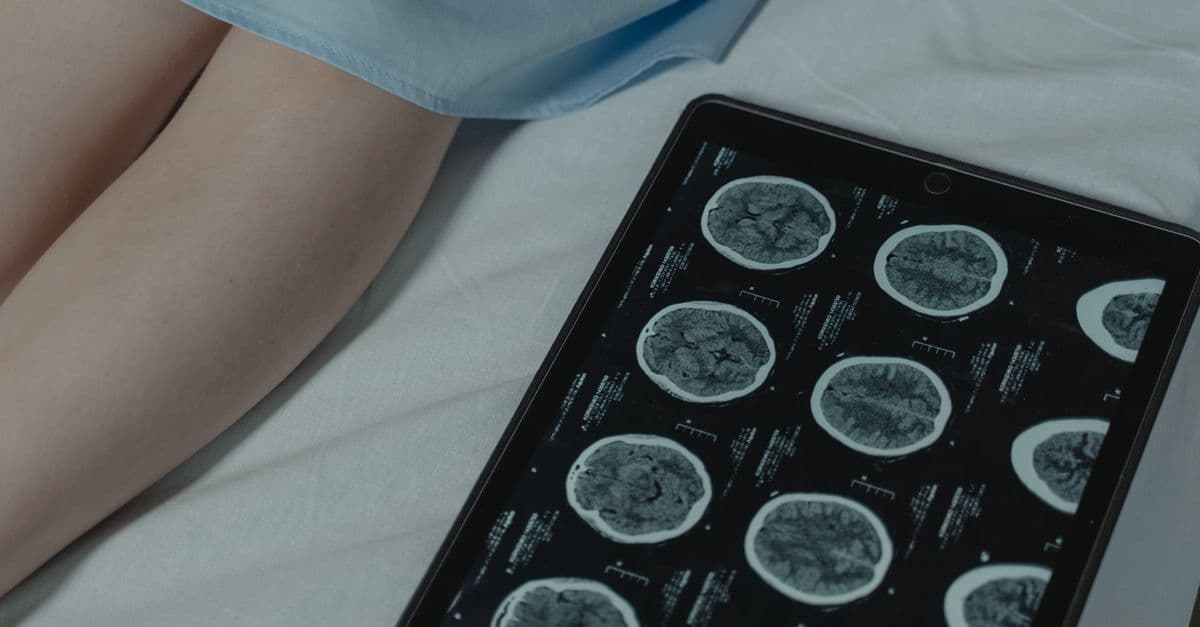
Photo: Tima Miroshnichenko / Pexels
A device implanted in your brain reads your neural activity and translates it into cursor movement, typed text, or commands to a computer — without you moving a muscle. Brain-computer interfaces (BCIs) sound like science fiction, but they're real, increasingly capable, and already changing the lives of paralysed patients. Neuralink, founded by Elon Musk, is the most public name in the field, but it's far from alone. Here's how the technology actually works.
Key takeaways
- A BCI reads brain activity (or stimulates it) to enable communication or control without normal muscle movement.
- BCIs range from non-invasive scalp electrodes to surgical brain implants.
- Neuralink's first human patient (Noland Arbaugh, 2024) controlled computer cursors with thoughts.
- Major medical applications are paralysis, restoring vision, and treating neurological disorders.
- "Mind reading" or "downloading thoughts" is far beyond current capability — these systems read intent for movement, not abstract thoughts.
The basic principle
Your brain consists of ~86 billion neurons. When you think, plan, or move, neurons fire — producing tiny electrical signals. A BCI:
- Detects these signals (with electrodes).
- Decodes them (with algorithms).
- Translates them into commands (cursor movement, typed text, robotic arm control).
The reverse direction — stimulating neurons to deliver sensations or instructions — is also being developed.
Levels of invasiveness
Non-invasive (EEG)
Electrodes on the scalp pick up averaged brain activity through the skull. Cheap, safe, but poor spatial resolution. Used for some communication systems and consumer products. Signal quality is limited.
Partially invasive
Electrodes placed on the brain's surface (under the skull but not penetrating brain tissue). Better signal than EEG, less risky than full implants. Used in some medical research.
Invasive
Tiny electrodes inserted directly into brain tissue, picking up signals from individual neurons. Highest signal quality. Most surgical risk. Neuralink's approach.
Each level has trade-offs between signal quality and surgical/recovery risk.
How Neuralink works
The implant
Neuralink's "N1" device is a small disc surgically implanted under the skull. From it, 1,024 thin flexible threads (each thinner than a human hair) extend into the brain, with electrodes that record from individual neurons. A dedicated explainer is how Neuralink's brain-computer interface works.
The implant is wireless and rechargeable. Data streams to nearby computers over Bluetooth.
The robot
Inserting threads precisely is too delicate for human surgeons. Neuralink built a surgical robot that places the threads with sub-millimetre precision, avoiding blood vessels visible through real-time imaging.
The decoding
Software analyses the recorded neural activity to determine what the user is trying to do — for example, attempting to move their hand left or right. With training (the user thinks about movements while the system learns), the system maps neural patterns to actions.
The result
Noland Arbaugh, paralysed from the shoulders down, received Neuralink's first human implant in 2024. Within weeks, he was controlling a computer cursor with his thoughts well enough to play chess, browse the web, and post on social media.
Subsequent patients have shown improving results. The technology works.
Other BCI companies
Synchron
A New York startup with an intriguing alternative: their device is inserted through a vein, not surgically embedded. Less invasive but lower-resolution. Already implanted in multiple human patients with FDA breakthrough designation.
Blackrock Neurotech
Pioneer in invasive BCIs, with the Utah Array technology used in academic research for nearly two decades.
Precision Neuroscience
Founded by Neuralink co-founder Ben Rapoport. Uses surface electrodes (not penetrating). Aims to reduce surgical risk.
Paradromics
Developing high-channel-count BCIs for medical applications.
Academic research
Multiple universities (Stanford, Johns Hopkins, BrainGate consortium) have been doing BCI research for decades, with significant medical results.
What BCIs can do today
Cursor control
Paralysed patients can move computer cursors smoothly, click, drag, and type via on-screen keyboards. Speeds approaching natural typing.
Speech generation
Researchers have decoded attempted speech from brain activity, allowing locked-in patients to "speak" through computer-generated voices. Improving rapidly.
Robotic limb control
Combined with prosthetic limbs, BCIs let paralysed patients move robotic arms with thoughts.
Treating neurological disorders
Implanted devices already treat Parkinson's disease (deep brain stimulation), severe depression, and epilepsy. These are simpler BCIs without communication functions.
Vision restoration
Experimental devices stimulate the visual cortex to provide rudimentary vision to blind patients. Currently very limited resolution.
What BCIs cannot do
Read your mind
BCIs detect specific neural patterns (typically related to attempted movement). They don't decode abstract thoughts or memories.
Download knowledge
The dream of "uploading languages" or "downloading skills" is fantasy. Skills are encoded in distributed neural patterns that we have no current way to write or read at that level.
Read silently while you sleep
Reading thoughts requires active engagement and trained patterns. A passive scan of someone's brain reveals very little useful information.
Interface seamlessly with other systems
Each system requires per-user training. Generalising across people remains a major challenge.
Risks and challenges
Surgical risk
Implants require brain surgery. While Neuralink has reduced this with their robot, it remains nontrivial. Infection, bleeding, and tissue rejection are real risks.
Signal degradation
Brain tissue eventually scars around electrodes, reducing signal quality. Long-term electrode performance is an open challenge.
Hardware failures
Several Neuralink threads in the first patient retracted, reducing functionality. The team adapted but it's a known issue.
Privacy
Future BCIs that read more of brain activity raise serious privacy questions. Brain data is the most personal data possible.
Cybersecurity
Implants connected to networks could theoretically be attacked. Securing them is a critical challenge.
Equity
Initial BCIs will be expensive. Without policy intervention, life-changing technology might only reach the wealthy.
Decoding Neural Signals: The Machine Learning Problem
The real magic of BCIs lies not in the electrodes, but in what happens next: translating neural noise into commands. A single neuron fires at roughly 1-100 times per second. A 1,024-channel array generates 1,024 independent signals, each fluctuating in real-time. The volume of data is enormous; the signal-to-noise ratio is poor.
Early BCIs used simple linear decoders: "When neurons A, B, and C fire together at this rate, move the cursor left." But neural coding is nonlinear and context-dependent. Modern systems use neural networks (the machine learning kind, not brain neurons) to learn mappings from neural activity to intended action.
A typical training session involves hundreds of trials: the user tries to move their hand left (or imagines it), the system records neural activity, and the decoder learns the association. Over weeks, the model accuracy improves from random guessing (50%) to >90% correct on a binary left-right task.
The challenge is generalization: a decoder trained for one user doesn't work for another. Neural patterns differ across individuals, electrode placements vary, and the brain itself is plastic — adapting to the implant over weeks. Neuralink's first patient, Noland Arbaugh, had to retrain the system constantly as his neural activity drifted. This remains unsolved.
A 2024 paper from Stanford (Pandarinath et al.) showed that transfer learning — using patterns learned from one patient to accelerate learning in another — is possible but difficult. The future likely involves pre-trained foundation models (analogous to GPT in language) that learn generalizable neural-to-action mappings, then fine-tune to individuals. But we're not there yet.
Source: Pandarinath et al. (2024). "Transfer Learning for Brain-Computer Interfaces"; Musk & Neuralink team technical papers; Stanford BrainGate consortium publications.
The Ethics and Privacy Frontier
As BCIs advance beyond movement control to decode speech or even abstract thoughts, ethical questions become urgent. Brain privacy is not currently protected by law in most jurisdictions. A future BCI that reads more sophisticated patterns could theoretically extract memories, thoughts, or emotional states — raising questions that make GDPR look quaint.
The second problem: coercion and consent. If a paraplegic patient is offered a BCI implant that might restore function, but they must share all neural data with a tech company for research, is that truly informed consent? The power imbalance is severe.
Third: military and law enforcement applications. BCIs that decode deception (a hypothetical lie detector) or intention (predicting criminal behavior from brain patterns) could be abused at scale. Some researchers have called for proactive governance, similar to the Asilomar AI principles, before militarization occurs.
Fourth: cognitive liberty. If a BCI can stimulate neural circuits, could it be used to suppress dissent, enforce emotional compliance, or alter personality without consent? Theoretically yes, though current devices can't do this. The precedent matters.
Neuralink has published ethics frameworks, but they're voluntary. The FDA's oversight is nascent. As with most powerful technologies, the ethical frameworks lag behind capability. By the time BCIs are capable of reading detailed thoughts, society will scramble to establish rules.
Source: Ienca & Andorno (2017). "Towards new human rights in the age of neuroscience"; Shih et al. (2022). "Brain-Computer Interfaces: Neurotechnology Frontiers"; FDA guidance on neurotechnology (2024); academic ethics literature.
The Signal Degradation Problem: Why Long-Term BCIs Fail
A practical challenge rarely discussed in popular coverage: signal degradation over time. Within weeks to months of implantation, brain tissue responds to the foreign electrodes. Glial cells (immune cells in the brain) form a scar-like layer around the electrode array, reducing the quality of recorded signals. It's like trying to listen to a radio station through increasingly thick walls.
Neuralink's first patient experienced this: several threads stopped recording within months. The team adapted with software, but it's a known limitation. Most current BCIs are designed for 5-10 years of function; decades-long performance is untested.
Solutions in development include:
- Better electrode materials that resist biofouling (coating the electrode with drugs that suppress scarring).
- Wireless recharging systems that let the implant remain untouched after initial surgery.
- New geometries like Utah Arrays that distribute electrodes more efficiently.
- Flexible substrates (like Precision Neuroscience's approach) that move with brain tissue, reducing chronic irritation.
None of these are fully solved. Signal degradation remains the dirty secret of invasive BCIs. A patient who depends on a BCI for communication faces the prospect of degrading function over their lifetime, requiring repeat surgeries or accepting diminishing capability.
Source: Polasek et al. (2012). "Electrode Degradation in Chronic Neural Recording"; Cogan et al. (2016). "Brain-Machine Interfaces"; Precision Neuroscience technical publications.
Realistic Timeline
Now (2025)
- Medical BCIs for severe paralysis: working, expanding.
- Limited speech generation: improving.
- Vision restoration: very early stages.
2030s
- Wider medical use for paralysis, ALS, locked-in syndrome.
- Better speech and language reconstruction.
- Some commercial non-invasive BCIs.
- Durability problems partially solved, but 5-10 year replacement cycles remain.
2040s+
- More sophisticated invasive BCIs with improved durability.
- Possibly broader use beyond medical applications.
- Significant ethical and policy debates.
The "merge with AI" vision Neuralink markets is several decades away at minimum, if it happens at all. The realistic trajectory is medical first, specialized applications second, and mass consumer BCIs (if they ever come) far in the future.
Common misconceptions
"Elon Musk invented BCIs"
BCI research goes back to the 1970s. Neuralink innovates on miniaturisation, channel count, and surgical robotics, but the field is decades old.
"BCIs are mind control"
They detect intentional patterns the user produces. They don't impose thoughts or behaviours.
"BCIs make you superhuman"
For the foreseeable future, they restore lost abilities (paralysis, vision, hearing) rather than enhance normal humans. Healthy people gain less.
"They cause permanent damage"
Surgical risk is real but most patients with current BCIs report no significant cognitive or behavioural changes.
"They'll replace smartphones"
Smartphones are extraordinarily good at what they do. BCIs are unlikely to compete with them for everyday use anytime soon. Medical and accessibility applications are far more practical.
Frequently Asked Questions
Q: Will I be able to get a Neuralink?
A: Currently only available to research participants with severe medical needs. Commercial availability is years away and likely to remain medical-focused. Regulatory approval exists only for invasive implants; broader rollout requires proof of long-term safety and efficacy.
Q: Does the surgery hurt?
A: Surgery uses general anesthesia, so you feel nothing during implantation. Recovery typically involves mild discomfort similar to other brain surgeries, managed with standard pain medication. Most patients report recovery within 2-4 weeks.
Q: Can the device read what I'm actually thinking?
A: No. Current BCIs decode movement intent and attempted actions, not abstract thoughts or memories. Privacy concerns will grow as systems become more sophisticated, but we're not at mind-reading yet.
Q: Can it be hacked or remotely controlled?
A: Theoretically, future networked BCIs could be vulnerable to cyberattack. Today's medical devices have limited connectivity to reduce this risk, and Neuralink uses encryption. Cybersecurity is an active area of research.
Q: How long does the implant actually work?
A: Long-term durability is an open problem. Most current implants are designed for 5-10 years; multi-decade performance is unproven. Signal degradation over time is expected, and patients may require repeat surgeries or suffer declining function.
Q: How is a BCI different from a pacemaker?
A: Pacemakers deliver simple electrical stimulation (fixed patterns). BCIs read neural signals and adapt their output based on decoded intent. BCIs require continuous calibration and learning; pacemakers, once programmed, run autonomously. BCIs are far more complex.
Recording Neurons: Unit vs. Field Recordings
BCIs can record neural activity at different scales:
Single-unit recordings: Electrodes record from individual neurons, capturing action potentials (spikes) from one cell. This produces very high signal-to-noise ratio and fine spatial resolution (you know exactly which cell fired). But single units are fragile — moving the electrode by 50 micrometers loses the signal. Long-term single-unit recording is challenging; the electrode must remain positioned exactly on the same cell.
Multi-unit recordings: Electrodes record from multiple nearby neurons simultaneously, capturing a blend of activity from dozens of cells in the electrode's vicinity. Signal-to-noise is lower (harder to isolate individual spikes), but the signal is more robust — small electrode drifts don't eliminate the signal entirely.
Local field potentials (LFPs): Very low-frequency signals reflecting summed activity of thousands of neurons in a region. LFPs change slowly (compared to spikes) and are more stable over time. But they carry less information — you lose the fine temporal structure of individual spiking.
Current approaches (Neuralink, Blackrock) record multi-unit activity and LFPs simultaneously. Decoders operate on this mixed signal, learning which patterns predict intended action.
Future directions: Higher-channel-count arrays (1,000+ channels instead of 1,024) would increase information capacity. Recording from a larger brain volume simultaneously would enable decoding more complex mental states. But this scales power consumption, heat dissipation, and complexity explosively.
Noise, Signal, and the Challenges of Neural Decoding
Neural signals are noisy. A single neuron's spike generates a voltage change of maybe 100 microvolts (0.0001 volts). Electronic noise in the recording hardware, electromagnetic interference from nearby devices, and drift in electrode impedance can easily drown the signal.
Signal-to-noise ratio (SNR) — the ratio of signal power to noise power — is a constant challenge. Techniques to improve SNR:
- Analog filtering: Filter out frequencies outside the 300 Hz to 10 kHz band where spike waveforms live
- Averaging: Repeat the same stimulus/task many times; average neural responses to wash out noise
- Independent component analysis (ICA): Decompose the recorded signal into independent sources, remove artifacts
- Spike sorting: Assign recorded spikes to individual neurons based on waveform shape (neurons' spikes have distinctive shapes)
Even with perfect SNR, decoding is hard because neural coding is population coding. No single neuron tells you "the user wants to move left." Instead, a population of neurons collectively encodes the intention. Different populations can encode the same information in different ways; hence transfer learning between patients is difficult.
Adaptive decoding: Modern BCIs use online learning — as the user trains, the decoder adapts in real time. This is essential because (1) the user's neural patterns change as they learn to use the BCI, (2) electrode impedance drifts, and (3) biological remodeling changes firing patterns. A static decoder would degrade over days; an adaptive one stays functional.
Invasiveness Trade-Offs: Why Surgery Matters
BCIs range from non-invasive (scalp EEG) to highly invasive (intracortical electrodes in brain tissue). The spectrum matters for clinical use:
Non-invasive (EEG, transcranial magnetic stimulation):
- No surgery, zero medical risk
- Low signal quality (scalp and skull attenuate signals ~1000-fold)
- ~10 μV signal amplitude vs. ~100 μV for intracortical recordings
- Usable for high-contrast tasks (left vs. right, or binary on-off) but poor for nuanced decoding
- Perfect for research on healthy volunteers, limited for medical applications
Partially invasive (electrocorticography / ECoG — electrodes on brain surface):
- Surgery required to open the skull, but electrodes don't penetrate tissue
- Moderate signal quality (~10-100 μV, better than EEG, worse than intracortical)
- Reasonable risk profile for some medical applications
- Several dozen electrode channels possible
- Good compromise if brain penetration is deemed too risky
Invasive (intracortical microelectrodes):
- Electrodes insert directly into brain tissue
- Excellent signal (100+ μV per unit)
- Highest channel count possible (1,000+)
- Highest information capacity
- Significant surgical risk (stroke, infection, hemorrhage — though risk is small)
- Long-term signal degradation from scar tissue
For medical applications (paralyzed patients), invasive BCIs are justified — the benefit of regaining motor control vastly outweighs surgical risk. For enhancement (non-medical users), the risk-benefit is much less attractive. This is likely why medical applications will dominate BCIs for decades.
Timeline to Clinical Availability
Current status (2024-2025):
- Neuralink: First human implanted in January 2024. Second and third patients implanted. Commercialization far away.
- Synchron: Vein-based implant in multiple patients. Seeking FDA approval.
- Academic: BrainGate consortium (Stanford, Johns Hopkins) has years of human BCI research.
- Commercial: EEG-based consumer BCIs exist (Emotiv, Neurable, Ceribell) but with poor signal quality.
Realistic timeline:
- 2024-2025: Neuralink and Synchron expand to 5-10 human patients, accumulating safety and efficacy data.
- 2026-2028: FDA approves first invasive BCIs as medical devices (similar to pacemaker approval). Regulatory pathway becomes clearer.
- 2028-2032: Clinical adoption in specialized centers (neurosurgery-capable hospitals). Prices high ($100K-$500K per device). Accessible only to severely disabled individuals in developed countries.
- 2032+: Possible expansion to broader patient populations (ALS, stroke). Cost reduction through competition.
- 2040+: If safe long-term performance is proven, broader adoption might occur. But this is speculative.
The "mass-market brain implant" is not on any realistic timeline. BCIs will remain medical for decades, serving patients with no other options.
The Bottom Line
Brain-computer interfaces are real, working medical technology that's already restoring abilities to paralysed patients. Neuralink is one of several leading companies pushing the field forward. The science fiction visions — uploaded consciousness, mind reading, downloaded skills — are very far away or impossible. The medical reality is profound: people who couldn't move can now control computers; people who couldn't speak might soon communicate fluently. The next decade will see major progress, but mostly in medicine. The "merger with AI" remains speculative. What's not speculative is that a device in your brain reading your intent works — and we're just getting started.
Frequently Asked Questions
Q: Will I be able to get a Neuralink?
A: Currently only available to research participants with severe medical needs. Commercial availability is years away and likely to remain medical-focused. Regulatory approval exists only for invasive implants; broader rollout requires proof of long-term safety and efficacy.
Q: Does the surgery hurt?
A: Surgery uses general anesthesia, so you feel nothing during implantation. Recovery typically involves mild discomfort similar to other brain surgeries, managed with standard pain medication. Most patients report recovery within 2-4 weeks.
Q: Can the device read what I'm actually thinking?
A: No. Current BCIs decode movement intent and attempted actions, not abstract thoughts or memories. Privacy concerns will grow as systems become more sophisticated, but we're not at mind-reading yet.
Q: Can it be hacked or remotely controlled?
A: Theoretically, future networked BCIs could be vulnerable to cyberattack. Today's medical devices have limited connectivity to reduce this risk, and Neuralink uses encryption. Cybersecurity is an active area of research.
Q: How long does the implant actually work?
A: Long-term durability is an open problem. Most current implants are designed for 5-10 years; multi-decade performance is unproven. Signal degradation over time is expected, and patients may require repeat surgeries or suffer declining function.
Q: How is a BCI different from a pacemaker?
A: Pacemakers deliver simple electrical stimulation (fixed patterns). BCIs read neural signals and adapt their output based on decoded intent. BCIs require continuous calibration and learning; pacemakers, once programmed, run autonomously. BCIs are far more complex.
Related Reading
Follow new articles
Add SciHub101 to your feed reader to see new science and technology stories.
About the Author
SciHub101 is an independent science and technology publication founded and edited by Buğra Sözeri, a software engineer and app developer based in Türkiye. AI tools assist with drafting and research. Source documentation in the existing archive is uneven, and articles are being reviewed and corrected. The Editorial Team byline identifies editorial responsibility; it does not certify specialist or independent human review. Where we compare products, anything built by our own team is labelled as such — see the editorial guidelines and About page for how corrections and disclosures work.
Related Articles

What Is Cybersecurity? The Basics Everyone Should Know
Every digital service you use is constantly being attacked. Cybersecurity is the layered defence keeping passwords, banking, hospitals, and infrastructure safe. Here's how it actually works.

How Drones Actually Work and Where They Are Going
Drones range from 249-gram camera quadcopters to 27-hour military aircraft. Here is how they fly, what sensors and software keep them stable, what the rules say, and what delivery and air taxis can realistically do.

How Neuralink Works — Brain-Computer Interface
Inside Neuralink's N1 implant — 1024 electrodes, a surgical robot, and the race to give paralyzed patients control of computers with thought alone.
Brain-Computer Interfaces: How Electrodes Read Your Mind
Brain-computer interfaces convert neural signals into digital commands. From Vidal's 1973 coinage to Neuralink's 2024 human implant, here's how BCIs work and what they can and cannot do.
Brain-Computer Interfaces and AI: The Science Behind Neural Prosthetics
AI-powered BCIs are restoring cursor control, handwriting, and speech to people with paralysis. Here is how the decoding works and where it still fails.
The Electroencephalogram (EEG) — How a Psychiatrist Mapped the Brain's Electric Storm — SciHub101
How Hans Berger's secret obsession with telepathy in 1924 produced the EEG—and why those squiggly lines still diagnose epilepsy and decode sleep 100 years later.