Brain-Computer Interfaces: How Electrodes Read Your Mind
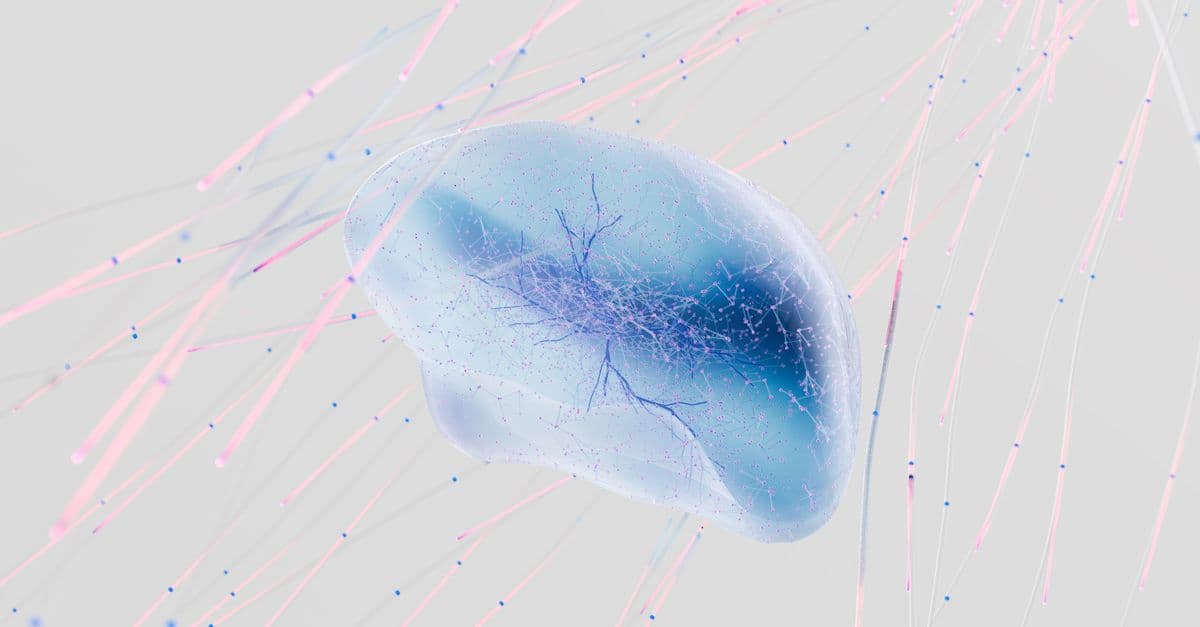
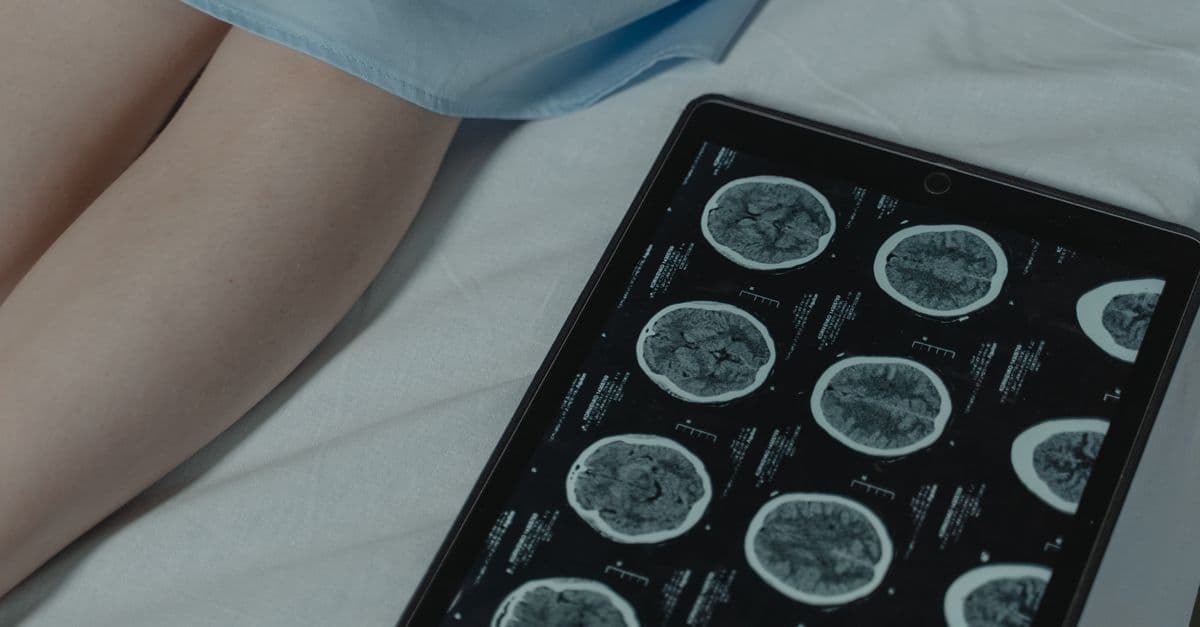
Photo: Google DeepMind / Pexels
The central promise of a brain-computer interface is absurdly simple to state: a person thinks about moving a cursor, and the cursor moves — no hand, no muscle, no nerve pathway required. The engineering required to fulfill that promise is anything but simple. Neurons fire in patterns measured in microvolts. The skull attenuates those signals by a factor of roughly 10,000. Even when you get electrodes inside the brain, the brain treats them as foreign objects and builds scar tissue around them. The history of BCIs is the history of closing the gap between a straightforward idea and a problem of extraordinary biological complexity.
What a BCI Actually Does
A brain-computer interface is a system that records electrical signals from neurons and converts them into outputs that can control an external device — a computer cursor, a robotic arm, a communication application, or a prosthetic limb. The interface bypasses the normal motor output pathway: spinal cord, peripheral nerves, muscles.
Neuron — the primary signaling cell of the nervous system. A typical neuron generates brief electrical pulses called action potentials, lasting approximately 1–2 milliseconds, with amplitudes of 60–100 millivolts at the cell membrane. These pulses propagate along axons and trigger responses in connected neurons through chemical synapses. The motor cortex — a strip of tissue on the surface of the brain — contains neurons whose firing rate is correlated with intended limb movement, which is the signal BCIs typically record.
The signal chain in an invasive BCI runs: neural action potentials → microelectrode recording → amplification → analog-to-digital conversion → decoding algorithm → output command. Each step introduces noise, delay, or information loss. The decoding algorithm — the software that translates raw electrode voltage traces into intended movements — is where most of the recent progress has been made, often through machine learning approaches that train on each user's particular neural patterns.
The signal chain in a non-invasive EEG-based BCI runs similarly, but the signal at the scalp is not individual action potentials. It is the summated electrical activity of tens of thousands of neurons, averaged across skull and scalp tissue, which degrades spatial resolution dramatically. EEG can detect which region of the brain is active; it cannot reliably resolve which individual neurons are firing.
Source: Brain-Computer Interfaces, Wikipedia https://en.wikipedia.org/wiki/Brain%E2%80%93computer_interface
Jacques Vidal and the Coinage of "BCI" (1973)
The term "brain-computer interface" appears for the first time in a 1973 paper by Jacques Vidal, a computer scientist at the University of California, Los Angeles. The paper, "Toward Direct Brain-Computer Communication," published in the Annual Review of Biophysics and Bioengineering, posed the question as an engineering challenge: could electrical signals from the brain be used to control external devices?
Vidal's experimental approach used EEG (electroencephalography) and visual evoked potentials. When a person stares at a flickering light, the visual cortex generates a characteristic electrical response synchronized with the flicker frequency — this is the visual evoked potential (VEP). Different flicker frequencies produce different VEP patterns. Vidal trained subjects to control a virtual cursor in a maze by attending to different flickering stimuli, each associated with a different direction of movement. The brain's automatic response to the attended stimulus became the control signal.
Source: bciintel.com — History of Brain-Computer Interfaces: Complete Timeline https://bciintel.com/bci-timeline/
This approach — using visually evoked potentials to generate discrete control signals — is still one of the most reliable non-invasive BCI paradigms, particularly for individuals with severely limited motor function. It requires no training of the decoder on individual neurons; it exploits the brain's existing sensory processing circuitry. Modern SSVEP (Steady-State Visual Evoked Potential) systems can achieve information transfer rates of 40–100 bits per minute, sufficient for spelling applications.
EEG (electroencephalography) — a non-invasive method of recording brain electrical activity using electrodes placed on the scalp. EEG measures voltage fluctuations caused by the summated electrical activity of neuronal populations. It has millisecond temporal resolution but poor spatial resolution (centimeters), because the skull disperses the electrical signals. EEG captures approximately 1/10,000th of the signal amplitude available at the cortical surface.
The Utah Array: The Dominant Invasive Electrode
For applications requiring high-resolution single-neuron recording — controlling a robotic arm with arm-quality speed and dexterity, for instance — EEG is insufficient. You need electrodes inside the brain, recording individual neurons or small groups of neurons. The dominant tool for this since the late 1990s has been the Utah array.
Utah array — a 10×10 grid of silicon microelectrodes (96 active electrodes after edge electrodes are excluded from recording) mounted on a 4×4 mm silicon base. Each electrode is approximately 1.5 mm long and tapers to a point about 3 micrometers wide. The array is implanted into the surface of the cortex, with each electrode penetrating approximately 1.0–1.5 mm into cortical tissue. Manufactured by Blackrock Neurotech (headquartered in Salt Lake City, Utah, which gives the device its name), the Utah array has been the primary tool for intracortical BCI research since the early 2000s.
Source: Works in Progress Magazine — Brain-Computer Interfaces https://worksinprogress.co/issue/brain-computer-interfaces/
The array was developed in the late 1980s and early 1990s at the University of Utah, using semiconductor fabrication processes borrowed from microchip manufacturing. The silicon substrate can be etched and doped with the same photolithographic techniques used to make integrated circuits, which allowed mass production of consistent, reproducible electrode geometries — a major advantage over handmade wire electrodes.
The core limitation of the Utah array, and of all penetrating silicon electrodes, is biological: the brain treats any rigid foreign object as damage. Within weeks of implantation, glial cells (the brain's immune cells) encapsulate the electrode tips in a sheath of scar tissue called a glial scar. The scar progressively increases electrical impedance between the electrode and the nearby neurons, degrading signal quality over months to years. This biological response is the primary reason that long-term BCI performance tends to decline even when the hardware remains intact.
A second limitation is mechanical: the brain moves slightly with each heartbeat and breath, while the rigid array does not. This chronic micromotion gradually displaces the electrode tips relative to the neurons they are supposed to record. The same neurons are not necessarily near the same electrode tips a year after implantation.
BrainGate: The First Clinical Trials (2004)
The BrainGate consortium — a collaboration of Brown University, Massachusetts General Hospital, and other institutions — conducted the first clinical trials of an implanted BCI in human patients in the early 2000s, using the Utah array.
The first participant, enrolled in 2004, was Matthew Nagle, a 25-year-old Massachusetts man who had been paralyzed from the neck down after a spinal cord injury. A Utah array was implanted in his motor cortex. Within days of implantation, Nagle was able to control a computer cursor using imagined hand movements, play simple video games, and operate a television using a thought-controlled interface. He could also move a robotic limb.
Source: IEEE Pulse — Silicon Synapses: The Bold Frontier of Brain-Computer Integration https://www.embs.org/pulse/articles/silicon-synapses-the-bold-frontier-of-brain-computer-integration/
The BrainGate trials established that the motor cortex of a paralyzed person — even years after the original injury, even without any motor output — continues to generate movement-related neural signals in response to imagined movement. The cortical representation of intended movement survives the loss of the efferent pathway that would normally execute it. This was a crucial empirical finding: the signal was there, reliably, waiting to be read.
Subsequent BrainGate participants achieved progressively more sophisticated control. Jan Scheuermann, a participant implanted in 2012, used a Utah array in her motor cortex to operate a robotic arm with seven degrees of freedom — reaching, grasping, and manipulating objects — while remaining completely paralyzed. In a demonstration that received substantial media attention, she fed herself a piece of chocolate using the robotic arm.
Source: medrxiv.org — Long-term performance of intracortical microelectrode arrays in 14 BrainGate clinical trial participants https://www.medrxiv.org/content/10.1101/2025.07.02.25330310.full.pdf
Motor cortex — a region on the surface of the frontal lobe, just anterior to the central sulcus, that contains neurons whose activity is correlated with voluntary movement. It is organized somatotopically (the "motor homunculus"): different sections of the motor cortex correspond to different body parts, with the hand and face regions disproportionately large relative to their physical size. BCI implants for hand control are typically placed in the hand area of the motor cortex.
The Timeline: From Theory to Clinical Use
| Year | Milestone |
|---|---|
| 1924 | Hans Berger records first human EEG |
| 1969 | Eberhard Fetz shows monkeys can learn to control firing rate of individual cortical neurons |
| 1973 | Jacques Vidal coins "brain-computer interface"; demonstrates VEP-based cursor control |
| 1988 | Lawrence Farwell and Emanuel Donchin demonstrate P300-based EEG spelling device |
| 1989 | Utah array designed at University of Utah; fabricated using semiconductor processes |
| 1998 | Philip Kennedy implants the first intracortical BCI in a human (a "cone electrode") |
| 2004 | BrainGate first human trial; Matthew Nagle controls computer cursor and TV via Utah array |
| 2006 | BrainGate publishes Nature paper on Nagle's performance; first major peer-reviewed clinical BCI result |
| 2012 | Jan Scheuermann uses BrainGate arm to feed herself chocolate; 7-degree-of-freedom robotic arm control |
| 2016 | Bill Kochevar (BrainGate) regains use of his own hand through BCI-controlled functional electrical stimulation |
| 2019 | Neuralink founded 2016; Elon Musk announces major N1 chip development press conference |
| 2023 | Synchron implants first stentrode BCI in US patient without open-brain surgery |
| Jan 28, 2024 | Noland Arbaugh receives first Neuralink N1 implant at Barrow Neurological Institute |
| 2024 | Arbaugh achieves 8.0 bits per second cursor control — a BCI world record at time of reporting |
Source: Harvard Medicine Magazine — Designing Brain-Computer Interfaces That Connect Neurons to the Digital World https://magazine.hms.harvard.edu/articles/designing-brain-computer-interfaces-connect-neurons-digital-world
Neuralink: Engineering at Scale
Neuralink, founded in 2016 with Elon Musk as a co-founder and public face, entered the field with a specific engineering thesis: that the failure of prior BCIs to achieve long-term reliable performance was primarily a problem of electrode count, electrode flexibility, and implantation method — all of which could be solved with better hardware engineering.
The company's N1 chip implant system uses 1,024 electrodes distributed across 64 thin, flexible polymer threads. The threads are significantly thinner and more flexible than the rigid silicon shanks of the Utah array, which the company argues should reduce the chronic immune response and micromotion damage. A robotic surgical system inserts the threads individually, using real-time optical imaging to avoid cortical blood vessels — a step that matters because bleeding at implantation triggers an accelerated inflammatory response.
Source: Neuralink first human trial reporting — elonx.net https://www.elonx.net/neuralink-in-2024-the-year-of-noland-arbaugh-the-first-human-user-of-the-n1-chip/
On January 28, 2024, Noland Arbaugh — a 29-year-old man paralyzed by a C4/C5 spinal cord injury sustained in a diving accident in 2016 — received the first Neuralink N1 implant at Barrow Neurological Institute in Phoenix, Arizona. Within weeks, he was controlling a computer cursor using imagined finger movements, achieving an information transfer rate of 4.6 bits per second (BPS). This was later optimized through software to 8.0 BPS — reported as a world record for BCI cursor control at the time.
Arbaugh subsequently used the system to play chess, browse the internet, stream music wirelessly, and play the video game Civilization VI — all through imagined movement. He described the experience as natural enough that he sometimes forgot the device was there.
The implant encountered a significant setback: approximately 85% of the flexible threads retracted from the cortical tissue within weeks of implantation, reducing the number of functional electrodes from the intended 1,024 to approximately 15% of that number. Neuralink modified its surgical technique for later implants in response. By mid-2024, Arbaugh's thread situation had stabilized, and algorithmic optimization recovered much of the performance lost from the electrode retraction.
Source: The Week — Neuralink's first human trial: Noland Arbaugh's journey with the N1 implant https://www.theweek.in/health/cover/2026/05/02/neuralinks-first-human-trial-noland-arbaughs-journey-with-the-n1-implant.html
By May 2026, Neuralink had implanted the device in multiple patients, with the broader trial ongoing. As of the same date, approximately 12 participants had received the system, with varying outcomes. The company is pursuing FDA approval for broader commercial use.
Invasive vs. Non-Invasive: The Core Trade-off
The field divides along a fundamental axis: how close do the electrodes need to be to the neurons, and how much risk is acceptable to get them there?
Invasive BCIs require neurosurgery — either open craniotomy (removing a section of skull) or endovascular approaches (threading a device through blood vessels to the brain surface). They record from individual neurons or small groups of neurons with high spatial resolution and high signal-to-noise ratios. The Utah array and Neuralink N1 are invasive. Performance is higher; risk of infection, bleeding, and electrode degradation is real.
Non-invasive BCIs use sensors placed on the scalp, outside the skull. EEG is the dominant modality. No surgery is required; no infection risk. The trade-off is severe signal degradation: the skull attenuates and spatially smears the neural signal, limiting information transfer rates to tens of bits per minute rather than the hundreds achievable with invasive systems. Non-invasive BCIs are adequate for communication applications (spelling, cursor control at slow speeds, control of smart home devices) but are currently too slow for dexterous motor prosthetics.
Semi-invasive BCIs occupy the middle ground. The Stentrode, developed by Synchron, is a mesh device delivered through the jugular vein and deployed in a blood vessel near the motor cortex. It does not penetrate brain tissue and does not require craniotomy — but it is inside the body and records field potentials from nearby neurons through the vessel wall. Performance is between invasive and non-invasive.
Source: Paradromics — From brain implants to neuroprosthetics: Making sense of brain-computer interface terminology https://www.paradromics.com/insights/from-brain-implants-to-neuroprosthetics
Think of it this way: a non-invasive BCI is like listening to a concert through a closed fire door. You can hear that music is playing, and roughly what genre, but you cannot resolve individual instruments. An invasive BCI is like sitting in the front row with a directional microphone — you can hear the individual strings of the violin — but getting the front-row seat required significant commitment.
Clinical Applications: What BCIs Can Do Now
The clinical applications of BCIs, as of 2026, fall into a few established categories:
Communication restoration — the highest-impact near-term application. Individuals with ALS (amyotrophic lateral sclerosis) or brainstem stroke who have lost the ability to speak or move can use BCIs to generate text at speeds approaching conversational typing. A 2023 Nature paper from UC San Francisco reported a BCI participant who could generate text at 62 words per minute by imagining handwriting — faster than the previous record of 40 words per minute.
Motor prosthetics and functional electrical stimulation — using a BCI to control a robotic arm or to directly stimulate paralyzed muscles via functional electrical stimulation (FES), restoring voluntary grip in a paralyzed hand. Bill Kochevar, a BrainGate participant, demonstrated this in 2016, using his own arm muscles — stimulated by FES commands from his motor cortex — to feed himself.
Sensory feedback — the field is beginning to add the reverse pathway: stimulating sensory cortex to create artificial touch sensations that give robotic prosthetic hands some ability to "feel." Without sensory feedback, a prosthetic hand lacks the tactile information needed to grip objects reliably. Early results show that electrical stimulation of the somatosensory cortex can produce localized sensations of touch and pressure.
Treatment of neurological conditions — deep brain stimulation (DBS), which has been used since the 1990s for Parkinson's disease, tremor, and other conditions, is a related but distinct technology: it delivers electrical stimulation to deep brain structures rather than recording from the cortex. Closed-loop DBS systems — which record brain activity and adjust stimulation based on the recorded signal — represent a convergence of BCI and DBS technology.
Source: techlifesci.com — Emerging Brain-Computer Interface Industry Across Chips, AI, and Regulation https://www.techlifesci.com/p/the-growing-relevance-of-brain-computer
What People Get Wrong About BCIs
The largest misconception is that BCIs "read minds" in a comprehensive or privacy-threatening sense. Current BCIs read motor intentions — plans for movement, specifically the firing patterns in motor cortex associated with intended hand or arm movements. They do not read language, memories, emotions, or identity. The decoding algorithm learns to associate specific electrode voltage patterns with specific intended movements for a specific person; it cannot be transferred to another person and does not generalize beyond its training domain.
A second misconception is that Neuralink represents a qualitative leap over prior BCI technology. Arbaugh's performance — 8.0 bits per second cursor control — is impressive for a commercial device in its first-generation human trial, but it is in the same general range as BrainGate results from 2006 onward. Neuralink's distinct claims are about long-term signal stability (flexible threads reducing scarring), wireless operation (no transcutaneous cables, which are an infection risk), and scalability toward many more electrodes. Whether these engineering advantages yield substantially better long-term clinical performance remains to be seen over multi-year follow-up periods.
A third misconception concerns the timeline to widespread use. BCI technology faces regulatory, biological, and economic constraints that make consumer-scale adoption a matter of decades, not years. Implanted devices require surgical approval, long-term safety data, and a risk-benefit profile acceptable for non-life-threatening applications. The near-to-medium term market is clinical: paralyzed patients, ALS sufferers, and people with severe communication impairments — populations where the risk of surgery is justified by the magnitude of functional restoration.
The Core Unsolved Problems
Despite substantial progress since 2004, several hard problems remain:
Long-term electrode stability. The glial scar response degrades signal quality over months to years in most implanted devices. The immune response to rigid silicon electrodes is well understood but not solved. Flexible polymer threads (Neuralink's approach) and bioactive coatings (various research approaches) have reduced but not eliminated the problem.
Wireless power and data transmission. A fully implanted wireless BCI must transmit high-bandwidth neural data (thousands of electrode channels, each sampled at tens of kilohertz) through the skull and scalp without heating the tissue or requiring frequent battery replacement. This is a difficult radio-frequency engineering problem with fundamental physical limits.
Decoding algorithms and generalization. Current decoders train on a user's neural patterns and are specific to that user and that device configuration. If electrodes shift position or degrade, the decoder must be retrained. Algorithms that can adapt continuously, maintain performance as the electrode array degrades, and generalize across users and device states are active research areas.
Regulatory pathway. The FDA's approval framework for implanted BCIs is evolving. Safety data requirements for devices intended to remain implanted for years or decades are extensive. The regulatory pathway for the transition from clinical trial device to approved medical device to commercial product will take years even for the most promising systems.
Source: IEEE Pulse — Silicon Synapses https://www.embs.org/pulse/articles/silicon-synapses-the-bold-frontier-of-brain-computer-integration/
FAQs
Q: What is a brain-computer interface, exactly?
A: A BCI is a system that records electrical signals from brain neurons and converts them into digital commands that control an external device — a computer cursor, robotic arm, communication application, or prosthetic limb — without requiring muscle movement. The BCI bypasses the normal motor output pathway (spinal cord, peripheral nerves, muscles) and reads the neural intention directly from the cortex.
Q: Who coined the term "brain-computer interface"?
A: Jacques Vidal, a computer scientist at UCLA, coined the term in his 1973 paper "Toward Direct Brain-Computer Communication" in the Annual Review of Biophysics and Bioengineering. Vidal also demonstrated an early BCI system using visual evoked potentials (VEPs) to control a virtual cursor.
Q: What is the Utah array, and why is it significant?
A: The Utah array is a 10×10 grid of silicon microelectrodes (96 active recording sites) on a 4×4 mm base, each electrode approximately 1.5 mm long. Manufactured by Blackrock Neurotech, it has been the standard implanted electrode for clinical BCI research since the early 2000s and was used in all BrainGate trials. Its silicon construction provides consistent geometry but triggers a chronic glial immune response that degrades signal quality over time.
Q: What did Noland Arbaugh achieve with the Neuralink implant?
A: Arbaugh, paralyzed from the neck down since a 2016 diving accident, received the first Neuralink N1 implant on January 28, 2024, and achieved cursor control at 8.0 bits per second — controlling a computer, playing chess and video games, and browsing the internet through imagined finger movements. He encountered a setback when approximately 85% of his electrode threads retracted, but software optimization restored much of his performance. He described the device as having substantially changed his daily life.
Q: What is the difference between invasive and non-invasive BCIs?
A: Invasive BCIs implant electrodes directly into brain tissue, recording individual neuron activity with high resolution and signal quality, but requiring neurosurgery. Non-invasive BCIs, primarily EEG-based, place electrodes on the scalp without surgery but record signals that are 10,000 times weaker and spatially smeared by the skull. Invasive BCIs allow faster, more precise control; non-invasive BCIs are safer and more accessible but slower and less precise.
Q: Can BCIs "read minds" or access memories and thoughts?
A: No. Current BCIs read motor intentions — the patterns of neural activity in the motor cortex associated with planned movements. They do not access memories, language, emotions, or any content outside the specific movement-planning signals they are trained to decode. Decoding is user-specific and trained to that user's movement intentions only.
Q: What are the main obstacles to widespread BCI use?
A: The principal technical obstacles are: electrode degradation from the brain's immune response (glial scarring around electrode tips), mechanical instability from brain-electrode micromotion, the need for user-specific decoder training, and wireless power/data transmission limits. The principal non-technical obstacles are: the requirement for neurosurgery for high-performance devices, long regulatory approval timelines, and cost. Near-term clinical use for paralysis and ALS is advancing; consumer-scale applications remain a longer-term prospect.
The Takeaway
The BCI field has moved in fifty years from Jacques Vidal's theoretical proposal to a man with a spinal cord injury playing Civilization VI with his thoughts. The gap between that achievement and the science-fiction vision of seamless brain-machine integration is still wide — glial scarring, signal instability, wireless bandwidth limits, and surgical risk are real engineering barriers, not rhetorical ones. What has been demonstrated, repeatedly and across multiple devices, is that the motor cortex of a paralyzed person continues to generate intentional movement signals for years after the injury, and those signals can be decoded well enough to restore meaningful communication and control. That is a narrow but genuine foothold, and the engineering is moving.
Read next:
Weekly digest
Stay ahead of the curve
Get the best science, AI, and tech stories delivered to your inbox every week. No spam — unsubscribe any time.
About the Author
SciHub101 is an independent science and technology publication founded and edited by Buğra Sözeri, a software engineer and app developer based in Türkiye. Articles are drafted against peer-reviewed literature and primary sources, fact-checked, and edited by a human before publication. Where we compare products, anything built by our own team is labelled as such — see the editorial guidelines and About page for how corrections and disclosures work.
Related Articles
Magnetic Tape Recording: The Wire, the Ribbon, and the Revolution
From Poulsen's 1898 telegraphone to the AEG Magnetophon to Ampex and the digital era, magnetic tape recording shaped music, broadcasting, computing, and data storage for a century.
The Invention of the Supercapacitor — SciHub101
How a misnamed physics error became the world's fastest energy storage device, from Becker's 1957 accident to today's electric brakes.
How Neuralink Works — Brain-Computer Interface
Inside Neuralink's N1 implant — 1024 electrodes, a surgical robot, and the race to give paralyzed patients control of computers with thought alone.
What Is Neuralink? How Brain-Computer Interfaces Actually Work
A device implanted in the brain that lets paralysed patients move computer cursors with their thoughts. Here's how Neuralink and other brain-computer interfaces actually work.
Brain-Computer Interfaces and AI: The Science Behind Neural Prosthetics
AI-powered BCIs are restoring movement, speech, and sensation to paralyzed patients—translating neural signals into action at speeds approaching normal human ability.
The Electroencephalogram (EEG) — How a Psychiatrist Mapped the Brain's Electric Storm — SciHub101
How Hans Berger's secret obsession with telepathy in 1924 produced the EEG—and why those squiggly lines still diagnose epilepsy and decode sleep 100 years later.