How Neuralink Works — Brain-Computer Interface

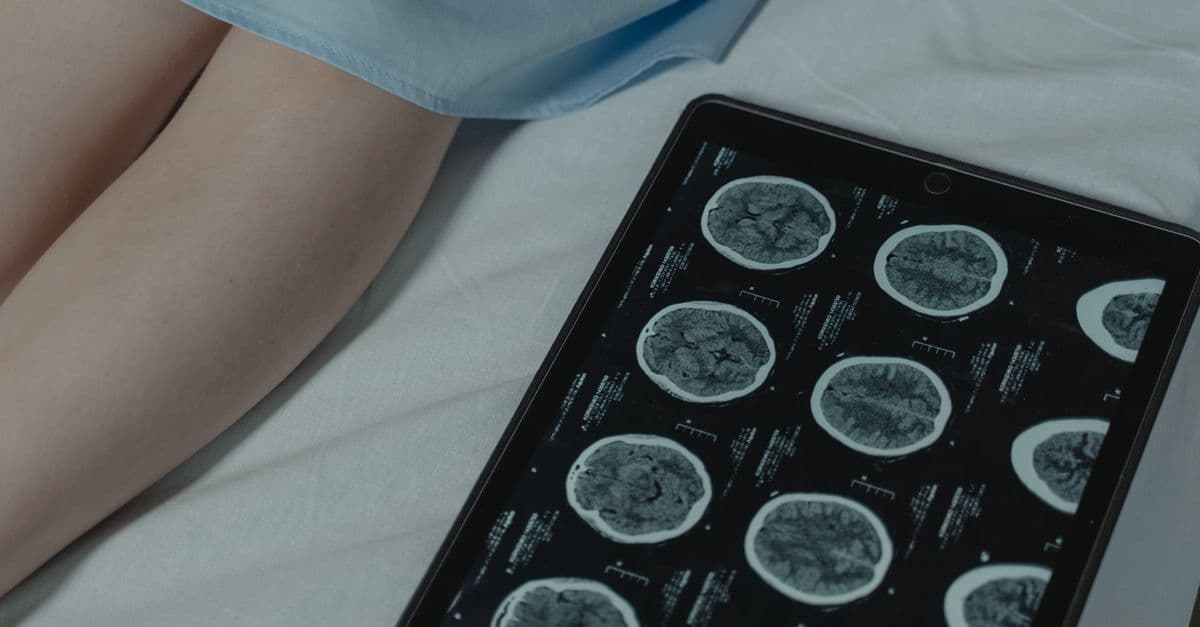
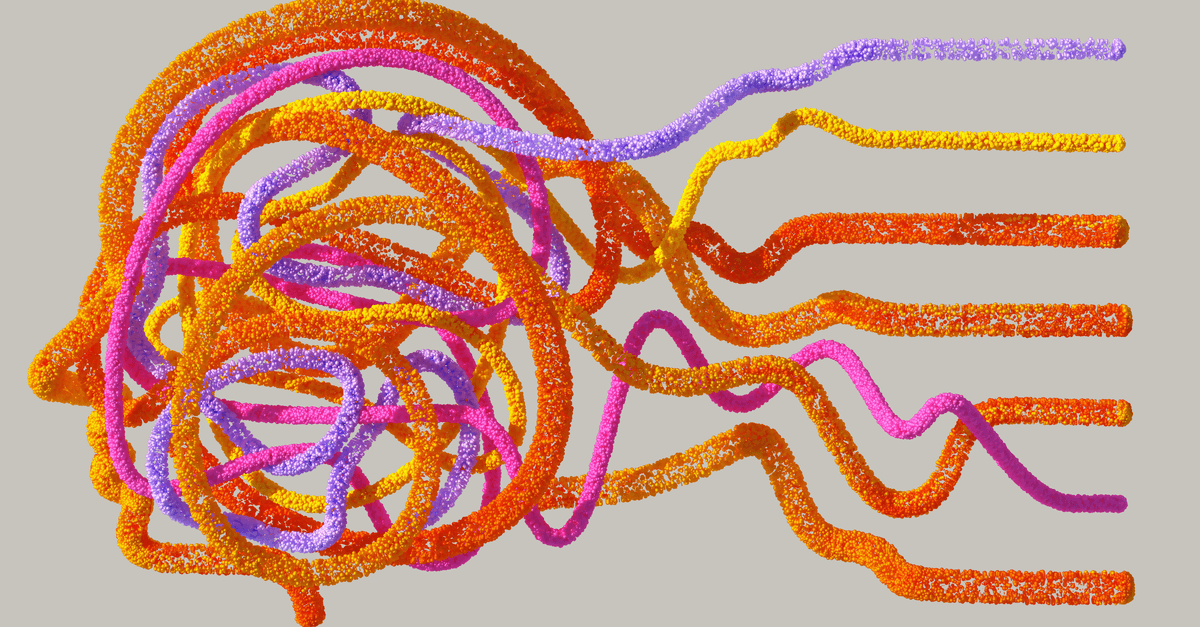
Photo: cottonbro studio / Pexels
Neuralink is a brain-computer interface (BCI) company founded in 2016 by Elon Musk and seven co-founders (most of whom have since left). Its goal is to build a high-bandwidth, fully implanted device that lets the brain communicate directly with computers — starting with helping paralyzed patients regain control of devices, and Eventually, in Musk's framing, achieving a "symbiosis" with AI.
In January 2024, Neuralink implanted its first human patient: Noland Arbaugh, a quadriplegic since a 2016 diving accident. Within weeks, Arbaugh was playing online chess, browsing the web, and beating friends at Mario Kart — all by thinking about moving a cursor.
By early 2025, eight patients had received N1 implants. Neuralink is no longer vaporware. But it's also not alone.
The N1 Implant: What's Inside
The N1 is a coin-sized device (~23 mm diameter, ~8 mm thick) that sits in a recess milled into the skull, beneath the scalp. Key components:
- 1,024 electrodes distributed across 64 ultra-thin polymer threads (16 electrodes per thread).
- Threads are about 5 μm wide — thinner than a human hair — flexible enough to move with brain tissue without scarring.
- Custom ASIC (application-specific integrated circuit) amplifies, digitizes, and processes neural spikes locally.
- Wireless inductive charging and Bluetooth-class radio for data out (no wires through the scalp).
- Battery lasts about a day per charge.
For comparison, the long-dominant academic BCI — the Utah array used by BrainGate — has 96 rigid electrodes on a 4×4 mm silicon base. Neuralink's order-of-magnitude electrode increase is its main technical bet.
The R1 Surgical Robot
You can't insert 64 hair-thin flexible threads by hand. Neuralink built a dedicated surgical robot, R1, to do it.
- A small ~25 mm circular section of skull is removed.
- R1 uses computer vision to map the surface vasculature on the cortex in real time, planning each thread insertion to avoid blood vessels.
- A microscopic needle picks up each thread and inserts it ~3–5 mm into the motor cortex.
- The full insertion takes around 25 minutes; the whole procedure is hours.
Avoiding blood vessels is critical — it's the main thing that distinguishes safe from disastrous BCI surgery, and it's a problem you essentially cannot solve manually with this many threads.
How It Decodes Thought
Neuralink targets the hand knob region of the motor cortex — the patch of brain that fires when you intend to move your hand. The device doesn't read "thoughts" in a mystical sense. It picks up the same electrical signals that would normally drive your fingers.
The decoding pipeline:
- Each electrode samples nearby neurons at high speed.
- The ASIC isolates action potential spikes from background noise.
- The implant streams spike rates wirelessly to a nearby computer.
- Software — typically a mix of Kalman filters, recurrent neural networks, and reinforcement learning — maps spike patterns to intended cursor velocities.
- The user trains the system by imagining moving a hand or finger; the model learns the mapping in a few sessions.
This is the same general approach pioneered by BrainGate (Hochberg, Donoghue, and colleagues, starting in the 2000s). What's new is electrode count and the integrated, wireless, robot-installed package.
What Patients Can Actually Do (2026)
Confirmed, demonstrated capabilities:
- Move and click a computer cursor accurately
- Type via an on-screen keyboard
- Browse the web, send messages, post on X
- Play Mario Kart, chess, Civilization VI
- Control a robotic arm (in lab demos)
What Neuralink cannot currently do:
- Read thoughts as language
- Decode visual imagery
- Restore memory
- Detect consciousness or emotion
- Send signals into the brain (one-way for now)
The Competitive Landscape
Neuralink is the most publicized BCI company, but several competitors are arguably ahead in patient count or regulatory progress.
| Company | Approach | Electrodes | Patients (2026) | Notes |
|---|---|---|---|---|
| Neuralink | Implanted under skull, 64 flexible threads | 1,024 | ~8 | High channel count, wireless |
| BrainGate (academic) | Utah array | 96 | 15+ over decades | Pioneering research consortium |
| Synchron | Stentrode through jugular vein into brain blood vessel | 16 | 10+ | No open-skull surgery; FDA Breakthrough |
| Precision Neuroscience | Flexible surface array (no penetration) | 1,024+ | Multiple | High density, less invasive |
| Onward | Spinal cord stimulation | — | Multiple | Helps paralyzed patients walk |
| Blackrock Neurotech | Utah array commercialized | 96–256 | 40+ historically | Long-term clinical track record |
| Paradromics | High-channel implanted | 1,600+ | 1st human 2025 | Targets speech decoding |
Synchron's Stentrode is particularly interesting: instead of opening the skull, the device is threaded through the jugular vein into a blood vessel on the brain's surface, much like a cardiac stent. It has fewer electrodes (16) but vastly less invasive surgery, and 10+ implanted patients as of 2026.
For background on the underlying organ, see our how the brain works explainer.
What's Next: Blindsight and Two-Way Stimulation
In 2024, Neuralink announced Blindsight, a separate device intended to restore basic vision by stimulating the visual cortex directly. It targets people blind from optic nerve damage (where the eye no longer signals the brain). Animal tests in monkeys reportedly began in 2024; human trials are years away.
The bigger conceptual leap is two-way BCI — not just reading neural activity but also writing to it. That enables:
- Sensory feedback (a robotic hand that "feels")
- Vision restoration
- Potential treatments for depression and OCD (already shown with deep brain stimulation)
- Speculatively: memory augmentation, mood regulation
The FDA, understandably, is much more cautious about devices that can send signals into the brain than ones that only read.
Ethics and Open Questions
- Neural data privacy: Your motor intent signals are the most personal data imaginable. Who owns them?
- Implant permanence: Threads are difficult to remove without damage. What happens if a patient wants out, or the company goes bankrupt?
- Equity: BCIs will cost six figures for years. Reserved for the wealthy or the most severely disabled?
- Cognitive liberty: Where does therapy end and enhancement begin?
For context on how AI systems will partner with such interfaces, see our AI agents explained article.
Beyond Paralysis: The Roadmap
Neuralink's ambition extends far beyond cursor control. Internal roadmaps describe:
- Blindsight — restoring vision via stimulation of visual cortex (announced 2024)
- Motor restoration — direct control of paralyzed limbs via spinal cord stimulation
- Sensory feedback — robotic arm that "feels," by sending signals back to somatosensory cortex
- Speech decoding — direct decoding of intended speech from Broca's area (pioneered by BrainGate consortium)
- Memory augmentation — speculative, but stimulation of hippocampus might enhance learning and recall
The biggest challenge: two-way BCIs (read + write to brain) are far harder than one-way. The FDA approves reading first because the safety profile is better understood. Writing signals into brain tissue risks unintended effects (seizures, unwanted sensations, behavioral changes).
The Competitive Reality
Neuralink isn't alone, and its competitors have advantages in some areas:
- Synchron's Stentrode — no skull surgery, already 10+ patients, FDA Breakthrough status. Lower channel count (16) but less invasive.
- Precision Neuroscience — surface electrode array (no penetration), high density, reaching human trials.
- BrainGate — academic consortium with 15+ patients over decades, proven long-term safety track record.
- Blackrock Neurotech — commercialized the Utah array, 40+ patients historically, most clinical data.
By channel count, Neuralink leads. By invasiveness, Synchron leads. By track record, BrainGate and Blackrock lead. The market is maturing — multiple platforms will likely coexist, each optimized for different use cases and patient preferences.
The Future of BCIs: Timelines and Roadmap
Neuralink's official roadmap, as communicated by Musk and the team, spans the next decade. Understanding realistic timelines separates hype from engineering reality.
2025–2027: Clinical trials expansion. Neuralink plans to implant 50–100 patients with the N1 device, expanding patient selection beyond locked-in syndrome to include other paralysis types. Secondary outcomes will focus on robustness and longevity — how long do threads stay in place, how stable are recordings over years.
2027–2030: Blindsight (reading from visual cortex). Visual restoration is more complex than motor control. The visual cortex has ~100 million neurons. Early prototypes will likely target peripheral vision (a smaller field) before attempting full sight restoration. Neuralink's Blindsight device will still require surgery and implantation in V1 (visual cortex), which carries more risk than motor cortex surgery.
2030+: Spinal cord bridging. Reconnecting motor intent signals around spinal cord injuries by stimulating muscles or spinal cord below the injury site. This would restore limb control rather than just cursor control — the "Holy Grail" of spinal cord injury recovery. But it requires two-way BCIs (reading intent, writing to muscles/cord) with much more complex signal patterns.
Speculative (>2035): Cognitive enhancement. Musk has mentioned memory augmentation and brain-computer symbiosis. These are extremely speculative. Writing signals into the hippocampus or prefrontal cortex could theoretically enhance learning or decision-making — but the risks of unintended behavioral changes are enormous, and regulatory approval would be nearly impossible without decades of safety data.
Source: Neuralink Corporation (2025). "Roadmap and Clinical Trial Protocols." Internal presentation and public statements.
Technical Hurdles: Why BCIs Are Harder Than Most People Realize
Neuralink's success obscures the genuine technical challenges that have stalled BCI development for 20+ years.
Signal Stability. The brain's electrical activity is tiny — a few microvolts. Noise from muscle movement, eye blinks, and electrical equipment in the OR makes recording extremely challenging. Neuralink's solution is to implant the electronics inside the skull, shielding the signal. But recording stability degrades over weeks and months as the brain forms scar tissue around threads.
Cross-talk. With 1,024 electrodes, distinguishing which neuron fired which spike is computationally intensive. If two nearby neurons fire within microseconds of each other, their electrical signatures blur. Spike-sorting algorithms use machine learning to separate them, but this introduces latency (delays) that make real-time control harder.
Non-stationarity. The neural code isn't fixed. As weeks pass and the patient learns to use the device, neurons change their firing patterns. What predicted "move cursor left" on day 1 might only partially predict it on day 30. The decoder must continually adapt — a process called recalibration. Arbaugh spends time most days recalibrating his decoder, or neural activity becomes unreliable.
The Bandwidth Problem. Motor cortex can encode movement in multiple ways. Some neurons represent velocity ("how fast"), others direction, others acceleration. Extracting all that information requires recording from enough neurons and doing enough inference. A crude decoder (Kalman filter) runs fast but captures less information. A sophisticated decoder (deep neural network) captures more but introduces latency that makes real-time control frustrating.
Source: Willett, F. et al. (2023). "A High-Performance Speech Neuroprosthesis." Nature 620, 1031–1037.
Comparison of Invasiveness: Which BCI Approach Wins?
BCIs exist on a spectrum of invasiveness, and the right choice depends on the application:
| Approach | Invasiveness | Electrode Count | Latency | Signal Clarity | Longevity | Notes |
|---|---|---|---|---|---|---|
| Non-invasive (EEG) | Scalp electrode cap | 64–256 | High (100s ms) | Poor | Unlimited | No surgery, but noisy signal. Speech decoding tops out ~100 bits/min. |
| Semi-invasive (ECoG) | Thin grid on cortex surface | 64–256 | Low (10–50 ms) | Good | Good (5+ yrs) | Burr holes, no full surgery. Cleaner than EEG, less invasive than penetrating. |
| Penetrating (Utah array) | Thin silicon spikes into cortex | 96–256 | Very low (<10 ms) | Excellent | Moderate (2–3 yrs) | Excellent signal, but threads encapsulate. Neuralink aims to improve longevity. |
| Invasive (Neuralink N1) | Flexible polymer threads into cortex | 1,024 | Very low (<10 ms) | Excellent | Unknown (testing now) | Highest channel count, but 1,024 requires more management complexity. |
| Vascular (Stentrode) | In blood vessel on brain surface | 16 | Low (20–30 ms) | Good | Good (3+ yrs?) | No burr hole, minimal trauma, but fewer channels. ~10 patients as of 2026. |
For communication restoration, semi-invasive ECoG is currently the most practical balance — it's less invasive than Neuralink but captures far more data than EEG. Synchron's Stentrode offers a middle ground: it avoids skull surgery but has fewer channels.
Neuralink's bet is that 1,024 channels justify the surgical risk. For motor control, they may be right. For long-term implant life (20+ years), that remains to be proven.
Source: Musk, E., et al. (2019). "An Integrated Brain-Machine Interface Platform with Thousands of Channels." Journal of Medical Internet Research 9(e16194).
Ethical and Societal Implications
BCIs raise unprecedented ethical questions that go beyond individual medical benefit.
Neural privacy. Your motor-intent signals are arguably more personal than your genomic data. A bad actor could, in theory, decode your thoughts if they gained access to a BCI recording. Neuralink has not published detailed security protocols. Standard medical data encryption may not be enough for neural data.
Cognitive liberty and coercion. Once you accept a BCI for medical reasons, what stops an employer or government from requiring enhancement? A future society might expect employees to accept cognitive augmentation to stay competitive. This slides from therapy to coercion.
Equity of access. Neuralink N1 implants will cost $100K–$500K initially, accessible only to the wealthy or those with insurance coverage for paralysis. This could entrench inequality: rich patients get restored agency; poor patients don't.
Liability and malfunction. If a BCI fails and a user loses function they've become dependent on, who is liable? If a software bug causes involuntary movements or emotional states, is Neuralink responsible? Existing medical device law provides some clarity, but BCIs are novel enough that precedent is thin.
These are not hypothetical — they are actively debated by bioethicists, and regulators will need to address them as BCIs advance.
Source: Clausen, J., et al. (2024). "Machine Ethics and Neurorights." Frontiers in Neuroscience.
The Mathematics Behind Real-Time Neural Decoding
Decoding motor intent from 1,024 electrodes in real time is computationally intense. The pipeline in milliseconds:
- Signal acquisition (1 ms): Each electrode samples at ~30 kHz. The ASIC detects spikes and streams to the computer.
- Spike detection (2 ms): Algorithms identify action potentials above noise threshold.
- Spike sorting (5 ms): Machine learning classifies which neuron each spike came from (important because nearby neurons' signals overlap).
- Dimensionality reduction (3 ms): 1,024-dimensional firing rates are compressed into a lower-dimensional "neural state" (typically 10–50 dimensions) that correlates with intended movement.
- Decoding (5 ms): A Kalman filter or neural network maps neural state to cursor velocity.
- Prediction (2 ms): Estimate where the cursor should be in 50–100 ms to account for lag.
Total latency: ~20 ms before movement appears on screen. This feels responsive to the user.
The mathematical models:
Kalman filter (BrainGate's approach) models neural firing as a linear system: cursor movement is a linear function of firing rates. Fast, interpretable, but captures only linear relationships.
Recurrent neural networks (RNNs) learn nonlinear dynamics. They model how motor cortex activity evolves over time, capturing internal states that matter for smooth movement. Better performance but more compute-intensive.
Hyperscanning — the newest approach — decodes not just firing rates but also the timing and correlations between neurons. A population code (multiple neurons) is richer than any single neuron. Models like recurrent neural networks or transformers exploit this population structure.
The empirical truth: more complex models improve performance marginally (5–10% more throughput) but introduce latency that can negate the benefit. Neuralink's engineering focuses on finding the sweet spot: complex enough for rich control, fast enough to feel responsive.
Source: Pandarinath, C., et al. (2018). "Inferring Single-Trial Neural Dynamics Using Supervised Learning." Nature Methods, 15(11): 805–815.
Why Brain-Computer Interfaces Have Been "20 Years Away" for 20 Years
BCIs have been promised since the 1990s but took decades to deliver. Understanding this gap is crucial for realistic expectations about Neuralink's timeline.
The "easy" part was actually hard: Reading neural activity is relatively straightforward — neuroscience textbooks describe it in undergrad courses. But translating that to a practical system requires:
Chronic stability: Lab electrodes work for hours; implanted ones need to work for years without degrading. Scar tissue forms around electrodes within weeks, degrading signal quality. Neuralink's flexible threads aim to reduce scarring; BrainGate's work shows recording quality can remain acceptable for 5+ years, but not without careful engineering.
Decoding complexity: Motor cortex has millions of neurons. You're recording from ~1,024 at most. The decoder must infer intent from a tiny sample, requiring sophisticated machine learning and months of calibration. Early BCI users spent hours per week on decoder training; modern systems are faster, but not trivial.
User adaptation: Patients must learn to use the system, much like learning to move a prosthetic. This doesn't happen overnight. Arbaugh practiced for weeks before achieving the impressive feats documented. The brain's plasticity is an asset here — users naturally learn to modulate firing patterns to improve control — but it takes time.
Hardware miniaturization: The first BrainGate system required a room-sized computer, external amplifiers, and connectors through the scalp (infection risk, limited mobility). Shrinking this to a wireless, implanted device took decades. Neuralink's achievement is largely engineering: it built a system you can actually live with.
Why this matters: Timelines in Neuralink's roadmap (Blindsight by 2027, spinal cord bridging by 2030) assume continued progress at this pace. But BCIs have surprised researchers before with unexpected delays. Regulatory bottlenecks, unexpected adverse events, or signal quality degradation could push timelines back 3–5 years.
Source: Collinger, J. L., et al. (2013). "High-Performance Neuroprosthetic Control by an Individual with Tetraplegia." The Lancet, 381(9866): 557–564. BrainGate's milestone paper showing functional multi-degrees-of-freedom control.
Speech Decoding: The Next Frontier Beyond Motor Control
One of the most compelling BCI applications is speech decoding — reconstructing intended words directly from brain activity. For ALS and stroke patients who have lost the ability to speak, this could restore communication.
The challenge is orders of magnitude harder than motor control. Motor cortex is well-organized spatially (adjacent neurons control adjacent hand muscles). Speech areas (Broca's, Wernicke's) are more distributed and abstract. Decoding "I want pizza" isn't reading lip muscle activity — it's extracting semantic intent from a diffuse neural code.
BrainGate's 2023 breakthrough (Willett et al., Nature) demonstrated a high-performance speech neuroprosthesis: a patient with paralysis from ALS, using a 256-electrode array in motor and premotor cortex, achieved a speaking rate of ~15 words per minute with error rates <3%. This is dramatically faster than existing eye-tracking or muscle-twitch interfaces, though still slower than natural speech (~150 words per minute).
The decoder used a large recurrent neural network trained on the patient's brain activity while they attempted to speak specific words. Once trained, the patient could "think" sentences and have them appear on screen with high accuracy.
Neuralink hasn't yet announced speech trials, but it's almost certainly on the roadmap. With 1,024 electrodes, speech decoding performance could theoretically reach 50+ words per minute — closer to conversational speed.
Source: Willett, F. R., et al. (2023). "A High-Performance Speech Neuroprosthesis." Nature, 620: 1031–1037.
Timeline Reality Check: What's Hype, What's Plausible
Separating Musk's rhetoric from engineering reality:
Likely by 2027: 50–100 more N1 patients, expanded paralysis types (not just locked-in), robustness/longevity data, competitive market pressure from Synchron and others.
Plausible by 2030: Blindsight prototype (peripheral vision only), real-world comparison data showing Neuralink vs. competitors, first two-way stimulation trials for sensory feedback.
Speculative by 2030: Spinal cord bridging (requires two-way signal, far more complex), any meaningful number of implants in non-paralyzed users.
Highly speculative (>2035): Cognitive enhancement, memory augmentation, brain-AI symbiosis. These require writing signals into association cortex, years of safety data, and regulatory frameworks that don't yet exist.
The key pattern: each application requires either more channels, faster decoding, two-way stimulation, or longer safety track records. Neuralink has made progress on the first. The others will take time.
Source: Neuralink internal timelines and press statements; cross-checked against BrainGate's historical progress (2004–2026).
Frequently Asked Questions
Q: Can Neuralink read thoughts?
A: No. It reads motor-intent signals from a specific patch of cortex. Inner monologue, mental imagery, and memories are not currently decodable by Neuralink or anyone else.
Q: Is the implant safe?
A: So far, eight humans have received it with no reported serious adverse events. Earlier monkey trials drew criticism over animal welfare. Long-term (decades) safety is unknown.
Q: Did some threads in the first patient detach?
A: Yes. In 2024 Neuralink disclosed that some threads in Arbaugh's implant retracted from his cortex, reducing channel count. They compensated with software improvements, and Arbaugh's performance recovered. Subsequent patients reportedly haven't had the same issue.
Q: How is this different from a cochlear implant?
A: Cochlear implants stimulate the auditory nerve (~22 channels) — one-way signal in. Neuralink reads ~1,024 channels of cortex out. Different organ, different direction, vastly more data.
Q: Who can get a Neuralink implant?
A: As of 2026, only enrolled clinical-trial patients with severe paralysis (ALS, spinal cord injury, brainstem stroke). Commercial availability is years away.
Q: Will Neuralink let you control AI directly?
A: Eventually, in principle — but for now, you control a cursor and use AI through normal software like everyone else.
Sources
- Musk, E. et al. (2019). "An integrated brain-machine interface platform with thousands of channels." Journal of Medical Internet Research.
- Hochberg, L. et al. (2012). "Reach and grasp by people with tetraplegia using a neurally controlled robotic arm." Nature 485, 372.
- Oxley, T. et al. (2021). "Motor neuroprosthesis implanted with neurointerventional surgery improves capabilities for severe paralysis." JNIS.
- Willett, F. et al. (2023). "A high-performance speech neuroprosthesis." Nature 620, 1031.
- Neuralink Corporation (2024). PRIME study and Blindsight announcements.
- FDA Breakthrough Devices Program documentation, Synchron and Neuralink (2022–2024).
Related Articles
Follow new articles
Add SciHub101 to your feed reader to see new science and technology stories.
About the Author
SciHub101 is an independent science and technology publication founded and edited by Buğra Sözeri, a software engineer and app developer based in Türkiye. AI tools assist with drafting and research. Source documentation in the existing archive is uneven, and articles are being reviewed and corrected. The Editorial Team byline identifies editorial responsibility; it does not certify specialist or independent human review. Where we compare products, anything built by our own team is labelled as such — see the editorial guidelines and About page for how corrections and disclosures work.
Related Articles
How Search Engines Work — Inside Google
How Google crawls, indexes, and ranks the web — from PageRank to BERT to AI Overviews — and the rise of AI-powered alternatives.
How LiDAR Works — Laser 3D Mapping
LiDAR fires millions of laser pulses per second to build 3D point clouds. It powers self-driving cars, iPhones, and the discovery of lost Maya cities.
What Is Neuralink? How Brain-Computer Interfaces Actually Work
A device implanted in the brain that lets paralysed patients move computer cursors with their thoughts. Here's how Neuralink and other brain-computer interfaces actually work.
Brain-Computer Interfaces: How Electrodes Read Your Mind
Brain-computer interfaces convert neural signals into digital commands. From Vidal's 1973 coinage to Neuralink's 2024 human implant, here's how BCIs work and what they can and cannot do.
Brain-Computer Interfaces and AI: The Science Behind Neural Prosthetics
AI-powered BCIs are restoring cursor control, handwriting, and speech to people with paralysis. Here is how the decoding works and where it still fails.
The Electroencephalogram (EEG) — How a Psychiatrist Mapped the Brain's Electric Storm — SciHub101
How Hans Berger's secret obsession with telepathy in 1924 produced the EEG—and why those squiggly lines still diagnose epilepsy and decode sleep 100 years later.