Consciousness Explained: The Hard Problem
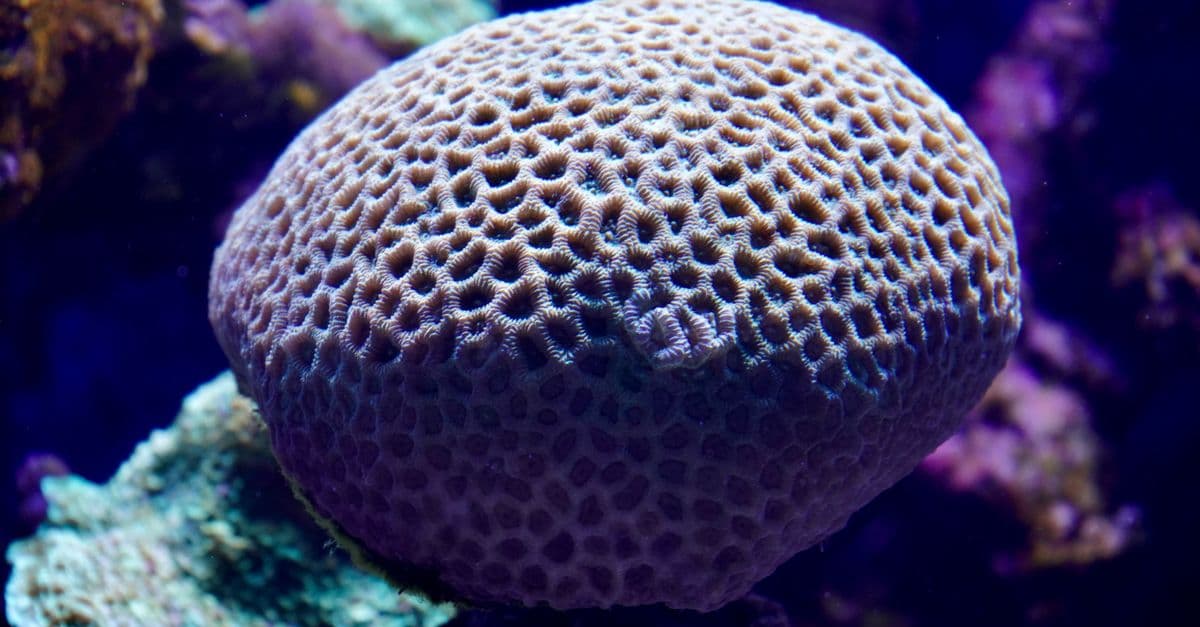
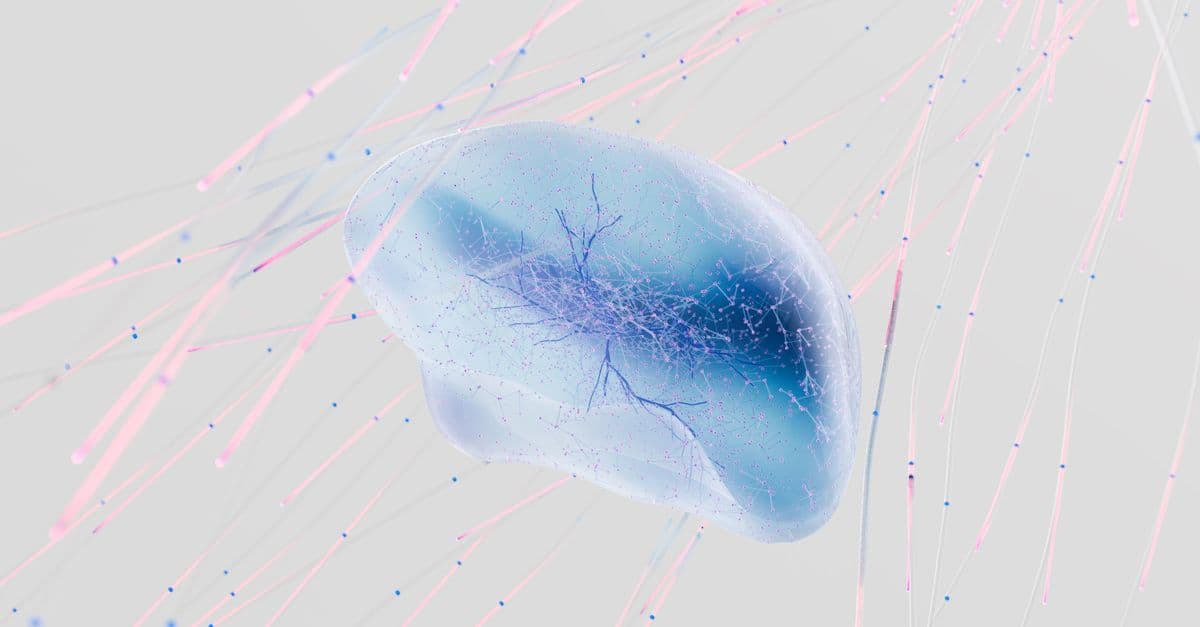
Photo: Жанна Алимкулова / Pexels
Somewhere in the hundred billion neurons of your brain, something remarkable is happening. Not just information processing — that computers can do. Not just behavior — robots can do that. Something else: experience. The redness of red. The sharpness of pain. The particular quality of this moment of reading these words. The fact that there is something it is like to be you.
Educational content, not medical advice. Talk to your doctor before changing any medication, treatment, or routine. Information here reflects current research but every person's situation differs.
This is consciousness. And despite enormous advances in neuroscience, it remains one of the most profound and genuinely unsolved problems in all of science. Why does brain activity produce subjective experience? How does matter become mind?
The Hard Problem vs. The Easy Problems
Philosopher David Chalmers drew a now-famous distinction in 1995 between the "easy" problems and the "hard" problem of consciousness.
The easy problems are things like: How does the brain integrate information from different senses? How does it direct attention? How does it report on its own internal states? These problems are "easy" not because they are trivial — they involve vast scientific complexity — but because they are in principle solvable by explaining mechanisms: how neurons process information, how circuits produce behavior, how feedback loops create reportable representations.
The hard problem is different. Even if we explained all those mechanisms perfectly, something would still seem left unexplained: why does any of this feel like anything? Why doesn't all this information processing happen in the dark, with no inner experience attached? This is the question that makes consciousness uniquely puzzling.
Chalmers formalized this as the problem of qualia — the intrinsic, subjective qualities of experience. The redness of red. The painfulness of pain. These seem irreducible to functional descriptions. No matter how complete your account of the brain's red-processing circuits, you haven't explained why red looks the way it does to you.
Chalmers was not the first to notice the puzzle. In 1974 Thomas Nagel asked "What is it like to be a bat?", arguing that an echolocating animal has a point of view that no amount of objective, third-person description of its sonar system would capture. Frank Jackson's 1982 "Mary's room" thought experiment made a similar point: a scientist who knows every physical fact about colour vision, but has lived her whole life in a black-and-white room, seems to learn something new the first time she sees a ripe tomato. Joseph Levine named the same worry the "explanatory gap" in 1983. What Chalmers added was a clean division of labour that let neuroscientists keep working on the tractable questions while being honest about the one left over.
Why the distinction matters for science
The easy/hard split is not just philosophy-seminar vocabulary. It shapes what experiments can and cannot show. Every brain-imaging study of consciousness ultimately relies on a person (or an animal trained to respond) reporting what they experienced. That means the data are always data about access: what made it into report. Whether the same neural activity is also felt has to be inferred, and different theories make that inference in different ways. This is why two research groups can look at the same scan and disagree about whether it shows consciousness or only the machinery for talking about it.
| Question | "Easy" or "hard"? | What would count as an answer |
|---|---|---|
| How does the brain combine sight and sound into one scene? | Easy | A mechanism of multisensory integration |
| How does attention select one object over others? | Easy | Circuit-level model of selection and gating |
| How do we report "I see red"? | Easy | Pathway from visual cortex to language and motor output |
| What separates wakefulness from dreamless sleep? | Easy (largely) | Measurable changes in brain dynamics |
| Why is seeing red like something at all? | Hard | No agreed form of answer yet |
Neural Correlates of Consciousness
Rather than solving the hard problem head-on, most neuroscientists focus on finding neural correlates of consciousness (NCCs) — the minimal neural activity sufficient for a given conscious experience. This is an empirical program that has made genuine progress.
Key methods include studying patients under anesthesia, patients with disorders of consciousness (coma, vegetative state, locked-in syndrome), binocular rivalry (where two different images fight for conscious perception), and the technique of comparing near-identical stimuli that do and do not reach conscious awareness.
These studies have identified several consistent findings:
- Conscious perception tends to involve widespread cortical activation and long-range synchrony, particularly in frontoparietal networks.
- Posterior cortical areas (visual, parietal, temporal) appear especially important for the specific content of consciousness.
- Prefrontal areas seem important for reportability and access consciousness — the ability to reflect on and report experience — though whether they are essential for consciousness itself is debated.
- Thalamocortical connectivity is strongly associated with conscious states: general anesthesia and deep sleep reduce thalamocortical communication, while conscious wakefulness and REM sleep are associated with its high activity.
Anesthesia is a particularly revealing test case, because it switches experience off and on reliably in millions of operations a year, yet nobody can fully say how. Drugs as chemically different as propofol, ketamine and the inhaled ethers all end in unconsciousness, which suggests they converge on a shared change in large-scale brain dynamics rather than on a single receptor. We cover that puzzle in why anesthesia is still a mystery.
Measuring consciousness without asking
One practical spin-off of this research is the attempt to detect consciousness in people who cannot report it. In the "zap and zip" approach developed by Marcello Massimini, Giulio Tononi and colleagues, a pulse of transcranial magnetic stimulation is delivered to the cortex and the resulting EEG echo is compressed like a computer file. The more complex and less compressible the response, the higher the score, known as the perturbational complexity index (PCI). In published validation work, PCI has separated wakefulness from deep sleep and anesthesia, and has flagged some patients diagnosed as unresponsive who nevertheless show brain responses typical of conscious people. It is an example of how theory-driven measures can matter clinically even while the hard problem stays open.
Split-brain research offers another window. When the corpus callosum is cut to treat severe epilepsy, the two hemispheres can be shown different images, and each responds as if only it saw its own. The Sperry split-brain experiment raised the uncomfortable question of whether one skull can house two streams of experience, a question every theory below has to answer.
Integrated Information Theory (IIT)
The most mathematically developed theory of consciousness is Integrated Information Theory (IIT), proposed by neuroscientist Giulio Tononi. IIT starts from the phenomenological properties of consciousness — that it is unified, definite, private, and structured — and asks what physical properties could produce these features.
IIT proposes that consciousness is identical to a system's capacity to integrate information in a way that cannot be decomposed into independent parts. This is measured by a quantity called phi (Φ) — roughly, the amount of information generated by a system as a whole above and beyond its parts. High phi systems have rich, irreducible, unified experience; low phi systems do not.
IIT makes some striking and controversial predictions: it implies that some non-biological systems could be conscious (if they have high phi), while some biological systems might not be (cerebellum, with its largely feedforward connectivity, may have low phi). It also implies consciousness comes in degrees and is potentially present in simple systems to small extent — a view sometimes called panpsychism.
IIT has gone through several versions, from Tononi's 2004 proposal to "IIT 3.0" in 2014 and "IIT 4.0" in 2023, each refining how Φ is defined. Its supporters, including Christof Koch, point to its rare willingness to make counterintuitive, committed claims, and to the fact that it predicts consciousness should depend heavily on posterior "hot zone" cortex whose dense recurrent wiring scores high on integration.
Critics note that IIT is computationally intractable (phi cannot be calculated for systems larger than a handful of nodes), and that some of its predictions conflict with intuition (a simple grid of logic gates might outrank a sleeping human).
The criticism turned unusually public in September 2023, when an open letter signed by 124 scholars and posted to the PsyArXiv preprint server argued that IIT should be labelled pseudoscience, objecting in particular to press coverage describing it as a leading, empirically tested theory. The letter itself drew sharp pushback, including from researchers who are not IIT supporters, such as Anil Seth, who argued that the same testability complaint could be made about rival theories. Scientific American's report gives a balanced account of the episode.
Global Workspace Theory (GWT)
A competing theory — Global Workspace Theory — was proposed by cognitive scientist Bernard Baars and expanded neuroscientifically by Stanislas Dehaene and Jean-Pierre Changeux.
GWT proposes that the brain contains many specialized, parallel processors operating unconsciously. Consciousness arises when information is broadcast globally via a "global workspace" — a large-scale, widely-connected cortical network that makes information available to many cognitive systems simultaneously. This global broadcast is what allows information to influence behavior, memory, reasoning, and verbal report.
GWT aligns well with empirical findings: conscious perception is associated with a characteristic neural event — the P3b wave in EEG and a late (>300 ms) burst of frontoparietal activation in imaging studies — that represents the global ignition event.
The neuronal version of the theory, usually called Global Neuronal Workspace Theory (GNWT), makes a specific physiological claim: when a stimulus crosses into awareness, activity in prefrontal and parietal neurons with long-range axons suddenly "ignites" into a self-sustaining, brain-wide state. Below threshold, the same stimulus produces only local, fading activity. Dehaene's lab has tested this with masking, in which a briefly flashed word is hidden by a following pattern: identical stimuli are sometimes seen and sometimes not, and the seen trials are the ones that show late, widespread ignition.
GWT's limitation is that it addresses access consciousness (availability of information for global use) but may not fully address phenomenal consciousness (the felt, qualitative character of experience). Critics argue that global broadcasting might occur without any experience attached — a sophisticated zombie system.
The Adversarial Collaboration: Putting Two Theories to the Test
For most of its history the science of consciousness has suffered from a familiar problem: each theory's supporters ran experiments designed by themselves, interpreted by themselves, and usually found support for themselves. In 2019 the Templeton World Charity Foundation funded a different approach, the "adversarial collaboration." Proponents of rival theories agree in advance on experiments whose outcomes the theories predict differently, and a neutral team runs them.
The first such project, the Cogitate Consortium, pitted IIT against GNWT. Stanislas Dehaene represented the workspace side; Giulio Tononi, Melanie Boly and Christof Koch represented IIT; Liad Mudrik, Michael Pitts and Lucia Melloni led the design and management. The protocol was preregistered, meaning predictions and analyses were fixed before data collection. In total 256 participants viewed clearly visible images (faces, objects, letters and symbols) shown for different durations, while their brains were recorded with fMRI, MEG and intracranial EEG across multiple laboratories, according to Scientific American's coverage.
Initial results were presented in June 2023, and the peer-reviewed paper appeared in Nature on 30 April 2025, per the project's own page.
| Prediction | Theory | Outcome reported |
|---|---|---|
| Sustained synchronization within posterior cortex for as long as an image is seen | IIT | Not observed |
| Conscious content decodable in posterior (visual, temporal) cortex | IIT | Largely supported |
| Prefrontal "ignition" when a stimulus disappears from view (offset) | GNWT | Largely absent |
| Conscious content represented in prefrontal cortex | GNWT | Present for some content, weaker than predicted for other dimensions |
The headline verdict was effectively a draw: each theory had predictions confirmed and core predictions challenged. Information about conscious content was found in visual, ventrotemporal and inferior frontal cortex, with sustained responses in occipital and lateral temporal regions tracking stimulus duration. Co-lead Liad Mudrik summarized one result plainly: the team had falsified one of IIT's predictions. GNWT's prediction of an offset signal in prefrontal cortex was also largely missing.
The 2023 presentation also settled a famous wager. In 1998 Koch had bet Chalmers that within 25 years neuroscientists would pin down the neural basis of consciousness. At the June 2023 meeting, with the Cogitate data inconclusive, Koch conceded.
The lasting value of the project may be methodological rather than any particular verdict. It showed that theory proponents can agree in advance on what would count against them, and that large, multi-site, multi-method studies can be run on consciousness the way they are run on other hard problems in biology. Follow-up collaborations testing other pairs of theories, including higher-order and recurrent-processing accounts, have been funded under the same programme.
Higher-Order Theories and Predictive Processing
Higher-order theories propose that consciousness requires a mental state to be represented by another mental state — a "higher-order" representation that takes the first-order state as its object. On this view, unconscious perception involves first-order processing; conscious perception involves a higher-order meta-representation of that processing.
Philosophers David Rosenthal and Peter Carruthers developed classic versions; neuroscientists Hakwan Lau and Joseph LeDoux have pushed empirical forms that tie the higher-order representation to prefrontal cortex. A key source of evidence is blindsight: patients with damage to primary visual cortex who insist they see nothing in part of the visual field, yet guess the location or motion of objects there well above chance. Higher-order theorists read this as first-order visual processing without the meta-representation that would make it conscious. Their theories predict that disrupting prefrontal metacognition should change experience itself, not only the ability to report it, which is exactly where they clash with posterior-cortex theories such as IIT.
The predictive processing or predictive coding framework, developed by Karl Friston and others, offers another perspective. In this model, the brain is fundamentally a prediction machine — constantly generating predictions about sensory input and updating them based on prediction error. Consciousness might arise from the brain's model of itself as a predictor — what Anil Seth calls "controlled hallucination." On this view, your experience of the world is not a direct read of reality but a best guess, constructed from predictions and shaped by expectation.
Seth extends this to bodily self-experience: your sense of having a body, of being a self, is also a prediction — a controlled hallucination that is highly adaptive but not a direct perception.
Predictive processing is less a single theory of consciousness than a general framework for brain function, so it does not by itself say which predictions are felt. Its strength is explanatory reach: it fits illusions, placebo responses, hallucinations and the influence of expectation on pain. Its weakness, critics say, is that it is flexible enough to explain almost any result after the fact.
The theories side by side
| Theory | Key figures | What consciousness is | Where in the brain | Main criticism |
|---|---|---|---|---|
| Global (Neuronal) Workspace | Baars; Dehaene, Changeux | Global broadcast of information to many systems | Frontoparietal network | Explains access, maybe not experience |
| Integrated Information | Tononi; Koch | Integrated cause-effect structure (Φ) | Posterior "hot zone" cortex | Φ uncomputable; panpsychist implications |
| Higher-order | Rosenthal; Lau, LeDoux | A state represented by another state | Prefrontal cortex | Seems to over-intellectualize experience |
| Predictive processing | Friston; Seth; Clark | The brain's best-guess model of world and body | Distributed hierarchies | Very flexible; hard to falsify |
| Recurrent processing | Lamme | Feedback loops within sensory cortex | Sensory cortex | May blur conscious and unconscious processing |
The Binding Problem
One specific aspect of the hard problem is the binding problem: how does the brain unify diverse, spatially distributed neural processes into a single, unified conscious experience? When you see a red ball rolling, color, shape, motion, and location are processed in different cortical areas. Yet you experience a single, unified object. How?
Synchronous oscillations — particularly in the gamma frequency band (30–80 Hz) — have been proposed as a binding mechanism. When neurons processing different aspects of the same object fire in synchrony, they may become bound together in a unified representation. While there is supporting evidence, the role of gamma synchrony in binding remains debated.
Some binding happens before awareness at all. Experiments on illusory conjunctions, pioneered by Anne Treisman in the 1980s, showed that when attention is overloaded, people sometimes report a red X and a green O when they were actually shown a green X and a red O. Features can float free of the objects they belong to, which suggests binding is an active process that attention normally completes.
Free Will, Timing and the Self
Consciousness research brushes against other old questions. Benjamin Libet's experiments in the 1980s found that a slow electrical build-up called the readiness potential begins several hundred milliseconds before people report deciding to move. The finding is often presented as proof that the brain decides before "you" do, but later work suggests the readiness potential may partly reflect background neural noise reaching a threshold, not a hidden decision. The Libet experiment is a good case study in how easily a measurement can be over-interpreted.
The sense of self is also not a single thing. Researchers distinguish a minimal bodily self (the feeling that this body is mine, which rubber-hand and full-body illusions can manipulate), a narrative self built from memory, and the self-referential thought associated with the default mode network. Each can be disrupted separately by brain injury, drugs or meditation, which suggests that "the self" is a bundle of processes rather than a single inner observer.
Consciousness Beyond Humans and Brains
If consciousness is a product of certain kinds of neural organization, it should appear in other animals with similar organization, and perhaps in very different brains too. Octopuses, whose neurons are spread largely through their arms, solve puzzles and show play-like behaviour; how octopus intelligence works shows how unfamiliar a non-human mind can be. In 2024 a group of researchers issued the New York Declaration on Animal Consciousness, arguing there is at least a realistic possibility of conscious experience in all vertebrates and many invertebrates, including insects and cephalopods.
Artificial systems raise the same question from the other side. Large language models produce fluent first-person talk about feelings, but that output is trained on human text, so it is weak evidence either way. Theories give different verdicts: functionalist theories such as GNWT leave the door open for a machine with the right architecture, IIT says that conventional digital computers have very low Φ regardless of what they compute, and biological views say silicon is the wrong substrate. Physicist Roger Penrose has gone further, arguing with Stuart Hameroff that consciousness depends on quantum processes in neuronal microtubules; Roger Penrose's profile covers why most neuroscientists remain unconvinced.
Common Misconceptions
- "Science has no idea what consciousness is." Science has strong, replicated findings about the conditions under which consciousness appears and disappears. What it lacks is an agreed explanation of why those conditions are accompanied by experience.
- "We only use 10% of our brain, and consciousness is the rest." False. Imaging shows activity throughout the brain, and the cerebellum, which contains most of the brain's neurons, can be badly damaged without abolishing consciousness.
- "Consciousness lives in one spot." No single area has been shown to be both necessary and sufficient. The debate is about which networks, not which point.
- "Dreams prove consciousness is independent of the senses." Dreams show that experience can be generated internally, but they still depend on the same cortical machinery; see dream science.
- "The adversarial collaboration proved IIT wrong." It challenged specific predictions of both theories it tested. Neither side abandoned its theory.
Does the Hard Problem Have a Solution?
There are broadly three positions:
Materialism/physicalism — consciousness is entirely reducible to physical processes; the hard problem will eventually dissolve with sufficient scientific progress, or there is no genuine problem beyond explaining the mechanisms.
Dualism — mind and matter are fundamentally distinct; consciousness cannot be fully reduced to physical processes. This is the position Chalmers himself defends (though in a sophisticated "property dualism" form rather than the Cartesian variety).
Illusionism — the sense that there is a hard problem is itself an illusion; subjective experience does not have the intrinsic properties we attribute to it. Philosophers like Daniel Dennett and Keith Frankish argue that our intuitions about qualia are systematically misleading.
There is, as yet, no scientific consensus. The hard problem remains genuinely open.
Key Takeaways
- The hard problem of consciousness — why brain processes produce subjective experience — remains genuinely unsolved and distinct from the "easy" problems of explaining cognitive mechanisms.
- Neural correlates of consciousness research has found that conscious perception involves widespread cortical activation, frontoparietal networks, and thalamocortical synchrony.
- Integrated Information Theory (IIT) identifies consciousness with integrated information (phi) and implies it comes in degrees, potentially even in simple systems.
- Global Workspace Theory identifies consciousness with the global broadcast of information across the cortex, aligning well with empirical data on late frontoparietal ignition.
- The predictive processing framework treats consciousness as a "controlled hallucination" — the brain's best-guess model of itself and the world.
- Major philosophical positions — materialism, dualism, and illusionism — disagree fundamentally on whether the hard problem has a solution.
FAQ
Q: What is the difference between access consciousness and phenomenal consciousness? A: Access consciousness means information is available for reasoning, report and guiding behaviour. Phenomenal consciousness is the felt quality of experience, what it is like to be in a state. Global workspace theory mainly explains access; the hard problem concerns phenomenal consciousness.
Q: Could a computer be conscious? A: It depends on the theory. Global workspace accounts allow it if a system implements global broadcasting. IIT says ordinary digital computers have very low integrated information whatever they compute. Biological naturalists such as John Searle say consciousness needs specific biological properties. There is no consensus.
Q: What did the 2023–2025 adversarial collaboration find? A: The Cogitate Consortium tested IIT against global neuronal workspace theory in 256 participants using fMRI, MEG and intracranial EEG. IIT's predicted sustained posterior synchronization was not seen, and GNWT's predicted prefrontal signal at stimulus offset was largely absent. Both theories survived, each with damaged predictions.
Q: What happens to consciousness during sleep? A: During deep slow-wave sleep, experience is largely absent or minimal. During REM sleep it returns as dreaming, typically vivid and emotional, with reduced awareness that you are dreaming. The shift tracks reactivation of thalamocortical activity.
Q: Is there evidence that animals are conscious? A: The 2012 Cambridge Declaration on Consciousness concluded that many non-human animals, including all mammals and birds, have the neurological substrates for conscious experience. The 2024 New York Declaration extended a "realistic possibility" of experience to all vertebrates and many invertebrates. Evidence is weaker the further an animal's nervous system is from ours.
Q: What is the philosophical zombie thought experiment? A: A philosophical zombie is a hypothetical being physically identical to a conscious human but with no experience at all. Chalmers argues that because such a being seems conceivable, consciousness is not logically entailed by physical facts. Critics reply that zombies are not truly conceivable, or that the argument shows something about our concepts rather than about reality.
Sources
- Scientific American, "Where does consciousness come from? Two neuroscience theories go head-to-head" (2025): https://www.scientificamerican.com/article/where-does-consciousness-come-from-two-neuroscience-theories-go-head-to-head/
- ARC-COGITATE project page on the Nature publication (Cogitate Consortium, 2025, doi:10.1038/s41586-025-08888-1): https://www.arc-cogitate.com/msp-1
- Scientific American, "Prominent consciousness theory is slammed as bogus science" (2023): https://www.scientificamerican.com/article/prominent-consciousness-theory-is-slammed-as-bogus-science/
- Chalmers, D. (1995). Facing up to the problem of consciousness. Journal of Consciousness Studies, 2(3), 200–219.
- Nagel, T. (1974). What is it like to be a bat? The Philosophical Review, 83(4), 435–450.
Read next:
Follow new articles
Add SciHub101 to your feed reader to see new science and technology stories.
About the Author
SciHub101 is an independent science and technology publication founded and edited by Buğra Sözeri, a software engineer and app developer based in Türkiye. AI tools assist with drafting and research. Source documentation in the existing archive is uneven, and articles are being reviewed and corrected. The Editorial Team byline identifies editorial responsibility; it does not certify specialist or independent human review. Where we compare products, anything built by our own team is labelled as such — see the editorial guidelines and About page for how corrections and disclosures work.
Related Articles
How Viruses Work: From Infection to Replication
Viruses are not quite alive, yet they've shaped every living thing on Earth. Here's how they hijack your cells and replicate themselves from the inside out.
How Language Works in the Brain
Language is the most complex thing the human brain does. Understanding how neurons transform thought into speech, and speech back into thought, reveals what makes us uniquely human.
How the Brain Works — Neuroscience Overview
Neurons, action potentials, brain regions, plasticity, and the science behind consciousness — a clear neuroscience primer.
The Aging Brain: How Cognition Changes as We Get Older
Your brain peaks at different ages for different skills, and some abilities actually improve with age. The neuroscience of brain aging is far more nuanced than the simple story of decline.
How Sleep Affects the Brain: The Science of Why You Need It
Sleep feels passive, but your brain is doing some of its most critical work while you're unconscious — consolidating memories, regulating emotion, and possibly clearing waste.
How the Human Brain Actually Works — Neurons, Networks, and Consciousness
Your brain has 86 billion neurons firing at 1,000 trillion connection points. Here's a tour of how it actually generates everything you think, feel, and remember.