Dream Science: Why the Brain Creates Stories at Night
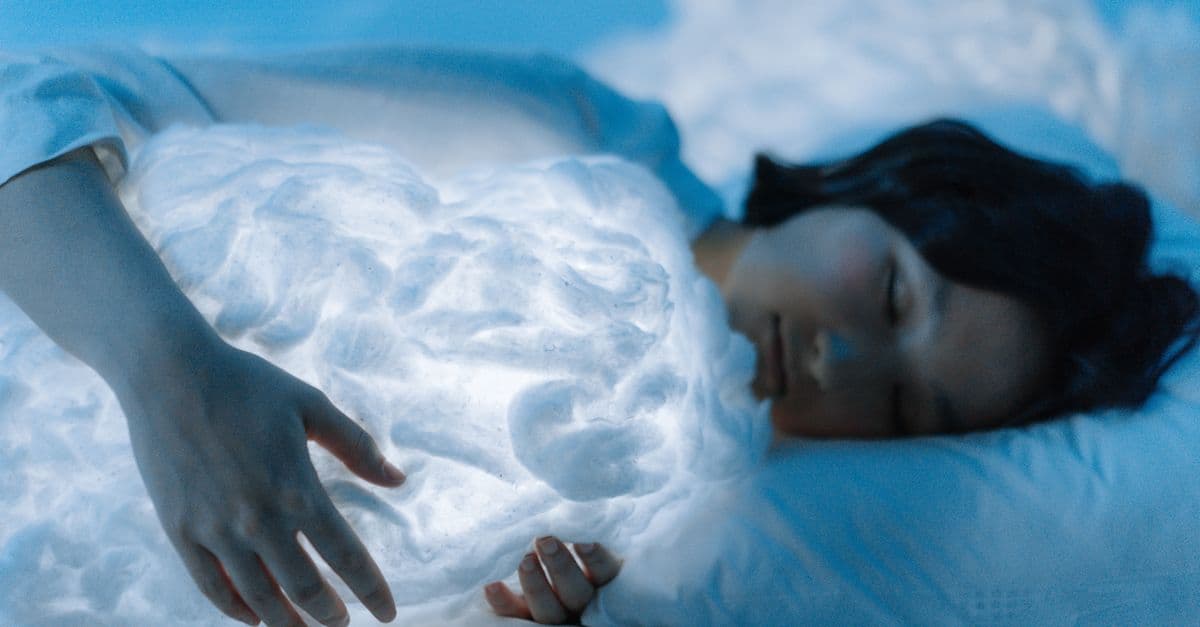
Photo: Ron Lach / Pexels
Every night, a sleeping brain assembles fragments of memory, emotion, and sensory noise into something that feels like a coherent, if strange, narrative. Researchers do not have one settled answer for why. Instead, four competing but partly compatible theories, memory consolidation, emotional regulation, evolved threat simulation, and the cortex narrating random brainstem signals, each explain part of what happens during rapid eye movement (REM) sleep and the non-REM stages around it. This article walks through the evidence for each, where they conflict, and what the data actually says about nightmares, lucid dreaming, and the old idea that dreams have hidden symbolic meaning.
What happens in the brain during a dream
Sleep is not one uniform state. It cycles through stages of light non-REM sleep, deep slow-wave sleep, and REM sleep roughly every 90 minutes, with REM periods getting longer as the night progresses. Most vivid, narrative dreaming happens during REM, though non-REM sleep produces its own dream-like mentation, usually shorter and less story-like.
During REM sleep, the brainstem fires bursts of activity that travel up into the cortex, the outer layer of the brain responsible for perception, memory, and reasoning. At the same time, the body is largely paralyzed (a mechanism called REM atonia) so that the muscle commands generated during a dream do not get acted out. Brain imaging during REM shows heightened activity in the amygdala (the brain's threat and emotion processor) and limbic structures, alongside reduced activity in the dorsolateral prefrontal cortex, the region responsible for logical planning and self-monitoring. That imbalance is a large part of why dreams feel emotionally intense but rarely bother with logical consistency: the part of the brain that would normally say "wait, this doesn't add up" is partially offline.
One of the more counterintuitive findings from sleep neuroscientist Matthew Walker's lab at UC Berkeley is that REM sleep is the only time in the 24-hour cycle when the brain is completely free of noradrenaline, the stress-related neurochemical that spikes during anxiety and threat. Walker's research group has proposed that this noradrenaline-free window lets the brain reactivate emotionally charged memories and strip the visceral stress response from them, effectively processing the memory without re-living the panic. This is sometimes called "sleep to forget, sleep to remember" (Walker & van der Helm, 2009, Psychological Bulletin) Walker Lab, UC Berkeley.
The four leading theories of why we dream
No single lab or paper "solved" dreaming. Instead, four research traditions have each accumulated real evidence, and they are not mutually exclusive. Think of them less as competing answers and more like four different lenses pointed at the same object, each catching a different part of it.
Memory consolidation: the brain replaying the day
The clearest experimental evidence for a dream-adjacent function comes from memory research, much of it not even in humans. In a landmark 1994 study published in Science, neuroscientists Matthew Wilson and Bruce McNaughton recorded "place cells" (neurons that fire when a rat is in a specific location) in the hippocampus of rats running a maze. When the rats fell asleep afterward, the same sequences of place cells fired again, in the same order, as if the rats were mentally re-running the maze Wilson & McNaughton, Science, 1994. Follow-up work by Kenway Louie and Matthew Wilson later showed the replay could occur at compressed timescales during REM sleep specifically, and more recent reviews describe how this hippocampal replay gradually transfers information into longer-term cortical storage, a process called systems consolidation Nature Neuroscience, 2019.
This is where the "sleep helps you learn" claim actually comes from, and it is one of the better-supported ideas in sleep science: slow-wave (deep, non-REM) sleep appears to stabilize newly learned facts and skills, while REM sleep appears to be more involved in integrating those memories with existing emotional and associative networks. Dreaming, on this view, is what memory reactivation feels like from the inside when it happens to cross the threshold into consciousness.
Emotional regulation: taking the sting out of the day
The second strand of evidence, also largely from Walker's lab, focuses on emotion rather than fact-memory. In functional MRI studies, subjects who viewed emotionally disturbing images, then slept and had REM sleep before viewing them again, showed reduced amygdala reactivity and reduced self-reported distress compared to subjects who stayed awake between viewings Walker & van der Helm, Psychological Bulletin, 2009. The interpretation is that REM sleep dreaming reprocesses the emotional content of the day's experiences and files it away with less charge attached, which is also the theoretical basis for why sleep deprivation is linked to worse next-day emotional reactivity and why chronic REM disruption shows up in some anxiety and mood disorders.
This does not mean every dream is therapeutic. It means the mechanism that plausibly does emotional housekeeping runs during the same sleep stage where vivid dreaming happens, which is suggestive rather than proof that the dream content itself is doing the regulating.
Threat simulation: an ancient rehearsal space
Finnish cognitive neuroscientist Antti Revonsuo proposed a very different explanation grounded in evolutionary biology rather than clinical neuroscience: the threat simulation theory (TST). Revonsuo argued that dreaming is an ancient biological defense mechanism, selected for because it let ancestral humans repeatedly rehearse recognizing and escaping dangerous situations in a low-cost virtual environment before facing them for real Revonsuo, Behavioral and Brain Sciences, 2000.
The theory generates testable predictions, which is part of why it has held up as a serious contender rather than pure speculation. Content analysis of large dream diaries has found that a majority of dreams (in some samples, roughly two-thirds of recurrent dreams) contain at least one threatening event aimed directly at the dreamer, and the dreamer typically responds with a realistic defensive or evasive action rather than a fantastical one Valli & Revonsuo, Consciousness and Cognition, 2005. A companion study on the dreams of children who had experienced real-world trauma, including children in a Kurdish refugee camp near an active conflict zone, found elevated and more severe threat content compared to non-traumatized children, consistent with the idea that a genuinely dangerous waking environment recalibrates the brain's threat-simulation system upward Valli et al., Consciousness and Cognition, 2005.
Critics point out that TST is harder to reconcile with the large share of everyday dreams that are mundane rather than threatening, and some content-analysis studies designed to directly test the theory found lower rates of threat content than TST would predict. The debate is unresolved, and Revonsuo's own papers acknowledge the theory remains "much debated" within dream research.
Activation-synthesis: the cortex narrating noise
The oldest of the four modern theories comes from Harvard psychiatrists J. Allan Hobson and Robert McCarley, who proposed the activation-synthesis hypothesis in 1977. Their model starts from a more mechanical observation: during REM sleep, neurons in the brainstem (specifically the pons) fire in essentially random bursts, sending signals up to the cortex with no inherent meaning attached Hobson & McCarley, 1977, summarized at Wikipedia. The cortex, which is built to find patterns and construct narrative out of incoming signals, does what it always does: it synthesizes a story to explain the input it's receiving, using whatever memories, faces, and associations happen to be available. On this account, the strange, illogical, occasionally nonsensical quality of dreams is not a bug to be interpreted symbolically, it is the direct signature of a story-generating cortex trying to make sense of essentially meaningless noise. Hobson was explicit that this was a departure from psychoanalytic dream theory, which treated dream content as a disguised expression of unconscious wishes.
Where the theories agree, and where they genuinely conflict
These four explanations are not simply four names for the same finding. They make different, sometimes incompatible predictions, and understanding where they clash is more useful than pretending dream science has settled into one tidy consensus.
Memory consolidation and activation-synthesis disagree about whether dream content is meaningful at all. Consolidation theory implies dreams draw on specific, recently encoded memories being replayed and reorganized. Activation-synthesis implies the brainstem signal is essentially arbitrary and any resemblance to yesterday's events is the cortex grabbing whatever associations are lying around, not evidence of a targeted memory process. Both can point to real data: hippocampal replay studies support the former, and the sheer bizarreness of much dream content (flying, talking animals, dead relatives appearing alive) is hard to explain as pure memory replay and fits the latter more comfortably.
Threat simulation and the continuity hypothesis (the idea, associated with dream researcher G. William Domhoff, that dream content mirrors waking-life concerns rather than serving any specialized evolved function) disagree about whether dreaming needed to evolve a dedicated purpose at all. Domhoff's four-decade content-analysis project, built on tens of thousands of coded dream reports, found strong continuity between a dreamer's real relationships, worries, and interests and what shows up in their dreams. He and others have argued this continuity is better explained as a side effect of a brain that keeps processing personally relevant information across states of consciousness, not evidence of a dedicated threat-rehearsal module Domhoff, ResearchGate summary. Revonsuo would respond that continuity and specialized threat rehearsal are not mutually exclusive; a system built to simulate danger will naturally draw its material from real dangers and worries the dreamer actually has.
Do dreams have symbolic meaning, the way Freud claimed?
Mainstream sleep science has largely moved away from Freud's claim that specific dream symbols (a house standing in for the body, a journey standing in for life change) carry universal hidden meanings. Modern researchers instead treat dream content as informative about a person's memory, emotional state, and concerns in a much more direct, individualized way, closer to what the continuity hypothesis proposes than to symbolic decoding.
Nightmares, lucid dreaming, and the limits of what we can measure
Two edge cases reveal both how far dream research has come and how much is still unmeasured.
Nightmares are far more common than most people assume, and most nightmares are not a disorder. A 16-country study published in the Journal of Sleep Research found frequent dream recall in just over half of participants and frequent nightmares reported by roughly 7 to 11 percent, depending on the year sampled Bolstad et al., Journal of Sleep Research, 2026. Separately, the American Academy of Sleep Medicine estimates that between 50 and 85 percent of adults report at least occasional nightmares, while nightmare disorder, a clinical diagnosis requiring frequent, distressing nightmares that impair functioning, affects an estimated 2 to 8 percent of adults American Academy of Sleep Medicine fact sheet. The gap between "occasionally has a bad dream" and "has a diagnosable sleep disorder" is large, and most nightmares do not need clinical intervention.
Lucid dreaming, being aware that you are dreaming while still inside the dream, was long dismissed by some scientists as unverifiable, until psychophysiologist Stephen LaBerge demonstrated in 1981 that lucid dreamers could signal their lucidity in real time using pre-agreed eye movement patterns detectable on an EOG (electro-oculogram) during confirmed REM sleep LaBerge, ResearchGate. That signal-verification method is still the field's gold standard. A 2025 study in Neuroscience of Consciousness, pooling data from labs including Radboud University, the Max Planck Institute, and Stanford, used the same left-right-left-right eye-signal protocol to study the electrophysiological signature of lucidity, finding distinct activity patterns compared to ordinary REM dreaming Neuroscience of Consciousness, 2025. A separate 2024–2025 multi-center study using combined cognitive-sensory training and wearable EEG reported inducing signal-verified lucid dreams in a meaningful share of first-time participants within a couple of nights in a laboratory setting, though induction rates vary substantially by method and population bioRxiv, 2024.
Why do dreams feel so illogical while you're having them?
The dorsolateral prefrontal cortex, the brain region most responsible for critical judgment and reality-testing, is significantly less active during REM sleep than during waking. Without that region running at full strength, a dreaming brain accepts implausible events (flying, shape-shifting rooms, dead people appearing alive) without flagging them as wrong, which is why the same dream that felt completely normal at 3 a.m. sounds absurd once you're awake and that prefrontal circuitry comes back online.
Can what you eat or when you sleep change your dreams?
Sleep researchers have documented that dream recall and vividness correlate with sleep architecture: more time in REM sleep late in the night (when REM periods lengthen) is associated with more, and more narratively developed, dream reports upon waking. Fragmented sleep, alcohol before bed, and certain medications that suppress REM sleep are all associated with reduced dream recall, though the underlying content-shaping effects of specific foods remain largely unsubstantiated by controlled research and are better treated as folklore than established science.
Do animals dream?
Researchers cannot ask an animal what it experienced, but the Wilson and McNaughton hippocampal replay findings in rats, later extended by other labs studying songbirds and other species, show that non-human brains reactivate structured, sequential neural patterns from waking experience during sleep. Whether that reactivation is accompanied by any subjective experience comparable to human dreaming is a question neuroscience cannot currently answer, since it depends on the nature of animal consciousness itself, not just on measurable brain activity.
Common misconceptions about dreaming
Dreams predict the future. No mechanism in sleep neuroscience supports precognition. Apparent "predictive" dreams are much better explained by confirmation bias (remembering the hits and forgetting the vastly more numerous misses) and by the fact that dream content already draws on real anxieties and probabilities the dreamer is aware of, which sometimes come true simply because they were realistic concerns to begin with.
Everyone dreams every night, some people just don't remember. This part is actually well supported: REM sleep occurs in every typical sleep cycle regardless of recall, and the 16-country dream-recall study cited above measured recall rates, not dreaming rates, precisely because dreaming itself is understood to be near-universal across a night's sleep even when memory of it is not.
A dream about something means you secretly want that thing (classic Freudian wish-fulfillment). Modern content-analysis research, including Domhoff's continuity-hypothesis work, finds dream content maps much more directly onto a person's actual daytime concerns, relationships, and emotional state than onto disguised, symbolic wishes. The wish-fulfillment framework has not held up well against decades of quantitative dream-diary analysis.
Only humans dream. As above, this is not something science can currently confirm or rule out with certainty, since it depends on unresolved questions about non-human subjective experience, though the neural replay evidence in other species is at minimum consistent with some form of sleep-state mental activity.
Dream interpretation apps and books can reliably decode your dreams. No peer-reviewed research supports the existence of a universal dream-symbol dictionary. Any given dream image is far more likely to reflect a personal association (a snake means something different to a herpetologist than to someone who was bitten as a child) than a fixed universal meaning, which is a core finding of continuity-hypothesis research rather than an assumption.
What this means
Dream science has moved well past "no one knows why we dream." Four evidence-backed mechanisms, hippocampal memory replay, amygdala-driven emotional reprocessing, evolved threat rehearsal, and a pattern-seeking cortex narrating brainstem noise, each explain a real slice of what happens on a given night, and none of them alone accounts for everything researchers observe. The honest summary is that dreaming is very likely doing more than one job at once, using shared neural machinery, which is also why competing labs keep finding real support for competing theories. What the evidence does not support is the older idea that dreams are a coded message waiting to be decoded by a symbol dictionary; the data points instead toward dreams as a direct, personal reflection of memory, emotion, and concern, running through a brain that has temporarily turned down its own capacity for disbelief.
Read next:
- /psychology/cognitive-biases-explained
- /psychology/how-memory-can-be-false
- /experiments/the-asch-conformity-experiment
Frequently Asked Questions
Q: Why does the brain create dreams at night? A: No single accepted answer exists. The leading evidence-based explanations are hippocampal memory replay and consolidation, amygdala-driven emotional reprocessing during REM sleep's noradrenaline-free window, evolved threat-simulation rehearsal, and the cortex constructing a narrative out of largely random brainstem signals. Most sleep researchers think several of these processes operate simultaneously.
Q: What is the activation-synthesis hypothesis? A: Proposed by Harvard psychiatrists J. Allan Hobson and Robert McCarley in 1977, it holds that REM sleep dreams originate from essentially random neural firing in the brainstem, which the cortex then synthesizes into a coherent narrative using available memories and associations, rather than dreams carrying an inherent hidden meaning.
Q: Does sleep actually help you remember what you learned? A: Yes, this is one of the better-supported claims in sleep science. Landmark hippocampal replay studies in rats (Wilson & McNaughton, 1994, Science) and subsequent human research show that memory traces formed during waking activity are reactivated and reorganized during sleep, a process called systems consolidation, with slow-wave sleep more associated with stabilizing facts and REM sleep more associated with emotional and associative integration.
Q: What is threat simulation theory? A: Proposed by Finnish researcher Antti Revonsuo, threat simulation theory argues dreaming evolved as a mechanism for rehearsing danger recognition and escape responses in a safe, low-cost virtual environment. Content analysis of dream diaries found a majority of recurrent dreams contain realistic threats aimed at the dreamer, and traumatized children's dreams show elevated threat content, though the theory remains debated because many everyday dreams are not threat-related.
Q: Is it true that dreams have hidden symbolic meanings, like Freud claimed? A: Modern quantitative dream research does not support Freud's model of universal disguised symbols. Instead, decades of dream-diary content analysis (associated with researcher G. William Domhoff's continuity hypothesis) show dream content tracks a person's actual waking-life relationships, concerns, and emotions directly, rather than encoding wishes in symbolic disguise.
Q: How common are nightmares, and when do they count as a disorder? A: Somewhere between 50 and 85 percent of adults report occasional nightmares, according to the American Academy of Sleep Medicine, while clinical nightmare disorder, frequent nightmares causing significant distress or impaired functioning, affects an estimated 2 to 8 percent of adults. Occasional bad dreams are normal and do not indicate a disorder on their own.
Q: Is lucid dreaming real, and can scientists verify it? A: Yes. Researcher Stephen LaBerge demonstrated in 1981 that people having a lucid dream, being aware they are dreaming while still asleep, could signal that awareness in real time using a pre-agreed eye-movement pattern detected by EOG during confirmed REM sleep. That signal-verification protocol remains the field's standard and has since been used in multi-lab EEG studies through 2025.
Q: Do animals dream the way humans do? A: Researchers can measure that non-human brains, including in rats, replay structured patterns of neural activity from waking experience during sleep, evidence consistent with some form of sleep-related mental processing. Whether that activity is accompanied by subjective dream experience comparable to a human's cannot currently be determined, because it depends on unresolved questions about animal consciousness.
Q: Why do dreams feel so illogical or bizarre while they're happening? A: Brain imaging shows reduced activity in the dorsolateral prefrontal cortex, the region responsible for critical judgment and reality-testing, during REM sleep, alongside heightened activity in emotional centers like the amygdala. With reduced critical oversight, a dreaming brain accepts implausible scenarios without flagging them as wrong, which is why dream logic often only seems absurd in hindsight, after waking.
Q: Can what you eat before bed change your dreams? A: Sleep architecture (how much REM sleep you get, and when) is well documented to affect dream recall and vividness, and disruptors like alcohol and certain REM-suppressing medications reduce dream recall. Specific claims about particular foods shaping dream content are not supported by controlled research and should be treated as folklore rather than established science.
Sources
- Walker, M.P., van der Helm, E. "Overnight Therapy? The Role of Sleep in Emotional Brain Processing." Psychological Bulletin, 2009, via Walker Lab, UC Berkeley
- Wilson, M.A., McNaughton, B.L. "Reactivation of Hippocampal Ensemble Memories During Sleep." Science, 265, 1994. science.org
- "Mechanisms of Systems Memory Consolidation During Sleep." Nature Neuroscience, 2019. nature.com
- Revonsuo, A. "The Reinterpretation of Dreams: An Evolutionary Hypothesis of the Function of Dreaming." Behavioral and Brain Sciences, 2000, summarized at Dream Studies Portal
- Valli, K., Revonsuo, A. et al. "Evolutionary Function of Dreams: A Test of the Threat Simulation Theory in Recurrent Dreams." Consciousness and Cognition, 2005. ScienceDirect
- Valli, K. et al. "The Threat Simulation Theory of the Evolutionary Function of Dreaming: Evidence from Dreams of Traumatized Children." Consciousness and Cognition, 2005. ScienceDirect
- Hobson, J.A., McCarley, R.W. Activation-Synthesis Hypothesis, 1977, summarized at Wikipedia
- Domhoff, G.W. "The Continuity Hypothesis." ResearchGate
- LaBerge, S. "Lucid Dreaming Verified by Volitional Communication During REM Sleep." 1981. ResearchGate
- "Electrophysiological Correlates of Lucid Dreaming: Sensor and Source Level Signatures." Neuroscience of Consciousness, 2025. Oxford Academic
- "Highly Effective Verified Lucid Dream Induction Using Combined Cognitive-Sensory Training and Wearable EEG." bioRxiv, 2024. biorxiv.org
- Bolstad, C.J. et al. "Prevalence Rates of Frequent Dream Recall and Nightmares by Age, Gender and Sleep Duration in 16 Countries." Journal of Sleep Research, 2026. Wiley Online Library
- American Academy of Sleep Medicine. "Nightmares & Other Disturbing Parasomnias" fact sheet. aasm.org
Follow new articles
Add SciHub101 to your feed reader to see new science and technology stories.
About the Author
SciHub101 is an independent science and technology publication founded and edited by Buğra Sözeri, a software engineer and app developer based in Türkiye. AI tools assist with drafting and research. Source documentation in the existing archive is uneven, and articles are being reviewed and corrected. The Editorial Team byline identifies editorial responsibility; it does not certify specialist or independent human review. Where we compare products, anything built by our own team is labelled as such — see the editorial guidelines and About page for how corrections and disclosures work.
Related Articles

False Memory Psychology: Why Confidence Is Not Proof
Human memory is reconstructive, not a recording. This guide explains false memories, suggestion, confidence, emotion, and eyewitness mistakes.

Why Do We Cringe? The Science of Vicarious Embarrassment
Vicarious embarrassment, known in German as Fremdscham, is the feeling of social pain on another person's behalf—you wince at their awkward moment even though they may feel nothing. This emotional contagion depends on empathy, theory of mind, and shared neural regions that also process physical pain. People higher in trait empathy cringe more intensely, and cringing can occur even when you know the other person does not care about the awkward situation. The anterior insula and anterior cingulate activate during vicarious embarrassment just as they do for empathy for others' pain, revealing that social mortification has neural roots.
Why Do We Dream? The Neuroscience Behind Your Sleeping Mind
Why do we dream? Neuroscience offers three competing theories — memory consolidation, threat simulation, and activation-synthesis. Here's what the evidence actually shows.

Why Humans Dream: What the Science of Sleep Actually Reveals
Dreams are not random brain noise or Freudian wish-fulfillment. Neuroscience points to a far more functional and surprising explanation.

Complete Psychology Guide 2026 — Mind, Behavior, and Human Science
The complete guide to psychology in 2026: cognitive biases, memory, emotions, decision-making, social behavior, famous experiments, and what neuroscience reveals about the human mind.