How Memory Can Be False: The Science of Reconstructive Memory

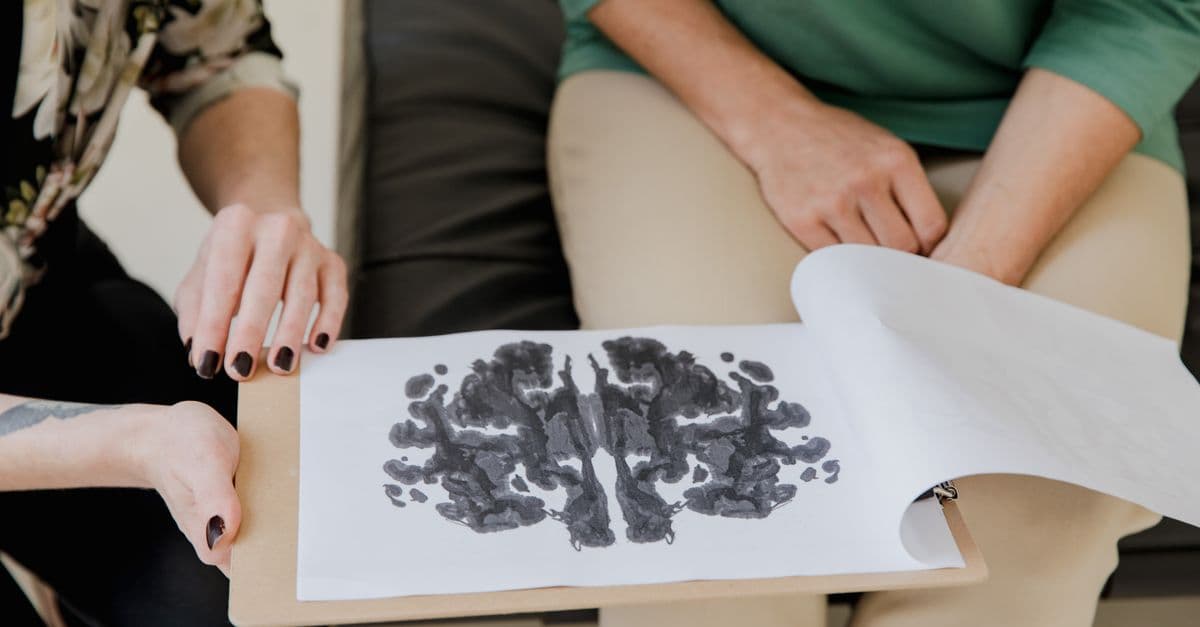
Photo: SHVETS production / Pexels
In 1974, Elizabeth Loftus showed participants a film of a car accident and asked one simple question afterward — varying only a single word. One group was asked: "How fast were the cars going when they smashed into each other?" Another was asked the same question but with hit replacing smashed. The smashed-group estimated a mean speed of 40.8 mph; the hit-group estimated 34.0 mph. A week later, the smashed-group was significantly more likely to report (falsely) having seen broken glass in the film. No glass had appeared. One word had edited a memory.
Memory Is Not a Recording
The most damaging misconception about human memory is that it works like a video camera — capturing events, storing them faithfully, and playing them back on demand. This model feels right from the inside, which is precisely why it is so dangerous.
Memory is better understood as a Wikipedia page: it is collaborative, updateable, influenced by the last person who accessed it, and built from many sources — some reliable, some not. Each time you recall a memory, you do not retrieve a stable stored file. You reconstruct the event from fragments: what you perceived at the time, what you learned about it afterward, what you have seen in similar situations, and what you expect or need the memory to say right now. The reconstruction feels seamless. The stitching is invisible.
Reconstructive memory — the process by which memories are reassembled during recall from stored fragments and schematic knowledge, rather than retrieved as fixed, intact records of past experience.
This view of memory dates back to British psychologist Frederic Bartlett's 1932 book Remembering, in which Bartlett asked British participants to read and retell a Native American folk tale ("The War of the Ghosts") at various delays. With each retelling, participants systematically altered the story to fit their existing cultural schemas — supernatural elements were rationalized, unfamiliar details were dropped, and culturally familiar elements were added. Memory did not degrade randomly; it drifted purposefully toward what made sense to the rememberer.
Source: Bartlett, F.C. (1932), Remembering: A Study in Experimental and Social Psychology, Cambridge University Press — the foundational text on schema-based reconstructive memory.
The Misinformation Effect: How Post-Event Information Contaminates Memory
Elizabeth Loftus at the University of California gave her name to the most-studied phenomenon in memory distortion research: the misinformation effect.
Misinformation effect — the finding that exposure to misleading information after witnessing an event impairs memory for the original event, often causing the misleading information to be incorporated into the memory as if it had been present originally.
In the paradigmatic version of the paradigm, participants witness an event (typically a film of an accident, crime, or other incident). Then, in what appears to be a separate phase, they receive written or verbal information about the event — some of which is subtly inaccurate. Later they are tested on their memory of the original event. Reliably, participants incorporate the misinformation into their reported memories, often with high confidence.
In one of Loftus's most-cited studies, participants saw slides of a car accident in which a car stopped at a stop sign. During a subsequent questionnaire, some participants encountered a reference to a "yield sign" rather than a stop sign. In a later recognition test, 41% of these participants chose a slide featuring a yield sign as more accurately representing what they had seen — compared to roughly 15% of controls who received consistent information.
The yield-sign contamination did not feel like an addition or a correction. Participants who misremembered the yield sign reported the memory with the same subjective sense of confidence as those who correctly reported the stop sign.
Source: Loftus, E.F. & Palmer, J.C. (1974), "Reconstruction of automobile destruction: An example of the interaction between language and memory," Journal of Verbal Learning and Verbal Behavior, 13(5), 585–589 — the smashed/hit speed estimation study.
Source: Loftus, E.F., Miller, D.G. & Burns, H.J. (1978), "Semantic integration of verbal information into a visual memory," Journal of Experimental Psychology: Human Learning and Memory, 4(1), 19–31 — the stop sign/yield sign study.
Source: Loftus, E.F. (2005), "Planting misinformation in the human mind: A 30-year investigation of the malleability of memory," Learning and Memory, 12(4), 361–366 — Loftus's own retrospective review of three decades of misinformation research.
Why the Brain Allows This to Happen
The misinformation effect is not a sign of weakness or gullibility in the people who experience it. It follows from the architecture of memory itself.
When you perceive an event, multiple brain systems encode different aspects of it: the hippocampus encodes contextual and episodic details, the amygdala encodes emotional tone, sensory cortices encode perceptual details. These components are stored separately and reassembled during recall. The source of each component — did I perceive this, or did I read it, or did someone tell me? — is tracked by a separate process called source monitoring.
Source monitoring — the cognitive process by which memories are attributed to their origin (an event witnessed, a story heard, something imagined), allowing the brain to distinguish real from imagined or suggested experiences.
Source monitoring is fallible. When a post-event suggestion arrives via a questionnaire or a conversation, the brain may encode it as a memory trace. Later, during reconstruction, the system asks: "What do I know about that event?" It retrieves the original trace and the post-event trace, but it may not reliably distinguish which came from direct experience. The yield sign gets filed as a perception.
The effect is strongest when:
- Substantial time passes between the event and the misinformation
- The misinformation is presented by an authoritative source
- The original memory trace is weak (low attention, high stress, poor lighting)
- The misinformation is repeated or elaborated
- Social conformity pressures encourage accepting the suggested version
Source: Johnson, M.K., Hashtroudi, S. & Lindsay, D.S. (1993), "Source monitoring," Psychological Bulletin, 114(1), 3–28 — the foundational review of source monitoring theory and its failure modes.
Eyewitness Testimony: The Courtroom Catastrophe
The practical stakes of the misinformation effect are highest in the courtroom, where eyewitness testimony has historically been treated as among the most reliable forms of evidence. Decades of research, and the advent of DNA exoneration data, have fundamentally revised that assessment.
The Innocence Project, founded in 1992 by attorneys Barry Scheck and Peter Neufeld at Cardozo School of Law, has used DNA evidence to exonerate over 375 wrongfully convicted individuals in the United States as of 2024. In approximately 70% of those cases, faulty eyewitness testimony was a contributing factor in the original conviction — making it the single largest contributor to wrongful convictions in the database.
The problem is not that witnesses lie. Most wrongful conviction cases involve witnesses who genuinely believed their testimony. The problem is that the conditions of crime witnessing are precisely those that maximize memory error: high stress, brief exposure, poor lighting, cross-racial identification, and followed by police interviews that, if poorly conducted, introduce misinformation.
Research on cross-racial identification is particularly sobering. Studies consistently show that people identify faces from their own racial group more accurately than faces from other groups — a phenomenon called the cross-race effect or other-race effect. The effect size is substantial and the mechanism appears to be differential perceptual expertise, not racial bias in the narrow sense.
Source: Wells, G.L. & Olson, E.A. (2003), "Eyewitness testimony," Annual Review of Psychology, 54, 277–295 — comprehensive review of eyewitness reliability research and its policy implications.
Source: Gross, S.R. et al. (2022), "Exonerations in the United States 1989–2021," National Registry of Exonerations — the empirical record of wrongful convictions and their contributing factors.
Implanting Memories: When Suggestion Creates Experience
The most striking demonstration of false memory research goes beyond altering details of witnessed events to implanting entirely new memories of events that never occurred.
Loftus and Jacqueline Pickrell's 1995 "lost in the mall" study gave 24 participants a booklet describing four childhood events — three true (confirmed by family members) and one false (being lost in a shopping mall at age five, becoming distressed, and being rescued by a kind elderly woman). Participants were asked to write about each event and rate their confidence in the memory.
After two interviews over several weeks, approximately 25% of participants reported a false memory of the mall event — sometimes elaborating it with vivid sensory and emotional details that the researchers had not supplied. When debriefed, many participants initially refused to believe the mall event was fictional.
Subsequent studies have implanted false memories of being attacked by an animal as a child, witnessing demonic possession, getting sick after eating a specific food, and experiencing events as a child that would have been impossible given the participant's actual age. The procedure is not perfect — roughly 20–30% of participants develop detailed false memories in most studies, with others developing partial or no false memory — but the reliability of the effect is well-established.
Source: Loftus, E.F. & Pickrell, J.E. (1995), "The formation of false memories," Psychiatric Annals, 25(12), 720–725 — the "lost in the mall" paradigm study.
Source: Hyman, I.E. & Pentland, J. (1996), "The role of mental imagery in the creation of false childhood memories," Journal of Memory and Language, 35(2), 101–117 — replication and extension using different false event types.
The Mandela Effect: False Memory at Scale
The Mandela Effect — the phenomenon in which large groups of people share a specific false memory, often contradicting verifiable historical records.
The term was coined by blogger Fiona Broome in 2009, who discovered that many people shared her vivid but false memory of Nelson Mandela dying in prison in the 1980s (he lived until December 5, 2013). Examples include widespread misremembering of the Monopoly mascot as wearing a monocle (he never did), the Berenstain Bears' name as "Berenstein," and the exact wording of lines from popular films.
The Mandela Effect is not evidence for parallel universes or quantum timeline-shifting, as some popular accounts suggest. It is the predictable output of reconstructive memory operating on shared cultural material.
The mechanisms are the same ones Loftus identified: source monitoring failures, schema completion (the monocle "fits" a wealthy character because monocles signal wealth in cultural schemas), social reinforcement (discussing a memory with others who share the same error reinforces and stabilizes it), and the way mass media selectively encodes certain features of public figures and products.
What makes Mandela Effects appear remarkable is the scale. But that scale is itself explicable: large populations share the same schemas, the same cultural exposures, the same gap between what was shown and what is expected. When millions of people watch a film, millions of people apply similar schemas to their encoding — and similar schemas produce similar reconstruction errors.
Source: Prasad, D. & Bainbridge, W.A. (2022), "The visual Mandela effect as evidence for shared and specific false memories across people," Psychological Science, 33(12), 1971–1988 — the most rigorous experimental study of Mandela Effects, using visual recognition paradigms.
A Comparison of Memory Distortion Types
| Distortion type | Mechanism | Source | Confidence of false memory | Reversible by correction? |
|---|---|---|---|---|
| Misinformation effect | Post-event suggestion absorbed | Loftus & Palmer, 1974 | Often high | Partially, with immediate correction |
| Source misattribution | Origin of memory trace mislabeled | Johnson et al., 1993 | High | Rarely |
| Implanted memory | False narrative elaborated into "experience" | Loftus & Pickrell, 1995 | Moderate to high | Often refuses correction |
| Schema completion | Expectation fills memory gaps | Bartlett, 1932 | High | Rarely noticed |
| Mandela Effect | Shared schema + social reinforcement | Prasad & Bainbridge, 2022 | Very high | Difficult |
What People Get Wrong About False Memories
The most consequential misconception is that false memories are distinguishable from real ones by their vividness, emotional intensity, or the confidence with which they are held. They are not. Loftus's research specifically demonstrated that false memories can match real memories on all subjective quality measures. A person who is 90% confident about a memory is no more likely to be accurate than one who is 60% confident, in conditions where false memory is systematically induced.
This has profound implications beyond the courtroom. It means that recovered memories of childhood trauma — once promoted via certain therapeutic techniques involving hypnosis, guided imagery, or dream interpretation — cannot be validated by the intensity with which they are experienced. The therapeutic techniques that generate such "recovered memories" are among those most likely to produce false ones.
A related misconception is that intelligent or educated people are immune to false memory. Multiple studies have shown that education level, IQ, and general cognitive ability do not strongly predict resistance to the misinformation effect or susceptibility to implanted memories. The mechanisms operate at the level of basic memory architecture, not intelligence.
For a related look at how the same suggestibility mechanisms operate in social contexts to produce belief change, see the companion piece on the Festinger cognitive dissonance experiment, which explored how people reconstruct their own past attitudes to fit present behavior.
The Lost-in-the-Mall Study and the Memory Wars
The 1995 "lost in the mall" study described above did more than demonstrate that false memories could be implanted. It detonated a decade-long controversy — one fought not just in academic journals but in courtrooms, legislatures, and public culture — over whether recovered memories of childhood abuse were genuine or manufactured artifacts of therapeutic suggestion.
The controversy had been building since the late 1980s. A wave of therapy practices had emerged in the United States and the United Kingdom that encouraged patients to recover ostensibly repressed memories of childhood trauma through techniques including guided imagery, hypnosis, age regression, and dream interpretation. Hundreds of adults came to believe, under therapeutic guidance, that they had suffered severe abuse — sometimes ritualistic or satanic in nature — with no prior conscious recollection of any such events.
Recovered memory therapy — a set of clinical techniques, now broadly discredited, aimed at retrieving traumatic memories presumed to be repressed or inaccessible to normal recall, often employing hypnosis, directed imagery, or leading suggestive questioning.
The results reached catastrophic proportions. Across the United States, day-care workers, parents, and community members were convicted of crimes — including the McMartin preschool case beginning in 1983 and the Little Rascals Day Care case in 1989 — based largely or entirely on testimony elicited from children via suggestive interviewing techniques. The McMartin case, eventually dismissed without convictions after seven years of proceedings, remains the longest and most expensive criminal trial in American history. Conviction rates were high during what historians of the period now call the "Satanic panic," a wave of prosecutions that produced over 190 convictions in the United States between 1983 and 1995 for alleged ritualistic abuse offenses that, in most documented cases, left no physical evidence and relied on testimony extracted through methods since identified as maximally likely to generate false memories.
Loftus's research on memory implantation provided the scientific foundation for defense challenges to these convictions. Her testimony as an expert witness, and the Loftus-Pickrell mall study specifically, shifted the evidential ground: if a false memory of being lost in a mall could be implanted in 25% of healthy adult participants within a few weeks of suggestion, what did that imply about memories "recovered" over months or years of suggestive therapy?
Source: Loftus, E.F. & Ketcham, K. (1994), The Myth of Repressed Memory, St. Martin's Press — Loftus's public account of her expert witness work and the scientific case against recovered memory therapy; also McNally, R.J. (2003), "Recovering memories of trauma: A view from the laboratory," Current Directions in Psychological Science, 12(1), 32–35 — a concise empirical review of the evidence against repression-based memory recovery.
The backlash against Loftus was fierce and personal. Trauma researchers, many of whom worked with genuine survivors of childhood abuse, argued that her laboratory paradigms — implanting memories of relatively neutral childhood events — did not model the conditions of traumatic memory, which they held was encoded differently and subject to genuine dissociative suppression. Loftus received death threats. She was the subject of a years-long legal challenge by a former research participant who objected to being identified as a subject in a case study.
The debate has not fully resolved, but its practical consequences have. Beginning in the mid-1990s, courts in the United States, Canada, and the United Kingdom began requiring independent corroboration for recovered memory testimony, and several landmark appellate decisions limited or excluded expert testimony promoting recovered memory theory without corroborating evidence. The False Memory Syndrome Foundation, founded in 1992 by Peter and Pamela Freyd, documented over 800 families who reported being falsely accused based on recovered memory testimony before closing in 2019 — stating that its work was substantially complete.
What Loftus's research ultimately did was not to settle the question of whether traumatic memories can be repressed — that remains contested in clinical psychiatry — but to demonstrate that the mechanisms by which "recovery" was sought were precisely those best designed to produce false memories. You cannot use suggestion-heavy therapeutic techniques to recover hidden truths if those same techniques reliably manufacture false ones.
Q: Can a memory be both real and partly false?
A: Yes, and this is probably the most common case. A memory can accurately record that an event occurred while misremembering details — the timing, the words used, who was present, what sequence events occurred in. Pure invention of entirely fabricated events is less common than distortion of real events through schema completion and post-event suggestion.
Q: Are children more susceptible to false memories than adults?
A: Young children (under seven) are significantly more susceptible to the misinformation effect and suggestion, especially from authority figures. This has important implications for forensic interviewing of child witnesses. However, susceptibility decreases with age but never disappears — adults remain measurably susceptible throughout the lifespan.
Q: Does repeated recall strengthen or weaken a memory?
A: Both, paradoxically. Retrieval practice generally strengthens accurate memories (a phenomenon called the testing effect). But each retrieval also opens the memory to reconsolidation — a window during which it can be updated or distorted by new information. The act of remembering is also an act of potential rewriting.
Q: Is photographic memory real?
A: True eidetic memory — the ability to recall visual information with photograph-like precision over extended periods — appears to be vanishingly rare and has never been reliably demonstrated in adults under controlled conditions. Many individuals who believe they have photographic memory are actually using skilled mnemonic strategies (memory palaces, chunking). The persistence of the photographic memory concept in popular culture may itself be a false memory-like cultural schema.
Q: Did Elizabeth Loftus have any critics?
A: Yes, and significantly so. Her work became highly controversial in the 1990s because it was used to challenge "recovered memory" therapy in abuse cases. Some trauma researchers argued that her laboratory paradigms did not adequately model the conditions under which genuine traumatic memories are formed or suppressed. The debate about repressed versus false memories remains one of the most contentious in clinical psychology.
Q: Can memories implanted in dreams be real memories?
A: No. Dreams themselves do not constitute evidence that events occurred, and the reconstructive memory system processes imagined and dreamed events with the same mechanisms as real ones — making them potential sources of false memory when they are later misattributed to real experience. For the relationship between dreaming and memory systems, see why we dream.
The Takeaway
Memory's flexibility is not a design flaw — it is what makes memory adaptive. A memory system that could not update and revise itself would be less useful than one that integrates new information. The problem is that this flexibility has no built-in truth-detector: it cannot distinguish between a genuine correction and a false suggestion. The brain updates faithfully; it does not update accurately. That gap between faithful and accurate is where false memories are born — and where they can do their most serious damage.
Read next:
Follow new articles
Add SciHub101 to your feed reader to see new science and technology stories.
About the Author
SciHub101 is an independent science and technology publication founded and edited by Buğra Sözeri, a software engineer and app developer based in Türkiye. AI tools assist with drafting and research. Source documentation in the existing archive is uneven, and articles are being reviewed and corrected. The Editorial Team byline identifies editorial responsibility; it does not certify specialist or independent human review. Where we compare products, anything built by our own team is labelled as such — see the editorial guidelines and About page for how corrections and disclosures work.
Related Articles

The Psychology of Habits: How the Brain Automates Behavior
Habits are not willpower failures — they are the brain's efficiency system. The cue-routine-reward loop, basal ganglia chunking, and the science of how long habit formation actually takes.
Cognitive Biases Explained: Why Your Brain Shortcuts Cost You
Cognitive biases are systematic errors in thinking produced by the brain's fast, automatic reasoning system. Here's what they are, why they evolved, and how they work.

False Memory Psychology: Why Confidence Is Not Proof
Human memory is reconstructive, not a recording. This guide explains false memories, suggestion, confidence, emotion, and eyewitness mistakes.

The Loftus Misinformation Effect: How Memory Gets Rewritten
Elizabeth Loftus's 1974 car-crash study showed a single word can alter memory. Here's how she proved it, what it means for eyewitness testimony, and why courts still struggle with the findings.

The Mandela Effect: What Science Says About False Memories
Millions of people clearly remember Nelson Mandela dying in prison in the 1980s. He died in 2013. Millions more remember the children's book series being spelled 'Berenstein Bears' — it was always 'Berenstain.' These are not misremembrings of obscure facts: they are vivid, confident memories that contradict documented reality, shared by large numbers of people who arrived at them independently. Neuroscience has a precise, non-mysterious explanation for every major Mandela Effect case, and it reveals something more striking than any alternate timeline: human memory is not a recording. It is a reconstruction.

What If the Mandela Effect Proved Parallel Universes? The Science of Memory
People remember Nelson Mandela dying in prison, the Berenstein Bears (not Berenstain), and Pikachu's tail tip being black. The "Mandela effect" — but it's memory, not a multiverse glitch.