Why Do We Dream? The Neuroscience Behind Your Sleeping Mind
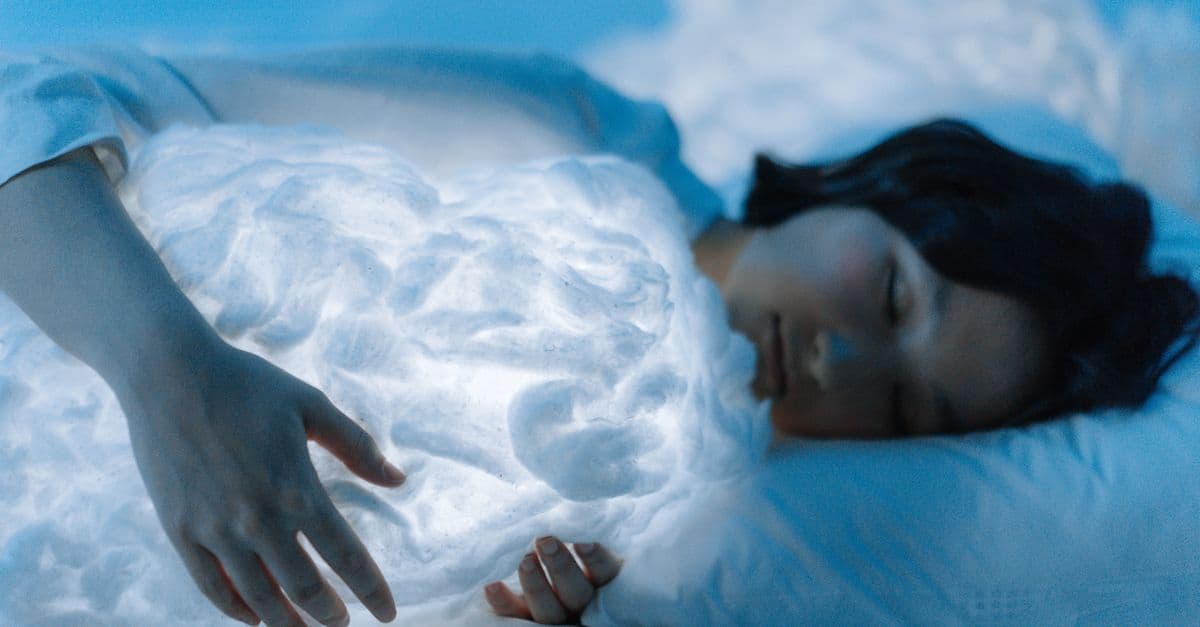
Photo: Ron Lach / Pexels
In 1953, a University of Chicago graduate student named Eugene Aserinsky noticed something nobody had thought to look for: the eyeballs of sleeping infants were moving — fast, periodically, and in synchronized bursts. When he and his supervisor Nathaniel Kleitman woke adults during those same eye-movement periods, nearly all reported vivid, narrative dreams. Before that night, no one knew that sleep had distinct stages. Before that night, the biology of dreaming was pure speculation. It still mostly is — but the speculation is now much better informed.
What Happens in the Brain During REM Sleep
REM sleep (Rapid Eye Movement sleep) — a recurring phase of the sleep cycle characterized by rapid conjugate eye movements, near-paralysis of the voluntary muscles, and brain electrical activity resembling alert wakefulness.
A typical adult cycles through four to six REM periods per night. The first lasts roughly 10 minutes; the last, before waking, can exceed 45 minutes. REM periods grow longer across the night, which is why early morning sleep produces the most vivid and memorable dreams.
During REM, the brain's electrical signature — measured by electroencephalogram (EEG) — looks almost indistinguishable from wakefulness. The prefrontal cortex (associated with rational evaluation and executive control) is relatively quiet. The amygdala (emotion processing), the hippocampus (memory formation), the visual cortex, and the motor cortex are highly active. This pattern explains the character of dreams: emotionally intense, visually rich, narratively bizarre, and largely unconstrained by logical self-monitoring.
The body does not move despite the motor cortex firing because the brainstem actively inhibits movement via a mechanism called REM atonia — temporary paralysis of skeletal muscles. This appears to prevent physical acting-out of dream motor commands. When the mechanism fails, the result is REM sleep behavior disorder, in which people physically act out their dreams, sometimes violently.
Source: Aserinsky, E. & Kleitman, N. (1953), "Regularly occurring periods of eye motility, and concomitant phenomena, during sleep," Science, 118(3062), 273–274 — the foundational paper that identified REM sleep and linked it to dreaming.
Source: Hobson, J.A., Stickgold, R. & Pace-Schott, E.F. (1998), "The neuropsychology of REM sleep dreaming," NeuroReport, 9(3), R1–R14 — review of neural correlates of REM dreaming including the amygdala and prefrontal deactivation pattern.
The Sleep Architecture: Where Dreams Fit
Sleep is not a single state. It is a structured, cyclical process with four stages, each serving different biological functions.
| Stage | Type | EEG pattern | Primary function | Dreaming? |
|---|---|---|---|---|
| N1 | Light NREM | Theta waves | Transition, drowsiness | Occasional hypnic imagery |
| N2 | Moderate NREM | Sleep spindles, K-complexes | Memory consolidation (procedural) | Rare, fragmentary |
| N3 | Deep NREM (slow-wave) | Delta waves | Physical restoration, immune function | Occasional, vague |
| REM | Paradoxical sleep | Beta/theta (waking-like) | Memory consolidation (emotional/episodic), dreaming | Nearly universal |
Dreams can technically occur in any stage, but the narrative, emotionally complex dreams that people typically describe come overwhelmingly from REM sleep. NREM dreams, when they occur, tend to be more thought-like and less visual — more "I was thinking about work" than "I was being chased by my second-grade teacher through a supermarket."
Source: Stickgold, R. (2005), "Sleep-dependent memory consolidation," Nature, 437(7063), 1272–1278 — major review of stage-specific memory functions during sleep.
Theory 1: Memory Consolidation
The memory consolidation hypothesis proposes that dreaming is either the byproduct of, or an active component in, the process by which the sleeping brain consolidates experiences from the prior day into long-term storage.
The hippocampus — the brain structure most critical to forming new declarative memories — is highly active during REM sleep and shows a pattern of "replay" in which neural sequences from waking experience are reactivated. This replay was first documented in rodents by MIT neuroscientist Matthew Wilson in 1994, who showed that hippocampal place cells in rats fired during REM sleep in sequences matching their waking navigation of mazes.
In humans, Robert Stickgold and colleagues at Harvard ran a series of studies in the early 2000s showing that sleep following learning improved performance on memory tasks — and that REM sleep in particular was associated with improvement in tasks requiring emotional and procedural memory. In one study, participants who dreamed about a virtual maze navigation task showed greater improvement in subsequent navigation than those who slept but did not dream about the task.
The hypothesis received further support from a 2023 meta-analysis in the journal Sleep examining the relationship between dream content and memory consolidation across 57 studies. The analysis found a reliable, if modest, association between dreaming about material and subsequent improved recall of that material.
Like a librarian working the overnight shift, the sleeping brain re-files the day's experiences — deciding what to strengthen, what to discard, and how to cross-reference new information with old. The dreams you experience during that process may be the perceptual side-effect of seeing the librarian at work.
Source: Wilson, M.A. & McNaughton, B.L. (1994), "Reactivation of hippocampal ensemble memories during sleep," Science, 265(5172), 676–679 — the landmark rodent study showing hippocampal replay during sleep.
Source: Wamsley, E.J. et al. (2010), "Dreaming of a learning task is associated with enhanced sleep-dependent memory consolidation," Current Biology, 20(9), 850–855 — the human study linking dream content to subsequent memory performance.
Source: Llewellyn, S. & Hobson, J.A. (2015), "Not only... but also: REM sleep creates and NREM sleep consolidates," Progress in Neurobiology, 126, 13–19 — the integrated model of stage-specific memory functions.
Theory 2: Threat Simulation
The threat simulation theory, proposed by Finnish psychologist Antti Revonsuo in 2000, argues that dreaming is an adaptive biological mechanism that evolved specifically to rehearse threatening and dangerous scenarios.
The evidence supporting this view starts with the content of dreams. Studies of large dream diaries and laboratory-collected dreams consistently show that aggressive and threatening events are dramatically overrepresented relative to waking life. You are far more likely to dream about being chased, attacked, falling, or losing something important than about doing laundry or attending a pleasant dinner party. The content skew is not random.
Revonsuo's argument is that this skew reflects natural selection: individuals who rehearsed threatening scenarios during sleep were better prepared to respond to actual threats during waking, conferring survival advantages. Dreams, in this view, are a biological flight simulator — running dangerous scenarios without the cost of actual danger.
Cross-cultural evidence adds weight to the theory. Research on trauma survivors shows that nightmares disproportionately replay traumatic events and near-miss scenarios. Children in conflict zones dream significantly more about threats than children in stable environments. These patterns suggest that the dreaming system is sensitive to real-world threat levels, as you would expect from a threat-rehearsal system.
The theory does not explain all dream content — many dreams are mundane or positive — but threat simulation theory does not claim to explain everything, only to explain why threatening content is so disproportionately common.
Source: Revonsuo, A. (2000), "The reinterpretation of dreams: an evolutionary hypothesis of the function of dreaming," Behavioral and Brain Sciences, 23(6), 877–901 — the original threat simulation theory paper.
Source: Valli, K. et al. (2005), "The threat simulation theory of the evolutionary function of dreaming," Journal of Sleep Research, 14(4), 447–452 — empirical test of threat simulation predictions in trauma survivors.
Theory 3: Activation-Synthesis
The activation-synthesis hypothesis, proposed by Harvard psychiatrists J. Allan Hobson and Robert McCarley in 1977, takes the most reductive position: dreams are not functional in any interesting sense. They are the brain's attempt to construct a coherent narrative from essentially random neural noise.
During REM sleep, the brainstem generates bursts of random electrical signals — the pons fires activation patterns upward into the cortex with no organized semantic content. The cortex, which is built to find patterns and narratives, cannot tolerate incoherence. It synthesizes the random activation into the most plausible story it can construct from whatever memory fragments and emotional states happen to be activated at that moment.
The result is dreams: narrative, emotional, often bizarre, usually featuring the dreamer — not because these qualities are functionally designed, but because they are the characteristic output of a pattern-seeking cortex working with random inputs. A dream about flying is not a meaningful symbol or a threat rehearsal. It is the cortex mapping random motor-activation signals onto the closest available narrative ("I am moving through space without effort").
Hobson and McCarley published their theory in the American Journal of Psychiatry in December 1977, and it produced immediate controversy because it directly challenged psychoanalytic dream interpretation — particularly Freud's view that dreams were disguised wish-fulfillment. Hobson was explicit about this intent.
The activation-synthesis model has been refined over decades. Hobson's later "AIM model" (Activation, Input gating, and Mode) added dimensional variables that better captured the continuous nature of brain states across waking and sleep. But the core insight — that much of dream content may reflect the brain's synthesis of random signals rather than coded meaning — remains influential.
Source: Hobson, J.A. & McCarley, R.W. (1977), "The brain as a dream state generator: An activation-synthesis hypothesis of the dream process," American Journal of Psychiatry, 134(12), 1335–1348 — the original activation-synthesis paper.
Lucid Dreaming: When System 2 Wakes Up in the Dream
Lucid dreaming — a state in which the dreamer becomes aware that they are dreaming while remaining asleep, and in some cases can exert voluntary control over dream content.
The existence of lucid dreaming presented a theoretical puzzle: if REM sleep involves suppression of prefrontal (rational) activity, how can lucid dreamers exercise meta-awareness and deliberate control? The answer appears to be that lucid dreaming involves selective reactivation of prefrontal areas while maintaining the broader REM state.
EEG studies of trained lucid dreamers show elevated gamma-wave activity (associated with conscious awareness) in frontal regions during lucid dreams, compared to non-lucid REM sleep. German neuroscientist Ursula Voss and colleagues demonstrated in 2009 that lucid dreaming is associated with a distinct neural signature — specifically, increased coherence of gamma oscillations (40 Hz) in frontal brain regions.
In 2021, a multi-laboratory study demonstrated that real-time two-way communication with sleeping lucid dreamers was possible: dreamers were given simple arithmetic problems ("What is 8 minus 6?") during confirmed REM sleep and responded using prearranged eye-movement signals while remaining asleep. They answered correctly at rates significantly above chance, which is either remarkable or deeply strange depending on your priors about the sleeping mind.
Source: Voss, U. et al. (2009), "Lucid dreaming: a state of consciousness with features of both waking and non-lucid dreaming," Sleep, 32(9), 1191–1200 — the EEG study establishing the neural signature of lucid dreaming.
Source: Konkoly, K.R. et al. (2021), "Real-time dialogue between experimenters and dreamers during REM sleep," Current Biology, 31(7), 1417–1427 — the multi-laboratory two-way communication study.
Nightmares: When the Threat Simulator Breaks
A nightmare is a vivid, disturbing dream that typically wakes the dreamer. They occur primarily in REM sleep, are more common in the early morning hours when REM periods are longest, and affect an estimated 50–85% of adults at some point in their lives.
Nightmares are to be distinguished from sleep terrors (pavor nocturnus), which occur in NREM sleep, involve screaming and intense fear, but leave no dream memory. Sleep terrors are a disorder of arousal from slow-wave sleep; nightmares are a disorder of REM dreaming.
Chronic nightmares — recurring more than once per week — affect approximately 4–8% of the general adult population and are strongly associated with post-traumatic stress disorder (PTSD). In PTSD, the normal process by which emotional memories are "processed" during REM sleep appears to malfunction: rather than reducing the emotional charge of traumatic memories over time, REM dreaming in PTSD patients replays the traumatic content with high emotional fidelity, sometimes repeatedly for years.
Notably, the research on sleep and emotional memory processing suggests that the function of healthy REM dreaming may be to reduce the emotional charge of aversive memories — to make them accessible without the raw distress. Matthew Walker at UC Berkeley has called this the "overnight therapy" function of REM sleep. PTSD nightmares represent a breakdown of that therapeutic process.
Source: Walker, M.P. & van der Helm, E. (2009), "Overnight therapy? The role of sleep in emotional brain processing," Psychological Bulletin, 135(5), 731–748 — the "overnight therapy" model of REM emotional processing.
Source: Krakow, B. & Zadra, A. (2006), "Clinical management of chronic nightmares: imagery rehearsal therapy," Behavioral Sleep Medicine, 4(1), 45–70 — evidence-based review of nightmare treatment approaches.
What People Get Wrong About Dreams
The most persistent misconception is that dreams are meaningfully symbolic in the way Sigmund Freud proposed — that manifest dream content (what you see) is a disguised representation of latent content (repressed wishes) that requires professional interpretation. The activation-synthesis hypothesis and subsequent research have largely undermined this specific claim. There is no reliable evidence that dream symbols map consistently to unconscious wishes, or that free-associating to dream images produces clinically valid insight into unconscious processes.
This does not mean dreams are meaningless. It means they are probably not a coded message requiring decryption. They are, in current scientific terms, better understood as a reflection of the memories, emotions, and concerns that are neurologically active at the time of dreaming — which is itself meaningful information, just not in the way Freud proposed.
The second misconception is that people who say they never dream simply do not dream. Everyone who enters REM sleep dreams. The difference is in recall, which depends on waking at the right moment (immediately after REM), arousal level, and individual variation in memory consolidation. People who "never dream" are almost certainly dreaming without retaining the memory on waking.
Can Dreams Be Decoded? The Science of Dream Content
Most of what scientists know about dream content has been gathered the old-fashioned way: ask people what they dreamed about and count. Calvin Hall and Robert Van de Castle developed the most influential coding system in the 1960s, analyzing over 10,000 dream reports from college students and adult populations and producing quantitative norms for the frequency of characters, social interactions, settings, emotions, and objects in reported dreams.
Hall-Van de Castle coding system — a standardized method for scoring dream reports across content categories (aggression, friendliness, sexuality, success, failure, and others), allowing statistical comparison of dream content across populations, cultures, and time periods.
Several findings from that tradition proved durable. Dreams are predominantly visual and social: almost all dreams include other people, and the most common interactions are aggressive or adversarial. Dreamers are far more often victims than perpetrators of aggression in their own dreams. Men dream more frequently about other men; women dream roughly equally about men and women. These patterns hold across cultures with sufficient replication to suggest they reflect something structural about how the dreaming brain generates scenarios rather than individual psychological peculiarities.
The continuity hypothesis — proposed and elaborated by German dream researcher Michael Schredl from the 1990s onward — argues that dream content is not random or symbolic but continuous with waking concerns and preoccupations. If you spent the day worried about a work deadline, you are more likely to dream about work. If you are in a new relationship, you are more likely to dream about your partner. Systematic diary studies support this: the single best predictor of dream content on any given night is what the dreamer was emotionally preoccupied with during the preceding day.
Source: Hall, C.S. & Van de Castle, R.L. (1966), The Content Analysis of Dreams, Appleton-Century-Crofts — the foundational quantitative coding system and normative database; Schredl, M. & Hofmann, F. (2003), "Continuity between waking activities and dream activities," Consciousness and Cognition, 12(2), 298–308 — empirical test of the continuity hypothesis with diary data.
The more ambitions question — whether dream content can be decoded without asking the dreamer — entered a new phase in 2013. Tomoyasu Horikawa and Yukiyasu Kamitani at ATR Computational Neuroscience Laboratories in Kyoto used functional MRI to scan participants in the early stages of sleep (hypnagogic sleep onset, stage N1) and recorded the visual imagery they reported upon waking. Using a machine-learning decoder trained on the fMRI activation patterns associated with specific visual categories during wakefulness, Horikawa and Kamitani found that the visual content of dream imagery could be predicted from brain activity at rates significantly above chance across a three-class categorization scheme.
The decoder worked like this: participants first viewed hundreds of images from predefined categories (buildings, people, vehicles) while awake and in the scanner, allowing the researchers to map fMRI activation patterns to visual categories. Those mappings were then applied to the brain activity recorded during sleep. The system predicted the correct category from 60 categories at above-chance accuracy, with particularly strong performance for high-level semantic categories rather than low-level visual features.
This was not full dream telepathy. The decoder could not reconstruct the specific image a person was dreaming about — it identified the category from a pre-specified set. And the study used hypnagogic imagery (the transitional state at sleep onset) rather than full REM dreams, which produce far richer and more complex content than the shorter-duration N1 episodes. But the study established that the visual brain encodes dream content in patterns structured enough to be decoded from the outside — that dreams leave a readable signal.
Source: Horikawa, T. et al. (2013), "Neural decoding of visual imagery during sleep," Science, 340(6132), 639–642 — the Kamitani lab fMRI dream-decoding study; one of the most-cited papers in modern sleep science.
The limits of current decoding are significant. Full REM dream content, with its narrative, emotional, and social complexity, remains well beyond any current decoding capability. The Horikawa-Kamitani result showed that visual categories could be inferred; the emotions, people, and narrative logic of a dream are encoded in distributed patterns across frontal, limbic, and association cortices that no current machine-learning approach can disentangle. A further complication is that dream reports themselves are imperfect: the memory of a dream, filtered through the process of waking and verbal reconstruction, may not accurately represent what the brain actually processed during sleep. The decoded signal and the verbal report are both approximate and mediated, and they do not always agree.
What the field has established is more modest but still important: dream content is not neurally random. The brain systematically represents the contents of dreaming in patterns structured by waking experience, emotional state, and visual category. Whether that means dreams are primarily a reflection of waking concerns (continuity hypothesis), a processed version of memory-relevant material (consolidation theory), or both simultaneously is a question that decoding research is only beginning to address.
Q: Do animals dream?
A: Almost certainly, at least mammals and birds. All mammals studied show REM sleep with the same neural characteristics. Wilson's rat studies showed hippocampal replay of waking maze-running during REM sleep — the rats appeared to be dreaming about the maze. Octopuses show periodic skin-color changes during sleep that may reflect visual dream activity, though their sleep architecture is very different from mammalian REM.
Q: Can you control your dreams?
A: Lucid dreamers can exert some control over dream content, but control is partial and unstable. Most people can be trained to achieve occasional lucid dreams through techniques like reality testing (checking throughout the day whether you are dreaming) and mnemonic induction of lucid dreams (MILD), developed by Stephen LaBerge at Stanford.
Q: Why do some dreams feel so real they're hard to distinguish from waking?
A: Because the brain regions that evaluate reality and logical consistency (primarily prefrontal cortex) are dampened during REM sleep. The experience is generated by the same perceptual and emotional systems as waking life, but the critical faculty that would flag inconsistencies is largely offline. This is also why dream logic — impossible events accepted without question — feels perfectly normal from inside the dream.
Q: What is the most common dream?
A: Across cultures, the most frequently reported dream themes are being chased or attacked, falling, flying, being unprepared for an exam, and teeth falling out. The cross-cultural consistency of chase dreams and falling dreams supports the threat simulation theory, as these represent ancestrally relevant dangers.
Q: Is there any benefit to remembering dreams?
A: Dream recall itself has no proven cognitive benefit. However, keeping a dream journal is the primary evidence-based method for increasing dream lucidity frequency, which some researchers believe has potential benefits for creativity and problem-solving.
Q: Do sleeping pills affect dreaming?
A: Yes. Most sedative-hypnotic medications (benzodiazepines, Z-drugs like zolpidem) suppress REM sleep, reducing or eliminating dreaming. This is one reason sleep induced by medication is often reported as less restorative than natural sleep, and abrupt discontinuation often produces a rebound surge in REM sleep with intense, vivid dreams.
The Takeaway
Dreaming remains one of the few universally shared human experiences that science cannot fully explain. The three dominant theories — memory consolidation, threat simulation, and activation-synthesis — are not mutually exclusive, and current evidence suggests they are complementary: the brainstem generates the neural noise, the cortex synthesizes it into narrative, and the hippocampus and amygdala use the REM window to process and consolidate the emotional and experiential content of the preceding day. The dream you remember in the morning is the intersection of all three processes, and probably a dozen others not yet named.
Read next:
Follow new articles
Add SciHub101 to your feed reader to see new science and technology stories.
About the Author
SciHub101 is an independent science and technology publication founded and edited by Buğra Sözeri, a software engineer and app developer based in Türkiye. AI tools assist with drafting and research. Source documentation in the existing archive is uneven, and articles are being reviewed and corrected. The Editorial Team byline identifies editorial responsibility; it does not certify specialist or independent human review. Where we compare products, anything built by our own team is labelled as such — see the editorial guidelines and About page for how corrections and disclosures work.
Related Articles

Why We Procrastinate: The Brain Science Behind Delay
Procrastination is not a time management failure — it is an emotion regulation strategy. The neuroscience of temporal discounting, limbic-prefrontal conflict, and why willpower rarely fixes it.

The Psychology of Habits: How the Brain Automates Behavior
Habits are not willpower failures — they are the brain's efficiency system. The cue-routine-reward loop, basal ganglia chunking, and the science of how long habit formation actually takes.
Dream Science: Why the Brain Creates Stories at Night
Dreams may support memory, emotional processing, threat simulation, and brain maintenance. This guide separates evidence from popular myths.

How Pain Works in the Brain: It's Not What You Think
Pain is not a signal your body sends to your brain. It is a decision your brain makes — and that distinction has transformed medicine.

Why Do We Dream? The Science of What Happens While You Sleep
Dreams are one of the most vivid experiences humans have — and one of the least understood. After a century of research, science finally has some real answers about why the sleeping brain tells stories.
Complete Psychology Guide 2026 — Mind, Behavior, and Human Science
The complete guide to psychology in 2026: cognitive biases, memory, emotions, decision-making, social behavior, famous experiments, and what neuroscience reveals about the human mind.