The Mandela Effect: What Science Says About False Memories

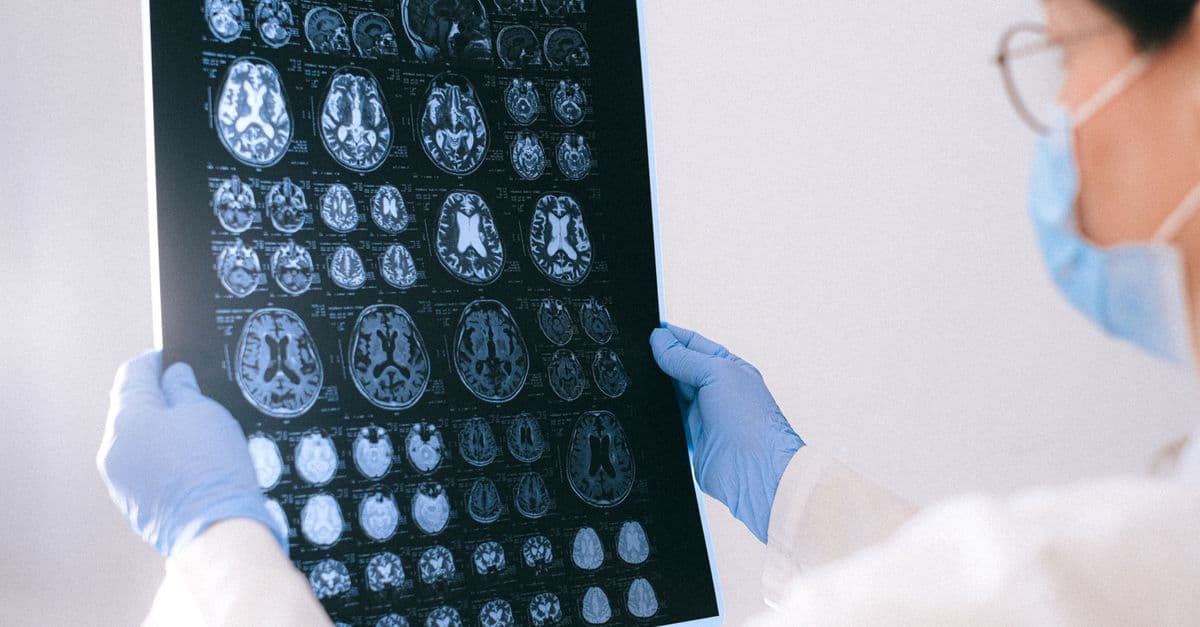
Photo: Berna / Pexels
Millions of people clearly remember Nelson Mandela dying in prison in the 1980s. He died in 2013, after serving as South Africa's first democratically elected president from 1994 to 1999. Millions more remember the children's book series being spelled "Berenstein Bears" — it was always "Berenstain," named after the Berenstain family. Others remember the Monopoly mascot wearing a monocle (he never wore one), or the line "Luke, I am your father" in The Empire Strikes Back (the actual line is "No — I am your father"). These are not vague recollections of obscure details. They are vivid, confident memories held by large numbers of people who arrived at them independently. Neuroscience has a precise, well-tested explanation for every one of these cases, and it is more striking than any claim about alternate timelines: human memory is not a recording. It is a reconstruction, rebuilt from fragments every time it is accessed, and those fragments are systematically shaped by expectations, knowledge, and social exposure.
What "The Mandela Effect" Actually Is
The term was coined in 2009 by Fiona Broome, a paranormal researcher who discovered that she and several others she spoke with shared a clear memory of Nelson Mandela dying in prison during the 1980s. Broome's explanation was that this constituted evidence of parallel universes or alternate timelines bleeding through into our own. The supernatural framing gave the phenomenon a memorable name, but the underlying pattern — large groups of people sharing the same specific false memory — was already well-studied in cognitive psychology under different names.
False memory — a memory of an event or detail that did not occur, or that occurred differently from how it is remembered; false memories feel subjectively real and are held with confidence, and they are not the same as lying or deliberate fabrication.
Mandela Effect — the informal term for cases where a large number of people share the same false memory, implying a common cause rather than individual errors.
The scientific literature on false memory predates the Mandela Effect by decades. Elizabeth Loftus, a psychologist at the University of California, Irvine, has spent fifty years building the empirical case for the reconstructive nature of human memory. Her research, beginning in the 1970s, demonstrated that memory is not a static record but an active reconstruction that is vulnerable to post-event information, suggestion, and expectation at every stage — encoding, storage, and retrieval.
Source: Loftus, E.F., & Palmer, J.C. (1974), "Reconstruction of automobile destruction: An example of the interaction between language and memory," Journal of Verbal Learning and Verbal Behavior, Vol. 13, No. 5 — the landmark study showing that the wording of a question about a car accident changed subjects' speed estimates and even created false memories of broken glass.
Memory Is a Reconstruction, Not a Recording
The most important thing to understand about human memory is that it is not stored like a video file. There is no single brain region where a complete, immutable record of past experiences is held, waiting to be played back. Instead, memory is distributed: different components of an experience are stored in different brain regions. Visual details are stored in visual cortex. Emotional context is stored partly in the amygdala. Spatial and sequential context is organized by the hippocampus. The sense of time — when the event occurred — involves prefrontal and parietal cortex.
When you recall a memory, these distributed components are reassembled — literally reconstructed — in working memory. The hippocampus coordinates this reassembly, but the components it pulls from are not pristine originals. They are traces that have been modified by subsequent experience, by every previous recall of that memory, and by general knowledge about how similar events usually go.
Think of it like reassembling a shattered ceramic bowl from fragments stored in different boxes in different rooms. Each time you reassemble it, you notice a fragment missing, so you fashion a replacement from available clay — material drawn from similar bowls you have seen. Each reassembly is functional and feels complete. But the bowl is slightly different each time, and by the tenth reassembly, several original fragments have been replaced by material that was never part of the original bowl.
This reconstruction process is not a bug — it is how memory is efficiently organized. A brain that stored every detail of every experience as a complete, immutable record would be computationally and energetically wasteful. The reconstruction system allows the brain to store generalized patterns (schemas) efficiently and fill in specific details when needed, which works well for most purposes. It fails systematically at fine details, especially details that are predictable from context — like the spelling of a name that sounds like it should end in "-stein" rather than "-stain."
Source: Schacter, D.L. (2001), The Seven Sins of Memory: How the Mind Forgets and Remembers, Houghton Mifflin — a landmark popular science book by Harvard memory researcher Daniel Schacter, synthesizing the evidence for memory's reconstructive nature and its characteristic failure modes.
Confabulation: The Brain Fills Gaps Without Telling You
Confabulation — the unconscious production of fabricated, distorted, or misinterpreted memories without the intention to deceive; confabulation is not lying because the person genuinely believes the confabulated content.
Confabulation was first studied in patients with severe amnesia, particularly those with Korsakoff syndrome — a brain disorder caused by thiamine (vitamin B1) deficiency, typically from chronic alcohol use, that damages specific memory-related brain structures. Korsakoff patients confabulate extensively: asked what they did yesterday, they produce detailed, confident, entirely fabricated accounts of activities they never engaged in. They do not know they are fabricating. Their brain's narrative-construction system fills gaps in memory with plausible content, and the output arrives in consciousness as genuine memory.
But confabulation is not limited to amnestic patients. In 1978, psychologists Ulric Neisser and Nicole Harsch conducted a study of memory for the Space Shuttle Challenger explosion (January 28, 1986). They collected detailed written accounts from students the morning after the explosion, then re-interviewed the same students two and a half years later. The students' later accounts differed dramatically from their written accounts — location, who they were with, what they were doing all shifted. When confronted with their own earlier written accounts, some students refused to believe the written document was accurate, so confident were they in their reconstructed memory.
In ordinary life, confabulation operates at a lower intensity but constant rate. When a memory trace is incomplete — which most traces are for anything not emotionally salient at the moment of encoding — the brain generates plausible completions from existing knowledge and schema. The completion enters consciousness as memory. The process is entirely automatic and unconscious.
Source: Neisser, U., & Harsch, N. (1992), "Phantom flashbulbs: False recollections of hearing the news about Challenger," in Winograd, E., & Neisser, U. (Eds.), Affect and Accuracy in Recall, Cambridge University Press — the foundational "flashbulb memory" study demonstrating high confidence with high error rates in emotionally significant memories.
Source Monitoring Errors: Knowing Something, Forgetting Where
A closely related mechanism is source monitoring error — a failure to correctly attribute the origin of a piece of information. You know something, but you misremember how you came to know it. You might correctly recall that "the Monopoly man wears a monocle" but misattribute the source: you feel certain you saw the monocle on the actual Monopoly board, when in fact you may have seen it in a parody, a meme, or simply inferred it from the character's wealthy-Edwardian-gentleman visual design, which strongly implies monocle.
Source monitoring is handled by the prefrontal cortex, and it is one of the cognitively expensive parts of retrieval — it requires actively tracking not just what you know but how and when you came to know it. This is why source monitoring errors increase with age (prefrontal function declines), with divided attention (when encoding was not effortful), and with high similarity between actual and misattributed sources (both seem equally plausible as the origin).
Source monitoring error — a memory failure in which the content of a memory is retrieved correctly but its origin is misattributed — to a different person, medium, time, or context.
The source monitoring framework explains several Mandela Effect cases with particular precision. People who remember the "Berenstein Bears" spelling are likely retrieving the sound of the name correctly ("-steen") from actual memory, while constructing the spelling from the much more common German/Jewish surname pattern "-stein." The name sounds like "Berenstein." The spelling is generated from phonetic expectation, and the source is misattributed to a specific visual memory of the book cover.
Source: Johnson, M.K., Hashtroudi, S., & Lindsay, D.S. (1993), "Source monitoring," Psychological Bulletin, Vol. 114, No. 1 — the defining peer-reviewed theoretical framework for source monitoring, covering its mechanisms, failure modes, and relationship to false memory.
Schema-Driven Memory Distortion: Filling In the Expected
Schema — a cognitive template or framework built from accumulated experience with a category of situations, objects, or people; schemas accelerate processing of familiar material by supplying expected features when perception is incomplete.
Schemas are extraordinarily useful for efficient cognition, but they systematically distort memory toward the expected. When you encode an experience that mostly matches a familiar schema, your brain stores the actual experience efficiently — but when you later retrieve it, the reconstruction draws not just on specific stored traces but on the schema itself, potentially substituting schema-consistent features for actual features that were encoded but weakly.
This is why people "remember" the Monopoly man having a monocle: the schema for "pompous Edwardian wealthy man" in popular culture heavily features the monocle. The character Rich Uncle Pennybags is visually consistent with the schema in every other respect — the top hat, the tuxedo, the white mustache, the portly figure. The monocle is schema-consistent and therefore fills in readily during reconstruction, even though it was never present in the actual image.
The same schema mechanism explains a large proportion of the movie and television misquotations that generate Mandela Effect claims. "Play it again, Sam" (never said in Casablanca), "Beam me up, Scotty" (never said in Star Trek in that exact form), and "Elementary, my dear Watson" (never written by Arthur Conan Doyle in that exact phrasing) all fit the schema for what those characters in those situations should say. The schema-consistent version was generated during recall and stored as the specific memory.
Source: Bartlett, F.C. (1932), Remembering: A Study in Experimental and Social Psychology, Cambridge University Press — the foundational work demonstrating schema-driven memory distortion, showing how subjects recalled a Native American folk tale in systematically schema-consistent but factually distorted ways.
Social Contagion of Memory: How False Memories Spread
Individual memory errors explain why a single person might misremember a spelling or a line. They do not immediately explain why millions of people share the same false memory. Social contagion — the transmission of memory errors through communication — provides this mechanism.
Research by psychologist Henry Roediger and colleagues has demonstrated in controlled laboratory settings that post-event discussion shapes individual memory. When people discuss a shared experience and one person introduces an incorrect detail confidently, other participants often incorporate that incorrect detail into their own memory of the event, even if they did not initially misremember it. This process is called memory conformity or social contagion of memory.
Memory conformity — the adoption of another person's version of a shared memory, either consciously (deliberate updating) or unconsciously (the alternative account is encoded as memory and replaces the original trace).
Before the internet, social contagion of memory was limited by geography and social network size. A particular false memory could spread through a community but was unlikely to synchronize across millions of independent people in different countries. The internet changed this dramatically. A widely shared online claim about the Berenstain Bears spelling being "Berenstein" reaches millions of people simultaneously. Each person who reads the claim and thinks "yes, that's what I remembered too" may be engaging in source monitoring error — what they actually remember is the sound "-steen," and they are now reconstructing the specific visual memory as consistent with the claim they just read.
The social media and forum environment is also one that selects for confirmation: people who share the false memory find the post interesting and share it forward; people who remember correctly may not engage. The result is a self-selecting sample in which the false memory appears more universal than it actually is.
Source: Roediger, H.L., Meade, M.L., & Bergman, E.T. (2001), "Social contagion of memory," Psychonomic Bulletin and Review, Vol. 8, No. 2 — the landmark peer-reviewed study demonstrating that exposure to other people's incorrect memories significantly increases false memory production in individuals.
Famous Mandela Effect Cases, Scientifically Explained
| Case | False memory | Actual fact | Most likely mechanism |
|---|---|---|---|
| Berenstain Bears | "Berenstein" | Always "Berenstain" | Phonemic schema ("-stein" is common German pattern) + source monitoring error |
| Monopoly man's monocle | Monocle present | Never had a monocle | Schema (wealthy Victorian gentleman archetype includes monocle) |
| "Luke, I am your father" | This exact phrasing | "No — I am your father" | Semantic memory for gist, phonemic source substitution; the word "No" is easily dropped |
| Nelson Mandela died in prison | 1980s death in prison | Died December 5, 2013 | Possible confusion with Steve Biko (died in police custody 1977); social contagion |
| Pikachu's tail tip | Black tip | Always fully yellow | Schema enrichment; anime character design generates assumption of color accent |
| "Mirror, mirror on the wall" | This phrasing | "Magic mirror on the wall" (1937 Disney film) | Poetic/rhyming schema; "mirror, mirror" scans more naturally as a fairy tale opening |
The Nelson Mandela case is worth examining more closely. Steve Biko — another prominent South African anti-apartheid activist — died in police custody in September 1977 and received enormous international press coverage. Multiple South African activists were imprisoned for years and died in detention. For people who were aware of anti-apartheid news in the late 1970s and 1980s without following it closely, the general-knowledge trace "prominent South African activist, died while imprisoned" may have been attributed to Mandela during reconstruction rather than to its actual source. Social contagion then amplified and synchronized the error.
Source: Broome, F. (2009), mandela-effect.com — the original coining of the term, notable as a primary source but not a scientific one.
Source: The Conversation (2016), "The Mandela Effect and how your mind is playing tricks on you" — peer-reviewed academic commentary by Christopher French, psychology professor at Goldsmiths, University of London.
Why the Parallel Universe Explanation Fails Scientifically
The alternate timeline/parallel universe interpretation of the Mandela Effect deserves respectful but direct examination. For the claim to be scientifically credible, it would need to meet two conditions: it would need to be mechanistically coherent (the proposed physics must be physically plausible), and it would need to make predictions that distinguish it from the false memory explanation.
On the first count: the Many-Worlds interpretation of quantum mechanics is a legitimate part of theoretical physics, and it does posit the branching of quantum states into non-interacting branches. However, these branches do not allow for the migration of memories, information, or physical matter between them — that is not a feature of the Many-Worlds interpretation, and no physical mechanism has been proposed that would allow it. The argument that "some people remember it differently, therefore parallel timelines merged" is not a prediction of any established physics; it is a retrofitted explanation for an observation that has a simpler, better-supported explanation already available.
On the second count: the false memory explanation predicts that Mandela Effect cases will cluster around schema-consistent distortions, source monitoring errors, and phonemically or visually similar alternatives — which they do. The parallel universe explanation makes no specific predictions about which memories should be false versus which should be accurate, and therefore cannot be distinguished from the null hypothesis by any observation. A theory that cannot be tested is not scientific.
The psychological explanation also has the advantage of being independently established across thousands of controlled experiments before any Mandela Effect case was analyzed. The alternative timeline hypothesis has no independent experimental support.
Source: Neven, H.M. (2016), "Déjà vu All Over Again: Are False Memories a Glitch in the Matrix?" Skeptical Inquirer, Vol. 40, No. 3 — skeptical analysis of the parallel universe interpretation in the context of established memory science.
Frequently Asked Questions
Q: Does everyone experience false memories, or only certain people?
A: False memory production is universal — it is a feature of how human memory works, not a defect in specific individuals. Laboratory studies consistently produce false memories in the vast majority of subjects under the right conditions. Susceptibility varies: people higher in imaginative absorption and lower in source monitoring ability tend to produce more false memories, and anxiety and stress at encoding reduce memory accuracy. But the basic mechanism affects everyone.
Q: Why do false memories feel so real and vivid?
A: Because the brain does not attach a "confidence tag" to memories based on their accuracy — it attaches a tag based on how easily and coherently the memory is retrieved, and how consistent it is with existing knowledge. A schema-consistent false memory retrieves smoothly and coheres with related knowledge, producing a high-confidence phenomenal experience that is indistinguishable from accurate memory from the inside.
Q: Can false memories be implanted intentionally?
A: Yes, and this has been demonstrated extensively in research and in legal contexts. Elizabeth Loftus's "lost in the mall" experiments showed that roughly 25 percent of adult subjects could be led to form a detailed false memory of being lost in a shopping mall as a child, after family members provided false information suggesting the event occurred. This research has had major implications for eyewitness testimony and the legal treatment of recovered memories.
Q: Are flashbulb memories — vivid memories of shocking events — more accurate than ordinary memories?
A: No. Flashbulb memories (your memory of where you were when a major unexpected event occurred) feel more vivid and are held with higher confidence than ordinary memories, but studies consistently show they are not more accurate. The Challenger study by Neisser and Harsch is the clearest demonstration: subjects were highly confident in their detailed but substantially incorrect recollections two years later.
Q: Does the internet make the Mandela Effect more common?
A: It makes the appearance of the Mandela Effect more visible and may amplify the social contagion component. False memories existed before the internet; what the internet does is provide a platform for people who share the same false memory to find each other rapidly, creating the impression of a widespread coordinated misremembering. It also exposes people to incorrect claims that can then be encoded as memory through source monitoring error.
Q: Is the Mandela Effect related to any medical condition?
A: The mechanisms behind the Mandela Effect — confabulation, source monitoring errors, schema-driven distortion — occur normally in healthy brains. They are amplified in conditions that affect memory consolidation or retrieval, including Alzheimer's disease, Korsakoff syndrome, schizophrenia, and severe depression. But experiencing occasional Mandela Effect-type false memories is not diagnostic of any condition; it is a normal feature of human memory.
Source: Loftus, E.F. (1997), "Creating false memories," Scientific American, Vol. 277, No. 3 — a highly cited summary of Loftus's false memory research accessible to general readers, covering implantation studies and legal implications.
Source: Garry, M., & Polaschek, D.L.L. (2000), "Imagination and memory," Current Directions in Psychological Science, Vol. 9, No. 1 — peer-reviewed review of how imagination and suggestion interact with memory to produce false memories.
The Takeaway
The Mandela Effect is genuinely interesting — not because it suggests alternate timelines, but because it reveals something deeply counterintuitive about memory. Every recalled experience is partly created at the moment of recall, assembled from stored fragments and filled with material generated from knowledge, expectation, and social input. The fragments are real; the assembly is inventive. This means that two people who independently misremember the same detail are not necessarily sharing a timeline — they are sharing a schema, a cultural exposure, or a common source monitoring vulnerability. The reconstructive nature of memory is not a failure. It is an efficient system operating exactly as designed, in a context where the design occasionally shows its limits.
Read next:
Follow new articles
Add SciHub101 to your feed reader to see new science and technology stories.
About the Author
SciHub101 is an independent science and technology publication founded and edited by Buğra Sözeri, a software engineer and app developer based in Türkiye. AI tools assist with drafting and research. Source documentation in the existing archive is uneven, and articles are being reviewed and corrected. The Editorial Team byline identifies editorial responsibility; it does not certify specialist or independent human review. Where we compare products, anything built by our own team is labelled as such — see the editorial guidelines and About page for how corrections and disclosures work.
Related Articles
The Neuroscience of Learning Elvish: What Conlangs Reveal About the Brain
In 2025, MIT researchers published fMRI data showing that Klingon, High Valyrian, and Esperanto activate the same neural circuits as English or Mandarin — the same brain regions that process natural human languages developed over thousands of years. A constructed language invented a decade ago by a screenwriter activates the identical network as a language shaped by centuries of use. This finding tells us something fundamental about how the brain decides what counts as a 'real' language — and it has practical implications for how anyone, at any age, learns any language, fictional or otherwise.

The Human Genome Revolution: From $3 Billion to $200 and What We Found
The Human Genome Project cost $3 billion, took 13 years, and involved 20 countries — to produce a sequence that was still 8 percent incomplete. A single lab can now sequence a human genome for under $200 in a single day. That price collapse, steeper than Moore's Law for a decade straight, has changed medicine, ancestry research, evolutionary biology, and our understanding of what 'the genome' actually is. The truly complete human genome, published in 2022, revealed nearly 200 million base pairs we never knew existed and overturned the idea that most DNA has no function.
How Human Memory Works: Encoding, Storage, and Retrieval
Memory isn't a recording—it's a reconstruction. Understanding encoding, storage, and retrieval reveals why we forget and misremember.

Why Time Feels Faster as You Age: The Science Behind It
A summer at age eight felt endless. A year at forty disappears. This is not nostalgia distorting judgment — it is a measurable difference in how the brain processes and encodes time. Multiple mechanisms are involved: a mathematical relationship between age and perceived duration, a decline in the novelty that creates dense memories, slowing neural processing speed, and falling dopamine levels that alter the brain's internal clock. Each mechanism operates independently, but they all converge on the same result: subjective time accelerates across a human lifetime.

How Pain Works in the Brain: It's Not What You Think
Pain is not a signal your body sends to your brain. It is a decision your brain makes — and that distinction has transformed medicine.

Why Humans Dream: What the Science of Sleep Actually Reveals
Dreams are not random brain noise or Freudian wish-fulfillment. Neuroscience points to a far more functional and surprising explanation.