The Neuroscience of Learning Elvish: What Conlangs Reveal About the Brain

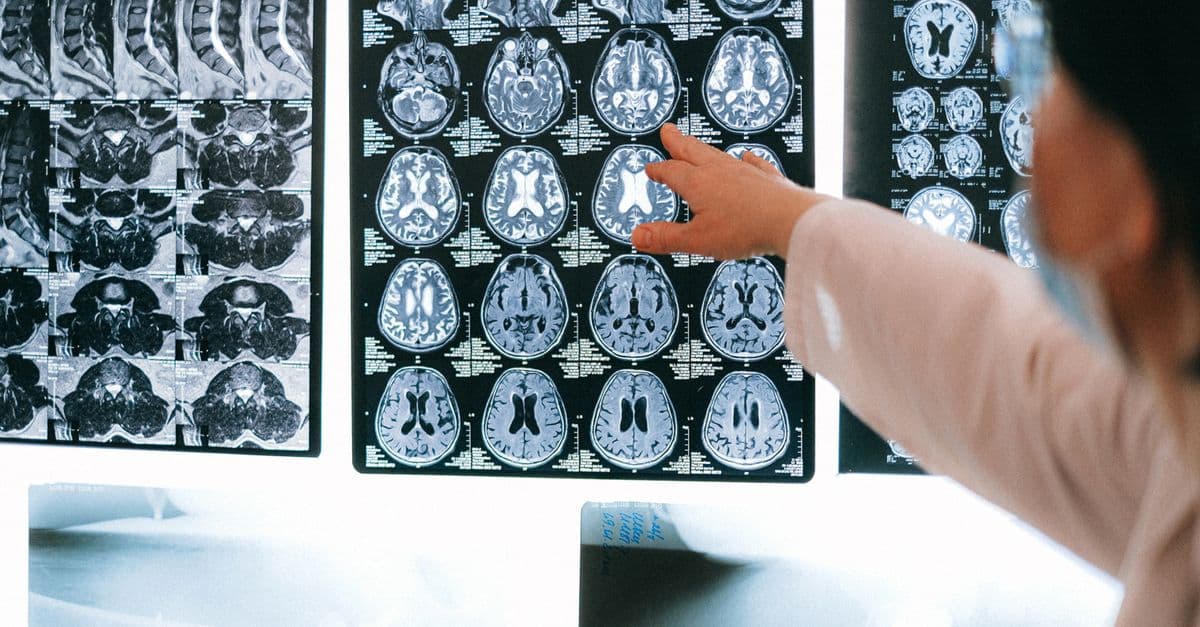
Photo: Anna Shvets / Pexels
In March 2025, MIT's McGovern Institute for Brain Research published a study in PNAS that settled a question linguists had debated for decades: does the human brain treat constructed languages differently from natural ones? Using fMRI to scan people proficient in Klingon, Esperanto, High Valyrian, Na'vi, and Dothraki as they processed sentences in their conlang, the researchers found no meaningful difference in brain activation patterns compared to native language processing. The same left-hemisphere network — Broca's area, Wernicke's area, and their connecting white matter pathways — lit up for a language invented by a linguist in the 1950s and a language invented by a television screenwriter in 2011. What the brain calls "language" is not what linguists, or fans, or philosophers might expect it to be.
What Is a Constructed Language?
Constructed language (conlang) — a language deliberately created by one or more individuals, as opposed to a natural language that evolved through use within a community over time. Conlangs vary enormously in their purpose, completeness, and linguistic sophistication.
The category is broader than popular culture suggests. Esperanto, designed by L. L. Zamenhof in 1887 with the explicit goal of becoming a global auxiliary language, now has an estimated 2 million speakers and a small but documented group of native speakers (children raised in Esperanto-speaking households). Quenya, Tolkien's High Elven language, has approximately 10 noun cases and a documented sound history of change across millennia of fictional time — more grammatical complexity than most natural languages most speakers ever learn. Klingon was originally invented for a film (Star Trek III, 1984) by linguist Marc Okrand, who built it with real phonological and syntactic structure that makes it learnable; it is now listed in the Guinness World Records as the most widely spoken invented language.
Other notable conlangs include Lojban (designed to be logically unambiguous, with a grammar formally derived from predicate logic), Dothraki and High Valyrian (created by linguist David J. Peterson for HBO's Game of Thrones), and Na'vi (created by linguist Paul Frommer for James Cameron's Avatar). Each was created with different linguistic priorities, and each has accumulated real communities of learners and speakers.
What all these systems share — and what distinguishes them from other human-created symbol systems — is that they can express propositional content about the world: they have words for entities, actions, and relationships, grammar that can combine those words into statements about real or imagined situations, and the expressive capacity to talk about things beyond the immediate present.
Source: Kell, C.A. et al. (2025), "Constructed languages are processed by the same brain mechanisms as natural languages," PNAS — the primary MIT study scanning conlang speakers with fMRI, published March 2025.
The Language Network: What the Brain Actually Uses
The brain's language network is a distributed set of regions in the left hemisphere (in most right-handed individuals) that work together to comprehend and produce language. Its anatomy has been mapped in considerable detail over the past 30 years through a combination of lesion studies (observing what language functions are lost when specific brain regions are damaged) and neuroimaging.
Broca's area — a region in the left inferior frontal gyrus, classically associated with language production and syntactic processing. Damage to Broca's area causes Broca's aphasia: the patient understands language but produces only halting, effortful speech with reduced grammatical complexity.
Wernicke's area — a region in the left posterior superior temporal gyrus, associated with language comprehension. Damage causes Wernicke's aphasia: the patient produces fluent speech but it is often semantically incoherent ("word salad"), and comprehension is severely impaired.
These regions are connected by a bundle of white matter fibers called the arcuate fasciculus, which transmits information between comprehension and production systems. Together with surrounding temporal and frontal regions, they form the core of the language network as identified by neuroimaging.
The critical finding of the MIT study — and of an earlier 2023 study by the same group (first published as a preprint in bioRxiv and subsequently in PNAS) — is that all five tested conlangs activated this same network, with an activation pattern statistically indistinguishable from the native language activations of the same participants. The brain does not have a separate "real language" circuit and a "fake language" circuit. It has one language circuit, and what that circuit responds to is not how a communication system originated but what it can express.
The same language-processing regions do not activate for computer programming languages (Python, Java) or for mathematics, even in expert programmers and mathematicians. Those systems are processed partly in regions associated with logical reasoning (the inferior parietal lobule, the dorsolateral prefrontal cortex) rather than the core language network. The distinction is not about complexity or rule-following — both programming languages and natural languages have complex, rule-governed grammar. The distinction appears to be about semantic richness: the ability to express meanings about arbitrary aspects of the world, including abstract concepts, counterfactual situations, and emotional states.
Source: Malik-Moraleda, S. et al. (2023), "Constructed languages are processed by the same brain mechanisms as natural languages," PNAS (also bioRxiv preprint) — the prior study establishing the finding, replicated and extended in the 2025 MIT publication.
Tolkien's Elvish: A Linguist's Lifework
J. R. R. Tolkien was a professional philologist — a scholar of the historical development of languages — who spent most of his adult life as a professor at Oxford University. His constructed languages were not invented to serve the stories: the stories, by his own account, were invented partly to give the languages somewhere to live.
Tolkien began constructing what would become Quenya around 1915, drawing principally on Finnish phonology (he encountered the Finnish Kalevala as a young man and described the sound of Finnish as producing something "like a great wine-cup filled with a noble draught" in his letters). Quenya's agglutinative structure — where grammatical relationships are expressed by attaching affixes to root words — mirrors Finnish, and its vowel-rich sound system (a preference for open syllables and sonorous consonants) gives it the aesthetic quality Tolkien was pursuing.
Sindarin, the language of the Grey Elves of Beleriand, has a different structural character: primarily fusional and analytic, with consonant mutation (where the initial consonant of a word changes depending on grammatical context) inspired by Welsh. Tolkien documented the historical relationship between Quenya and Sindarin as fictional cousins of the same proto-language, with systematic sound changes — a complete fictional application of the comparative method that historical linguists use to reconstruct proto-languages like Proto-Indo-European.
The linguistic depth Tolkien achieved is unmatched among conlangs. His unpublished manuscripts — subsequently edited and published in the journals Parma Eldalamberon and Vinyar Tengwar — run to thousands of pages of linguistic notes, revisions, and internal historical documentation. Quenya has approximately 10 noun cases (nominative, accusative, genitive, possessive, dative, locative, allative, ablative, instrumental, and a partitive/genitive), a complex verb system with tenses, aspects, moods, and a documented history of change across Tolkien's own revisions spanning five decades of work.
The resulting languages are learnable to a real degree of communicative competence. Quenya courses exist online (Helge Fauskanger's Ardalambion and the Quenya course at Tolkien Language List have served learners for over two decades), and online communities produce new text, poetry, and songs in Quenya and Sindarin. The communities are small compared to Esperanto, but they are real: people learn Elvish the same way they learn Norwegian or Classical Greek, using grammar references, vocabulary lists, and practice with other speakers.
Source: Tolkien, J.R.R. (1955), The Return of the King (Appendix E: Writing and Spelling, Appendix F: Languages and Peoples of the Third Age) — Tolkien's own documentation of Elvish language structure, phonology, and the historical relationship between Quenya and Sindarin.
Source: Fauskanger, H.K. (2003 onward), Ardalambion: Of the Tongues of Arda — the most comprehensive academic resource for Tolkien's constructed languages, drawing on both published and archival material.
How the Brain Learns Any Language: The Critical Period and Beyond
Critical period hypothesis — the proposal, associated with Eric Lenneberg's 1967 work and substantially refined since, that there is a developmental window (roughly from birth to puberty) during which language acquisition is maximally efficient, and after which learning a language to native-like proficiency becomes substantially more difficult.
The critical period effect is real but more nuanced than the popular version suggests. Children who are exposed to a language from birth acquire it to native proficiency without formal instruction — a process not available to adult learners. Adults learning a second language typically never achieve the same phonological accuracy as native speakers: they retain accents, make systematic errors in morphology and syntax, and require explicit instruction that children do not.
The neural basis of this effect involves synaptic pruning — the process by which the brain eliminates unused neural connections during development. Early language exposure shapes which neural pathways are maintained. The language network becomes increasingly specialized to the features of the languages a child already knows, making it harder (but not impossible) to incorporate the phonological or grammatical features of a new language that differ substantially from the first.
But the critical period is specific to phonology, not to grammar or vocabulary. Adults actually learn new vocabulary faster than young children in controlled studies. Adults can learn complex grammatical rules explicitly and apply them accurately. What adults cannot easily acquire is the unconscious, automatic phonological processing that children develop — the ability to hear and produce the sounds of a language without conscious effort.
This matters for conlang learning. Quenya, for example, distinguishes between short and long vowels (a phonemic length distinction, like Latin or Finnish), uses consonant clusters uncommon in English (such as ty, ry, and initial ng-), and has stress rules that depend on syllable weight. An adult English speaker learning Quenya will struggle with these phonological features in the same way they would struggle with Finnish or Hungarian — not because Quenya is constructed, but because its sound patterns are genuinely foreign to English phonology.
Source: Lenneberg, E.H. (1967), Biological Foundations of Language, John Wiley & Sons — the foundational work establishing the critical period hypothesis for language acquisition.
Source: Birdsong, D. (ed.) (1999), Second Language Acquisition and the Critical Period Hypothesis, Lawrence Erlbaum Associates — a comprehensive collection of research on the empirical status of the critical period, including evidence for and against different versions of the hypothesis.
What Conlang Learning Reveals About Language Acquisition
Conlangs are, unexpectedly, useful scientific tools for studying language acquisition. Because they are designed — with explicit, documented grammatical rules and controlled vocabulary — researchers can manipulate specific features and measure how learners respond, without the confound of learners already having partial knowledge of the language from cultural exposure.
Several key findings have emerged from research using conlangs in acquisition studies.
Semantic richness predicts language-network activation more reliably than age, number of speakers, or evolutionary history. The MIT 2025 study confirmed that what activates the language network is a system's capacity to express diverse propositional meanings — not the fact that it developed naturally or is widely spoken. This suggests the brain's language machinery is not specifically tuned to natural languages as a category, but to a functional property that natural languages happen to have.
The order of acquisition is similar across natural and constructed languages. Languages with complex morphology (many case endings, agreement systems) tend to produce characteristic error patterns in learners: overregularization (applying regular rules to irregular forms), simplification of agreement systems under production pressure, and gradual acquisition of marked forms (unusual or cross-linguistically rare structures). These patterns appear in Quenya learners in the same sequence as in learners of morphologically complex natural languages like Russian or Hungarian.
Emotional attachment affects motivation but not the neural processing pathway. Conlang communities are notable for the emotional investment of their members — Tolkien fans who learn Quenya report deep affective connection to the language. But the fMRI data show that emotional salience does not change which neural circuits process the language. Motivation affects how much people study, but not where in the brain the learned material ends up being processed.
Conlang exposure can accelerate natural language learning. Studies on Esperanto specifically — which was designed as an easier stepping stone to other European languages — have found that children who study Esperanto for one year before beginning a natural language (French, German, Spanish) achieve higher ultimate proficiency in the natural language than children who spend all their study time on the natural language directly. The "Springboard effect" appears to work because Esperanto exposes learners to fundamental grammatical concepts (cases, agreement, aspect) in a simplified but accurate form before they encounter the irregular surface forms of natural languages.
Source: Lindstedt, J. (2006), "Native Esperanto as a test case for natural language," in: Proceedings of the Annual Meeting of the Berkeley Linguistics Society — analysis of native Esperanto speakers and their language acquisition patterns.
Source: Geller, J. (1998), "The Springboard Effect in Language Learning," Language Problems & Language Planning, Vol. 22 — the original study demonstrating accelerated natural language acquisition following Esperanto instruction.
Adult Language Learning: What Actually Works
Given what we know about the critical period and the brain's language network, what does this imply for someone who wants to learn Quenya, Klingon, or a natural language as an adult?
The neurological picture is that adult language learning works, but it is different from child acquisition in specific ways. Adult learners build explicit representations of grammatical rules that children never need — because children acquire grammar implicitly through exposure. This explicit knowledge can be highly accurate and can eventually become proceduralized (automatic), but it takes more practice to reach automaticity than the implicit acquisition path children use.
Several evidence-based strategies follow from this.
Comprehensible input — exposure to material in the target language at a level slightly above current ability — is the primary driver of acquisition in both children and adults, though adults benefit additionally from explicit instruction in grammar rules. Stephen Krashen's input hypothesis has been controversial in details but is broadly supported: passive exposure to meaningful content in the target language produces language acquisition that explicit grammar instruction alone does not.
Spaced repetition — reviewing vocabulary at intervals calibrated to the learner's forgetting curve — substantially increases long-term retention compared to massed practice. Software implementations (Anki, Duolingo's underlying algorithm) apply this principle systematically.
Production practice matters more for fluency than comprehension. Reading and listening build vocabulary and grammatical understanding. Speaking and writing are needed to build the proceduralized representations that enable spontaneous use. For conlangs with active communities (Esperanto, Klingon, High Valyrian, to some extent Quenya), finding partners for production practice is feasible.
Phonological practice must start early. Because phonological acquisition is the aspect most affected by the critical period, adult learners who want to achieve accurate pronunciation should prioritize it early in their learning rather than treating it as a detail to address later.
Source: Krashen, S.D. (1982), Principles and Practice in Second Language Acquisition, Pergamon Press — the formulation of the Input Hypothesis, arguing that comprehensible input is the primary mechanism of language acquisition.
Source: Baddeley, A., Eysenck, M.W., & Anderson, M.C. (2015), Memory, 2nd ed., Psychology Press — the standard reference on memory systems relevant to language learning, including the role of working memory in grammatical processing.
Why Conlangs Keep Growing
The constructed-language community has expanded significantly since the Lord of the Rings film adaptations (2001–2003) revived interest in Tolkien's languages and Game of Thrones (2011–2019) gave millions of viewers exposure to Peterson's Dothraki and High Valyrian. Duolingo has offered High Valyrian and Klingon courses, and the High Valyrian course had over 1 million registered learners as of 2022.
The linguistic sophistication of conlangs created for fiction has increased. Peterson — who has created languages for multiple film and television productions — has written publicly about the grammatical choices behind Dothraki and High Valyrian, providing the same kind of documentation that makes a language learnable rather than merely decorative. The conlang community has developed standards and resources (the Language Creation Society, the annual Language Creation Conference) that would not have been imaginable in the era when Klingon was essentially a handful of vocabulary items appended to a screenplay.
The neurological finding that conlangs are processed as languages — not as codes, games, or cognitive curiosities — validates the experience of the millions of people who have invested real effort in learning them. The brain does not know that High Valyrian was invented in the 2010s. It knows that High Valyrian can express a proposition about the world, and it applies the full power of the language network to process it.
Tolkien's Deepest Ambition
Tolkien never primarily thought of himself as a world-builder or a storyteller. In a famous 1955 lecture at Oxford ("English and Welsh"), he described his constructed languages as the result of a deep "native language" aesthetic — a personal response to the sounds and structures of languages he found beautiful, and an attempt to create something with that quality from scratch.
His linguistic work was, in his own framing, an act of discovery rather than invention: the sense that Quenya and Sindarin were already there, waiting to be found, rather than being fabricated from nothing. This is not scientifically accurate — they are plainly artifacts of deliberate design — but it describes something real about how deeply integrated the languages became with his imaginative world. No other conlang has a documented fiction in which the languages' own internal history plays a structural role in the narrative's cosmology.
The neuroscience does not explain Tolkien's achievement, but it does confirm its effect: a language that someone can think in, that activates the same network as the language they grew up speaking, is for the brain's purposes entirely real. Whatever Tolkien thought he was discovering, he was, among other things, building a structure that a human brain would recognize as the genuine article.
Source: Tolkien, J.R.R. (1983), "English and Welsh," in: The Monsters and the Critics and Other Essays, ed. Christopher Tolkien, Allen & Unwin — Tolkien's Oxford lecture describing his linguistic aesthetic and the personal motivation behind constructing Quenya and Sindarin.
The Takeaway
The brain's language network does not care about a language's origin, age, or number of speakers. What it responds to is semantic richness — the capacity of a system to express diverse meanings about the world. Constructed languages that have this property activate the same neural circuits as natural languages that developed over centuries. Tolkien's Elvish languages, built with professional philological rigor, represent among the most complete implementations of this principle outside natural language itself. Learning them — or any conlang — engages real language acquisition processes, subject to the same critical-period and input-driven dynamics as natural language learning. For anyone curious about how the brain processes language, a conlang is not a toy version of the real thing. It is a precisely engineered probe.
Frequently Asked Questions
Q: Does the brain process constructed languages the same way as natural languages?
A: Yes, according to a 2025 MIT fMRI study. Speakers proficient in Klingon, Esperanto, High Valyrian, Na'vi, and Dothraki showed activation of the same left-hemisphere language network as when processing their native language. The key factor is the system's ability to express diverse propositional meanings — not how or when the language was created.
Q: What is the difference between Quenya and Sindarin in Tolkien's languages?
A: Quenya is the ancient, ceremonial High Elven language, structurally inspired by Finnish — vowel-rich, agglutinative (meaning grammar is expressed by adding suffixes to roots), with 10 noun cases. Sindarin is the everyday language of Middle-earth's Elves, structurally inspired by Welsh — more fusional and analytic, with consonant mutation as a grammatical feature. Both have documented fictional historical relationships to a proto-language Tolkien called Primitive Quendian.
Q: Can adults learn a constructed language to actual fluency?
A: Yes, with the same caveats that apply to adult natural language learning. Adults typically cannot achieve native-like phonological accuracy (due to critical-period effects on sound processing) but can achieve high grammatical accuracy and communicative fluency through explicit instruction and practice. Esperanto has documented native speakers and proficient adult learners worldwide.
Q: Why doesn't learning to code engage the same brain regions as language?
A: Programming languages process in brain regions associated with logical reasoning and mathematical cognition (inferior parietal lobule, dorsolateral prefrontal cortex) rather than the core language network (Broca's and Wernicke's areas). The distinction appears to be semantic richness: programming languages manipulate abstract computational operations, while natural and constructed languages express propositions about any aspect of the real or imagined world.
Q: Does learning Esperanto first help with learning natural languages?
A: Research suggests it does. Studies on the "Springboard effect" found that students who studied Esperanto for one year before beginning a natural foreign language achieved higher proficiency in the natural language than students who spent all their time on the natural language directly. The proposed mechanism is that Esperanto efficiently introduces grammatical concepts in a simplified but accurate form.
Q: How many people speak Klingon or Elvish today?
A: Klingon has Guinness recognition as the most widely spoken invented language, with thousands of learners worldwide and a smaller number of highly proficient speakers. High Valyrian had over 1 million registered Duolingo learners as of 2022. Quenya and Sindarin communities are smaller but active, producing new texts, translations, and original composition. Esperanto is the largest conlang community, with an estimated 2 million speakers globally.
Read next:
Follow new articles
Add SciHub101 to your feed reader to see new science and technology stories.
About the Author
SciHub101 is an independent science and technology publication founded and edited by Buğra Sözeri, a software engineer and app developer based in Türkiye. AI tools assist with drafting and research. Source documentation in the existing archive is uneven, and articles are being reviewed and corrected. The Editorial Team byline identifies editorial responsibility; it does not certify specialist or independent human review. Where we compare products, anything built by our own team is labelled as such — see the editorial guidelines and About page for how corrections and disclosures work.
Related Articles

The Science of Déjà Vu: What Actually Causes It
Roughly two-thirds of the general population reports experiencing déjà vu at some point in their lives — that disorienting conviction that a present moment has been experienced before, accompanied by the simultaneous knowledge that it cannot have been. The experience lasts a few seconds, then dissolves. For most people it is occasional and benign. For patients with temporal lobe epilepsy, it can be a reliable seizure precursor. The fact that déjà vu can be reproduced reliably in clinical settings — both by electrical stimulation of specific brain regions and by certain drug compounds — tells neuroscientists where to look for the mechanism.

The Mandela Effect: What Science Says About False Memories
Millions of people clearly remember Nelson Mandela dying in prison in the 1980s. He died in 2013. Millions more remember the children's book series being spelled 'Berenstein Bears' — it was always 'Berenstain.' These are not misremembrings of obscure facts: they are vivid, confident memories that contradict documented reality, shared by large numbers of people who arrived at them independently. Neuroscience has a precise, non-mysterious explanation for every major Mandela Effect case, and it reveals something more striking than any alternate timeline: human memory is not a recording. It is a reconstruction.

How Pain Works in the Brain: It's Not What You Think
Pain is not a signal your body sends to your brain. It is a decision your brain makes — and that distinction has transformed medicine.

Neuroplasticity: How the Brain Rewires Itself Throughout Life
The idea that adult brains are fixed is one of neuroscience's most consequential myths — the reality is far more remarkable and hopeful.
How the Human Brain Works
The human brain contains 86 billion neurons, each connected to thousands of others through 100 trillion synapses. It runs on 20 watts of power yet produces consciousness, language, memory, and emotion. Here's what neuroscience actually knows — and what remains deeply mysterious.

Why Time Feels Faster as You Age: The Science Behind It
A summer at age eight felt endless. A year at forty disappears. This is not nostalgia distorting judgment — it is a measurable difference in how the brain processes and encodes time. Multiple mechanisms are involved: a mathematical relationship between age and perceived duration, a decline in the novelty that creates dense memories, slowing neural processing speed, and falling dopamine levels that alter the brain's internal clock. Each mechanism operates independently, but they all converge on the same result: subjective time accelerates across a human lifetime.