How Hearing Works — From Sound to Brain

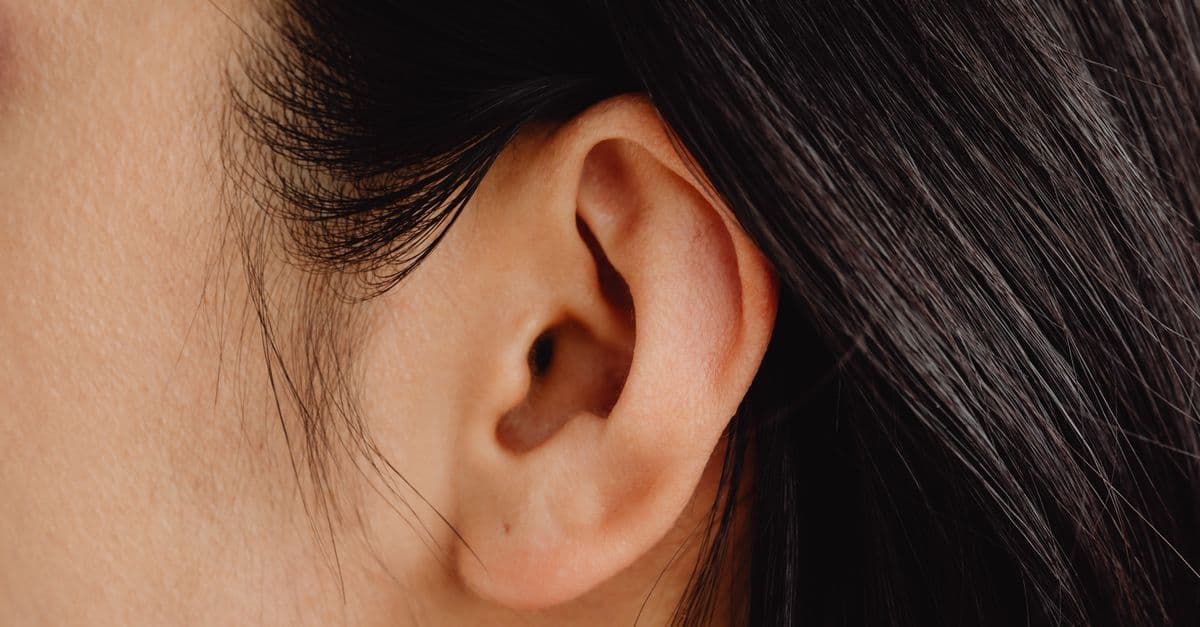
Photo: Towfiqu barbhuiya / Pexels
Hearing is the brain's interpretation of tiny pressure fluctuations in air, converted into electrical signals by one of the most mechanically precise organs in the body. From the rustle of leaves at around 20 decibels (dB) to a jet engine at 140 dB, the ear runs a chain of transformations — acoustic, mechanical, hydraulic, electrochemical, and finally neural — in a few milliseconds. The most striking fact in that chain: the roughly 15,500 sensory cells that make it possible cannot be replaced once they die, which is why so much hearing loss is permanent rather than a temporary inconvenience.
The Outer Ear: A Funnel and a Filter
The visible part of the ear, the pinna (auricle), is not decorative. Its folds and ridges reflect incoming sound waves asymmetrically before they enter the ear canal, subtly reshaping the frequency spectrum in a way the brain uses to judge whether a sound came from above, below, in front, or behind. Think of the pinna as a distorted satellite dish: the distortion is not a flaw, it is the encoding.
The ear canal (external auditory meatus) is roughly 2.5 cm (1 inch) long in adults and functions as a quarter-wavelength acoustic resonator. That geometry naturally amplifies sound in the 2,000–4,000 Hz range by several decibels — which happens to be exactly the frequency band that carries most of the information distinguishing consonants in human speech. Evolution did not design the ear canal for language, but its resonant properties turned out to line up with the frequencies that make speech intelligible, which is one reason hearing loss in that band is disproportionately disruptive to conversation even when overall hearing seems only mildly affected.
At the end of the canal sits the tympanic membrane, or eardrum — a thin, cone-shaped sheet of tissue about 8–10 mm across, roughly the size of a small coin, that vibrates in sympathy with incoming pressure waves. It moves by fractions of a nanometer for the quietest audible sounds, a displacement smaller than the diameter of a hydrogen atom at the threshold of hearing.
The Middle Ear: A Lever and an Impedance Matcher
Behind the eardrum, an air-filled cavity houses the three smallest bones in the human body, the ossicles:
| Bone | Common name | Role |
|---|---|---|
| Malleus | Hammer | Attached directly to the eardrum |
| Incus | Anvil | Bridges malleus and stapes |
| Stapes | Stirrup | Presses on the oval window of the cochlea |
Table 1: The three ossicles of the middle ear, in order of the sound-transmission chain.
These three bones solve a physics problem that would otherwise cripple hearing. Sound traveling through air behaves very differently from sound traveling through the dense fluid inside the cochlea. Air is compressible and low-density; cochlear fluid is nearly incompressible and roughly 800 times denser. Without some mechanism to bridge that mismatch, about 99.9% of airborne sound energy would simply reflect off the fluid's surface, the same way sound bounces off the surface of a swimming pool instead of penetrating it.
The ossicles function as both a mechanical lever and an area transformer. The lever action of the malleus-incus joint provides a modest mechanical advantage, and the large difference in surface area between the eardrum and the much smaller oval window (roughly a 17-to-1 ratio) concentrates the same force onto a much smaller patch, multiplying pressure. Combined, these two effects boost sound pressure by roughly 20-fold by the time it reaches the cochlear fluid, enough to overcome the air-to-fluid impedance mismatch.
Two small reflexive muscles, the stapedius and tensor tympani, contract automatically when sound gets loud, stiffening the ossicular chain and slightly damping transmission. This acoustic reflex has a response latency of tens of milliseconds, though, which means it offers essentially no protection against sudden impulse noises like a gunshot or explosion — the damage is already done before the reflex can engage.
Why do my ears pop on airplanes?
The middle ear cavity has to equalize pressure with the outside world through the Eustachian tube, a narrow passage connecting it to the back of the throat. When cabin pressure changes faster than the tube can equalize, the eardrum bulges inward or outward, and it "pops" audibly once air finally forces its way through — restoring equal pressure on both sides of the membrane.
The Inner Ear: The Cochlea
The cochlea is a fluid-filled, snail-shaped tube coiled about 2.5 turns, roughly the size of a pea, embedded in some of the densest bone in the human skull (the otic capsule). Running along its length is the basilar membrane, and its physical structure is what makes frequency discrimination possible at all: it is stiff and narrow near the base, where the stapes pushes in, and progressively wider and floppier toward the apex. Because the cochlea sits in bone, sound also reaches it through the skull, which is part of why your own voice sounds different on a recording.
That stiffness gradient creates a tonotopic map — a spatial layout where each point along the membrane responds most strongly to one particular frequency, the way piano keys are laid out by pitch along the keyboard.
- High frequencies (up to roughly 20,000 Hz) cause peak vibration near the base, closest to the oval window.
- Low frequencies (down to roughly 20 Hz) cause peak vibration near the apex, the innermost coil.
This physical sorting mechanism, described mathematically by Georg von Békésy in work that won him the 1961 Nobel Prize in Physiology or Medicine, means the cochlea performs a real-time frequency analysis of incoming sound purely through the mechanics of a vibrating membrane — no computation required, just geometry.
Sitting on the basilar membrane is the organ of Corti, which contains an estimated 15,500 sensory hair cells in a typical human cochlea — about 3,500 inner hair cells arranged in a single row and roughly 12,000 outer hair cells arranged in three rows, according to anatomical counts summarized by the NIDCD and by Nadol's classic cochlear morphometry work. Each hair cell carries a bundle of stereocilia, hair-like protein filaments, at its top. When the basilar membrane moves, these stereocilia bend, mechanically opening ion channels at their tips. That opens the channel gate directly, with no chemical intermediary — a speed advantage that lets hearing respond to vibrations up to 20,000 times per second, far faster than any other sense.
Inner hair cells are the primary sensory transducers: they convert mechanical bending into a graded electrical signal and release neurotransmitter onto the endings of the auditory nerve (cranial nerve VIII), which carries roughly 95% of the afferent fibers leaving the cochlea despite inner hair cells being outnumbered roughly 3-to-1 by outer hair cells. Outer hair cells work differently: they are motor cells that physically contract and elongate in response to sound, actively amplifying the basilar membrane's vibration and sharpening its frequency tuning. This active amplification, sometimes called the "cochlear amplifier," boosts sensitivity by up to 40–60 dB compared to what a purely passive membrane could achieve, and it is also the source of otoacoustic emissions — faint sounds the healthy ear itself produces, which clinicians use to screen newborn hearing because a functioning cochlear amplifier proves the outer hair cells are alive and working.
From the auditory nerve, signals travel through a relay chain: the cochlear nuclei in the brainstem, the superior olivary complex, the inferior colliculus in the midbrain, the medial geniculate nucleus of the thalamus, and finally the auditory cortex in the temporal lobe. Each stage adds processing — the superior olive, for instance, is where signals from both ears are first compared for sound localization.
This same broad pattern, a specialized peripheral sensor converting a physical stimulus into an electrical code that gets progressively refined on its way to cortex, is mirrored in other senses. See how the eye works for the visual version of that pipeline, and how the brain works for what happens once sensory signals of any kind reach cortical tissue.
Why don't cochlear hair cells grow back?
Mammalian inner ear hair cells are terminally differentiated cells that, once lost, do not naturally regenerate. Non-mammals tell a very different story: birds, fish, and amphibians can regenerate functional hair cells throughout life using supporting cells that re-enter the cell cycle after damage. A December 2023 study in Developmental Cell identified a specific signaling pathway (involving the receptor F2RL1 and downstream EGFR/ERK signaling) that drives this regeneration in chickens, and researchers are now investigating whether reactivating analogous pathways in mammalian supporting cells could restart the process in humans (Developmental Cell, 2023).
How the Ear Locates Sound
Two ears, separated by roughly 20 cm (8 inches) of skull, give the brain two complementary cues for figuring out where a sound is coming from.
Interaural Time Difference (ITD) exploits the fact that sound reaches the nearer ear first. The maximum possible delay, when a sound comes directly from one side, is only about 660–700 microseconds — shorter than the blink of an eye by a factor of hundreds — and the auditory brainstem is specialized to detect differences even smaller than that. ITD works best for low frequencies, where the wavelength is long relative to the head, giving unambiguous phase comparisons between the two ears.
Interaural Level Difference (ILD) relies on the head physically blocking, or "shadowing," high-frequency sound on its way to the far ear, making that ear's signal quieter. ILD becomes more useful as frequency rises above roughly 1,500 Hz, precisely where ITD becomes ambiguous because the sound's wavelength gets shorter than the head's width.
Neither ITD nor ILD explains how you tell whether a sound came from directly in front, directly behind, above, or below — all positions where the two ears receive nearly identical timing and level cues. That's where the pinna's spectral filtering, described earlier, does the remaining work: it imprints a direction-specific spectral signature on the sound before it ever reaches the eardrum, and the brain has learned to associate specific "notches" in that spectrum with specific vertical and front-back positions.
Hearing Range Across Species
Human hearing is unremarkable by animal standards, both in raw frequency range and in the sharpness of directional cues, largely because our ancestors relied more on vision than audition for survival. Other species evolved auditory systems tuned to very different ecological needs.
| Species | Approximate range | Notes |
|---|---|---|
| Human (young adult) | 20 Hz – 20,000 Hz | Declines with age (presbycusis) |
| Human (age 60+) | 20 Hz – 12,000 Hz | High-frequency loss typical |
| Dog | 67 Hz – 45,000 Hz | Hears ultrasonic dog whistles |
| Cat | 48 Hz – 85,000 Hz | Wider range than dogs; hunts by ultrasonic rodent calls |
| Bat (echolocating species) | 2,000 Hz – 110,000 Hz | Uses ultrasound for echolocation |
| Dolphin | 75 Hz – 150,000 Hz | Underwater echolocation |
| Elephant | 14 Hz – 12,000 Hz | Infrasound communication over kilometers |
| Mouse | 1,000 Hz – 91,000 Hz | Ultrasonic vocalizations, inaudible to humans |
Table 2: Approximate hearing ranges by species. Figures compiled from comparative auditory physiology literature (Fay, R.R., Hearing in Vertebrates: A Psychophysics Databook, 1988; species-specific veterinary audiology sources).
The elephant's low-frequency range is a case study in how anatomy dictates capability. Elephants communicate using infrasound below 20 Hz, frequencies too low for the human ear to register as sound rather than felt vibration, and these calls can travel several kilometers through the ground and air, allowing herds separated by long distances to coordinate. Bats sit at the opposite extreme: their outer and middle ear anatomy is scaled to resolve echoes in the tens of kilocycles, fast enough to reconstruct a three-dimensional map of insect prey in flight from the timing of returning echoes measured in microseconds.
Types and Causes of Hearing Loss
Audiologists divide hearing loss into three broad mechanical categories, based on where in the auditory pathway the problem sits.
Conductive hearing loss occurs when sound cannot mechanically reach the inner ear — caused by earwax impaction, middle ear fluid from infection, a perforated eardrum, or otosclerosis, an abnormal bone growth that fixes the stapes in place so it can no longer vibrate freely. This category is often treatable medically or surgically, because the sensory apparatus itself remains intact.
Sensorineural hearing loss results from damage to the hair cells or the auditory nerve itself. This is, by far, the more common and more consequential category worldwide, and it is generally permanent, precisely because mammalian hair cells do not regenerate. The World Health Organization's 2021 World Report on Hearing estimates that hearing loss affects more than 1.5 billion people globally, with 430 million experiencing moderate or higher levels of disabling hearing loss in the better ear — and the WHO projects that number could climb to nearly 2.5 billion people with some degree of hearing loss by 2050 (WHO, World Report on Hearing, 2021).
Mixed hearing loss involves both conductive and sensorineural components simultaneously, and it is common in older adults who accumulate multiple causes over a lifetime.
How does noise damage hearing?
Sustained sound above roughly 85 dB, or single sharp impulses above roughly 120 dB, mechanically over-stresses stereocilia, shearing them or triggering cell death in the hair cells they belong to. The damage is cumulative and dose-dependent: OSHA's occupational standard permits 85 dB exposure for up to 8 hours but halves the allowable exposure time for every additional 3 dB, meaning 100 dB (comparable to a motorcycle at close range) is only considered safe for roughly 15 minutes and 110 dB (a rock concert near the speakers) for under two minutes without hearing protection.
This is not a hypothetical risk confined to industrial workplaces. CDC-analyzed national survey data found that between 12.8% and 17.5% of U.S. adolescents aged 12 to 19 show audiometric evidence consistent with noise-induced hearing loss in one or both ears, meaning roughly one in every six to eight middle and high school students already carries measurable damage before adulthood (CDC/NHANES data, summarized in American Journal of Public Health and NIDCD reporting). High-frequency hair cells located near the cochlear base, the region most exposed to incoming acoustic energy, are consistently the most vulnerable, which is why early noise damage typically shows up first as difficulty distinguishing consonants in noisy rooms — the classic complaint of "I can hear people talking, I just can't understand what they're saying" — well before it affects the ability to detect sound at all.
Tinnitus: Sound Without a Source
Roughly 10–15% of adults experience tinnitus, the perception of ringing, buzzing, hissing, or humming with no corresponding external sound source. The leading explanatory model treats tinnitus as a form of central gain compensation: when hair cells in a particular frequency band are damaged or lost, the auditory cortex, deprived of its normal input in that band, effectively "turns up the volume" on the surrounding neural circuitry to compensate, and that heightened gain generates spontaneous neural activity that gets perceived as phantom sound. This mirrors phantom limb pain in the somatosensory system, where the loss of expected input from an amputated limb similarly triggers the brain to generate false signals rather than simply falling silent — both are examples of the nervous system interpreting absence of expected input as something to actively fill in, rather than as nothing.
There is no universal cure for tinnitus, though sound therapy (using background noise to mask the phantom sound), hearing aids when hearing loss coexists, and cognitive behavioral therapy aimed at reducing the emotional distress response all show benefit for many patients in clinical studies.
Cochlear Implants: Bypassing the Broken Part
For severe-to-profound sensorineural hearing loss where hair cells are extensively damaged or absent, cochlear implants skip the hair cells entirely. An external microphone captures sound, a speech processor digitally splits it into separate frequency bands, and a surgically implanted electrode array threaded along the cochlea's coil stimulates the auditory nerve directly at locations corresponding to the tonotopic map — high frequencies near the base, low frequencies toward the apex, mimicking the natural frequency layout even though no hair cells are involved.
More than one million cochlear implants had been placed worldwide as of mid-2022, and in the United States alone, roughly 118,100 devices are implanted in adults and about 65,000 in children, according to NIDCD figures (NIDCD, Cochlear Implants, quick statistics). Modern devices carry 12 to 24 separate electrode channels, a crude approximation compared to the roughly 15,500 hair cells they replace, and yet that coarse substitute is typically sufficient for most recipients to understand conversational speech, and increasingly, with training, to appreciate music, which requires much finer pitch discrimination than speech does.
Gene Therapy: A New Frontier for Congenital Deafness
Cochlear implants replace lost function; gene therapy aims to restore it. The most advanced human trial to date targets a specific, well-defined cause of deafness: mutations in the OTOF gene, which codes for a protein called otoferlin that inner hair cells need to release neurotransmitter onto the auditory nerve. Without functional otoferlin, hair cells are physically present and can still detect sound mechanically, but they cannot pass that information on to the nervous system — a wiring fault rather than a missing sensor.
Regeneron's DB-OTO, an adeno-associated virus (AAV) gene therapy delivered directly into the cochlea during a surgical procedure, restores a working copy of the OTOF gene. In results published in the New England Journal of Medicine in 2024 from the Phase I/II CHORD trial, one child treated at 11 months of age showed hearing restored to essentially normal levels within 24 weeks, with an average 80 dB improvement in hearing threshold from baseline, and a second, older child showed a 16 dB improvement within just six weeks of treatment (NEJM, 2024; Regeneron trial data presented at ASGCT 2024). This approach only works for the specific subset of deafness caused by otoferlin mutations, and cannot yet address the far more common forms of sensorineural loss caused by physical hair cell death from noise or age, but it demonstrates that at least one category of "permanent" congenital deafness can, in principle, be reversed at the molecular level rather than merely compensated for.
What People Get Wrong About Hearing
"If I can still hear most sounds, my hearing is fine." Sensorineural hearing loss is frequency-selective, not all-or-nothing. Someone can retain excellent low-frequency hearing while losing 40 dB or more in the 4,000–8,000 Hz range, a pattern common with noise exposure, and still pass a casual conversational test while struggling badly in restaurants or on phone calls, because consonant sounds like "s," "f," and "th" live disproportionately in those higher frequencies.
"Hearing aids restore hearing to normal." Hearing aids amplify sound, but they cannot restore the frequency resolution and dynamic range that damaged or missing hair cells once provided. They help enormously with audibility, but the underlying processing deficit, distorted frequency discrimination, reduced ability to separate speech from background noise, generally remains even with amplification, which is why hearing aid users often still report more difficulty in noisy environments than someone with unimpaired hearing.
"Tinnitus means something is wrong with my ears right now." Tinnitus is generated in the brain, not the ear, even though it is usually triggered by cochlear damage. This is why treatments aimed at the ear itself (cleaning wax, treating infections) rarely resolve established tinnitus, while approaches that target the central auditory pathway or the brain's emotional response to the phantom sound tend to have more evidence behind them.
"Loud sound only damages hearing if it's painful." Pain receptors are not present in the cochlea, and the loudness that causes long-term damage (sustained exposure above 85 dB) is well below the threshold that feels physically uncomfortable, which is roughly 120–130 dB. A concert, a set of earbuds at high volume for hours, or years of unprotected power-tool use can all cause permanent, cumulative hair cell loss with no warning pain at any point.
FAQs
Q: Why do my ears pop on airplanes? A: The middle ear cavity needs to equalize pressure with the outside via the Eustachian tube. When ambient pressure changes faster than the tube can equalize, the eardrum bulges and "pops" when air finally rushes through, restoring equal pressure on both sides.
Q: Can hearing loss be reversed? A: Conductive losses often can — earwax removal, surgery for otosclerosis, and treating infections can restore normal mechanical transmission. Sensorineural loss generally cannot, because mammalian hair cells do not regrow once lost. Gene therapy for specific genetic causes, like OTOF-related deafness, has shown real hearing restoration in early clinical trials, but this remains limited to narrow genetic subtypes, not general noise- or age-related loss (NEJM, 2024).
Q: Why do older people lose high frequencies first? A: Presbycusis (age-related hearing loss) affects hair cells near the cochlear base, the high-frequency region, earliest and most severely, partly because those cells absorb the most mechanical stress over a lifetime and partly because of cumulative noise exposure that compounds with age.
Q: How loud is too loud? A: OSHA permits 85 dB of exposure for 8 hours, halving the allowable safe time for every 3 dB increase. That makes 100 dB (a motorcycle at close range) safe for roughly 15 minutes and 110 dB (a rock concert near the speakers) safe for under two minutes without hearing protection.
Q: Why does my own voice sound different in recordings? A: When you speak, you hear your own voice both through air conduction and through bone conduction inside your skull, and bone conduction boosts low frequencies. Recordings only capture the air-conducted version, which sounds thinner and higher-pitched than what you hear internally.
Q: Do animals really sense earthquakes before humans do? A: Many animals can detect the faster, lower-amplitude seismic P-waves (and associated infrasound) that arrive before the more destructive S-waves humans typically feel. Elephants, whose hearing extends well into the infrasound range, are particularly well documented for sensing ground vibrations through their feet and trunk.
Q: How common is hearing loss worldwide? A: The WHO's 2021 World Report on Hearing estimates that more than 1.5 billion people globally live with some degree of hearing loss, including 430 million with disabling hearing loss in their better ear, and projects that figure could reach nearly 2.5 billion by 2050 as populations age and noise exposure persists (WHO, 2021).
Q: What is otoacoustic emission testing, and why is it used for newborn hearing screening? A: Healthy outer hair cells don't just receive sound, they actively amplify it, and a byproduct of that amplification is a faint sound the cochlea itself emits back out through the ear canal. Detecting this otoacoustic emission with a small probe proves the outer hair cells are alive and functioning, which is why it has become the standard, noninvasive first-line test for newborn hearing screening.
Q: Can loud music through earbuds cause the same damage as industrial noise? A: Yes. Hair cells respond to sound energy delivered directly to the eardrum regardless of source, and earbuds can easily deliver well above 85 dB directly and consistently for hours. The mechanism of damage, mechanical stress on stereocilia, is identical whether the source is a jet engine, a jackhammer, or a phone at maximum volume.
Q: Will hair cell regeneration therapies ever work in humans? A: It's an active area of research rather than a settled question. Birds and fish naturally regenerate hair cells throughout life, and a 2023 study identified a specific signaling pathway driving that process in chickens; researchers are now testing whether triggering analogous pathways in mammalian cochlear supporting cells could restart regeneration, but no such therapy has yet reached human trials (Developmental Cell, 2023).
The Takeaway
Hearing works because a chain of purpose-built mechanical structures, the pinna's spectral filter, the eardrum's vibration, the ossicles' pressure amplification, and the cochlea's frequency-sorted hair cells, convert air pressure waves into an electrical code the brain can interpret, all within a few milliseconds and with a sensitivity that approaches the physical limits of what a biological sensor can detect. The single fact that should change how anyone thinks about protecting their hearing is that the roughly 15,500 hair cells doing the actual sensing in each ear cannot be regrown once they die in humans, unlike in birds and fish, which means every instance of sustained loud noise exposure draws down a fixed, non-renewable biological resource rather than causing temporary strain that recovers on its own.
Read next:
- How the Eye Works: Light, the Retina, and How the Brain Builds Sight
- How the Brain Works: Neurons, Regions, and the Mind
- How Memory Works in the Brain
Sources
- Pickles, J. O. (2012). An Introduction to the Physiology of Hearing. Brill.
- Møller, A. R. (2013). Hearing: Anatomy, Physiology, and Disorders of the Auditory System. Plural Publishing.
- Fettiplace, R. (2017). Hair Cell Transduction, Tuning, and Synaptic Transmission. Comprehensive Physiology.
- WHO. (2021). World Report on Hearing. https://www.who.int/publications/i/item/9789240020481
- NIDCD. Quick Statistics About Hearing, Balance, & Dizziness. https://www.nidcd.nih.gov/health/statistics/quick-statistics-hearing
- NIDCD. Cochlear Implants. https://www.nidcd.nih.gov/health/cochlear-implants
- NIDCD. Noise-Induced Hearing Loss. https://www.nidcd.nih.gov/health/noise-induced-hearing-loss
- CDC/NHANES teen noise-exposure survey data, summarized in MMWR and NIDCD reporting.
- Developmental Cell (2023). Signaling cascade for avian auditory hair cell regeneration. https://www.sciencedirect.com/science/article/pii/S1534580723006494
- Zheng, Q. Y. et al. and Regeneron/Decibel Therapeutics. DB-OTO gene therapy for OTOF-related deafness. New England Journal of Medicine (2024). https://www.nejm.org/doi/full/10.1056/NEJMoa2400521
- Fay, R. R. (1988). Hearing in Vertebrates: A Psychophysics Databook. Hill-Fay Associates.
Follow new articles
Add SciHub101 to your feed reader to see new science and technology stories.
About the Author
SciHub101 is an independent science and technology publication founded and edited by Buğra Sözeri, a software engineer and app developer based in Türkiye. AI tools assist with drafting and research. Source documentation in the existing archive is uneven, and articles are being reviewed and corrected. The Editorial Team byline identifies editorial responsibility; it does not certify specialist or independent human review. Where we compare products, anything built by our own team is labelled as such — see the editorial guidelines and About page for how corrections and disclosures work.
Related Articles

Blood Types Explained — ABO and Rh Systems
ABO and Rh blood groups explained — antigens, antibodies, inheritance, transfusion compatibility, and whether blood type can be changed.

Macronutrients Explained — Proteins, Carbs, Fats
What proteins, carbohydrates, and fats actually do in the body, how many calories each delivers, and which diet approaches the evidence supports.

How Hearing Works: Sound Waves, the Cochlea, and Why Hearing Loss Is Permanent
Your inner ear contains roughly 15,500 hair cells — each one tuned to a specific frequency — and they do not grow back. Lose them to noise, age, or disease, and the corresponding frequencies are gone permanently. Here is how they work, and why that loss is irreversible in mammals.
Why Our Voice Sounds Different on Recording
Why you hate your recorded voice: bone conduction adds bass when you speak, but recordings only capture the air-conducted version everyone else hears.
Complete Biology Guide 2026 — How Life Works
The complete guide to biology in 2026: cells and genetics, evolution, the human body, neuroscience, disease, immune systems, and the future of genetic engineering.

What Happens to Your Body with No Sleep for 24 to 72 Hours
After 17 hours without sleep, your cognitive performance matches someone with a blood alcohol concentration of 0.05% — legally impaired to drive in most countries. After 24 hours, the equivalent is 0.10% — above the legal limit in all US states. After 72 hours, hallucinations are common, emotional regulation breaks down, and the immune system's ability to mount a response is measurably compromised. Sleep deprivation is not discomfort — it is a physiological insult to nearly every system in the body, and it unfolds on a precisely documented timeline.