Why Our Voice Sounds Different on Recording
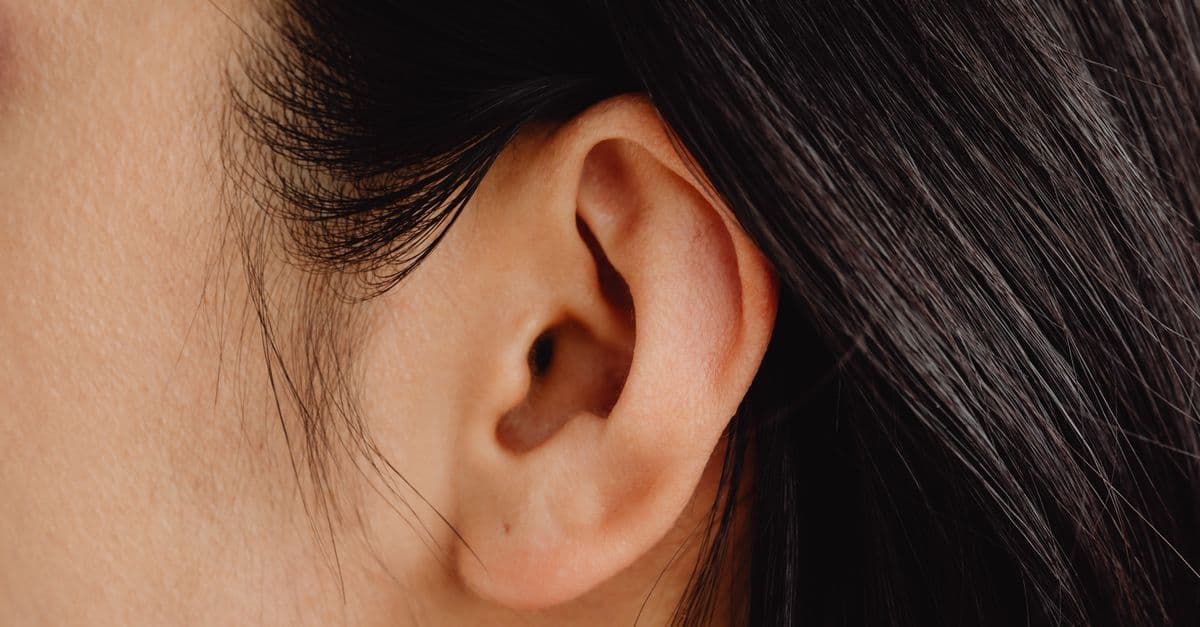
Photo: www.kaboompics.com / Pexels
Press play on a voice memo of yourself and something jarring happens: that voice does not sound like you. It sounds thinner, higher, more nasal — somehow not the voice you have been listening to your whole life. The reaction is so common that psychologists gave it a name back in 1966: voice confrontation. It is not a recording glitch. The microphone captured your voice with total accuracy. The problem is that you have never actually heard your real voice before — only a version of it mixed with vibrations traveling through your own skull.
Educational content, not medical advice. Talk to a doctor or audiologist before changing any hearing-related routine, evaluating unexplained hearing changes, or interpreting symptoms. Information here reflects current research, but every person's anatomy and situation differs.
You Hear Yourself Through Two Different Pathways at Once
Every other sound in your environment reaches your ears the same way: sound waves ripple through the air, funnel into your ear canal, and set your eardrum vibrating. That single pathway, called air conduction, is how you hear traffic, music, and other people's voices. It is also the only pathway a microphone has access to, because a microphone diaphragm behaves like a simplified eardrum sitting in open air.
Your own voice is different. When your vocal cords vibrate to produce speech, two things happen simultaneously. Sound leaves your mouth and travels through the air back to your ears, exactly like anyone else's voice would. But at the same moment, the vibration of your vocal cords, jaw, sinuses, and skull bones transmits sound directly into your inner ear through solid tissue. This second pathway is called bone conduction, and it never touches open air at all.
Bone is a much denser medium than air, and dense media transmit low-frequency vibration more efficiently than they transmit high-frequency vibration. The German acoustics researcher Christoph Pörschmann quantified this in a landmark 2000 study published in Acta Acustica united with Acustica. Using a masking experiment to isolate the bone-conducted signal from the air-conducted one, he found that bone conduction adds a perceptually significant boost in the 700 Hz to 1,200 Hz range compared to air conduction, and that the contribution of each pathway varies by speech sound rather than staying fixed. In plain terms: the sound reaching your cochlea while you talk is not the sound leaving your mouth. It has already been altered by your own skeleton before your brain ever processes it. (Pörschmann, 2000, Acta Acustica)
A related study by Stefan Stenfelt and Sabine Reinfeldt, published in the Journal of the Acoustical Society of America in 2007, measured this more directly using accelerometers on the skull during live speech and confirmed that bone-conducted sound contributes meaningfully to self-perceived voice quality, particularly at lower frequencies, while air conduction dominates at higher frequencies. The upshot of both lines of research is the same: your internal voice is a real-time blend of two acoustic signals that no other person, and no microphone, ever has access to. (Reinfeldt et al., 2010, Journal of Rehabilitation Research and Development)
| Feature | Air conduction | Bone conduction |
|---|---|---|
| Physical path | Mouth → open air → ear canal → eardrum → middle ear bones → cochlea | Vocal cords and jaw → skull and jaw bones → cochlea directly |
| Frequency emphasis | Relatively flat across the speech range | Boosted roughly 700 Hz–1,200 Hz; attenuated above 5 kHz |
| Who receives it | You, every listener nearby, and any microphone | Only you, and only while you are speaking |
| Perceived quality | Thinner, brighter, "recorded" tone | Deeper, fuller, more resonant tone |
| Real-world uses | Normal hearing, telephones, microphones, hearing aids (air-route) | Bone-anchored hearing aids, Shokz-style headphones, some audiometry |
Table: The two simultaneous pathways your brain blends every time you talk, and the single pathway everyone else — and every microphone — actually hears.
The Moment You Press Play, One Pathway Disappears
A microphone sitting in front of you during a recording session captures only the air-conducted signal. It has no physical connection to your skull, so it cannot register the bone-conducted component at all. When you play that recording back through headphones or speakers, every bit of sound reaching your ears now travels through air conduction only — even the parts of the signal your brain expects to also feel arriving through bone.
Your auditory system has spent your entire life calibrated to a combined signal. Decades of talking, laughing, humming, and singing have built a stable internal template of what "your voice" sounds like, and that template includes the bass and mid-range boost that bone conduction supplies every single time you speak. A recording strips that boost out entirely, leaving only the thinner, more air-conduction-dominant signal that has always been available to everyone else. Your brain does not experience this as "a recording of a familiar voice." It experiences it as "an unfamiliar voice that vaguely resembles mine," and that mismatch is what produces the jolt of recognition failure.
This is also why the effect is so consistent across people regardless of how good or bad anyone thinks their actual singing or speaking voice is. The gap between the internal voice and the recorded voice is not a judgment about vocal quality. It is a structural, physical difference in which frequencies made it to your cochlea, present in every human being who has an intact skull and a working set of vocal cords.
Why does my voice sound higher on a recording?
Recordings capture only the air-conducted portion of your voice. The bone-conducted low-frequency boost you hear internally while speaking — concentrated around 700 Hz to 1,200 Hz according to Pörschmann's 2000 acoustic study — is absent from any recording, so the same voice reads as thinner and higher-pitched played back.
Your Brain Actively Suppresses the Sound of Your Own Live Speech
There is a second, less obvious layer to this story that has nothing to do with bone versus air and everything to do with how the brain handles self-generated sound in real time. Before you speak a single word, your motor cortex sends a prediction of what that word should sound like to your auditory cortex. Neuroscientists call this signal an efference copy or corollary discharge, and its job is to tell the hearing system, in advance, "this incoming sound is one you are producing, not one arriving from the outside world."
Research using scalp electrodes to measure the N1 component of the brain's auditory evoked response — a signal that normally spikes in response to any new sound — has repeatedly shown that this response is measurably suppressed when a person is speaking compared to when they hear an identical recording of their own voice played back to them passively. A 2013 study in PLOS ONE using magnetoencephalography confirmed that auditory cortex activity during self-produced speech is actively dampened relative to activity during passive listening to the same speech, and that the degree of suppression tracks how closely the sound matches what the brain predicted. This same corollary-discharge mechanism has been documented across an unusually wide range of species, from crickets and bats to marmoset monkeys, suggesting it is a deeply conserved solution to a universal problem: distinguishing sounds you made from sounds that happened to you. (Auditory Cortex Processes Variation in Our Own Speech, PLOS ONE, PMC; Corollary Discharge Versus Efference Copy, Cerebral Cortex, 2020)
The practical consequence is that live speech is processed differently by your brain than recorded playback of the exact same words, on top of the acoustic differences already described. You are not just hearing a different frequency mix when you talk versus when you listen to a recording. Your auditory cortex is running a completely different processing mode — active prediction and suppression during live speech, ordinary passive listening during playback. Two layers of difference stack on top of each other, which is part of why the recorded-voice reaction feels so disorienting rather than merely "a bit off."
Is delayed auditory feedback related to this same system?
Yes. When speech a person hears through headphones is deliberately delayed by roughly 50 to 200 milliseconds, most fluent speakers stumble, repeat sounds, or slow down. This delayed auditory feedback (DAF) effect happens because the corollary discharge no longer matches the timing of the returning sound, disrupting the brain's real-time speech-monitoring loop. A 2026 systematic review in the International Journal of Language & Communication Disorders found the effect is consistent enough across studies that DAF is used clinically, sometimes reducing stuttering-related disfluencies by 60 to 80 percent in people who stutter, even though it disrupts fluency in typical speakers. (Iimura et al., 2026, systematic review and meta-analysis)
The "Voice Confrontation" Effect Is Partly Psychological, Not Just Acoustic
The acoustic mismatch explains why a recorded voice sounds different. It does not fully explain why so many people report actively disliking the sound of their own recorded voice, often describing it as "annoying," "nasal," or "weak." That reaction has a documented psychological component, and it predates modern digital recording by decades.
Psychologists Philip Holzman and Clyde Rousey published a study in 1966 in the Journal of Personality and Social Psychology that first used the term voice confrontation to describe this phenomenon. Their participants listened to recordings of their own voices and consistently rated them as more tense, more unpleasant, and less appealing than recordings of other people's voices, including strangers. Crucially, when Holzman and Rousey simulated the bone-conducted component using headphones so that participants heard something closer to their internal voice, the negative reaction persisted, though it was somewhat reduced. That detail matters: it means the discomfort is not purely a function of missing bass frequencies. Something about hearing yourself the way the external world hears you triggers a distinct, independent layer of unease. (Holzman & Rousey, 1966, Journal of Personality and Social Psychology)
Follow-up work in the decades since has connected this to a broader idea in self-perception research: people build and maintain an internal self-concept, a working model of how they look, sound, and come across to others, and that model is often more flattering or more familiar than the external reality. Hearing your recorded voice does something similar to what seeing an unexpected candid photograph does — it collapses the comfortable distance between "how I imagine I present myself" and "how I actually present myself to a room full of strangers." Researchers studying self-face and self-voice recognition using fMRI have found that hearing your own recorded voice activates regions in the right inferior frontal gyrus that also respond to seeing your own face, suggesting the brain treats self-voice recognition as part of the same broader self-identity network rather than as a purely auditory task. (The self across the senses: an fMRI study of self-face and self-voice recognition, PubMed)
Think of it like a mirror that only shows you the back of your head. You know intellectually what the back of your head looks like, but you have almost never actually seen it, and any photograph of it will feel oddly foreign the first several times, even though it is objectively accurate. Your recorded voice functions the same way: technically correct, subjectively alien, purely because of how rarely and how differently you have encountered it before.
Why do I hate the sound of my own voice?
Two separate effects combine. First, an acoustic mismatch: recordings strip out the bone-conducted bass you are used to hearing while you speak. Second, a psychological effect called voice confrontation, first documented by Holzman and Rousey in 1966, in which hearing the externally perceived version of your identity creates discomfort independent of the acoustic difference.
How Singers, Broadcasters, and Public Speakers Get Past It
The good news, well documented across voice-training and broadcasting literature, is that voice confrontation fades with repeated, deliberate exposure. Professional voice users do not have fundamentally different vocal anatomy than anyone else. What they have is hundreds or thousands of hours of recorded self-playback, which retrains the brain's expectations until the air-only, recorded version becomes the new baseline rather than a jarring outlier.
Vocal coaches and speech pathologists commonly use a handful of practical techniques to accelerate this process:
- Cup a hand behind one ear while speaking. This slightly redirects and reflects air-conducted sound back into the ear canal, giving a rough live preview of what a recording will sound like, before you ever hit record.
- Plug one ear temporarily while talking. This emphasizes the bone-conducted signal in that ear by comparison, which paradoxically makes the difference between "internal voice" and "external voice" more obvious and, with repetition, less startling.
- Record short daily clips and listen back immediately. Consistency matters more than clip length. Repeated, low-stakes exposure is the only intervention with a track record of durably reducing the discomfort, according to voice-training practice built on the desensitization principle common across exposure-based psychology.
- Record in the actual context you will be judged in. A podcaster rehearsing conversational tone benefits more from recording casual chat than from reading formal scripts, because the brain needs to recalibrate the specific register it will actually be evaluated on.
- Separate the acoustic reaction from the content review. On a first listen, ignore word choice and pacing entirely and just let the voice itself stop feeling foreign. Trying to judge content and get used to the sound simultaneously slows the process down.
Broadcasters and voice actors describe an almost identical arc: intense discomfort on the first handful of playbacks, a plateau where the voice starts to sound merely "neutral" rather than actively wrong, and eventually a state where the recorded voice functions as the default mental model, at which point live conversation can occasionally feel like the unusual version instead. There is no shortcut around the exposure requirement. No amount of understanding the underlying acoustics removes the discomfort by itself, though it does typically reduce the intensity of the initial reaction, because the brain has at least one explanation for the mismatch instead of an unexplained wrongness.
Bone Conduction Is Also a Working Technology, Not Just a Curiosity
The same physics responsible for making your own voice sound richer to you has been engineered directly into several categories of consumer and medical devices, which is a useful way to understand bone conduction as a real physical phenomenon rather than an abstract explanation invoked only to answer the recorded-voice question.
Bone conduction headphones, sold under brands including Shokz (formerly AfterShokz), use small transducers that rest against the cheekbones just in front of the ears rather than sitting inside or over the ear canal. The transducers vibrate the skull directly, and those vibrations reach the cochlea the same way your own speech does when you talk. Because the ear canal stays completely open, users can still hear ambient traffic, other runners, or a training partner's voice, which is the main reason these headphones are popular with outdoor runners and cyclists who need situational awareness that sealed earbuds remove.
Bone-anchored hearing aids (BAHA) take the same principle and apply it therapeutically. A small titanium implant is surgically anchored to the skull behind the ear, and an external sound processor clips onto it, converting sound into vibrations that travel through bone directly to a functioning cochlea. This bypasses damaged or malformed outer and middle ear structures entirely, which makes BAHA devices effective for people with conductive hearing loss (a physical obstruction or damage somewhere in the outer or middle ear) or for people who cannot use conventional in-ear hearing aids because of chronic ear infections or structural abnormalities.
Diagnostic audiometry uses bone conduction for a different purpose: precisely locating where a hearing problem originates. An audiologist presents tones through both a standard air-conduction headphone and a small bone-conduction oscillator placed against the mastoid bone behind the ear, then compares the softest volume the patient can detect through each route. If bone-conduction thresholds are close to normal but air-conduction thresholds are notably worse, the problem sits somewhere in the outer or middle ear (conductive hearing loss). If both thresholds are similarly reduced, the problem more likely involves the cochlea or auditory nerve (sensorineural hearing loss). That single comparison, built entirely on the same physical principle that makes your recorded voice sound thin, is one of the first diagnostic branch points in a standard hearing evaluation.
How do bone conduction headphones work?
They rest small vibrating transducers against the cheekbones in front of the ears rather than inside the ear canal. The vibrations travel through skull bone directly to the cochlea, the same physical pathway your own speech uses when you talk, while leaving the ear canal open to outside sound.
Do hearing tests measure bone conduction?
Yes. Audiologists test air conduction and bone conduction separately using headphones and a bone oscillator placed behind the ear. A meaningful gap between the two thresholds, called an air-bone gap, helps identify whether hearing loss originates in the outer or middle ear (conductive) or in the cochlea or auditory nerve (sensorineural).
Vocal Anatomy Sets the Raw Material Both Pathways Work With
Understanding why recordings sound different also requires a basic picture of where the sound originates in the first place. Speech begins in the larynx, a cartilage structure in the throat that houses the vocal folds (commonly called vocal cords). Air pushed up from the lungs causes the folds to open and close rapidly, chopping the airstream into a buzzing series of puffs. In adult men, the vocal folds typically vibrate around 85 to 180 times per second during conversational speech; in adult women, typically around 165 to 255 times per second. That rate of vibration is the fundamental frequency, the acoustic property most people mean when they talk informally about someone's vocal "pitch." A companion guide covers the same effect from the human-body angle in why your voice sounds different on recordings.
That buzzing signal alone would sound like a flat, unpleasant drone. What turns it into recognizable, individual-sounding speech is the vocal tract above the larynx, the throat, mouth, and nasal cavity, which acts as a resonating chamber and selectively amplifies certain frequency bands, called formants, while suppressing others. The exact shape of a person's vocal tract, throat length, mouth cavity size, sinus structure, is as individual as a fingerprint, which is part of why voices remain recognizable and distinct even among people with similar fundamental pitch.
Both air conduction and bone conduction carry this same fundamental-frequency-plus-formant signal, but they carry it with different frequency emphasis, for the physical reasons already covered. Bone tissue transmits low frequencies, closer to and including the fundamental frequency and lower formants, with less energy loss than it transmits higher frequencies. Air transmits the full range more evenly. That is the acoustic seed from which the entire recorded-voice mismatch grows: same source signal, two different filters, one pathway available only to you.
The Anatomy of the Listening Side: How Both Signals End Up at the Same Destination
Regardless of which pathway carries it, sound has to reach the same final destination to be perceived at all: the cochlea, a fluid-filled, snail-shaped structure in the inner ear lined with roughly 15,500 sensory hair cells that convert mechanical vibration into the electrical signals your brain interprets as sound. In ordinary air-conduction hearing, that vibration arrives via a well-known chain: outer ear collects sound, eardrum vibrates, three tiny middle-ear bones (the malleus, incus, and stapes, with the stapes being the smallest bone in the human body) mechanically amplify and transfer that vibration into the fluid of the cochlea.
Bone conduction skips almost the entire first half of that chain. Vibration traveling through the temporal bone, the skull bone that houses the inner ear, sets the cochlear fluid moving directly, without ever needing an eardrum or middle-ear bones to relay it. This is precisely why bone-anchored hearing aids work for people whose eardrum or middle-ear bones are damaged or missing: bone conduction offers a physical bypass around exactly the part of the ear that is not functioning.
Once vibration reaches the cochlea, whether it arrived through air or bone, the hair cells and downstream auditory nerve process it identically. Your cochlea has no built-in way to tag a signal as "arrived via air" or "arrived via bone." The distinction only exists earlier, in which physical medium delivered the vibration and which frequencies survived the trip. By the time a combined signal reaches your brain, it is a single blended waveform, air conduction and bone conduction both baked in, and your brain has learned to treat that blend as "my voice" through years of repetition it can never fully undo just by understanding the underlying mechanism.
What People Get Wrong About the Recorded-Voice Effect
A common misconception is that recordings somehow "add" a foreign, tinny quality that was not present in the original speech, as though microphones distort voices the way a cheap phone speaker distorts music. In reality, an accurate microphone and a clean recording chain reproduce the air-conducted signal with high fidelity. Nothing is added. Something is simply missing that was never part of the true external sound to begin with. If you want proof, ask a close friend to describe your speaking voice from memory. Their description, and any recording of you, will track each other closely, because both are built entirely from the air-conducted signal, the only version of your voice anyone besides you has ever had access to.
A second common misconception is that people who are comfortable with public speaking or singing simply have "better" voices that sound more like their recordings from the start. There is no evidence for this. What professional voice users typically have is more accumulated exposure to their own recorded voice, not a smaller acoustic gap between internal and external voice. The underlying bone-versus-air physics does not change based on training; the brain's tolerance for the mismatch does.
A third misconception worth addressing directly: some people assume the recorded voice is somehow the "fake" one and the internal voice is the "true" one, because the internal voice feels more natural and has been familiar for longer. Acoustically, this has it backwards. The internal voice is the unusual, private mix, available only to the one person whose skull happens to be conducting it. The recorded voice, whatever discomfort it produces, is functionally identical to what every other person who has ever spoken to you has heard. In a very literal sense, it is the more universally shared, externally verified version of the two.
Why do sleep-talking recordings sound even stranger than normal recordings?
People who hear recordings of their own sleep-talking often describe the effect as more disorienting than an ordinary voice recording. One likely reason is that sleep speech happens without the listener consciously generating expectations through corollary discharge in the way waking speech does, so there is no internal comparison signal built up in memory to soften the mismatch; only the raw, unfamiliar recording remains.
Does everyone experience voice confrontation, or only some people?
The acoustic mismatch between bone-conducted and air-conducted voice affects everyone with typical hearing and an intact skull, because it is a physical consequence of anatomy rather than a personal quirk. The intensity of the psychological discomfort that accompanies it, first documented by Holzman and Rousey in 1966, varies between individuals, but the underlying acoustic gap itself does not depend on how a person feels about their voice.
Can hearing loss change how someone experiences their own recorded voice?
Yes, in principle. Because bone conduction and air conduction can be affected differently by different types of hearing loss, a person with primarily conductive hearing loss may rely more heavily on bone conduction for self-perception, potentially widening the gap between their internal and recorded voice, while a person with sensorineural hearing loss affecting both pathways equally may experience a smaller relative gap. This is an extension of the same principles audiologists use in air-bone gap testing rather than a separately studied phenomenon in its own right.
The Takeaway
Your recorded voice is not distorted, and your internal voice is not more authentic. Two physically distinct pathways, air conduction and bone conduction, deliver two different acoustic signals to your cochlea every time you speak, and only one of those pathways has ever been available to anyone but you. A microphone captures exactly what the rest of the world has always heard; the mismatch you feel on playback is your brain confronting, often for the first time, an accurate version of a sound it has spent a lifetime hearing through a private, bone-filtered shortcut. The discomfort fades with exposure because the brain is doing what it always does with unfamiliar input: building a new baseline. It just takes a few dozen playbacks to get there.
Sources
- Holzman, P.S. & Rousey, C. (1966). The voice as a percept. Journal of Personality and Social Psychology, 4(1), 79–86.
- Pörschmann, C. (2000). Influences of bone conduction and air conduction on the sound of one's own voice. Acta Acustica united with Acustica, 86(6), 1038–1045.
- Reinfeldt, S., Östli, P., Håkansson, B., & Stenfelt, S. (2010). Hearing one's own voice during phoneme vocalization — transmission by air and bone conduction. Journal of the Acoustical Society of America / summarized in Journal of Rehabilitation Research and Development.
- Stenfelt, S. (2011). Acoustic and physiologic aspects of bone conduction hearing. Advances in Oto-Rhino-Laryngology, 71, 10–21.
- Behroozmand, R. et al. (2013). Auditory cortex processes variation in our own speech. PLOS ONE, 8(12), e82925.
- Kaplan, J.T., Aziz-Zadeh, L., Uddin, L.Q., & Iacoboni, M. (2008). The self across the senses: an fMRI study of self-face and self-voice recognition. Social Cognitive and Affective Neuroscience, 3(3), 218–223.
- Iimura, D. et al. (2026). Immediate effects of delayed auditory feedback on stuttering: a systematic review and meta-analysis of literature published 2000–2024. International Journal of Language & Communication Disorders.
- Poeppel, D. et al. (2020). Corollary discharge versus efference copy: distinct neural signals in speech preparation differentially modulate auditory responses. Cerebral Cortex, 30(11), 5806–5820.
Related Reading
Follow new articles
Add SciHub101 to your feed reader to see new science and technology stories.
About the Author
SciHub101 is an independent science and technology publication founded and edited by Buğra Sözeri, a software engineer and app developer based in Türkiye. AI tools assist with drafting and research. Source documentation in the existing archive is uneven, and articles are being reviewed and corrected. The Editorial Team byline identifies editorial responsibility; it does not certify specialist or independent human review. Where we compare products, anything built by our own team is labelled as such — see the editorial guidelines and About page for how corrections and disclosures work.
Related Articles

Why Do We Cry When Laughing? The Science
Intense laughter can make people cry real tears. Here's the physiological mechanism, the brain science, and why joy and grief share a face.

Why We Get Butterflies in Stomach — Science
The gut-brain axis explained: why nervousness, excitement, and love all produce the same fluttery stomach sensation through the vagus nerve and fight-or-flight.

How Hearing Works — From Sound to Brain
How the ear turns air pressure waves into the experience of sound — outer, middle, and inner ear anatomy, cochlear mechanics, and hearing loss.

What Is the Appendix For? Biology Explained
What does the appendix actually do? The microbiome safe-house hypothesis, immune function, appendicitis, and why it's not really useless.

How Lungs Work — Breathing and Gas Exchange
How the lungs move air, exchange oxygen and CO2, and what goes wrong in asthma, COPD, pneumonia, and at high altitude. A clear, evidence-based explanation...
How Skin Works — Your Largest Organ
Skin's three layers, how it protects you, why it ages, and the biology of pigment, sweat, and sensation in your body's largest organ.