Why Vacuum Chambers Are Useful In Science
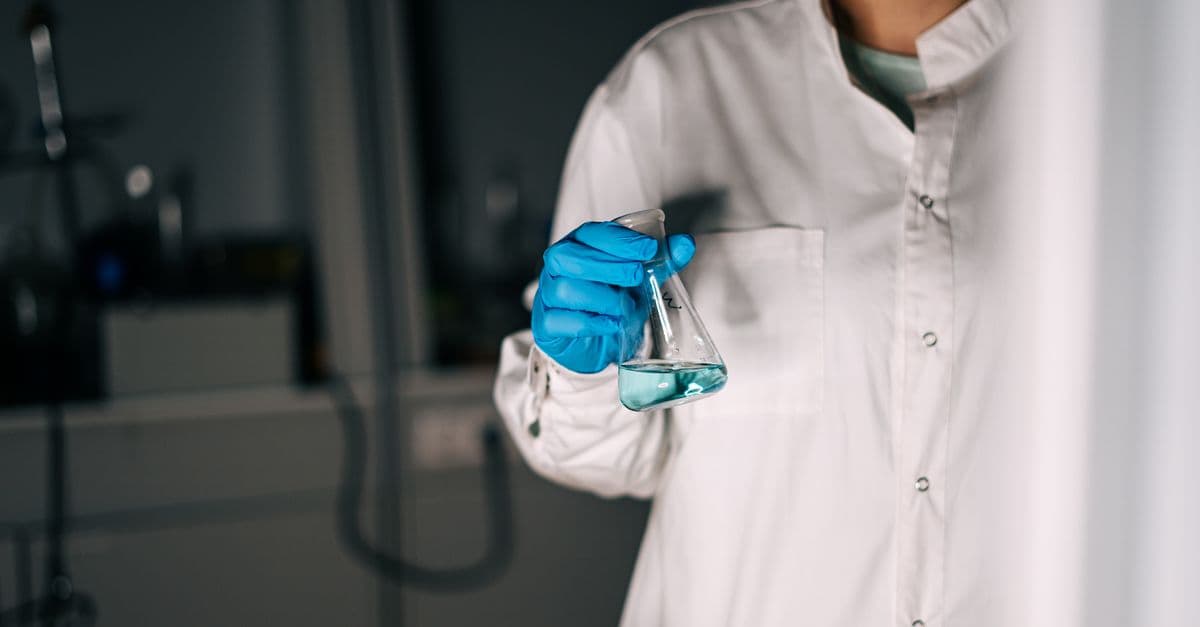
Photo: Daria / Pexels
In 1654, the German scientist and mayor of Magdeburg, Otto von Guericke, sealed two bronze hemispheres together, pumped the air out of the gap between them, and challenged two teams of horses to pull them apart. They couldn't. The demonstration, staged in Regensburg for the Holy Roman Emperor and later repeated in Magdeburg itself, proved that ordinary atmospheric pressure, invisible and easy to ignore, is strong enough to hold two metal bowls together against sixteen straining horses once the air between them is removed (Britannica). That single, dramatic experiment is the ancestor of every vacuum chamber in every modern laboratory, semiconductor fab, and spacecraft-testing facility on Earth. The core idea hasn't changed: remove the air, and you remove a source of pressure, chemical reactivity, and interference that would otherwise contaminate whatever you're actually trying to measure or build.
Air as an uncontrolled variable
Ordinary air is not an empty backdrop for experiments, it's an active participant. At sea level, it exerts a pressure of about 101,325 pascals (14.7 pounds per square inch) on every surface it touches, a force most people never notice because it pushes on everything, everywhere, all at once. But that same pressure pushes back against any process that wants to move something through it, from a spinning turbine blade to a beam of accelerated particles.
Air also transfers heat through convection, the process by which warm gas molecules physically carry heat away from a hot surface and redistribute it. It carries moisture, dust, and airborne microorganisms that can settle on a delicate sample. And it reacts chemically with a huge range of materials, especially through the oxygen that makes up about 21 percent of its volume, which readily bonds with metals, semiconductors, and organic compounds to form oxide layers or degrade surfaces outright.
Any experiment sensitive to these effects, a precision balance trying to weigh something to the microgram, a metal-deposition process trying to lay down an atom-thin film, an accelerated particle beam trying to travel in a straight line, gets contaminated by air's presence unless that presence is deliberately controlled or removed entirely. That's the whole reason vacuum chambers exist.
A vacuum chamber is a sealed enclosure connected to one or more pumps that remove gas molecules from the interior until the internal pressure drops far below normal atmospheric pressure. Removing the air removes air resistance, removes oxygen for chemical reactions, and removes the medium through which heat would otherwise convect, isolating whatever effect the experiment is actually trying to measure.
Preventing oxidation and contamination
Many materials react readily with atmospheric oxygen and moisture, forming oxide layers or degrading in ways that ruin sensitive manufacturing processes. Semiconductor fabrication is the clearest modern example. Building a microchip means depositing layers of material only a few atoms thick, with electrical properties engineered down to the atomic scale, and even a monolayer of unwanted oxide forming during that process can disrupt the precise conductivity or insulation the design calls for. That requirement for an extremely clean, oxygen-controlled environment during steps like thin-film deposition is well documented in semiconductor manufacturing standards published by SEMI, the global semiconductor industry association.
Vacuum deposition techniques, including sputtering (in which atoms are knocked loose from a source material by ion bombardment and travel to a target surface) and thermal evaporation coating, rely on a vacuum chamber specifically so that metal or other material can travel from a source to a target without colliding with air molecules or reacting with oxygen along the way. The result is a cleaner, thinner, and more uniform coating than would be possible in open air, which is why the same underlying technology shows up in everything from anti-reflective camera lens coatings to the reflective layer on a potato chip bag.
Contamination control isn't limited to chip fabrication either. Surface scientists studying how atoms arrange themselves on a crystal's surface need a chamber where new gas molecules aren't constantly landing on and disturbing that surface between measurements, which is why surface science, alongside particle physics, is one of the primary users of the most extreme vacuum levels achievable in a laboratory.
Why do metal coatings need a vacuum instead of just being sprayed on in open air?
Metal atoms traveling through open air would collide repeatedly with nitrogen and oxygen molecules before reaching a target surface, scattering their path and reacting chemically along the way. A vacuum removes that interference, letting atoms travel in a straight, predictable line and land as a clean, uniform, oxide-free film, something spray-based coating in ordinary air cannot achieve.
Simulating space without leaving Earth
Space itself is, for practical purposes, an extremely good vacuum, and testing spacecraft components, materials, and instruments on Earth requires simulating that environment before launch, because the consequences of a hardware failure in orbit are far more expensive and far less fixable than a failure caught on the ground. NASA's Space Environment Simulation Laboratory at Johnson Space Center uses large vacuum chambers, some big enough to hold an entire spacecraft, to test hardware under space-like vacuum and temperature conditions before it's trusted with an actual mission.
This matters because a component that behaves predictably at normal atmospheric pressure can behave very differently once air pressure, and the heat transfer and lubrication effects that come with it, are removed. Many everyday assumptions about how materials behave simply don't hold once air is gone.
Ordinary lubricants, for example, often rely partly on evaporation resistance that only works because air pressure suppresses the rate at which the lubricant's molecules boil off. In a vacuum, with nothing holding those molecules back, the same lubricant can evaporate away entirely within hours or days, leaving moving mechanical parts to grind against each other with no protection. That's why spacecraft mechanisms, from solar panel hinges to robotic arm joints, require specially formulated vacuum-compatible lubricants that are tested inside chambers on Earth before they're trusted in orbit.
Heat transfer changes just as dramatically. On Earth, a hot object cools partly by convection, warm air rising away from its surface and carrying heat with it. In the vacuum of space, convection doesn't exist at all, so a spacecraft can only lose heat through radiation, the same process by which the Sun's warmth crosses empty space to reach Earth. Engineers testing a satellite's thermal design inside a vacuum chamber, often combined with cryogenic cooling to simulate the cold of deep space, are checking whether components will overheat or freeze once convective cooling is no longer available to help.
An analogy: a padded room versus an open field
Testing a delicate measurement in ordinary air is like trying to hear a whisper in a noisy room full of background chatter. The signal you actually want is buried under interference from something you didn't intend to be part of the experiment in the first place. A vacuum chamber is like removing everyone else from the room, so the only sound left is the one you're actually trying to measure.
There's a second, complementary analogy worth holding alongside the first. Think of air molecules in a normal room as pedestrians on a crowded sidewalk. Try to walk in a perfectly straight line across that sidewalk and you'll get jostled, bumped, and nudged off course by nearly everyone you pass. A vacuum chamber clears the sidewalk entirely, letting whatever is moving through it, an electron, a metal atom, a laser beam, a satellite component being scanned, travel in an undisturbed, predictable path from one side to the other.
This is precisely why particle physics experiments, gravitational wave detectors, and precision atomic clocks all rely on high-vacuum or ultra-high-vacuum environments. Removing air molecules removes a source of collisions, noise, and interference that would otherwise obscure the extremely subtle physical effects these instruments are built to detect. A gravitational wave detector like LIGO, for instance, measures distortions in space smaller than a fraction of a proton's width, a precision that residual air molecules bouncing around inside the instrument's beam tubes would completely swamp.
Levels of vacuum and why the difference matters
Not every application needs the same degree of emptiness, and the vacuum industry classifies vacuum levels into broad tiers based on how far pressure has been reduced from normal atmospheric conditions. Choosing the right tier matters because pushing a chamber to a deeper vacuum than a given process actually requires wastes time, energy, and equipment cost without adding any scientific or manufacturing benefit.
| Vacuum level | Approximate pressure range | Typical use |
|---|---|---|
| Low (rough) vacuum | ~100,000 to 3,000 pascals | Basic degassing, vacuum packaging, some medical suction devices |
| Medium vacuum | ~3,000 to 0.1 pascals | Freeze-drying, vacuum distillation, some thin-film deposition |
| High vacuum | ~0.1 to 0.0000001 pascals | Semiconductor fabrication, electron microscopy, mass spectrometry |
| Ultra-high vacuum | Below ~0.0000001 pascals | Particle accelerators, surface science, atomic-scale research |
Deeper vacuum levels remove more residual gas molecules, but each additional order of magnitude of pressure reduction costs more time, energy, and specialized equipment, so scientists and engineers match the vacuum level to the actual sensitivity of the process.
Why do electron microscopes require a vacuum to operate?
Electron microscopes fire a focused beam of electrons at a sample to generate images at resolutions far beyond what visible light permits, since electrons have a much shorter effective wavelength than photons of visible light. But electrons traveling through air would collide with air molecules and scatter before reaching the sample, blurring or destroying the image entirely. A high-vacuum environment removes those air molecules, letting the electron beam travel in a clean, straight, predictable path, which is essential for the microscope's resolution and accuracy. This is one of many places where the underlying physics overlaps with the way mass spectrometry identifies molecules, since both techniques depend on charged particles traveling undisturbed through a near-empty chamber.
How low does the vacuum inside a particle accelerator actually go?
Particle accelerators require some of the emptiest environments humans can create, with pressures inside the beam pipe approaching levels comparable to the near-vacuum found in interplanetary space. At that level of emptiness, an accelerated particle can travel enormous distances, sometimes many kilometers around a circular collider, without a single collision with a stray gas molecule knocking it off its carefully controlled trajectory.
How vacuum pumps actually remove the air
A vacuum chamber is only as good as the pumps attached to it, and no single pump design can take a chamber from normal atmospheric pressure all the way down to ultra-high vacuum. Instead, real systems stack two or three different pump technologies in sequence, each one taking over once the pressure has dropped low enough for the previous pump's mechanism to stop working efficiently.
Rotary vane pumps do the first, roughest stage of the job, pulling a chamber down from atmospheric pressure into the low or medium vacuum range. Inside the pump, an off-center rotor spins inside a cylindrical housing, and a set of vanes mounted on the rotor slide in and out under centrifugal force as it turns, sealing off small pockets of gas between the vanes and the housing wall. As the rotor keeps turning, each pocket shrinks, compressing the trapped gas and pushing it out through an exhaust valve, the same basic principle as a mechanical air compressor working in reverse (Leybold, "How do Vacuum Pumps Work?"). Most rotary vane pumps are oil-sealed, meaning a thin film of oil lubricates the vanes and helps maintain the seal between each pocket, which is why lab technicians periodically have to check and replace pump oil as routine maintenance.
Once a chamber reaches the upper end of what a rotary vane pump can achieve, gas has become too sparse for that compression-based approach to keep working efficiently, and a second-stage pump takes over. Turbomolecular pumps handle the jump into high and ultra-high vacuum territory using an entirely different mechanism: a stack of angled turbine blades spinning at extremely high speed, commonly in the range of tens of thousands of rotations per second. Rather than compressing gas into shrinking pockets, the spinning blades physically strike individual gas molecules and knock them, through momentum transfer, toward the pump's exhaust side, passing molecules down through successive blade stages until they reach a rotary vane pump backing the system, since a turbomolecular pump cannot exhaust directly into open atmospheric pressure (ULVAC, "Turbomolecular Pump: Fundamentals of Vacuum Pumps"). This is closer to swatting individual tennis balls one at a time toward a corner than to squeezing a balloon; it only works once the gas is sparse enough that the spinning blades can reliably intercept and redirect individual molecules rather than fighting a dense, resistant crowd of them.
For the very deepest vacuum levels used in surface science and some space-simulation work, a third technology, the cryopump, takes a fundamentally different approach again: instead of physically pushing gas molecules out of the chamber, it freezes them in place. A cryopump cools an internal surface down to extremely low cryogenic temperatures, often within a few degrees of absolute zero, and gas molecules that drift onto that surface lose enough kinetic energy on contact to condense directly onto it, similar to how water vapor condenses into frost on a freezer's cold interior wall. Because cryopumps trap and hold gas rather than expel it, they need periodic "regeneration," warming the surface back up to release and vent the accumulated frozen gas, and they cannot start pumping from atmospheric pressure, so a chamber has to be roughed down by another pump first before a cryopump can take over (Leybold, "How does a Cryopump work?").
Why can't one pump do the whole job from atmosphere to ultra-high vacuum?
Each pump design has a pressure range where its physical mechanism stops being efficient. Rotary vane pumps rely on compressing gas pockets, which requires a reasonably dense supply of molecules to trap; turbomolecular pumps rely on blades striking individual molecules, which only works once gas is sparse; and cryopumps require gas already thin enough that a cold surface can capture it without instantly frosting over. Stacking pump types in sequence lets each one operate in the pressure range it's actually built for.
Where vacuum chambers do essential scientific work
Particle accelerators like CERN's Large Hadron Collider maintain ultra-high vacuum conditions in their roughly 27-kilometer ring of beam pipes, a level of emptiness CERN itself has described as approaching pressures found in interplanetary space, specifically so that particles accelerated to near light-speed can travel that entire distance without colliding with stray air molecules and losing their energy or trajectory (CERN). Without that level of vacuum, the LHC's proton beams would lose coherence within a fraction of a single lap.
Freeze-drying, formally called lyophilization, is one of the more counterintuitive applications: it's used both in food preservation and in pharmaceutical manufacturing to stabilize sensitive biological products like vaccines and antibody therapies. The process relies on a vacuum chamber to lower pressure enough that frozen water sublimates, meaning it turns directly from solid ice to water vapor without ever passing through a liquid phase. Skipping the liquid phase matters because liquid water moving through a delicate protein or cell structure during ordinary drying can rupture membranes and denature molecules; sublimation removes the water while leaving the underlying structure largely intact.
Vacuum chambers also underpin large parts of materials science, where researchers studying how thin films, coatings, or nanostructures form need to observe and control that process without oxygen or moisture interfering. And in fluid dynamics research, low-pressure wind tunnels and vacuum-assisted test chambers help researchers isolate specific aerodynamic effects, a controlled-environment approach that echoes the broader challenge of why turbulence is so hard to predict even under otherwise well-understood conditions: chaotic fluid behavior is sensitive enough to initial conditions that removing every extraneous variable, including uncontrolled air currents, is often the only way to get a clean, repeatable measurement.
Optical coating and photonics research is another major user. Many of the antireflective and highly reflective coatings used in precision optics, telescopes, lasers, and even the glowing indicators studied in explanations of how fluorescence makes objects glow, are built up layer by layer inside a vacuum deposition chamber, because even a thin, uncontrolled oxide layer between coating layers would scatter light and ruin the optical precision the coating is designed to achieve.
What people get wrong about vacuum chambers
A common misconception is that a vacuum chamber creates "nothing," an absolute void with zero particles present anywhere inside it. In practice, even the most advanced ultra-high vacuum systems still contain some residual gas molecules bouncing around; a "perfect" vacuum with literally zero particles doesn't exist in any laboratory setting on Earth, or arguably anywhere in the observable universe, since even the emptiest regions of interstellar space still contain a handful of atoms per cubic meter. Vacuum quality is always described in terms of how low the pressure has been reduced relative to normal atmospheric pressure, not as an absolute absence of matter.
Another misconception is that all vacuum applications require the same level of vacuum, or that "more vacuum is always better." A food-preservation vacuum chamber used for freeze-drying operates at a vastly different, much less extreme, pressure range than the ultra-high vacuum required inside a particle accelerator's beam pipe. Using the wrong vacuum level for a given application either wastes energy and cost pursuing an emptiness the process doesn't need, or fails to adequately control the interfering variable the experiment actually requires removed.
A third misconception worth naming plainly, in the spirit of honest limitations rather than overselling the technology: a vacuum chamber does not eliminate every source of experimental noise. Vibration, stray electromagnetic fields, temperature fluctuations in the chamber walls, and outgassing (the slow release of trapped gas molecules from the chamber's own interior surfaces) can all still interfere with a sensitive measurement even after the air itself has been pumped out. Building and maintaining a genuinely clean ultra-high vacuum system, one where outgassing has been minimized through careful material selection and extended pump-down "bake-out" periods that can run for days, is itself a specialized engineering discipline, not something that happens automatically the moment a pump is switched on.
The takeaway
Vacuum chambers matter because ordinary air is never a passive backdrop, it's an active source of pressure, chemical reactivity, heat transfer, and particle collisions that can distort delicate measurements or ruin precision manufacturing processes. Removing air deliberately, to whatever degree a given experiment or process actually requires, isolates the effect scientists and engineers are trying to study or produce, whether that's testing spacecraft hardware for the vacuum of space itself, keeping oxygen away from a semiconductor wafer during fabrication, or letting a particle beam circle a 27-kilometer ring undisturbed. The same principle Otto von Guericke demonstrated with two bronze hemispheres and sixteen horses in 1654 is still the working logic behind some of the most advanced instruments humans have ever built.
Read next:
- How Mass Spectrometry Identifies Molecules
- Why Turbulence Is Hard to Predict
- How Fluorescence Makes Objects Glow
FAQ
Q: Why do experiments need a vacuum instead of just controlling for air separately?
Air affects experiments through multiple simultaneous mechanisms, pressure, chemical reactivity with oxygen, heat convection, and particle collisions, that are difficult to isolate and control individually. Removing the air entirely eliminates all of these interfering effects at once rather than requiring separate controls for each one.
Q: Why do electron microscopes need a vacuum to work?
Electrons traveling through air collide with air molecules and scatter, which would blur or destroy the image. A vacuum removes those air molecules, letting the electron beam travel in a clean, predictable path needed for high-resolution imaging.
Q: Is there such a thing as a perfect, empty vacuum in a laboratory?
No. Even ultra-high vacuum systems retain some residual gas molecules. Vacuum quality is described in terms of how far pressure has been reduced from normal atmospheric levels, not as an absolute absence of all matter.
Q: How do vacuum chambers help test spacecraft components before launch?
Facilities like NASA's Space Environment Simulation Laboratory use vacuum chambers to replicate the near-total absence of air pressure found in space, revealing how materials, lubricants, and mechanisms will actually behave once launched, since many properties that hold in normal atmospheric air don't hold in a vacuum.
Q: Why does freeze-drying require a vacuum chamber?
Freeze-drying (lyophilization) uses a vacuum to lower pressure enough that frozen water sublimates directly from ice to vapor without passing through a liquid state, which preserves delicate molecular structures in food or pharmaceutical products that heat-based drying methods would damage.
Q: What was Otto von Guericke's Magdeburg hemispheres experiment?
In 1654, Otto von Guericke sealed two bronze hemispheres together and pumped the air out from between them, then showed that two teams of horses pulling in opposite directions couldn't separate them, demonstrating just how strong ordinary atmospheric pressure becomes once air is removed from one side of a sealed surface (Britannica).
Follow new articles
Add SciHub101 to your feed reader to see new science and technology stories.
About the Author
SciHub101 is an independent science and technology publication founded and edited by Buğra Sözeri, a software engineer and app developer based in Türkiye. AI tools assist with drafting and research. Source documentation in the existing archive is uneven, and articles are being reviewed and corrected. The Editorial Team byline identifies editorial responsibility; it does not certify specialist or independent human review. Where we compare products, anything built by our own team is labelled as such — see the editorial guidelines and About page for how corrections and disclosures work.
Related Articles


Cosmic Rays and Particle Physics — Sources, Detection, and the Oh-My-God Particle — SciHub101
What cosmic rays are, how Victor Hess discovered them in 1912, their sources from the Sun to AGN, detection methods, biological effects, and the ultra-high-energy mystery.

The Higgs Boson Explained — God Particle
The Higgs boson explained: how particles get mass, the 2012 CERN discovery, Standard Model, and why the 'God particle' nickname is misleading.

String Theory Explained — Beyond the Standard Model
What string theory really proposes, the extra dimensions, M-theory, the multiverse landscape, and why critics call it unfalsifiable in 2026.

AI at CERN: How Machine Learning Found the Higgs Boson and What Comes Next
Machine learning didn't just assist the Higgs boson discovery—it's now reshaping how physicists search for physics beyond the Standard Model.