How Cloud Chambers Make Radiation Visible
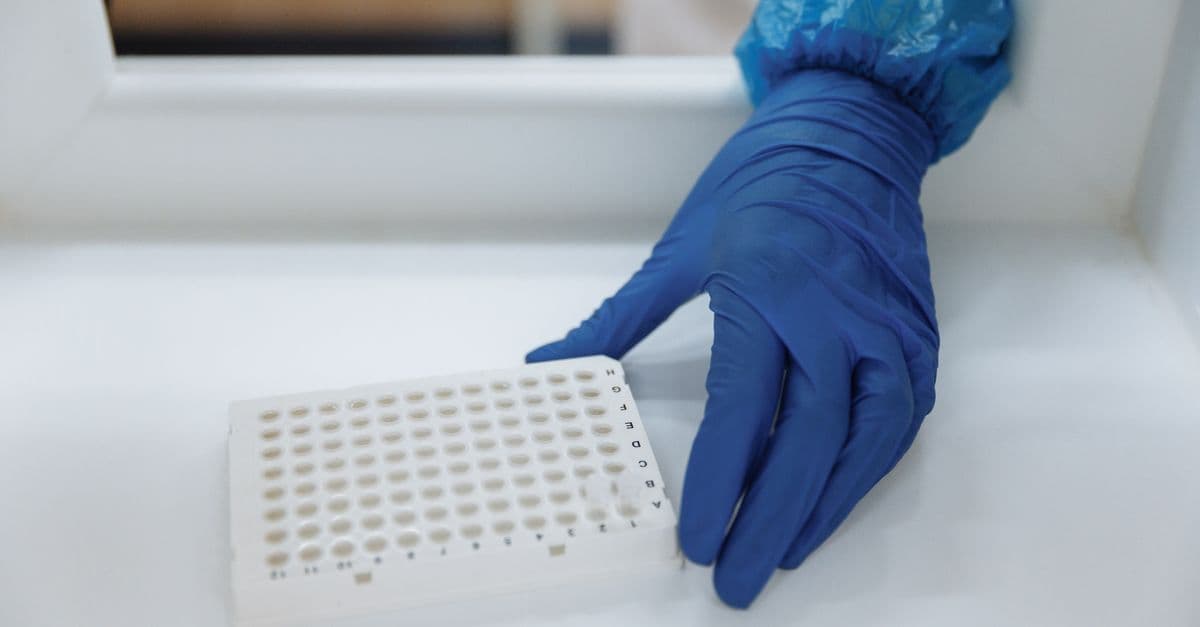
Photo: Thirdman / Pexels
A cloud chamber turns invisible subatomic particles into thin white streaks you can watch with your own eyes, using nothing more exotic than alcohol vapor and a cold surface. Charles Thomson Rees Wilson built the first working version at the Cavendish Laboratory in Cambridge, demonstrating the particle-track effect in 1911 after years of studying how clouds form in the atmosphere. He shared the 1927 Nobel Prize in Physics for the invention, and physicist Ernest Rutherford later called it "the most original and wonderful instrument in scientific history." This article explains the physics behind that instrument, why different particles leave different signatures, and how it helped confirm the existence of antimatter.
Why Wilson built a machine meant to study weather, not particles
Charles Thomson Rees Wilson was not trying to detect radiation when he started. He was a Scottish physicist fascinated by atmospheric optics, and in 1894 he spent time as a research assistant at the meteorological observatory on Ben Nevis, Scotland's highest mountain, watching clouds form around the summit. He wanted to reproduce that process in the laboratory, so he built small glass chambers where he could expand and cool moist air on demand and watch condensation form under controlled conditions.
That apparatus, the expansion cloud chamber, worked by suddenly increasing the volume of a sealed container of moist air, which cools the air rapidly (adiabatic expansion, the same principle that makes a can of compressed air feel cold when you spray it) and pushes the vapor past its saturation point. Wilson spent the better part of a decade refining this setup purely as a meteorology tool, trying to understand whether dust particles were strictly necessary for cloud droplets to form, a question that mattered for weather science at the time.
The turning point came when Wilson started testing what else, besides dust, could seed condensation. Around 1910 and 1911, following the 1895 discovery of X-rays by Wilhelm Röntgen and growing interest in ionizing radiation across European physics, Wilson exposed his supersaturated chamber to X-rays and to radioactive samples emitting alpha and beta particles. He found that even in air scrubbed clean of dust, the vapor still condensed, but only in fine lines that traced exactly where the ionizing radiation had passed. He had built, without initially intending to, the first device that let a human eye watch a subatomic particle's path in real time. The Royal Society and the Nobel committee later recognized this dual achievement (Nobel Prize in Physics, 1927): Wilson had turned a tool for studying clouds into a tool for studying the atom.
The physics of a supersaturated vapor
Supersaturation — a state where air holds more water or alcohol vapor than it normally could at a given temperature, without the vapor actually condensing into visible droplets. The vapor stays suspended in this unstable state because nothing is present to give the droplets a starting point, the same reason distilled, dust-free water can be chilled below its normal freezing point without turning to ice.
In a diffusion cloud chamber, the modern classroom design that runs continuously rather than needing a manual expansion stroke, isopropyl alcohol is heated gently at the top of a sealed chamber and cooled sharply at the bottom, often with dry ice sitting beneath a metal plate at around minus 78 degrees Celsius (minus 108 degrees Fahrenheit). Alcohol vapor rises from a soaked felt strip at the top, then sinks through the temperature gradient inside the chamber. As it falls, it becomes progressively colder and more saturated, until it reaches a thin, invisible layer just above the cold floor where it sits right on the edge of condensing, held back only by the lack of a nucleation site.
Supersaturated vapor needs a nucleation site — a physical seed, such as an ion, dust speck, or scratch on a surface, around which molecules can cluster and condense — to actually collapse into liquid droplets. This is the identical principle behind cloud seeding in the atmosphere, where airplanes disperse silver iodide crystals to give supersaturated water vapor something to condense onto and trigger rain. When a charged particle from radioactive decay or cosmic radiation tears through that critical layer inside the chamber, it strips electrons off the alcohol and air molecules it collides with, leaving a trail of positive and negative ions in its wake. Each ion becomes a tiny nucleation site: alcohol droplets condense onto the trail within a few milliseconds, tracing a visible white line that follows the particle's exact path through the chamber, like frost forming instantly along a wire.
Reading the tracks: what each particle's signature reveals
Different particles leave distinct, recognizable trails, and learning to read those trails was the entire basis of experimental particle physics for the first half of the twentieth century, before electronic detectors existed. The shape, length, thickness, and curvature of a track together tell a trained observer what kind of particle produced it, roughly how much energy it carried, and even its electric charge.
Alpha particles: short, thick, and unmistakable
Alpha particle — a helium nucleus (two protons and two neutrons) ejected from a heavy radioactive nucleus during decay, carrying a double positive charge. Because alpha particles are relatively heavy and carry two units of charge, they interact strongly with the vapor around them, ripping off electrons at a high rate over a very short distance. That produces a track that is short (typically two to seven centimeters in air at atmospheric pressure), thick, and almost perfectly straight, since the particle is too massive to be knocked off course by the comparatively light electrons and atoms it collides with.
Beta particles: long, thin, and wandering
Beta particle — typically a high-speed electron ejected from a nucleus during beta decay, though some beta decay emits a positron instead. Beta particles carry a single unit of charge and a tiny mass compared to alpha particles, so they ionize far less densely per unit of path length and travel much farther before losing all their energy. Because they're light, they scatter more easily off atoms they pass near, producing tracks that are long, thin, and often visibly kinked or wispy rather than ruler-straight.
Cosmic-ray muons: faint lines from outer space
Muon — a subatomic particle similar to an electron but roughly 207 times heavier, created when high-energy cosmic rays from deep space strike nuclei in Earth's upper atmosphere. Muons produced this way rain down continuously, and a large fraction of them survive the trip to sea level despite an average lifetime of only about 2.2 microseconds, because they're moving close to the speed of light, which stretches their apparent lifespan from the perspective of an observer on the ground (a real, measured demonstration of relativistic time dilation). In a cloud chamber they appear as long, straight, comparatively faint lines that can cross the entire chamber, and in a home-built diffusion chamber you can typically expect to see roughly one muon track crossing each square centimeter of viewing area about once per minute at sea level.
Gamma rays: invisible unless they hit something
Gamma rays carry no electric charge, so they cannot ionize the vapor directly and leave no track of their own. They only become visible indirectly, when a gamma ray strikes an electron via the Compton effect or the photoelectric effect and knocks that electron loose; the ejected electron then leaves its own short, beta-like track starting from an apparently empty point in the chamber, a signature experienced cloud-chamber observers learn to recognize as gamma activity rather than a particle track in its own right.
| Particle | Typical track | Why it looks that way |
|---|---|---|
| Alpha particle | Short, thick, straight (2–7 cm in air) | Heavy mass, +2 charge, dense ionization per centimeter |
| Beta particle (electron) | Long, thin, wispy, often curved | Low mass, easily deflected by collisions |
| Cosmic-ray muon | Long, straight, faint | High energy, penetrates deeply, minimal ionization |
| Gamma ray | Indirect — visible only via an ejected electron | Neutral charge, does not ionize the vapor directly |
Track shape alone is often enough to identify a particle type without any additional instrumentation, which is what made the cloud chamber such a fast, intuitive discovery tool.
How a magnetic field turned tracks into a antimatter detector
A straight or curved line tells you something is ionizing, but a cloud chamber only becomes a precision instrument once it's placed inside a magnetic field. A moving charged particle in a magnetic field experiences a sideways force (the Lorentz force) that bends its path into a curve, and the direction of that curve depends on the sign of the particle's charge: positive and negative particles of otherwise identical mass and speed curve in opposite directions. The tighter the curve, the lower the particle's momentum, since a magnetic field of a given strength bends a slow, low-momentum particle more sharply than a fast, high-momentum one.
Physicist Carl Anderson exploited exactly this principle at the California Institute of Technology in 1932, using a cloud chamber built inside a powerful electromagnet capable of producing a field up to about 2.4 tesla, generated by a 600-kilowatt direct-current source in the basement of Caltech's Guggenheim Aeronautics building. Anderson inserted a six-millimeter lead plate across the middle of the chamber so that any particle passing through would lose energy and curve more sharply on the far side, letting him determine which direction the particle was actually traveling rather than relying on curvature alone (Caltech, 2024; American Physical Society, 2004).
On August 2, 1932, Anderson photographed a track that curved in the direction expected of a positively charged particle, yet the ionization density and the degree of scattering matched an electron rather than a much heavier proton. The particle had an electron's mass but a positive charge, exactly what physicist Paul Dirac's 1928 relativistic quantum equation had predicted should exist as an "antielectron." Anderson named the particle the positron, and the discovery earned him the Nobel Prize in Physics in 1936, awarded when he was 31 years old, one of the youngest Nobel laureates in the prize's history in physics.
The positron discovery mattered well beyond one photograph. It confirmed that Dirac's equation was not just a mathematical curiosity but a correct description of nature, and it opened the entire field of antimatter physics, later crucial for understanding processes from radioactive decay to the design of PET (positron emission tomography) scanners used in modern hospitals, which detect the gamma rays produced when a positron from an injected radioactive tracer meets an electron in the body and annihilates.
Cloud chambers versus modern particle detectors
The cloud chamber dominated experimental particle physics for roughly four decades, but it had a hard physical limit: an expansion-style chamber needed several seconds to minutes to reset between usable expansions, and even a diffusion chamber could only be photographed a few times per second at best. That ceiling became a serious bottleneck as physicists began building particle accelerators that produced far more collisions than any cloud chamber could record.
Physicist Donald Glaser addressed that limitation in 1952 by inventing the bubble chamber, which reversed the cloud chamber's underlying physics. Instead of a supersaturated vapor that condenses into liquid droplets along an ion trail, a bubble chamber holds a superheated liquid, typically liquid hydrogen chilled to roughly 30 kelvin (minus 243 degrees Celsius), that is unstable in the opposite direction: it wants to boil, and a passing charged particle's ionization trail gives it the nucleation sites to do so, producing a trail of tiny vapor bubbles instead of liquid droplets. Bubble chambers could be built far larger than cloud chambers and could reset faster, and physicist Luis Alvarez's team later scaled Glaser's design up to liquid-hydrogen chambers roughly two meters long, dramatically increasing the number of particle interactions that could be captured per experiment.
By the late twentieth century, both cloud and bubble chambers were largely superseded by electronic detectors: wire chambers, silicon-strip detectors, and the layered calorimeters used today at facilities like CERN's Large Hadron Collider. These modern systems can register and digitize millions of particle interactions per second and feed the data directly into computers for automated analysis, something no photographic chamber technology could ever match. What they trade away is the cloud chamber's immediate, intuitive visual quality; nobody looks at raw silicon-detector data and simply sees a curving line the way Anderson could look at a photographic plate.
| Detector | Era introduced | Detection medium | Key strength | Key limitation |
|---|---|---|---|---|
| Cloud chamber | 1911 (Wilson) | Supersaturated alcohol/water vapor | Simple, cheap, intuitive visual tracks | Slow reset (seconds–minutes), low collision rate |
| Bubble chamber | 1952 (Glaser) | Superheated liquid (often hydrogen) | Larger volume, higher event rate than cloud chambers | Requires cryogenics, still photographic and manual |
| Geiger counter | 1908, refined 1928 (Geiger and Müller) | Ionized gas in a sealed tube | Fast, simple counting of individual particles | No directional or track information, no particle ID |
| Silicon-strip / wire detector | 1960s–1970s onward | Solid-state semiconductors or gas-filled wires | Millions of events per second, direct digital output | Expensive, requires complex electronics and computing |
Each generation of detector traded the previous one's simplicity for higher event-processing speed, culminating in the fully digital detectors used at modern accelerators like the LHC.
Why cloud chambers still matter in classrooms and homes today
Despite being scientifically obsolete for frontier research, the cloud chamber never disappeared from physics education, because it remains the only common particle detector a person can build cheaply and understand at a glance. A working continuous-diffusion chamber can be assembled for well under 50 US dollars using a clear plastic or glass container, dry ice, a strip of felt or black sponge soaked in isopropyl alcohol, a metal plate as the cold floor, and a bright flashlight angled to backlight the chamber so the droplet trails scatter light toward the viewer.
Two sources of radiation reliably show up in a home-built chamber without any radioactive sample being added deliberately. The first is radon gas, a naturally occurring radioactive gas present at low concentrations in most indoor air (it seeps up from trace uranium decay in soil and rock), which produces short, thick alpha tracks that appear to originate from seemingly random points in the chamber rather than tracing back to any visible object. The second is background cosmic-ray muons, the faint straight lines described above, arriving from particle showers triggered when cosmic rays strike the upper atmosphere, providing a constant low-level demonstration that radiation from space is passing through the room, and through the body of anyone standing in it, at essentially all times.
That accessibility is part of why cloud chambers remain standard equipment in university and even high-school physics labs. A student can watch, within minutes of assembling a chamber, the same basic phenomenon that let Wilson trace individual ionizing particles in 1911 and that let Anderson identify antimatter in 1932, without needing anything more than dry ice, alcohol, and a flashlight. Few instruments in the history of experimental physics have remained pedagogically useful for over a century with essentially unchanged core mechanics.
Common misconceptions about cloud chambers
A cloud chamber does not measure radioactivity levels the way a Geiger counter does. It shows the path of a particle, not a numeric count or dose rate, and it cannot easily distinguish between a chamber sitting near a strong source and a chamber merely picking up ordinary background radiation, unless an observer is actively counting and timing the tracks themselves.
Cloud chambers do not "create" radiation. They only reveal radiation and cosmic particles that are already present in the environment, whether from natural background sources like radon and cosmic rays, or from a deliberately introduced radioactive sample such as a small check-source used in classroom demonstrations. The chamber itself emits nothing; it is a passive detector that makes an existing, invisible process visible.
Not every visible streak in a chamber is dangerous radiation. The vast majority of tracks seen in a home or classroom cloud chamber come from natural background sources, primarily cosmic-ray muons and trace environmental radon, at levels that pose no meaningful health risk. Radiation safety concerns become relevant with concentrated industrial or medical sources, not the faint background activity a hobby chamber typically reveals.
The tracks are not permanent. An individual droplet trail dissipates or falls out of the visible layer within a second or two of forming, which is why serious cloud-chamber research historically depended on photographic or, later, video recording rather than a human observer's memory of what they saw.
The takeaway
Cloud chambers make radiation visible by exploiting a physically unstable state, supersaturated vapor, that only needs a trail of ions to collapse into visible droplets. Charles Thomson Rees Wilson stumbled into that discovery while trying to understand clouds, not particles, and by the time Carl Anderson placed a similar chamber inside a powerful magnet in 1932, the instrument was precise enough to confirm the existence of antimatter. The same basic physics, condensation seeded by ionization, still runs in classroom demonstrations today, connecting a beginner watching alcohol vapor with a fundamental discovery that reshaped twentieth-century physics.
For more on the atomic-scale behavior that cloud chambers reveal, see what is a photon, explained and the double-slit experiment explained in plain English. For more on angular momentum and classical motion in physics instruments, see how gyroscopes resist falling over. And for the broader story of early radioactivity research that made devices like the cloud chamber possible, see Marie Curie's biography.
FAQ
Q: What liquid is used in a cloud chamber?
Most cloud chambers use isopropyl alcohol vapor because it reaches a useful supersaturated state at temperatures achievable with dry ice, around minus 78 degrees Celsius (minus 108 degrees Fahrenheit), and it condenses readily onto ion trails.
Q: Can you see gamma rays in a cloud chamber?
Not directly. Gamma rays carry no electric charge and do not ionize the vapor themselves, but they can knock electrons loose from atoms through the Compton effect or the photoelectric effect, and those ejected electrons leave their own visible tracks.
Q: Who invented the cloud chamber?
Charles Thomson Rees Wilson developed the cloud chamber at the Cavendish Laboratory in Cambridge, demonstrating that condensation trails could reveal charged-particle paths around 1911. He won the Nobel Prize in Physics in 1927, sharing it with Arthur Compton, for the method of making particle paths visible.
Q: How was the positron discovered using a cloud chamber?
Carl Anderson placed a cloud chamber inside a strong magnetic field, up to about 2.4 tesla, at Caltech and on August 2, 1932, photographed a track curving like an electron's track but in the opposite direction. The particle had an electron's mass but positive charge, confirming Paul Dirac's 1928 theoretical prediction of antimatter and earning Anderson the 1936 Nobel Prize in Physics.
Q: How long does a particle track stay visible?
An individual droplet trail typically lasts only a second or two before it dissipates or settles out of the supersaturated layer, which is why photographic or video recording, rather than relying on the naked eye alone, was essential for serious cloud-chamber research throughout the twentieth century.
Q: What replaced the cloud chamber in modern physics research?
Donald Glaser's bubble chamber, invented in 1952 and using a superheated liquid such as hydrogen instead of a supersaturated vapor, offered a larger detection volume and faster reset times. Both were eventually superseded by electronic detectors, including silicon-strip and wire detectors used at facilities like CERN's Large Hadron Collider, which can record millions of particle events per second.
Q: Is radiation from a cloud chamber dangerous?
No. A cloud chamber is a passive detector; it does not generate radiation. Most tracks seen in a home or classroom chamber come from harmless background sources, primarily cosmic-ray muons and trace environmental radon, at levels far below any threshold of health concern.
Follow new articles
Add SciHub101 to your feed reader to see new science and technology stories.
About the Author
SciHub101 is an independent science and technology publication founded and edited by Buğra Sözeri, a software engineer and app developer based in Türkiye. AI tools assist with drafting and research. Source documentation in the existing archive is uneven, and articles are being reviewed and corrected. The Editorial Team byline identifies editorial responsibility; it does not certify specialist or independent human review. Where we compare products, anything built by our own team is labelled as such — see the editorial guidelines and About page for how corrections and disclosures work.
Related Articles

The Anderson Positron Discovery: The First Antiparticle Seen in Nature
In 1932, Carl Anderson photographed a positron in a cloud chamber — the first antiparticle ever detected, confirming Dirac's 1928 relativistic quantum theory and opening the field of antimatter physics.
Cosmic Rays and Particle Physics — Sources, Detection, and the Oh-My-God Particle — SciHub101
What cosmic rays are, how Victor Hess discovered them in 1912, their sources from the Sun to AGN, detection methods, biological effects, and the ultra-high-energy mystery.
Radiocarbon Dating: How Carbon-14 Tells Us the Age of Ancient Things
Carbon-14 dating lets scientists calculate the age of once-living organisms with remarkable accuracy. Here is the physics behind how a radioactive isotope became archaeology's most powerful clock.

The Higgs Boson Explained — God Particle
The Higgs boson explained: how particles get mass, the 2012 CERN discovery, Standard Model, and why the 'God particle' nickname is misleading.