Biggest Mines in the World: The Giant Holes Powering Modern Life
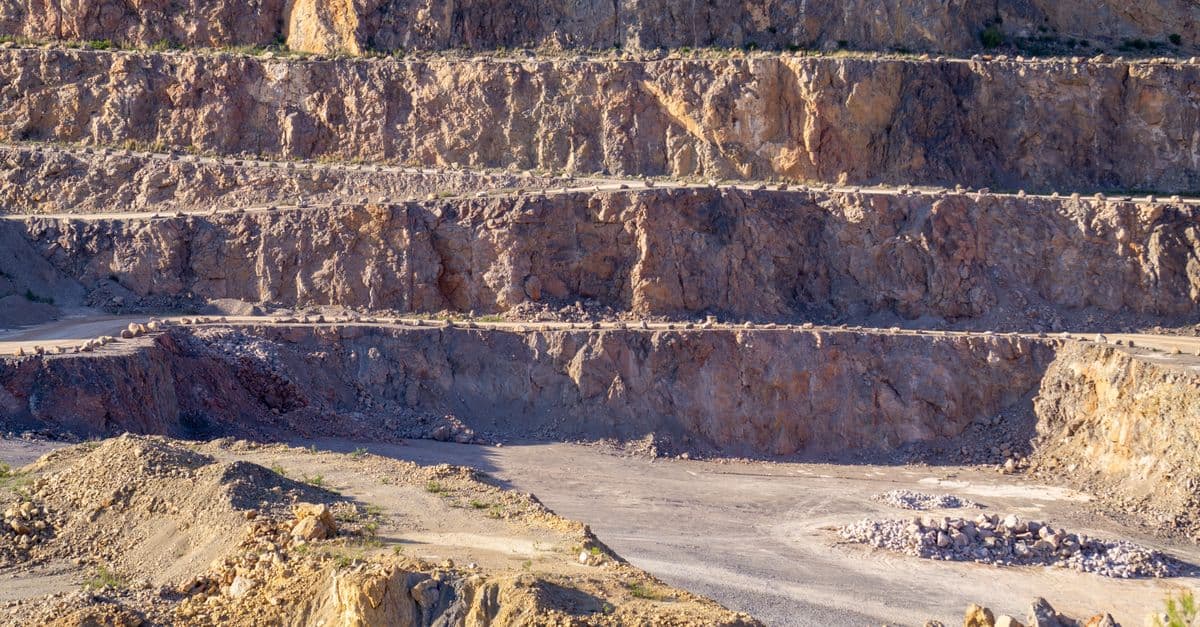
Photo: Crono Viento / Pexels
The largest excavation ever dug by human hands is not a canal or a subway tunnel. It's the Bingham Canyon Mine outside Salt Lake City, Utah, a copper pit deep enough to swallow two Empire State Buildings stacked end to end and wide enough to see from space. "Biggest mine" turns out to be a genuinely confusing phrase, because size means something different depending on whether you're measuring depth, surface area, annual output, or dollar value. This guide sorts the record-holders by what they actually measure, and explains the geology and economics that put them there.
What "biggest" actually means in mining
A mine can be a record-holder in at least four unrelated ways, and ranking lists frequently conflate them without saying so. The first is physical size: how deep the pit goes, or how much land it covers. The second is annual production: tons of ore, metal, or coal pulled out in a given year. The third is total reserves: how much valuable material is estimated to remain in the ground, which is a geological forecast, not a fact. The fourth is value: what the extracted material is worth on world markets, which swings with commodity prices independent of anything happening underground.
These four metrics rarely point to the same mine. Bingham Canyon is the largest excavation by volume ever dug, but it is not the top copper producer today. Escondida in Chile produces more copper per year than any mine on Earth, yet it isn't the deepest or the oldest. Jwaneng in Botswana processes far less rock than an iron ore complex like Carajás, but it is the world's richest mine by the dollar value of what comes out of it, because diamonds carry enormous value per kilogram compared to iron ore or coal (Mining Technology, Jwaneng Diamond Mine).
This is why any serious ranking of "the biggest mines in the world" has to name its metric before it names its winner. A reader asking "what's the biggest mine" might mean the deepest hole ever dug, the mine feeding the most smartphones with copper, or the mine that makes the most money in a given year. All three questions have different correct answers.
How an open-pit mine gets that big in the first place
Open-pit mining is the technique behind almost every record on this list, and understanding why it produces such enormous holes explains a lot about why these sites look the way they do. Underground mining follows a narrow, high-grade vein and tunnels toward it, leaving the surface largely undisturbed. Open-pit mining does the opposite: it removes everything above and around a low-grade deposit in concentric terraces, called benches, working outward and downward like a spiral staircase carved into rock.
The reason mining companies choose this brute-force approach comes down to ore grade, which is the percentage of valuable metal contained in a given mass of rock. Porphyry copper deposits, the geological formations behind most of the world's largest copper mines, typically contain well under 1% copper by weight. To get a ton of copper metal, an open-pit operation might move and process 100 tons or more of rock, waste included. That ratio, called the strip ratio, is why these mines are wide rather than narrow: digging a deep, narrow shaft into low-grade rock would be uneconomical, but scraping away broad benches with truck-and-shovel fleets makes the low grade tolerable at scale.
Think of it the way you'd think about panning for gold in a riverbed versus mining a solid gold nugget. If the gold is spread thin through tons of sediment, you don't dig a narrow hole, you process enormous volumes of material and let the economics of scale do the work. Open-pit mines are the industrial version of that same logic, run at a scale of billions of tons over a century of operation.
Why do open-pit mines get wider instead of just deeper?
As a pit gets deeper, its walls need to be sloped back at a shallow angle to prevent rock slides, similar to how a sand pile settles at a stable angle before it collapses. Each meter of added depth therefore requires removing a much larger volume of surrounding rock just to keep the walls stable, which is why pits widen dramatically as they deepen.
The record-holders, sorted by what they actually measure
No single mine wins every category, so the table below separates the record by metric, using the most recent production or measurement data available for each site.
Table: World's largest mines by measurement category
| Metric | Record holder | Country | Key figure | Source |
|---|---|---|---|---|
| Largest man-made excavation (volume/depth) | Bingham Canyon Mine | United States | 1,210 m deep, 4 km wide, 7.7 km² | Rio Tinto / Wikipedia |
| Largest copper producer (annual) | Escondida | Chile | 1,347,600 metric tons of copper, FY2025 | MINING.COM |
| Largest gold reserve | Grasberg | Indonesia | Single largest known gold reserve; also 2nd-largest copper reserve globally | Freeport-McMoRan / Mining Technology |
| Largest open-pit gold mine by scale | Muruntau | Uzbekistan | ~3.3 km long, 3 km wide, 600 m deep; 170+ million oz gold reserves | NS Energy Business |
| Largest coal mine | North Antelope Rochelle | United States | 85.3 million tons produced in 2019; 2.3+ billion tons in reserves | Wikipedia / Mining Technology |
| Largest iron ore mine (open-pit) | Carajás | Brazil | 200 million metric tons/year capacity; 7.2 billion tons proven reserves | Mining Technology |
| Richest mine by value | Jwaneng | Botswana | ~12–15 million carats/year; ~$2.31 billion production value (2017) | Mining Technology / Statista |
Bingham Canyon: the largest hole humans have ever dug
The Bingham Canyon Mine, also called the Kennecott Copper Mine, sits in Utah's Oquirrh Mountains and has been in continuous production since 1906, making it one of the longest-running industrial excavations on the planet (Wikipedia, Bingham Canyon Mine). Rio Tinto, the current operator, has removed so much rock over more than a century that the pit was designated a U.S. National Historic Landmark in 1966, not for what it produces today but for what its scale represents in industrial history.
Astronauts have reported that Bingham Canyon is visible from low Earth orbit, a claim that shows up frequently in mining literature and tourism material about the site (WorldRecordAcademy). Whether or not it's visible with the naked eye in every lighting condition, the underlying fact is not in dispute: at 1,210 meters deep and 4 kilometers across, it is the largest excavation of any kind, mining or otherwise, that any civilization has ever dug.
Escondida: the copper mine feeding the electrified world
Escondida, in Chile's Atacama Desert, doesn't hold a depth or area record, but it dominates the metric that matters most economically: output. In fiscal year 2025 it produced 1,347,600 metric tons of copper metal, its highest production in 17 years, driven by a 16% year-on-year increase from record concentrator throughput and higher ore grade (MINING.COM, Top 10 Copper Mines). The mine is a joint venture majority-owned by BHP (57.5%), with Rio Tinto and JECO holding the rest.
Escondida's output alone accounts for a meaningful share of Chile's status as the world's largest copper-producing country. Chile mined roughly 5.3 million metric tons of copper in 2025, about 23% of global supply, and Escondida is the single largest contributor to that national total (MINING.COM). Copper demand tracks the buildout of electric grids, EV motors, and data-center wiring, which is why a single Chilean pit has outsized influence on global electrification costs.
Grasberg: the mine with the largest known gold reserve on Earth
Grasberg, high in the mountains of Indonesia's Papua province, holds the single largest known gold reserve in the world and the second-largest copper reserve, a rare combination that makes it one of the most valuable ore bodies ever discovered (Mining Technology, Grasberg). It is operated by PT Freeport Indonesia, a joint venture in which Freeport-McMoRan holds 48.76% and the Indonesian government holds a majority 51.24% stake.
Grasberg finished mining its open pit in 2019 and has since transitioned to large-scale underground block-caving, a technique where ore is undercut so it collapses under its own weight into collection tunnels below, rather than being dug out from the top down. In 2024, the site still produced 816,466 metric tons of copper, making it the world's second-largest copper mine even in its underground phase (Databoks).
Muruntau: the world's largest gold mine by physical scale and output
In the Kyzylkum Desert of Uzbekistan sits Muruntau, a state-owned pit roughly 3.3 kilometers long, 3 kilometers wide, and 600 meters deep, holding estimated reserves of more than 170 million ounces of gold (NS Energy Business, Muruntau). Surface mining began in 1967, and the mine is wholly owned and operated by Uzbekistan's state mining company, Navoi Mining and Metallurgical Combinat.
Muruntau produces more than 2 million ounces of gold annually, making it the leading gold-producing mine in the world by output, not just by reserve size (NS Energy Business). Because gold ore grades are typically measured in grams per ton rather than percentage points, a mine producing 2 million ounces a year is processing an enormous volume of rock, comparable in scale to a large copper operation, even though gold occupies a completely different market from industrial metals.
North Antelope Rochelle: the largest coal mine in the world
In Wyoming's Powder River Basin, the North Antelope Rochelle Mine formed in 1999 when Peabody Energy merged two adjacent operations, the North Antelope mine (opened 1983) and the Rochelle mine (opened 1984), into a single complex (Wikipedia, North Antelope Rochelle Mine). It produced 85.3 million tons of coal in 2019 and has shipped more than 1.8 billion tons cumulatively since it began operating, supplying coal to more than 40 utility customers running over 80 power plants across the United States.
As of December 2012, the mine's estimated recoverable reserves stood above 2.3 billion tons, and in 2017 it alone accounted for roughly 13.1% of all U.S. coal production (Mining Digital). Powder River Basin coal is low-sulfur and sits in thick, shallow seams close to the surface, which is why strip mining, a variant of open-pit mining tailored to horizontal seams rather than a bowl-shaped ore body, works so efficiently here.
Carajás: the largest iron ore mine feeding global steelmaking
Carajás, operated entirely by the Brazilian mining company Vale in the northern state of Pará, is the world's largest open-pit iron ore mine, with proven and probable reserves of 7.2 billion metric tons and a production capacity around 200 million metric tons of iron ore per year (Mining Technology, Carajás). The complex sits inside one of the largest iron ore provinces ever discovered, embedded in the Amazon region, which has made the mine's environmental footprint and its 500-mile dedicated rail line to the coast a subject of extensive scrutiny (National Geographic).
Iron ore is measured in a different economic universe from copper or gold. It's a bulk commodity, priced per ton rather than per gram, and steelmaking is the single largest use of virgin iron ore worldwide. Carajás's 200-million-ton annual capacity places it in a category by volume that most metal mines never approach, because steel demand, unlike copper or gold demand, scales directly with the tonnage of buildings, ships, and rail infrastructure a country is constructing.
Jwaneng: not the biggest hole, but the richest mine on the planet
Jwaneng, in south-central Botswana, sits atop the convergence of three kimberlite pipes, the volcanic geological formations that carry diamonds up from the Earth's mantle (NASA Earth Observatory, Jwaneng). It produces between 12 and 15 million carats of diamonds a year and generated roughly $2.31 billion in production value in 2017, the most recent year with detailed public figures (Mining Technology).
Jwaneng illustrates why value and volume tell entirely different stories. Measured by tons of rock moved, it is dwarfed by Carajás or Bingham Canyon. Measured by dollars generated per ton of ore processed, it is arguably unmatched, because gem-quality diamonds carry a market value per gram that no industrial metal comes close to. That single fact explains why Botswana, a country of roughly 2.5 million people, derives a substantial share of its national export revenue from one mine.
Why the rankings keep shifting
Mining records are unusually unstable compared to records in physics or geography, because the underlying reality changes every year on purpose. A mine's annual output depends on ore grade, which declines as the highest-grade rock near the surface gets exhausted and operators move to lower-grade material deeper down. Escondida's 2025 production jump, for instance, came partly from a higher feed grade of 1.02%, up from 0.88% the year before, not from digging a bigger hole (SEC filing, BHP Group FY2025).
Reserves are forecasts, not facts. A company reports "proven and probable reserves" based on drilling, commodity price assumptions, and current technology, and that number can rise or fall as prices change, even if no new rock has been discovered. When copper prices climb, previously uneconomical low-grade rock at the edge of a pit suddenly qualifies as a reserve, expanding the mine's official size on paper without a single new excavation. When prices fall, the reverse happens.
Geopolitics and infrastructure disruptions also reorder the list abruptly. Grasberg experienced a force majeure event affecting output in 2026, a reminder that even the world's most valuable ore bodies remain vulnerable to accidents, permitting disputes, and logistics failures that can knock a top-five mine out of contention for a year or more (Fastmarkets). A "biggest mine" list published in 2020 and one published today will differ for reasons that have nothing to do with anyone digging a bigger hole. Other record-setting industrial projects are ranked in the biggest hydrogen projects.
What people get wrong about "the biggest mine"
The most common mistake is treating open-pit size as a proxy for economic importance. Bingham Canyon's pit is the largest excavation on Earth, but that fact alone says nothing about how much copper it produces this year, because a century-old mine has already removed the highest-grade, easiest-to-reach ore. Depth and area are historical records of cumulative digging, not snapshots of current productivity.
A second confusion is treating "largest mine" as synonymous with "most profitable mine." Jwaneng proves this wrong directly: it is nowhere near the largest pit by volume, yet it may be the single most valuable mining operation on Earth per ton of rock processed, because diamonds are priced in a completely different range than bulk commodities like iron ore or coal.
A third mistake, common in casual rankings, is quoting reserve figures as if they were a fixed, permanent quantity, like the height of a mountain. Reserve estimates change with commodity prices and drilling results almost every year. A mine described as having "170 million ounces of gold reserves" in one year may report a different number the next, not because gold physically vanished, but because the estimate itself is an economic calculation, recalculated on a rolling basis.
Finally, readers often assume the biggest mines are all metal mines. Coal mines like North Antelope Rochelle move less total rock than the largest copper pits, but their annual tonnage output, tens of millions of tons a year of a bulk fuel commodity, puts them in a different comparison category entirely from precious-metal or gemstone operations, where output is measured in ounces or carats rather than tons.
The takeaway
There is no single "biggest mine in the world," because size, output, reserves, and value are four different measurements that rarely crown the same winner. Bingham Canyon holds the record for sheer excavated volume, Escondida for annual copper output, Grasberg for gold reserves, Muruntau for gold output at scale, North Antelope Rochelle for coal tonnage, Carajás for iron ore capacity, and Jwaneng for value per ton processed. The useful habit, when you next see a "world's biggest mine" headline, is to ask which of those four numbers the claim is actually measuring, because the answer changes the mine every time.
Read next:
- The Largest Structures Ever Built
- The Fastest Man-Made Objects Ever Built
- Countries With the Most Data Centers
Frequently Asked Questions
Q: What is the biggest mine in the world? A: It depends on the metric. Bingham Canyon Mine in Utah is the largest excavation ever dug by humans, at 1,210 meters deep and 4 kilometers wide. Escondida in Chile produces the most copper of any mine, over 1.3 million metric tons in FY2025. There is no single mine that leads every category at once.
Q: What is the deepest mine in the world? A: For depth measured as an excavated open pit, Bingham Canyon in Utah is the deepest at roughly 1,210 meters. Underground mines go far deeper: some South African gold mines exceed 3,900 meters below the surface, but that is a different measurement, vertical shaft depth rather than open-pit depth.
Q: Why does Escondida produce more copper than Bingham Canyon if Bingham Canyon is bigger? A: Bingham Canyon's pit is larger because it has been mined continuously since 1906 and has already extracted its highest-grade ore near the surface. Escondida is a younger, higher-grade deposit currently operating at record throughput, so its annual output currently exceeds Bingham Canyon's, even though its total excavated volume is smaller.
Q: What is the richest mine in the world by value? A: Jwaneng in Botswana is generally considered the richest mine by value per ton processed, generating roughly $2.31 billion in diamond production value in 2017 from 12 to 15 million carats a year, because gem-quality diamonds carry far higher value per gram than bulk metals or coal.
Q: Why do mining reserve estimates change from year to year? A: Reserve figures are calculated using current commodity prices, drilling data, and extraction technology. When metal prices rise, previously uneconomical low-grade rock becomes profitable to mine and gets added to reserves. When prices fall, some reserves are removed from the estimate, even though nothing underground has physically changed.
Q: What is the largest coal mine in the world? A: North Antelope Rochelle Mine in Wyoming's Powder River Basin is the world's largest coal mine, producing 85.3 million tons in 2019 with recoverable reserves estimated above 2.3 billion tons as of December 2012.
Q: What is the difference between open-pit mining and underground mining? A: Open-pit mining removes rock in wide, descending terraces called benches, exposing a large low-grade deposit from the surface downward. Underground mining tunnels directly to a narrow, higher-grade vein, leaving the surface largely intact. Open-pit mining suits large, low-grade deposits; underground mining suits smaller, richer ones or deposits too deep to strip economically.
Q: Can the biggest mines be seen from space? A: Bingham Canyon Mine is frequently cited as visible from low Earth orbit due to its scale, and NASA's Earth Observatory has published satellite imagery of it along with Carajás and Jwaneng, though visibility with the unaided eye depends heavily on lighting, altitude, and atmospheric conditions.
Q: Why did Grasberg switch from open-pit to underground mining? A: Grasberg's open pit reached the end of its economically mineable depth in 2019, after decades of extraction. Freeport-McMoRan then transitioned to block-caving, an underground technique where ore is undercut so it collapses under gravity into collection tunnels, allowing continued extraction of deeper ore that a surface pit could no longer reach economically.
Q: How much of the world's copper comes from the biggest mines alone? A: The top 10 copper mines combined account for a substantial share of global supply, with Escondida alone contributing over a quarter of the top 10's combined output. Chile as a country produced about 5.3 million metric tons of copper in 2025, roughly 23% of total global production, with Escondida as its largest single contributor.
Sources
- Bingham Canyon Mine, Wikipedia
- World's Largest Man-Made Excavation, World Record Academy
- Ranked: The World's Top 10 Biggest Copper Mines, MINING.COM
- BHP Group Ltd, Form 6-K FY2025, SEC EDGAR
- Grasberg Open Pit Copper Mine, Mining Technology
- Freeport's Grasberg Mine Produces World's Second-Largest Amount of Copper, Databoks
- Grasberg Mine Force Majeure, Fastmarkets
- Muruntau Gold Mine, NS Energy Business
- North Antelope Rochelle Mine, Wikipedia
- The Most Productive Coal Mine in the World, Mining Digital
- Carajas Iron Ore Mine, Mining Technology
- Jwaneng Diamond Mine, Botswana, NASA Earth Observatory
- Jwaneng Diamond Mine, Mining Technology
- To Carry Iron to the World, National Geographic
Follow new articles
Add SciHub101 to your feed reader to see new science and technology stories.
About the Author
SciHub101 is an independent science and technology publication founded and edited by Buğra Sözeri, a software engineer and app developer based in Türkiye. AI tools assist with drafting and research. Source documentation in the existing archive is uneven, and articles are being reviewed and corrected. The Editorial Team byline identifies editorial responsibility; it does not certify specialist or independent human review. Where we compare products, anything built by our own team is labelled as such — see the editorial guidelines and About page for how corrections and disclosures work.
Related Articles
Fastest Trains in the World: Maglev, High-Speed Rail, and Records
The fastest trains can be ranked by test record, commercial service speed, or average journey speed. This guide explains the differences.
Biggest Hydrogen Projects in the World
NEOM's $8.4B plant leads a wave of gigawatt-scale hydrogen projects reshaping fertilizer, steel, and shipping. Here's how the biggest ones actually work.
The Largest Caves in the World: A Cavern With Its Own Jungle and Clouds
Deep in the Vietnamese jungle is a cave so large it has its own weather. Hang Sơn Đoòng — the world's largest cave passage — contains a forest, a river, and a microclimate that forms clouds beneath its ceiling, which soars high enough to fit a 40-storey skyscraper. It was only fully explored in 2009. The largest caves on Earth are among the last great unmapped spaces on the planet, carved by nothing more than slightly acidic water and a great deal of time.
The Largest Volcanoes in the World: The Mountain That's Mostly Underwater
Mauna Loa in Hawaii rises 4,170 metres above the sea — but that's only the tip. Measured from its true base on the ocean floor, it stands roughly 17 kilometres tall, more than twice Everest's height above sea level, and is so heavy it has pushed the seabed downward beneath it. It may not even be the largest volcano on Earth by volume. And lurking beneath Yellowstone is something that isn't a mountain at all: a supervolcano whose eruptions are measured not in metres but in continents.
The Longest Mountain Ranges in the World: The 65,000-Kilometre Range You'll Never See
The Andes stretch 7,000 kilometres down the spine of South America — the longest mountain range on land, and a wall so high it creates deserts on one side and rainforests on the other. But it's not even close to the longest range on the planet. That title belongs to a mountain chain ten times longer, winding 65,000 kilometres around the globe entirely beneath the oceans, where most of Earth's volcanic activity quietly happens.
The Tallest Waterfalls in the World: Angel Falls and the Hidden Giants
Venezuela's Angel Falls drops 979 meters — so far that much of the water turns to mist before it ever reaches the ground, especially in the dry season. It is the tallest waterfall on land, plunging off a flat-topped mountain built from some of the oldest rock on Earth. But the single tallest waterfall on the planet is not on land at all: it is underwater, a cataract beneath the ocean that dwarfs every waterfall you can see.