The Largest Volcanoes in the World: The Mountain That's Mostly Underwater
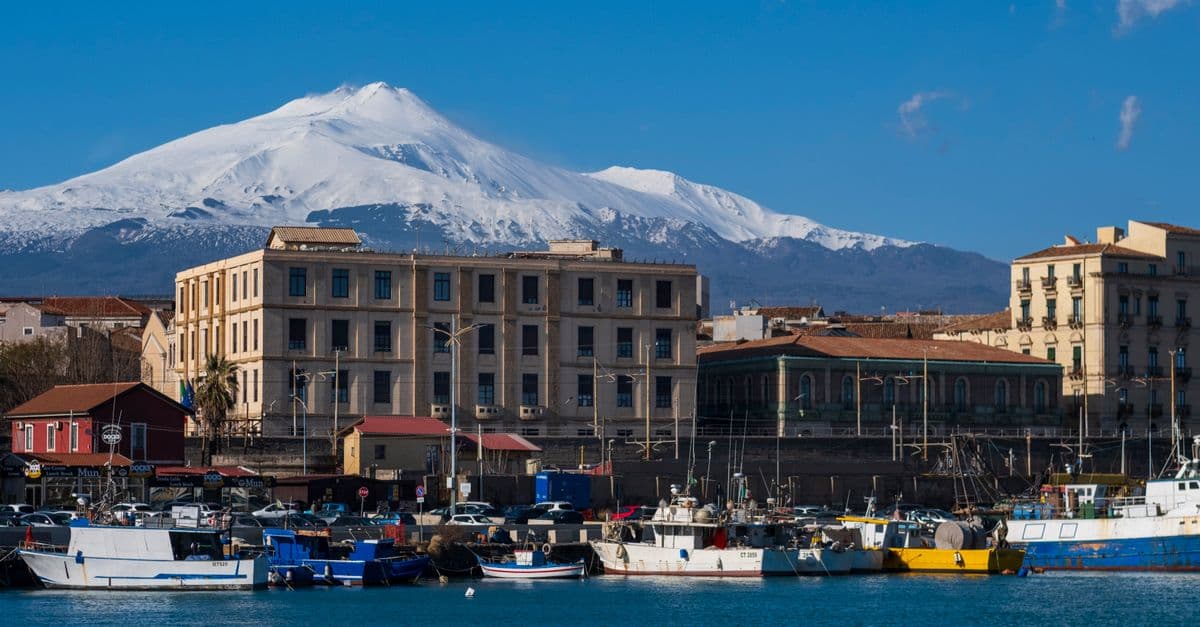
Photo: pierre matile / Pexels
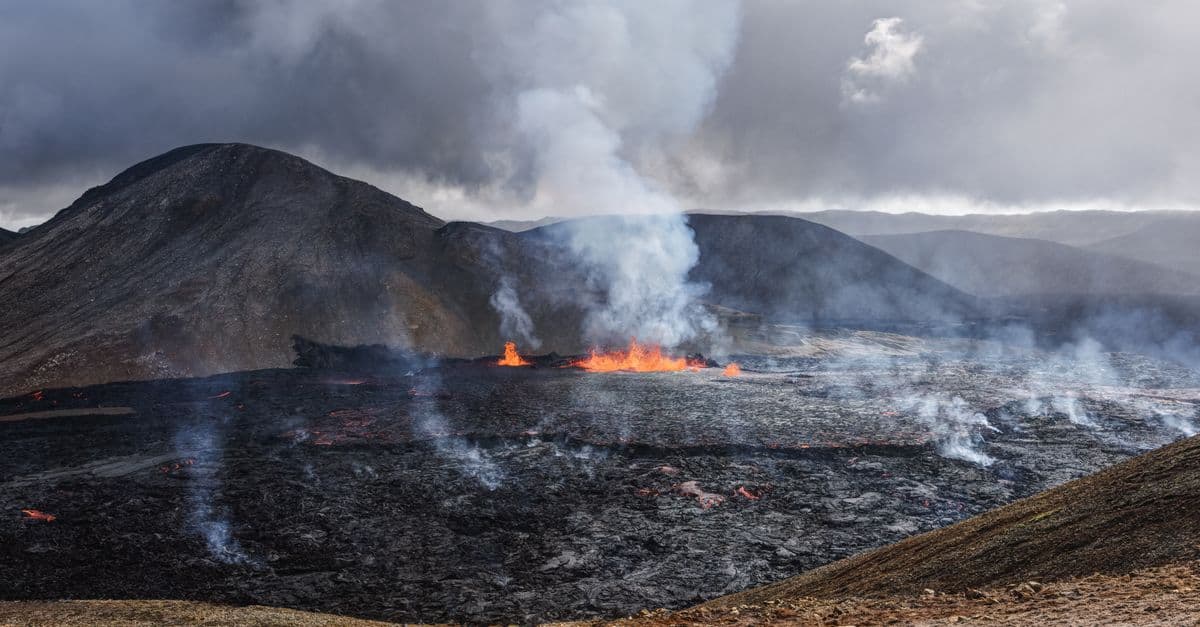
Mauna Loa in Hawaii is the largest active volcano on Earth by volume, and measured from its true base on the ocean floor it stands roughly 17 kilometers (10.5 miles) tall — more than twice Mount Everest's height above sea level. But "largest volcano" is not one record. It splits into at least four separate contests: volume, base-to-summit height, altitude above sea level, and raw eruptive power. Mauna Loa wins some of those. It loses others to a volcano most people have never heard of, buried under water so deep that scientists only confirmed its true size in 2020. And none of them come close to the destructive potential of a buried supervolcano under Yellowstone, whose largest eruptions are measured not in meters of rock but in continents blanketed with ash.
The short answer: five volcanoes, five different records
| Volcano | Claim to "largest" | Location | Key figure |
|---|---|---|---|
| Pūhāhonu | Largest by volume (candidate) | Hawaii (submerged) | ~150,000 km³ of rock |
| Mauna Loa | Largest active volcano by volume; tallest base-to-summit among named peaks | Hawaii | ~75,000 km³; ~17 km base-to-summit |
| Tamu Massif | Largest footprint / single edifice (disputed) | Pacific (Shatsky Rise) | ~553,000 km² surface area |
| Ojos del Salado | Highest volcano above sea level | Chile/Argentina | 6,893 m elevation |
| Yellowstone Caldera | Most powerful (supervolcano) | Wyoming, USA | VEI 8 eruptions, >1,000 km³ ejected |
Table: Five volcanoes, each holding a different definition of "largest." Figures sourced from USGS, University of Hawaiʻi at Mānoa research, and peer-reviewed geophysics literature (cited throughout).
Every one of these volcanoes is genuinely the biggest at something. None of them is simply "the biggest." That's the first thing to understand before ranking volcanoes at all: size is not one number, and the mountain you picture when you hear "largest volcano" is probably not the one that actually holds the record you're thinking of.
Mauna Loa: a mountain hiding in the sea
Above the waves, Mauna Loa ("Long Mountain" in Hawaiian) rises 4,170 meters (13,681 feet), a modest elevation by world standards — lower than dozens of Andean and Himalayan peaks. That number is almost meaningless on its own, because it describes only the fraction of the volcano that pokes above sea level. Mauna Loa's submarine flanks continue descending another 5 kilometers to the seafloor, and the sheer weight of the volcano has depressed the ocean crust beneath it by a further 8 kilometers. Add it up, and the summit sits roughly 17 kilometers (about 10.5 miles) above the true base of the mountain, according to U.S. Geological Survey figures. That is more than twice Mount Everest's 8.85-kilometer rise above sea level.
Mauna Loa is a shield volcano — broad, gently sloping, and built almost entirely from countless thin, fluid lava flows rather than explosive eruptions. Its volume is estimated by the USGS at a minimum of 75,000 cubic kilometers (18,000 cubic miles), a figure that makes it Earth's largest active volcano by mass and volume. To put 75,000 cubic kilometers in perspective: that's enough rock to bury the entire land area of the United Kingdom under a layer more than 300 meters deep.
Mauna Loa's immediate neighbor, Mauna Kea, is slightly taller measured strictly base-to-summit — a distinction that makes Mauna Kea the tallest mountain on Earth by total vertical extent, a title explored in depth in the tallest mountains on Earth, where base-to-summit measurement changes the entire ranking of Earth's peaks. But among volcanoes still capable of erupting, Mauna Loa remains the reigning heavyweight — it last erupted in November 2022, sending lava flows within a few kilometers of the main highway connecting Hilo and Kona.
How is a volcano's "height" even measured?
A volcano's summit elevation is measured from sea level, the same reference used for any mountain. Its total height is measured from its true base — which, for an ocean volcano, means the seafloor before crustal depression, not the visible waterline. These two numbers can differ by a factor of four, which is why Mauna Loa is simultaneously "only" 4,170 meters tall and also taller than Everest.
Pūhāhonu: the volcano nobody had heard of until 2020
If you asked a geologist in 2015 to name the largest volcano on Earth, most would have said Mauna Loa. That answer changed in 2020, when a team from the University of Hawaiʻi at Mānoa's School of Ocean and Earth Science and Technology published research on Pūhāhonu, a long-extinct shield volcano whose only visible remnant is a pair of small rocky peaks called Gardner Pinnacles, roughly 1,200 kilometers northwest of Honolulu.
The name Pūhāhonu means "turtle surfacing for air" in Hawaiian — an apt description for a mountain where 70 percent of the structure is submerged and only a sliver breaks the surface. Using gravity data, bathymetric mapping, and the flexural signature the volcano's mass leaves in the surrounding seafloor, the research team calculated that Pūhāhonu contains roughly 150,000 cubic kilometers of rock — about twice the volume of Mauna Loa, and enough to make it, by volume, the largest single volcano yet measured on Earth.
The same study found something else notable: Pūhāhonu's lavas record a mantle source temperature of roughly 1,700°C, the hottest ever measured for a Hawaiian volcano or any other oceanic island basalt. A hotter, more voluminous magma supply over a longer period is exactly the recipe for building an unusually large shield volcano — which is a useful clue for the next section, on why shield volcanoes get so big in the first place.
Tamu Massif: the volcano the size of New Mexico
In 2013, a team led by geophysicist William Sager at the University of Houston announced that Tamu Massif, a broad underwater rise within the Shatsky Rise oceanic plateau about 1,600 kilometers east of Japan, was a single, colossal shield volcano — and, by surface footprint, the largest yet identified on Earth. Their research, published in Nature Geoscience, measured Tamu Massif's area at approximately 553,000 square kilometers, comparable to the state of New Mexico or the entire nation of Japan.
Unlike Mauna Loa or Pūhāhonu, whose summits rise several kilometers above the surrounding seafloor, Tamu Massif is extraordinarily broad and low relative to its footprint — its flanks slope at less than 1 degree, meaning it looks less like a mountain and more like a slowly domed plain that happens to sit 6 kilometers below the ocean surface. Sager's team argued this shallow-sloped, single-source shape marked it as one enormous coalesced volcanic edifice rather than a cluster of smaller ones, and drew a direct comparison to Olympus Mons on Mars, the largest known volcano in the solar system.
That claim did not go unchallenged. In 2019, Sager and colleagues published a follow-up study reassessing the seismic and magnetic data and concluded that Tamu Massif's internal structure was more consistent with layered lava flows erupted from multiple sources over time — closer to a plateau built by many contributing eruptions than a single, self-contained shield volcano in the way Mauna Loa is. The paper didn't retract the "largest" claim about its footprint, but it complicated the idea that it's one volcano in the same sense Mauna Loa is one volcano. Science journalists have continued to describe Tamu Massif both ways since, which is why any "largest volcano in the world" list has to include a caveat next to its name.
For scale, Olympus Mons on Mars — which Tamu Massif is routinely compared to — stands about 21 to 26 kilometers tall (estimates vary slightly by measurement method) and spans roughly 600 kilometers across, with a surface area near 300,000 square kilometers. NASA and planetary scientists generally attribute its extreme size to Mars's lower surface gravity, the absence of shifting tectonic plates to carry the crust away from a stationary hot spot, and billions of years of essentially uninterrupted eruption from the same vent system. Earth's plates move, which caps how large any single volcanic edifice can grow before it drifts off its magma source — one reason Hawaii is a chain of volcanoes rather than one impossibly large one.
Why shield volcanoes get so big in the first place
The largest volcanoes on Earth by volume are, without exception, shield volcanoes built over hot spots — plumes of unusually hot rock rising from deep within the mantle, largely independent of the plate boundaries that drive most other volcanism. The Hawaiian Islands sit atop one such hot spot, which has been building a chain of enormous volcanoes for tens of millions of years as the Pacific Plate slowly drifts over the stationary plume beneath it.
Three factors combine to make shield volcanoes grow to record-breaking sizes:
- Low-silica, low-viscosity lava. Hawaiian basalt is runny compared to the thick, gas-rich magma that fuels explosive stratovolcanoes like Mount St. Helens or Vesuvius. It flows for kilometers before solidifying, spreading into broad, gently layered mounds instead of steep cones.
- A long-lived, stationary magma supply. A hot spot can feed a single volcano for a million years or more, allowing flow after flow to stack up in the same location rather than being scattered across many short-lived vents.
- Effusive, not explosive, eruption style. Because the lava is fluid and low in dissolved gas, it tends to ooze and flow rather than blast apart in violent, edifice-destroying explosions. The volcano builds up instead of blowing itself apart, layer after layer, eruption after eruption.
Think of the difference between pouring pancake batter and packing wet sand. A stratovolcano is built more like a sandcastle: steep, structurally fragile, and prone to catastrophic collapse or explosive failure once internal pressure exceeds what the rock can hold. A shield volcano is built more like pancake batter spreading across a griddle: low, wide, and stable, because each new layer settles gently over the last instead of stacking into an unstable peak. That's the mechanical reason shield volcanoes can keep growing for hundreds of thousands of years without collapsing under their own mass, while steep-sided volcanoes rarely get anywhere near that large before an eruption tears them apart.
This is also why so much of Earth's largest volcanism hides underwater and stays invisible for centuries. Roughly 70 percent of Earth's total volcanic output happens along the mid-ocean ridges and submerged hot spots, out of sight and largely unmonitored compared to volcanoes on land — a pattern that echoes the longest mountain ranges in the world, where the single longest range on the planet is a 65,000-kilometer volcanic chain running along the ocean floor, entirely submerged and invisible from any coastline.
Ojos del Salado: tallest above sea level, but not "largest"
Not every record goes to a Hawaiian shield volcano. Ojos del Salado, a stratovolcano straddling the Chile-Argentina border in the Andes, is the highest volcano on Earth measured strictly by elevation above sea level, standing 6,893 meters (22,615 feet) tall — making it the second-highest peak in both the Western and Southern Hemispheres, behind only Aconcagua.
Ojos del Salado illustrates why "highest" and "largest" are not the same question. It is a comparatively modest stratovolcano by volume next to Mauna Loa or Pūhāhonu — it simply starts from an unusually high base, because the entire Andes range sits atop the Nazca Plate subducting beneath South America, thrusting the surrounding terrain thousands of meters upward before the volcano itself begins. Ojos del Salado has no confirmed historic eruption, though geological evidence suggests an eruption occurred around 750 CE, and it holds a small permanent crater lake near its summit at 6,390 meters, one of the highest bodies of water on Earth.
Supervolcanoes: a completely different kind of "largest"
Everything above measures volcanoes by their physical bulk. There's a separate, arguably more consequential way to rank a volcano: how much destruction a single eruption can cause. By that measure, the "largest" volcano isn't a mountain at all.
A supervolcano like Yellowstone, in the northwestern United States, isn't a tall peak — it's a vast caldera, a huge depression formed when an enormous underground magma chamber empties itself in a single eruption and the overlying ground collapses into the space left behind. The Yellowstone Caldera itself spans roughly 85 by 45 kilometers (53 by 28 miles), though its walls rise barely 500 meters above the caldera floor — nothing close to a dramatic peak, which is part of why visitors driving through it often don't realize they're standing inside the crater of one of the most studied volcanic systems on the planet.
Supervolcano eruptions are rated VEI 8, the maximum category on the Volcanic Explosivity Index, reserved for eruptions that eject more than 1,000 cubic kilometers of pyroclastic material — ash, pumice, and rock fragments blasted skyward in columns that can punch more than 25 kilometers into the stratosphere, according to USGS and National Park Service figures. Yellowstone has produced two confirmed VEI 8 eruptions in its history: the Huckleberry Ridge eruption roughly 2.2 million years ago and the Lava Creek eruption about 640,000 years ago.
Toba, in what is now Sumatra, Indonesia, produced arguably the largest known eruption of the last two million years roughly 74,000 years ago, releasing an estimated 2,800 cubic kilometers of material — an event covered in depth in the largest volcanic eruptions in history, and one that ranks among the biggest explosions in history when converted into an energy-equivalent scale alongside asteroid impacts and nuclear weapons. By this definition of "largest," the record doesn't belong to the biggest mountain — it belongs to whichever magma chamber can release the most material in a single event, regardless of how tall the resulting landform ends up being.
What is a supervolcano, exactly?
A supervolcano is any volcanic system capable of a VEI 8 eruption — releasing more than 1,000 cubic kilometers of material in a single event, enough to alter global climate for years. They almost always leave behind vast calderas rather than tall cones, because the eruption empties the magma chamber fast enough that the ground above collapses. Yellowstone, Toba, and Taupō in New Zealand are the best-documented examples.
Could Yellowstone actually erupt?
Yellowstone is an active volcanic system, and its hydrothermal features — geysers, hot springs, mudpots — are constant reminders of the heat below. But USGS monitoring data shows no indication that a supereruption is imminent or even statistically likely on a human timescale; most of the system's current activity is hydrothermal rather than magmatic. A full VEI 8 eruption remains geologically possible over the very long term, which is why the USGS Yellowstone Volcano Observatory keeps continuous seismic and deformation monitoring in place, but it is not something current data supports predicting or expecting soon.
Where each record actually stands today
Putting the four measurement systems side by side makes clear why volcanologists resist a single "world's largest volcano" answer:
| Measurement | Winner | Runner-up | Why it's contested |
|---|---|---|---|
| Volume (total rock) | Pūhāhonu (~150,000 km³) | Mauna Loa (~75,000 km³) | Pūhāhonu's figure rests on gravity/bathymetric modeling, not direct drilling |
| Base-to-summit height | Mauna Kea (~10,210 m) | Mauna Loa (~9,170 m ocean-floor to summit, ~17 km incl. crustal depression) | Depends whether crustal depression counts as "base" |
| Footprint / surface area | Tamu Massif (~553,000 km²) | Pūhāhonu | Tamu Massif's single-volcano status was disputed by its own discoverers in 2019 |
| Elevation above sea level | Ojos del Salado (6,893 m) | Various Andean/Andean-adjacent volcanoes | Not a volume or mass measurement at all |
| Eruptive power (single event) | Toba (~2,800 km³ ejected) | Yellowstone's Huckleberry Ridge (>2,450 km³) | Power at eruption, not standing size |
Table: Five different metrics for "largest volcano," each with a different winner and a documented reason the ranking is contested.
What people get wrong about "the world's largest volcano"
The most common mistake is treating "largest volcano" like it's a settled Guinness World Record with one titleholder, the way "tallest building" has one clear answer once you agree on a measurement standard. Volcanoes don't work that way, because most of the largest ones are buried, and different research teams have used different instruments — gravity surveys, seismic tomography, bathymetric sonar, direct sampling — to estimate volumes that can't be measured by simply pointing a laser rangefinder at a peak.
A second common error is conflating "supervolcano" with "biggest volcano." Yellowstone is not a large mountain by any of the volume or height metrics above — its caldera floor barely rises above the surrounding landscape. Its record belongs entirely to eruptive power, a completely different physical quantity from standing rock volume. A supervolcano earns its name from what it's capable of releasing in a single catastrophic event, not from how much rock is currently piled up on the surface.
A third mistake, understandable but worth correcting, is assuming Olympus Mons on Mars and Tamu Massif are directly comparable "largest volcanoes," full stop. They're comparable in scale, and the comparison is genuinely useful for grasping just how enormous both are, but Olympus Mons's size comes from conditions — lower gravity, no plate tectonics moving the crust off a stationary hot spot, billions of uninterrupted years of eruption — that don't exist anywhere on Earth. It's less "Earth has an Olympus Mons too" and more "here's what happens to shield volcano growth when you remove the two main things that limit it on our planet."
The takeaway
There is no single largest volcano on Earth, because "largest" isn't one measurement — it's at least four, and each has a different winner. Mauna Loa remains the benchmark for active volcanoes by volume and the popular answer for good reason: it's climbable, well-studied, and genuinely enormous, at roughly 17 kilometers from seafloor base to summit. But Pūhāhonu likely beats it on raw volume, Tamu Massif contests the largest-footprint title with an asterisk its own discoverers added, Ojos del Salado owns the highest-elevation record without being especially large at all, and Yellowstone dwarfs every one of them in destructive potential without qualifying as a mountain in the first place. The honest answer to "what's the world's largest volcano" is: tell me which of the four questions you're actually asking, and I'll tell you which volcano wins.
Frequently Asked Questions
Q: What is the largest volcano in the world? A: It depends on the measurement. By volume, current research points to Pūhāhonu in Hawaii at roughly 150,000 cubic kilometers of rock, per 2020 University of Hawaiʻi at Mānoa research. Mauna Loa remains the largest active volcano by volume, at about 75,000 cubic kilometers, per USGS figures. By surface footprint, Tamu Massif in the Pacific covers roughly 553,000 square kilometers, though its status as a single volcano is disputed. There is no single agreed answer.
Q: Is Mauna Loa taller than Mount Everest? A: Measured from its true base on the seafloor, including the depression Mauna Loa's mass has pushed into the crust, USGS figures put its total height at roughly 17 kilometers — more than double Everest's 8.85-kilometer rise above sea level. Measured strictly above sea level, Mauna Loa's summit is only 4,170 meters, far shorter than Everest's 8,848.86 meters. Both numbers are correct; they're answering different questions about what "tall" means.
Q: What is Pūhāhonu and why wasn't it discovered sooner? A: Pūhāhonu is a long-extinct shield volcano in the northwestern Hawaiian Islands, visible today only as two small rock outcrops called Gardner Pinnacles. Roughly 70 percent of its total mass is buried below the seafloor, which is why its true scale wasn't confirmed until a 2020 University of Hawaiʻi study combined gravity data, bathymetric mapping, and crustal flexure analysis to calculate its full volume.
Q: What is a supervolcano, and is it the same as a large volcano? A: No. A supervolcano is defined by its capacity for a VEI 8 eruption — releasing more than 1,000 cubic kilometers of material in a single event — not by its standing physical size. Yellowstone's caldera floor is relatively flat and barely rises above the surrounding terrain; its "super" status comes entirely from the scale of its past and potential eruptions, a completely different metric from volcano volume or height.
Q: Why are the largest volcanoes almost always shield volcanoes? A: Shield volcanoes are built from low-silica, low-viscosity lava that flows long distances before solidifying, spreading into broad, gently sloped mounds rather than steep cones. They typically sit over long-lived hot spots that supply magma for a million years or more, and they erupt effusively rather than explosively, so successive lava flows stack up instead of periodically blasting the structure apart. Steep, explosive stratovolcanoes rarely survive long enough to reach comparable volumes.
Q: Could Yellowstone erupt and end civilization? A: Yellowstone is an active volcanic system monitored continuously by the USGS Yellowstone Volcano Observatory, and its shallow magma chamber is only 5 to 15 percent molten according to USGS estimates — most of it is solidified rock. Current USGS data does not indicate an eruption is imminent or likely on a human timescale, and most present-day activity is hydrothermal (geysers, hot springs) rather than magmatic. A future VEI 8 eruption remains geologically possible over very long timescales but is not something scientists currently consider predictable or near-term.
Q: How does Olympus Mons on Mars compare to Earth's largest volcanoes? A: Olympus Mons stands roughly 21 to 26 kilometers tall and spans about 600 kilometers across, with a footprint near 300,000 square kilometers — several times the scale of Tamu Massif and dwarfing Mauna Loa's summit elevation. Scientists attribute its extreme size to Mars's lower gravity and the absence of moving tectonic plates, which on Earth eventually carry a volcano away from the stationary hot spot feeding it, capping how large any single edifice can grow.
Q: What's the highest volcano in the world by elevation? A: Ojos del Salado, a stratovolcano on the Chile-Argentina border in the Andes, stands 6,893 meters (22,615 feet) above sea level — the highest of any volcano on Earth, and the second-highest peak in both the Western and Southern Hemispheres after Aconcagua. It is comparatively modest in volume next to shield volcanoes like Mauna Loa; its record comes from the exceptionally high Andean terrain it sits on top of, not from unusual bulk of its own.
Q: Is Tamu Massif really one single volcano? A: That's disputed, including by the researchers who first proposed it. A 2013 study led by William Sager described Tamu Massif as a single, coalesced shield volcano roughly the size of New Mexico. A 2019 follow-up study by the same lead author reassessed the internal seismic and magnetic structure and found evidence more consistent with layered lava flows from multiple eruptive sources over time, closer to a broad volcanic plateau than one unified edifice in the way Mauna Loa is understood to be.
Q: Why do so many of the largest volcanoes hide underwater? A: An estimated 70 percent of Earth's total volcanic activity occurs along mid-ocean ridges and submerged hot spots, largely out of sight and historically under-monitored compared to volcanoes on land. That's the same reason the single longest mountain range on Earth, the roughly 65,000-kilometer Mid-Ocean Ridge system, is almost entirely submerged and invisible from any coastline.
Read next
- The Largest Volcanic Eruptions in History
- The Biggest Explosions in History
- The Tallest Mountains on Earth
- The Longest Mountain Ranges in the World
Sources
- U.S. Geological Survey, Hawaiian Volcano Observatory — Geology and History of Mauna Loa; How big are the Hawaiian volcanoes?
- Michael O. Garcia et al., "Pūhāhonu: Earth's biggest and hottest shield volcano," Earth and Planetary Science Letters (2020), University of Hawaiʻi at Mānoa SOEST — ScienceDirect
- William W. Sager et al., "An immense shield volcano within the Shatsky Rise oceanic plateau, northwest Pacific Ocean," Nature Geoscience (2013) — Nature
- Schmidt Ocean Institute — Introducing Tamu Massif
- U.S. Geological Survey — Questions About Supervolcanoes; How big is the magma chamber under Yellowstone?; Is Yellowstone overdue for an eruption?
- U.S. National Park Service — "Super Volcanoes"
- Wikipedia (cross-checked figures) — Ojos del Salado
- NASA / Britannica / Space.com (cross-checked figures on scale) — Olympus Mons, Britannica
Bottom line: Mauna Loa remains the best-known giant, but the "largest volcano" title genuinely splits four ways — volume (Pūhāhonu), footprint (Tamu Massif, with an asterisk), elevation (Ojos del Salado), and destructive power (Yellowstone) each crown a different winner.
Last verified: July 2026
Follow new articles
Add SciHub101 to your feed reader to see new science and technology stories.
About the Author
SciHub101 is an independent science and technology publication founded and edited by Buğra Sözeri, a software engineer and app developer based in Türkiye. AI tools assist with drafting and research. Source documentation in the existing archive is uneven, and articles are being reviewed and corrected. The Editorial Team byline identifies editorial responsibility; it does not certify specialist or independent human review. Where we compare products, anything built by our own team is labelled as such — see the editorial guidelines and About page for how corrections and disclosures work.
Related Articles
The Oldest Living Trees in the World: A Pine Older Than the Pyramids
High in California's White Mountains grows a bristlecone pine that was already a thousand years old when the Egyptians built the Great Pyramid. Named Methuselah, it has been alive for over 4,850 years — a single organism that has witnessed the entire span of recorded human civilization. And it may not even be the oldest: some trees cheat death by cloning themselves, producing organisms that have lived, in a sense, for tens of thousands of years.
The Deadliest Animals in the World: The Tiny Killer That Beats the Lion
Ask which animal kills the most people and the mind jumps to sharks, lions, or crocodiles. The real answer is something you've swatted without a second thought: the mosquito, which killed an estimated 597,000 to 610,000 people in 2023 and 2024 alone — more than every large predator combined, many times over. The deadliest animals on Earth aren't the biggest or fiercest. They're the ones that carry disease, and the ranking overturns almost everything our instincts tell us.
The Largest Volcanic Eruptions in History
Toba, Yellowstone, Tambora, Krakatau, and Pinatubo compared by volume, climate effect, and death toll, with a plain explanation of the VEI scale and why the biggest eruption is rarely the deadliest.
How Volcanoes Work — Magma to Eruption
Where magma comes from, why volcanoes form at plate boundaries and hotspots, eruption types, the VEI scale, and how scientists monitor them.
What If Yellowstone Erupted Tomorrow?
The Yellowstone supervolcano produces a major eruption roughly every 600,000–800,000 years. The last was 631,000 years ago. If it erupted today, parts of the western United States would be buried in ash, global temperatures would drop, and agriculture would collapse for years.
Biggest Mines in the World: The Giant Holes Powering Modern Life
The biggest mines on Earth expose how copper, iron, coal, gold, and diamonds reach the global economy, and why size can mean depth, output, or area.