The Oldest Living Trees in the World: A Pine Older Than the Pyramids
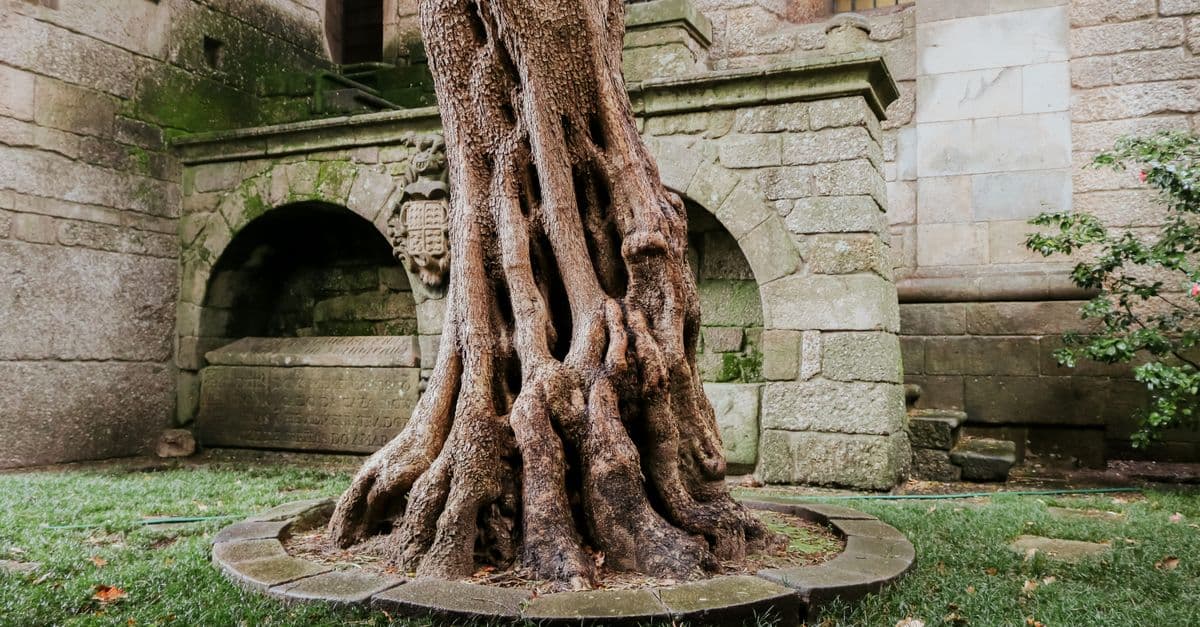
Photo: Ana M. / Pexels
The oldest known individual tree is Methuselah, a Great Basin bristlecone pine in California's White Mountains, dated to roughly 4,850 years old. It was already ancient when the pyramids at Giza were finished. But "oldest tree" turns out to be a much slipperier title than it sounds: a Chilean cypress may be older still, and some trees clone themselves endlessly, producing organisms that have been alive, in genetic terms, for thousands of years longer than any single trunk.
The Short Answer: Oldest Living Trees
Table 1. The oldest confirmed and candidate trees on Earth, ranked by estimated age.
| Tree | Estimated age | Type | Location |
|---|---|---|---|
| Pando | Estimated 9,000–16,000+ years (root system) | Clonal aspen colony | Fishlake National Forest, Utah, USA |
| Old Tjikko | ~9,550 years (root system, radiocarbon-dated) | Clonal Norway spruce | Fulufjället, Sweden |
| Gran Abuelo (Alerce Milenario) | ~5,484 years (statistical model, 80% confidence >5,000) | Individual | Alerce Costero National Park, Chile |
| Methuselah | ~4,850–4,857 years (ring count) | Individual | White Mountains, California, USA |
| Sarv-e Abarkuh | Traditionally cited near 4,000–5,000 years, unverified by ring count | Individual | Abarkuh, Iran |
| Llangernyw Yew | Estimated 4,000–5,000 years | Individual | Llangernyw, Wales |
| Prometheus (deceased) | At least 4,862 years, possibly older | Individual (felled 1964) | Wheeler Peak, Nevada, USA |
The records split into two very different categories: individual trees, meaning one trunk and one root system that has never died back, and clonal organisms, meaning one genetic individual that keeps regrowing new stems from a root system that predates all of them. Sources: Conservation International, Smithsonian Magazine on Gran Abuelo, Wikipedia on Old Tjikko, Wikipedia on Prometheus.
Methuselah: A Single Tree That Saw History Begin
Methuselah is a Great Basin bristlecone pine (Pinus longaeva) growing in the Ancient Bristlecone Pine Forest of the Inyo National Forest, in California's White Mountains. It was cored and dated in 1957 by Edmund Schulman, a dendrochronologist (a scientist who dates wood by counting and matching its growth rings) working with the Laboratory of Tree-Ring Research at the University of Arizona. Schulman's ring count put the tree's germination at roughly 2,832 BC, which makes it older than 4,850 years as of the current year. The US Forest Service manages the grove, and the tree's precise location within it is deliberately withheld from public maps and trail signage, a decision made after a nearby tree, discussed below, was destroyed by a researcher's mistake.
Different sources round Methuselah's age slightly differently, landing anywhere from about 4,850 to 4,857 years, depending on when the count was last updated and which growing season is used as the baseline. That handful of years is not sloppiness. It reflects the reality that ring counts on trees this old are extraordinarily hard to complete without a core sample that passes cleanly through the exact center of the trunk, called the pith, and bristlecones grow in twisted, asymmetric shapes that make finding true center difficult. Even a small miss can lose or duplicate a stretch of rings.
For scale: Methuselah sprouted centuries before the Great Pyramid of Giza was completed around 2,560 BC, before the invention of writing systems spread widely, and before Stonehenge was assembled. It has now outlived every human civilization that existed at the time of its birth, several times over, and it is still producing new growth today.
How Scientists Actually Count a Tree's Rings
How do scientists know how old a tree is?
Most trees in temperate and cold climates add one visible growth ring per year, so a cross-section or extracted core, sliced to reveal the rings, gives a direct year-by-year record. Dendrochronologists extract a thin cylinder of wood using a hollow drill called an increment borer, which does not require cutting the tree down. They count the rings under a microscope and cross-check the pattern against other trees in the region, a technique called cross-dating, to confirm no rings were missed or duplicated. For very old wood, radiocarbon dating of specific rings is used to independently verify the ring count, since abrupt shifts in atmospheric carbon-14 leave a chemical fingerprint that can pin a specific ring to a specific calendar year. Source: Cambridge Core, "Dendrochronology and Radiocarbon Dating".
This method has real limits. Coring an ancient bristlecone rarely produces a perfect sample: the wood is often partially hollow or so contorted that the geometric center is nowhere near where it looks like it should be. When a core misses the true pith, the tree's age is a minimum, not a confirmed maximum, which is part of why researchers suspect trees even older than Methuselah exist in the same groves but have not been cored successfully.
Why doesn't every old tree get the "oldest" title confirmed the same way?
Because ring-counting only works cleanly on individual, non-clonal, non-hollow trees with an intact center. Trees like Gran Abuelo in Chile, whose core sample only reached about 40% of the way into the trunk, require statistical modeling of growth rates from related, fully-cored trees to estimate the remaining unsampled years. That produces a probability, not a hard count. Researchers reported an 80% likelihood the tree exceeds 5,000 years, with a best estimate of 5,484 years, a method described by dendrochronologist Jonathan Barichivich and covered in Smithsonian Magazine and the Scientific American report on the tree. Because that figure rests on modeling rather than a completed physical count, most dendrochronologists still treat Methuselah, whose rings were counted end to end, as the more rigorously confirmed record holder, while acknowledging Gran Abuelo as the stronger scientific candidate for the true oldest tree.
Why Bristlecone Pines Live So Long
It seems backwards, but bristlecones reach their great ages precisely because their environment is brutal, not despite it.
- They grow at elevations above 3,000 meters (roughly 10,000 feet), in cold, dry, nutrient-poor dolomite soil that most plants cannot use at all, which removes most competing vegetation.
- Their extreme slow growth, sometimes adding less than 0.3 millimeters of trunk radius per year in the harshest spots, produces exceptionally dense, resin-rich wood that resists rot, insects, and fungal decay far better than the loose, fast-grown wood of a tree racing toward the sunlight in a crowded forest.
- The high, arid setting has almost no understory fuel, so wildfires that would kill a forest tree in minutes rarely reach these isolated groves.
- Slow growth also means a bristlecone accumulates comparatively little cellular damage per year, similar to the logic behind why cold-water, slow-metabolism animals tend to outlive warm, fast-metabolism ones.
This is the same "cold, slow, and steady" longevity pattern documented across the longest-living animals on Earth, where the record-holding ocean quahog clam Ming lived 507 years in the cold North Atlantic and Greenland sharks may live over 270 years in near-freezing Arctic water. A lush, fast-growing tree in a rich, competitive forest, by contrast, typically lives a small fraction as long, because speed and softness go together in biology just as much as slowness and toughness do.
Think of it like the difference between a cheap wooden chair built quickly from soft pine and a hand-carved oak chest built over years from dense, tight-grained wood. The fast one is functional immediately but falls apart within a decade. The slow one outlasts the people who made it.
Why do bristlecone pines live longer than almost any other tree species?
Because their extreme high-altitude habitat is too harsh for competitors, pests, and fire, and their painfully slow growth rate produces dense, decay-resistant wood. The tree trades speed for durability, the opposite strategy of most fast-growing forest species, and that trade pays off over thousands rather than hundreds of years.
The Clonal Loophole: Pando and Old Tjikko
The most genuinely strange record holders are clonal organisms, meaning a single genetic individual that keeps sending up new above-ground stems from one continuous root system, even as each individual stem lives and dies on a much shorter cycle. For the wider picture, see the oldest living things on Earth.
Pando ("I spread" in Latin) is a colony of roughly 47,000 quaking aspen (Populus tremuloides) trunks spread across about 43 hectares (106 acres) of the Fishlake National Forest in Utah. Every trunk is genetically identical and connected underground by a single root system that researchers estimate weighs around 6,000 metric tons (roughly 13 million pounds), making Pando one of the heaviest known organisms on Earth by mass, a title explored further in the largest living things on Earth. Individual stems typically live less than 150 years before dying back and being replaced by new shoots from the same root system. Age estimates for the root system itself vary widely across studies, from roughly 9,000 years to as much as 14,000–16,000 years, because unlike a single trunk, there is no continuous ring record to count. Source: Utah Historical Society, USU Western Aspen Alliance.
Old Tjikko, on Fulufjället mountain in Sweden, looks unremarkable at first glance: a scraggly Norway spruce (Picea abies) with a visible trunk that is likely only a few hundred years old. But radiocarbon dating of the roots beneath it, conducted by Umeå University geography professor Leif Kullman, dated organic material at the root system to roughly 9,550 years old. Individual trunks in a clonal spruce like this survive only around 600 years on average before dying and being replaced by a new shoot from the same ancient root mass, in a cycle that has apparently repeated for nearly ten millennia. Source: Old Tjikko research summary.
Are these organisms as old as their roots, or only as old as their currently visible trunks? The honest answer is that it depends entirely on how biologists define "an individual," a definitional problem that shows up again and again in record-keeping, from disputes over the longest rivers in the world (where does a river's true source begin) to arguments over which fungal colony truly counts as the largest single organism on the planet.
What is Pando and how old is it?
Pando is a colony of about 47,000 genetically identical quaking aspen trunks in Utah's Fishlake National Forest, all connected by one continuous root system and functioning as a single organism. Its individual trunks live under 150 years each, but the shared root system is estimated at somewhere between roughly 9,000 and 16,000 years old, depending on the study, making it one of the strongest candidates for oldest living organism on Earth if clonal age is counted.
The Rest of the Ancient Grove: Other Candidates Worth Knowing
Methuselah, Gran Abuelo, Pando, and Old Tjikko dominate the record-book conversation, but several other trees appear on nearly every serious list of the world's oldest, even though their ages rest on weaker or unverified evidence.
Table 2. Additional ancient trees frequently cited, and how solid their age claims actually are.
| Tree | Species | Claimed age | Evidence quality |
|---|---|---|---|
| Sarv-e Abarkuh | Mediterranean cypress | ~4,000–5,000 years (traditional) | No confirmed ring count; widely repeated folk estimate |
| Llangernyw Yew | Common yew | ~4,000–5,000 years (estimated) | Yews rot hollow with age, making ring counts unreliable; estimate based on girth and growth-rate modeling |
| Jōmon Sugi | Japanese cedar (Cryptomeria) | Estimates range from ~2,170 to ~7,200 years | Wide range reflects disagreement between direct ring sampling and folklore-driven high estimates |
| General Sherman | Giant sequoia | ~2,200 years | Well-documented by volume records, but not among the oldest by age |
Yew trees illustrate a specific dating problem worth understanding on its own: as a yew ages past a few centuries, its heartwood, the dense inner core, typically rots away entirely, leaving a hollow shell supported only by an outer ring of living wood. That means there is no continuous ring sequence from center to edge to count. Estimates for trees like the Llangernyw Yew rely instead on measuring trunk girth and applying known growth-rate curves from younger, intact yews of the same species, a method that produces a plausible range rather than a precise year. Source: Llangernyw Yew, Wikipedia.
Sarv-e Abarkuh, a Mediterranean cypress in Yazd Province, Iran, is frequently cited in popular lists as being roughly 4,000 to 5,000 years old and is often called the oldest living thing in Asia. No peer-reviewed ring count or radiocarbon study has confirmed that figure, so it should be treated as a widely repeated estimate rather than a scientifically verified age, unlike Methuselah's Schulman-era count or Gran Abuelo's modeled estimate.
Jōmon Sugi, a Japanese cedar on Yakushima Island, shows the same pattern: local tradition places its age as high as 7,200 years, but the tree's interior is partially hollow, and formal tree-ring studies of accessible branch material have only confirmed an age of at least roughly 2,000 years, leaving a very large gap between folklore and hard evidence.
Why Some of the Oldest Trees Are Now Dying
Age this extreme is not automatic protection. Several of the oldest known trees are currently under direct threat, and the causes trace back to the same slow-growth strategy that made their longevity possible in the first place.
Gran Abuelo, the Chilean cypress that may be the oldest confirmed individual tree on the planet, is losing water availability as regional rainfall patterns shift, and roughly 28% of the tree's crown remains alive, with the rest already dead, according to reporting in Scientific American. Tourists are also permitted to climb on its exposed roots, compacting soil the tree depends on for what little moisture reaches it.
Pando is shrinking for a different reason: deer and elk populations, no longer controlled by large predators across much of Pando's range, browse new aspen shoots faster than the root system can replace them, preventing young stems from ever reaching maturity. Researchers studying the colony describe this as an active population decline rather than a stable ancient organism, despite the root system's enormous age. Source: Utah Historical Society.
Bristlecone pines face a newer threat that their evolutionary strategy never accounted for: mountain pine beetles and white pine blister rust, a fungal disease, have both been expanding into higher elevations as regional temperatures warm, reaching groves that were historically too cold and dry for either threat to survive. A strategy built for a static, brutal, unchanging climate does not necessarily hold up once that climate itself starts moving.
Common Confusion: What People Get Wrong About "Oldest Tree"
The most common mistake is treating "oldest tree" as a single settled fact rather than a claim that depends entirely on definitions. A tree's age can mean the age of its currently visible trunk, the age of its root system if it clones itself, or a statistically modeled estimate rather than a direct count, and these three things can differ by thousands of years for the same organism.
A second common error is confusing "oldest" with "largest" or "tallest." General Sherman, a giant sequoia in California, is the largest tree on Earth by trunk volume, and Hyperion, a coast redwood, is the tallest tree in the world at 115.9 meters, but neither is anywhere close to being among the oldest. Giant sequoias typically top out around 3,200 years, and Hyperion is far younger still. Size, height, and age are three separate records driven by three different biological strategies, and a tree can dominate one category while being unremarkable in the others.
A third confusion involves Prometheus. Some sources still describe it, incorrectly, as "the oldest tree ever cut down for no reason," implying pure carelessness. The fuller record shows a more complicated story: the exact sequence of decisions that led to felling it is disputed even among the people involved, with different accounts blaming a stuck coring tool versus a deliberate choice to get a full cross-section, but every account agrees the researcher did not know beforehand that he was about to destroy a nearly 5,000-year-old, possibly record-setting tree.
Finally, people often assume the oldest trees must look ancient, gnarled, and clearly dying. In practice, the visible portion of the very oldest clonal organisms, like Old Tjikko's current trunk, can look like an ordinary, unremarkable small tree. Age in these cases is invisible above ground.
Frequently Asked Questions
Q: What is the oldest living tree in the world? A: The most rigorously confirmed individual tree is Methuselah, a Great Basin bristlecone pine in California, dated to roughly 4,850–4,857 years old. A Patagonian cypress in Chile called Gran Abuelo may be older, at a modeled estimate of about 5,484 years, but that figure comes from statistical modeling rather than a complete ring count. If clonal organisms count, Pando in Utah and Old Tjikko in Sweden, both estimated at 9,000 years or older, are older still.
Q: Is Methuselah older than the pyramids? A: Yes. Ring counts place Methuselah's germination around 2,832 BC, roughly two to three centuries before the Great Pyramid of Giza was completed around 2,560 BC. It has been alive through the entire span of recorded human civilization and is still growing in California's White Mountains today.
Q: Why do bristlecone pines live so long? A: Because they grow at high, cold, dry, nutrient-poor elevations that most competing plants, pests, and wildfires cannot tolerate. The harsh conditions force extremely slow growth, which produces dense, resin-rich wood that resists rot and insects far longer than fast-grown wood. Living slowly in a stable, harsh place is the core mechanism behind their extreme longevity.
Q: What is Pando and how old is it? A: Pando is a colony of about 47,000 genetically identical quaking aspen trunks in Utah's Fishlake National Forest, all connected by one root system and functioning as a single organism. Individual trunks live under 150 years each, but researchers estimate the shared root system at somewhere between roughly 9,000 and 16,000 years old, making it one of the oldest known living organisms if clonal age counts.
Q: How do scientists know how old a tree is? A: Mainly by counting growth rings in a core sample extracted with a hollow drill, since most trees add one ring per year. Researchers cross-check ring patterns against other trees in the same region and use radiocarbon dating on specific rings to verify the count independently. Clonal organisms and hollow-trunked trees like yews cannot be ring-counted directly and are instead estimated from growth-rate models, which produce a range rather than an exact year.
Q: Was Prometheus really the oldest tree ever recorded, and why was it cut down? A: Ring counts on the stump of Prometheus, a bristlecone pine felled in Nevada in 1964, showed it was at least 4,862 years old and possibly older than Methuselah, making it possibly the oldest tree ever documented. It was cut down by a graduate student researching climate history, either to retrieve a stuck coring drill or to obtain a full cross-section, depending on which account is believed; nobody involved knew beforehand that the tree held a record-setting age.
Q: Is Gran Abuelo actually older than Methuselah? A: It might be, but the claim is not yet as firmly established. Gran Abuelo's core sample only reached about 40% of the way to the tree's center, so its estimated age of 5,484 years comes from statistical modeling based on growth rates of related, fully-cored trees, giving an 80% probability of exceeding 5,000 years rather than a direct count. Methuselah's age comes from a completed ring count, which most dendrochronologists still treat as the stronger form of evidence.
Q: Do all trees add exactly one ring per year? A: No. Most trees in strongly seasonal climates do, which is what makes ring counting reliable, but trees in tropical regions with little seasonal variation may not form clear annual rings at all, and some species can occasionally skip a ring in an extremely poor growing year or form a false ring during an unusual mid-season stress event. This is why dendrochronologists cross-check ring patterns against multiple trees in a region rather than trusting a single sample alone.
Q: Why is Old Tjikko's visible trunk so much younger than its claimed age? A: Because Old Tjikko is a clonal Norway spruce. Its current above-ground trunk is likely only a few hundred years old, but it is the latest in a long cycle of trunks that have each lived roughly 600 years before dying and being replaced by a new shoot from the same continuous root system, which radiocarbon dating placed at about 9,550 years old.
Q: Are any of these ancient trees at risk of dying? A: Yes. Gran Abuelo is losing water as regional rainfall patterns shift and already has only about 28% of its crown still alive. Pando is shrinking because deer and elk are eating new shoots faster than the root system can replace them. Bristlecone pine groves are increasingly threatened by mountain pine beetles and a fungal disease called white pine blister rust, both expanding into higher, historically too-cold elevations as regional temperatures warm.
The Takeaway
There is no single, uncontested "world's oldest tree." There is Methuselah, whose age was earned through a complete, verifiable ring count and has held up since 1957. There is Gran Abuelo, whose likely-older age rests on careful but still statistical modeling. And there are the clonal organisms, Pando and Old Tjikko, whose visible trunks are almost young by comparison but whose root systems have quietly outlasted the entire Holocene. The real lesson is not which name deserves the trophy. It is that "age" itself is a harder question for a tree than it is for almost anything else alive, and the trees that answer it best are the ones that grew the slowest, in the harshest places, for the longest time.
Read next:
- The Longest-Living Animals on Earth
- The Largest Living Things on Earth
- The Tallest Trees in the World
Sources
- Conservation International — "Methuselah: Still the World's Oldest Tree?"
- Smithsonian Magazine — "How One Researcher Accidentally Killed One of the Oldest Trees in the World"
- Wikipedia — Prometheus (tree)
- Smithsonian Magazine — "A New Candidate for Oldest Tree in the World Is Discovered in Chile"
- Scientific American — "This Might Be the World's Oldest Tree. And It Could Die of Thirst"
- Utah Historical Society — "The Diminishing Pando Clone: History and Forest Management"
- Utah State University Western Aspen Alliance — "Sizing Up Pando"
- The Vintage News — "Old Tjikko the Norwegian Spruce Is Dated at 9,550 Years Old"
- Cambridge Core — "Dendrochronology and Radiocarbon Dating," Radiocarbon
- Wikipedia — Llangernyw Yew
Bottom line: Methuselah is the oldest single tree with a completed ring count to back its claim, but the strongest scientific candidate for the true title, Chile's Gran Abuelo, and the real endurance champions, clonal root systems like Pando and Old Tjikko, suggest the actual record for staying alive may belong to organisms far stranger than a single, countable trunk.
Last verified: July 2026
Follow new articles
Add SciHub101 to your feed reader to see new science and technology stories.
About the Author
SciHub101 is an independent science and technology publication founded and edited by Buğra Sözeri, a software engineer and app developer based in Türkiye. AI tools assist with drafting and research. Source documentation in the existing archive is uneven, and articles are being reviewed and corrected. The Editorial Team byline identifies editorial responsibility; it does not certify specialist or independent human review. Where we compare products, anything built by our own team is labelled as such — see the editorial guidelines and About page for how corrections and disclosures work.
Related Articles
The Tallest Trees in the World: Hyperion and the Limits of Living Tall
Hidden in a Californian valley, its exact location kept secret to protect it, stands Hyperion — a coast redwood roughly 116 metres tall, the tallest living thing on Earth. It is taller than the Statue of Liberty, older than most nations, and growing near a hard ceiling that physics imposes on every tree: a height beyond which water simply cannot be lifted. The tallest trees aren't just big; they're pushing against the laws of nature.
The Largest Volcanoes in the World: The Mountain That's Mostly Underwater
Mauna Loa in Hawaii rises 4,170 metres above the sea — but that's only the tip. Measured from its true base on the ocean floor, it stands roughly 17 kilometres tall, more than twice Everest's height above sea level, and is so heavy it has pushed the seabed downward beneath it. It may not even be the largest volcano on Earth by volume. And lurking beneath Yellowstone is something that isn't a mountain at all: a supervolcano whose eruptions are measured not in metres but in continents.

The Largest Living Things on Earth: From Blue Whales to Fungi
A single fungus in Oregon spans about 965 hectares of forest. An aspen grove in Utah is one genetic individual with roughly 47,000 stems. The blue whale is the largest animal known. Which one is the largest living thing on Earth depends on whether you measure mass, volume, area, or length, and on what you count as a single organism.
The Deadliest Animals in the World: The Tiny Killer That Beats the Lion
Ask which animal kills the most people and the mind jumps to sharks, lions, or crocodiles. The real answer is something you've swatted without a second thought: the mosquito, which killed an estimated 597,000 to 610,000 people in 2023 and 2024 alone — more than every large predator combined, many times over. The deadliest animals on Earth aren't the biggest or fiercest. They're the ones that carry disease, and the ranking overturns almost everything our instincts tell us.
The Longest-Living Animals on Earth: From 500-Year Clams to the Immortal Jellyfish
In 2006, researchers dredged a clam from the seabed off Iceland and counted the rings on its shell. The number stopped them cold: 507 years. The animal, later nicknamed Ming, had been alive since before Columbus sailed. It is the oldest individual animal ever reliably aged — but it isn't even the strangest entry on this list. One creature appears to cheat death entirely, reversing its own aging on demand.