The Longest-Living Animals on Earth: From 500-Year Clams to the Immortal Jellyfish
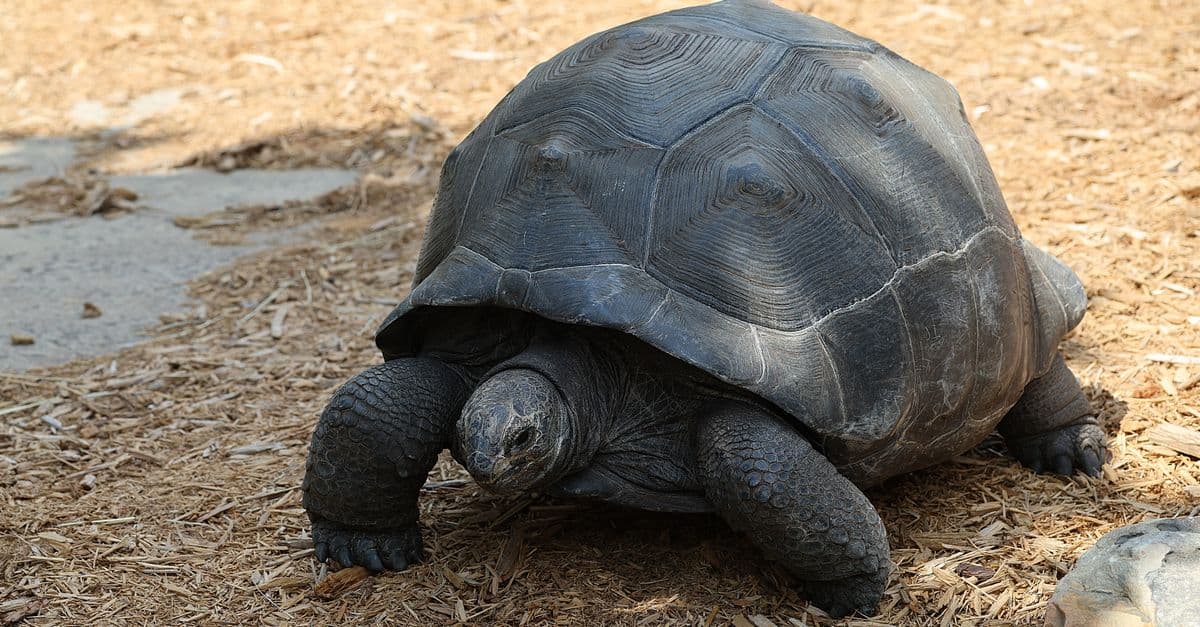
Photo: Veronika Andrews / Pexels
The longest-living animal ever reliably aged is Ming, an ocean quahog clam that lived 507 years. But raw lifespan is only part of the story. Some deep-sea sponges may be thousands of years old, a shark cruising the Arctic today might have been born before the telescope was invented, and at least one jellyfish appears to have found a genuine workaround for old age. Longevity in the animal kingdom is not one record — it is a spectrum running from the well-documented to the barely believable, and each entry on it teaches biologists something different about why bodies wear out at all.
The Short Answer: Longest-Lived Animals
Table 1. The longest-living animals on Earth, ranked by estimated maximum lifespan and confidence level.
| Animal | Lifespan (estimate) | Confidence | Notes |
|---|---|---|---|
| Glass sponges (Anoxycalyx joubini and relatives) | Possibly 10,000+ years | Low — extrapolated from growth rate | Antarctic deep-sea sponges; some estimates exceed 11,000 years |
| Turritopsis dohrnii (immortal jellyfish) | Potentially biologically immortal | Moderate — mechanism confirmed, wild lifespan unmeasured | Can revert adult cells to an earlier life stage |
| Ocean quahog clam (Ming) | 507 years (verified) | High — annual growth rings + radiocarbon | Oldest individual animal ever reliably aged |
| Greenland shark | ~272–392 years typical, up to ~500 years possible | High — radiocarbon dating of eye lens | Longest-lived vertebrate confirmed |
| Bowhead whale | 200+ years | High — amino-acid racemization + embedded harpoon points | Longest-lived mammal |
| Rougheye rockfish | Up to ~205 years | Moderate — otolith ring counts | Longest-lived fish outside sharks |
| Galápagos / Seychelles giant tortoise | 150–191 years | High — direct observational records | Longest-lived land animal; Jonathan (b. ~1832) is the record holder alive today |
| Tuatara | Up to ~100 years, possibly more in captivity | Moderate | New Zealand reptile with the coldest optimal body temperature of any reptile |
| Naked mole rat | Up to ~40 years | High | Small mammal; extreme outlier for its body size |
| Freshwater pearl mussel | Up to ~280 years | Moderate — shell rings | European and North American rivers |
The list spans the verifiable (a clam you can count like a tree) to the speculative (sponges and biological "immortality"), so the records come with genuinely different levels of confidence, and that distinction matters more than the raw numbers. For living things beyond animals, see the oldest living things on Earth.
The Verifiable Champion: Ming the Clam
The ocean quahog (Arctica islandica) is a hand-sized bivalve that lives buried in cold seafloor sediment across the North Atlantic, and it grows a new ring on its shell every year, almost exactly like a tree growing a new ring of wood. By counting and cross-checking those rings against radiocarbon dating of the shell, scientists can age an individual with real precision, not a rough estimate.
The specimen nicknamed Ming, dredged from waters off the north coast of Iceland by researchers from Bangor University's School of Ocean Sciences in 2006, was initially aged at 405 to 410 years old when first announced in 2007. A second, more careful analysis using refined shell-cross-matching techniques revised that figure upward in 2013 to 507 years, meaning the clam began its life around 1499 — before the Reformation, before the founding of most modern nation-states, while the Ottoman and Ming dynasties still ruled their respective empires. The nickname, in fact, comes from that Chinese dynasty.
This is why the clam, rather than the more famous whale or shark, holds the title for the oldest reliably aged animal: its age can be checked against physical, countable evidence, not just estimated from a statistical model. It also demonstrates the central pattern that runs through nearly every entry on this list — Ming lived in cold, stable, nutrient-poor water on the seafloor, and grew almost imperceptibly slowly for five centuries. There was no growth spurt, no rapid metabolism to manage, just steady, minimal cellular turnover year after year. According to Bangor University's research on the species, the quahog's growth-ring record now serves as a valuable climate archive too — each ring's chemistry preserves a snapshot of ocean temperature going back five centuries, effectively turning a single animal into a live-recording thermometer for half a millennium of North Atlantic history.
The Vertebrate Record: The Greenland Shark
The Greenland shark (Somniosus microcephalus) drifts through the freezing dark of the North Atlantic and Arctic Ocean at depths that can exceed 2,000 meters, and it holds the record for the longest-lived vertebrate confirmed by direct measurement. A landmark 2016 study published in Science, led by Julius Nielsen and John Steffensen at the University of Copenhagen, used radiocarbon dating of proteins in the eye's lens nucleus — a tissue that forms early in development and is never replaced — to estimate the ages of 28 female sharks.
The method relied on a strange but useful historical marker: above-ground nuclear weapons testing in the 1950s and early 1960s released a global pulse of carbon-14 into the ocean, and any shark eye lens formed after that pulse carries the elevated signature. Only the smallest sharks in the sample, those 220 centimeters (7.2 ft) or shorter, showed the bomb-pulse signature, meaning every larger shark in the study predated the nuclear era entirely. The largest animal analyzed, at 502 centimeters (16.5 ft), was estimated at 392 years old, with a statistical range of 272 to 512 years at 95.5% confidence. That range is precisely why the shark's typical citation is written as "270 to 500 years" rather than a single number — the method gives a probability band, not a birth certificate.
It achieves this longevity through extreme metabolic slowness. Living in water that hovers near 0°C (32°F) year-round, the Greenland shark has one of the slowest metabolic rates of any vertebrate, swims at speeds of roughly 1 kilometer per hour (0.6 mph), grows about 1 centimeter (0.4 in) a year, and — based on the same study — likely does not reach sexual maturity until it is around 150 years old. Cold plus slow equals long, a recurring theme that connects Greenland sharks to the most extreme organisms (extremophiles), animals that survive not through toughness in the conventional sense but by running their internal chemistry at a near standstill.
How does radiocarbon dating an eye tell you an animal's age?
The lens of a vertebrate eye is built in layers, like an onion, and the innermost layer — the nucleus — forms before birth and is metabolically inert for the rest of the animal's life; it is never rebuilt or replaced. That makes it a frozen chemical snapshot of the year the animal was born. By measuring the amount of radioactive carbon-14 trapped in that nucleus and comparing it to known atmospheric carbon-14 levels from different decades (including the 1950s–60s bomb-test spike), scientists can back-calculate a birth year with far more confidence than external measurements like body length would allow.
The Mammal Record: The Bowhead Whale
The bowhead whale (Balaena mysticetus) is the longest-lived mammal on Earth, with individuals confirmed to exceed 200 years, and some population models suggesting a small number may live considerably longer. Two independent lines of evidence converge on this figure. The first is grimly literal: Alaskan Iñupiat whalers in the 1990s and 2000s recovered whales carrying stone and ivory harpoon points, and later explosive bomb-lance fragments, embedded in their blubber — weapons that had gone out of commercial use decades to over a century earlier, meaning the whale had survived being struck and kept living for a very long time afterward.
The second line is chemical: aspartic acid racemization of the eye lens, the same "metabolically frozen tissue" logic used for Greenland sharks. Aspartic acid exists in two mirror-image molecular forms, L and D; living tissue builds almost exclusively the L-form, but in tissue that no longer turns over — like the lens core — the L-form slowly converts to the D-form at a fixed, known rate over centuries. Measuring the ratio of the two forms in a bowhead's eye lens gives researchers an age estimate independent of harpoon evidence, and the two methods have largely agreed with each other.
Bowheads have become an active subject in human aging research precisely because of what they don't get: despite their enormous body size — larger animals should, statistically, accumulate more cancer-causing mutations over a lifetime simply because they have more cells dividing more times — bowheads rarely develop cancer at all. A 2025 study published in Nature identified unusual, duplicated variants in bowhead DNA-repair and cell-cycle genes that appear to actively suppress tumor formation and improve genomic maintenance over the whale's long life. Understanding those variants is now informing broader research into human longevity and cancer resistance, which makes the bowhead less a curiosity and more a working model organism for anti-aging science.
The Fish Record You Rarely Hear About: Rougheye Rockfish
Sharks and whales dominate the popular longevity conversation, but a bony fish belongs on this list too. The rougheye rockfish (Sebastes aleutianus), found in the cold North Pacific from California to Japan, has been aged using otoliths — small calcium carbonate structures in the inner ear that, like tree rings and clam shells, lay down annual growth bands. Ring counts on rougheye rockfish otoliths have produced age estimates approaching 205 years in some individuals, making it one of the longest-lived fish species known outside the shark lineage.
Rockfish longevity fits the established pattern closely: cold deep water, a slow metabolic rate, delayed sexual maturity, and minimal predation pressure once an individual reaches a certain size. Researchers studying rockfish longevity have proposed that efficient antioxidant defenses and strong DNA-repair capacity — traits shared with several other long-lived cold-water species — help explain why these fish can accumulate over two centuries of cellular wear without succumbing to age-related decline in the way most fish do within a decade or two.
The Land Record: Giant Tortoises and the Slow-Reptile Club
On land, the cold-water longevity recipe is harder to pull off — land animals face bigger daily temperature swings and can't simply sink into freezing, stable water — so the record holders instead lean on armor, extremely low metabolic rates, and simple caution. The Galápagos and Aldabra giant tortoises are the standard-bearers, routinely living beyond 150 years even in the wild.
The individual record belongs to Jonathan, a Seychelles giant tortoise (Aldabrachelys gigantea hololissa) who lives on the island of Saint Helena in the South Atlantic. Jonathan hatched around 1832 and was already estimated at about 50 years old when he arrived on Saint Helena in 1882 as a gift to the island's governor. Guinness World Records recognizes him as the oldest known living land animal and the oldest chelonian (the group that includes tortoises, turtles, and terrapins) ever documented, with a confirmed age past 190 years as of late 2023 — a figure that comfortably exceeds his own species' typical life expectancy of roughly 150 years.
A second, less famous reptile deserves a mention here: the tuatara (Sphenodon punctatus), a lizard-like reptile found only in New Zealand and the sole living member of an entire ancient order, Rhynchocephalia, that otherwise died out alongside the dinosaurs. Tuatara typically live around 60 years in the wild and up to about 100, with some captive individuals — including a tuatara named Henry, who reportedly became a father at age 111 — suggesting the species' true ceiling may run even higher. Tuatara maintain the lowest optimal body temperature of any reptile, operating comfortably between roughly 16°C and 21°C (61–70°F), and they keep growing until they are around 35 years old, one of the slowest maturation schedules of any reptile alive.
What is the longest-living land animal?
The Galápagos and Seychelles giant tortoises hold this record, with individuals routinely living past 150 years. The current title holder is Jonathan, a Seychelles giant tortoise on Saint Helena hatched around 1832, confirmed past 190 years old as of late 2023 by Guinness World Records — making him both the oldest living land animal and the oldest chelonian ever documented.
The Small-Mammal Outlier: The Naked Mole Rat
Every mammal on this list so far is enormous — whales, tortoises, and by extension, large-bodied animals generally live longer than small ones, because bigger animals tend to have slower metabolisms relative to their mass and face fewer predators. The naked mole rat (Heterocephalus glaber) breaks that rule entirely. It is a nearly hairless burrowing rodent from East Africa, roughly the size of a mouse, and most rodents that size live two to three years. Naked mole rats regularly live past 30 years, with documented individuals exceeding 38 to 40 years — roughly ten to fifteen times longer than body-size scaling would predict.
What makes the naked mole rat scientifically valuable isn't just the raw number, it's what doesn't happen to them as they age. They show almost no increase in mortality risk with age (a phenomenon called negligible senescence), rarely develop cancer, and don't experience the typical age-related decline in fertility or metabolic function seen in nearly every other mammal, including humans. Research has linked this partly to an unusual, extra-high-molecular-weight form of hyaluronan (a molecule found in connective tissue) that appears to suppress tumor formation, along with enhanced DNA-repair enzymes that carry specific amino-acid changes not found in shorter-lived rodents. Because naked mole rats are small, easy to study in a lab, and genuinely defy the size-lifespan relationship, they've become one of biology's most closely watched models for understanding what separates ordinary aging from something closer to biological resilience.
The Speculative Extremes: Sponges and Immortality
Two entries push past ordinary lifespan into stranger, less certain territory — animals whose ages can only be estimated indirectly, because no one can observe a single individual for the millennia involved.
Glass sponges. Certain deep-sea sponges in Antarctic waters grow so slowly that researchers have proposed ages running into the thousands of years. A frequently cited 2021 estimate for Anoxycalyx joubini, a large Antarctic glass sponge, placed some specimens above 10,000 years old, and one dating method applied to McMurdo Sound sponges based on silicon deposits in their skeletal spicules produced estimates as high as 23,000 years for a single organism. Growth-rate observations underline just how slow these animals really are: one tagged 2-centimeter (0.8 in) individual of A. joubini showed no measurable growth over a full decade of monitoring, and a separate specimen of the related species Rossella racovitzae was estimated to grow only about 2 millimeters (0.08 in) per year. These figures carry real uncertainty, because they are extrapolated from growth models rather than counted directly the way Ming's shell rings were, but if anywhere close to correct, glass sponges would be the oldest living animals on the planet by a wide margin, edging the record toward the timescales explored in the oldest things on Earth, a list otherwise dominated by minerals, ice cores, and ancient trees rather than animals.
The "immortal" jellyfish (Turritopsis dohrnii). This small jellyfish, only a few millimeters across, does something no other complex animal is known to do: when stressed, injured, starving, or aging, it can trigger a process called transdifferentiation, in which its specialized adult (medusa) cells convert back into an earlier developmental cell type and the entire organism reverts to its juvenile polyp stage — effectively restarting its life cycle from a point earlier in development, rather than simply healing or regenerating a lost limb. In principle, and under laboratory observation, it can repeat this reversal many times over. A 2022 genome assembly and transcriptomic study, based on sequencing more than 1,500 young medusae from a single genetic clone, identified duplicated genes involved in DNA repair and protection that appear to switch on or off depending on which life stage the jellyfish is in, offering the first genetic explanation for how the transdifferentiation trick actually works at a molecular level.
The jellyfish still dies from predation, disease, or physical injury just like any other animal, so calling it truly "immortal" oversimplifies things. But it appears to have no built-in maximum lifespan the way every other complex animal does — no clock counting down toward senescence and organ failure from old age specifically. That distinction, between "cannot be killed" and "does not wear out on a schedule," is the entire reason biologists study it so closely, and it places Turritopsis dohrnii naturally alongside the planet's other biological extremes, such as the strongest and most extreme animals that push a single physical trait to its outer limit.
The Common Thread: Cold, Slow, and Steady
Across nearly every record-holder on this list, the same underlying recipe appears, and it's consistent enough that biologists treat it as a genuine explanatory pattern rather than a coincidence:
- Cold environments. Deep ocean water and polar seas slow down every chemical reaction in a body, including the ones that damage cells over time. Ming's seafloor habitat, the Greenland shark's near-freezing range, and Antarctic glass sponges all share this.
- Slow metabolism. Less energy burned per unit of body mass generally means fewer reactive byproducts (like free radicals) generated, and less cumulative cellular wear.
- Slow growth and late maturity. Bodies built gradually, over decades or centuries, appear to invest more heavily in maintenance and repair rather than rapid reproduction.
- Few predators and stable habitats. Longevity is only evolutionarily useful if an individual survives long enough, and safely enough, for it to matter — a fast-growing prey species gains nothing from a genome capable of living 500 years if something eats it at age three.
- Enhanced repair machinery. In cases where researchers have looked closely — bowhead whales, naked mole rats, and now the immortal jellyfish — the same theme reappears at the genetic level: extra or modified copies of DNA-repair and cell-cycle genes that seem to specifically suppress cancer and slow cellular aging.
Aging, viewed through this list, looks partly like a matter of pace rather than an unavoidable countdown. Animals that live fast — shrews, small songbirds, most mice — burn through their biological budget and die young; animals that live cold, slow, and protected can persist for centuries, and in a few documented cases, for millennia. It is one of biology's clearest trade-offs, and it sits at the heart of why gerontologists (researchers who study aging) keep coming back to this particular, odd assortment of clams, sharks, whales, and jellyfish rather than to more conventional lab animals.
What People Get Wrong About Animal Longevity
A few persistent misconceptions are worth clearing up, because they distort how people talk about this topic.
"Lobsters don't age" is a myth, but a useful one to understand. Lobsters do show unusually slow senescence and can grow for most of their lives, which has led to the popular claim that they are biologically immortal. In reality, lobsters die from molting-related exhaustion, disease, or predation long before any theoretical age limit is reached, and their telomeres (protective caps on chromosomes that shorten with age in most animals) don't behave the way the "immortality" claim implies. The myth persists because it sounds tidy, but real long-lived species — the ones on this list — earn their record through direct evidence, not folklore.
Size alone doesn't determine lifespan. It's tempting to assume "bigger animal, longer life," and the pattern often holds — but the naked mole rat and the immortal jellyfish both demolish it. What actually correlates more consistently with long life across the animal kingdom is metabolic rate, environmental stability, and DNA-repair efficiency, not raw body mass.
"Reliably aged" and "estimated" are not the same claim. Ming's 507 years comes from counting physical growth rings, cross-checked with radiocarbon dating — about as close to a birth certificate as biology gets. Glass sponge ages in the thousands of years, by contrast, come from extrapolating a measured growth rate over an unmeasured span of time, which is a reasonable scientific method but carries much wider error bars. Treating both claims with the same confidence is a common mistake in popular coverage of this topic.
Freshwater species get overlooked. The freshwater pearl mussel (Margaritifera margaritifera), found in cold, clean rivers across Europe and North America, has been aged using shell growth rings to estimates approaching 280 years in some populations — making it one of the longest-lived freshwater invertebrates known, and a useful reminder that record-setting longevity isn't confined to the deep ocean.
Frequently Asked Questions
Q: What is the longest-living animal on Earth? A: Among animals that can be reliably aged through direct physical evidence, it's Ming, an ocean quahog clam confirmed at 507 years old through shell-ring counts and radiocarbon dating. Some Antarctic glass sponges may be thousands of years old, but those ages are extrapolated estimates rather than directly measured. The immortal jellyfish (Turritopsis dohrnii) may have no fixed maximum lifespan at all, though it can still be killed by predation, disease, or injury.
Q: How do scientists know how old these animals are? A: The method depends on the animal. Clams and some fish grow annual rings — in shells or ear bones called otoliths — that can be counted much like tree rings. For sharks and whales, researchers date proteins in the eye lens nucleus, a tissue that forms once and is never replaced, using either radiocarbon signatures from 1950s–60s nuclear testing or amino-acid racemization chemistry. Sponge ages are extrapolated from very slow, measured growth rates projected backward, which is why they carry more uncertainty than ring counts.
Q: Is the immortal jellyfish really immortal? A: Not in the everyday sense of being unkillable. Turritopsis dohrnii can still be eaten, infected, or killed by injury like any other jellyfish. But it appears able to escape death from old age specifically by reverting its adult cells to an earlier developmental stage through a process called transdifferentiation, effectively restarting its life cycle, potentially over and over. That means it has no known maximum lifespan tied to aging, which is the specific, narrower sense in which it's called "biologically immortal."
Q: What is the longest-living land animal? A: Galápagos and Seychelles giant tortoises, which routinely live over 150 years in the wild. The individual record holder is Jonathan, a Seychelles giant tortoise on Saint Helena hatched around 1832 and confirmed past 190 years old by Guinness World Records as of late 2023. Land animals rarely reach the multi-century lifespans seen in deep, cold ocean species because stable, near-freezing environments are harder to find on land.
Q: Why do cold-water animals live so long? A: Cold water slows an animal's metabolic rate, and a slower metabolism generally produces less cumulative cellular damage over time. Combined with slow growth, delayed sexual maturity, and stable habitats with few predators, this lets animals like the Greenland shark, ocean quahog clam, and Antarctic glass sponges persist for centuries or longer. In effect, living slowly buys biological time.
Q: What is the longest-living mammal? A: The bowhead whale, confirmed to exceed 200 years of age through both aspartic acid racemization of eye lens tissue and physical evidence — stone and ivory harpoon points from weapons retired over a century ago, found embedded in living whales during 1990s and 2000s hunts. Bowheads are also notable for their strong resistance to cancer, an active area of anti-aging research.
Q: Do animals with no natural predators automatically live longer? A: Reduced predation pressure is part of the pattern, but it's not sufficient on its own — a slow metabolism and efficient cellular repair systems matter just as much. The naked mole rat, for instance, lives underground with relatively few predators but is still small-bodied; its extreme longevity for its size is better explained by specialized DNA-repair genes and tumor-suppressing molecules than by predator avoidance alone.
Q: Is it true that lobsters don't age? A: No, this is a persistent myth. Lobsters do show unusually slow senescence and continue growing for most of their lives, but they still die, typically from the physical exhaustion of molting, disease, or predation, well before reaching anything like the centuries-long lifespans confirmed in animals like Ming or the Greenland shark.
Q: How does studying long-lived animals help human aging research? A: Long-lived animals like bowhead whales and naked mole rats have unusual, often duplicated variants of genes involved in DNA repair and cancer suppression. Researchers study these variants directly to understand mechanisms that might, in principle, inform future human longevity and cancer research — though none of this translates into any current treatment or intervention for people.
Q: What is the longest-living fish? A: Excluding sharks, the rougheye rockfish is among the longest-lived fish known, with otolith ring counts producing age estimates approaching 205 years in some individuals. Including sharks, the Greenland shark holds the overall vertebrate record at an estimated 272 to 392 years typical, with a statistical range extending toward 500 years.
The Takeaway
Every animal on this list is running the same basic biological math differently: how much damage accumulates in a cell, how fast, and how well the body repairs it before that damage becomes fatal. Ming the clam and the Greenland shark answer that math by living cold and slow, letting time pass almost without consequence. Bowhead whales and naked mole rats answer it with unusually good genetic repair crews. The immortal jellyfish answers it by refusing to accept the premise at all, reverting itself to an earlier stage rather than aging forward. None of these animals have "solved" death, but each represents a different, real, measurable strategy for delaying the ordinary rules of biological wear, and that variety is exactly why they remain such active subjects of scientific study rather than mere trivia.
Read next
- The Most Extreme Organisms (Extremophiles)
- The Oldest Things on Earth
- The Largest and Smallest Animals
Sources
- Bangor University / National Geographic — Ming the ocean quahog clam, 507 years
- Guinness World Records — Longest-lived animal (Ming the clam)
- Nielsen, J. et al. (2016). "Eye lens radiocarbon reveals centuries of longevity in the Greenland shark." Science 353(6300), 702–704.
- Virginia Institute of Marine Science — Greenland shark longevity summary
- North Slope Borough — Bowhead whale age estimation (harpoon evidence, aspartic acid racemization)
- Nature (2025) — "Evidence for improved DNA repair in the long-lived bowhead whale"
- Hasegawa, Y. et al. (2022). "Genome assembly and transcriptomic analyses of the repeatedly rejuvenating jellyfish Turritopsis dohrnii." DNA Research 30(1).
- IFLScience — Antarctic glass sponges estimated over 10,000 years old
- Guinness World Records — Jonathan the tortoise, oldest known living land animal
- Rochester University — Naked mole rat cancer resistance and longevity
- Department of Conservation (New Zealand) — Tuatara biology and lifespan
Bottom line: From a clam that outlived empires to a jellyfish that rewinds its own life, the longest-living animals all bend toward the same rule — live cold, live slow, repair well, and the centuries follow.
Last verified: July 2026
Follow new articles
Add SciHub101 to your feed reader to see new science and technology stories.
About the Author
SciHub101 is an independent science and technology publication founded and edited by Buğra Sözeri, a software engineer and app developer based in Türkiye. AI tools assist with drafting and research. Source documentation in the existing archive is uneven, and articles are being reviewed and corrected. The Editorial Team byline identifies editorial responsibility; it does not certify specialist or independent human review. Where we compare products, anything built by our own team is labelled as such — see the editorial guidelines and About page for how corrections and disclosures work.
Related Articles

The Deepest Lakes in the World: Lake Baikal and the Crack in a Continent
Lake Baikal in Siberia plunges to 1,642 metres — deep enough to swallow the world's tallest building twice over with room to spare. It is not just the deepest lake on Earth; it holds about a fifth of all the planet's unfrozen fresh water and has existed for 25 million years, longer than any other lake. The deepest lakes share a common origin: they sit in places where the Earth's crust is literally being pulled apart.

The Largest Lakes in the World: The Caspian Paradox and the Inland Seas
The largest lake on Earth is called a sea. The Caspian Sea covers about 371,000 to 374,000 square kilometres — larger than Germany — and is bordered by five countries that argued for over two decades about whether it's legally a lake or a sea, because the answer decides who owns its oil. Behind it stretch the true freshwater giants, including a single North American lake big enough to cover the entire United Kingdom.
The Longest-Living Animals Explained: Biology of Extreme Longevity
A Greenland shark alive today may have been born before the Thirty Years' War ended in 1648. An ocean quahog clam called Ming was 507 years old when researchers accidentally killed it by opening its shell. A bowhead whale carries harpoon fragments from weapons manufactured in the 1800s, embedded in its blubber for over a century. Extreme longevity in animals is not accidental — it is the product of specific biological mechanisms that researchers are now mapping in molecular detail.

Why We Age — The Biology of Getting Old
The 12 hallmarks of aging, why evolution allowed us to grow old, and what interventions — from rapamycin to reprogramming — actually have evidence.

Why Do We Age? The Science of Aging Explained
Aging is not a disease, a single clock winding down, or an inevitable consequence of time passing. It is a set of overlapping molecular failures that accumulate faster than cells can repair them. Researchers have now identified twelve distinct hallmarks that drive this process — and several of them can be slowed, at least in model organisms.

Countries with the Highest Life Expectancy (Ranked)
Japan's women live to an average of 87.7 years — the longest female life expectancy ever recorded for a large country. At the national level, Hong Kong leads all territories at 85.5 years, while Japan tops sovereign nations at 84.7. This is a story of diet, healthcare, culture, and the biology of longevity.