The Largest Lakes in the World: The Caspian Paradox and the Inland Seas
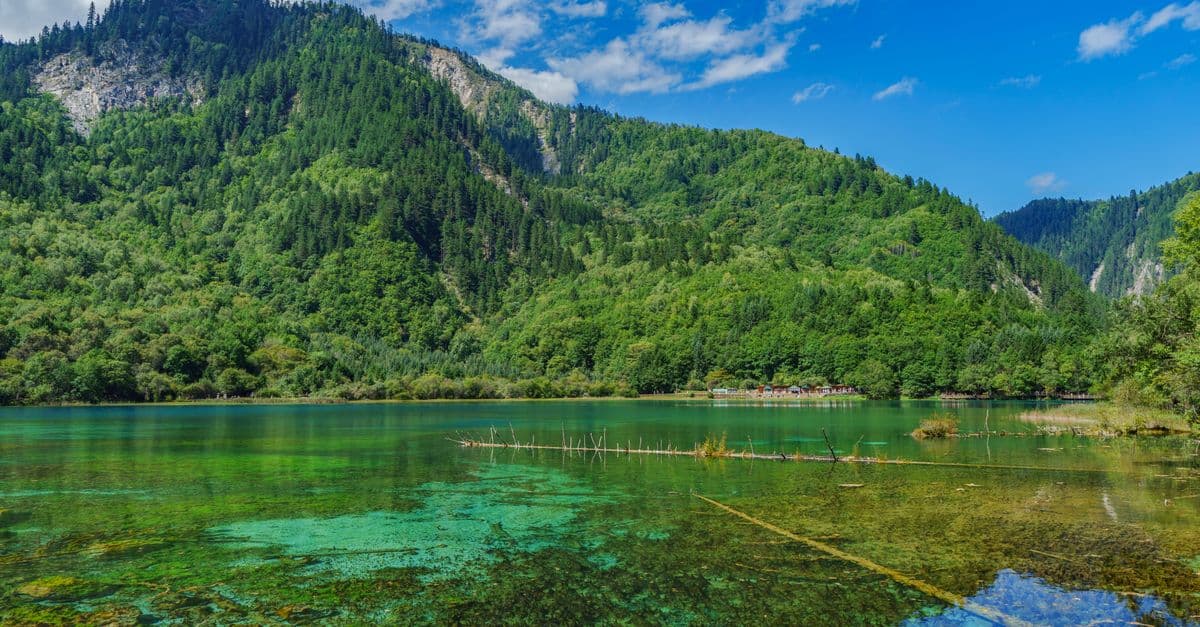
Photo: David Tran / Pexels
The largest lake in the world is the Caspian Sea, covering roughly 371,000 to 374,000 square kilometres (143,000-144,400 square miles) — an area larger than Germany. Despite the name, it meets the standard geographic definition of a lake: a body of water entirely surrounded by land, with no direct outlet to the ocean. Behind it come the great freshwater lakes, led by North America's Lake Superior. But as with the world's longest rivers, "largest" hides a catch. Measure by surface area and you get one winner. Measure by the volume of water actually held, and you get a completely different one. Measure by drainage basin, and a third lake takes the crown.
This matters beyond trivia. Lake size determines drinking water supply for tens of millions of people, shipping capacity worth billions of dollars a year, and — in the Caspian's case — who has legal rights to drill for oil beneath the water. Understanding how lakes form, why some are shrinking fast enough to watch on satellite footage, and why a body of water can be legally undefined for over twenty years tells you something real about how geography intersects with geology, climate, and international law.
The Short Answer: Largest Lakes by Surface Area
| Rank | Lake | Area (approx.) | Type | Location |
|---|---|---|---|---|
| 1 | Caspian Sea | 371,000-374,000 km² | Salt | Central Asia |
| 2 | Superior | 82,100 km² | Fresh | North America |
| 3 | Victoria | 68,800-68,900 km² | Fresh | East Africa |
| 4 | Huron | 59,600 km² | Fresh | North America |
| 5 | Michigan | 58,000 km² | Fresh | United States |
| 6 | Tanganyika | 32,900 km² | Fresh | East Africa |
| 7 | Baikal | 31,700 km² | Fresh | Siberia, Russia |
| 8 | Great Bear Lake | 31,000 km² | Fresh | Canada |
| 9 | Malawi (Nyasa) | 29,600 km² | Fresh | East Africa |
| 10 | Great Slave Lake | 27,000 km² | Fresh | Canada |
Table 1: The ten largest lakes on Earth ranked by surface area. Figures are approximate and vary slightly between sources depending on measurement year and water-level fluctuation.
The Caspian is so large it dwarfs everything else combined among the top five. It alone covers more surface area than the next four lakes on this list added together. Excluding it, Lake Superior is the largest freshwater lake by area, and it is large enough that its surface alone would rank as the world's 18th-largest country if it were dry land.
The Caspian Paradox: A Lake Called a Sea
The Caspian Sea earns its "sea" name from a combination of sheer scale and salty water. It is the last visible remnant of the Paratethys, an ancient inland ocean that stretched across much of what is now Southern Europe and Central Asia before tectonic uplift and drying cut it off from the world ocean roughly 5.5 million years ago. Its water carries about 1.2% salinity — far saltier than a typical freshwater lake, though only about a third as salty as the open ocean, which averages around 3.5%.
Geographically, though, it is landlocked. It has no outlet to any sea or ocean, which by the textbook definition makes it a lake, not a sea, no matter what its name says. That single technicality made it the largest lake on the planet by a wide margin, and it's also what triggered one of the strangest territorial disputes in modern diplomacy.
Why does it matter whether the Caspian is a lake or a sea?
International maritime law treats seas and lakes very differently. A sea under the UN Convention on the Law of the Sea grants coastal nations exclusive economic zones extending 200 nautical miles (370 km) from shore. A lake, by contrast, is typically divided by agreement among the bordering states, often along a median line or through negotiated shares. For a body of water sitting on some of the largest untapped oil and gas reserves in the world, that difference could mean tens of billions of dollars.
Russia, Iran, Kazakhstan, Turkmenistan, and Azerbaijan spent more than two decades arguing over this exact question after the Soviet Union's collapse in 1991 turned a single-country lake into a five-country dispute. Prior to that, the Caspian's waters were divided simply between the USSR and Iran under a 1940s treaty, and the question of "lake or sea" barely mattered because there was no competition over the seabed.
What did the 2018 Caspian convention decide?
On August 12, 2018, leaders of all five bordering nations signed the Convention on the Legal Status of the Caspian Sea, and their solution was to sidestep the binary entirely. The convention classified the Caspian as neither a full sea nor an ordinary lake, but a body of water with its own bespoke legal status. Each country received a 15-nautical-mile territorial water zone plus a further 10-nautical-mile fishing zone, with everything beyond that treated as common waters — while seabed mineral rights are still negotiated separately between the neighboring pairs of countries whose coastlines meet at the relevant point, according to the Convention text summarized by Norton Rose Fulbright and analysis on Wikipedia's summary of the convention. It took over 20 years of negotiation to reach that compromise.
Area vs. Volume vs. Drainage Basin: Three Different Winners
As with the longest-river question, the "largest lake" record splits depending on exactly what you measure. There isn't one number — there are at least three, and each produces a different champion.
- By surface area: the Caspian Sea leads overall; Lake Superior leads among strictly freshwater lakes.
- By volume (total water held): Lake Baikal wins among freshwater lakes, holding roughly 23,000 cubic kilometers (5,500 cubic miles) of water — about 20% of all the unfrozen fresh water on Earth's surface, despite ranking only seventh by surface area. The Caspian still holds the single largest volume of any lake overall, at roughly 78,200 cubic kilometers, because its enormous surface area more than compensates for being shallower on average than Baikal.
- By drainage basin (the total land area that feeds water into the lake): the Caspian again dominates, since it collects runoff from the Volga, Ural, and Kura rivers across a watershed larger than most countries.
So Lake Superior is the biggest sheet of fresh water on Earth, but Baikal is the biggest reservoir of it. The difference comes down almost entirely to depth: Superior averages about 147 meters (483 feet) deep, while Baikal plunges to a maximum depth of 1,642 meters (5,387 feet), the deepest of any lake on the planet, a subject explored in more detail in the deepest lakes in the world.
Why is Lake Baikal so much deeper than every other lake?
Baikal sits in a continental rift zone, a location where two tectonic plates are actively pulling apart rather than colliding. As the crust stretches and thins, the ground between the plates drops, creating a long, narrow, extremely deep trench that steadily deepens over geological time. Baikal has been rifting for an estimated 25 to 30 million years, making it not only the deepest but also the oldest lake on Earth, according to UNESCO's World Heritage listing for Lake Baikal. Most other large lakes, by contrast, were carved out much more recently by glaciers and are geologically young and comparatively shallow.
The North American Great Lakes
The five Great Lakes — Superior, Huron, Michigan, Erie, and Ontario — together hold roughly 21% of the world's surface fresh water and form the largest connected group of freshwater lakes on Earth by total area. More than 30 million people rely on them for drinking water: about 10% of the entire United States population and roughly 30% of Canada's population, according to figures compiled by NOAA's Great Lakes fast facts.
Their origin traces directly to the last ice age. Around 20,000 years ago, an ice sheet as thick as 3,000 to 9,000 feet (roughly 900 to 2,700 meters) began retreating northward across what is now the U.S.-Canada border. As the glacier receded, it gouged out deep basins in the underlying rock and left behind ridges of debris called moraines that dammed the meltwater in place, filling the basins to form the lakes we see today, a process detailed by Wisconsin Sea Grant's explanation of Great Lakes formation. That glacial-scouring origin is the common story behind most of the world's large lakes: broad, shallow basins carved by moving ice, in contrast to the narrow, deep rift lakes like Baikal and Tanganyika that formed through entirely different tectonic processes.
The Great Lakes are large enough that they behave less like inland ponds and more like small seas. They generate their own regional weather, most famously lake-effect snow, when cold air passing over the relatively warmer lake water picks up moisture and dumps it as heavy snowfall on the downwind shore. They also have measurable tides (though tiny, on the order of centimeters, driven mostly by wind and barometric pressure rather than the moon), shipping lanes used by ocean-going freighters, and storms capable of generating waves over 6 meters (20 feet) tall that have sunk hundreds of ships across recorded history, including the well-documented 1975 loss of the SS Edmund Fitzgerald on Lake Superior.
How much of the world's fresh water do the Great Lakes hold?
Together, the five Great Lakes contain about 21% of the world's surface fresh water supply and roughly 90% of the fresh water in the United States specifically. Lake Superior alone accounts for the largest single share of that volume, since it is both the largest by surface area and among the deepest of the five, averaging 147 meters (483 feet) with a maximum depth of 406 meters (1,332 feet).
Lake Victoria and the Tropical Giants
Lake Victoria in East Africa is the largest tropical lake in the world and the second-largest freshwater lake by surface area, behind only Lake Superior. It sits in a shallow depression cradled between the eastern and western branches of the East African Rift Valley, a rift system that itself began forming 22 to 25 million years ago, though Victoria itself is geologically young, estimated at only around 400,000 years old, according to background compiled by Turkana Wildlife Safaris' geology overview.
It is the primary source of the White Nile, the westernmost of the Nile's two main tributaries, directly linking Lake Victoria's fate to the story told in the longest rivers in the world. Tens of millions of people across Uganda, Kenya, and Tanzania depend on the lake for fishing, transport, and drinking water.
Unlike the deep rift lakes nearby, such as Tanganyika and Malawi, Victoria is unusually shallow for its size. Its average depth is only about 25 meters (82 feet), with a maximum depth of roughly 84 meters (276 feet) — shallow enough that it has completely dried up at least three separate times in the past 100,000 years, most recently around 17,000 years ago at the tail end of an ice age, according to research summarized in The Conversation's coverage of Lake Victoria's drying history. That shallow profile also means it responds fast to modern climate shifts and rainfall changes, unlike a deep reservoir like Baikal, which is buffered by sheer volume.
Could Lake Victoria dry up again?
Yes, in principle. Because Lake Victoria's water balance depends almost entirely on rainfall rather than glacial meltwater or a deep groundwater reserve, extended drought could shrink it dramatically the way it has three times before in the last 100,000 years. Scientists studying the lake's sediment record have suggested a future arid spell could plausibly recur within the next several centuries if regional rainfall patterns shift substantially, though this is a long-range projection, not an imminent event.
When a Lake Vanishes: The Aral Sea
Not every large lake stays large, and no case makes that clearer than the Aral Sea. Once the fourth-largest lake in the world by surface area, straddling the border of modern-day Kazakhstan and Uzbekistan, the Aral Sea began shrinking catastrophically starting in the 1960s after Soviet planners diverted its two feeder rivers, the Amu Darya and the Syr Darya, to irrigate cotton fields across the surrounding desert.
The results were severe. By 1990, the lake had already lost 40% of its surface area and 60% of its total volume. By 2007, it had shrunk to roughly 10% of its original size, splitting into several smaller, increasingly saline remnant lakes, according to satellite tracking summarized by NASA Earth Observatory's World of Change series on the Aral Sea. The exposed lakebed, now a salt-crusted desert known as the Aralkum, generates dust storms that carry salt and agricultural pesticide residue across the surrounding farmland and communities, contributing to documented respiratory illness and other public health problems in the region. The Supreme Soviet formally declared the Aral Sea a disaster area in March 1991, and in 2010 then-UN Secretary-General Ban Ki-moon called its disappearance one of the planet's worst environmental disasters, based on reporting from The Diplomat's account of the Aral Sea's decline.
The Aral Sea is the clearest cautionary tale in the history of large lakes: unlike glacial or tectonic formation, its destruction was not geological at all. It was a direct, documented consequence of human water diversion, and it happened within a single human lifetime rather than over geological time.
How Lakes Actually Form: Four Mechanisms
Not all large lakes come from the same geological process. Broadly, the world's biggest lakes fall into four formation categories, and knowing which one applies to a given lake tells you a lot about its shape, depth, and future stability.
| Formation type | Mechanism | Example lakes | Typical shape |
|---|---|---|---|
| Tectonic rift | Crust pulled apart, creating a deep, narrow trench | Baikal, Tanganyika, Malawi | Long, narrow, very deep |
| Glacial scour and damming | Ice sheets carve basins and leave debris dams | Superior, Huron, Michigan, Great Bear | Broad, shallow-to-moderate depth |
| Endorheic remnant | Ancient sea or ocean cut off, then partially evaporated | Caspian Sea, Aral Sea (historically) | Very large surface area, variable depth |
| Volcanic (crater/caldera) | Collapsed volcanic magma chamber fills with water | Crater Lake (Oregon), Lake Toba (Indonesia) | Roughly circular, often very deep for their size |
Table 2: The four dominant mechanisms behind the world's largest lakes, with representative examples.
The Caspian Sea belongs to its own special sub-case within the endorheic category. It didn't just get cut off from an ocean recently; it is the largest surviving fragment of the Paratethys Sea, a body of water that once stretched from the Alps to Central Asia before tectonic collision and evaporation shrank it down over roughly 5.5 million years into the isolated basin we see today.
Common Confusions: What People Get Wrong About Lake Size
There are a few recurring mistakes people make when talking about the world's largest lakes, and clearing them up makes the record itself easier to understand.
The first is assuming "largest lake" always means the same thing as "largest freshwater lake." It does not. The Caspian Sea is saline, so most rankings of freshwater lakes exclude it entirely, which is why Lake Superior often gets cited as "the world's largest lake" in casual conversation even though it's actually second when the Caspian is included.
The second is confusing surface area with volume. Lake Superior wins on area; Lake Baikal wins on volume among fresh water. These are genuinely different physical properties, roughly analogous to the difference between the footprint of a building and its total interior square footage across every floor. A wide, shallow lake and a narrow, extremely deep one can hold wildly different amounts of water despite looking similar on a flat map.
The third is treating "Great Lakes" and "great lakes" as interchangeable. Capitalized, "Great Lakes" specifically refers to the five North American lakes (Superior, Huron, Michigan, Erie, Ontario). The lowercase term "great lakes" is sometimes used loosely to describe the African Great Lakes region (Victoria, Tanganyika, Malawi, and others), which is a completely separate group formed by an entirely different geological process.
Finally, people often assume lake rankings are static. They are not. The Caspian Sea's water level has fluctuated by several meters over the past century due to river inflow changes and evaporation, and it is currently in a documented multi-decade decline linked partly to reduced Volga River discharge and rising regional temperatures. The Aral Sea shows how fast a top-ten lake can effectively disappear. Any "largest lakes" list is a snapshot, not a permanent fact.
Frequently Asked Questions
Q: What is the largest lake in the world? A: The Caspian Sea, at roughly 371,000 to 374,000 km² (143,000-144,400 square miles). Despite its name, it is technically the world's largest lake, a body of water entirely surrounded by land, though a 2018 international convention gave it a special legal status that is neither fully "lake" nor "sea." The largest strictly freshwater lake by area is Lake Superior in North America, at about 82,100 km².
Q: Why is the Caspian Sea called a sea if it's a lake? A: Because of its enormous size and salty water (about 1.2% salinity). It is the last remnant of the Paratethys, an ancient ocean cut off from the world ocean roughly 5.5 million years ago. Geographically it is landlocked with no outlet to any ocean, so it meets the technical definition of a lake. Its classification was a genuine legal dispute for over two decades because "lake" and "sea" trigger different international laws for dividing seabed oil and gas rights.
Q: What is the largest freshwater lake in the world? A: By surface area, Lake Superior (~82,100 km²). By water volume, Lake Baikal in Siberia, which holds roughly 23,000 cubic kilometers of water, about a fifth of the world's unfrozen fresh water, thanks to its extreme depth of 1,642 meters. The answer genuinely depends on whether you measure the surface footprint or the total water held.
Q: What are the Great Lakes and how big are they? A: The five Great Lakes of North America (Superior, Huron, Michigan, Erie, and Ontario) together hold about 21% of the world's surface fresh water, the largest such group on Earth. They formed roughly 20,000 years ago when retreating ice-age glaciers carved out basins later filled with meltwater. More than 30 million people rely on them for drinking water today.
Q: Is Lake Victoria bigger than Lake Superior? A: No. Lake Superior (~82,100 km²) is larger by surface area than Lake Victoria (~68,800-68,900 km²). Victoria is the largest lake in Africa and the largest tropical lake in the world, and it ranks as the world's second-largest freshwater lake by surface area after Superior.
Q: What happened to the Aral Sea? A: The Aral Sea was once the fourth-largest lake on Earth. Starting in the 1960s, Soviet planners diverted its two main feeder rivers to irrigate cotton fields, and by 2007 the lake had shrunk to about 10% of its original size. It was officially declared a disaster area by the Supreme Soviet in 1991, and the UN has called its decline one of the world's worst environmental disasters.
Q: Why is Lake Baikal the deepest lake in the world? A: Baikal sits in a continental rift zone, where tectonic plates are actively pulling apart rather than colliding. That stretching thins the crust and drops the ground between the plates, creating a long, narrow trench that has deepened steadily for an estimated 25 to 30 million years, making Baikal both the deepest lake on Earth (1,642 m) and the oldest.
Q: How does a lake form in the first place? A: Large lakes generally form through one of four mechanisms: tectonic rifting (Baikal, Tanganyika), glacial scouring and damming (the Great Lakes), an ancient sea or ocean being cut off and partially evaporating (the Caspian Sea), or a collapsed volcanic crater filling with water (Crater Lake). Each mechanism produces a distinctly different shape and depth profile.
Q: What is the largest lake entirely within one country? A: Lake Baikal in Russia is the largest lake that lies entirely within a single country's borders, at about 31,700 km². The Caspian Sea, Great Lakes, Victoria, and Tanganyika are all shared across multiple national borders.
Q: Is the Caspian Sea shrinking too? A: The Caspian Sea's water level has fluctuated over the past century and is currently in a documented decline linked to reduced river inflow (particularly from the Volga) and rising evaporation from regional warming. Its decline has been slower and less dramatic than the Aral Sea's near-total collapse, but scientists monitoring the region have flagged it as an ongoing trend worth tracking, not a one-time event.
The takeaway
There is no single "largest lake in the world" if you demand one clean number, because area, volume, and drainage basin measure genuinely different things and don't always agree on a winner. The Caspian Sea wins on surface area and total volume but gets excluded from most "freshwater" rankings because of its salinity; Lake Superior wins the freshwater-area title; Lake Baikal wins on freshwater volume despite ranking only seventh by surface area, because its rift-valley origin made it extraordinarily deep instead of extraordinarily wide. The Aral Sea's near-disappearance is the reminder that these rankings aren't fixed facts carved in geological stone. They shift with climate, water diversion, and time, and the "largest lakes" list of a century from now may look meaningfully different from the one printed today.
Read next:
Sources
- Norton Rose Fulbright — The Convention on the Legal Status of the Caspian Sea
- Wikipedia — Convention on the legal status of the Caspian Sea
- UNESCO World Heritage Centre — Lake Baikal
- NOAA — Great Lakes Fast Facts
- Wisconsin Sea Grant — The Formation of the Great Lakes
- WorldAtlas — Role of the Great Lakes in the Economy of the US and Canada
- The Conversation — In 100,000 years Lake Victoria has dried up three times
- Turkana Wildlife Safaris — Lake Victoria Geology
- NASA Earth Observatory — World of Change: Shrinking Aral Sea
- The Diplomat — How the Soviet Union Created Central Asia's Worst Environmental Disaster
Bottom line: The world's largest lake is a salty leftover ocean we call a sea; its freshwater rivals split the title depending on whether you count surface area or volume. Geography rarely gives one clean answer, and lake rankings shift with climate and human water use more than most people realize.
Last verified: July 2026
Follow new articles
Add SciHub101 to your feed reader to see new science and technology stories.
About the Author
SciHub101 is an independent science and technology publication founded and edited by Buğra Sözeri, a software engineer and app developer based in Türkiye. AI tools assist with drafting and research. Source documentation in the existing archive is uneven, and articles are being reviewed and corrected. The Editorial Team byline identifies editorial responsibility; it does not certify specialist or independent human review. Where we compare products, anything built by our own team is labelled as such — see the editorial guidelines and About page for how corrections and disclosures work.
Related Articles
The Longest-Living Animals on Earth: From 500-Year Clams to the Immortal Jellyfish
In 2006, researchers dredged a clam from the seabed off Iceland and counted the rings on its shell. The number stopped them cold: 507 years. The animal, later nicknamed Ming, had been alive since before Columbus sailed. It is the oldest individual animal ever reliably aged — but it isn't even the strangest entry on this list. One creature appears to cheat death entirely, reversing its own aging on demand.
The Longest Bridges in the World: The 164-Kilometre Crossing
The longest bridge on Earth runs for 164 kilometres — roughly the distance from London to Birmingham — carrying high-speed trains across the rice paddies and rivers of eastern China. The Danyang–Kunshan Grand Bridge is so long that calling it a 'bridge' almost understates it; it is an elevated railway the length of a small country. But the real engineering drama lies elsewhere: in the bridges that span the widest single gaps without touching the ground.
The Deepest Lakes in the World: Lake Baikal and the Crack in a Continent
Lake Baikal in Siberia plunges to 1,642 metres — deep enough to swallow the world's tallest building twice over with room to spare. It is not just the deepest lake on Earth; it holds about a fifth of all the planet's unfrozen fresh water and has existed for 25 million years, longer than any other lake. The deepest lakes share a common origin: they sit in places where the Earth's crust is literally being pulled apart.
The Longest Mountain Ranges in the World: The 65,000-Kilometre Range You'll Never See
The Andes stretch 7,000 kilometres down the spine of South America — the longest mountain range on land, and a wall so high it creates deserts on one side and rainforests on the other. But it's not even close to the longest range on the planet. That title belongs to a mountain chain ten times longer, winding 65,000 kilometres around the globe entirely beneath the oceans, where most of Earth's volcanic activity quietly happens.
The Tallest Waterfalls in the World: Angel Falls and the Hidden Giants
Venezuela's Angel Falls drops 979 meters — so far that much of the water turns to mist before it ever reaches the ground, especially in the dry season. It is the tallest waterfall on land, plunging off a flat-topped mountain built from some of the oldest rock on Earth. But the single tallest waterfall on the planet is not on land at all: it is underwater, a cataract beneath the ocean that dwarfs every waterfall you can see.

The Tallest Mountains on Earth: Everest, Mauna Kea, and Chimborazo Compared
Mount Everest is not the tallest mountain on Earth — and it is not the closest point on Earth's surface to outer space. Both claims belong to other peaks depending on how you define 'tallest.' At 8,848.86 meters (29,031.7 feet) above sea level, Everest wins the elevation contest. But Mauna Kea in Hawaii stands 10,210 meters (33,500 feet) from seafloor base to summit. And Chimborazo in Ecuador, a relatively modest 6,263 meters above sea level, sits 6,384.4 km from Earth's center — 2.1 km farther than Everest's summit.