The Longest Bridges in the World: The 164-Kilometre Crossing
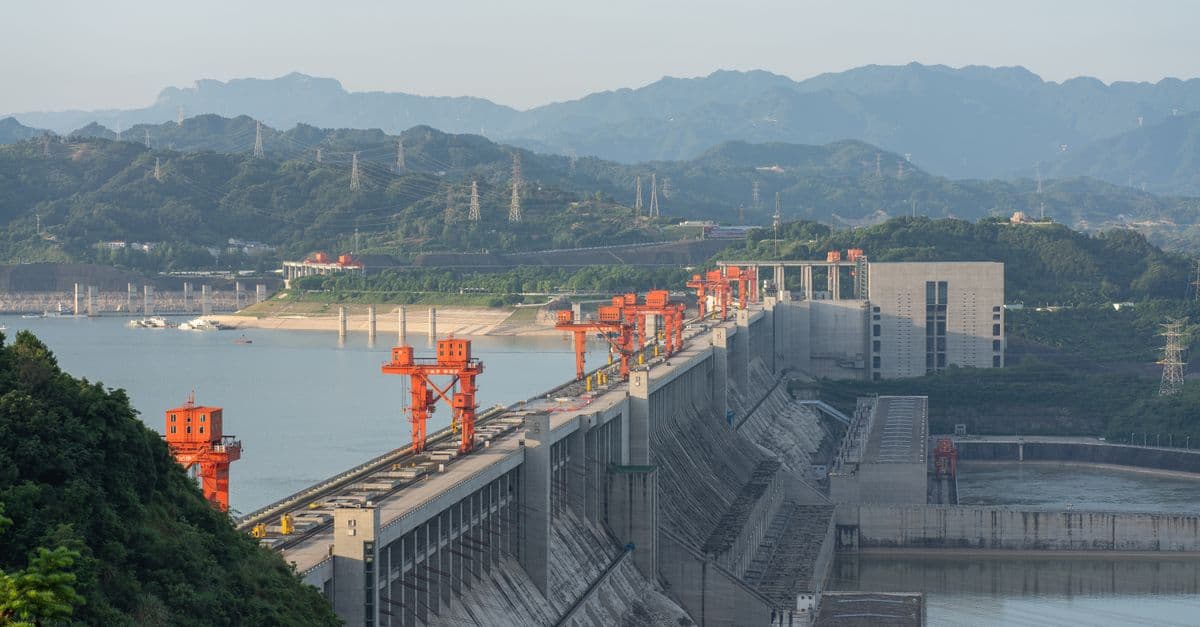
Photo: 高 长华 / Pexels
The longest bridge in the world is the Danyang–Kunshan Grand Bridge in China, stretching 164.8 kilometres. It carries the Beijing–Shanghai high-speed railway on a continuous elevated viaduct longer than many countries are wide. But "longest bridge" is a trick phrase — it means two completely different things, and the more impressive engineering record belongs to a different kind of bridge entirely.
Ask a civil engineer which bridge is the longest and they will usually pause and ask you back: "Longest how?" A viaduct that marches across 165 km of flat farmland on tens of thousands of concrete pillars is an entirely different kind of achievement from a single steel cable stretched 2 km through open air with nothing underneath it. Both get called "the longest bridge." Only one of them has to fight gravity and wind with no help from the ground.
The Short Answer: Longest Bridges (Total Length)
Table 1. The world's longest bridges by total length
| Rank | Bridge | Length | Country | Type |
|---|---|---|---|---|
| 1 | Danyang–Kunshan Grand Bridge | 164.8 km | China | Railway viaduct |
| 2 | Changhua–Kaohsiung Viaduct | 157.3 km | Taiwan | Railway viaduct |
| 3 | Cangde Grand Bridge | 116 km | China | Railway viaduct |
| 4 | Tianjin Grand Bridge | 113 km | China | Railway viaduct |
| 5 | Weinan Weihe Grand Bridge | 79.7 km | China | Railway viaduct |
| 6 | Wuhan–Guangzhou High-Speed Railway Viaducts (combined sections) | ~40–60 km | China | Railway viaduct |
| 7 | Hong Kong–Zhuhai–Macau Bridge | 55 km (incl. tunnel) | China | Road bridge + tunnel |
| 8 | Bang Na Expressway | 54 km | Thailand | Elevated highway |
| 9 | Lake Pontchartrain Causeway | 38.4 km | United States | Road bridge over water |
| 10 | Manchac Swamp Bridge | 36.7 km | United States | Railway/highway viaduct over wetland |
Notice the pattern: the longest bridges are almost all high-speed railway viaducts in East Asia, with a handful of North American causeways built over swamp and lake. There's a reason for both patterns. Another category of large civil engineering is covered in the largest dams in the world.
Why the Longest Bridges Are Railways
High-speed trains demand an almost perfectly flat, straight, rigid path — they cannot climb steep grades or take tight curves at 300 km/h (186 mph). Across the soft, flat, densely farmed, river-laced plains of eastern China, the cheapest and most stable way to provide that is not to build on the ground at all, but to run the track on a continuous concrete viaduct raised on thousands of piers.
Elevating the line does four things at once:
- avoids settling on soft, waterlogged soil that would otherwise buckle a ground-level track bed,
- crosses countless rivers, canals, and roads without a single at-grade interruption,
- preserves valuable farmland underneath, since the land under the viaduct can still be farmed or used for roads,
- and keeps the track rigid and level, which matters more at 300 km/h than it does at highway speeds, because even a few centimetres of settlement can translate into a dangerous vibration at speed.
So these record "bridges" are really enormous elevated railways, built in sections and repeated tens of thousands of times. China's high-speed rail network is why it holds almost every total-length record — a feat of mass, repeatable infrastructure rather than a single dramatic span. It sits among the great construction records in the largest structures ever built.
How was the Danyang–Kunshan Grand Bridge actually built?
Engineers did not pour one continuous structure. They mass-produced standardized concrete box-girder sections in factories, then lifted and placed them onto pre-built piers with enormous gantry cranes that crawled along the completed sections of viaduct. This prefab-and-place method is why China can build hundreds of kilometres of viaduct per year rather than per decade.
The bridge crosses rice paddies, canals, rivers, and a section of Yangcheng Lake near Suzhou, all without a single at-grade railway crossing. Because the terrain along the Beijing–Shanghai corridor is so flat, the "bridge" and the "railway" are, for 165 km, functionally the same structure.
The Other Record: Longest Single Span
To most engineers, the truer "longest bridge" record is the longest single span — the unsupported distance between two towers. This is the hard problem: the longer the gap, the more the bridge must defy gravity and wind with nothing beneath it. A viaduct only has to be strong enough not to sag between pillars set every few dozen metres. A record-span suspension bridge has to hold its own deck aloft, plus traffic, plus wind loads, across two full kilometres of open air.
Table 2. The world's longest suspension-bridge main spans
| Rank | Bridge | Main span | Country | Year opened |
|---|---|---|---|---|
| 1 | 1915 Çanakkale Bridge | 2,023 m | Turkey | 2022 |
| 2 | Akashi Kaikyō Bridge | 1,991 m | Japan | 1998 |
| 3 | Yangsigang Yangtze River Bridge | 1,700 m | China | 2019 |
| 4 | Xihoumen Bridge | 1,650 m | China | 2009 |
| 5 | Great Belt Bridge (East Bridge) | 1,624 m | Denmark | 1998 |
| 6 | Osman Gazi Bridge | 1,550 m | Turkey | 2016 |
| 7 | Yi Sun-sin Bridge | 1,545 m | South Korea | 2012 |
| 8 | Runyang Bridge (South) | 1,490 m | China | 2005 |
| 9 | Nanjing Fourth Yangtze Bridge | 1,418 m | China | 2012 |
| 10 | Humber Bridge | 1,410 m | United Kingdom | 1981 |
Here the champions are suspension bridges. The 1915 Çanakkale Bridge, crossing the Dardanelles strait in Turkey, holds the current record with a main span of 2,023 metres — a number chosen deliberately, since it commemorates 2023, the 100th anniversary of the founding of the Turkish Republic (ConstructionKenya; ENR). It was designed by the Danish engineering firm COWI and built by a Turkish-South Korean consortium (Limak, Yapı Merkezi, DL E&C, SK Ecoplant) at a cost of roughly $2.7 billion, and it opened 18 months ahead of schedule with a workforce of more than 5,000 people.
Before 1915 Çanakkale opened in 2022, the record belonged for 24 years to Japan's Akashi Kaikyō Bridge, connecting Kobe to Awaji Island across the Akashi Strait, with a main span of 1,991 metres (Britannica). Its story is one of the more remarkable in bridge engineering, and worth pulling apart on its own.
A two-kilometre unsupported span is a fundamentally different achievement from a 164-km viaduct resting on thousands of pillars. One is about distance covered; the other is about gap leaped. Both are real records — they just answer different questions, the same way "tallest building" and "tallest tower" do (see the tallest buildings in the world).
Why did the Akashi Kaikyō Bridge's span change during construction?
Planning for the Akashi Kaikyō Bridge began in 1955, but it took 30 years to secure government approval, and construction itself ran from 1988 to 1998. Partway through, on January 17, 1995, the magnitude-7.3 Great Hanshin earthquake struck near Kobe, with an epicenter roughly 20 km from the bridge site. At the time, only the two towers had been erected.
The earthquake physically shifted the towers more than a metre farther apart. Rather than tear them down and start over, engineers recalculated the design around the new tower positions, stretching the planned 1,990-metre span to its final 1,991 metres (Britannica; Interesting Engineering). The bridge itself survived the earthquake with no significant structural damage, a result credited to its seismic dampers and flexible design. Its final construction consumed roughly 180,000 tonnes of steel and 1.4 million cubic metres of concrete over ten years.
How Suspension Bridges Cross the Void
A suspension bridge hangs its deck from massive steel cables draped between tall towers. Think of it like a clothesline strung between two poles, scaled up by a factor of a million: the main cables sag under their own weight and the weight of the deck, then transfer that load in pure tension down through the towers and out to anchorages buried deep in the ground or rock at each end. Tension — pulling, not pushing — is the most efficient way a cable can carry a load, which is why suspension bridges can leap distances that no beam or truss bridge could ever manage on its own.
Each main cable on a bridge like Akashi Kaikyō is itself a bundle of tens of thousands of individual steel wires, each roughly 5 mm thick, spun into place one strand at a time using a technique called aerial spinning. A single main cable on Akashi Kaikyō contains 36,830 kilometres of wire — enough to circle the Earth almost once — bundled into a cable more than a metre thick.
The towers themselves do the heavy lifting in compression, absorbing the downward pull of the cables and transmitting it straight into their foundations. On Akashi Kaikyō, those towers stand 283 metres tall, taller than most skyscrapers, purely to give the main cables enough height to sag gracefully across the strait without dragging the roadway down with them.
Why is wind the real enemy of long-span bridges, not weight?
A modern suspension bridge is engineered with enormous safety margins against static loads — the dead weight of the deck, the live weight of traffic. What actually destroys long-span bridges is dynamic wind behavior: a structure flexible enough to span 2 km is also flexible enough to start oscillating if wind hits it at the wrong frequency, and once that oscillation begins, it can feed on itself until the structure tears apart.
The 1940 collapse of the original Tacoma Narrows Bridge in Washington State remains the textbook case. The bridge failed in a wind of only about 68 km/h (42 mph) — a moderate gale, not a hurricane — just four months after it opened. Its deck was built with thin, solid plate girders rather than open steel trusses, which made it aerodynamically unstable: wind hitting the deck at an angle caused it to twist, the twisting changed the angle the wind struck it at, and that produced more lift and more twisting in a runaway feedback loop engineers call torsional flutter (WSDOT; Live Science).
The bridge did not need a bigger storm to fail. It needed the wrong shape.
What Bridge Engineers Changed After Tacoma Narrows
The Tacoma Narrows collapse rewrote how every long-span bridge on this list would later be designed. Before 1940, engineers mostly treated wind as a static push — a horizontal force to design against, like the weight of a truck. After 1940, they had to treat wind as a dynamic partner in the structure's own motion, capable of amplifying itself if the deck's shape and stiffness weren't right.
Three concrete changes followed directly from that lesson, and every bridge in Table 2 above incorporates them:
- Open, slotted deck sections instead of solid plate girders, so wind passes through the deck rather than pushing against a flat wall of steel.
- Wind-tunnel testing of scale models before construction begins, which is now standard practice for any suspension or cable-stayed bridge with a main span over roughly 500 metres.
- Tuned mass dampers and aerodynamic fairings, mechanical and shape-based features that dissipate oscillation energy before it can build into flutter.
The 1915 Çanakkale Bridge uses a twin-box girder deck specifically chosen for its aerodynamic stability in the Dardanelles' strong, funneling winds. Akashi Kaikyō was engineered to withstand wind speeds up to 286 km/h (178 mph) and the shaking of a magnitude-8.5 earthquake, a design target set explicitly because of what happened at Tacoma Narrows and confirmed, unplanned, by the 1995 Kobe earthquake.
Suspension Bridges vs. Cable-Stayed Bridges
Not every long bridge in this ranking is a suspension bridge, and it is worth being precise about the difference, because the two designs solve the span problem differently and suit different situations.
Table 3. Suspension bridges vs. cable-stayed bridges
| Feature | Suspension bridge | Cable-stayed bridge |
|---|---|---|
| How cables attach | Deck hangs from vertical suspender cables off two continuous main cables | Cables run directly from the tower to the deck, fan- or harp-shaped |
| Best for | Very long single spans (over ~1,000 m) | Medium spans (roughly 200–1,100 m) |
| Foundation demands | Requires massive anchorages at each end to hold the main cables | No separate anchorage; the tower and deck balance each other |
| Example | Akashi Kaikyō Bridge, 1915 Çanakkale Bridge | Sutong Bridge (China), Russky Bridge (Russia) |
| Relative cost for medium spans | Higher, due to anchorage engineering | Lower, faster to build |
Cable-stayed bridges have become the default choice for medium-length crossings worldwide precisely because they skip the need for enormous ground anchorages, which are among the most expensive and geotechnically demanding parts of a suspension bridge. Suspension bridges only pull ahead when the gap to be crossed is so wide that nothing else works — which is why every bridge at the very top of Table 2 is a suspension bridge, not a cable-stayed one.
Bridges Over Water: The Sea Crossings
A special category of "longest bridge" spans open sea rather than a river or a strait between two fixed points. These crossings face problems land bridges never do: saltwater corrosion, ship strikes, typhoons, and — increasingly — the need to let enormous cargo vessels pass underneath or, in some cases, straight through the crossing via tunnel.
The Hong Kong–Zhuhai–Macau Bridge, at about 55 km including tunnel sections, is the longest sea crossing on Earth, linking three cities across the Pearl River Delta. Its main bridge section runs 29.6 km, but rather than build a tower tall enough to let every ship pass beneath it, engineers routed a 6.7-km stretch through an immersed tunnel that dips roughly 40 metres below the seabed at its deepest point, allowing vessels of up to 300,000 tonnes to pass overhead unobstructed (We Build Value). The whole link, including four artificial islands built to transition between bridge and tunnel, cost roughly 120 billion RMB (about $17 billion at the time) and took nearly eight years to build, opening in October 2018. It was engineered to withstand winds of up to 340 km/h, built to survive a Category 8 typhoon making a direct hit.
The US Lake Pontchartrain Causeway in Louisiana, at 38.4 km, was for decades considered the longest continuous bridge over open water — a title it can still claim since, unlike the Hong Kong–Zhuhai–Macau crossing, none of its length dips into tunnel. It consists of two parallel two-lane spans built on concrete pilings driven into the lakebed, and much of its length is out of sight of land in both directions, a genuinely disorienting drive.
Canada's Confederation Bridge, at 12.9 km, connects Prince Edward Island to the mainland and was engineered specifically to survive drifting sea ice each winter — its piers are shaped with ice shields that force pack ice to fracture upward rather than pile against the structure. The US Chesapeake Bay Bridge–Tunnel, at about 28 km including two mile-long tunnel sections, solves the same ship-clearance problem as Hong Kong–Zhuhai–Macau, but four decades earlier, having opened in 1964.
Case Study: Bangladesh's Padma Bridge and the Hardest Rivers to Cross
Not every record-setting bridge is about raw length or span. Sometimes the achievement is holding a bridge up at all. Bangladesh's Padma Bridge, which opened in 2022, is only 6.15 km long — modest by the standards of Table 1 — but it solved one of the hardest foundation problems in bridge engineering: building on the shifting silt bed of the Padma River, one of the widest and most sediment-laden rivers on Earth.
The riverbed there is so soft and unstable that engineers had to drive foundation piles down to 127 metres, the deepest pile depth of any bridge in the world, to reach ground firm enough to hold the structure (worldsteel.org). The bridge is a two-level steel truss carrying a four-lane highway above a single railway track below, supported on 42 piers engineered to resist both river-current scour and earthquakes. It cost about $3.6 billion and took eight years to build, partly because it was funded entirely by Bangladesh itself after the World Bank withdrew financing over corruption allegations that were later dismissed by a Canadian court.
Padma Bridge is a reminder that "longest bridge" rankings can obscure just as much engineering difficulty as they reveal. A 6-km bridge with 127-metre piles is, foundation-for-foundation, a harder problem than a much longer viaduct on stable ground.
How the Record Has Changed Over Time
Longest-span records move slowly, because each new record bridge typically takes the better part of a decade to plan, approve, and build. Tracking the sequence shows how the engineering envelope has crept outward, roughly 30 to 500 metres at a time, over more than a century.
Table 4. Longest suspension-bridge main span, by era
| Bridge | Main span | Country | Year record set |
|---|---|---|---|
| Brooklyn Bridge | 486 m | United States | 1883 |
| George Washington Bridge | 1,067 m | United States | 1931 |
| Golden Gate Bridge | 1,280 m | United States | 1937 |
| Verrazzano-Narrows Bridge | 1,298 m | United States | 1964 |
| Humber Bridge | 1,410 m | United Kingdom | 1981 |
| Great Belt Bridge (East Bridge) | 1,624 m | Denmark | 1998 |
| Akashi Kaikyō Bridge | 1,991 m | Japan | 1998 |
| 1915 Çanakkale Bridge | 2,023 m | Turkey | 2022 |
Two things stand out in that progression. First, the record holder shifted from the United States, which held it continuously from 1883 to 1981, to Europe and then Asia, tracking the geography of large-scale infrastructure spending over the twentieth and twenty-first centuries. Second, the gains have gotten smaller in relative terms even as they've gotten larger in absolute terms — Akashi Kaikyō only beat the Great Belt Bridge by 367 metres, and 1915 Çanakkale only beat Akashi Kaikyō by 32 metres, a sign that engineers are approaching the practical limits of steel-cable suspension technology at current cost levels, not that progress has stalled.
What People Get Wrong About "Longest Bridge"
The most common confusion is treating Table 1 and Table 2 as competing lists, as though one of them must be "wrong." They are not competing. They are answering two different questions that happen to share the word "bridge."
A second common mistake is assuming the longest bridges must be the most technically difficult. In raw engineering-risk terms, a 165-km viaduct on flat, stable land, built from repeated prefabricated sections, is a logistics and manufacturing problem more than a structural one. The Padma Bridge case above, and the 1995 Kobe earthquake that struck mid-construction at Akashi Kaikyō, are better illustrations of genuine engineering peril than sheer distance is.
A third mistake is assuming height and span are the same record. The tallest bridge on Earth, France's Millau Viaduct, has towers taller than the Eiffel Tower but a comparatively modest main span of 342 metres — tallest and longest-span are as separate a pair of records as tallest building and widest building, discussed in the tallest buildings in the world. Finally, people sometimes conflate "longest bridge" with "longest man-made crossing," which would have to include causeways, tunnels, and hybrid structures like Hong Kong–Zhuhai–Macau — a genuinely different, broader category than either table above.
Frequently Asked Questions
Q: What is the longest bridge in the world? A: The Danyang–Kunshan Grand Bridge in China, at 164.8 km. It's a railway viaduct carrying the Beijing–Shanghai high-speed line across flat, river-crossed terrain, built by about 10,000 workers over roughly four years. It holds the record for total bridge length — a different record from the longest single span between two towers.
Q: Why are the longest bridges in China? A: Because China built an enormous high-speed rail network across flat, soft, densely farmed plains. Elevating the track on continuous viaducts is the most stable and economical way to keep it level and straight for 300 km/h trains while crossing rivers and sparing farmland. That mass-produced, prefab-and-place construction approach is what produces record-length bridges.
Q: What is the longest single-span bridge? A: The 1915 Çanakkale Bridge in Turkey, with a main span of 2,023 metres — the longest unsupported distance between two towers. It overtook Japan's Akashi Kaikyō Bridge (1,991 m) in 2022. This suspension-bridge record is considered by many engineers the truer "longest bridge," since spanning a gap with nothing beneath is far harder than building a long viaduct on pillars.
Q: What's the difference between total length and span length? A: Total length is the entire end-to-end distance of the bridge, including all its supported sections on pillars. Span length is the single longest unsupported gap between two supports. China leads on total length with vast viaducts; suspension bridges in Turkey and Japan lead on span length. They measure different engineering challenges, not the same challenge at different scales.
Q: What is the longest bridge over water? A: The Hong Kong–Zhuhai–Macau Bridge, at about 55 km, is the longest sea crossing, combining bridge and undersea tunnel sections so large ships can pass overhead. For a continuous bridge over water with no tunnel section, the Lake Pontchartrain Causeway in the United States (38.4 km) holds that narrower record. Sea crossings face corrosion, storms, and shipping traffic that inland bridges don't.
Q: Why did the Tacoma Narrows Bridge collapse? A: It collapsed on November 7, 1940, in a moderate wind of about 68 km/h (42 mph), because its solid plate-girder deck was aerodynamically unstable. Wind hitting the deck at an angle caused it to twist, which changed the wind's angle of attack and produced more lift, feeding a runaway oscillation called torsional flutter. The collapse forced every long-span bridge built afterward to undergo wind-tunnel testing.
Q: What's the difference between a suspension bridge and a cable-stayed bridge? A: In a suspension bridge, the deck hangs from vertical cables attached to two continuous main cables draped between towers and anchored deep in the ground at each end. In a cable-stayed bridge, cables run directly from the tower to the deck in a fan or harp pattern, with no separate main cable or ground anchorage needed. Suspension bridges handle the longest spans; cable-stayed bridges are cheaper and faster for medium-length crossings.
Q: How deep were the foundations for Bangladesh's Padma Bridge? A: Engineers drove foundation piles to 127 metres below the riverbed, the deepest pile depth of any bridge in the world, because the Padma River's silt bed is too soft and shifting to support a structure on shallow foundations. The bridge itself is only 6.15 km long, showing that foundation difficulty and total length are unrelated engineering challenges.
Q: Is the tallest bridge the same as the longest-span bridge? A: No. France's Millau Viaduct is the tallest bridge on Earth, with towers taller than the Eiffel Tower, but its main span is a comparatively modest 342 metres. Tower height and unsupported span length are measured completely separately, the same way a building's height and footprint are separate records.
Q: How much did the world's longest bridges cost to build? A: The Danyang–Kunshan Grand Bridge cost about $8.5 billion; the 1915 Çanakkale Bridge cost about $2.7 billion; the Hong Kong–Zhuhai–Macau Bridge cost roughly 120 billion RMB (about $17 billion); and Bangladesh's Padma Bridge cost about $3.6 billion. Costs scale with total length, span difficulty, and foundation conditions rather than any single factor.
The takeaway
"Longest bridge" is really two records wearing one name: total length, a game China wins by building enormous, repeatable railway viaducts across flat, soft terrain, and single-span length, a game decided by which structure can hang the most steel across open air without anything underneath it. The second record is the harder engineering problem, and its history — from the Brooklyn Bridge's 486 metres in 1883 to the 1915 Çanakkale Bridge's 2,023 metres today — traces the slow, expensive science of keeping a flexible structure from tearing itself apart in the wind. Neither record makes the other one wrong. They just answer different questions about what it means to cross a gap.
Read next:
- The Longest Tunnels in the World
- The Largest Structures Ever Built
- The Tallest Buildings in the World
- The Most Powerful Machines Ever Built
Sources
- Live Science — Danyang–Kunshan Grand Bridge
- History of Bridges — Danyang–Kunshan Grand Bridge facts and history
- ConstructionKenya — 1915 Çanakkale Bridge key facts and figures
- Engineering News-Record — 1915 Çanakkale Bridge, Global Project of the Year
- Encyclopædia Britannica — Akashi Kaikyō Bridge
- Interesting Engineering — 7 facts about the Akashi Kaikyō Bridge
- We Build Value — Hong Kong–Zhuhai–Macau Bridge inauguration report
- Washington State Department of Transportation — Tacoma Narrows Bridge history: lessons from failure
- Live Science — Tacoma Narrows Bridge collapse, November 7, 1940
- World Steel Association — Padma Bridge, Bangladesh
- Guinness World Records — longest bridge and longest span entries
Bottom line: China owns the longest bridges by sheer length, but the longest span — two kilometres of road hanging from cables over open water — is the record that still makes engineers hold their breath.
Last verified: July 2026
Follow new articles
Add SciHub101 to your feed reader to see new science and technology stories.
About the Author
SciHub101 is an independent science and technology publication founded and edited by Buğra Sözeri, a software engineer and app developer based in Türkiye. AI tools assist with drafting and research. Source documentation in the existing archive is uneven, and articles are being reviewed and corrected. The Editorial Team byline identifies editorial responsibility; it does not certify specialist or independent human review. Where we compare products, anything built by our own team is labelled as such — see the editorial guidelines and About page for how corrections and disclosures work.
Related Articles
The Largest Lakes in the World: The Caspian Paradox and the Inland Seas
The largest lake on Earth is called a sea. The Caspian Sea covers about 371,000 to 374,000 square kilometres — larger than Germany — and is bordered by five countries that argued for over two decades about whether it's legally a lake or a sea, because the answer decides who owns its oil. Behind it stretch the true freshwater giants, including a single North American lake big enough to cover the entire United Kingdom.
The Largest Islands in the World: Why Greenland Wins and Australia Doesn't Count
Greenland is the largest island on Earth at about 2.16 million square kilometres — but Australia, which is more than three times bigger, isn't on the list at all. The reason isn't size; it's a definition. Australia is classified as a continent, and the moment a landmass becomes a continent, it stops being an island. That single rule explains the entire ranking, and a famous map projection explains why Greenland looks even bigger than it is.

The Largest Structures Ever Built: Towers, Bridges, Dams, and Walls
The Burj Khalifa in Dubai stands 828 meters tall — for context, you could stack almost two Empire State Buildings on top of each other and still not reach its antenna. But height is only one dimension of 'largest.' The world's longest bridge stretches 164.8 km across China. The Great Wall of China, including all branches, runs over 21,000 km. The largest building by floor area is a Boeing factory in Washington State that covers 398,000 square meters under a single roof. What engineering limits the next record depends on which dimension you're measuring and why physics makes every additional meter harder than the last.

How Bridges Are Engineered to Not Fall Down
Bridges carry millions of people safely every day. Here's the remarkable engineering behind why they hold.
Largest Dams in the World Explained: Height, Volume, and Power
The largest dam changes depending on whether you rank by height, reservoir, concrete volume, or hydroelectric output. Here is the science behind each record.
The Longest Tunnels in the World: 57 Kilometres Under the Alps
To send high-speed trains through the heart of the Alps, engineers didn't go over the mountains — they went straight through, boring the Gotthard Base Tunnel 57 kilometres beneath rock up to 2.3 kilometres thick. It's the longest railway tunnel on Earth, and at its deepest the rock above presses down so hard the temperature reaches 46°C. But the single longest tunnel of any kind carries no trains at all — it carries water to a thirsty city.