The Longest Tunnels in the World: 57 Kilometres Under the Alps
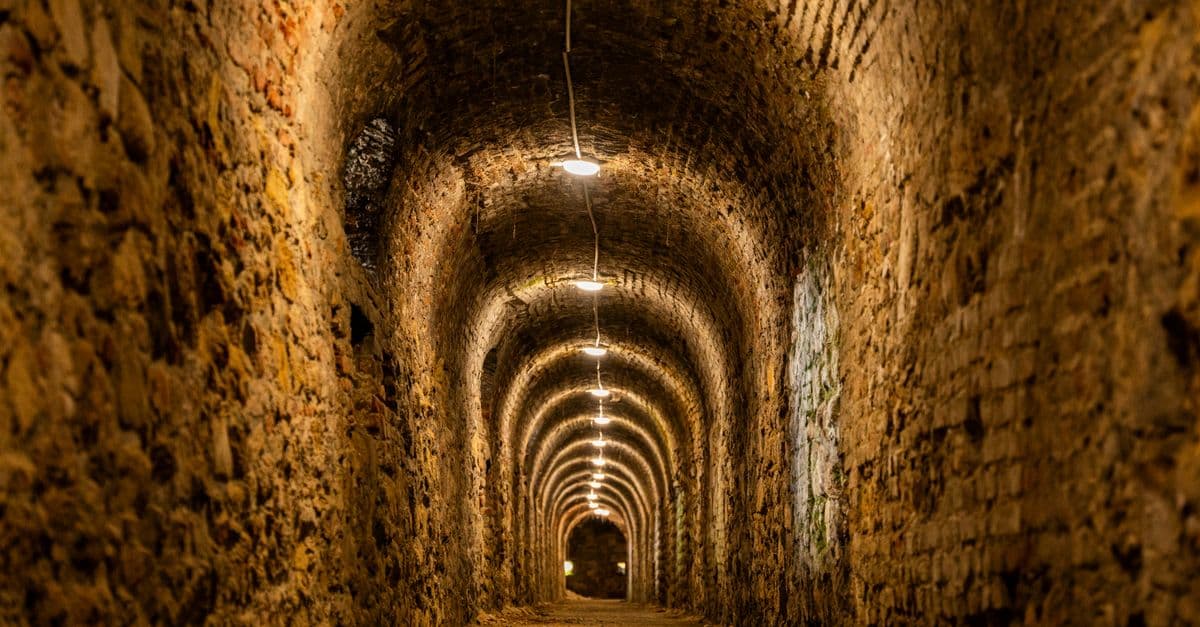
Photo: Masood Aslami / Pexels
The longest railway tunnel in the world is the Gotthard Base Tunnel in Switzerland, at 57.1 kilometres (35.5 miles), bored straight through the Alps. It lets trains pass under mountains instead of climbing over them, cutting a journey that once took hours of switchbacks down to a flat, high-speed run. But the longest tunnel of any kind isn't for trains or cars at all. It's a water tunnel beneath New York State, and it's more than twice as long as anything carrying people.
That gap between "longest passenger tunnel" and "longest tunnel, full stop" is the whole story of this article. Once you stop needing to keep humans alive and breathing inside a bore, the physics of how long you can dig changes completely. This piece walks through the record holders in each category, how tunnel-boring machines actually cut through rock, why undersea crossings are a different engineering problem than mountain crossings, and why New York City is still repairing a tunnel dug during the Great Depression.
The Short Answer: Longest Tunnels
| Rank | Tunnel | Length | Country | Purpose |
|---|---|---|---|---|
| 1 | Delaware Aqueduct | ~137 km (85 mi) | USA | Water supply |
| 2 | Gotthard Base Tunnel | 57.1 km | Switzerland | Railway (longest rail) |
| 3 | Seikan Tunnel | 53.85 km | Japan | Railway (undersea) |
| 4 | Channel Tunnel | 50.45 km | UK–France | Railway (undersea) |
| 5 | Yulhyeon Tunnel | 50.3 km | South Korea | Railway |
| 6 | New York City Water Tunnel No. 3 | ~97 km (60 mi), phased | USA | Water supply |
| 7 | Lötschberg Base Tunnel | 34.6 km | Switzerland | Railway |
| 8 | Guadarrama Tunnel | 28.4 km | Spain | Railway |
| 9 | Lærdal Tunnel | 24.5 km | Norway | Road (longest road tunnel) |
Table: The world's longest tunnels by category, ranked by total length. Water tunnels dominate the top of the list because they carry no passengers.
Water tunnels can be the longest of all because they don't need ventilation, lighting, or emergency exits for people or vehicles. They just need a sealed, sloped or pressurized path for water to travel. That single design difference is why a tunnel most people have never heard of beats the Gotthard Base Tunnel by 80 kilometres (50 miles).
The Gotthard Base Tunnel: Through the Heart of the Alps
The Gotthard Base Tunnel runs 57.1 km beneath the Swiss Alps, with up to 2.3 km of rock overhead at its deepest point — more overburden than the height of most of the peaks around it. It's a "base" tunnel, meaning it's bored low through the mountain's foot rather than climbing partway up like older Alpine crossings. That distinction matters: trains travel a flat, nearly straight path instead of grinding up the steep grades and tight curves that older routes like the Gotthard Pass road demand.
Officially opened on June 1, 2016 and entering full passenger and freight service that December, the tunnel was the product of a 17-year construction effort that began in 1999 and cost about CHF 12.2 billion (roughly $12 billion), a sum close to 2% of Switzerland's 2014 GDP (Britannica). Crews excavated 28.2 million tonnes of rock, moving it out through access shafts and adits scattered across the mountain rather than hauling every load out one portal.
Two parallel single-track bores, connected by cross-passages roughly every 325 meters for emergency access, run the tunnel's full length. That parallel-tube design is now standard for any tunnel long enough that a single-bore fire or breakdown could trap a train with no way out.
The heat problem at Gotthard is a smaller cousin of what miners face at the true frontiers of underground engineering, where rock temperature and rock pressure both climb with depth — the same physics explored in the most extreme pressure conditions on Earth. The tunnel now anchors a flagship rail corridor linking Rotterdam in the Netherlands to Genoa in Italy, and its scale places it firmly among the largest structures ever built by any human civil-engineering project.
How Tunnel-Boring Machines Actually Cut Through Rock
Most of the Gotthard Base Tunnel, along with the majority of modern long tunnels, was cut by tunnel-boring machines (TBMs) rather than blasted with explosives. A TBM looks like a cylindrical factory on wheels, sometimes hundreds of meters long including its trailing support gear, and its business end is a rotating steel disc called the cutterhead.
The cutterhead is studded with disc cutters, hardened steel wheels that press against the rock face with enormous hydraulic force while the whole head spins. Rather than grinding the rock into dust, each disc cutter concentrates stress along a narrow line, causing the rock to fracture and chip away in flakes ahead of the cutter path (Enerpac). It's closer to how a glass cutter scores glass than to how a drill bores wood: the machine doesn't pulverize the material so much as it convinces the rock to break along a controlled line.
How does a tunnel-boring machine stay on course over tens of kilometres?
Modern TBMs use laser guidance systems and gyroscopic navigation referenced against surveyed points, correcting their heading continuously as they advance. On the Gotthard project, bores driven from opposite ends of the mountain met in the middle with an alignment error of just a few centimeters after years of digging in the dark, a level of precision that depends on both the machine's navigation and painstaking surface surveying above the mountain.
Behind the cutterhead sits the shield, a steel cylinder that braces against the freshly cut tunnel walls and supports them before they can collapse inward. In stable granite, gripper shoes push outward against the rock to brace the machine while hydraulic rams thrust the cutterhead forward; in softer or more fractured ground, the shield instead installs pre-cast concrete rings, called segments, immediately behind the cutting face to hold the tunnel open. Excavated rock and soil, known as spoil, ride a conveyor belt back through the machine's length and out to a train, truck, or muck pit at the surface.
Why does tunnel digging speed vary so much by rock type?
A TBM in stable granite can advance tens of meters a day; in fractured, water-bearing, or mixed-face ground it can slow to a crawl or stop for weeks while crews stabilize the ground ahead by injecting grout or freezing the soil. Geology, not the machine's raw cutting power, is usually what sets the pace of a project.
This is precisely the risk that turned deadly during construction of Japan's Seikan Tunnel, discussed below, and it's why modern projects spend years on geological surveying before a single cutterhead ever turns.
Why the Longest Tunnel Carries Water, Not People
The single longest tunnel on Earth is the Delaware Aqueduct, an 85-mile (about 137 km) conduit that moves drinking water from four reservoirs in New York's Catskill Mountains down to New York City, using gravity alone to push roughly 600 million gallons a day into the city's taps (NYC DEP). It's the water backbone for a large share of New York City's population, and most of the city has never seen it, because it runs hundreds of meters underground for its entire length.
It can be far longer than any rail or road tunnel for one simple reason: it doesn't carry people or vehicles, so it needs none of the infrastructure a passenger tunnel requires. No ventilation shafts to clear exhaust. No emergency exits every few kilometres. No lighting, no fire-suppression systems, no fume extraction, no evacuation planning for a stalled train. It's essentially a very long, sealed pipe bored through bedrock, and a pipe's only real design requirements are that it holds pressure and doesn't leak.
That last part, unfortunately, is where the Delaware Aqueduct's age has caught up with it. Since the 1990s, engineers monitoring the tunnel have tracked serious leaks in a 45-mile stretch called the Rondout-West Branch Tunnel, concentrated at two weak points known as the Wawarsing and Roseton crossings, together losing about 35 million gallons of water a day into the surrounding ground (NYC DEP). Rather than draining and patching a tunnel the city depends on for drinking water, engineers built a 2.5-mile bypass tunnel 600 feet beneath the Hudson River, connecting it to the original aqueduct so the leaking section can finally be taken offline and repaired. New York City launched the final phase of that roughly $2 billion repair project in September 2024 (Parsons; Underground Construction).
This is the same theme that runs through bridge records: see the longest bridges in the world, where the longest structures by total length are elevated railway viaducts, not the bridges with the most dramatic single spans. The "longest" example of a structure often turns out to be the one whose purpose removes the usual constraint. For bridges, that constraint is span length between supports. For tunnels, it's keeping the humans inside alive.
New York's other giant water tunnel
New York City isn't relying on the Delaware Aqueduct alone. Water Tunnel No. 3, a second major supply tunnel running more than 60 miles (about 97 km) and reaching depths of 500 feet (150 m) below street level in places, has been under construction in phases since 1970 (Wikipedia; NY1). Its first stage entered service in 1998, its main bore was finished in 2008, and the full system, including branches into Brooklyn and Queens, is expected to be complete by 2032, a 62-year construction span and, at over $6 billion, the largest capital construction project in New York City's history (Underground Construction). The city built it so that it could finally take Water Tunnel No. 1 and No. 2, both built in the early 20th century, offline for the first inspection and repair in their history without shutting off water to millions of residents.
The Real Challenge: Not Digging, but Surviving Inside
Modern tunnel-boring machines can grind through rock steadily once the geology cooperates. The genuinely hard part of a long tunnel project is everything that has nothing to do with cutting rock:
- Ventilation. Road and rail tunnels need enormous, continuous airflow to clear vehicle exhaust, keep the air breathable, and control smoke in a fire. Ventilation shafts, sized for worst-case fire scenarios rather than everyday traffic, are often the single largest engineering constraint on how long a passenger tunnel can practically be.
- Water pressure. Undersea tunnels like Seikan and the Channel Tunnel fight constant water ingress through fractures and porous rock; pumps run continuously for the life of the tunnel, not just during construction.
- Rock temperature. The deeper a tunnel runs, the hotter the surrounding rock gets, following the geothermal gradient. At Gotthard's deepest point that meant 46°C rock; in the world's deepest mines, temperatures can exceed 60°C, forcing refrigeration systems just to make the working environment survivable.
- Geology. Soft, fractured, or water-bearing rock can flood or collapse a bore without warning. Surveying the route, often years of core drilling and seismic imaging before construction starts, is as important as the digging itself.
Undersea tunnels add a category of risk that mountain tunnels don't face: there's an ocean sitting directly overhead, so an uncontrolled breach isn't a delay, it's a catastrophe. That's why undersea projects are engineered with extraordinary redundancy, from multiple parallel bores to continuously monitored drainage and pumping systems that run for the tunnel's entire operational life.
Undersea Tunnels: Crossing Without a Bridge
When a strait is too wide, too deep, or too storm-prone for a bridge, engineers go under it instead. Two of the world's longest tunnels prove the point.
Japan's Seikan Tunnel (53.85 km) links the islands of Honshu and Hokkaido beneath the Tsugaru Strait, with its rail level running about 100 meters below the seabed and 240 meters below sea level at the deepest point (Wikipedia). The idea for the tunnel dates back to geological surveys begun in 1946, but full-scale construction didn't start until 1971, and the project wasn't completed until 1988, a total span of 34 years from first survey to opening train. Construction claimed 34 workers' lives, largely in a series of four major flooding accidents where crews hit fractured rock zones weakened by volcanic intrusions or geological faults, and had to fight back rushing seawater with emergency concrete plugs and pumping (TRID).
The Channel Tunnel (50.45 km) connects Britain and France beneath the English Channel, and its undersea section, about 39 km of the total, is the longest stretch of any tunnel actually running beneath open sea (Wikipedia). Eleven tunnel-boring machines, six starting from the English side and five from the French, dug simultaneously toward each other, cutting through chalk marl at rates up to about 250 feet (76 m) a day where geology cooperated. The project cost close to $16 billion, more than double its original estimate, and employed around 15,000 workers at peak construction between 1988 and 1994 (The B1M). Structurally, it's really three parallel tunnels rather than one: two outer bores carry trains, while a smaller central service tunnel handles ventilation, drainage, and emergency access, an arrangement now considered the template for any major undersea rail crossing.
These undersea projects are the underground answer to the sea crossings discussed in the longest bridges in the world: bridge or tunnel, the goal is identical, moving traffic across open water, and the choice between them usually comes down to water depth, shipping-lane clearance, and storm exposure rather than raw cost.
Road Tunnels: A Different Set of Limits
Rail tunnels dominate the length rankings, but road tunnels face the toughest per-kilometre ventilation demands of any tunnel type, because internal combustion engines produce far more exhaust per passenger than an electric train does. That's a major reason the longest road tunnel in the world, Norway's Lærdal Tunnel (24.5 km), is barely more than a third the length of the Gotthard Base Tunnel.
Opened in November 2000 to give drivers a reliable, all-weather route between Oslo and Bergen without ferries or dangerous mountain passes, the Lærdal Tunnel takes about 20 minutes to drive at its 80 km/h speed limit (Amusing Planet). Its designers had to solve a problem no rail tunnel faces at the same scale: driver fatigue and claustrophobia over a 20-minute stretch with no natural light. Engineers broke the drive into three roughly 6-kilometer sections, each ending in a large, cavernous rest area lit in blue and yellow light meant to simulate a sunrise, giving drivers a visual and psychological break before they continue into the next stretch.
Beyond driver comfort, road tunnels also need continuous jet-fan ventilation to push exhaust toward extraction shafts, plus fire-rated cross-passages spaced closely enough that anyone caught in a vehicle fire can reach safety on foot within a few minutes. Those requirements, multiplied over dozens of kilometers, get expensive and complicated fast, which is a large part of why no road tunnel anywhere approaches rail-tunnel lengths.
Base Tunnels: Switzerland's Alpine Specialty
The Gotthard Base Tunnel wasn't Switzerland's first attempt to solve the Alps problem, and it isn't the country's only base tunnel. The Lötschberg Base Tunnel (34.6 km), opened in 2007, runs beneath the Bernese Alps and served partly as a proof of concept and engineering testbed for techniques later refined at Gotthard. Spain's Guadarrama Tunnel (28.4 km), opened in 2007 to carry high-speed rail beneath the Sierra de Guadarrama mountains north of Madrid, applied similar base-tunnel principles outside the Alps entirely, showing the approach isn't unique to Switzerland's geology.
What unites all base tunnels is the core idea: instead of following a mountain's terrain up and over, cut a new, flat route through its foundations. That single design choice is why Alpine rail journeys that once took the better part of a day now take a few hours, and why "base tunnel" has become the standard vocabulary for any major mountain-crossing rail project since the 1990s.
South Korea's Yulhyeon Tunnel (50.3 km), opened in 2016 as part of the high-speed rail line linking Suseo and Pyeongtaek, shows the same base-tunnel logic applied to a very different, less mountainous terrain, built primarily to shorten travel time on a flat, heavily used commuter and intercity corridor rather than to cross an Alpine massif.
Frequently Asked Questions
Q: What is the longest tunnel in the world? A: The Delaware Aqueduct in the United States, at about 137 km (85 miles), which carries drinking water from the Catskill Mountains to New York City. It's the longest tunnel of any kind because it transports water rather than people, so it needs no ventilation, lighting, or emergency exit systems. The longest railway tunnel is Switzerland's Gotthard Base Tunnel (57.1 km).
Q: What is the longest railway tunnel? A: The Gotthard Base Tunnel in Switzerland, at 57.1 km, running deep beneath the Alps with up to 2.3 km of rock overhead. It lets trains cross the Alps on a flat, fast route instead of climbing over the mountains, and it took 17 years and about CHF 12.2 billion to build, opening in 2016.
Q: What is the longest undersea tunnel? A: Japan's Seikan Tunnel is the longest undersea rail tunnel overall at 53.85 km, with its track running about 100 meters below the seabed. The Channel Tunnel between Britain and France (50.45 km) has the longest section actually running under open sea, about 39 km. Both fight constant water pressure and require continuous pumping to stay dry.
Q: Why aren't tunnels even longer? A: The limit usually isn't the digging itself; boring machines can grind steadily through stable rock. It's ventilation (clearing exhaust and providing breathable air and fire safety for passenger tunnels), water ingress, rock temperature rising with depth, and unpredictable geology. Water tunnels avoid the ventilation problem entirely, which is a major reason they can be far longer than any tunnel built for people.
Q: How hot does it get inside a deep tunnel? A: Rock temperature rises with depth following the geothermal gradient. In the deepest part of the Gotthard Base Tunnel, the surrounding rock reaches about 46°C (115°F), so cooling systems were needed just to make conditions survivable for construction workers. In the world's deepest mines, rock temperature can exceed 60°C, one of the defining engineering challenges of any deep excavation.
Q: How does a tunnel-boring machine actually cut through rock? A: A rotating cutterhead studded with hardened steel disc cutters presses against the rock face with hydraulic force, concentrating stress until the rock fractures and chips away, similar to how a glass cutter scores a line rather than grinding through material. A trailing shield supports the freshly cut walls, and excavated rock rides a conveyor belt back out of the machine.
Q: What is the longest road tunnel in the world? A: Norway's Lærdal Tunnel, at 24.5 km, opened in 2000 to connect Oslo and Bergen without ferries or dangerous mountain passes. It's broken into three sections by large, softly lit cavern rest stops designed to reduce driver fatigue on the roughly 20-minute drive through.
Q: Why is the Delaware Aqueduct being repaired after decades of use? A: Since the 1990s, engineers have tracked leaks losing about 35 million gallons of water a day from a 45-mile stretch of the aqueduct called the Rondout-West Branch Tunnel. Rather than draining the tunnel New York City depends on for drinking water, crews built a 2.5-mile bypass tunnel 600 feet under the Hudson River so the leaking section can be isolated and repaired without cutting off supply.
Q: How dangerous was building the Seikan Tunnel? A: Construction, which ran from 1971 to 1988, encountered four major flooding accidents where crews hit fractured, water-bearing rock zones and had to fight back rushing seawater with emergency plugs and pumping. Thirty-four workers were killed during the project, largely from cave-ins and flooding, underscoring why undersea tunnels demand far more redundancy than land-based bores.
Q: Why does Switzerland have more than one "base tunnel"? A: Switzerland pioneered the base-tunnel approach, boring flat routes through the base of mountains instead of climbing over them, first at the Lötschberg Base Tunnel (34.6 km, opened 2007) and then at the larger Gotthard Base Tunnel (57.1 km, opened 2016). The Lötschberg project served partly as an engineering testbed for techniques later scaled up at Gotthard.
Read next
- The Longest Bridges in the World
- The Largest Structures Ever Built
- The Most Powerful Machines Ever Built
- The Most Extreme Pressure Conditions on Earth
Sources
- Britannica — Gotthard Base Tunnel
- NYC Department of Environmental Protection — Delaware Aqueduct Rondout-West Branch Tunnel Repair
- Parsons — Delaware Aqueduct Rondout-West Branch Bypass Tunnel
- Underground Construction — After 62 Years, NYC's Third Water Tunnel Nears Completion
- Wikipedia — New York City Water Tunnel No. 3
- Wikipedia — Seikan Tunnel
- TRID / Transportation Research Board — Extraordinary Inundation Accidents in the Seikan Undersea Tunnel
- Wikipedia — Channel Tunnel
- The B1M — This $15BN Undersea Tunnel Changed Europe Forever
- Amusing Planet — Lærdal Tunnel: The World's Longest Road Tunnel
- Enerpac — Tunnel Boring Machines: How They Work
Bottom line: The Gotthard Base Tunnel is the longest path trains take through rock, but the record holder is a silent water tunnel under New York, still being repaired nearly a century after it first opened. Once again, the "longest" version of a structure is the one that doesn't have to keep people alive inside it.
Last verified: July 2026
Follow new articles
Add SciHub101 to your feed reader to see new science and technology stories.
About the Author
SciHub101 is an independent science and technology publication founded and edited by Buğra Sözeri, a software engineer and app developer based in Türkiye. AI tools assist with drafting and research. Source documentation in the existing archive is uneven, and articles are being reviewed and corrected. The Editorial Team byline identifies editorial responsibility; it does not certify specialist or independent human review. Where we compare products, anything built by our own team is labelled as such — see the editorial guidelines and About page for how corrections and disclosures work.
Related Articles
The Longest Mountain Ranges in the World: The 65,000-Kilometre Range You'll Never See
The Andes stretch 7,000 kilometres down the spine of South America — the longest mountain range on land, and a wall so high it creates deserts on one side and rainforests on the other. But it's not even close to the longest range on the planet. That title belongs to a mountain chain ten times longer, winding 65,000 kilometres around the globe entirely beneath the oceans, where most of Earth's volcanic activity quietly happens.

The Largest Countries in the World: Russia Spans Eleven Time Zones
Russia is so large that when the sun rises over its Pacific coast, much of the country is still in the previous day. At about 17 million square kilometres it covers more than an eighth of all the land on Earth — bigger than the surface of Pluto — and stretches across eleven time zones. The ranking of the world's biggest countries is a story of empires, frozen frontiers, and a map projection that quietly lies about who's really biggest.
The Longest Bridges in the World: The 164-Kilometre Crossing
The longest bridge on Earth runs for 164 kilometres — roughly the distance from London to Birmingham — carrying high-speed trains across the rice paddies and rivers of eastern China. The Danyang–Kunshan Grand Bridge is so long that calling it a 'bridge' almost understates it; it is an elevated railway the length of a small country. But the real engineering drama lies elsewhere: in the bridges that span the widest single gaps without touching the ground.

The Largest Structures Ever Built: Towers, Bridges, Dams, and Walls
The Burj Khalifa in Dubai stands 828 meters tall — for context, you could stack almost two Empire State Buildings on top of each other and still not reach its antenna. But height is only one dimension of 'largest.' The world's longest bridge stretches 164.8 km across China. The Great Wall of China, including all branches, runs over 21,000 km. The largest building by floor area is a Boeing factory in Washington State that covers 398,000 square meters under a single roof. What engineering limits the next record depends on which dimension you're measuring and why physics makes every additional meter harder than the last.