How Bridges Are Engineered to Not Fall Down

Photo: Tima Miroshnichenko / Pexels
When the Tacoma Narrows Bridge collapsed in 1940, it didn't fall because of a hurricane or an earthquake. A 42-mph wind — barely a strong storm — set the bridge oscillating until it tore itself apart. Engineers watched in horror, then went back to the drawing board. Every bridge built since that November morning carries the lessons of Galloping Gertie inside its steel and stone.
Bridges are humanity's oldest large-scale engineering feat, and they remain among the most demanding. A modern highway bridge must support thousands of tons of traffic, survive temperature swings of 100°F, resist hurricane-force winds, and outlast generations of humans — sometimes for more than a century. Understanding how engineers make that happen reveals some of the most elegant physics in the built world.
Key Takeaways
- Every bridge resolves into two fundamental forces: compression (pushing) and tension (pulling)
- The shape of a bridge — arch, suspension, cable-stayed, beam — determines how those forces flow through the structure
- Modern bridges are designed to flex, not just stand rigid; controlled movement prevents catastrophic failure
- Wind, resonance, and dynamic loading are as dangerous as static weight
- Computer modeling and real-time sensor networks now allow engineers to monitor bridge health continuously
The Two Forces That Rule Everything
Strip away the concrete and cable and every bridge comes down to two forces. Compression squeezes material together — push on a column from both ends and that's compression at work. Tension pulls material apart — stretch a rubber band and you feel tension. Every beam, cable, and arch in a bridge is experiencing one or both of these forces constantly.
The genius of bridge engineering is routing those forces safely to the ground. Engineers call this load path. A load (a truck, a crowd, wind pressure) enters the bridge at one point and must travel through a chain of structural members to the foundation. If any link in that chain fails, the load finds another path — and that path might be catastrophic.
Concrete is excellent in compression: it can handle around 4,000 pounds per square inch before cracking. But it's terrible in tension — barely 400 psi. Steel is superb in both, but expensive and heavy. Modern bridges combine the two: concrete handles compressive loads while steel rebar or post-tensioned cables handle tension. This partnership, called reinforced or prestressed concrete, defines most bridge construction today.
The Four Great Bridge Types
Beam bridges are the simplest: a horizontal span supported at both ends. The top of the beam is in compression, the bottom in tension. For short spans — up to about 250 feet — this works elegantly. The interstate highway system is largely built on prestressed concrete beam bridges that most people never consciously notice.
Arch bridges redirect load outward and downward into the ground. The arch is pure compression — the Romans understood this 2,000 years ago, which is why aqueducts built with no mortar still stand. The arch converts vertical load from traffic into diagonal thrust that the abutments (the walls at each end) must resist. The world's longest arch bridge, the Chaotianmen Bridge in China, spans 1,811 feet using this ancient principle with modern steel.
Suspension bridges flip the logic entirely. Instead of compression carrying the load to the ground, cables slung from tall towers carry it in tension. The roadway hangs from vertical suspenders attached to the main cables, which curve gracefully between anchorages buried deep in solid rock or massive concrete blocks. The Golden Gate Bridge's main cables are 36 inches in diameter, each containing 27,572 individual steel wires. Together they support a roadway 4,200 feet long.
Cable-stayed bridges look like suspension bridges but are structurally different. In a cable-stayed design, cables run directly from the tower to the deck — no catenary curve, no separate anchorages. The deck itself is in compression, squeezed between cable attachment points. Cable-stayed bridges have become the dominant choice for medium spans (500–3,000 feet) because they're stiffer and use less material.
How Engineers Beat Gravity and Wind
Static load — the dead weight of the bridge itself plus the traffic it carries — is the starting point. Engineers calculate it precisely. The Golden Gate weighs 887,000 tons. Every part of that weight flows through calculated paths to the two towers, down through caissons sunk 100 feet into the bay floor, and into bedrock.
Dynamic load is trickier. Traffic creates millions of tiny impulses, each sending waves through the structure. Earthquakes send enormous impulses. Wind is subtlest and most treacherous of all.
Tacoma Narrows collapsed because the wind set up an aeroelastic flutter — the bridge deck acted like an airplane wing, generating lift on one side, then the other, in a self-reinforcing cycle. The oscillations amplified until the steel failed. The fix, applied to every suspension bridge built afterward, was aerodynamic: either make the deck a streamlined box that cuts through wind without generating lift, or add open grating to let wind pass through rather than push.
Modern long-span bridges are routinely tested in wind tunnels before a single beam is placed. A scale model of the Akashi Kaikyō Bridge in Japan — the world's longest suspension bridge at 6,532 feet — was subjected to simulated winds for years. The final design includes pendulum dampers inside the towers, devices that swing opposite to the bridge's sway, canceling the oscillation.
Materials That Make Modern Bridges Possible
The Brooklyn Bridge, completed in 1883, used steel wire cables that were revolutionary at the time, with a tensile strength around 80,000 psi. Today's bridge cables use high-strength steel wire rated at 270,000 psi — more than three times stronger. This isn't just incremental improvement; it's what makes spans of a mile or more physically possible.
High-performance concrete now achieves compressive strengths above 14,000 psi, compared to 3,000–4,000 psi for standard concrete. Ultra-high-performance concrete (UHPC) can exceed 30,000 psi and is being used in deck overlays that triple bridge lifespan.
Carbon fiber reinforced polymer (CFRP) is beginning to replace steel rebar in bridge decks. It's five times lighter, ten times stronger in tension, and immune to corrosion — the single largest cause of bridge deterioration in the United States, where the American Society of Civil Engineers estimates 42% of all bridges are over 50 years old.
Sensing, Monitoring, and the Smart Bridge
The Golden Gate Bridge has over 600 sensors embedded in its structure, continuously measuring strain, temperature, vibration, and wind speed. The data streams to engineers who can detect unusual loading, developing cracks, or cable tension changes in real time.
This structural health monitoring transforms maintenance from scheduled guesswork to condition-based precision. Sensor arrays have caught developing fatigue cracks before they became visible to inspection — years before failure could occur.
Finite element analysis (FEA) software now models an entire bridge as millions of tiny elements, each with known material properties, calculating stress distributions that would take centuries of manual computation. Engineers can simulate a 100-year earthquake, a fully-loaded rush hour, and a century of thermal cycling before pouring a single yard of concrete. Sensing shows up in everyday devices too, as in how touchscreens work.
Source: Brownjohn, J. M. (2005), "Structural health monitoring of civil infrastructure," Philosophical Transactions of the Royal Society A — review of sensor networks and real-time monitoring in bridge engineering.
Bridge Types Compared: Strengths and Trade-offs
| Bridge Type | Best Span | Advantages | Disadvantages | Example |
|---|---|---|---|---|
| Beam | Up to 250 ft | Simple, economical, rigid | Limited span, poor aesthetics | Most highway overpasses |
| Arch | Up to 1,800 ft | Elegant, ancient principle, pure compression | High abutment forces, complex geometry | Chaotianmen (China), 1,811 ft |
| Suspension | 1,000–6,500+ ft | Longest spans possible, flexible, iconic | Expensive cables, aerodynamic risk, deflects under traffic | Golden Gate, 4,200 ft main span |
| Cable-stayed | 500–3,000 ft | Stiff, economical for medium spans, modern look | Less graceful than suspension, limited maximum span | Millau Viaduct (France), 2,460 ft |
| Truss | 100–600 ft | Lightweight, high strength-to-weight, scenic | Complex joints, maintenance-heavy, less rigid | Forth Bridge (Scotland), 1,710 ft total |
Modern bridge engineering selects type based on span requirement, foundation conditions, and budget rather than tradition.
Seismic Design: Engineering for Earthquakes
Bridges in seismically active regions must survive shaking that can exceed 1 gravity — equivalent to being violently tossed upward. Traditional rigid design fails catastrophically because the structure tries to resist the motion, concentrating stress until components shatter.
Modern seismic design philosophy: let the bridge move.
Base isolation: Specialized bearings at the foundation allow the bridge deck to move laterally while absorbing energy. The Viaduct Bridge in New Zealand uses lead-rubber bearings — layers of natural rubber alternating with lead cores. The rubber flexes, letting the deck sway; the lead dissipates energy as heat.
Damping systems: Tuned mass dampers (heavy weights that swing opposite to bridge motion), viscous dampers (hydraulic cylinders), and friction pendulum bearings all absorb the kinetic energy of earthquakes before it can rupture structural members.
Flexible connections: Instead of welding deck to towers (rigid), engineers use expansion joints and flexible hinge connections that allow rotation and lateral movement. The 1989 Loma Prieta earthquake in California damaged many bridges with conventional rigid connections; retrofits added seismic dampers.
Liquefaction mitigation: In areas where soil may liquefy (lose strength) during shaking, engineers drive pilings to bedrock or use ground improvement techniques to reinforce soil.
The Akashi Kaikyō Bridge in Japan, completed in 1998, was designed for magnitude 8.5 earthquakes and wind speeds exceeding 178 mph. It has survived the 1995 Kobe earthquake (magnitude 6.9, 12 miles away) and continues to safely carry 200,000 vehicles daily — proof that modern engineering can marry flexibility with safety.
Source: Nagarajaiah, S., & Narasimhan, S. (2006), "Seismic control of smart isolated bridge segments," Earthquake Engineering & Structural Dynamics — technical framework for seismic design in long-span bridges.
Corrosion and Deterioration: The Silent Killer
Salt water is a bridge's worst enemy. In the US, road salt applied to bridge decks for ice control permeates concrete, reaching the steel rebar inside. Water + steel + oxygen = rust. Rust expands, cracking concrete from within. This process, called rebar corrosion, has rendered tens of thousands of bridges structurally compromised.
According to the American Society of Civil Engineers, deferred maintenance on US bridges totals $137 billion as of 2024. Most of that cost is corrosion-related.
Solutions range from reactive to preventive:
Maintenance: Crack sealing, pothole patching, and regular cleaning extend lifespan but are never sufficient alone. Concrete repairs typically last 15–20 years before re-cracking.
Cathodic protection: Impressing an electrical current on reinforcing steel to suppress rust. Works but requires continuous power and monitoring.
Material innovation: Epoxy-coated rebar, stainless steel rebar, and carbon fiber reinforced polymer (CFRP) overlays replace corroded steel. CFRP is corrosion-proof but expensive ($50–100 per square foot) and not yet proven beyond 20–30 years in the field.
Preventive design: New bridges increasingly use high-performance concrete with lower permeability, eliminating chloride ingress before it starts. Some jurisdictions have eliminated road salt applications, replacing them with calcium magnesium acetate or other deicers that don't corrode steel.
Replacing deteriorated infrastructure is economically brutal — a typical bridge deck reconstruction costs $1–3 million. Preventive investment up front is vastly cheaper, but budgets favor the urgent over the preventive.
Major Bridge Failures and the Lessons They Taught
Tacoma Narrows (1940): Collapsed from wind-induced flutter. Engineers had assumed long cables would dampen wind effects; they didn't account for aerodynamic lift. Lesson: wind is not just static pressure; aerodynamic effects can destabilize a bridge through resonance.
Severn Bridge (1988): Steelwork corroded faster than expected, discovered during inspection. Lesson: protective coatings and maintenance schedules must be aggressive, especially over salt water.
Southfork Bridge (1988): A pile-driven footbridge in Canada collapsed from harmonic vibration induced by pedestrian traffic. Lesson: human motion (synchronized footsteps) can create dangerous resonances.
Millennium Bridge (2000): London's pedestrian bridge swayed dangerously under foot traffic. Retrofits added damping. Lesson: pedestrian-induced vibration must be explicitly calculated for footbridges, or crowds will couple to structural movement.
Each failure added a design constraint or monitoring requirement. Modern codes now mandate aerodynamic testing, fatigue analysis, pedestrian loading analysis, and seismic design where relevant. The cost of these analyses is tiny compared to the cost of failure.
Source: Petroski, H. (1994), Design Paradigms: Case Histories of Error and Judgment in Engineering — detailed examination of bridge failures and recovery strategies.
Advanced Materials and Nanotechnology in Modern Bridge Engineering
Bridge materials are evolving rapidly, driven by the need for lighter structures that last longer and require less maintenance. Carbon fiber reinforced polymers (CFRP), self-healing concrete, and even graphene-enhanced materials are beginning to reshape what's possible.
Carbon fiber composite decks weigh 80% less than steel equivalent structures while providing superior strength. The first all-composite I-beam bridge built in Germany in 2007 eliminated corrosion concerns entirely — there's no steel to rust. The downside: composites cost 2–3 times more than steel per pound, and their long-term performance beyond 30 years remains unproven.
Self-healing concrete incorporates microcapsules of healing agent or dormant bacterial spores that activate when cracks develop, releasing an agent that fills the fissure. Lab tests show cracks healing over months; field trials are ongoing. If this technology matures, maintenance costs on concrete bridges could drop by 30–50%.
High-performance concrete blends now incorporate supplementary cementitious materials — fly ash, silica fume, slag — that reduce the cement content (cement production is carbon-intensive) while increasing durability. Some new concrete formulations achieve 100+ year service life without deterioration under salt water, a historic weakness of concrete bridges.
Nanofiber reinforcement adds carbon nanotubes or graphene to concrete matrices, increasing strength by 20–30% while reducing weight. A single layer of graphene is 200 times stronger than steel, gram-for-gram. The engineering challenge: dispersing nanofibers uniformly in concrete and controlling cost.
These materials don't replace steel or concrete; they augment them. A modern bridge might use steel for primary suspension cables, high-performance concrete for the deck, and composite overlays for waterproofing and corrosion protection.
Source: Bisby, L. A. (2012), "Advances in FRP Composites for Civil Engineering Applications," in Advances in Polymer Composites, Woodhead Publishing.
Underwater Bridge Construction: Engineering Beneath the Surface
The world's longest bridges span open water using underwater foundations — a feat requiring engineers to battle tides, currents, silt, and crushing water pressure.
Caissons and pneumatic methods: Early underwater bridges (like the Brooklyn Bridge) used caissons — massive hollow tubes sunk to the riverbed. Workers entered pressurized chambers, excavated the riverbed, and built massive stone foundations. Decompression sickness ("the bends") killed and paralyzed hundreds of workers; it took years to understand that rapid pressure change causes nitrogen bubbles in the blood.
Pile-driving and piledrivers: Modern construction uses large-diameter steel pilings, often 6–10 feet in diameter, driven into the seabed with hydraulic hammers or vibratory drivers. The Hong Kong-Zhuhai-Macao Bridge used 6,000 pilings driven to depths of 180 feet below sea level, each taking weeks to drive through mixed soil layers and rock.
Scour protection and riprap: Fast-moving water can erode riverbed sediment away from bridge pilings, undermining them. Engineers use "riprap" (large rocks) or concrete mattresses placed around the piling to prevent scour. The scour around the Akashi Kaikyō Bridge's pilings is monitored continuously — a 10-meter scour could reduce structural capacity by measurable amounts.
Cofferdams: To construct above-water piers in waterways, engineers build temporary walls (cofferdams) that hold back water while dewatering the interior. The iconic Forth Bridge in Scotland used massive timber and steel cofferdams, some requiring 18 months to construct. Modern cofferdams are prefabricated steel structures installed rapidly, reducing environmental impact and schedule.
Submarine cable routing: Bridges over major shipping channels must allow taller ships to pass. In the Hudson River, massive cables span 3,600 feet between towers anchored offshore, hanging free across the shipping channel. Engineers must account for cable sag under its own weight and the added load of the suspended deck.
Sustainable Bridges and Adaptive Reuse
The infrastructure crisis in developed nations is driving innovation in sustainable design. Building fewer new bridges and extending the life of existing ones is economically and environmentally superior to replacement.
Adaptive reuse: Many historic bridges designed for horse-drawn carriages now carry automobiles and pedestrians. The Brooklyn Bridge (1883) was retrofitted for bicycles and electric vehicles. Engineers assessed the original cable strength (verified through testing samples from retired sections) and confirmed that design safety factors were so generous that 140 years of unanticipated loading haven't degraded the structure.
Recycled materials: New bridges now incorporate recycled asphalt and rubber in deck surfaces. Recycled content reduces embodied carbon (the energy used to manufacture the material) by 30–50%. Some jurisdictions require 25%+ recycled content in concrete used for public infrastructure.
Modular construction: Factory-built bridge segments are transported to site and assembled, reducing on-site construction time and waste. Modular steel and composite sections can be fabricated to tight tolerances and shipped 500 miles, slashed by 40% from traditional on-site casting and joining.
Climate resilience: As climate change drives more extreme precipitation and storm surge, engineers now design bridges with larger clearances, elevated approaches to reduce flood risk, and permeable decking that allows stormwater to pass through rather than pooling. The Dutch have pioneered "climate-adaptive" bridge design that accommodates both drought (lowered water levels) and flood (raised water levels) scenarios.
Sensor networks for predictive maintenance: Installing strain gauges, accelerometers, and temperature sensors throughout a bridge enables machine learning models to predict when maintenance will be needed — sometimes months in advance. Predictive maintenance is 20–40% cheaper than scheduled maintenance because replacement parts are only ordered when needed and installed during optimal weather windows.
The Takeaway
Bridges stand because engineers route forces through cleverly designed paths, use materials that excel in compression and tension, accommodate movement rather than resisting it, and continuously monitor performance. The engineering principles are elegant — compression flows through arches, tension through cables, and bending is split between compression and tension zones in beams. Modern materials (high-strength steel, high-performance concrete, carbon fiber) have expanded what's possible; wind tunnel testing, computer modeling, and sensor networks have eliminated dangerous unknowns. The failures of the past — Tacoma Narrows, Southfork, Millennium Bridge — are now cautionary tales baked into every design code. A modern bridge is not a monument to boldness but a carefully calculated negotiation between ambition and safety, built to outlast generations and survive earthquakes, hurricanes, and the relentless wear of time. For deeper insight into nanotechnology's role in engineering, see Nanotechnology Explained: The Science of Small.
Frequently Asked Questions
Q: Why do bridges make noise in cold weather?
A: Bridges expand and contract with temperature — a 1,000-foot steel bridge can change length by 5 inches between summer and winter. Expansion joints allow this movement. When temperatures change rapidly, the movement produces clicks and groans as joints shift, which is completely normal and expected by engineers.
Q: What is the longest bridge in the world?
A: The Danyang–Kunshan Grand Bridge in China at 102 miles is the longest by total length. The longest over open water is the Hong Kong-Zhuhai-Macao Bridge at about 34 miles. The longest single span is the Akashi Kaikyō Bridge in Japan at 6,532 feet between towers, a record that has stood since 1998.
Q: How long do modern bridges last?
A: Most are designed for 75–100-year service lives, though many last far longer with maintenance. The Pont du Gard Roman aqueduct in France has stood for nearly 2,000 years with minimal maintenance. Lifespan depends heavily on material quality, maintenance schedules, climate, and traffic loads.
Q: Why did the Tacoma Narrows Bridge collapse?
A: It was destroyed by aeroelastic flutter — wind at 42 mph matched the bridge's natural oscillation frequency, creating self-amplifying vibrations that grew until the steel fractured. Engineers had underestimated dynamic wind effects. All modern suspension bridge designs account for aerodynamic phenomena through wind tunnel testing.
Q: How do engineers test if a bridge is safe?
A: Through a combination of detailed structural calculation, computer finite element modeling, wind tunnel testing for long spans, load testing with known weights, and ongoing structural health monitoring with embedded sensors. Bridges are also visually inspected every two years in the US, with underwater inspections for submerged elements and elements over salt water.
Q: Can old bridges be retrofitted to be earthquake-safe?
A: Yes, through base isolation bearings, damping systems, and connection upgrades, though retrofits are expensive (often 10-30% of new construction cost). Many older bridges lack seismic capacity by modern standards and are either retrofitted or eventually replaced. The cost-benefit analysis often favors preservation when retrofits are cost-effective.
Read next:
- How Skyscrapers Are Built: Engineering
- How Concrete Works
- The History of Engineering and Infrastructure
Follow new articles
Add SciHub101 to your feed reader to see new science and technology stories.
About the Author
SciHub101 is an independent science and technology publication founded and edited by Buğra Sözeri, a software engineer and app developer based in Türkiye. AI tools assist with drafting and research. Source documentation in the existing archive is uneven, and articles are being reviewed and corrected. The Editorial Team byline identifies editorial responsibility; it does not certify specialist or independent human review. Where we compare products, anything built by our own team is labelled as such — see the editorial guidelines and About page for how corrections and disclosures work.
Related Articles

How the Internet Actually Works
Undersea cables, packets, IP addresses, routers, DNS and encryption: the engineering that moves every click from your device to a server and back in a fraction of a second.
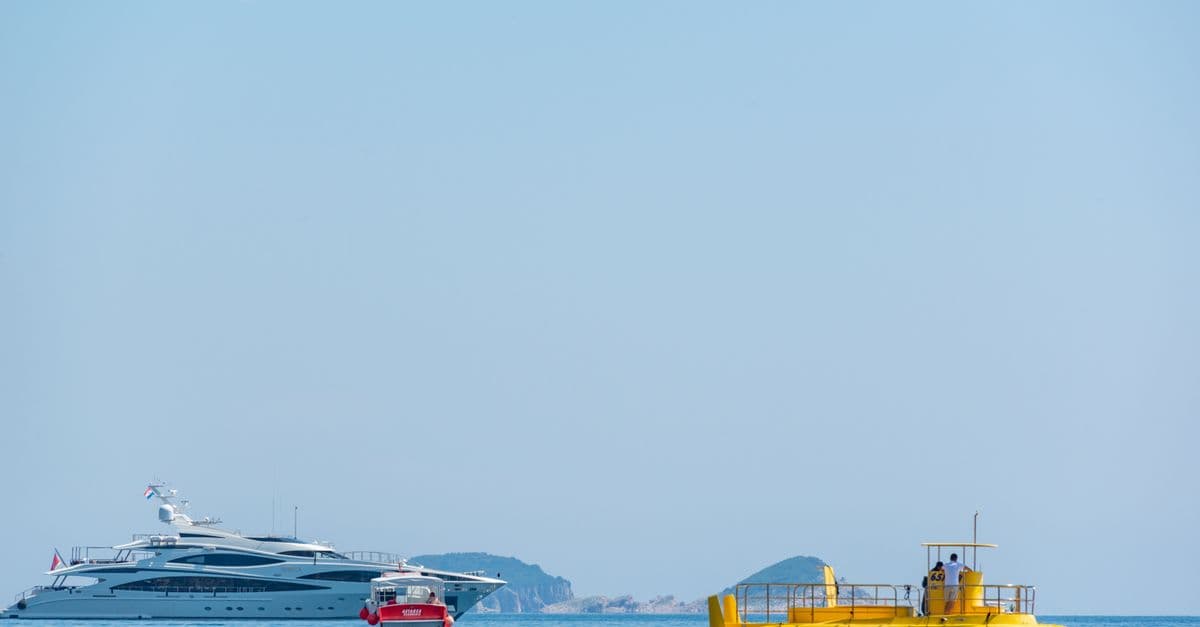
How Submarines Work: The Engineering of Underwater Vessels
Submarines dive, surface, navigate blind, and stay underwater for months. The engineering behind them defies intuition.
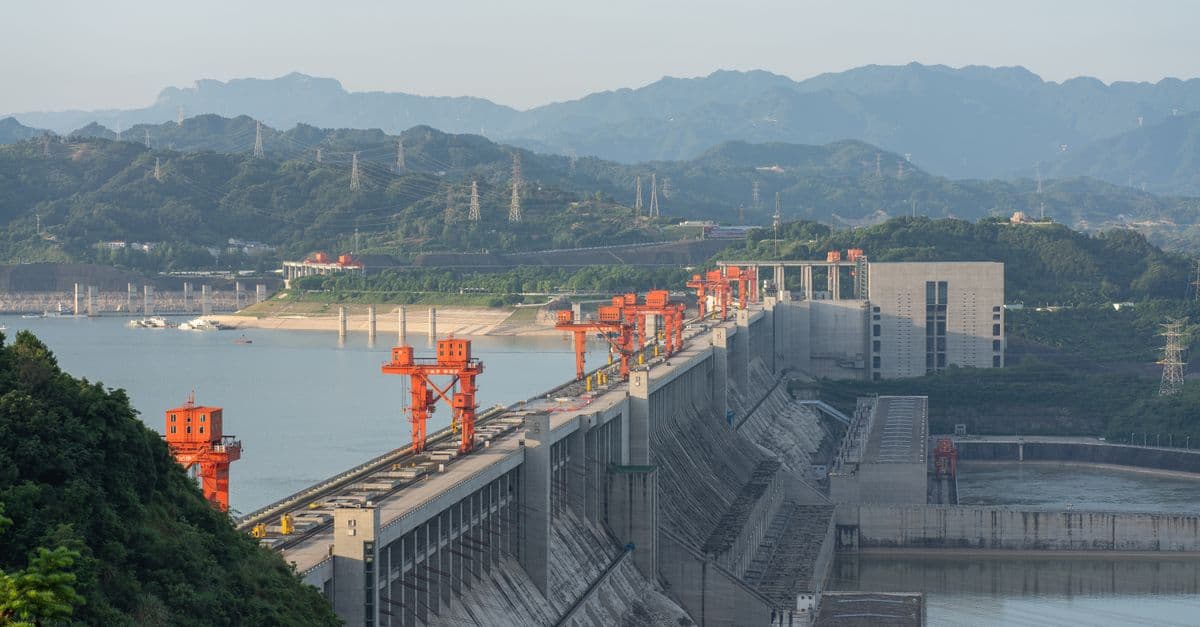
The Longest Bridges in the World: The 164-Kilometre Crossing
The longest bridge on Earth runs for 164 kilometres — roughly the distance from London to Birmingham — carrying high-speed trains across the rice paddies and rivers of eastern China. The Danyang–Kunshan Grand Bridge is so long that calling it a 'bridge' almost understates it; it is an elevated railway the length of a small country. But the real engineering drama lies elsewhere: in the bridges that span the widest single gaps without touching the ground.

How Satellites Orbit Earth: The Physics and Engineering Behind Eyes in the Sky
There are over 8,000 active satellites orbiting Earth right now. Here's how they stay up and what they do.
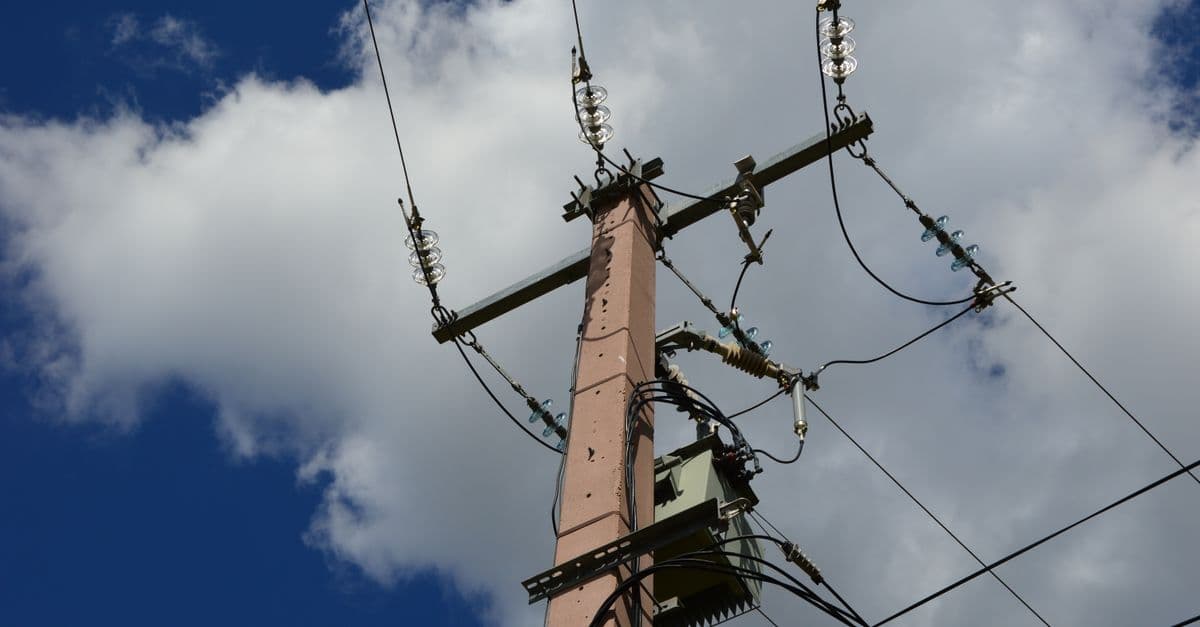
History of Electricity: Faraday, Tesla, Edison, and the Force That Powers the World
Electricity was a scientific curiosity in 1800. Within 100 years it was lighting cities and running factories.
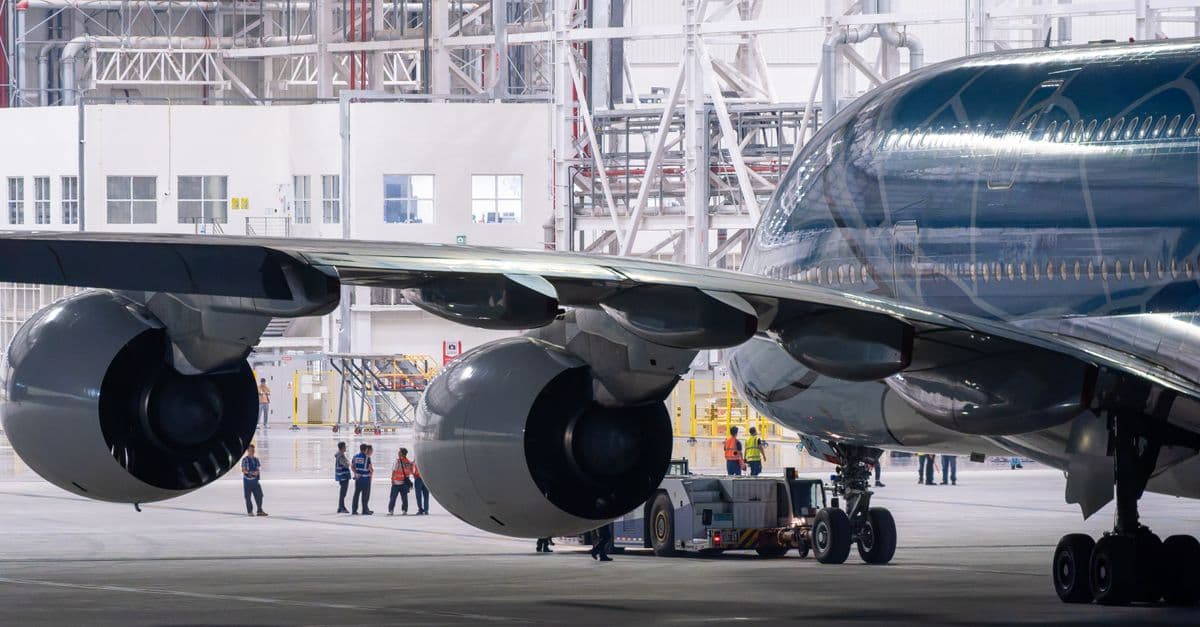
How Jet Engines Work: The Physics of Flight Power
A single GE90-115B turbofan is rated at 115,300 pounds-force of thrust. The physics behind it is a short chain of ideas: squeeze air, burn fuel in it, and let the hot gas do work.