How Submarines Work: The Engineering of Underwater Vessels
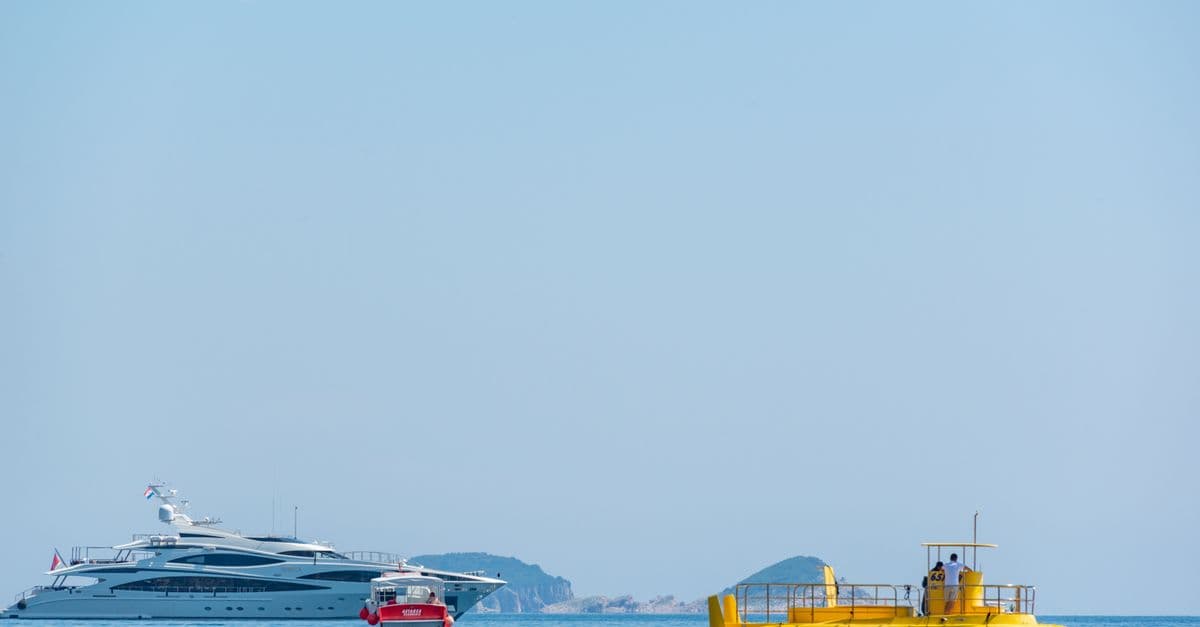
Photo: Diego F. Parra / Pexels
A nuclear-powered ballistic missile submarine can remain submerged for over 90 days. During that time it produces its own oxygen, purifies its own water, generates electricity from a nuclear reactor the size of a compact car, navigates with pinpoint precision using only internal instruments, and if ordered, can launch missiles that reach targets 7,000 miles away within minutes. All while operating under pressures that would crush an unprotected human body flat.
The submarine is among the most complex machines humans have ever built. It solves engineering problems across chemistry, physics, materials science, thermodynamics, nuclear engineering, and acoustics simultaneously. Understanding how it works reveals engineering at its most demanding.
Key Takeaways
- Submarines dive by flooding ballast tanks with seawater, reducing buoyancy; they surface by blowing the water out with compressed air
- Hull pressure from deep diving requires steel or titanium alloys with extreme yield strength; the deeper the dive, the thicker the hull must be
- Nuclear submarines generate oxygen by electrolyzing seawater and remove CO₂ with chemical scrubbers, enabling months-long submerged operations
- Inertial navigation systems — gyroscopes and accelerometers — allow navigation without any external signals, even under the polar ice cap
- Acoustic stealth is as important as structural integrity; modern submarines use anechoic tile coatings and rubber-mounted machinery to reduce sonar signatures
The Physics of Diving and Surfacing
The fundamental principle of submarine operation is Archimedes' principle: an object floats when it displaces water whose weight equals the object's weight, and sinks when it's heavier than the water it displaces.
A submarine controls its buoyancy with ballast tanks — large tanks built into the hull structure between the inner pressure hull and the outer hydrodynamic hull. When surfaced, these tanks contain air, making the submarine's total weight less than the water it displaces. To dive, valves open and seawater floods the ballast tanks, replacing air. The submarine becomes denser than seawater and sinks.
To surface, high-pressure air (stored in tanks at 3,000–4,500 psi) is blown into the ballast tanks, forcing the water out. The submarine becomes buoyant again and rises. This emergency blow procedure can surface a submarine from 400 feet in about 40 seconds — a safety margin critical if something goes wrong at depth.
But a submarine doesn't just sink or float — it needs to maintain precise depth during operation. This is controlled by planes (horizontal wing-like control surfaces at the bow and stern), which generate hydrodynamic force that angles the submarine up or down as it moves forward. The diving planes are to depth control what ailerons are to an aircraft's roll: continuous small adjustments maintaining the desired state.
Pressure Hull: Engineering Against the Ocean
Water pressure increases by approximately 1 atmosphere (14.7 psi) for every 33 feet of depth. A submarine at 1,000 feet faces pressure of about 30 atmospheres — 450 psi — pressing on every square inch of its hull. A submarine at the deepest point the ocean has been accessed, nearly 7 miles, would face pressure of over 16,000 psi.
Military submarines operate at depths of several hundred to over a thousand feet. The pressure hull — the inner cylinder where the crew lives and works — must withstand these forces without collapsing inward. The shape is critical: a cylinder is the ideal pressure vessel shape because it distributes load evenly across the structure. Flat surfaces would buckle; the circular cross-section turns compressive load into hoop stress distributed uniformly around the circumference.
The material must be extremely strong and tough. US Navy attack submarines use HY-80 steel (minimum yield strength 80,000 psi) or newer HY-100 and HY-130 steels. Russian submarines historically used titanium alloys that are lighter than steel for equivalent strength and don't corrode in seawater — but are far more expensive and difficult to weld. The Soviet Alfa-class attack submarines, with titanium hulls, could dive to over 2,400 feet and sprint at 44 knots — capabilities no Western submarine could match.
Hull thickness depends directly on target depth. The pressure hull of a typical nuclear submarine is 2–3 inches thick at operational depth. The research submarine Alvin, which dives to 14,764 feet, uses a 2-inch titanium sphere as its pressure hull. The Limiting Factor submersible, which dove to the deepest point in every ocean, uses a titanium sphere 90mm thick.
Nuclear Power and Life Support
Conventional submarines use diesel-electric propulsion: diesel engines charge batteries while surfaced, batteries power electric motors while submerged. The fundamental constraint is oxygen — diesel engines need air, and battery capacity limits submerged endurance. A conventional submarine must snorkel (raise a mast to access surface air) regularly.
Nuclear submarines eliminated this constraint. A naval nuclear reactor uses enriched uranium to heat water, which drives steam turbines connected to generators and propellers. It needs no air. The fuel lasts 20–30 years without refueling in modern designs. The USS Nautilus, the world's first nuclear submarine, traveled 60,000 miles on its first uranium fuel core — more than an entire conventional submarine fleet could have managed.
Life support is equally sophisticated. A nuclear submarine at depth for 90 days needs to provide breathable air for over 130 crew members. The oxygen generation system electrolyzes seawater (splitting H₂O into hydrogen and oxygen gas) using electricity from the reactor. The CO₂ scrubbing system passes air through monoethanolamine or lithium hydroxide to remove exhaled carbon dioxide. Trace contaminants from equipment outgassing, cooking, and human metabolism are managed with activated carbon filters and catalytic burners.
Water comes from the sea: distillation systems evaporate seawater, condense the steam, and produce pure fresh water at rates sufficient for drinking, cooking, and some bathing. A nuclear submarine is essentially a self-contained closed-loop life support system — closer to a space station than a conventional ship.
Navigation Without GPS
GPS satellites transmit signals that submarines cannot receive while submerged — radio waves don't penetrate seawater at GPS frequencies. A submarine at depth must navigate using only information it carries with it.
The primary solution is the Ship's Inertial Navigation System (SINS). It consists of precision gyroscopes that maintain a fixed orientation relative to the stars, and accelerometers that detect every acceleration the submarine experiences. Integrating the accelerations over time gives velocity; integrating velocity gives position. A submarine can navigate for weeks using only SINS, with position errors accumulating slowly over time.
Modern submarines combine SINS with GPS fixes when near the surface (using a buoyant wire antenna), acoustic positioning beacons in some areas, terrain-following sonar in shallow water, and celestial navigation. The combination achieves navigational accuracy sufficient to launch ballistic missiles that hit targets on the other side of the planet.
Acoustic stealth is crucial to survival — a submarine detected by an adversary's sonar is in mortal danger. Every noise-generating element on a modern submarine is isolated from the hull with rubber mounts. The propeller is designed for minimum cavitation (bubble formation that creates noise). The hull is coated with anechoic tiles — rubber or composite materials that absorb incoming sonar pings rather than reflecting them. US Virginia-class submarines are coated with roughly 1,000 square feet of these tiles, which must be replaced regularly.
FAQ
How deep can military submarines go? Exact figures are classified. The publicly acknowledged test depth for US Los Angeles-class submarines is about 950 feet, with a collapse depth estimated around twice that. Russian Alfa-class titanium submarines were reported to dive to 2,400+ feet. Civilian research submersibles like the Alvin reach 14,764 feet; purpose-built vehicles have reached the bottom of the Mariana Trench at 36,000 feet.
How do submarines communicate while submerged? Conventional radio waves don't penetrate water. Submarines use Extremely Low Frequency (ELF) radio, which penetrates hundreds of feet — but ELF transmitters are massive and only send a few bits per minute (essentially just a signal to surface and receive full messages). Submarines also use acoustic communications (sonar-based), towed floating wire antennas, and laser communications for future applications.
What happens if a submarine springs a leak? Submarines have multiple watertight compartments separated by heavy steel bulkheads. Flooding one compartment doesn't immediately doom the submarine if compartments are sealed. But at depth, the rate of flooding from even a small breach is enormous — a 1-inch hole at 600 feet allows water in at 7,500 gallons per minute. Rapid surfacing and damage control are the response. Emergency buoys and rescue vehicles exist for catastrophic situations.
How long can submarine crews actually stay submerged? Nuclear submarines are practically limited by food stores and crew psychology rather than mechanical factors. 90 days is a typical maximum deployment before crew performance degrades from social isolation, lack of sunlight, and confined spaces. Conventional submarines surface much more frequently for air intake.
What is a ballistic missile submarine (SSBN)? A submarine designed to carry nuclear-armed ballistic missiles as a second-strike nuclear deterrent. Because submarines are nearly impossible to locate, they can survive a first strike and retaliate. The US Ohio-class SSBNs each carry up to 24 Trident II D5 missiles, each with multiple independently targetable warheads. There are 14 Ohio-class submarines, providing the most survivable element of the US nuclear triad.
Read next:
Follow new articles
Add SciHub101 to your feed reader to see new science and technology stories.
About the Author
SciHub101 is an independent science and technology publication founded and edited by Buğra Sözeri, a software engineer and app developer based in Türkiye. AI tools assist with drafting and research. Source documentation in the existing archive is uneven, and articles are being reviewed and corrected. The Editorial Team byline identifies editorial responsibility; it does not certify specialist or independent human review. Where we compare products, anything built by our own team is labelled as such — see the editorial guidelines and About page for how corrections and disclosures work.
Related Articles
How Bridges Are Engineered to Not Fall Down
Bridges carry millions of people safely every day. Here's the remarkable engineering behind why they hold.

AI Compiler Optimization and Code Generation, Explained
Machine-learned policies now make some of a compiler's optimization decisions, and language models write source code. Here is what has been measured, what is hype, and why the compiler still checks the work.

How Satellites Orbit Earth: The Physics and Engineering Behind Eyes in the Sky
There are over 8,000 active satellites orbiting Earth right now. Here's how they stay up and what they do.
History of Electricity: Faraday, Tesla, Edison, and the Force That Powers the World
Electricity was a scientific curiosity in 1800. Within 100 years it was lighting cities and running factories.

How Jet Engines Work: The Physics of Flight Power
A single GE90-115B turbofan is rated at 115,300 pounds-force of thrust. The physics behind it is a short chain of ideas: squeeze air, burn fuel in it, and let the hot gas do work.

How Fiber Optic Cables Transmit Data
A strand of glass thinner than a human hair can carry more information than all the copper wires ever made. Here's the physics behind it.