Largest Dams in the World Explained: Height, Volume, and Power
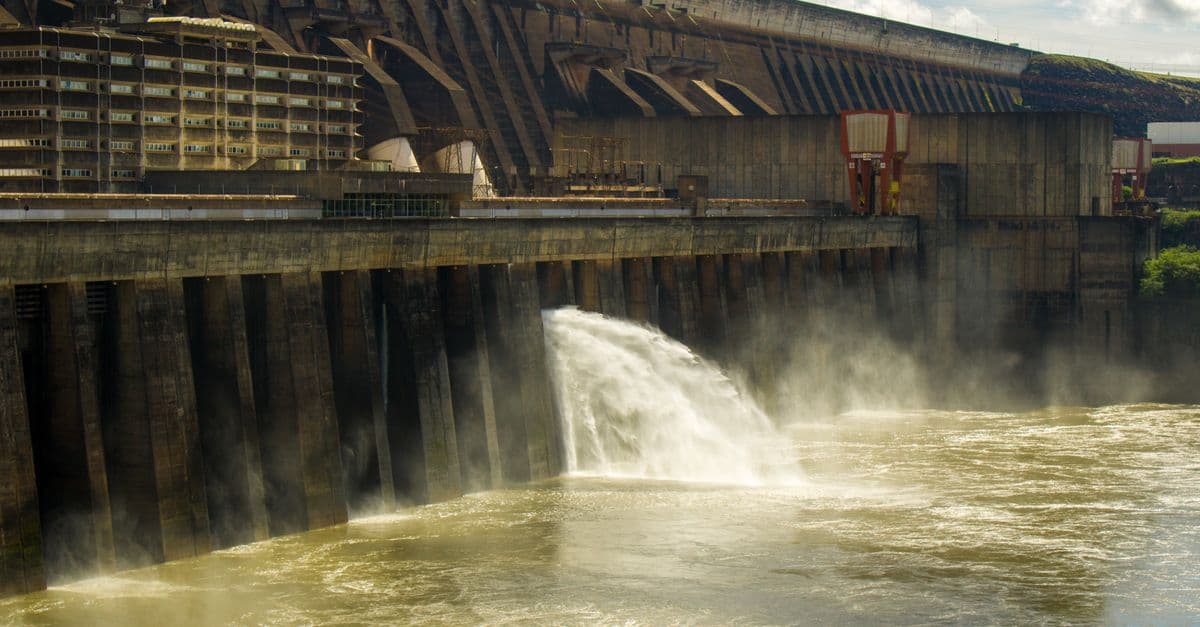
Photo: João Saplak / Pexels
There is no single "world's largest dam." The Jinping-I arch dam in China's Sichuan province stands 305 meters (1,001 feet) tall, taller than any other dam on Earth, according to Guinness World Records. The Three Gorges Dam on the Yangtze generates more electricity than any other power station of any kind, with an installed capacity of 22,500 megawatts. Tarbela Dam in Pakistan contains more earth and rock than any other dam ever built. Lake Kariba, held back by a much smaller dam on the Zambezi River, stores more water than any other reservoir on the planet. Four different structures, four different records, and none of them wrong.
Why "largest dam" splits into four different answers
A dam is not one measurement, it is an engineering problem with at least four independent variables: how tall the wall is, how much material went into building it, how much water sits behind it, and how much electricity it can generate. Those four numbers do not track together. A short, wide dam across a broad river valley can hold back far more water than a soaring dam squeezed into a narrow gorge. A dam optimized for maximum power output needs a big river with steady flow, not necessarily a tall wall.
This is the same reason "world's largest building" splits into tallest, largest floor area, and largest by volume — the underlying structure being measured has more than one dimension worth ranking. Treating "biggest dam" as a single trophy hides the actual engineering story, which is that each record is solved by a completely different design.
The tallest dam: Jinping-I and the physics of arch construction
Jinping-I Dam, completed on the Yalong River in Sichuan in 2014, holds the Guinness World Records title for highest dam at 305 meters (1,001 feet), with a crest length of 568.5 meters (1,865 feet), according to Guinness World Records and Britannica. It is a double-curvature concrete arch dam, meaning the wall curves both horizontally, like an ordinary arch bridge, and vertically, tapering inward as it rises.
That double curve is the entire trick behind building anything this tall. A gravity dam resists water pressure with raw mass, the concrete simply weighs enough that the river cannot push it over. That approach gets expensive fast, because the amount of concrete needed grows roughly with the square of the height. An arch dam instead transfers the water's horizontal push sideways into the canyon walls on either side, the same way a stone archway transfers the weight of a bridge deck into its supporting piers rather than straight down. Less concrete does more work, but the design only works in a narrow, solid-rock gorge that can absorb that sideways thrust. Jinping-I sits in exactly that kind of canyon, with rock walls strong enough to take the load.
What is the world's tallest dam?
Jinping-I Dam in Sichuan, China is the tallest dam on record at 305 meters (1,001 feet), according to Guinness World Records. It surpassed the previous record holder, Nurek Dam in Tajikistan (300 meters), when it began storing water in 2013.
Height records in this category move quickly. The Shuangjiangkou Dam, also in Sichuan and also under construction on a tributary of the Dadu River, is designed to reach 315 meters once fully complete, which would take the title from Jinping-I, according to reporting from Newsweek and Domus. Height records for dams behave like altitude records for skyscrapers: a handful of similar projects compete in the same narrow band, and the record shifts by single-digit percentages every decade rather than by dramatic leaps.
The most powerful dam: Three Gorges and the physics of hydroelectric scale
Three Gorges Dam on the Yangtze River, completed in 2012 near Yichang in Hubei province, has a total installed generating capacity of 22,500 megawatts (MW) across 32 main turbines rated at 700 MW each, plus two smaller 50 MW generators for onsite power, according to the U.S. Geological Survey and industry reporting from NS Energy Business. That capacity makes it the highest-output power station of any kind on Earth, ahead of every nuclear, coal, or gas plant. Other energy infrastructure records include the biggest hydrogen projects and the largest solar farms.
Hydroelectric output is governed by a simple physics relationship: power is proportional to the flow rate of water through the turbines multiplied by the height it falls, known as the hydraulic head. Three Gorges does not have an unusually tall dam, its wall reaches about 185 meters, well short of Jinping-I's 305 meters. What it has instead is the Yangtze itself, one of the highest-volume rivers on the planet, pushing enormous flow through the turbines around the clock. Height buys you pressure per liter, but volume of flow is what turns pressure into gigawatts, and the Yangtze supplies volume that a narrow mountain river like the Yalong simply cannot match.
Actual annual output varies with rainfall. Three Gorges generated close to 112 terawatt-hours (TWh) in 2020 after unusually heavy monsoon rain, breaking the previous world production record of about 103 TWh set by the Itaipu Dam in 2016, according to reporting compiled by NS Energy Business. In an average year the plant produces roughly 95 TWh, plus or minus about 20 TWh depending on precipitation in the Yangtze basin, according to the same reporting. That swing of ±20 TWh, larger than the entire annual electricity consumption of many mid-sized countries, is the practical reality of hydropower: unlike a nuclear or gas plant, a dam's output rises and falls with the weather.
What is the world's most powerful hydroelectric dam?
Three Gorges Dam in China has the largest installed generating capacity of any power station on Earth, at 22,500 MW, according to the U.S. Geological Survey. Itaipu Dam on the Brazil-Paraguay border ranks second at 14,000 MW and, despite the smaller number on paper, has come close to matching Three Gorges in some years because the Paraná River's flow is unusually steady year-round.
The runner-up: Itaipu and the case for consistency over capacity
Itaipu Dam, spanning the Paraná River between Brazil and Paraguay, is the world's second-largest hydroelectric plant by installed capacity at 14,000 MW, and it used roughly 12.3 million cubic meters of concrete during construction, enough concrete, according to figures compiled by The Fact File, to build the equivalent of 210 stadiums the size of Rio de Janeiro's Maracanã. The dam wall reaches about 196 meters and the structure spans roughly eight kilometers across the river valley.
What makes Itaipu notable is not its capacity number but its consistency. It was the first hydropower plant in history to generate over 100 TWh of electricity in a single year, a record it set in 2016 and held until Three Gorges overtook it in 2020, according to NS Energy Business. The Paraná's flow does not swing as sharply between wet and dry seasons as the Yangtze's does, so Itaipu's real-world output stays closer to its rated capacity than most large hydro plants manage. Itaipu also illustrates a fact easy to miss in raw capacity tables: it supplied close to 90 percent of Paraguay's electricity in some years, making a single dam functionally the backbone of a national grid, a scale of dependence no fossil-fuel plant of similar size typically reaches for an entire country.
The heaviest dam: Tarbela and the mechanics of an earth-fill wall
Tarbela Dam on the Indus River in Pakistan is the largest dam in the world by fill volume, an earth-and-rock-filled embankment containing about 106 million cubic meters of material, according to figures reported by Britannica and Pakistan's Water and Power Development Authority (WAPDA). It stands 143 meters (469 feet) tall and stretches 2,743 meters (8,997 feet) across the Indus valley.
An embankment dam like Tarbela works on a completely different principle from an arch dam like Jinping-I. Instead of curving concrete to redirect force sideways, engineers pile up a massive sloped mound of compacted earth, clay, and rock, wide enough at the base that its own weight and internal friction resist the water pressure, with a waterproof clay or concrete core running through the middle to stop seepage. Think of it as the difference between a stone archway and a levee: one redirects force through shape, the other simply outweighs the force pushing against it. Because dirt and rock are far cheaper than concrete, embankment dams are the go-to design when the riverbed is wide, flat, and made of soft sediment rather than solid canyon rock, exactly the terrain the Indus provides as it leaves the Himalayan foothills. Tarbela's reservoir holds an effective capacity of about 7.07 billion cubic meters of water, according to Britannica, and the dam remains central to Pakistan's irrigation network as well as its power supply.
The biggest reservoir: Lake Kariba and the difference between a dam and its lake
Lake Kariba, formed by Kariba Dam on the Zambezi River between Zambia and Zimbabwe, is the largest artificial reservoir on Earth by water volume, holding approximately 180 billion cubic meters of water across a surface area of about 5,580 square kilometers (2,150 square miles), according to figures compiled from Wikipedia's geographic dataset and cross-referenced hydrological surveys. That is roughly 25 times the volume held behind Tarbela and more than double the capacity of Lake Mead, the largest reservoir in the United States.
Kariba's dam wall itself is comparatively modest, a double-curvature arch structure around 128 meters tall, dwarfed by Jinping-I's 305 meters. The reservoir is enormous because the Zambezi valley behind the dam is a wide, shallow basin rather than a narrow gorge, so a moderate wall floods a huge area to a moderate depth. This is the clearest illustration of why "biggest dam" cannot be one number: the structure holding back the most water on the planet is not even in the top ten tallest dams, because reservoir volume is a function of the valley's shape as much as the wall's height.
Kariba also carries a cautionary footnote for anyone reading dam records as pure celebration. Engineering surveys since the 2010s have documented erosion of the plunge pool beneath the dam's spillway, deep enough that engineers from the Zambezi River Authority have run structural reinforcement programs to keep the foundation stable, a reminder that even record-setting infrastructure requires ongoing monitoring decades after completion.
What happens when a dam fails
Understanding why these records matter requires understanding the failure case, because dam engineering exists specifically to prevent it. The deadliest dam failure in history occurred at Banqiao Dam in Henan province, China, in August 1975, when Typhoon Nina stalled over the region and dropped more than 1,000 millimeters (over 40 inches) of rain in 24 hours, roughly twice the flood level the dam was designed to withstand, according to the Association of State Dam Safety Officials and Britannica's coverage of the disaster.
Banqiao and 61 smaller dams in the same river system failed within hours of each other. A wall of water roughly 10 kilometers wide and more than five meters high swept across flat farmland at speeds up to 50 km/h (31 mph), according to case studies compiled by the Association of State Dam Safety Officials. Official Chinese government figures put the direct death toll at 26,000, with an estimated 145,000 additional deaths from the famine and disease that followed in the flood's aftermath, for an estimated total exceeding 170,000, making it the deadliest dam failure and one of the deadliest infrastructure disasters of the twentieth century.
The lesson engineers drew from Banqiao was not about height, volume, or power capacity, it was about the gap between a "design flood" and reality. Every record dam discussed above is built to a specific flood-return standard, meaning engineers calculate the worst flood statistically expected once every 500 or 1,000 years and design the spillway to handle it. Banqiao was rated for what was described as a 1-in-1,000-year flood; Typhoon Nina delivered something closer to twice that. Modern dam design after Banqiao shifted toward larger safety margins and independent spillway redundancy specifically because the disaster proved that a record-setting structure is only as safe as its worst-case assumption.
Concrete volume versus concrete strength: two different engineering problems
It is worth separating two things that get conflated in casual "biggest dam" lists: how much material a dam contains and how tall or strong that material makes the dam. Itaipu used more concrete, 12.3 million cubic meters, than Jinping-I, yet Jinping-I is far taller. The explanation is design geometry, not material quality. Itaipu is a long, relatively low gravity and buttress dam stretching eight kilometers across a wide river valley, so its concrete volume comes from sheer length rather than height. Jinping-I is a compact double-curvature arch squeezed into a narrow gorge, so a comparatively small amount of concrete, precisely shaped, reaches extraordinary height.
This is the same distinction as comparing a long suspension bridge to a tall skyscraper: total material used and peak vertical achievement measure different engineering feats, and a structure that dominates one ranking can rank modestly on the other. A useful gut check when comparing dam records: ask whether the number describes total material (volume), water storage (reservoir capacity), vertical height, or electricity output, because a source that blends these into a single "biggest" ranking without specifying which is being measured is usually oversimplifying.
How dam type determines which record a structure can even compete for
| Dam type | How it resists water pressure | Best suited for | Record example |
|---|---|---|---|
| Arch (concrete) | Curves force sideways into canyon rock walls | Narrow, solid-rock gorges | Jinping-I — 305 m, tallest dam on Earth |
| Gravity (concrete) | Sheer mass and friction resist the water | Wide valleys with stable bedrock | Three Gorges — 22,500 MW, most powerful plant |
| Embankment (earth/rock-fill) | Sloped mass of compacted earth with a waterproof core | Wide, sediment-heavy river valleys | Tarbela — 106 million m³, largest earth-fill volume |
| Buttress/gravity hybrid | Combination of mass and structural supports along a long wall | Broad rivers needing high flow-through capacity | Itaipu — 14,000 MW, second-largest by capacity |
Table: Dam construction type determines which "largest" category a structure is even eligible to compete in — geology and river shape dictate the design before size ever enters the equation.
Common confusions in dam records
People often assume the tallest dam must also generate the most electricity, but height and hydroelectric output are governed by different physics, as the Jinping-I versus Three Gorges comparison shows directly. A 305-meter arch dam on a modest mountain river can produce far less power than a 185-meter dam on a massive river, because output depends on flow volume as much as head height.
A second common mix-up is treating "largest dam" and "largest reservoir" as the same thing. Lake Kariba proves they are not: its dam wall, at roughly 128 meters, is not close to record height, yet it backs up more water than any other reservoir because the valley behind it is wide and shallow rather than narrow and deep. A short dam across a broad basin can out-store a much taller dam squeezed into a canyon.
A third confusion is nominal versus real output. Installed capacity, the number usually quoted in "world's largest" lists, is the maximum a plant could theoretically produce if every turbine ran at full rated output continuously. Actual annual generation almost always falls well short of that ceiling and swings with rainfall, as Three Gorges' ±20 TWh annual variance demonstrates. A plant's capacity rating and its delivered electricity are related but not identical numbers, and conflating them overstates how reliable hydropower output actually is from year to year.
What this means
Dam records are not a single leaderboard, they are four separate engineering competitions running in parallel: height, material volume, reservoir capacity, and power output, each shaped by a different combination of geology, river flow, and design choice. Jinping-I wins on height because a narrow gorge lets an arch dam reach extraordinary elevation with comparatively little material. Three Gorges wins on power because the Yangtze supplies flow volume no mountain river can match. Tarbela wins on fill volume because the Indus valley called for an earth embankment rather than concrete. Kariba wins on reservoir size because a wide, shallow basin behind a modest wall stores more water than any canyon ever could. None of these structures is simply "the biggest dam," and understanding why is the difference between reading an infrastructure statistic and understanding the engineering behind it.
Q: What is the tallest dam in the world? A: Jinping-I Dam in Sichuan, China is the tallest dam on record at 305 meters (1,001 feet), according to Guinness World Records. It surpassed Nurek Dam in Tajikistan, which held the record at 300 meters until Jinping-I began storing water in 2013.
Q: What is the world's most powerful hydroelectric dam? A: Three Gorges Dam on China's Yangtze River has the largest installed generating capacity of any power station on Earth at 22,500 megawatts, according to the U.S. Geological Survey. It also holds the record for most electricity generated by a power plant in a single year, producing close to 112 terawatt-hours in 2020.
Q: What is the largest dam by volume of material? A: Tarbela Dam in Pakistan is the largest dam by fill volume, containing approximately 106 million cubic meters of earth and rock, according to Britannica and Pakistan's Water and Power Development Authority.
Q: What is the largest reservoir in the world? A: Lake Kariba, formed by Kariba Dam on the Zambezi River between Zambia and Zimbabwe, is the largest artificial reservoir by water volume, holding approximately 180 billion cubic meters of water.
Q: Why isn't the tallest dam also the most powerful? A: Hydroelectric output depends on both the height water falls (hydraulic head) and the volume of water flowing through the turbines. Jinping-I is tall but sits on a comparatively modest mountain river, while Three Gorges is shorter but harnesses the Yangtze's massive flow, producing roughly six times more electricity.
Q: What is the deadliest dam failure in history? A: The 1975 failure of Banqiao Dam in China's Henan province, triggered by Typhoon Nina, is the deadliest dam disaster on record. Official figures put the direct death toll at 26,000, with an estimated total exceeding 170,000 when famine and disease deaths are included, according to the Association of State Dam Safety Officials.
Q: What is the difference between an arch dam and an embankment dam? A: An arch dam is made of curved concrete that transfers water pressure sideways into solid canyon rock, making it efficient for narrow gorges. An embankment dam is a sloped mound of compacted earth and rock that resists water pressure through sheer mass, making it suited to wide river valleys with softer riverbeds, like Tarbela on the Indus River.
Q: Which dam produces the most consistent electricity output? A: Itaipu Dam, on the Brazil-Paraguay border, is known for unusually stable output because the Paraná River's flow varies less between seasons than rivers like the Yangtze. Itaipu was the first hydropower plant to generate over 100 terawatt-hours in a single year, a record it set in 2016.
Q: Is installed capacity the same as actual electricity output? A: No. Installed capacity is the maximum theoretical output if every turbine ran continuously at full rated power. Actual annual generation depends on rainfall and river flow; Three Gorges, for example, produces roughly 95 terawatt-hours in an average year but that figure can swing by about 20 terawatt-hours depending on precipitation.
Q: Could a taller dam than Jinping-I be built soon? A: Yes. The Shuangjiangkou Dam, also under construction in Sichuan, China, is designed to reach 315 meters once complete, which would surpass Jinping-I's 305-meter record, according to reporting from Newsweek and Domus.
Related Reading
- The Largest Structures Ever Built
- The Fastest Man-Made Objects Ever Built
- Countries With the Most Data Centers
Sources
- Guinness World Records — Highest Dam
- Britannica — Jinping-I Dam
- Britannica — Tarbela Dam
- Britannica — Typhoon Nina–Banqiao Dam Failure
- U.S. Geological Survey — Three Gorges Dam: The World's Largest Hydroelectric Plant
- NS Energy Business — Three Gorges Hydropower Station
- NS Energy Business — Itaipu Hydroelectric Project
- The Fact File — 50 Facts About the Itaipu Dam
- WAPDA — Tarbela Dam
- Association of State Dam Safety Officials — Banqiao Dam Case Study
- Newsweek — The Tallest Dam in the World Begins Storing Water
Follow new articles
Add SciHub101 to your feed reader to see new science and technology stories.
About the Author
SciHub101 is an independent science and technology publication founded and edited by Buğra Sözeri, a software engineer and app developer based in Türkiye. AI tools assist with drafting and research. Source documentation in the existing archive is uneven, and articles are being reviewed and corrected. The Editorial Team byline identifies editorial responsibility; it does not certify specialist or independent human review. Where we compare products, anything built by our own team is labelled as such — see the editorial guidelines and About page for how corrections and disclosures work.
Related Articles

Largest Libraries and Archives in the World
The Library of Congress holds over 173 million items and the Internet Archive stores more than 99 petabytes. Here's how the world's biggest libraries stack up.

Largest Airports in the World by Size and Passenger Traffic
The largest airport can mean land area, terminal size, runways, or passengers. This guide ranks all four and explains why the answers never match.
Largest Solar Farms in the World
The largest solar farms rank by installed capacity, from China's Tengger park to the UAE's Al Dhafra site. Here is how capacity, land, and real output compare.
The Longest Bridges in the World: The 164-Kilometre Crossing
The longest bridge on Earth runs for 164 kilometres — roughly the distance from London to Birmingham — carrying high-speed trains across the rice paddies and rivers of eastern China. The Danyang–Kunshan Grand Bridge is so long that calling it a 'bridge' almost understates it; it is an elevated railway the length of a small country. But the real engineering drama lies elsewhere: in the bridges that span the widest single gaps without touching the ground.

The Largest Structures Ever Built: Towers, Bridges, Dams, and Walls
The Burj Khalifa in Dubai stands 828 meters tall — for context, you could stack almost two Empire State Buildings on top of each other and still not reach its antenna. But height is only one dimension of 'largest.' The world's longest bridge stretches 164.8 km across China. The Great Wall of China, including all branches, runs over 21,000 km. The largest building by floor area is a Boeing factory in Washington State that covers 398,000 square meters under a single roof. What engineering limits the next record depends on which dimension you're measuring and why physics makes every additional meter harder than the last.