Largest Airports in the World by Size and Passenger Traffic
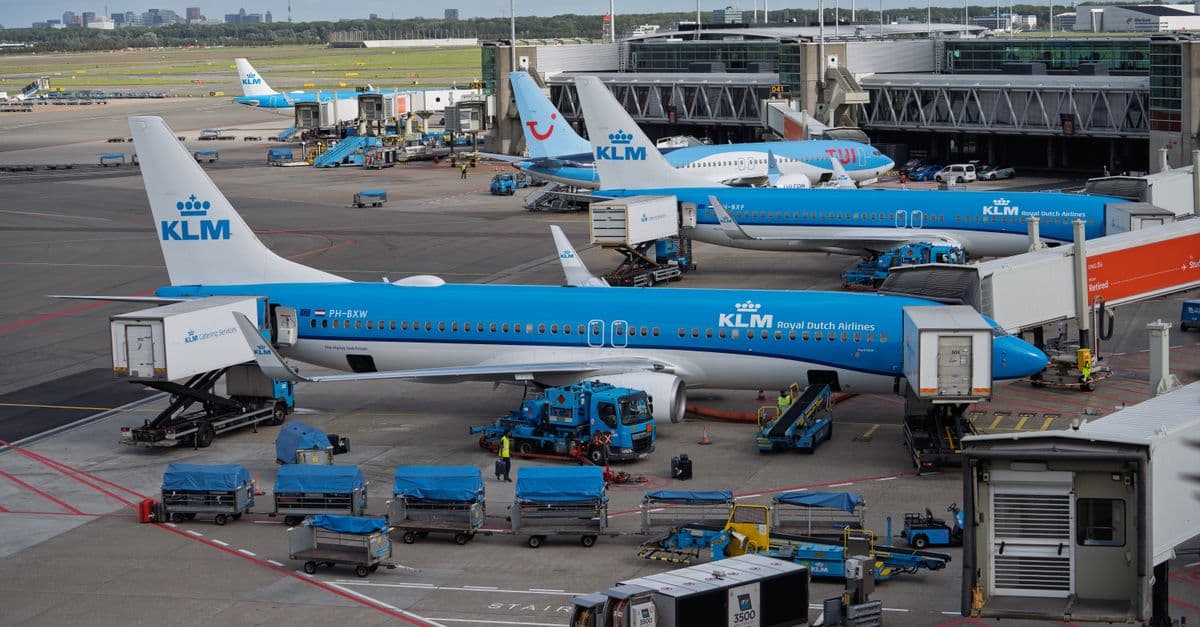
Photo: Martijn Stoof / Pexels
Ask "what's the largest airport in the world" and you'll get at least four different correct answers, depending on what you're measuring. King Fahd International Airport in Dammam, Saudi Arabia, covers 776 square kilometers of desert — bigger than the entire island of Bahrain — yet carries fewer passengers each year than a single mid-sized US hub. Hartsfield-Jackson Atlanta International handles more people than any other airport on Earth, but it would fit inside King Fahd's perimeter more than 190 times over. This guide separates the rankings by metric, explains where the numbers come from, and shows why "biggest" is really four different questions wearing one costume.
Why "biggest airport" splits into four separate records
An airport is not one object. It is a bundle of land, buildings, pavement, and operations, and each of those can be the biggest in the world independently of the others. Land area measures how much ground an airport controls, including runways, taxiways, cargo aprons, undeveloped buffer zones, and sometimes agricultural land leased back to farmers. Terminal floor area measures the size of the building or buildings where passengers actually walk, check bags, and board. Runway count measures operational capacity for simultaneous departures and arrivals. Passenger traffic measures how many people actually pass through the gates in a calendar year, tracked by Airports Council International (ACI World), the trade body that compiles the annual global rankings from data self-reported by member airports.
These four metrics rarely point to the same airport because they reward different things. A remote military-era airfield with cheap land can sprawl for size without ever attracting airline demand. A dense, land-constrained hub in a wealthy metro area can move enormous numbers of people through a comparatively compact footprint because its terminals, taxiways, and gate turnarounds are engineered for throughput rather than acreage. Understanding which record you actually want to know is the first step to reading any "world's biggest airport" list correctly, because most of them silently pick one metric and never say so.
The record by land area: King Fahd, Denver, and Dallas-Fort Worth
King Fahd International Airport, which opened in 1999 to serve Dammam and the eastern Saudi oil region, holds the land-area record by a wide margin at approximately 776 km² (WorldAtlas; dmmairport.com). Much of that land is undeveloped desert reserved for future runways and a planned royal terminal complex that has never been fully built out. The airport was designed at a scale matched to Saudi Arabia's long-range ambitions rather than to the passenger demand it currently serves, which is why the gap between its size and its traffic is so large.
Denver International Airport (DEN) is the second-largest airport in the world by land area and the largest in the Western Hemisphere, spanning about 137.8 km² — roughly twice the size of Manhattan (WorldAtlas). When Denver's airport authority chose the site in the late 1980s, it deliberately bought far more land than needed for the initial runways, both to build in a large noise buffer around the airfield and to leave room for decades of expansion without a fight over adjacent farmland. That decision is why Denver can still add runways today without touching a single neighboring property line.
Dallas-Fort Worth International Airport (DFW) covers roughly 69 km², smaller than Denver but still larger than the island of Manhattan, and it illustrates a different design philosophy: land bought specifically to support parallel runway operations rather than a generous buffer zone (CPG Click Oil and Gas). Kuala Lumpur International Airport (KUL) in Malaysia rounds out the top tier at about 100 km², making it the largest airport in Asia by footprint (WorldAtlas).
Why does land area not correlate with passenger traffic?
Land area reflects planning decisions made decades in advance, often based on projected demand that never materialized or on strategic goals unrelated to travel volume. Passenger traffic reflects present-day airline route networks, connecting hub status, and local population. A sprawling airport with few airline partners can sit largely empty while a compact one packed with gates moves tens of millions of people a year. Other record-setting human-built giants include the largest ships ever built and the largest solar farms in the world.
The runway and terminal records: capacity built into concrete
Runway count is the clearest proxy for how many aircraft an airport can physically launch and land per hour, and it is a genuinely separate record from land area. Chicago O'Hare International Airport operates eight runways, the most of any civilian airport in the world, giving it the highest theoretical simultaneous-movement capacity on the planet (SimpleFlying). Dallas-Fort Worth follows with seven runways arranged for parallel independent operations, a layout chosen specifically so controllers can run multiple simultaneous approaches in different weather conditions without one runway's traffic interfering with another's (SimpleFlying).
Terminal floor area is its own record, separate again from land and runways, and it belongs to Beijing Daxing International Airport, whose single starfish-shaped terminal building covers about 700,000 square meters, making it the largest single-structure airport terminal ever built (Islands). The starfish design, with six piers radiating from a central hub, was chosen so that no gate sits more than about eight minutes' walk from the terminal center, solving the problem that giant single-building terminals usually create punishing walk distances for passengers.
Istanbul Airport's terminal complex is larger in total combined floor area, at roughly 1.4 million square meters, but that figure spans multiple connected structures built and expanded in phases rather than one continuous building, which is why aviation analysts credit Beijing Daxing, not Istanbul, with the single-structure record (We3Travel). Dubai International's Terminal 3 is similarly enormous, at about 1.18 million square meters, but it too is excluded from the single-building record for the same structural reason.
Runway design is a good example of a record that looks simple but hides serious engineering. A runway is not just a long strip of pavement; it has to support the weight of a fully loaded jet — an Airbus A380 can weigh over 560 metric tons at maximum takeoff weight — while resisting the freeze-thaw cracking, heat expansion, and rubber-and-fuel chemical wear of thousands of landings a year. Runway pavement is typically 40 to 100 centimeters thick, layered like a cake of asphalt or concrete over compacted aggregate base, and it is graded to a precision of millimeters over kilometers of length so water sheds off fast enough to prevent hydroplaning during heavy rain.
The traffic records: Atlanta, Dubai, and the airports that actually move the most people
Passenger traffic is the metric most people mean when they casually say "biggest airport," and it is tracked annually by ACI World from data submitted by member airports worldwide. For 2025, Hartsfield-Jackson Atlanta International Airport retained the top spot for total passengers with 106.3 million travelers, followed by Dubai International with 95.2 million and Tokyo Haneda with 91.7 million (ITIJ; Moodie Davitt Report). Atlanta has held the number-one spot for total passengers almost continuously since 1998, a run built on its role as Delta Air Lines' primary domestic connecting hub, funneling passengers between hundreds of smaller US cities that have no direct flights to each other.
Dubai tells a different story. It ranked second overall but has remained the world's single busiest airport for international traffic specifically, because unlike Atlanta, which carries enormous volumes of domestic US point-to-point and connecting flights, essentially all of Dubai's traffic crosses an international border (Moodie Davitt Report). Dubai's position reflects its role as the midpoint hub between Europe, Africa, and Asia, a geography Emirates has built its entire long-haul network around: you can fly nonstop from Dubai to nearly every major city on four continents, which pulls connecting traffic that would otherwise route through Europe.
Global passenger traffic across all airports reached an estimated 9.8 billion in 2025, up 3.6% year-over-year and 7.3% above pre-pandemic 2019 levels, according to ACI World's tally, with the top ten airports alone accounting for about 9% of that total (ITIJ). Asia-Pacific hubs showed the strongest year-over-year growth in the 2025 data: Shanghai Pudong climbed to fifth place globally and Guangzhou Baiyun rebounded to ninth, reflecting the region's faster post-pandemic recovery and expanding middle-class air travel demand (ITIJ).
Chicago O'Hare, despite ranking outside the top three for total passengers, led the world in aircraft movements — takeoffs and landings combined — in the 2025 data, a direct consequence of its eight-runway layout and its role as a connecting hub for both American Airlines and United Airlines simultaneously (ITIJ). This is the clearest illustration of why runway count and passenger count are separate records: an airport can dominate movements while another dominates people, because Chicago's flights skew toward smaller regional jets carrying fewer passengers per takeoff than Atlanta's larger mainline aircraft.
What is the difference between total passenger traffic and international passenger traffic?
Total passenger traffic counts every passenger who boards, deplanes, or connects at an airport, regardless of whether the flight crosses a national border. International traffic counts only passengers on flights that cross a border. Atlanta wins the total count because of its huge US domestic connecting hub role; Dubai wins the international count because nearly all of its traffic already crosses a border by definition.
Cargo airports: a fifth record hiding in the same conversation
Passenger counts are only half of what makes an airport large in operational terms. Cargo tonnage is tracked as its own separate ACI category, and it produces a completely different leaderboard. Hong Kong International Airport retained the top cargo ranking in 2025 with 5.1 million metric tonnes handled, up 2.7% from the prior year, followed by Shanghai Pudong at 4.1 million tonnes and Ted Stevens Anchorage International at 3.9 million tonnes (Air Cargo News).
Anchorage's presence near the top of a cargo ranking, despite carrying comparatively few passengers, is not a coincidence. It sits almost exactly halfway along great-circle routes between East Asia and North America and Europe, making it an efficient refueling and transfer point for cargo freighters that would otherwise burn extra fuel flying a longer direct route or need to carry less cargo to fit more fuel. Memphis International Airport, long a fixture near the top of cargo rankings as the FedEx global hub, dropped from third to sixth place in the 2025 rankings after losing a US Postal Service air-transport contract in late 2024, with its cargo volume falling 20.9% — the sharpest single-year decline among the world's top 20 cargo airports (Air Cargo News). Memphis's drop is a useful case study in how fragile a "world's busiest" cargo title can be: it depends heavily on a small number of contracts with a small number of logistics companies, unlike passenger traffic, which is spread across hundreds of airlines and millions of individual travel decisions.
Global air cargo volume exceeded 131 million metric tonnes in 2025, up 3.3% from 2024 and 7.4% above 2019 levels, tracking the broader rebound in global trade and e-commerce shipping after the pandemic-era disruption (Air Cargo News).
How airport size actually gets engineered
Building an airport at any of these scales is closer to building a small city than a single facility. A major hub airport needs its own water treatment, electrical substations, fire and rescue services, fuel storage and pipeline distribution, and often its own police force and postal code. Runway placement is dictated first by prevailing wind direction, because aircraft take off and land into the wind whenever possible to shorten ground roll and improve lift at lower speed, which is why many major airports have runways angled in more than one direction to cover seasonal wind shifts.
Parallel runway spacing is itself a regulated safety number, not an arbitrary design choice: aviation authorities set minimum separation distances between simultaneous-use parallel runways specifically so wake turbulence — the rotating vortex of disturbed air that trails behind a large jet's wingtips — from an aircraft on one runway cannot destabilize an aircraft landing or departing on the runway next to it. That single safety constraint is a major reason airports like Dallas-Fort Worth need so much lateral land: the runways cannot simply be packed close together no matter how much traffic the airport wants to handle.
Terminal design faces a different set of constraints entirely. Beyond the six-minute-walk logic behind Beijing Daxing's starfish shape, terminal engineers have to solve for baggage sorting throughput, security checkpoint queuing, and the sheer structural load of a roof that has to span hundreds of meters without interior support columns blocking sightlines to gates. It's a bit like the difference between designing a warehouse and designing a cathedral: both need to be enormous and structurally sound, but a terminal also has to feel navigable to a stressed traveler who has never set foot in the building before and has fifteen minutes to find their gate.
Common confusions in "world's largest airport" claims
The single most common error in casual rankings is treating land area and passenger traffic as if they measure the same thing. A list that puts King Fahd International "first" without specifying land area will confuse readers who then expect it to be crowded, when in fact it serves a modest regional population and handles a small fraction of the traffic of far smaller airports.
A second common confusion is conflating a terminal complex with a single terminal building. Istanbul Airport is frequently cited as having the world's largest terminal because its total floor area across all connected buildings, roughly 1.4 million square meters, exceeds Beijing Daxing's 700,000 square meters. Both figures are accurate, but they answer different questions: total terminal complex area versus largest single continuous structure. Aviation trade press consistently credits Beijing Daxing with the single-structure record for exactly this reason.
A third confusion involves runway count versus runway capacity. More runways generally means more capacity, but not always in a straightforward way, because two runways that are too close together for simultaneous independent operations do not add as much capacity as two runways spaced far enough apart to run in parallel without interference. Chicago O'Hare's eight runways are arranged specifically to maximize independent parallel operations, which is why it leads the world in aircraft movements despite not leading in total passengers.
A fourth confusion, particularly common in listicles aggregated from older data, is citing "world's busiest airport" without specifying the year or the metric, since the title has changed hands repeatedly. Dubai International held the total-passenger crown for several years in the mid-2010s before Atlanta reclaimed it; the international-passenger title and the total-passenger title have belonged to different airports simultaneously for most of the past decade.
The takeaway
There is no single "world's largest airport," because size is really four or five separate engineering and operational records that rarely align: land area (King Fahd International, 776 km²), single terminal building (Beijing Daxing, 700,000 m²), runway count (Chicago O'Hare, 8 runways), total passenger traffic (Atlanta, 106.3 million in 2025), and cargo tonnage (Hong Kong, 5.1 million tonnes in 2025). Each record reflects a different set of constraints, whether that's desert land bought decades ahead of demand, wake-turbulence separation rules that force runways apart, or a hub airline's route map built around geography. The next time a list claims one airport is simply "the biggest," the useful question is which of these five records it actually means.
Frequently Asked Questions
Q: What is the largest airport in the world by land area? A: King Fahd International Airport in Dammam, Saudi Arabia, is the largest by land area at approximately 776 km², roughly the size of Singapore. It far exceeds the second-largest, Denver International Airport, at about 137.8 km² (WorldAtlas).
Q: What is the busiest airport in the world by passenger traffic? A: Hartsfield-Jackson Atlanta International Airport was the busiest by total passengers in 2025, handling 106.3 million travelers, per ACI World data (ITIJ).
Q: Which airport has the largest single terminal building? A: Beijing Daxing International Airport has the largest single-structure terminal building at about 700,000 square meters, built in a six-pier starfish layout designed to shorten passenger walking distances (Islands).
Q: Which airport has the most runways? A: Chicago O'Hare International Airport has eight runways, the most of any civilian airport in the world, giving it the highest aircraft-movement capacity globally (SimpleFlying).
Q: Why is King Fahd International Airport so large but not very busy? A: It was built with land reserved for a scale of expansion, including a planned royal terminal, that never fully materialized. Most of its 776 km² footprint remains undeveloped desert rather than active runways or terminals, so it serves under 10 million passengers a year despite its size (WorldAtlas).
Q: Is Dubai or Atlanta the world's busiest airport? A: It depends on the metric. Atlanta is busiest by total passenger traffic. Dubai is busiest by international passenger traffic specifically, since nearly all of its traffic crosses a national border while much of Atlanta's is domestic US connecting traffic (Moodie Davitt Report).
Q: What is the busiest cargo airport in the world? A: Hong Kong International Airport, with 5.1 million metric tonnes of cargo handled in 2025, ahead of Shanghai Pudong and Ted Stevens Anchorage International (Air Cargo News).
Q: Why did Memphis International Airport drop in the cargo rankings? A: Memphis fell from third to sixth in the 2025 cargo rankings, with volume down 20.9%, after losing a US Postal Service air-transport contract in late 2024. Its position had long depended heavily on FedEx's global hub operation plus postal contracts, which is a more concentrated traffic base than most passenger hubs rely on (Air Cargo News).
Q: Why do airports need so much land between parallel runways? A: Aviation safety regulators require minimum lateral separation between simultaneously used parallel runways to prevent wake turbulence, the rotating vortex trailing a large jet's wingtips, from destabilizing an aircraft on the adjacent runway. This safety margin is a major reason land-hungry designs like Dallas-Fort Worth's seven-runway layout need tens of square kilometers of space.
Q: How is global air passenger traffic trending as of 2025? A: Global passenger traffic reached an estimated 9.8 billion in 2025, up 3.6% year-over-year and 7.3% above 2019 levels, according to ACI World, with the strongest growth concentrated in Asia-Pacific hubs like Shanghai Pudong and Guangzhou Baiyun (ITIJ).
Read next:
- The Largest Structures Ever Built
- The Fastest Man-Made Objects Ever Built
- Countries with the Most Data Centers
Sources
- WorldAtlas — The Largest Airports in the World by Size
- King Fahd International Airport — Expansion and Size
- ITIJ — World's Busiest Airports 2025: Atlanta Tops Passenger Traffic
- Moodie Davitt Report — Dubai Remains World's Busiest Airport for International Traffic in 2025
- Islands — The World's Largest Airport Terminal (Beijing Daxing)
- We3Travel — Discover the Largest Single-Structure Airport Terminal on Earth
- SimpleFlying — Which International Airports Have the Most Runways?
- SimpleFlying — Why DFW Has So Many Runways
- Air Cargo News — Hong Kong Retains Busiest Cargo Airport Title
- CPG Click Petroleo e Gas — Dallas-Fort Worth International Airport Land Area
Follow new articles
Add SciHub101 to your feed reader to see new science and technology stories.
About the Author
SciHub101 is an independent science and technology publication founded and edited by Buğra Sözeri, a software engineer and app developer based in Türkiye. AI tools assist with drafting and research. Source documentation in the existing archive is uneven, and articles are being reviewed and corrected. The Editorial Team byline identifies editorial responsibility; it does not certify specialist or independent human review. Where we compare products, anything built by our own team is labelled as such — see the editorial guidelines and About page for how corrections and disclosures work.
Related Articles

Largest Dams in the World Explained: Height, Volume, and Power
The largest dam changes depending on whether you rank by height, reservoir, concrete volume, or hydroelectric output. Here is the science behind each record.
Fastest Trains in the World: Maglev, High-Speed Rail, and Records
The fastest trains can be ranked by test record, commercial service speed, or average journey speed. This guide explains the differences.

Largest Solar Farms in the World
The largest solar farms rank by installed capacity, from China's Tengger park to the UAE's Al Dhafra site. Here is how capacity, land, and real output compare.

The Longest Tunnels in the World: 57 Kilometres Under the Alps
To send high-speed trains through the heart of the Alps, engineers didn't go over the mountains — they went straight through, boring the Gotthard Base Tunnel 57 kilometres beneath rock up to 2.3 kilometres thick. It's the longest railway tunnel on Earth, and at its deepest the rock above presses down so hard the temperature reaches 46°C. But the single longest tunnel of any kind carries no trains at all — it carries water to a thirsty city.
The Longest Bridges in the World: The 164-Kilometre Crossing
The longest bridge on Earth runs for 164 kilometres — roughly the distance from London to Birmingham — carrying high-speed trains across the rice paddies and rivers of eastern China. The Danyang–Kunshan Grand Bridge is so long that calling it a 'bridge' almost understates it; it is an elevated railway the length of a small country. But the real engineering drama lies elsewhere: in the bridges that span the widest single gaps without touching the ground.

The Largest Structures Ever Built: Towers, Bridges, Dams, and Walls
The Burj Khalifa in Dubai stands 828 meters tall — for context, you could stack almost two Empire State Buildings on top of each other and still not reach its antenna. But height is only one dimension of 'largest.' The world's longest bridge stretches 164.8 km across China. The Great Wall of China, including all branches, runs over 21,000 km. The largest building by floor area is a Boeing factory in Washington State that covers 398,000 square meters under a single roof. What engineering limits the next record depends on which dimension you're measuring and why physics makes every additional meter harder than the last.