Largest Ships Ever Built: Tankers, Container Ships, and Floating Cities
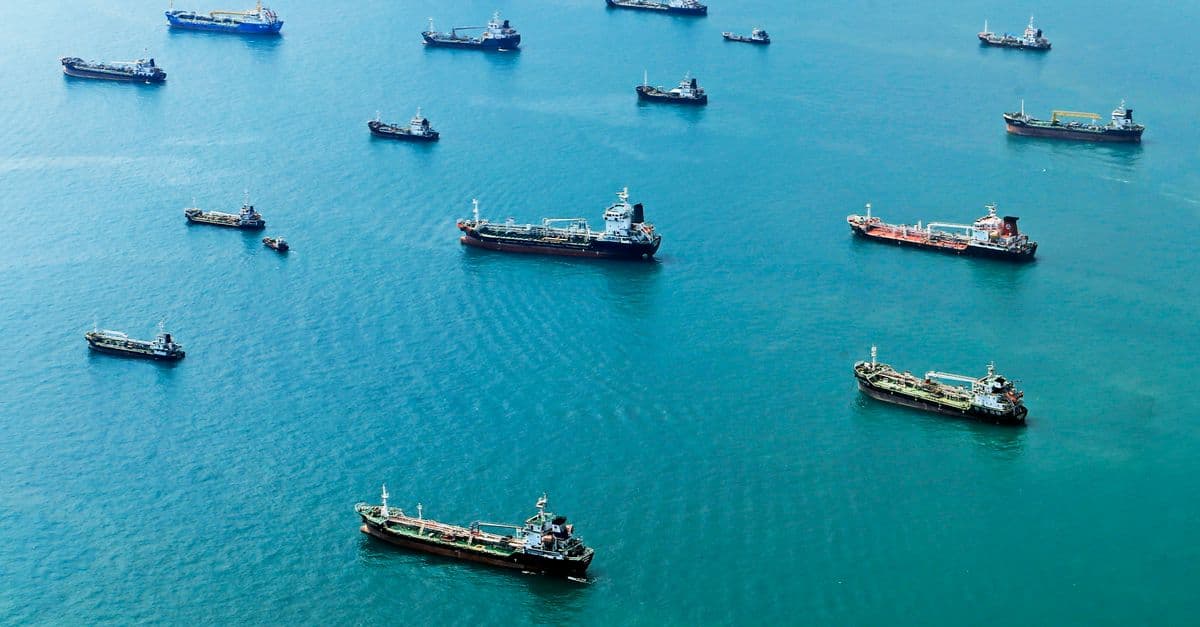
Photo: Jeffry Surianto / Pexels
No single ship holds every record. The longest and heaviest vessel ever floated was a 458-meter oil tanker that could not fit through the Suez Canal, the Panama Canal, or the English Channel. The ship carrying the most cargo today is a container vessel barely 400 meters long, but stacked 24 containers wide. The heaviest floating object of any kind is not a ship in the traditional sense at all — it is a gas plant the size of four football fields moored off the coast of Australia. This guide breaks down each record by the metric that actually defines it, explains the engineering that makes each type possible, and shows why "biggest ship" is really four or five separate questions.
The record holder by length and displacement: Seawise Giant
The largest ship ever built, by both length and total displacement, was the ultra-large crude carrier known first as Seawise Giant, later as Happy Giant, then Jahre Viking, and finally MV Mont before scrapping. Built by Sumitomo Heavy Industries in Yokosuka, Japan, and lengthened by a Japanese yard in 1980-81 after its initial 1979 delivery, the ship stretched to 458.45 meters (1,504 feet) long with a deadweight tonnage of 564,763 DWT (Wikipedia, "Seawise Giant"; maritimepage.com). Fully loaded, it displaced roughly 657,019 tonnes — the heaviest displacement ever recorded for a ship of any kind.
Those numbers only mean something next to a comparison. Stand the Seawise Giant on its stern and it would be taller than the Eiffel Tower and nearly as tall as the Empire State Building's roof. Its laden draft, the depth of hull below the waterline, was 24.6 meters (81 feet), deeper than many harbors. That draft is the real story: the ship's size was not a marketing flex, it was a direct consequence of how supertankers are built.
Oil tankers scale differently than almost any other vessel type. A tanker's cargo is a liquid that fills the hull volume completely, so there is no efficiency loss from awkward stacking or void space the way there is with boxes or bulk ore. Doubling a tanker's length and beam can roughly quadruple its cargo volume, while the crew, engine room, and navigation equipment barely change size at all. That is why tankers, more than any other ship class, kept growing past the point where any port could actually berth them. The Seawise Giant spent much of its working life not docking at conventional terminals but transferring oil at sea, ship-to-ship, or moored as a floating storage unit in the Persian Gulf.
The ship's history was almost as extreme as its size. It was hit by two Exocet missiles and sunk during the Iran-Iraq War in 1988, salvaged, towed to Singapore, and rebuilt at a reported cost of around 60 million US dollars (historydefined.net). It served for another two decades under the Knock Nevis name before it was finally sold for scrap and beached in Alang, India, in 2010. No tanker built since has matched its length, largely because the industry's economics shifted: modern crude carriers max out around 380,000-441,000 DWT (the Very Large Crude Carrier and Ultra Large Crude Carrier classes) because anything bigger struggles to find enough deep-water terminals willing to receive it.
The cargo-capacity record: MSC Irina and the container fleet
If "largest" means "carries the most standardized cargo," the record belongs to a completely different kind of ship. Container vessels measure capacity in TEU, or twenty-foot equivalent units — a standardized shipping container roughly 6.1 meters (20 feet) long. TEU is the industry's common currency because it lets a port compare a ship carrying a mix of 20-foot and 40-foot boxes on equal footing.
The current record holder is the MSC Irina, delivered in 2023, with a capacity of 24,346 TEU — the largest container ship ever built by that measure, edging out its near-identical sister ship OOCL Spain by about 150 TEU (Adani Ports press release; Ships Monthly). The Irina is 399.9 meters (1,312 feet) long and 61.3 meters (201 feet) wide, and it is one of six nearly identical ships MSC brought into service that year, meaning the "world's largest" title has changed hands within the same shipping line's own fleet multiple times in a single 12-month span. Its closest rival, Evergreen's Ever Ace, launched in 2021 with 23,992 TEU, held the title before Irina's class surpassed it (Ships Monthly).
To put 24,346 TEU into a picture a reader can hold in their head: laid end to end, that many 20-foot containers would stretch roughly 148 kilometers (92 miles), longer than the distance from Boston to Providence. Stacked, the tallest tiers of containers rise more than 20 meters (about seven stories) above deck, and the ship's crew on the bridge often cannot see the water directly in front of the bow because the container stacks block the sightline — officers rely on radar and AIS tracking for close-quarters visibility in that blind zone.
Why container ships are measured differently than tankers
Container ships are measured in TEU rather than deadweight tonnage because their limiting factor is usually volume and deck space, not weight. A container ship can be "cubed out" (full of light cargo, out of space) long before it is "grossed out" (at its maximum safe weight). TEU capacity tells port planners and shipping lines what actually matters commercially: how many boxes fit, not how many tonnes of steel the hull weighs.
How big can a container ship physically get?
Naval architects generally agree the practical ceiling sits somewhere around 30,000 TEU, a class informally called Malacca-Max because a ship any larger would exceed the draft limits of the Strait of Malacca, one of the world's most critical shipping chokepoints (The Geography of Transport Systems). Beyond that size, a ship stops being a ship and becomes a liability: too few ports could load or unload it, and losing propulsion in a narrow strait becomes catastrophically more likely to cause a blockage.
When a record-sized ship goes wrong: the Ever Given lesson
Size records are usually framed as triumphs of engineering. The Ever Given, a 400-meter, 20,000-plus TEU container ship, showed the other side of the ledger in March 2021, when it ran aground diagonally across the Suez Canal and blocked the waterway for six days (Al Jazeera; Wikipedia, "2021 Suez Canal obstruction"). High winds and a sandstorm reduced the crew's ability to steer a vessel with an enormous sail area of stacked containers acting like a wall against crosswinds. Investigators pointed to the combination of wind load, a single-lane stretch of canal, and the sheer momentum of a fully loaded ultra-large vessel as the core problem — a ship that size, once it loses its line, does not correct itself easily. It took fourteen tugboats, dredgers, and a spring tide to refloat it.
The incident is a useful corrective to record-chasing coverage of ship size. Every meter of added length and every extra tier of stacked containers increases windage, reduces maneuverability in narrow water, and raises the stakes of a single navigational mistake. The canal authorities and shipping lines that operate these vessels have since tightened weather-routing rules and tug-escort requirements for the largest ships transiting Suez, a direct engineering and policy response to a size record turning into a six-day, multi-billion-dollar global trade disruption.
The heaviest floating structure: Prelude FLNG
Neither a tanker nor a container ship holds the record for the single heaviest object ever set afloat. That belongs to Prelude FLNG, a floating liquefied natural gas facility owned by Shell and moored roughly 475 kilometers (295 miles) off the coast of Broome, Western Australia. Prelude displaces about 600,000 tonnes fully loaded — more than five times the displacement of a Nimitz-class US Navy aircraft carrier (CNBC; Inspenet). The hull is 488 meters (1,601 feet) long and 74 meters (243 feet) wide, roughly the length of the Empire State Building laid on its side, with the difference that Prelude never intends to move once positioned.
Prelude is not a ship in the operational sense — it has no ballast tanks emptied for a cargo run, no bridge crew navigating open ocean, and no port call schedule. It is a permanently moored gas-processing plant that draws natural gas from an undersea field, cools it to liquid form on board, and loads it directly onto LNG carriers that dock alongside. The reason it counts on any "largest ship" list at all is naval architecture technicality: it was built and classified as a vessel, launched from a shipyard hull, and is registered with a flag state the same way a tanker or bulk carrier is. That classification detail is also why some record lists distinguish "largest ship by gross tonnage" (a volumetric measure) from "largest floating structure by displacement" (a weight measure), and Prelude and its close rival, the heavy-lift installation vessel Pioneering Spirit, sit at the top of different versions of that ranking depending on which one a source is using.
The record by gross tonnage: Pioneering Spirit
Gross tonnage measures a ship's total internal enclosed volume, not weight and not cargo capacity — it is the figure port authorities and canal operators actually use to set transit fees, which is why "largest ship" lists that cite gross tonnage produce a different winner than lists built around length or displacement. By that measure, the record holder is Pioneering Spirit, a 403,342-gross-tonnage catamaran-hulled construction vessel operated by the Swiss firm Allseas, built in South Korea and delivered in 2014 under the name Pieter Schelte before its 2016 renaming (Guinness World Records; Wikipedia, "Pioneering Spirit").
Pioneering Spirit is 382 meters (1,253 feet) long and an extraordinary 124 meters (407 feet) wide — nearly a third as wide as it is long, because its twin hulls need to straddle and lift entire offshore oil platform topsides in a single piece, weighing up to 48,000 tonnes, using a system of hydraulic jacking beams instead of cranes. It was reportedly built for close to 3 billion US dollars, making it one of the most expensive single vessels ever constructed. Where a supertanker's size comes from carrying liquid cargo and a container ship's size comes from stacking boxes, Pioneering Spirit's size comes from raw structural lifting capacity: it needs a catamaran hull wide enough and stiff enough to hoist an entire drilling platform out of the water without the vessel itself flexing or capsizing.
How ships this size actually get built
Every record-holding ship on this list was assembled the same fundamental way, in a graving dock: a dry, gated basin cut into the shipyard's waterfront. Shipbuilders weld and bolt prefabricated steel sections called blocks, each often the size of a multi-story building, into the hull inside the dock. Once the hull is complete, the dock gates open and the basin floods, letting the finished ship float free for the first time rather than being launched down a slipway the way smaller vessels are. Dry docks capable of building ships longer than 400 meters exist at only a handful of yards worldwide, concentrated in South Korea (Hyundai Heavy Industries, Samsung Heavy Industries, Daewoo Shipbuilding), China, and Japan, which is why nearly every record ship on this list, from the Seawise Giant to the MSC Irina to Pioneering Spirit, was built in one of those three countries.
Steel is only part of the engineering challenge. A hull hundreds of meters long has to survive hogging and sagging stress, the tendency of a long structure to bend upward in the middle when waves lift its bow and stern, or bend downward in the middle when a wave trough passes underneath it. Naval architects size the steel plating and internal bulkheads to handle these bending loads across the ship's expected 25-to-30-year service life, factoring in fatigue from millions of wave cycles. It is the same physics that limits how long a wooden plank can span between two supports before it sags and cracks, just calculated for a structure carrying hundreds of thousands of tonnes instead of a person's body weight.
Why don't shipbuilders just keep making ships bigger?
Three hard limits stop ship size from growing indefinitely: port and canal draft limits (how deep a hull can sit before it scrapes bottom), crane and terminal reach limits (how wide a ship can be before cranes can no longer load its outer container rows), and hull-flex tolerances (how long a steel hull can be before wave-bending stress outpaces what steel and welds can safely absorb over decades of service).
Ships versus buildings: a useful comparison
It helps to compare the largest ships to the largest static structures, because the engineering trade-offs are almost mirror images of each other. A skyscraper like the Burj Khalifa fights gravity and wind resonance with a foundation that never moves; a ship the size of Prelude fights waves, currents, and hull-bending stress with a structure that must flex slightly and remain seaworthy for decades while never resting on solid ground. Readers curious about how engineers solve the static version of this size problem can see the parallel constraints explained in SciHub101's guide to the largest structures ever built, which covers the Burj Khalifa, the Three Gorges Dam, and the physics ceiling on building height.
Speed tells a similar comparison story from the opposite direction: while these ships are optimized purely for volume and structural strength at slow cruising speeds (container ships typically sail around 20-25 knots, or roughly 37-46 km/h), the fastest human-made objects ever built sacrifice every ounce of unnecessary mass to achieve speeds that dwarf anything that floats. SciHub101's breakdown of the fastest man-made objects explains why the Parker Solar Probe reached 692,000 km/h using the same basic physics of momentum and energy that governs, at a vastly smaller scale, how a supertanker's mass makes it so hard to stop or steer.
What people get wrong about "largest ship" claims
The most common mistake in casual coverage is treating "largest ship" as a single, stable title instead of at least four separate records: longest (Seawise Giant, 458.45 m), heaviest by displacement (Prelude FLNG, ~600,000 tonnes loaded), largest by gross tonnage (Pioneering Spirit, 403,342 GT), and largest by cargo capacity (MSC Irina, 24,346 TEU). A headline that says "the world's largest ship" without specifying which of these it means is almost certainly imprecise, and different sources genuinely disagree because they are answering different questions.
A second common error is assuming bigger ships are always safer or more efficient. Size brings real efficiencies of scale, since fuel and crew costs do not grow at the same rate as cargo capacity, but it also brings real risks, as the Ever Given grounding showed. Larger container ships have more sail area exposed to crosswind, deeper drafts that limit which ports and canals can accept them, and longer turning radii that make emergency maneuvers slower to execute.
A third error is confusing "largest ship ever built" with "largest ship in service today." The Seawise Giant was scrapped in 2010 and no tanker built since has matched its 458-meter length, because the economics of ultra-large crude carriers shifted after the 1970s oil shocks that originally justified building it. The current record holders in most categories, MSC Irina and Pioneering Spirit, were both built within the last decade and reflect what is commercially useful today rather than what is physically possible to build.
Quick Reference
| Record | Ship | Key figure | Year built | Source |
|---|---|---|---|---|
| Longest ship ever built | Seawise Giant (Knock Nevis) | 458.45 m (1,504 ft) | 1979, lengthened 1981 | Wikipedia, maritimepage.com |
| Heaviest displacement ever | Seawise Giant | ~657,019 tonnes loaded | 1979 | Wikipedia |
| Heaviest floating structure | Prelude FLNG | ~600,000 tonnes | 2017 | CNBC, Inspenet |
| Largest by gross tonnage | Pioneering Spirit | 403,342 GT | 2014 | Guinness World Records |
| Largest cargo capacity | MSC Irina | 24,346 TEU | 2023 | Adani Ports, Ships Monthly |
| Largest cruise ship | Icon of the Seas | 250,800 GT | 2024 | Cruise Hive, Royal Caribbean Blog |
Table: Largest ships ever built, ranked by the metric each record actually uses.
Cruise ships: a different kind of record entirely
Passenger vessels get measured almost exclusively by gross tonnage rather than length or cargo weight, because their commercial value comes from enclosed livable space, not displacement or hull volume for freight. The current record holder is Royal Caribbean's Icon of the Seas, delivered in 2024 at 250,800 gross tonnes, 1,198 feet (365 meters) long, and 219 feet (67 meters) wide, with a maximum capacity of 7,600 passengers (Cruise Hive; Royal Caribbean Blog).
The comparison people reach for instinctively is the Titanic, and the gap is a genuinely useful way to grasp a century of naval engineering progress. The Titanic measured 46,328 gross tonnes and 882.5 feet (269 meters) long, meaning Icon of the Seas is roughly 5.4 times larger by gross tonnage while being only about 36 percent longer. That mismatch, huge tonnage growth against comparatively modest length growth, is the real story: modern cruise ships get bigger mostly by growing taller and wider, adding deck after deck of cabins and public space, rather than by growing dramatically longer the way tankers and container ships do. The Titanic had nine passenger decks; Icon of the Seas has decks running nearly the ship's entire length across twenty. In terms of gross tonnage, the Titanic does not even rank among the top 60 cruise ships operating today, a fact that says more about a century of naval engineering than any single statistic could.
The takeaway
There is no single "world's largest ship." The record splits cleanly along the axis that matters to whoever is asking: the Seawise Giant is unmatched for sheer length and displacement, MSC Irina carries more standardized cargo than any vessel in history, Pioneering Spirit has the most enclosed volume, and Prelude FLNG is the heaviest object ever set afloat. What ties every record together is the same set of physical limits: draft depth at the ports and canals a ship must actually use, the structural bending stress steel can absorb over decades at sea, and the economics of whether building bigger still pays. The Ever Given's six days stuck in the Suez Canal is the clearest reminder that every meter added to a hull is also a meter of risk, which is why the largest ships being built today are optimized for what is commercially useful, not simply for what shipyards are capable of welding together.
Read next:
- The Largest Structures Ever Built
- The Fastest Man-Made Objects Ever Built
- Countries With the Most Data Centers
Frequently Asked Questions
Q: What is the largest ship ever built? A: By length and displacement, the largest ship ever built was the Seawise Giant (later Knock Nevis), an oil tanker measuring 458.45 meters (1,504 feet) long with a fully loaded displacement of roughly 657,019 tonnes, built in Japan and delivered in 1979.
Q: What is the largest container ship in the world today? A: MSC Irina, delivered in 2023, holds the record with a capacity of 24,346 TEU (twenty-foot equivalent units). It is 399.9 meters long and 61.3 meters wide, one of six nearly identical ships MSC built that year.
Q: Why couldn't the Seawise Giant use the Suez or Panama Canal? A: Its laden draft of 24.6 meters (81 feet) was deeper than either canal could accommodate, so the ship had to sail around the Cape of Good Hope or Cape Horn on every voyage rather than use either shortcut.
Q: What is the heaviest floating structure ever built? A: Shell's Prelude FLNG, a floating liquefied natural gas facility moored off Western Australia, displaces about 600,000 tonnes fully loaded, making it more than five times heavier than a Nimitz-class aircraft carrier.
Q: How is gross tonnage different from deadweight tonnage? A: Gross tonnage measures a ship's total enclosed internal volume and is used to set port and canal fees. Deadweight tonnage measures how much weight, cargo, fuel, and crew a ship can safely carry. A ship can rank first in one measure and not the other.
Q: How big can container ships realistically get? A: Naval architects generally place the practical ceiling around 30,000 TEU, a class sometimes called Malacca-Max, because larger ships would exceed the draft limits of the Strait of Malacca and other critical shipping chokepoints.
Q: What caused the Ever Given to block the Suez Canal in 2021? A: High winds and a sandstorm reduced steering control on the 400-meter container ship, whose stacked containers act like a sail. It ran aground diagonally across the single-lane canal and blocked traffic for six days before fourteen tugboats and dredgers freed it.
Q: How much bigger is a modern cruise ship than the Titanic? A: Icon of the Seas (2024) measures 250,800 gross tonnes versus the Titanic's 46,328, making it roughly 5.4 times larger by tonnage, while being only about 36 percent longer in overall length.
Q: Where are the largest ships in the world built? A: Almost exclusively in South Korea, China, and Japan, at the handful of shipyards with dry docks large enough to construct hulls longer than 400 meters, including Hyundai Heavy Industries, Samsung Heavy Industries, and Daewoo Shipbuilding.
Q: Why don't shipyards just keep building bigger ships? A: Three hard limits apply: port and canal draft depth, crane and terminal reach for loading the outer rows of cargo, and the structural stress steel hulls can safely absorb from decades of wave-bending cycles.
Sources
- Wikipedia, "Seawise Giant"
- maritimepage.com, "Seawise Giant: The Largest Ship Ever Built (Knock Nevis)"
- historydefined.net, "Seawise Giant: The History of the Largest Ship Ever Built"
- Adani Ports, "World's Largest Container Ship MSC IRINA Makes Historic Debut"
- Ships Monthly, "MSC shatters records with delivery of 24,346TEU MSC Irina"
- The Geography of Transport Systems, "Specifications for Very Large Post-Panamax Containerships"
- Al Jazeera, "Container ship blocks Suez Canal"
- Wikipedia, "2021 Suez Canal obstruction"
- CNBC, "The world's largest-ever vessel is all set to go in 2018"
- Inspenet, "Shell Oil Company's Prelude FLNG is the largest floating structure built"
- Guinness World Records, "Largest ship (gross tonnage)"
- Wikipedia, "Pioneering Spirit"
- Cruise Hive, "Icon of the Seas vs Titanic: A Giant Comparison"
- Royal Caribbean Blog, "Comparing Titanic vs biggest cruise ship in the world"
Follow new articles
Add SciHub101 to your feed reader to see new science and technology stories.
About the Author
SciHub101 is an independent science and technology publication founded and edited by Buğra Sözeri, a software engineer and app developer based in Türkiye. AI tools assist with drafting and research. Source documentation in the existing archive is uneven, and articles are being reviewed and corrected. The Editorial Team byline identifies editorial responsibility; it does not certify specialist or independent human review. Where we compare products, anything built by our own team is labelled as such — see the editorial guidelines and About page for how corrections and disclosures work.
Related Articles

Largest Solar Farms in the World
The largest solar farms rank by installed capacity, from China's Tengger park to the UAE's Al Dhafra site. Here is how capacity, land, and real output compare.

Largest Libraries and Archives in the World
The Library of Congress holds over 173 million items and the Internet Archive stores more than 99 petabytes. Here's how the world's biggest libraries stack up.

The Largest Structures Ever Built: Towers, Bridges, Dams, and Walls
The Burj Khalifa in Dubai stands 828 meters tall — for context, you could stack almost two Empire State Buildings on top of each other and still not reach its antenna. But height is only one dimension of 'largest.' The world's longest bridge stretches 164.8 km across China. The Great Wall of China, including all branches, runs over 21,000 km. The largest building by floor area is a Boeing factory in Washington State that covers 398,000 square meters under a single roof. What engineering limits the next record depends on which dimension you're measuring and why physics makes every additional meter harder than the last.
Sailing in Grandeur: The 10 Largest Yachts in the World by Length
The world's largest yachts are floating cities. The Eclipse, owned by Roman Abramovich, stretches 164 meters and costs an estimated 500 million dollars to build. The Azzam, at 180 meters, was the longest yacht in the world for a decade. The New Global, recently launched in 2024, measures 180 meters and generates nearly 100 megawatts of power. This essay catalogs the 10 largest yachts by length, documenting their engineering, ownership where public, and the technological race to build the most massive privately-owned vessel.