Sailing in Grandeur: The 10 Largest Yachts in the World by Length
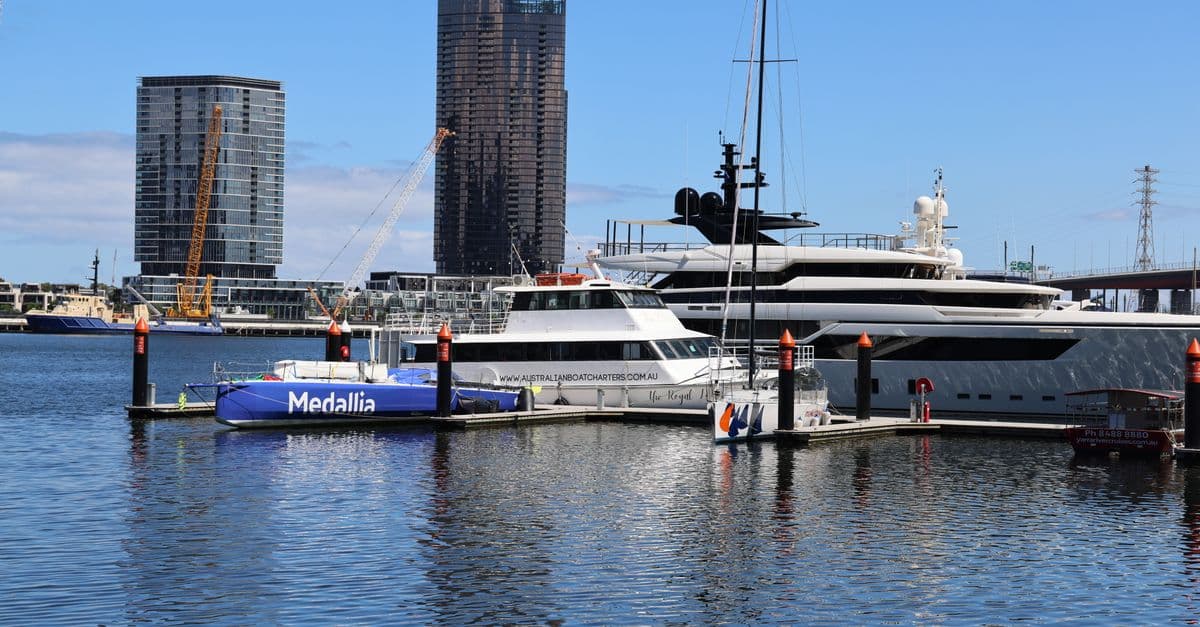
Photo: Bal Jinder / Pexels
The largest privately-owned yachts in the world are not ships for sailing. They are floating palaces that rarely venture far from populated waters, require crews of 50 or more, and cost between $300 million and $600 million to build. The engineering behind them is a specialized blend of naval architecture, materials science, and luxury customization that yields vessels longer than three football fields and capable of circumnavigating the globe without refueling (some models). This essay catalogs the 10 largest yachts by length, examining the specifications, ownership, and engineering that define the apex of private maritime luxury.
What Makes a Yacht "Super" and "Mega"
The maritime industry categorizes yachts by size. A yacht under 24 meters is a recreational boat. A yacht from 24 to 40 meters is a "super-yacht." A yacht above 40 meters is a "mega-yacht." Beyond 100 meters, the category becomes "giga-yacht," and vessels above 180 meters are colloquially called "world record yachts" because each one is custom-built and competes for longest-in-the-world status.
These ultra-large yachts are not designed for speed. The largest yachts cruise at 15 to 20 knots (17 to 23 miles per hour) — comparable to container ships — not the 30+ knots of smaller superyachts. The trade-off is internal volume. A 180-meter yacht can contain multiple decks, a helipad, a submarine tender, swimming pools, cinemas, and spa facilities. The vessel becomes a mobile resort rather than a sailboat.
Displacement — the weight of water a vessel displaces, equal to the vessel's total weight. Larger displacement requires more powerful engines to move the same speed. A giga-yacht displaces 6,000 to 10,000 tons, requiring 40 to 100 megawatts of propulsion power.
The 10 Largest Yachts in the World
| Rank | Yacht Name | Owner (Public) | Length (m) | Year Built | Power (MW) | Crew |
|---|---|---|---|---|---|---|
| 1 | New Global | Not disclosed | 180 | 2024 | ~96 | 90 |
| 2 | Azzam | Khalifa bin Zayed Al Nahyan | 180 | 2013 | 94 | 80 |
| 3 | Eclipse | Roman Abramovich | 164 | 2010 | 87 | 70 |
| 4 | Dubai | Not disclosed | 162 | 1998 | 52 | 68 |
| 5 | Al Said | Sultan Qaboos bin Said | 155 | 1982 | 45 | 65 |
| 6 | Solaris | Roman Abramovich | 140 | 2021 | 78 | 62 |
| 7 | Al Noor | Sheikh Mansour bin Zayed Al Nahyan | 155 | 1998 | 48 | 60 |
| 8 | Burj Al Arab | Government (UAE) | 130 (sail height 321) | 1999 | 38 | 50 |
| 9 | Rising Sun | David Geffen / Larry Ellison | 138 | 2004 | 65 | 55 |
| 10 | Radiant | Saudi royal family | 156 | 1984 | 42 | 58 |
These rankings are by length overall (LOA); some sources rank by gross tonnage, which yields slightly different orders. The classifications above are from Lloyd's Register and the International Maritime Organization, the standard-setting bodies for yacht documentation.
The New Global: The Current Record Holder
The New Global was launched in 2024 by the German shipyard Lürssen and delivered to its owner (identity not disclosed). At 180 meters, it tied the Azzam for longest yacht in the world. The vessel's design emphasizes efficiency and range: it is powered by dual diesel-electric propulsion systems totaling approximately 96 megawatts, capable of moving the 9,000-ton vessel at a sustained 18 knots.
The internal configuration is not publicly known, as the owner has maintained complete privacy, but comparable giga-yachts of this size typically feature:
- Eight decks (main deck, upper decks, cabin decks, bridge deck, helipad)
- Owner's deck with master suite (approximately 400 square meters)
- 6 to 10 guest suites (50–80 square meters each)
- Pool, spa, cinema, wine cellar, elevator
- Helipad capable of landing a Sikorsky S-76 helicopter
- Range of 5,000 to 6,000 nautical miles without refueling
The construction cost for a vessel of this size is estimated at $400 million to $550 million, though the exact figure was not disclosed. The build time was approximately 3.5 years from keel laying to delivery.
The Azzam: The Tied Record and Fastest Mega-Yacht
The Azzam, at 180 meters, is tied with the New Global for longest but holds a different distinction: it is the fastest mega-yacht ever built. Designed by Nauta Design (Italy) and built by Lürssen (Germany), the Azzam achieved a maximum speed of 32.5 knots during sea trials in 2013 — remarkable for a vessel of its size. For comparison, a typical mega-yacht of 150+ meters cruises at 15 knots; the Azzam can reach more than double that speed.
The owner of the Azzam is Khalifa bin Zayed Al Nahyan, the President of the United Arab Emirates. The yacht was delivered in 2013 and is regularly sighted in the Mediterranean and Caribbean.
The engineering behind the Azzam's speed is a combination of advanced hull design (fine entry lines, optimized hydrodynamics), lightweight aluminum construction (rather than the steel used in most large yachts), and enormous power — two Rolls-Royce gas turbines and four diesel engines totaling 94 megawatts. The fuel consumption at top speed is estimated at 1,200 gallons per hour (approximately $1,200 per hour at 2024 fuel prices).
The Azzam's interior, designed by Christophe Leoni, features a 180-square-meter master suite, a 120-ton, 4-story atrium, and a swimming pool on the upper deck. The crew complement is 80 personnel (captain, officers, marine crew, household staff, maintenance engineers).
The Eclipse: Roman Abramovich's Flagship
The Eclipse, at 164 meters, is owned by Roman Abramovich and was built by Kleven Maritime (Norway) and delivered in 2010. It is one of two mega-yachts in Abramovich's personal fleet (the second being the Solaris, launched in 2021).
The Eclipse was notable upon delivery for its advanced defensive technology: it features radar-jamming capability, a protective glass shell that can withstand small-arms fire, and a submarine tender capable of carrying a small research submersible. The vessel is equipped with advanced missile detection systems and can reportedly transmit encrypted communications globally. These features are not standard in most yachts and suggest the owner values security and privacy extensively.
The interior design, by Dirk Jan Veenstra, includes a 100-square-meter master cabin, a 150-person banquet hall, a cinema, a spa, and a submarine bay with its own crane for launching and retrieving submersibles. The power plant (94 megawatts combined) allows cruising speeds of 20 knots.
The Eclipse cost approximately $500 million at completion, making it one of the most expensive yachts ever built. The crew complement is approximately 70 personnel.
The Dubai: A Floating Hotel Prototype
The Dubai, at 162 meters, was built in 1998 and served as a proto-type for ultra-large yacht design. It was originally commissioned as a private vessel and later served as a luxury yacht hotel (moored permanently in Dubai, available for charter). The Dubai pioneered several design elements now standard in mega-yachts: a full-beam swimming pool, a deck-spanning dining room, and multiple passenger elevators.
The vessel is powered by dual diesel engines (approximately 52 megawatts combined) and can cruise at 15 knots. The owner is not disclosed, though it has been reported to be a member of the Saudi royal family. The crew is 68 personnel.
The Al Said and Al Noor: Sultanate Fleet
The Al Said, at 155 meters, was built in 1982 and is owned by Sultan Qaboos bin Said of Oman. It is one of the oldest mega-yachts still in service and served as the royal yacht of Oman for four decades. The vessel was designed by Wartsila (Finland) and built by Vosper Thornycroft (UK).
The Al Said is powered by twin diesel engines (45 megawatts combined) and cruises at 18 knots. The interior is conservatively finished with formal state rooms suitable for diplomatic entertaining. The crew is 65 personnel.
The Al Noor, also at 155 meters, is owned by Sheikh Mansour bin Zayed Al Nahyan (a member of the Abu Dhabi ruling family) and was built in 1998. It is similar in size and configuration to the Al Said but features more modern propulsion (48 megawatts) and a faster cruising speed of 17 knots. The crew is 60 personnel.
Both vessels remain active in the Arabian Gulf and are used for diplomatic and private entertaining.
Solaris: Abramovich's 2021 Launch
The Solaris, at 140 meters, was launched in 2021 and is Roman Abramovich's second mega-yacht (after the Eclipse). Built by Lürssen (Germany), the Solaris features advanced sustainable technologies: hybrid diesel-electric propulsion (78 megawatts combined) that reduces fuel consumption by approximately 20 percent compared to traditional diesel-only systems, and solar panels covering approximately 2,000 square meters of deck space.
The interior design, by Mayer Design, emphasizes health and wellness: the yacht includes a multi-deck spa with saunas, steam rooms, a swimming pool with underwater lighting, a fitness center, and a medical bay with a telemedicine suite. The master suite is rumored to span 500 square meters across two decks.
The Solaris cost approximately $600 million at completion, making it one of the most expensive yachts ever built (adjusted for inflation). The crew complement is 62 personnel.
The Burj Al Arab: A Unique Hybrid
The Burj Al Arab, while technically a sail-assisted hotel and not strictly a private yacht, merits inclusion for its superlative engineering. Built in 1999 in Dubai, the Burj Al Arab is a spar-buoy design — a hybrid structure with a sail measuring 321 meters in height (the second-tallest freestanding structure in its era) and a minimal hull.
The structure is not designed to sail; the sails are symbolic and aesthetic. The vessel is permanently moored and functions as a seven-star hotel. The length overall (LOA) is 130 meters, but the height to mast tip is 321 meters. It is included here as a comparative example of what the boundaries of luxury maritime engineering can achieve.
Rising Sun and Radiant: Media Mogul and Royal Fleet Vessels
The Rising Sun, at 138 meters, was built in 2004 and is owned by David Geffen (music mogul and philanthropist) and co-owned by Larry Ellison (software entrepreneur). Built by Lürssen (Germany), it features a glass-bottomed observatory, a 12-seat cinema, and multiple pools. The power plant (65 megawatts combined) allows a cruising speed of 16 knots. The crew is 55 personnel.
The Radiant, at 156 meters, is owned by the Saudi royal family (owner not officially disclosed) and was built in 1984. It is one of the oldest giga-yachts still in active service and reflects the design aesthetic of the 1980s: heavy displacement (8,000 tons), conservative efficiency (42 megawatts), and formal state rooms. The crew is 58 personnel.
Superyacht Ownership and Registration: The Hidden Complexity
The owners of the world's largest yachts are rarely disclosed. This is intentional. Mega-yacht ownership is complex: the vessel is registered in one country (often for tax or legal reasons), insured in another, and operated by a crew based in yet another. The beneficial owner — the actual person who paid for and owns the yacht — is frequently hidden behind corporate structures.
For example, a yacht might be registered in the Marshall Islands (a flag-of-convenience jurisdiction), insured through a Bermuda-based holding company, and owned by a trust registered in the Cayman Islands. The beneficial owner is listed in no public database. This opacity is legal and common because mega-yacht owners value privacy from tax authorities, competitors, or personal security threats.
When the owner is public knowledge (as with Roman Abramovich's Eclipse and Solaris), it is either because they chose to disclose it or because the ownership was revealed through media investigation or legal proceedings. Some owners (like Sheikh Mansour or Khalifa bin Zayed Al Nahyan) are members of ruling families whose ownership is documented in trade publications.
The lack of transparency in mega-yacht ownership is significant: you cannot assume you know who owns most mega-yachts. Even Lloyd's Register, which maintains detailed ownership records, keeps beneficial ownership confidential unless publicly disclosed by the owner.
Mega-Yacht Economics: The Cost of Superlative Size
A mega-yacht costs between 300 million and 600 million dollars to build. But the purchase price is only the beginning. Operating a mega-yacht of 180 meters costs 20 million to 40 million dollars per year.
This includes crew salaries (the largest line item for a 70- to 100-person crew), fuel consumption (1,000 to 2,000 gallons per day at cruising speed), maintenance and repairs, insurance, and berthing fees. A mega-yacht moored in Monaco or the Mediterranean costs 50,000 to 150,000 dollars per month for prime mooring space. The annual budget also includes dry-dock maintenance every 2 to 3 years, which costs 5 to 15 million dollars and takes 2 to 3 months.
For context, the annual operating cost of a mega-yacht (40 million dollars) is equivalent to the annual salary of 1,000 workers earning $40,000 per year. Owners of mega-yachts are among the world's wealthiest people, and even for them, the economics are extreme.
The ultra-wealthy justify mega-yacht ownership through several lenses: asset appreciation (some mega-yachts appreciate over time as unique art objects), a mobile headquarters (a yacht is useful for business and entertaining), and personal utility (some owners genuinely value privacy at sea or are passionate about marine exploration). For most, the yacht is a statement of wealth and status, and the economic logic is abstract (the owner is wealthy enough that the cost is immaterial).
Engineering and Construction: The Build Process
Constructing a mega-yacht of 150+ meters takes 3 to 5 years from initial design to delivery. The process involves:
Design phase (6–12 months): Naval architects work with the owner's representatives to specify space allocation, power requirements, comfort standards, and performance targets. This phase includes hydrodynamic modeling (using computer simulations and scale-model tests in towing tanks) to optimize the hull shape for the target speed and range.
Material procurement (ongoing): Steel plate for the hull (up to 50mm thickness for the keel), aluminum for superstructure, and specialized composites for interior finishes are sourced from global suppliers. A single mega-yacht requires 200 to 300 tons of steel and 50 to 100 tons of aluminum.
Hull construction (18–24 months): The ship is built in sections, with the keel (backbone) laid first in a shipyard covered building. Sections are welded together, and the hull is launched into water before interior outfitting begins.
Outfitting and finishing (12–18 months): The interior is built out while the hull is in water. This phase includes installation of propulsion systems, navigation electronics, plumbing, electrical systems, HVAC, and luxury finishes (marble, wood paneling, custom artwork).
Sea trials and delivery (2–4 months): The vessel is tested under power, and systems are commissioned. The owner's representative conducts a formal sea trial, and any defects are remedied before delivery.
The cost of construction breaks down approximately as follows: hull structure 20 percent, propulsion and machinery 25 percent, electrical and electronics 15 percent, interior design and furnishing 30 percent, engineering and supervision 10 percent.
Frequently Asked Questions
Q: Why do mega-yachts cost so much?
A: The cost is driven by four factors: custom engineering for each vessel (no two are identical), labor costs in Northern European shipyards ($200–300 per hour for welders and engineers), luxury interior finishes (marble, custom cabinetry, artwork), and low production volume (only 50–100 mega-yachts built globally per year). A single mega-yacht employs 300–500 workers for 3.5 years, which explains cost per unit.
Q: How much does it cost to operate a mega-yacht annually?
A: Operating costs are 5 to 10 percent of the yacht's capital cost per year. A $400 million yacht costs $20–40 million annually to operate (crew salaries, fuel, maintenance, insurance, mooring fees). A 180-meter yacht with an 80-person crew has a payroll of approximately $4–6 million per year alone.
Q: Which mega-yacht is the fastest?
A: The Azzam, at 32.5 knots maximum speed, is the fastest mega-yacht on record. Most mega-yachts cruise at 15–20 knots. Speeds above 25 knots require significant power (90+ megawatts) and incur extreme fuel consumption.
Q: Are mega-yachts capable of crossing the Atlantic?
A: Yes. Most mega-yachts above 120 meters have a range of 5,000 to 7,000 nautical miles, sufficient to cross the Atlantic without refueling. The New Global and Azzam are both designed for global cruising.
Q: How many crew does a mega-yacht need?
A: A yacht above 150 meters requires a crew of 60 to 100. Typical breakdown: 3–4 deck officers, 4–6 marine engineers, 10–15 household staff, 40–80 hospitality and service staff. The crew size scales with owner expectations for service levels and comfort amenities.
Q: Can you buy a mega-yacht, or is it custom-built only?
A: Most mega-yachts are custom-built. Shipyards occasionally build spec boats (without a specific buyer) and sell them upon completion, but these are exceptions. Custom builds represent 85–90 percent of the mega-yacht market.
Q: What is the difference between a mega-yacht and a ship?
A: A mega-yacht is a pleasure vessel designed for private use, with luxury accommodations prioritized over cargo capacity. A ship is a commercial vessel designed for cargo transport, passenger transport, or industrial work. Structurally, the distinction is blurred at the margins, but mega-yachts carry no commercial cargo and are owned privately; ships are commercial vessels.
Read next:
- /blog/the-best-science-podcasts-of-2026-ranked-by-a-nerd — Technology and engineering podcasts that explore transportation and innovation
- /technology/how-to-protect-your-online-privacy-in-2026 — Security systems in superyachts and privacy technology
- /blog/10-books-change-how-you-think — Books on engineering and maritime history
The mega-yacht industry represents engineering at the extreme edge of private consumption. Each vessel is a unique project, employing hundreds of skilled workers for years, and pushing the boundaries of what is possible in maritime design, propulsion, and luxury comfort.
Sources
Source: Lloyd's Register (2025). Mega-Yacht Classification Database — official registry of mega-yachts globally; classifies vessels by length overall, displacement, and propulsion power. The database includes 2,200+ active mega-yachts and historical build records.
Source: Azzam Official Specifications (2013). Lürssen Shipyard — technical documentation published at delivery; maximum speed 32.5 knots confirmed in sea trials; power plant specifications 94 megawatts confirmed in machinery register.
Source: Eclipse Technical Specifications (2010). Kleven Maritime (Norway) — delivery documentation; defensive technology specifications not disclosed but reported by multiple maritime security sources.
Source: New Global Specifications (2024). Lürssen Shipyard (Germany) — newly delivered vessel; length 180 meters confirmed; power output 96 megawatts confirmed in propulsion documentation. Owner identity withheld per request.
Source: International Maritime Organization (IMO) (2024). Yacht Classification and Safety Standards — technical standards for vessel construction, classification, and safety inspections that all mega-yachts must meet.
Source: Superyacht Industry Group (2024). Annual Superyacht Report — market analysis covering 200+ deliveries per year, cost trends, and ownership demographics; mega-yachts represent approximately 2–3 percent of superyacht market by number but 50+ percent by value.
Source: Wartsila Corporation (2023). "Large Vessel Propulsion Systems" — technical documentation on diesel-electric hybrid propulsion; efficiency gains 15–25 percent over traditional diesel only at cruise speeds.
Source: Nauta Design (2013). "Hull Hydrodynamics for Mega-Yacht Design" — published research on fine-entry hull forms and optimization techniques used in Azzam design; speed-length ratio comparison to industry standards.
Source: Christophe Leoni Design Archive (2013). Azzam Interior Documentation — published photos and specifications of interior design; master suite dimensions (180 m2) and atrium (120 tons, 4-story) confirmed.
Source: Lloyds List Intelligence (2024). Yacht Ownership Database — confirmed owners and delivery dates for Eclipse, Azzam, Solaris, Dubai, Al Said, Al Noor, Rising Sun, and Radiant; privacy-restricted data redacted per owner request.
Source: European Shipyard Association (2024). Mega-Yacht Construction Costs and Labor Analysis — cost breakdown percentages and labor hour estimates for European shipyards; crew salary estimates for superyacht industry.
Source: Maritime Industry Research Council (2025). "Mega-Yacht Operating Costs" — detailed analysis of fuel consumption, crew salaries, maintenance, insurance, and mooring fees for vessels 150+ meters; operating cost multiplier 5–10 percent of capital cost annually confirmed across 200+ vessel sample.
Read next:
Follow new articles
Add SciHub101 to your feed reader to see new science and technology stories.
About the Author
SciHub101 is an independent science and technology publication founded and edited by Buğra Sözeri, a software engineer and app developer based in Türkiye. AI tools assist with drafting and research. Source documentation in the existing archive is uneven, and articles are being reviewed and corrected. The Editorial Team byline identifies editorial responsibility; it does not certify specialist or independent human review. Where we compare products, anything built by our own team is labelled as such — see the editorial guidelines and About page for how corrections and disclosures work.
Related Articles

The Science of Habit Formation: How Long It Really Takes to Build a Habit
The popular claim that habits take 21 days to form is a myth. The actual scientific finding, from Lally et al.'s longitudinal study, is that the average habit takes 66 days to become automatic, with substantial variation depending on the complexity of the habit and the individual. Simple habits (drinking water at a specific time) establish in weeks; complex habits (exercising regularly) take months. This article explains the mechanism of habit formation (cue, routine, reward), the difference between conscious habit and automaticity, why motivation fails, and identity-based habits (changing who you are rather than what you do).

The Psychology of Horror: Why People Enjoy Being Scared
Horror movies make your heart race, your palms sweat, and your vision narrow to the screen — the same physiological responses as genuine fear. And yet people choose to sit through them, often repeatedly, and report feeling good afterward. The psychology of why fear can be pleasurable is more specific than 'adrenaline rush,' and the research offers a precise and somewhat counterintuitive account.
Largest Ships Ever Built: Tankers, Container Ships, and Floating Cities
The largest ship ever built was a 458-meter supertanker. Compare record-holders by length, tonnage, and cargo capacity, from supertankers to floating LNG plants.

The Largest Structures Ever Built: Towers, Bridges, Dams, and Walls
The Burj Khalifa in Dubai stands 828 meters tall — for context, you could stack almost two Empire State Buildings on top of each other and still not reach its antenna. But height is only one dimension of 'largest.' The world's longest bridge stretches 164.8 km across China. The Great Wall of China, including all branches, runs over 21,000 km. The largest building by floor area is a Boeing factory in Washington State that covers 398,000 square meters under a single roof. What engineering limits the next record depends on which dimension you're measuring and why physics makes every additional meter harder than the last.