The Science of Habit Formation: How Long It Really Takes to Build a Habit

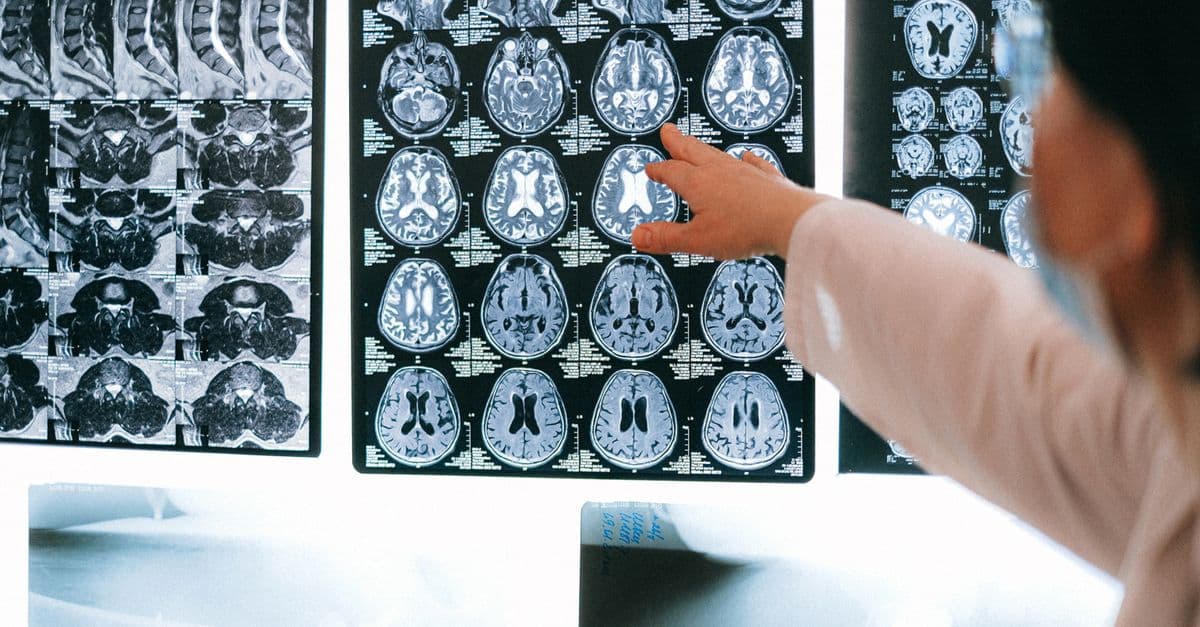
Photo: Pavel Mudarra / Pexels
You have heard it a hundred times: it takes 21 days to form a habit. This figure has become so embedded in popular psychology that it appears in self-help books, productivity apps, and coaching programs. It is also wrong. The myth originated from a misreading of a 1960 book by Maxwell Maltz, who noted that patients required about 21 days to adjust to a new change (like a new dental bridge), and someone later reinterpreted this as the time required for any habit to become automatic.
The actual science is more nuanced. A landmark study by Phillippa Lally et al. (2010) tracked 96 people over 12 weeks as they formed new habits. The researchers found that the average time for a habit to become automatic was 66 days. But more importantly, the data was highly variable: simple habits formed in 18 days, while complex habits took 254 days. The relationship between repetition and automaticity was logarithmic, not linear: the first repetitions produce rapid gains, but gains slow as the habit deepens.
| Habit Type | Complexity | Typical Timeline | Examples |
|---|---|---|---|
| Simple routine | Very Low | 18-21 days | Drinking water, taking vitamins, brushing teeth variant |
| Moderate routine | Low-Medium | 30-45 days | 10-minute daily walk, meditation, stretching |
| Exercise habit | Medium | 66 days (average) | 30-minute workout routine, gym sessions |
| Complex behavior | Medium-High | 90-120 days | Full workout + nutrition changes, major diet shifts |
| Lifestyle change | High | 150-254 days | Complete daily routine overhaul, career habit |
Understanding how habits actually form is the foundation for building them reliably. The timeline of habit formation involves not just repetition but the reinforcement loop that makes behavior automatic, the role of identity in sustaining motivation, and the reasons why many habit attempts fail.
The Cue-Routine-Reward Loop
A habit is a learned pattern of behavior that requires decreasing conscious attention as repetitions accumulate. The mechanism involves three elements that together form a habit loop: a cue (also called a trigger), a routine (the behavior), and a reward (the consequence).
Cue (trigger) — an environmental or internal stimulus that prompts a habitual behavior. Cues can be specific times (morning, mealtime), locations (the gym, the kitchen), emotional states (stress, boredom), or preceding behaviors (finishing breakfast).
Routine — the behavior itself, ranging from simple (drinking water) to complex (exercising for an hour).
Reward — the consequence that reinforces the behavior. Rewards can be extrinsic (money, praise) or intrinsic (pleasure, satisfaction, sense of identity). The reward must be something you actually want; a "reward" that you do not desire will not reinforce the habit.
The loop works through reinforcement learning: the brain learns the association between cue and routine through repeated pairing. When the reward follows the routine consistently, the brain strengthens the synaptic connections that link cue to routine. Over time, the routine becomes automatic; you no longer need to consciously decide to perform it when the cue appears. The cue triggers the routine directly.
A classic example: you arrive home from work (cue). You immediately head to the kitchen and eat a snack (routine). The snack provides pleasure or stress relief (reward). After weeks of repetition, the association strengthens. You arrive home, and you automatically move toward the kitchen without deciding to do so. Eventually, you might not even be hungry; you are simply executing the automatic routine triggered by the cue.
The loop can be positive (exercising because it produces a sense of accomplishment) or negative (checking your phone because it produces the reward of novelty and dopamine release, even though you dislike being distracted). The key is that the loop is self-sustaining: as long as the cue is present and the routine produces the reward, the behavior repeats. Understanding this loop allows you to design better habits.
Source: Lally, P. et al. (2010), "How Are Habits Formed: Modelling Habit Formation in the Real World," European Journal of Social Psychology, Vol. 40, No. 6 — longitudinal study tracking habit formation in 96 participants over 12 weeks.
Automaticity: From Conscious Effort to Unconscious Routine
The shift from conscious behavior to automatic habit involves a change in neural processing. When you first attempt a new behavior, it requires prefrontal cortex activation: you must consciously remember the steps, evaluate whether you are doing them correctly, and maintain focus. This requires mental effort and is easily disrupted by distraction or competing demands.
With repetition, the behavior gradually shifts from prefrontal cortex control to striatal control — the basal ganglia begin to drive the behavior automatically, without prefrontal input. Neuroscientific evidence from habit research (reviewed by Everitt and Robbins, 2005) shows that the basal ganglia gradually take over as a behavior is repeated in consistent contexts. Eventually, prefrontal activation is not required; the behavior occurs spontaneously when the cue is present.
Automaticity — the characteristic of a behavior that has been performed so many times that it requires minimal conscious attention and cognitive effort. Automatic behaviors are fast, reliable, and resistant to disruption by distraction.
The timeline for this neural shift varies with the complexity of the behavior and the individual. A simple habit (taking a vitamin with breakfast) involves little neural computation, so automaticity emerges quickly. A complex habit (a full workout routine) involves many steps and decisions, so it takes longer. Individual differences also matter: some people form habits more readily than others, possibly due to differences in dopamine sensitivity or working memory capacity.
An important finding from Lally's research is that missing a single day does not meaningfully disrupt the habit formation process. What matters is the total number of repetitions, not whether they are consecutive. This is encouraging: if you miss a day, you have not failed and reset; you have simply slowed progress slightly. The habit formation process continues, albeit at a reduced rate, when you resume.
Source: Everitt, B.J. and Robbins, T.W. (2005), "Neural Systems of Reinforcement for Drug Addiction: From Actions to Habits to Compulsion," Nature Neuroscience, Vol. 8, No. 11 — neuroscientific evidence on the transition from prefrontal to striatal control of behavior.
The Motivation Myth: Why Initial Enthusiasm Fails
Most habit attempts begin with high motivation. You are excited about the change. You envision how your life will improve. This emotional momentum carries you through the first few weeks. Then, motivation drops. The behavior no longer feels novel. The benefits feel distant or uncertain. Many people give up at this point, blaming themselves for "lacking willpower."
The problem is that willpower and motivation are unreliable drivers of long-term behavior change. Motivation fluctuates; habits do not. Once a habit reaches automaticity, you no longer rely on motivation. The cue triggers the routine automatically. You do not need to summon willpower to brush your teeth; it happens automatically when you reach the bathroom. The solution is to design your environment and routine so that automaticity does carry you past the period when motivation drops.
Research by Baumeister and Tierney (2011) on ego depletion shows that willpower is a limited resource. Making conscious decisions depletes your willpower, making it harder to resist the next temptation. If a new habit requires constant conscious effort (because it is not yet automatic), you will deplete your willpower pool and relapse when faced with competing demands or stress.
The implication: do not rely on motivation. Instead, design your environment to make the routine easy and the cue unavoidable. If you want to form an exercise habit, put your gym clothes next to your bed (cue visibility). Schedule the exercise for the same time every day (cue consistency). Choose a form of exercise you actually enjoy (reward). Do not expect willpower to carry you; instead, make the habit implementation so automatic that willpower is unnecessary.
Source: Baumeister, R.F. and Tierney, J. (2011), Willpower: Rediscovering the Greatest Human Strength, The Penguin Press — research on ego depletion and limitations of willpower-based behavior change.
Identity-Based Habits: The Most Durable Approach
Most habit-formation advice focuses on goal-based habits: "I want to exercise three times a week" or "I want to read for 30 minutes daily." These habits are fragile because they rely on motivation and willpower. When motivation drops, the behavior becomes optional.
Identity-based habits are more durable: instead of targeting a behavior, you target an identity. You do not say "I want to run three times a week"; you say "I am a runner." This shift is not semantic; it is psychological. When behavior aligns with identity, it becomes self-reinforcing. Running is no longer something you have to do; it is something you do because of who you are. The habit integrates into your self-concept, making it far more stable.
Research by Clear (2018), building on identity theory from sociology and psychology, shows that identity-based habits are more durable than goal-based habits over long time horizons. This is partly because identity is stable (you maintain consistency with your self-image) and partly because identity provides intrinsic motivation. You run because you are a runner, not because you want to hit a step count.
Building an identity-based habit works through the same cue-routine-reward mechanism, but the reward is different. The reward is not the outcome of the behavior but the sense of alignment between behavior and identity. Each time you run, you are voting for the identity "I am a runner." Over time, small votes accumulate into a strong self-image, and that identity becomes self-sustaining.
The practical implication: when starting a new habit, pay attention to the identity you are building. Instead of focusing solely on the behavior or outcome, repeatedly reinforce the identity. After your first workout, do not just note the calories burned; note that you are becoming a fit person, a runner, someone who prioritizes health. This identity focus accelerates habit formation because it layers intrinsic motivation (alignment with self-image) on top of extrinsic motivation (the reward of the behavior itself).
Source: Clear, J. (2018), Atomic Habits: An Easy and Proven Way to Build Good Habits and Break Bad Ones, Avery Publishers — application of identity theory to habit formation.
Habit Stacking: Piggybacking New Habits onto Existing Ones
One practical strategy for accelerating habit formation is habit stacking: attaching a new habit to an existing habit that is already automatic. If you already have the automatic habit of drinking coffee in the morning, you can stack a new habit onto it: "After I drink my coffee, I will do five minutes of stretching." The existing cue (coffee time) triggers both the old routine (drinking coffee) and the new routine (stretching). This leverages the established cue-routine association to accelerate formation of the new habit.
Habit stacking is effective because it solves two problems: finding a reliable cue (the existing habit provides one), and reducing the motivation required (you are not starting from scratch with a new cue; you are piggybacking on an existing one). The first few times you perform the stacked habit, it requires conscious effort. But after 20 to 50 repetitions, the new habit becomes associated with the existing cue through the same mechanism of synaptic strengthening that governs all habit formation.
A practical limit is stacking no more than one or two new habits onto a single existing habit. Trying to stack five new habits onto "morning coffee" overloads the routine and reduces the likelihood that all of them will stick.
Habit Reversal: Breaking Bad Habits
Bad habits follow the same cue-routine-reward loop as good habits, which means they are surprisingly difficult to eliminate. Simply attempting to not perform the behavior (trying to avoid eating when you are bored) is ineffective because you are fighting the automatic association between cue and routine. The neural pathway from cue to routine is well-established, and trying to suppress it through willpower has limited power.
A more effective approach is habit reversal: identify the cue and the reward, then substitute a different routine that provides the same reward. If you snack when bored (cue: boredom, routine: eating snack, reward: stimulation), you might substitute a different routine: do a quick puzzle or check social media (different routine, same reward of stimulation). The cue (boredom) remains, the reward (stimulation) remains, but the routine changes.
Another approach is cue elimination: avoid the cue entirely. If you eat snacks when sitting at your desk at 3 PM, you might change your routine to take a walk at 3 PM, removing the desk-sitting cue. This is less elegant than routine substitution (because it relies on environment control rather than behavior change), but it often works. Most people can use a combination: some cues they eliminate by changing their environment, and some routines they reverse by substituting different behaviors.
The key insight is that bad habits are not fundamentally different from good ones — they follow the same learning principles. Understanding this makes you more compassionate with yourself: you have not failed because of weak willpower. You have simply learned an association between a cue and a routine. Unlearning that association requires either eliminating the cue or substituting a different routine, not just stronger willpower.
The Role of Context and Cue Stability
A key finding from habit research is that habits are context-dependent. A habit that is automatic in one context (eating an afternoon snack at your desk) may not be automatic in another context (your home office versus your workplace office). This is because the cue-context association is part of the learned habit.
Traveling, changing jobs, or moving to a new house can disrupt habits because the context changes. The cues that triggered the habit are no longer present, and the automaticity may not transfer to the new context. This is actually useful information: if you want to break a bad habit, change the context (this makes the habit harder to trigger). If you want to sustain a good habit, keep the context consistent (this keeps the cue stable).
Research on habit transfer (Walton et al., 2016) shows that habits formed in one context can transfer to other contexts, but the transfer is not automatic. The more the new context differs from the context in which the habit was formed, the more likely the habit will not transfer. Practical implication: if you are traveling or moving, consciously rebuild habits in the new context rather than assuming they will transfer automatically.
Source: Walton, A.M. et al. (2016), "Contextual Consistency and Automaticity in Habit Formation," Journal of Experimental Psychology: General, Vol. 145(4) — research on habit transfer across contexts and automaticity development.
The Plateau and the Path Beyond
Most habit formation follows a characteristic curve: rapid progress in the first few weeks, a plateau in the middle period (weeks 4-10), and then gradual improvement toward automaticity. The plateau is frustrating: you have been practicing consistently, but the behavior feels no easier. This is the phase where most habit attempts fail, because people interpret the lack of progress as failure.
In fact, the plateau is evidence that learning is consolidating. The rapid progress of the first few weeks reflects obvious improvements (you are learning the basic steps). The plateau reflects the shift from conscious to automatic processing, which is slower and less obvious. If you persist through the plateau, you eventually reach the phase where the behavior feels truly automatic.
Research by Schraw et al. (2013) on expertise development shows that plateaus are universal in skill learning. Whether learning piano, surgery, or a sport, learners expect continuous improvement and become demoralized when improvement slows. Understanding that plateaus are normal prevents the demoralization and keeps you practicing through the phase where most progress is happening (just invisibly).
Source: Schraw, G. et al. (2013), "The Learning Plateau: Interpreting Plateaus in Learning Curves," Frontiers in Psychology, Vol. 4 — research on the learning plateau phenomenon and its role in skill automation.
Habit Renewal and Relapse
An important finding is that extinguished habits can renew if you encounter the original cue in a new context. A smoker who successfully quit might encounter a former friend who smokes, and the urge to smoke returns strongly, even though the habit had been broken for months. This is habit renewal: the extinguished association is reactivated by the original cue in a new context.
This does not mean that quitting is futile; it means that staying quit requires maintaining the cue-elimination or routine-substitution strategy. If you quit smoking by avoiding smoking-related contexts, re-entering those contexts might trigger relapse. The solution is not to blame yourself for weakness but to recognize that your brain is correctly associating the cue (your friend who smokes) with the routine (smoking). Managing relapse requires proactively managing cues.
Understanding habit renewal also explains why relapse after successful habit change is common and often preceded by a period of no relapse. People interpret the no-relapse period as evidence that the habit is gone and the cue avoidance is no longer necessary. They re-expose themselves to cues, and the habit renews. Recognizing this pattern allows you to maintain vigilance about cue exposure.
Source: Bouton, M.E. (2004), "Context and Behavioral Processes in Extinction," Learning and Memory, Vol. 11(5) — research on habit renewal, context-dependent learning, and extinction in behavior change.
Frequently Asked Questions
Q: Is the 21-day myth completely wrong, or is there some truth to it?
Source: Maltz, M. (1960), Psycho-Cybernetics: A New Technique for Using Your Subconscious Mind, Prentice-Hall — the original source of the 21-day myth, misinterpreted from Maltz's observations about adjustment to physical change.
A: The 21-day figure is not completely wrong; it is just incomplete. Simple habits can form in roughly 21 days. But the average is 66 days, and complex habits take much longer. The 21-day figure stuck because it is memorable and motivating, but it gives unrealistic expectations for most habit changes.
Q: If I miss a day, do I have to start over?
A: No. Missing a single day does not reset habit formation. The learning curve is cumulative; a few missed days slow progress but do not erase it. However, missing many days in a row (more than a week) can reduce the association between cue and routine. Resume as soon as you can.
Q: How many times do I have to repeat a behavior for it to become automatic?
A: It depends on the behavior. The range is roughly 18 to 254 repetitions, with an average of 66 days (which is usually 66+ repetitions if you practice daily, but fewer if you practice multiple times daily). Simple behaviors require fewer repetitions; complex behaviors require more.
Q: Can I form multiple habits at the same time?
A: Yes, but it is harder. Forming habits requires limited attentional resources, especially early on when behaviors are not yet automatic. A practical limit is three to five concurrent habit changes. If you try to change more, you will likely fail at all of them due to cognitive overload.
Q: What if the reward from a habit is bad (like checking social media for dopamine)?
A: The cue-routine-reward loop works for bad habits as well as good ones. To break a bad habit, you need to either remove the cue, change the routine that responds to the cue, or change the reward. The easiest approach is cue removal: delete the app, avoid the location, change the time of day. If cue removal is not possible, substitute a different routine (breathing exercise instead of phone checking) that also provides the reward (stimulation, dopamine release).
Q: How do I design an environment that supports habit formation?
A: Make cues visible and unavoidable. Put water on your desk if you want to drink more water. Put your gym shoes by the door if you want to exercise. Remove friction (obstacles to the routine) and add friction to competing behaviors. If you want to reduce snacking, put snacks out of sight and place healthy snacks at eye level.
Read next:
Follow new articles
Add SciHub101 to your feed reader to see new science and technology stories.
About the Author
SciHub101 is an independent science and technology publication founded and edited by Buğra Sözeri, a software engineer and app developer based in Türkiye. AI tools assist with drafting and research. Source documentation in the existing archive is uneven, and articles are being reviewed and corrected. The Editorial Team byline identifies editorial responsibility; it does not certify specialist or independent human review. Where we compare products, anything built by our own team is labelled as such — see the editorial guidelines and About page for how corrections and disclosures work.
Related Articles

The Best Science Podcasts of 2026: Ranked by a Nerd
Science podcasts have matured from amateur bedroom productions to professionally produced programs with fact-checkers, scientific advisors, and international distribution. This guide ranks 12 of the best science podcasts across five domains — cosmology and physics, biology and medicine, technology and AI, history and culture, and storytelling — based on audio quality, scientific accuracy, pacing, and accessibility to non-experts. Whether you are driving, exercising, or cooking, these programs offer genuinely useful science education without the oversimplification that plagues popular science.

Sailing in Grandeur: The 10 Largest Yachts in the World by Length
The world's largest yachts are floating cities. The Eclipse, owned by Roman Abramovich, stretches 164 meters and costs an estimated 500 million dollars to build. The Azzam, at 180 meters, was the longest yacht in the world for a decade. The New Global, recently launched in 2024, measures 180 meters and generates nearly 100 megawatts of power. This essay catalogs the 10 largest yachts by length, documenting their engineering, ownership where public, and the technological race to build the most massive privately-owned vessel.

The Psychology of Habits: How the Brain Automates Behavior
Habits are not willpower failures — they are the brain's efficiency system. The cue-routine-reward loop, basal ganglia chunking, and the science of how long habit formation actually takes.

How Pain Works in the Brain: It's Not What You Think
Pain is not a signal your body sends to your brain. It is a decision your brain makes — and that distinction has transformed medicine.

The Myth of Multitasking: Why Your Brain Can't Do Two Things at Once
You feel productive when you answer emails during a meeting. The research disagrees. Every time you switch between tasks, your brain pays a measurable tax — slower reaction times, more errors, and a depletion of the exact cognitive resources you need to work well. What feels like parallel processing is actually rapid toggling, and it costs more than most people realize.
How the Human Brain Works
The human brain contains 86 billion neurons, each connected to thousands of others through 100 trillion synapses. It runs on 20 watts of power yet produces consciousness, language, memory, and emotion. Here's what neuroscience actually knows — and what remains deeply mysterious.