The Myth of Multitasking: Why Your Brain Can't Do Two Things at Once

Photo: RDNE Stock project / Pexels
You feel productive when you answer emails during a meeting. You draft a report while listening to a podcast. You jump between three browser tabs and a Slack thread and call it efficiency. The research disagrees. Cognitive scientists have spent decades investigating what actually happens when humans attempt to perform two demanding tasks at once, and the finding is consistent: the brain does not multitask. It task-switches. And every switch carries a measurable cost in time, accuracy, and mental energy — costs that compound over the course of a workday into something that looks a great deal like exhaustion.
What "Multitasking" Actually Means — and What It Doesn't
Multitasking, in everyday language, refers to performing two or more tasks at the same time. In cognitive science, the term is more precise: it describes the concurrent execution of multiple task demands, which can only happen if those tasks do not compete for the same neural resources.
The key distinction is between automatic and controlled processes. Automatic processes — walking, breathing, habitual motor routines — can genuinely run in parallel with other tasks because they require minimal prefrontal engagement and operate largely below conscious awareness. Controlled processes — reading, writing, reasoning, listening to speech — require the prefrontal cortex and compete directly for the same limited attentional bandwidth.
This is why you can walk and hold a conversation, but cannot write an email and genuinely follow what someone is saying to you at the same time. One task is automatic; the other is not. When both tasks are controlled, you are not doing them simultaneously. You are alternating between them, often quickly enough that the switching is imperceptible — but the cost accumulates regardless.
Prefrontal cortex — the brain region at the front of the frontal lobe, responsible for working memory, planning, decision-making, and the executive control of attention. It is the neural bottleneck that prevents true parallel processing of complex tasks.
Source: Meyer, D.E. and Kieras, D.E. (1997), "A computational theory of executive cognitive processes and multiple-task performance," Psychological Review, Vol. 104 — one of the foundational theoretical papers establishing the executive processing bottleneck model of multitasking.
The Task-Switching Research: What Studies Actually Show
The most cited experimental evidence on the cost of task-switching comes from a 2001 study by Rubinstein, Meyer, and Evans, published in the Journal of Experimental Psychology: Human Perception and Performance. Participants switched between tasks of varying complexity — simple arithmetic or classifying geometric shapes. The researchers measured the time cost of switching versus staying on a single task.
Their finding: switching always costs time. For simple tasks, the switch cost (the extra time required to reorient after a switch) was around 0.1 seconds per switch. For more complex tasks, the cost was several tenths of a second. When people switched frequently, those fractions of a second added up to a 40% reduction in productivity compared to working through tasks sequentially.
A 2009 Stanford study by Ophir, Nass, and Wagner produced an even more striking result. The researchers surveyed 262 students on their media consumption habits, then selected the heaviest and lightest multitaskers for cognitive testing. The expectation was that heavy multitaskers would show some compensating advantage — better at filtering relevant information, perhaps, or faster at task-switching itself. Instead, heavy multitaskers performed worse on every measure: they were more distracted by irrelevant stimuli, had poorer working memory, and switched tasks more slowly than light multitaskers.
The lead author, Eyal Ophir, summarized the finding plainly: "We kept looking for what they're better at, and we didn't find it."
Source: Ophir, E., Nass, C., and Wagner, A.D. (2009), "Cognitive control in media multitaskers," Proceedings of the National Academy of Sciences, Vol. 106 — the landmark Stanford study finding heavy media multitaskers perform worse than light multitaskers on filtering, working memory, and task-switching.
Source: Rubinstein, J.S., Meyer, D.E., and Evans, J.E. (2001), "Executive control of cognitive processes in task switching," Journal of Experimental Psychology: Human Perception and Performance, Vol. 27 — measured a 40% productivity loss from task-switching across complex tasks.
Why the Brain Can't Parallelize Controlled Thinking
The neural explanation for why controlled tasks cannot run in parallel involves the architecture of the prefrontal cortex and the attentional bottleneck it creates.
Attention, in cognitive neuroscience, is not simply "awareness." It is an active resource allocation process: the brain selectively enhances processing of task-relevant information and suppresses processing of task-irrelevant information. This selection process is metabolically expensive and requires continuous engagement of prefrontal circuits. Only one such allocation can be active at a time for any demanding task.
Think of it like a single-lane bridge. Two cars cannot cross simultaneously — one must wait. No matter how fast each car moves, the throughput of the bridge is limited by the lane. The prefrontal cortex is that bridge. When task A and task B both require it, one must pause while the other crosses. The illusion of simultaneous processing comes from how fast the alternation can be — but the pauses are real, even if you don't consciously feel them.
Switch cost — the additional time and errors incurred when the brain transitions from one task to another. Switch costs arise from two processes: goal shifting (updating the mental model of what you're trying to do) and rule activation (inhibiting the rules of the previous task and loading the rules of the new one). Both take time and consume cognitive resources.
Neuroimaging research supports this model. Functional MRI studies show that task-switching activates the anterior prefrontal cortex (Brodmann area 10) — a region associated with managing competing intentions. The activation is measurable, consistent, and proportional to the difficulty of the tasks being alternated. You can watch the brain paying the switch cost in real time.
Source: Koechlin, E. and Summerfield, C. (2007), "An information theoretical approach to prefrontal executive function," Trends in Cognitive Sciences, Vol. 11 — review of neuroimaging evidence for the prefrontal bottleneck in task-switching, including anterior prefrontal involvement.
The Illusion of Productivity: Why We Think We're Good at It
If multitasking is inefficient, why does it feel productive? The answer involves both metacognitive error and reward circuitry.
Metacognition — the capacity to think about one's own thinking. Research consistently shows that human metacognitive accuracy is weak in the domain of attention. People overestimate how much of a conversation they retained while texting, how carefully they read a document written while distracted, and how accurately they performed dual tasks. The brain's sense of "busyness" — switching between stimuli, responding to notifications, managing multiple threads — activates the same dopamine-mediated reward circuits as genuine accomplishment. The feeling of activity is mistaken for the result of activity.
There is also a novelty effect. Each task switch delivers a small burst of dopamine, the neurotransmitter associated with reward and motivation. Checking a notification, switching to email, glancing at a chat window — each of these is neurologically rewarding in a way that sustained focus on a single demanding task is not. This is analogous to the way a sugar snack delivers immediate energy but leaves you more depleted later. The task-switching habit is partly maintained by this reward loop.
Research by Gloria Mark at the University of California, Irvine, has tracked office workers' attention patterns in naturalistic settings. Her work found that it takes an average of approximately 23 minutes for a worker to fully return to a task after an interruption. The interruption itself might last 30 seconds; the recovery takes far longer, during which errors are more frequent and work quality is reduced.
Source: Mark, G., Gudith, D., and Klocke, U. (2008), "The cost of interrupted work: more speed and stress," Proceedings of the ACM CHI Conference — the study measuring approximately 23 minutes to return to full task engagement after interruption.
Who Does It Worst: The Surprising Profile of the Heavy Multitasker
One of the counterintuitive findings from the multitasking literature is that people who multitask most heavily are not those who are best suited for it. They are those who are most susceptible to distraction.
The Ophir et al. 2009 Stanford study identified heavy media multitaskers as individuals with broad, diffuse attentional profiles — they attend to many things at once because they have difficulty filtering irrelevant information, not because they process relevant information faster. In the study's task-switching tests, heavy multitaskers showed larger switch costs than light multitaskers, not smaller ones.
This creates a feedback loop. People with difficulty sustaining focus are drawn to environments with high stimulus variety. High-variety environments reinforce the habit of frequent task-switching. Frequent task-switching further degrades the ability to sustain focus. The result is a progressively worsening capacity for deep work, dressed up as a busy schedule.
Sensation-seeking is a related trait associated with higher rates of multitasking behavior. Individuals who score high on sensation-seeking scales show stronger preferences for novel stimuli and are more likely to voluntarily switch tasks before completing them. This is not a clinical disorder — it is a normally distributed personality dimension — but it does predict how disruptive the multitasking habit becomes.
Source: Ophir, E., Nass, C., and Wagner, A.D. (2009), Proceedings of the National Academy of Sciences, Vol. 106 — finding that heavy multitaskers showed larger, not smaller, switch costs compared to light multitaskers.
The Real Cost Over a Workday: What 40% Lost Productivity Looks Like
The 40% productivity loss figure from Rubinstein et al. is sometimes dismissed as a laboratory abstraction. It is worth translating into concrete terms.
A standard knowledge-work day of eight hours represents 480 minutes of potential productive time. A 40% reduction from task-switching-related inefficiency removes approximately 192 minutes — over three hours — of productive capacity. That lost time does not disappear; it is absorbed by the friction of context-switching: the time to reload the previous task state, the errors that require correction, and the extended periods of below-optimal performance following each switch.
The picture is further complicated by the phenomenon of attention residue, documented by Sophie Leroy at the University of Washington. When you switch from task A to task B, part of your attention remains on task A — specifically, on the unfinished elements of task A that have not been resolved. This residual attention reduces performance on task B, even when you believe you have fully switched. The more tasks you leave in an unfinished state simultaneously, the more residual attention is split across them.
Consider an analogy: a computer running 30 browser tabs simultaneously is not processing each tab in parallel. The operating system is allocating processor time in tiny slices across all tabs, and the total available memory is divided among them. The machine is slower for every open tab, even the ones not actively in view. The human brain under heavy multitasking shows the same pattern — degraded performance across every active task, not just the one you're "not focusing on."
Source: Leroy, S. (2009), "Why is it so hard to do my work? The challenge of attention residue when switching between work tasks," Organizational Behavior and Human Decision Processes, Vol. 109 — introduced the concept of attention residue and demonstrated its performance cost.
What Actually Works: Single-Tasking Strategies
The evidence for single-tasking is not controversial in the research literature. The challenge is behavioral: how do you implement focused work in environments designed for constant interruption?
Several strategies have empirical support:
Time-blocking — assigning specific blocks of time to specific tasks and treating those blocks as inviolable during the block — is the most widely studied intervention. Cal Newport's structured synthesis of the research on "deep work" aligns with controlled studies showing that extended uninterrupted focus produces qualitatively different output than the same amount of time fragmented by interruptions.
Notification suppression has measurable effects. A controlled study published in Computers in Human Behavior found that participants who turned off email and phone notifications for a workday showed significantly lower cortisol levels (a physiological marker of stress) and reported higher focus and productivity.
Task queuing — writing out a single task at the start of a focused period and committing to completing it before opening the queue — addresses the attention residue problem. Finishing a task before switching eliminates the unresolved state that taxes subsequent performance.
Batching similar tasks — answering all emails in one dedicated window rather than throughout the day, handling all calls consecutively — reduces the number of context switches by grouping tasks that require similar cognitive configurations. Fewer switches means fewer switch costs.
For a deeper look at how the brain encodes and retrieves focused memories, see our article on how memory works in the brain.
Source: Kushlev, K. and Dunn, E.W. (2015), "Checking email less frequently reduces stress," Computers in Human Behavior, Vol. 43 — controlled study finding lower cortisol and higher focus in participants who restricted email checking to three times daily.
The Exceptions: When Multitasking Is Genuinely Possible
The claim that multitasking is always harmful needs one important qualification. Not all task combinations compete for the same resources.
Listening to music while running does not impair running performance (and often enhances it) because the motor-planning demands of running are automatic for practiced runners, while music processing uses auditory cortex, not prefrontal executive resources. The two tasks draw from different neural pools.
Similarly, driving on a familiar, low-complexity route while holding a casual conversation is manageable under normal conditions because familiar route-driving is largely automatized. Add unexpected traffic, a navigation challenge, or an emotionally charged conversation, and the driving task immediately reclaims prefrontal resources — which is why accident risk increases substantially when drivers engage in phone conversations, even hands-free ones.
The general principle: multitasking is possible when at most one of the concurrent tasks is controlled and demanding. The moment both tasks require executive attention, performance on both degrades.
Automaticity — the property of a learned skill that allows it to run without explicit attentional supervision. Automaticity develops through thousands of repetitions of a consistent stimulus-response pattern and is associated with a shift in neural control from prefrontal cortex to basal ganglia. Reading, driving a familiar route, and touch-typing are examples of partially automatized skills.
Source: Strayer, D.L. and Johnston, W.A. (2001), "Driven to distraction: dual-task studies of simulated driving and conversing on a cellular telephone," Psychological Science, Vol. 12 — demonstrated that hands-free phone conversations impaired driving performance to the same degree as hand-held calls, because both equally tax prefrontal resources.
Frequently Asked Questions
Q: Is multitasking ever truly possible?
A: Yes, under one specific condition: when at most one of the tasks being performed requires conscious, executive attention. Walking while talking, or listening to music while exercising, works because one task is largely automatic. Two demanding, non-routine tasks — like writing while following a lecture — cannot genuinely run in parallel; the brain switches rapidly between them, paying a cost each time.
Q: Do some people genuinely multitask better than others?
A: The research suggests the opposite. People who consider themselves strong multitaskers and who multitask most frequently perform worse on laboratory tests of filtering, working memory, and task-switching than people who multitask infrequently. The Stanford 2009 study by Ophir, Nass, and Wagner found no cognitive domain on which heavy multitaskers outperformed light multitaskers.
Q: How much productivity is actually lost to task-switching?
A: Rubinstein, Meyer, and Evans (2001) measured approximately a 40% reduction in productivity on complex tasks when participants switched between them rather than completing them sequentially. This figure varies with task complexity and switch frequency, but the direction of the effect is consistent across dozens of studies: switching always reduces effective output.
Q: What is attention residue and why does it matter?
A: Attention residue, identified by researcher Sophie Leroy, is the cognitive phenomenon where part of your attention remains on a previous unfinished task after you have switched to a new one. Because the previous task is unresolved, the brain continues to allocate some processing to it, reducing the resources available for the current task. It is why leaving many tasks "in progress" simultaneously is consistently associated with lower quality work on all of them.
Q: Why does multitasking feel productive if it isn't?
A: Task-switching triggers small dopamine releases in response to novelty — each switch to a new stimulus is neurologically rewarding in a short-term sense. The brain's sense of "busyness" and activity activates reward circuits in a way that resembles the feeling of accomplishment, even when measurable output is low. This reward loop helps maintain the habit despite its costs.
Q: What is the single most effective strategy for reducing task-switching costs?
A: The most evidence-supported approach is completing tasks sequentially rather than concurrently — starting one task and finishing it before beginning the next. When that isn't practical, time-blocking (reserving uninterrupted periods for specific tasks) and notification suppression (disabling alerts during focus periods) have both shown measurable improvements in output quality and reductions in stress in controlled studies.
Read next:
Follow new articles
Add SciHub101 to your feed reader to see new science and technology stories.
About the Author
SciHub101 is an independent science and technology publication founded and edited by Buğra Sözeri, a software engineer and app developer based in Türkiye. AI tools assist with drafting and research. Source documentation in the existing archive is uneven, and articles are being reviewed and corrected. The Editorial Team byline identifies editorial responsibility; it does not certify specialist or independent human review. Where we compare products, anything built by our own team is labelled as such — see the editorial guidelines and About page for how corrections and disclosures work.
Related Articles

Who Invented the Fork? The Surprising History of a Scandalous Utensil
For most of human history, people ate with their fingers. The fork arrived in European noble courts and was immediately condemned as an insult to God, a sign of effeminacy, and proof of moral weakness. It took roughly 700 years for the fork to become standard European tableware. The resistance wasn't just squeamishness — it was a genuine cultural collision between Eastern refinement and Western custom.

The Case for Walking: Why the Simplest Exercise Is the Most Underrated
Walking is the most underrated exercise in health discourse, overshadowed by high-intensity training, resistance work, and achievement-oriented fitness. Yet the evidence associates regular walking with cognitive benefits, cardiovascular health, mental health, and longevity gains. A 2022 meta-analysis linked daily walks of 7,000-8,000 steps to 40% lower mortality compared to sedentary lifestyles. Walking boosts BDNF (brain-derived neurotrophic factor), supporting memory and cognitive function. Moderate-paced walking improves creative problem-solving compared to seated work. Walking is sustainable: 80% of people maintain a regular walking habit after one year, compared to 20-30% for gym memberships. This guide covers the research on walking's cognitive and physiological effects, honest discussion of effect sizes, and why accessibility beats intensity for population-level health. Walking is not the most intense exercise; it is among the most valuable.

The Psychology of Horror: Why People Enjoy Being Scared
Horror movies make your heart race, your palms sweat, and your vision narrow to the screen — the same physiological responses as genuine fear. And yet people choose to sit through them, often repeatedly, and report feeling good afterward. The psychology of why fear can be pleasurable is more specific than 'adrenaline rush,' and the research offers a precise and somewhat counterintuitive account.

The Science of Habit Formation: How Long It Really Takes to Build a Habit
The popular claim that habits take 21 days to form is a myth. The actual scientific finding, from Lally et al.'s longitudinal study, is that the average habit takes 66 days to become automatic, with substantial variation depending on the complexity of the habit and the individual. Simple habits (drinking water at a specific time) establish in weeks; complex habits (exercising regularly) take months. This article explains the mechanism of habit formation (cue, routine, reward), the difference between conscious habit and automaticity, why motivation fails, and identity-based habits (changing who you are rather than what you do).
How the Human Brain Works
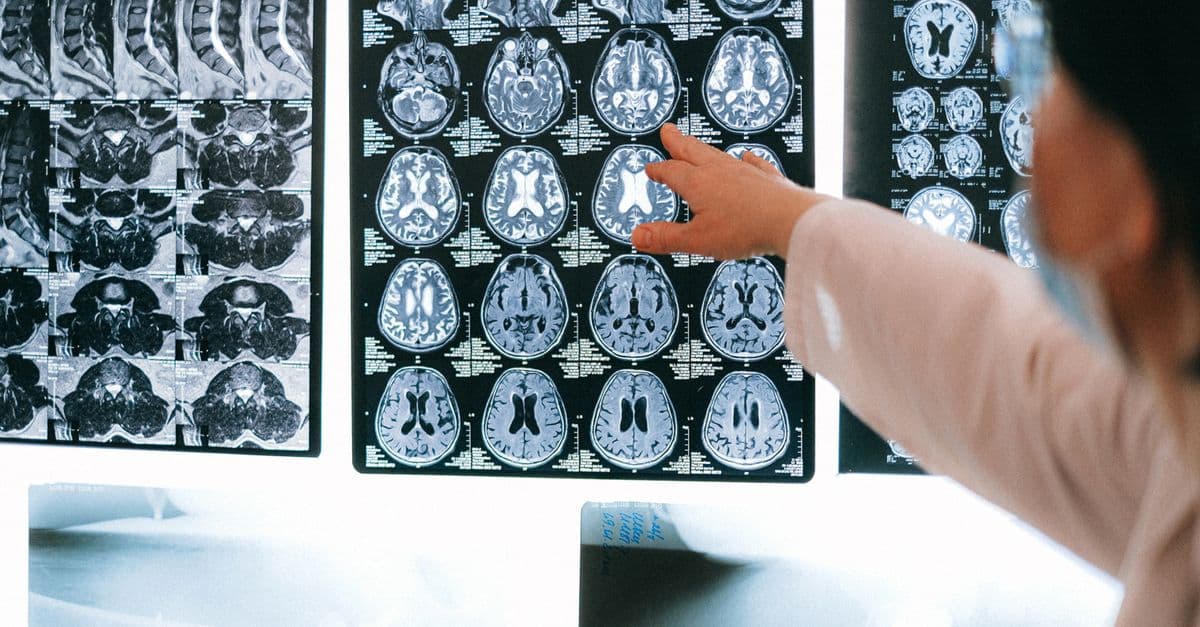
The human brain contains 86 billion neurons, each connected to thousands of others through 100 trillion synapses. It runs on 20 watts of power yet produces consciousness, language, memory, and emotion. Here's what neuroscience actually knows — and what remains deeply mysterious.
Complete Psychology Guide 2026 — Mind, Behavior, and Human Science
The complete guide to psychology in 2026: cognitive biases, memory, emotions, decision-making, social behavior, famous experiments, and what neuroscience reveals about the human mind.