Countries With the Largest Coast Guards in the World (2025)
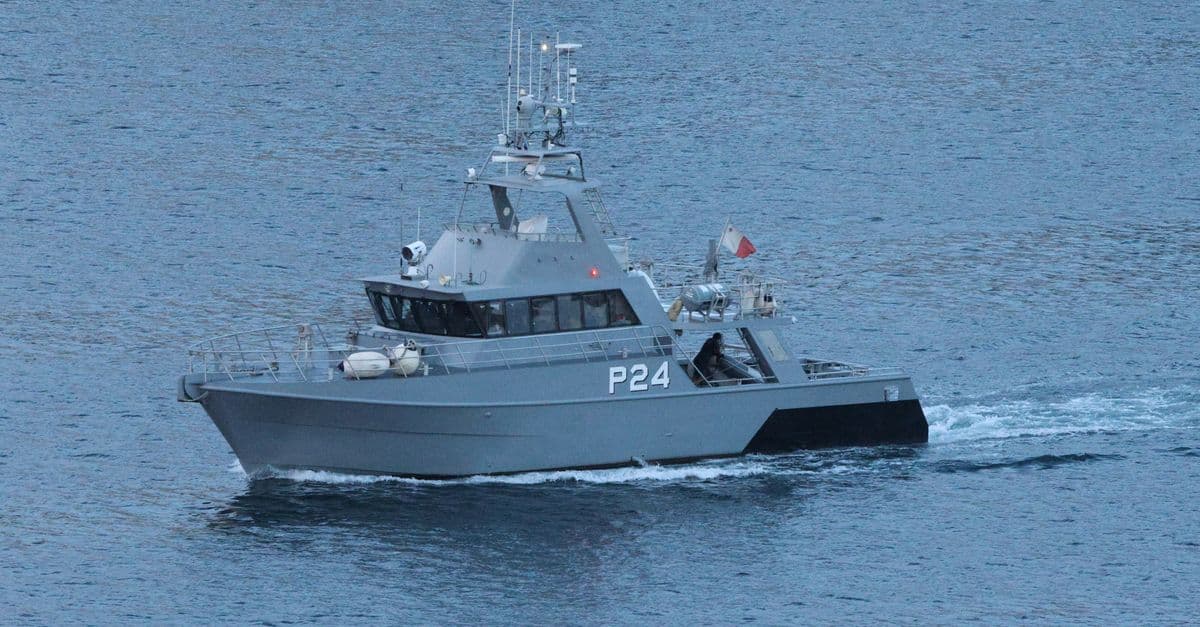
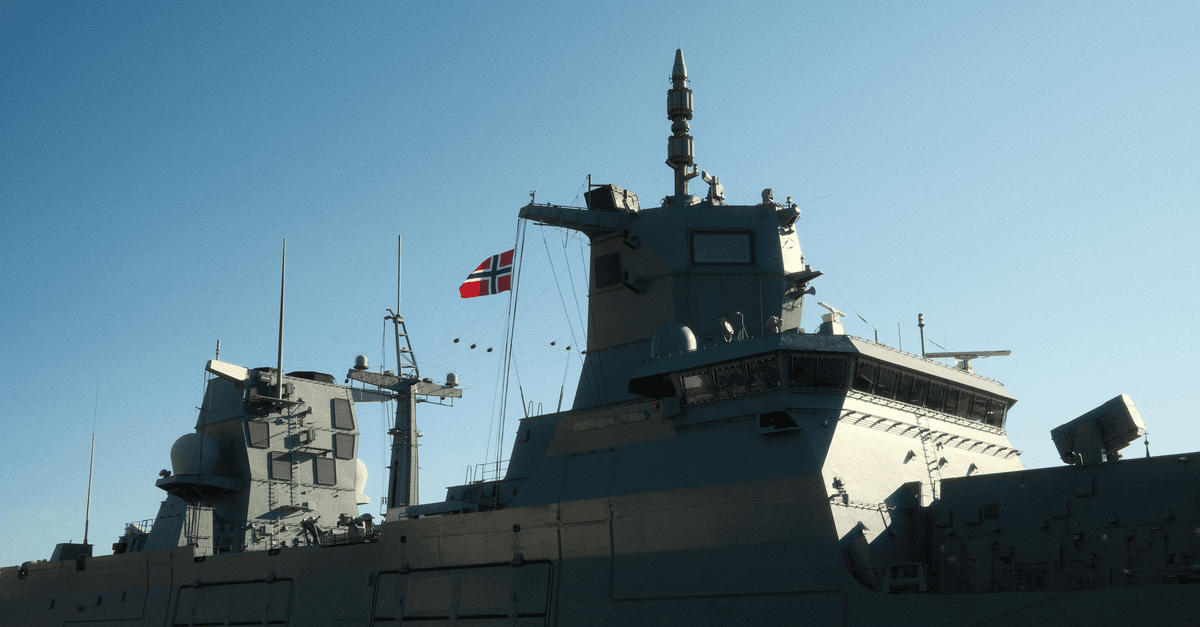
Photo: Drinu Cutajar / Pexels
Which country has the largest coast guard depends on what you count. The United States Coast Guard leads on published headcount, with roughly 41,000 active-duty members. China's Coast Guard appears to lead on large ships, with a fleet that U.S. and Japanese assessments put well above 150 vessels of more than 1,000 tons. Japan's service is smaller, at 14,123 personnel, and is barred by law from acting as a military force. This article lays out the figures that can be sourced, flags the ones that cannot, and explains why a coast guard's size says less about its influence than its legal status and its neighbors.
Key takeaways
- The U.S. Coast Guard has the largest published workforce: roughly 41,000 active-duty personnel, about 7,000 reservists, about 8,600 civilians, and tens of thousands of volunteer auxiliarists, plus more than 220 cutters and about 185 aircraft, according to the service's own published figures. Exact counts shift from year to year.
- China's Coast Guard is widely reported to operate the world's largest maritime law enforcement fleet by ship count. The U.S. Department of Defense put it at about 570 vessels of 100 to 999 tons in its 2022 report, on top of the large cutters.
- Japan's Coast Guard reported 14,123 personnel at the end of March 2025 and about 97 aircraft in early 2024, and is barred by law from acting as a military force.
- Personnel figures for several well-known coast guards, including Russia's border service and Indonesia's Bakamla, are not published in a form that allows a fair ranking, so this article does not invent them.
- In the South China Sea and East China Sea, a coast guard's importance is set less by its headcount than by whether it faces a rival coast guard or a navy.
Why there is no clean ranking
Rankings of this kind tend to look authoritative and then fall apart on inspection. A coast guard is not one kind of organization, and countries have bundled the job in very different ways.
In the United States, the Coast Guard is a military service and a law enforcement agency at once. In Japan, a 1948 law bars the service from being organized or trained as a military force. In China, the coast guard reports through the paramilitary People's Armed Police and, ultimately, the Central Military Commission. In Indonesia, maritime security duties are split between the navy, Bakamla (the Maritime Security Agency), and other bodies. Counting "coast guard personnel" across those systems is like comparing the number of employees at a hospital, a clinic, and a school nurse's office and calling the result a ranking of health care.
There is also a data problem. Some governments publish detailed annual reports, and some publish almost nothing. Some lists include entries such as Russia's border service or Mexico's maritime police, whose published numbers either mix land and sea functions or belong to a navy. They are left out of the table below rather than guessed at.
What the figures below do and do not measure
The table uses the most recent figures that could be traced to an official statement, a government report, or a news report quoting one. Where a number could not be found, the cell says so. Treat every row as a snapshot, because fleets change as ships are commissioned and retired, and because agencies count aircraft, small boats, and unmanned systems differently.
| Country | Agency | Personnel | Vessels | Aircraft | Source and date |
|---|---|---|---|---|---|
| United States | U.S. Coast Guard | About 41,000 active duty; about 7,000 reserve; about 8,600 civilian; volunteer auxiliary in the tens of thousands | More than 220 cutters; about 1,300 boats | About 185 fixed- and rotary-wing | USCG workforce page and 2026 USCG press release; exact counts vary by document |
| China | China Coast Guard | Not published in sources reviewed | About 132 large ships (1,000+ tons) in 2021; over 150 after a transfer of 22 corvettes; about 570 vessels of 100 to 999 tons | Not published in sources reviewed | Japan Coast Guard data, Kyodo News, and U.S. DoD 2022 report, as cited by Stars and Stripes, February 2023 |
| Japan | Japan Coast Guard | 14,123 (end of March 2025) | Not found in sources reviewed | About 97 (35 fixed-wing, 62 helicopters, February 2024) | Yomiuri Shimbun, May 2025; Japan Coast Guard aircraft data, 2024 |
| India | Indian Coast Guard | Not found in sources reviewed | 151 ships | 76 | ICG Raising Day brief, February 2025, as reported |
| South Korea | Korea Coast Guard | Not found in sources reviewed | 11 patrol ships of 3,000 tons, with 17 planned by 2030 | Not found in sources reviewed | Herald Corp reporting, 2026 |
| Philippines | Philippine Coast Guard | Not found in sources reviewed | Two 97-meter Japan-built ships in service; five more financed | Not found in sources reviewed | Baird Maritime; Philippine Department of Finance |
| Indonesia | Bakamla | Not found in sources reviewed | Not found in sources reviewed | Not found in sources reviewed | No fleet figures confirmed |
Reading across, the U.S. leads where data exist on people, China leads on hulls, and Japan sits between them on both. Several other countries run coast guards of real consequence, but the numbers that would rank them are not public or could not be confirmed.
The three types of coast guard
Understanding the structural differences explains most of what the headlines get wrong. Think of three different answers to the question "who enforces the law at sea?"
The military-service model. The U.S. Coast Guard is, by statute, a military service and a branch of the armed forces at all times. It sits in the Department of Homeland Security, except when it operates as part of the Navy. That transfer happens if Congress directs it in a declaration of war or if the President orders it. Since the service took its current form in 1915, it has operated as part of the Navy in World War I and World War II.
The civilian-police model. Japan's Coast Guard was created in 1948 under the Allied occupation. Article 25 of its founding law says nothing in the Act authorizes the service or its personnel to be organized, trained, or to function as a military force. Tokyo maintains that the service is non-military. The Maritime Self-Defense Force, created in 1954, is the military arm at sea.
The paramilitary model. China's Coast Guard was first consolidated in 2013 from four agencies: the coast guard proper, China Marine Surveillance, fisheries law enforcement, and maritime anti-smuggling units. In 2018 it was moved under the People's Armed Police, which reports to the Central Military Commission. Analysts described the reason as friction between a civilian-run coast guard and the navy during maritime operations.
A useful analogy is the difference between a city police department, a national guard unit, and a gendarmerie. All three can arrest someone on a street, but they answer to different authorities and are bound by different rules, and an observer can tell very little by counting officers alone.
Where the sea ends and the law begins
Coast guard powers depend on where a vessel is. The 1982 United Nations Convention on the Law of the Sea (UNCLOS) divides coastal waters into zones, and each zone carries different rights.
| Zone | Distance from baseline | What the coastal state can do |
|---|---|---|
| Territorial sea | Up to 12 nautical miles | Full sovereignty, subject to the right of innocent passage for foreign ships |
| Contiguous zone | Up to 24 nautical miles | Act against violations of customs, fiscal, immigration, and sanitary laws |
| Exclusive economic zone (EEZ) | Up to 200 nautical miles | Sovereign rights over fishing, minerals, and energy, but not full sovereignty |
The baseline is roughly the low-water line along the coast. One nautical mile is 1.852 kilometers, so the 200-mile limit is about 370 kilometers. The size of a country's EEZ is one of the main reasons coast guards exist at all, and our ranking of countries with the largest exclusive economic zones shows how little connection there is between land area and ocean responsibility. Our piece on countries with the longest coastlines covers the other half of that story.
The United States Coast Guard
The U.S. Coast Guard traces its origin to August 4, 1790, when Congress authorized the construction of ten boats for the collection of customs revenue. The service began as the Revenue Marine, later became the Revenue Cutter Service, and took the name Coast Guard when it merged with the Life-Saving Service in 1915. It predates the U.S. Navy, which was created in 1798.
Today the service's own published figures show roughly 41,000 active-duty members, about 7,000 reservists, and about 8,600 civilian employees, along with a volunteer auxiliary in the tens of thousands. Its assets include more than 220 cutters, about 1,300 boats, and about 185 fixed- and rotary-wing aircraft. Different Coast Guard documents give slightly different counts, so treat these as approximate. The largest cutters are the National Security Cutters of the Legend class, which are 418 feet (127 meters) long and displace about 4,500 long tons, according to a February 2025 Coast Guard fact sheet.
What the Coast Guard does every year
The service's search-and-rescue office reports 14,282 cases in fiscal year 2024, with 5,892 lives saved and $132.7 million in property saved. Those cases make up the least controversial part of the job, and for most of the public they are the most visible one. The rest of the portfolio includes drug and migrant interdiction, fisheries enforcement, aids to navigation, icebreaking, marine safety inspection, and port security.
The U.S. Exclusive Economic Zone is among the largest in the world. The U.S. Geological Survey describes it as the largest, and NOAA as one of the largest, at about 3.4 million square nautical miles, while other compilations that count overseas territories differently rank France first and the United States second. That ambiguity is typical of ocean statistics.
The readiness problem
Size does not equal readiness. A Government Accountability Office review found that the Coast Guard ended fiscal year 2024 with about 2,600 fewer enlisted personnel than its target, a shortfall of 8.5%. Recruiting then improved: the service said it brought in 5,204 active-duty enlisted members in fiscal year 2025, which was 121% of its target of 4,300. Its Force Design 2028 plan aims to grow the military workforce by 15,000 members by fiscal year 2028.
For readers interested in how these forces fit within wider military capacity, our rankings of countries with the most powerful navies and countries with the biggest defense budgets show where coast guards sit relative to the forces they work beside.
China's Coast Guard
The China Coast Guard is the clearest example of a coast guard whose significance exceeds its headcount. The U.S. Department of Defense's 2022 report to Congress called it the largest maritime law enforcement fleet in the world.
The most reliable public estimates concern ships. Japan Coast Guard data showed about 132 vessels of more than 1,000 tons in December 2021. Kyodo News reported in early 2023 that a transfer of 22 Type 056 corvettes from the navy would push the figure past 150. The Defense Department separately counted roughly 570 smaller vessels of 100 to 999 tons. By comparison, Kyodo put the Japan Coast Guard's large-ship count at 70.
The ship called the "monster"
The biggest cutter is CCG 5901, also named Nansha, a Zhaotou-class ship. Public sources describe it as about 165 meters (541 feet) long with a full displacement of roughly 12,000 tons, armed with a 76 mm gun. Commentators call it the "monster" because of its size relative to other coast guard vessels. Its armament is modest by naval standards, but its hull and helicopter deck give it a presence that smaller cutters cannot match.
In January 2025, the U.S. Naval Institute reported that CCG 5901 was operating within the Philippines' EEZ off western Luzon. Tracking relies on public ship-location data, and operators sometimes switch transponders off, so individual movements are difficult to verify independently.
The 2021 law
In January 2021, China passed a Coast Guard Law. The Asia Maritime Transparency Initiative at CSIS describes Article 22 as allowing the service to take "all necessary measures, including the use of weapons" when a foreign organization or individual illegally violates China's sovereignty, sovereign rights, or jurisdiction at sea, or when such a violation is imminent. The same analysis notes that the article is tied to other provisions requiring that measures be taken in accordance with the law and other regulations, and that its restrictions are largely in line with other coast guards.
Many analysts see the unresolved question as geographic rather than legal. The law applies in "jurisdictional waters," a term that is not clearly defined, and China's claims in the South China Sea overlap with the EEZs of several neighbors. Our ranking of countries with the most military bases abroad puts that regional contest in a wider strategic context.
Japan's Coast Guard
Japan's service is a case study in how a small force can matter. It reported about 97 aircraft in early 2024. The Yomiuri Shimbun reported the headcount at 14,123 at the end of March 2025, six fewer than a year earlier, with 389 voluntary resignations in fiscal year 2024. Staffing is a recurring concern.
The legal limit
Article 25 of the 1948 Japan Coast Guard Act is the cornerstone of its identity. It was added at the urging of occupation authorities to answer concerns from the Soviet Union and the then-government of China that the new service would lead to Japanese rearmament. A 2023 control guideline on how the service would work with the military during an armed attack has renewed debate about whether its civilian status can survive a real conflict. That debate is unresolved.
The Senkaku pressure
The most intense day-to-day contact between rival coast guards is in the East China Sea, near the Senkaku Islands, which Japan administers and China claims as the Diaoyu Islands. Japanese reports said China Coast Guard ships were confirmed in the contiguous zone on a record 355 days in 2024, up from 352 in 2023. A continuous presence that began on November 19, 2024 ran for a record 335 days before ending in October 2025, according to the Japan Coast Guard.
Japan has also added aircraft that do not need a pilot. The service operates MQ-9B SeaGuardian drones, with three in service and plans, reported by Naval News, to reach nine by fiscal year 2028. For wider context on unmanned systems, see our ranking of countries with the most advanced drone programs.
The middle powers that decide the outcome
The countries below are not the biggest on any table, and several of them are on the front line of the contest between the larger coast guards.
The Philippines
The Philippine Coast Guard has become the most visible small coast guard in the world because of its role at Second Thomas Shoal, where a grounded Philippine navy ship, the BRP Sierra Madre, is resupplied by sea. A resupply mission on March 5, 2024 was targeted with water cannon. On June 17, 2024, a Filipino sailor lost a thumb when Chinese coast guard personnel, armed with knives, sticks, and an axe, blocked a mission and confiscated some weapons.
In July 2024, Manila announced a provisional arrangement covering resupply and rotation missions. The two governments described it differently, with Manila rejecting suggestions that it requires prior notification to Beijing. A CSIS analysis reports 13 rotation and resupply missions between the deal and March 4, 2026, roughly one every six weeks, without dangerous encounters.
Japan has been the biggest external supplier of ships. Two 97-meter multi-role response vessels of the Teresa Magbanua class are in service, and five more are planned under concessional Japanese financing of 64.38 billion yen, with the first due in 2027. These ships are built on the Japan Coast Guard's Kunigami design but carry no autocannon, because Japanese law bars exporting them.
Indonesia
Indonesia shows the opposite problem. Its Bakamla agency has a mandate to patrol one of the world's largest archipelagic zones, but its capacity is limited, and in the October 2024 confrontation below it needed a navy ship and aircraft to help. The best-documented recent confrontation took place on October 21, 2024, when the patrol vessel KN Tanjung Datu 301, assisted by a navy ship and a Bakamla patrol aircraft, drove a Chinese coast guard vessel, CCG 5402, out of Indonesian jurisdiction near a seismic survey.
India and South Korea
The Indian Coast Guard reported 151 ships and 76 aircraft at its February 2025 Raising Day, with a stated goal of 200 surface platforms and 100 aircraft by 2030. The target has been pushed back more than once, which is a common pattern in naval procurement.
South Korea's service sits under the Ministry of Oceans and Fisheries. Reports in 2026 said the government plans to raise the number of 3,000-ton patrol ships from 11 to 17 by 2030, and a budget of 2.2 trillion won for 2027, an increase of 6.7%. The plans also call for additional 500-ton vessels dedicated to cracking down on illegal foreign fishing boats.
What "gray zone" means
Analysts often describe Chinese coast guard operations as gray-zone activity. The phrase refers to coercion that stays below the threshold of armed conflict. A coast guard vessel is lightly armed or unarmed in appearance, painted white, and operated by an agency that presents itself as law enforcement. A navy ship is painted gray and carries the legal and political weight of a military force.
The distinction matters because of escalation. If a naval vessel fires on another country's ship, it is an act of war in a way that a coast guard blocking a fishing boat is not. Using coast guard "white hulls" lets a government press a claim while keeping the confrontation in the language of policing. The risk is that the other side may respond in the same terms, which is why coast guard capacity has become a priority for the Philippines, Japan, Vietnam, and Indonesia. Our ranking of countries with the most aircraft carriers and the one on submarines cover the gray-hull side of the picture.
Why this is not just a Pacific story
Coast guards matter far from the South China Sea. Most of what any coast guard does, most days, is search and rescue and routine safety work. UNCLOS and the International Maritime Organization's rescue conventions require coastal states to provide rescue services in assigned areas, which is why even countries with no navy maintain some form of coast guard.
A timeline of the encounters that shaped the debate
Looking at the dated record helps separate what has actually happened from what is feared. The events below are the ones that can be tied to published reports.
| Date | Event | Why it matters |
|---|---|---|
| 2013 | China merges four maritime agencies into one coast guard | Created a single fleet from separate civilian forces |
| July 2018 | China Coast Guard moves under the People's Armed Police | Placed the service in a military chain of command |
| January 2021 | China passes its Coast Guard Law | Spelled out when the service may use weapons |
| March 5, 2024 | Water cannon used against a Philippine resupply mission | Showed non-lethal force being used on a mission to a navy ship |
| June 17, 2024 | Filipino sailor loses a thumb at Second Thomas Shoal | Marked the most violent encounter in the series |
| July 21, 2024 | Manila announces a provisional arrangement for resupply | Opened a period of calmer missions |
| October 21, 2024 | Indonesia drives CCG 5402 out of its jurisdiction near Natuna | Showed a third country responding with its own coast guard |
| November 19, 2024 to October 2025 | Record 335 consecutive days of Chinese presence near the Senkakus | Turned presence itself into a form of pressure |
| January 2025 | CCG 5901 operates in the Philippines' EEZ off western Luzon | Put the largest cutter in a rival's economic zone |
The pattern is not a straight line toward war. Violent episodes have been followed by negotiated arrangements, and the more recent record at Second Thomas Shoal has been quieter. What the table does show is a shift in who stands at the front of a dispute. In every row, the actors are coast guards and the language is law enforcement.
Common misunderstandings about coast guards
"A coast guard is a small navy." The two serve different purposes. A navy is built to defeat an enemy fleet. A coast guard is built to board, inspect, rescue, and arrest, and its ships are designed for long patrols and endurance more than for combat. Some cutters carry guns and helicopters, but the mission still differs.
"Coast guards are unarmed." Many are armed. China's largest cutter mounts a 76 mm gun, and the U.S. Coast Guard operates as part of the armed forces. The difference lies in the legal framework for how and when weapons may be used, not in whether weapons exist.
"The biggest coast guard is the most important one." The Philippine Coast Guard does not appear near the top of any size table, but it is the service most often named in coverage of maritime confrontations. Importance follows geography and exposure.
"The numbers are settled." They are not. Some of the commonly repeated figures, including personnel totals and ship counts, come from secondary compilations, and the underlying agencies do not always report on the same basis. Anyone building a ranking should prefer official statements, state the date, and say plainly when a figure is unavailable.
How to read a coast guard ranking
When you see a list that claims to rank the world's coast guards, a few questions will quickly tell you how much to trust it.
- What was counted? Active-duty uniformed staff, civilians, volunteers, and reservists produce very different totals. A U.S. figure of roughly 41,000 and a combined total near 88,000 can both describe the same service, depending on whether reservists, civilians, and volunteer auxiliarists are included.
- What counts as a ship? A 4,500-ton cutter and a 10-meter patrol boat are both "vessels." Ship counts by tonnage band are more informative than totals.
- Is the agency military? A coast guard that can be transferred to a navy, or that answers to a military commission, is a different instrument from a civilian police agency.
- Who is the opponent? A coast guard that faces another coast guard operates under different rules than one that faces a navy. Our overview of the world's largest militaries is useful for that comparison.
- What is the date? Fleet figures can change by dozens of ships in a few years. Any ranking without a date should be treated with suspicion.
Frequently Asked Questions
Q: What is the difference between a coast guard and a navy? A: A navy exists to fight at sea and project military power. A coast guard enforces laws, rescues people, and protects the marine environment, mostly within a country's own waters. The line is not clean: the U.S. Coast Guard is a military service, and China's is under military command. In law, the key difference is that coast guard vessels can carry out civilian law enforcement, while warships generally cannot.
Q: Which country has the largest coast guard? A: It depends on the measure. The United States has the largest published workforce, with roughly 41,000 active-duty members and more than 220 cutters. China is widely reported to have the largest fleet of large coast guard ships, with over 150 vessels above 1,000 tons. No single authoritative ranking exists.
Q: Is China's coast guard bigger than the U.S. Coast Guard? A: By number of large ships, estimates suggest yes. By published personnel and by range of missions, the U.S. service is larger and more global. The Chinese figures come from foreign government assessments and news reports, because Beijing does not publish a detailed order of battle.
Q: Can a coast guard become part of a navy during a war? A: In the United States, yes. By law, the Coast Guard operates as a service in the Navy if Congress so directs in a declaration of war or the President orders it. Japan's coast guard cannot be organized as a military force under Article 25, though a 2023 guideline has prompted debate about how it would work with the military in an armed attack.
Q: Why do coast guards matter so much in the South China Sea? A: Coast guards let governments assert maritime claims in a way that looks like law enforcement. That keeps incidents below the level of armed conflict, and the legal rules for responding to a coast guard differ from those for responding to a warship. This is often called gray-zone competition.
Q: How many people does the U.S. Coast Guard rescue each year? A: In fiscal year 2024, the Coast Guard's search-and-rescue program reported 14,282 cases and 5,892 lives saved. These are agency figures, and "saved" means a life that was in danger and was rescued, not every person assisted.
Q: Does a bigger coast guard make a country safer at sea? A: Not by itself. Readiness, training, crew retention, and the match between ships and missions count for more than totals. The U.S. service, for instance, ended fiscal 2024 with a shortfall of about 2,600 enlisted personnel relative to its target, according to GAO.
The takeaway
The most useful thing to understand about coast guards is that a ranking by size hides the thing that matters. The U.S. Coast Guard is the largest by published headcount and sits within the armed forces. China's is the largest by large-ship count and answers to a military command. Japan's is mid-sized, dense, and barred by law from being a military force, yet it faces a Chinese coast guard presence that has reached a record 355 days in 2024. The Philippines and Indonesia, by measures of tonnage and personnel, are minor players, yet they are where the most consequential encounters of recent years took place.
If you want one lesson from the numbers, it is this: a coast guard's weight is set by its neighborhood and its legal status as much as by its size. A single cutter off Second Thomas Shoal carries more strategic meaning than a dozen cutters on a quiet coast.
Sources
- U.S. Coast Guard. About the U.S. Coast Guard Workforce and 2026 Coast Guard press releases (news.uscg.mil).
- U.S. Coast Guard Office of Search and Rescue (CG-SAR). Fiscal year 2024 totals.
- U.S. Coast Guard. National Security Cutter fact sheet, February 2025.
- Stars and Stripes. China's coast guard grows rapidly. February 2, 2023, citing Kyodo News, Japan Coast Guard data, and the U.S. Department of Defense 2022 China Military Power report.
- CSIS Asia Maritime Transparency Initiative. "Force Majeure: China's Coast Guard Law in Context."
- Yomiuri Shimbun reporting on Japan Coast Guard staffing, 2025.
- United Nations. UNCLOS at 30 pamphlet (static.un.org).
- Government Accountability Office. Coast Guard workforce review, fiscal year 2024.
- CSIS AMTI. "Divergence and Tacit Understanding in the China-Philippines Provisional Arrangement at Second Thomas Shoal."
- Baird Maritime. Reporting on the Teresa Magbanua-class vessels for the Philippine Coast Guard.
Related Reading
Follow new articles
Add SciHub101 to your feed reader to see new science and technology stories.
About the Author
SciHub101 is an independent science and technology publication founded and edited by Buğra Sözeri, a software engineer and app developer based in Türkiye. AI tools assist with drafting and research. Source documentation in the existing archive is uneven, and articles are being reviewed and corrected. The Editorial Team byline identifies editorial responsibility; it does not certify specialist or independent human review. Where we compare products, anything built by our own team is labelled as such — see the editorial guidelines and About page for how corrections and disclosures work.
Related Articles

Countries Where Women Live the Longest (2023 Data)
Women in Monaco, Hong Kong, and Japan live longest, at 87 to 88.5 years on average. Here is how the ranking is built, why the leaders lead, and what the data cannot tell you.

Most Urbanised Countries in the World (2025)
Singapore, Kuwait, and Qatar are 100% urbanised — every single resident lives in an urban area. This ranking of the world's most urbanised countries examines which nations have the highest percentage of urban dwellers, which are urbanising fastest, and what this means for housing, climate, and economic development.
Countries With the Most Powerful Navies in the World (2025)
Naval power defines a country's ability to control trade routes, project power across oceans, and deny adversaries access to the seas. This ranking of the top 10 most powerful navies in 2025 covers carrier fleets, submarines, surface combatants, and total tonnage.
Countries With the Most Aircraft Carriers (2025)
Aircraft carriers are the ultimate symbol of naval power projection. In 2025, only a handful of countries operate them, and the United States operates more than the rest of the world combined. This ranking covers every country with aircraft carriers, from American supercarriers to light carriers and helicopter carriers.
Countries With the Longest Coastlines, Ranked and Explained
Coastline length is one of geography's most measurement-dependent numbers. This ranking shows which countries have the longest coastlines, why Canada leads by a wide margin, and why different datasets disagree.
Countries With the Most Submarines in the World (2025)
Submarines are the most feared weapons in any navy — invisible, long-range, and capable of delivering nuclear strikes or sinking entire carrier groups. This ranking of the top 15 countries with the most submarines in 2025 covers nuclear vs conventional fleets, strategic ballistic missile subs, and the future of undersea warfare.