Countries With the Most Tanks in the World (2025)
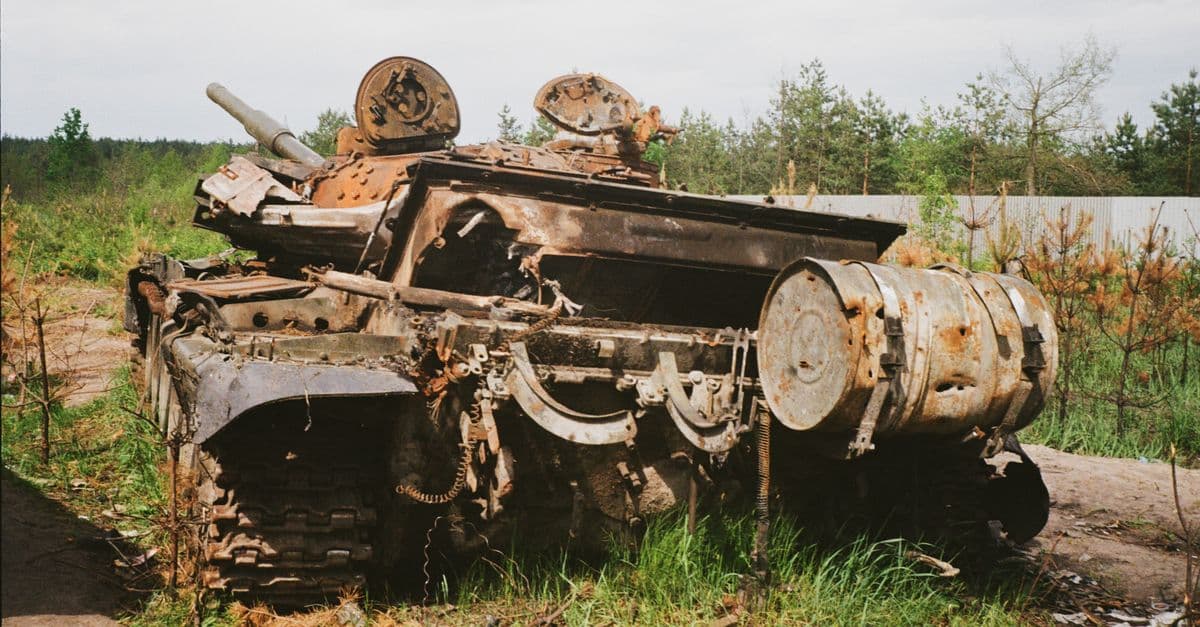
Photo: Mykhailo Volkov / Pexels
The tank has been declared obsolete more times than perhaps any other weapons system. Javelin anti-tank missiles, FPV drones, and loitering munitions have killed thousands of tanks in Ukraine since 2022. Yet in 2025, the world's major military powers are not abandoning armour — they are buying more of it, upgrading it, and exporting it at rates not seen since the Cold War. The lesson Ukraine taught was not that tanks are dead, but that tanks used poorly — without infantry support, air cover, or active protection systems — are catastrophically vulnerable. Tanks used well, integrated into combined-arms formations with electronic warfare and anti-drone protection, remain decisive.
This ranking uses total inventory figures (active plus stored) from the International Institute for Strategic Studies Military Balance 2025 and supplementary open-source data. Total inventory reflects a country's mobilisable armoured potential; active-only figures are noted where available.
How tanks are counted and classified
Main Battle Tank (MBT): The primary type in this ranking. An MBT is a heavily armoured, fully tracked vehicle with a large-calibre gun (typically 120mm or 125mm), designed to engage other armoured vehicles and provide direct fire support to infantry. Weight typically ranges from 40 to 70+ metric tons.
Generation classification: Tanks are commonly grouped into generations by their era of design and capabilities. First-generation MBTs (1940s–1960s: T-54/55, M48) are mostly in museums or extreme storage. Second-generation (1960s–1980s: T-72, T-80, M60, Leopard 1) remain in large inventories globally. Third-generation (1980s–present: M1A2, T-90M, Leopard 2, K2, Type 99A, Challenger 2) are the current gold standard. Fourth-generation concepts are in development (Germany's MGCS, Russia's T-14 Armata, South Korea's K3) but none are in mass production.
Total vs. active inventory: Russia's headline figure of 12,000+ tanks includes vehicles in deep storage of uncertain serviceability. The active fleet — tanks in operational units, regularly maintained and crewed — is a fraction of that number. This distinction matters enormously for assessing real military capability.
Source: IISS — The Military Balance 2025; Global Firepower — Combat tank fleet strength 2025; Visual Capitalist — World's largest combat tank fleets 2025.
Top 15 Countries With the Most Tanks (2025)
| Rank | Country | Total Inventory | Primary MBT | Generation |
|---|---|---|---|---|
| 1 | Russia | ~12,420 | T-72B3, T-80BVM, T-90M | 2nd/3rd gen mix |
| 2 | North Korea | ~6,645 | Pokpung-ho, Chonma-ho, T-62 | 2nd gen (mostly) |
| 3 | USA | ~5,500 | M1A2 SEPv3/SEPv4 Abrams | 3rd gen |
| 4 | China | ~5,000 | Type 99A, Type 96B | 3rd gen |
| 5 | India | ~4,614 | T-90S Bhishma, Arjun Mk.2 | 3rd gen mix |
| 6 | Egypt | ~4,295 | M1A1 Abrams, T-72, M60 | 3rd/2nd gen mix |
| 7 | Pakistan | ~3,742 | Al-Khalid (VT-1), T-80UD | 3rd gen mix |
| 8 | Turkey | ~2,229 | M60T, Leopard 2A4, Altay | 3rd gen mix |
| 9 | South Korea | ~2,200 | K2 Black Panther, K1A2 | 3rd gen |
| 10 | Iran | ~1,996 | T-72S, Karrar, T-54/55 | 2nd/3rd gen mix |
| 11 | Israel | ~1,370 | Merkava Mk.4, Merkava Mk.3 | 3rd gen |
| 12 | Greece | ~1,244 | Leopard 2A6, M1A1, Leopard 1 | 3rd/2nd gen mix |
| 13 | Ukraine | ~1,100 | T-84 Oplot, Leopard 2, M1A1 | 3rd gen (mixed) |
| 14 | Germany | ~350 | Leopard 2A7+ | 3rd gen (top tier) |
| 15 | France | ~215 | Leclerc | 3rd gen |
Notes: Russia's inventory figures are pre-war totals; post-2022 losses are substantial (see below). Ukraine's figures reflect wartime attrition and Western resupply as of early 2025. China's figures from open-source assessments; official Chinese inventory data is not published.
Source: International Institute for Strategic Studies Military Balance 2025; Global Firepower; open-source analysis (Oryx project).
Where this data comes from
Tank inventory figures derive from the International Institute for Strategic Studies Military Balance 2025, the most authoritative annual survey of global military equipment, supplemented by Global Firepower assessments and open-source tracking projects like Oryx (which documents visual confirmation of battlefield losses). Published inventories reflect official government declarations, which may undercount active reserves or exaggerate deployed numbers for deterrence purposes. Russia's published figure of 12,420 vehicles includes both front-line units and deep storage; estimates of truly operational strength vary by analyst. China's inventory is estimated rather than officially declared, making exact figures uncertain.
Top countries lead in tank inventories due to distinct historical factors. Russia inherited a vast Soviet production base designed to support Cold War European confrontation, with continuous post-Soviet production replacing combat losses and attrition. The United States prioritises quality over quantity, maintaining a smaller but technologically superior fleet centred on the M1A2 Abrams platform. China has combined Soviet-origin designs with domestic innovation to field a mechanically comparable but qualitatively distinct fleet optimised for regional conflict scenarios. India and Pakistan maintain large inventories reflecting subcontinental military balance and the historical proliferation of Soviet-era platforms to Non-Aligned Movement states. North Korea's extraordinary inventory reflects autarky (self-reliance) and near-total militarisation of its economy, with limited modernisation offsetting age and obsolescence.
Historical context: the rise and persistence of the tank
The main battle tank emerged from the trenches of World War I as a solution to a specific tactical problem: how to cross no-man's-land under machine gun fire. The British Mark I (1916) was slow, mechanically unreliable, and tactically rudimentary, but it demonstrated that armour could suppress machine gun positions and enable infantry advance. By World War II, tank doctrine had evolved into the decisive element of ground warfare — the German blitzkrieg, Soviet armoured offensives at Kursk and Stalingrad, and the US drive across France were all primarily armour-led operations.
The Cold War produced the largest tank inventories in history. The Soviet Union built tens of thousands of T-54s, T-55s, T-62s, T-64s, T-72s, T-80s, and T-90s — a production rate driven by the assumption that any European war would involve armoured breakthroughs across Germany's north German plain. The US, NATO, and Warsaw Pact collectively deployed approximately 60,000–70,000 tanks in Europe at the Cold War's peak. Today's inventories are remnants and successors of that production.
The Persian Gulf War (1991) appeared to vindicate the Western quality-over-quantity approach: US M1A1 Abrams tanks destroyed hundreds of Iraqi T-72s in engagements at ranges where Iraqi guns could not penetrate American armour. The Coalition lost a handful of tanks to friendly fire and mine strikes; Iraq lost 3,000+. This asymmetric outcome seemed to make the case for small numbers of highly capable, well-crewed tanks over large numbers of adequate ones.
The Iraq and Afghanistan wars then appeared to challenge the tank's relevance in counterinsurgency. Tanks are expensive, logistically demanding, and politically visible when operating in urban areas. Several European countries (the UK, France, Germany) reduced their tank fleets significantly in the 2000s and 2010s under "expeditionary force" defence reviews that prioritised deployability over mass armoured capability.
Ukraine changed this calculation in 2022.
Source: Wikipedia — List of main battle tanks by country; 247WallSt — China leads Asia at 6,800 tanks.
What Ukraine taught about tanks
The Russia-Ukraine war is the largest armoured conflict since World War II. Both sides have deployed thousands of tanks; both sides have lost thousands. The tactical conclusions emerging from 1,000+ days of war are more nuanced than either "tanks are obsolete" or "tanks are invincible."
Tanks are vulnerable without combined-arms support. Russia's early losses in February and March 2022 were catastrophic — long columns of tanks advancing without infantry clearing cover from flanking positions, without air cover (suppressed by Ukrainian air defences), without electronic warfare jamming anti-tank guidance systems, and without engineering reconnaissance. Ukrainian Javelin operators and TB2 drone strikes killed tanks at extraordinary rates precisely because they lacked combined-arms protection. This is not a new vulnerability; it is the oldest tactical lesson in armour doctrine, violated en masse.
Active protection systems dramatically change survivability. The Israeli Trophy system — which detects incoming anti-tank missiles and fires interceptor charges to destroy them before impact — has demonstrated near-complete effectiveness against RPGs and older ATGMs in both Israeli urban operations and, when exported to US M1A2 variants, in US Army testing. Countries that have Trophy or equivalent systems (Israel's Merkava Mk.4, some US Abrams units) show dramatically better survivability than those without.
FPV drones are the new Molotov cocktail. First-person-view drones costing $400–800 each have become effective against tanks whose crews keep hatches open or whose soft-top engine decks are exposed. This is tactically significant but not strategically novel: cheap improvised weapons have always been capable of killing expensive weapons systems in specific circumstances. The adaptation — anti-drone electronic warfare, slat armour over engine decks, drone-hunting escort vehicles — is already occurring.
Tanks that adapt survive; tanks that don't, don't. Russia began the war deploying tanks without the "cope cages" (improvised anti-drone overhead protection) that now appear on nearly all Ukrainian-front vehicles. Ukraine began the war with Soviet-doctrine tank formations and has adapted to combined Western-Soviet hybrid doctrine. The learning curve is continuous and asymmetric — the side that adapts faster gains tactical advantage.
Mass still matters. Russia has absorbed losses that would have been strategically catastrophic for a smaller army and continued fielding armoured forces. The ability to pull Soviet-era T-62s and T-72s from storage, hastily refurbish them, and crew them with newly mobilised soldiers — however suboptimal tactically — means Russia has sustained armoured pressure that a smaller force could not. Ukraine's tank inventory has been sustained only by Western transfers.
Source: Visual Capitalist — World's largest combat tank fleets 2025; IISS Military Balance 2025.
Russia's vast but troubled arsenal
Russia's total tank inventory — approximately 12,420 vehicles — is the world's largest. It is also the most misleading single number in any military comparison.
Russia's inventory includes vehicles from four decades of Soviet and Russian production, stored in conditions ranging from active maintenance to long-term open-air storage where vehicles may not have been started in years. The Oryx project, which tracks visually confirmed equipment losses from photograph and video evidence, has documented the destruction or capture of over 3,000 Russian tanks since February 2022. Independent analysts estimate total Russian armoured losses (including damaged and repaired) at significantly higher numbers.
Russia's response to these losses reveals the true inventory quality distribution. To replace front-line losses, Russia has drawn T-62s — a design from the early 1960s — from storage and deployed them to Ukraine. The T-62M carries a 115mm smoothbore gun that cannot penetrate modern Western tank armour and lacks the thermal sights needed for night combat. Its appearance on the front line confirms that Russia's "active" modern fleet is far smaller than the 12,000+ headline number suggests.
Russia's best tanks — the T-90M Proryv (approximately 600–800 delivered to the army before 2022) and T-80BVM — are genuine third-generation designs competitive with Western equivalents at similar range. They feature improved composite armour, Kontakt-5 explosive reactive armour, and Sosna-U thermal sights. But they represent a small fraction of the total inventory, and production rates have not matched losses.
The M1 Abrams: America's standard
The M1A2 SEPv3 Abrams is the most capable mass-produced main battle tank in operational service by most assessments. Its combination of a 120mm M256 smoothbore gun (capable of penetrating any known tank armour at combat ranges), depleted uranium-reinforced composite armour package (providing protection levels that cannot be matched by most anti-tank rounds), second-generation thermal sights enabling effective engagement at 3,000+ meters in darkness, and (in Trophy-equipped variants) active protection against incoming missiles make it the current benchmark.
The Abrams's weakness is weight: approximately 68 metric tons in combat configuration, which limits its deployability (it requires heavy-lift transport and strains bridges) and creates logistical demands (fuel consumption, maintenance requirements) that smaller tanks avoid. The US Army has acknowledged this and is evaluating concepts for a lighter supplementary armoured vehicle alongside future Abrams upgrades.
Ukraine received approximately 31 M1A1 Abrams tanks in late 2023 and early 2024 — not the most advanced SEPv3 variant, but the older M1A1 with depleted uranium armour. Several have been lost to FPV drone attacks and anti-tank missiles, providing adversaries their first opportunity to examine captured Abrams components at close range.
China's modern armour
China's Type 99A is the PLA's premier main battle tank and broadly competitive with Western third-generation designs — 125mm smoothbore gun, composite armour package, active protection system integration, and a fully digital battle management system. China operates approximately 1,200 Type 99/99A tanks, with the remainder of its estimated 5,000-tank inventory consisting of older Type 96 and Type 96B models that are still capable designs, if slightly below the top tier.
China is also developing the VT-5, a lighter (36-ton) tank designed for amphibious and air-mobile operations in the South China Sea and potential Taiwan scenarios — reflecting a different threat environment from the European great-plains warfare that shaped Russian and NATO armour doctrine. The VT-5 can be transported by heavy military helicopters, a capability the M1 Abrams definitively lacks.
China's export record provides indirect evidence of its armour quality: the VT-4 (an export variant of the Type 96 lineage) has been purchased by Pakistan, Nigeria, Thailand, and Bangladesh — countries with meaningful options that chose Chinese armour on merit and price. This is a better quality signal than manufacturer claims.
South Korea's K2: the technology frontier
The K2 Black Panther represents a different approach to tank design philosophy. South Korea began development in the 1990s with the explicit goal of producing a tank technologically superior to any potential adversary's — specifically the T-90 series operated by North Korea's patron states.
The K2 features a 120mm Rheinmetall smoothbore gun (the same gun family used in Leopard 2 and some Abrams variants), a hydropneumatic suspension with "walking" capability across uneven terrain, a fully automated fire control system with target acquisition under 7 seconds, and a domestically developed active protection system. In 2022, Poland selected the K2 as its new main battle tank, signing contracts for up to 1,000 vehicles — the largest tank export contract since the Cold War. Norway has also evaluated the K2.
The export success confirms what military analysts had assessed: the K2 is a genuine top-tier design that competes directly with the Leopard 2A7 and M1A2. South Korea's overall tank fleet of approximately 2,200 vehicles gives the ROK Army formidable armoured capability — essential given the North Korean threat of 6,645 tanks to the north, the majority of which are older designs but represent genuine mass.
Israel's Merkava: crew survival above all
The Merkava design philosophy inverts the priorities of most tank designers. Where most MBTs place the engine at the rear (maximising turret placement and gun arc), the Merkava places the engine at the front — providing additional protection to the crew from frontal hits, which are statistically the most common in combat. The rear compartment freed by the forward engine placement can carry four soldiers or serve as a casualty evacuation space, giving the Merkava multi-role capability uncommon in a main battle tank.
Combined with the Trophy active protection system — the world's first operationally proven APS, which has intercepted anti-tank missiles in combat since 2011 — the Merkava Mk.4 has shown the highest crew survivability of any tank in recent conflicts. Israel's operational tank inventory of approximately 1,370 vehicles is relatively small by global standards but among the most capable and best-maintained in any country's arsenal.
Source: SlashGear — How many tanks does Russia have?; WorldPopulationReview — Tanks by country 2026.
Frequently asked questions
Q: Which country has the most tanks in the world in 2025? A: Russia has the world's largest total tank inventory at approximately 12,420 vehicles, but a significant portion are stored Soviet-era designs of uncertain operational readiness. The United States has the largest fleet of third-generation tanks in confirmed active service at approximately 5,500 M1 Abrams. China's active armoured fleet may rival or exceed Russia's fully operational component given losses Russia has sustained in Ukraine.
Q: Are tanks still relevant in modern warfare? A: Yes — the Ukraine conflict has confirmed that tanks remain essential for combined-arms ground warfare. The pattern of high losses primarily affects tanks deployed without proper infantry support, air cover, and active protection. The response to losses has been rearmament, upgraded doctrine, and accelerated active protection system adoption — not withdrawal of armour from military planning. Countries that concluded tanks were obsolete (Germany, UK, France in the 2010s) are rebuilding their armoured fleets.
Q: What makes the M1 Abrams better than the T-90? A: The Abrams's primary advantages are crew protection (depleted uranium-reinforced armour with a significantly higher protection coefficient), sight systems (better thermal imaging enabling longer-range engagement in darkness), fire control (faster target acquisition, higher first-shot hit probability), and ammunition quality (M829 series kinetic penetrators are assessed to outperform Russian equivalent rounds at comparable ranges). The T-90M has closed some of these gaps. At equivalent ranges with equivalent crew training, the Abrams is assessed to have a significant advantage; at extended ranges in degraded conditions, the gap narrows.
Q: What is a 4th-generation tank? A: No fourth-generation tank is yet in mass production. Russia's T-14 Armata — which features an unmanned turret with crew isolated in an armoured capsule in the hull — has been produced in very small numbers for evaluation. Germany and France are developing the MGCS (Main Ground Combat System) for the 2030s. South Korea's K3 programme is in early concept development. The defining features of a 4th-gen MBT are expected to include unmanned turrets or remote weapons stations, AI-assisted fire control, deep integration with drone systems, and active protection as standard.
Q: Why does Germany have only 350 tanks? A: Germany reduced its Leopard 2 fleet from approximately 2,000+ during the Cold War to 350 during the post-Cold War "peace dividend" era, when European land forces were redesigned for expeditionary operations rather than territorial defence. Germany has committed to increasing its Leopard 2 fleet back toward 800 vehicles by 2030 as part of its post-Ukraine rearmament programme. The 350 figure also reflects tanks transferred to Ukraine (approximately 18 Leopard 2A6s) and to other NATO allies.
Q: What is an active protection system and why does it matter? A: An active protection system (APS) is a defensive technology that detects incoming anti-tank missiles or projectiles and fires interceptor charges or pellets to defeat them before impact — rather than relying on armour alone to absorb the hit. The Israeli Trophy system, the first operationally proven APS in combat, has demonstrated near-complete effectiveness and is now being integrated into multiple armies' platforms including the US M1A2 Abrams. APS shifts the survivability equation dramatically, allowing older or lighter tanks equipped with APS to achieve survivability comparable to or exceeding unequipped heavier designs.
The takeaway
The 2025 global tank ranking shows armoured warfare at an inflection point. Russia's massive inherited inventory, depleted by two-plus years of grinding attrition, demonstrates both the value of deep reserves (Russia is still fielding tanks despite extraordinary losses) and the limits of quantity without quality (T-62s retrieved from 1960s-era storage are not competitive on a modern battlefield). The United States, China, South Korea, and Israel field genuinely world-class armoured vehicles that integrate active protection, advanced fire control, and digital battle management into platforms that crews from previous tank generations would barely recognise. The experience of Ukraine is accelerating active protection system adoption, drone-tank teaming concepts, and combined-arms doctrine improvements across every military that takes ground combat seriously. The tank is not dead — it is being rebuilt for the battlefield that actually exists in 2025, not the one that was predicted.
Read next:
Follow new articles
Add SciHub101 to your feed reader to see new science and technology stories.
About the Author
SciHub101 is an independent science and technology publication founded and edited by Buğra Sözeri, a software engineer and app developer based in Türkiye. AI tools assist with drafting and research. Source documentation in the existing archive is uneven, and articles are being reviewed and corrected. The Editorial Team byline identifies editorial responsibility; it does not certify specialist or independent human review. Where we compare products, anything built by our own team is labelled as such — see the editorial guidelines and About page for how corrections and disclosures work.
Related Articles

Countries With the Most Time Zones (2025)
France has 12 time zones — more than any other country — thanks to its scattered overseas territories from French Polynesia to the Caribbean. Russia and the USA follow with 11 each. This ranking explains how countries accumulate time zones, why China uses just one, and the surprising geography of global timekeeping.
Countries With the Most Submarines in the World (2025)
Submarines are the most feared weapons in any navy — invisible, long-range, and capable of delivering nuclear strikes or sinking entire carrier groups. This ranking of the top 15 countries with the most submarines in 2025 covers nuclear vs conventional fleets, strategic ballistic missile subs, and the future of undersea warfare.
Countries Spending the Most on Military R&D (2025)
Military research and development determines which country dominates warfare in 20 years, not today. The United States spends over $140 billion annually on defence R&D — more than China's entire official military budget. This ranking covers the top 10 investors in military technology and the cutting-edge programmes they are funding.
Countries With the Best Special Forces in the World (2025)
Special forces are the sharp edge of military power — small teams of elite soldiers who operate behind enemy lines, conduct hostage rescues, and execute missions that conventional forces cannot. This ranking of the top 10 countries with the best special forces covers the world's most elite units, their doctrine, and their most famous operations.
Countries With the Most Aircraft Carriers (2025)
Aircraft carriers are the ultimate symbol of naval power projection. In 2025, only a handful of countries operate them, and the United States operates more than the rest of the world combined. This ranking covers every country with aircraft carriers, from American supercarriers to light carriers and helicopter carriers.
Countries With the Most Military Bases Abroad (2025)
Foreign basing is one of the clearest expressions of a country's global reach, but no two lists count it the same way. Here is what is documented for the United States, United Kingdom, France, Russia, China, Turkey, and others, and why the totals differ so much.