Countries With the Strongest Air Forces in the World (2025)
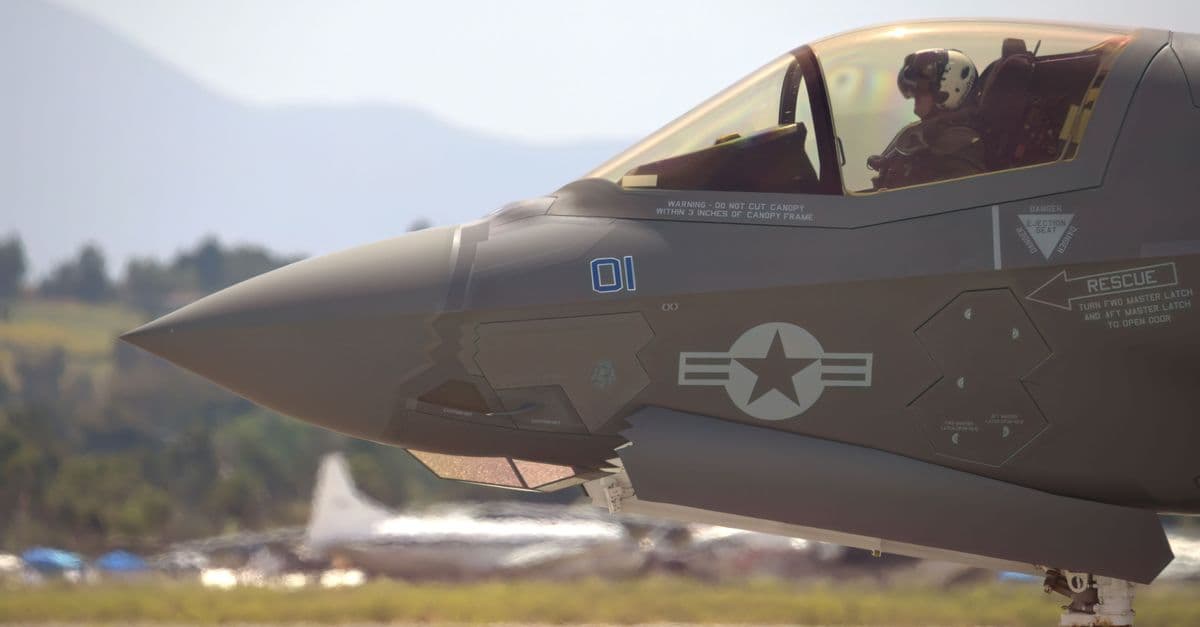
Photo: Guy Seela / Pexels
Control of the air has been the decisive factor in virtually every major conflict since World War II. The country that achieves air superiority can strike targets at will, protect its own forces from attack, disrupt enemy supply lines, and dominate the intelligence-surveillance-reconnaissance picture. The country that loses the air war finds its ground and naval forces exposed to devastating attack from above. In 2025, the ranking of the world's strongest air forces is dominated by the United States — an organization with more aircraft than the next three competitors combined — but challenged by a China whose qualitative modernization has been faster than most Western analysts predicted and a Russia whose Ukraine performance has revealed significant structural weaknesses beneath a large nominal inventory.
What makes an air force "strong"
Aircraft count alone is not strength. The relevant variables are: total aircraft (a measure of mass and sustainability in extended conflict), the proportion of fourth and fifth-generation fighters (a measure of air-to-air and air-to-ground capability), supporting enablers such as aerial refueling tankers and airborne early warning and control aircraft (AWACS) that extend operational reach and battle management, precision munitions stocks, and pilot training quality measured in annual flying hours.
An air force with 500 modern, well-maintained fighters, supported by 50 tankers and 10 AWACS platforms, with pilots flying 180 hours per year, is more capable than one with 1,500 older aircraft, no tankers, and pilots flying 60 hours per year. Russia's performance in Ukraine has made this point in combat conditions: a large numerical inventory did not produce air superiority against a smaller but better-organized Ukrainian air defense and air force.
Source: IISS Military Balance 2025 — the primary reference for all aircraft inventory data in this article. Published annually by the International Institute for Strategic Studies, London. Flight Global World Air Forces 2025 directory provides supplementary data.
Methodology
Aircraft inventory figures are drawn primarily from IISS Military Balance 2025 and the Flight Global World Air Forces 2025 annual directory. Fifth-generation designations follow the US Air Force's generational classification system. Operational aircraft counts exclude aircraft in depot-level maintenance, long-term storage without confirmed return-to-service status, and training-only platforms. Tanker and AEW figures are for operational platforms, not total on order or in reserve. This ranking assesses combined military air power — including naval aviation where aircraft carrier-based air power is operationally integrated — to reflect actual wartime capability rather than bureaucratic service designations.
Top 10 strongest air forces in the world (2025)
| Rank | Country | Total Aircraft | Fighter/Attack Aircraft | 5th-Gen Aircraft | Tankers/AEW |
|---|---|---|---|---|---|
| 1 | USA | 13,200 | ~2,800 | 800+ (F-22, F-35) | 600+ |
| 2 | Russia | 4,100 | ~1,500 | 22 (Su-57) | 30+ |
| 3 | China | 3,300 | ~1,600 | 200+ (J-20, J-35) | 15+ |
| 4 | India | 2,200 | ~700 | 0 (in development) | 6 |
| 5 | South Korea | 1,600 | ~500 | 40 (F-35A) | 4 |
| 6 | Japan | 1,450 | ~350 | 42 (F-35A/B) | 5 |
| 7 | Pakistan | 1,400 | ~400 | 0 | 4 |
| 8 | France | 1,050 | ~300 | 0 | 14 |
| 9 | Egypt | 1,050 | ~500 | 0 | 2 |
| 10 | Turkey | 1,000 | ~300 | 0 (F-16V upgrade) | 7 |
Source: IISS Military Balance 2025; Flight Global World Air Forces 2025 directory.
Where this data comes from
Air force aircraft inventory and capability data come from the International Institute for Strategic Studies (IISS) Military Balance 2025, the authoritative annual assessment of global military capabilities. IISS compiles aircraft data from national defence ministries, defence budgets, open-source imagery, and military journals. Aircraft counts represent operational inventory: aircraft in active service with confirmed operational status, excluding long-term storage and aircraft undergoing multi-year depot maintenance. Fifth-generation aircraft designations follow US Air Force classification. Tanker and airborne early warning counts include operationally deployed platforms only.
Why top countries lead in air force strength reflects three intersecting factors: historical defense spending accumulation, geographic scale, and recent technological investment. The United States leads through: decades of R&D spending exceeding any other nation's entire defense budget ($700+ billion annually), active recruitment of international air power talent, and continuous technology cycle modernization creating the F-22, F-35, and emerging B-21. Russia ranks second through sheer inherited Soviet inventory quantity (4,100 aircraft) despite revealed operational weaknesses in Ukraine that suggest many are not truly combat-ready. China rises to third through acceleration of qualitative modernization (5th-generation J-20/J-35 production since 2015+) combined with a large existing fleet. India, South Korea, and Japan rank by a combination of their own modernization programs and access to US-aligned technology (F-35 acquisition). France and Turkey round out the top 10 through regional modernization programs combined with legacy Cold War inventory. The ranking therefore reflects not pure combat capability in a symmetric conflict but rather what each nation can field: large inventories in combination with varying levels of modernization, logistics, and pilot training.
Historical context: how air power became decisive
Before World War I, warfare was conducted on the surface. Aircraft were curiosities. World War I transformed them into weapons: reconnaissance aircraft providing information that directed artillery, fighter aircraft contesting that reconnaissance, and early strategic bombing demonstrating the possibility of striking an enemy's population and industry directly. By 1918, air superiority had become a recognized objective.
World War II elevated air power to a genuinely decisive factor. The Battle of Britain (1940) demonstrated that an air force could deny an adversary the ability to invade. The destruction of the Luftwaffe over Germany by 1944 — enabling the Eighth Air Force and RAF Bomber Command to operate with decreasing opposition — was a precondition for D-Day's success. The Pacific War was decided by carrier aviation. The atomic bombs were delivered by B-29 bombers.
The Cold War produced the nuclear-capable strategic bomber triad (land-based, submarine-launched, and aircraft-delivered), the development of supersonic fighters designed for both air-to-air and nuclear delivery missions, and the accelerating technology cycles that defined the generational progression of combat aircraft.
Source: Richard Overy, "The Air War 1939–1945" (1980) and subsequent scholarship on the operational role of air power in WWII — the foundational historical reference for air power's role in 20th-century warfare.
The 1991 Gulf War is the most frequently cited modern demonstration of decisive air power. The 38-day Coalition air campaign preceding the ground assault effectively destroyed Iraq's command, control, communications, and logistics infrastructure. Iraqi ground forces, many of which had not moved under Coalition air attack, had lost cohesion before a single Coalition soldier crossed the border. The Gulf War's "100-hour ground war" was made possible by 38 days of air warfare. It shaped the doctrine, procurement priorities, and institutional culture of every major military for the following 30 years.
Why this matters now
The 2025 air power balance is more contested than at any point since the Cold War's end for three reasons. Elite ground units are another dimension of military capability, covered in countries with the best special forces.
China's rapid qualitative modernization has created a genuine fifth-generation threat in the Western Pacific. The J-20 Mighty Dragon entered service in 2017 and over 200 are now operational — making China the world's second-largest operator of fifth-generation fighters. This changes the calculus for US air operations in a Taiwan scenario from one of near-uncontested superiority to one of credible competition.
Russia's Ukraine performance has revised assessments in both directions. Russian air power has been less effective than expected: the inability to establish air superiority over Ukraine despite numerical and qualitative advantages has revealed weaknesses in suppression of enemy air defenses (SEAD), precision munitions stocks, pilot tactical training, and command integration. But the sheer volume of missile and drone strikes from Russian air and naval platforms has demonstrated that non-stealthy mass can still impose costs on an adversary with insufficient air defenses.
The proliferation of advanced air defense systems — Russian S-400 (sold to Turkey, India, and others), Chinese HQ-9, and potential future systems — means that fifth-generation stealth is increasingly necessary for air operations against peer adversaries, not merely desirable.
Source: IISS Military Balance 2025 Editor's Introduction — discusses the lessons of the Russia-Ukraine war for air power doctrine and procurement, including the performance gap between assessed and actual Russian air capabilities.
The United States: unchallenged dominance with a quality edge
The United States Air Force is the most powerful air force in recorded history measured by any relevant metric. The USAF's own fleet of approximately 5,500 aircraft includes over 180 B-52H strategic bombers being re-engined for service extension to the 2050s, 20 B-2 Spirit stealth bombers, and the new B-21 Raider that achieved initial operational capability in 2025 — the world's only stealth strategic bomber currently in series production. Navy aviation adds approximately 4,300 aircraft including F/A-18E/F Super Hornets and F-35C carrier variants. Marine Corps aviation contributes 1,100 aircraft including the F-35B short take-off and vertical landing variant.
The qualitative edge is substantial. The F-22 Raptor remains the world's most capable air superiority fighter — its combination of supercruise (supersonic flight without afterburner, reducing heat and fuel consumption), extreme maneuverability, all-aspect low observability, and advanced avionics has not been publicly matched. Only 186 F-22s were produced (a procurement decision widely regarded as a strategic error, made during the post-Cold War "peace dividend" era), but each represents the apex of current air-to-air capability.
The F-35A (Air Force), F-35B (Marines), and F-35C (Navy) represent the world's most capable multi-role combat aircraft in production. With over 900 F-35s delivered across all three variants to the US military as of early 2025, the F-35 has become the backbone of US tactical aviation. Its combination of multi-spectral stealth, the AN/APG-81 AESA radar, the Distributed Aperture System (which projects the entire 360-degree environment onto the pilot's helmet display), and electronic warfare capability makes it significantly more capable than any fourth-generation aircraft against peer threats.
The enabler fleet is where no competitor approaches the US. Over 600 aerial refueling tankers (KC-135, KC-46) give the US the ability to sustain combat operations at intercontinental distances indefinitely. Forty-three E-3 Sentry AWACS aircraft (in the process of being replaced by the E-7 Wedgetail) and 17 E-8 Joint STARS ground surveillance aircraft provide battle management capabilities that no adversary has replicated at comparable scale.
Source: US Air Force FY2025 Budget Materials and IISS Military Balance 2025 — operational aircraft inventory by type, including USAF, USN, USMC aviation.
The B-21 Raider: the next strategic dimension
The B-21 Raider, developed by Northrop Grumman and achieving initial operational capability in 2025, is the US's most consequential new weapons platform in a generation. It is designed to penetrate the most sophisticated integrated air defense systems — including those equipped with Russian S-400 or Chinese HQ-9 missiles — and deliver both conventional and nuclear weapons. The B-21's design incorporates lessons from the F-22 and B-2 but goes further, with an open-systems architecture allowing rapid capability upgrades, and the ability to fly optionally manned missions.
The production plan calls for at least 100 B-21s to replace the B-1B Lancer and B-2 Spirit fleets. At an estimated unit cost exceeding $700 million, it is the most expensive tactical production aircraft in history.
Russia: power eroded by Ukraine and revealed weaknesses
Russia's Aerospace Forces (VKS) nominally hold the world's second-largest aircraft inventory at approximately 4,100 aircraft. In practice, operationally ready numbers are substantially lower — IISS and independent analysts estimate that a meaningful fraction of Russia's listed inventory is in long-term storage or undergoing maintenance at any given time, a consequence of the Soviet-era practice of retaining aircraft rather than retiring them.
Russia's Ukraine performance has been examined extensively by Western defense analysts and consistently produces the same conclusions. Russia was unable to establish air superiority over Ukraine despite significant numerical and qualitative advantages. The failure has multiple documented causes: inadequate SEAD capability (the ability to destroy or suppress enemy surface-to-air missile systems), limited stocks of precision-guided munitions forcing reliance on unguided bombs, poor coordination between air and ground operations, and relatively low pilot training hours producing pilots who struggled with tactical adaptation in a contested environment.
Russia's most capable operational fighter is the Su-35S Flanker-M — a significantly upgraded variant of the Su-27 family with thrust-vectoring engines, advanced avionics, and an AESA radar. In air-to-air capable terms, it is a competitive fourth-generation-plus aircraft. The Su-57 Felon is Russia's fifth-generation response to the F-22, featuring reduced radar cross-section, supercruise capability, and internal weapons bays. However, only approximately 22 operational Su-57s had been delivered by early 2025 — a production pace that reflects both industrial challenges and cost constraints. The Su-57's stealth characteristics have been assessed by Western analysts as significantly inferior to the F-22 or F-35, though external public assessments cannot be fully definitive without direct measurement.
Source: IISS Military Balance 2025 — Russia chapter, documents VKS equipment inventory and assesses combat performance lessons from Ukraine operations.
Russia's bomber force — Tu-160 Blackjack (a supersonic swing-wing strategic bomber) and Tu-95 Bear (a turboprop-powered aircraft in service since the 1950s, still operational due to continuous upgrades) — has been extensively used for long-range cruise missile strikes in Ukraine. These aircraft fire Kh-101 cruise missiles from outside Ukrainian air defense range, demonstrating that standoff strike capability is still viable even when the penetrating strike mission is compromised.
China: the fastest qualitative rise in air power history
The People's Liberation Army Air Force (PLAAF) has undergone the most rapid qualitative transformation of any air force in the post-Cold War period. As recently as 2000, the PLAAF's inventory was dominated by J-6 and J-7 aircraft — copies of Soviet MiG-19 and MiG-21 designs from the 1950s. In 2025, it operates the J-20 fifth-generation stealth fighter, the J-35 carrier-capable stealth fighter, large numbers of advanced fourth-generation J-10C and J-16 aircraft, and an expanding tanker and AEW fleet.
The J-20 Mighty Dragon entered service in 2017 and approximately 200 are now operational, with production accelerating. Western assessments of J-20 capability vary — public information about its radar cross-section, sensor capabilities, and weapons capacity is limited. The consensus among open-source analysts is that the J-20 is a genuine fifth-generation aircraft with meaningful stealth characteristics, though probably not matching the F-22 in all-aspect stealth depth or the F-35 in sensor fusion. China is the only country other than the United States operating two distinct fifth-generation fighter programs (J-20 for the PLAAF, J-35 for the PLA Navy).
China's training standards have also significantly improved. PLA Air Force pilots now fly more hours annually than a decade ago, and training scenarios have moved toward realistic combat training rather than the scripted exercises that characterized Cold War-era Soviet and Chinese air forces.
Source: US Department of Defense Annual Report on Military and Security Developments Involving the People's Republic of China 2024 — provides the US government's assessment of PLAAF capabilities and modernization trajectory.
The limiting factor for Chinese air power in 2025 is enablers. China operates approximately 15 H-6U/K aerial refueling aircraft — compared to over 600 for the US. Without tanker support, PLA aircraft cannot operate far beyond China's coastal periphery. This limits Chinese air power projection capability significantly — though it is less limiting in the Taiwan scenario, which is within unrefueled range of Chinese bases.
India: mass and modernization in parallel
India's Indian Air Force (IAF) operates approximately 2,200 aircraft, making it the fourth-largest air force globally. The IAF's challenge is balancing mass — necessary against both the Pakistani threat to the west and the potential Chinese threat to the north — with modernization, complicated by budget constraints and procurement delays that have been endemic for two decades.
The most significant recent addition is the Rafale — 36 aircraft acquired from France in a government-to-government deal signed in 2016, delivered 2019–2022. The Rafale represents a substantial qualitative improvement over the IAF's older fleet, with an AESA radar, excellent electronic warfare capability, and the Meteor beyond-visual-range air-to-air missile — assessed as one of the world's most capable air-to-air missiles due to its ramjet propulsion and extended no-escape zone. India's Rafale deal was politically contentious; the fleet itself is operationally significant.
India is developing the Advanced Medium Combat Aircraft (AMCA) — a domestically designed fifth-generation fighter intended to reduce dependence on imported aircraft. The AMCA has been in development since the early 2000s under the Aeronautical Development Agency (ADA). A first flight is targeted for the late 2020s, with initial operational capability in the 2030s. The program's history of delays and scope adjustments means these timelines should be treated as aspirational rather than firm.
Source: Indian Ministry of Defence, IAF Annual Reports, and Jane's by S&P Global — for Rafale delivery schedule, AMCA development status, and IAF fleet composition.
South Korea and Japan: advanced regional powers with alliance integration
South Korea's Republic of Korea Air Force (ROKAF) and Japan's Air Self-Defense Force (JASDF) are both highly capable regional air forces with significant fifth-generation capability through F-35 acquisition, and both operate within tight alliance integration with the United States.
South Korea operates 40 F-35A fighters acquired from Lockheed Martin, alongside large fleets of F-15K Slam Eagles and KF-16 aircraft. South Korea is also producing the KF-21 Boramae — a domestically developed 4.5-generation fighter designed with significant South Korean content, developed with technical partnership from Indonesia (which contributed to development costs). The KF-21 first flew in July 2022 and is intended to replace aging F-4 and F-5 aircraft in ROKAF service.
Japan has committed to acquiring 147 F-35A and F-35B aircraft — one of the largest F-35 orders outside the United States — and operates the Mitsubishi F-2, a Japanese-developed variant of the F-16. Japan's most ambitious program is the F-X (designated F-3 in some references), a sixth-generation fighter being developed in partnership with the United Kingdom and Italy under the Global Combat Air Programme (GCAP). The target is an aircraft in service by 2035 with stealth, AI-assisted sensor fusion, and optionally manned capability.
Source: UK Ministry of Defence and Japan Defense Ministry — GCAP program announcements confirming trilateral F-X/Tempest development partnership, with target in-service date of 2035.
France and Turkey: capable middle powers
France operates the Dassault Rafale as its primary combat aircraft — a twin-engine multi-role fighter that has demonstrated considerable combat performance in Mali, Libya, Syria, and Iraq. France has no fifth-generation aircraft in service; the Rafale is a 4.5-generation aircraft by most classification schemes, though French officials contest this designation. France's air power is notable for its nuclear delivery capability: Rafales configured for the ASMP-A nuclear stand-off missile are integral to France's independent nuclear deterrent.
Turkey's situation is complicated by its exclusion from the F-35 program in 2019 following its acquisition of the Russian S-400 air defense system — a decision that created incompatibilities with NATO interoperability requirements and resulted in Turkey's removal from the F-35 industrial supply chain. Turkey is operating upgraded F-16 Block 70 aircraft and developing the indigenous KAAN fifth-generation fighter — a domestically designed aircraft that made its first flight in February 2023. KAAN's production timeline and capability level remain to be demonstrated.
Source: US Department of Defense — Turkey F-35 Removal Statement (2019); Turkish Aerospace Industries (TAI) — KAAN program first flight announcement, February 13, 2023.
The 5th-generation gap and what it means operationally
Fifth-generation fighters are defined by the combination of low-observable (stealth) design, advanced sensor fusion merging multiple radar and electro-optical inputs into a single integrated picture, supersonic performance, and internal weapons carriage (external weapons carriage undermines stealth). The F-22, F-35, J-20, J-35, and Su-57 are the five aircraft that meet these criteria. The difference between this class and fourth-generation aircraft in a contested air environment is not merely technical — it is doctrinal.
Think of it this way: a fourth-generation aircraft in a contested environment needs to defeat the enemy's radar and missiles while the enemy knows exactly where it is. A fifth-generation aircraft can approach and engage without the enemy knowing it is there until it is too late. The tactical advantage is qualitatively different from any speed or maneuverability improvement — it changes the basic rules of the engagement.
This is why China's deployment of over 200 J-20s is treated by US Air Force planners as a qualitative threshold crossing, not merely a quantitative increase. The Western Pacific air environment is now one where both sides have stealth capability — a fundamentally different scenario from every US air operation since the Gulf War.
Trends shaping air power through 2035
Sixth-generation programs. The US Next Generation Air Dominance (NGAD) program, the GCAP (UK/Japan/Italy), and the French/German FCAS are all targeting aircraft with AI-assisted pilot decision support, loyal wingman uncrewed combat air vehicle (UCAV) teaming, directed energy weapons integration, and significantly improved stealth. The US NGAD is reportedly on hold for cost reassessment as of 2024, but the underlying technology development continues. China is reportedly developing its own sixth-generation concepts.
Drone warfare integration. The Russia-Ukraine war demonstrated that uncrewed aerial systems — from commercially derived quadcopters modified for grenade delivery to purpose-built loitering munitions (Shahed-136, Lancet-3) — can inflict meaningful damage on military targets at low cost. Every major air force is incorporating UAS into doctrine, but the integration of attritable drones with crewed aircraft (the loyal wingman concept) is still in early operational stages.
Hypersonic glide vehicles. Russia has deployed the Kinzhal air-launched hypersonic missile and the Zircon ship-launched hypersonic weapon. China has demonstrated hypersonic glide vehicle technology. The US is developing hypersonic strike weapons but is behind Russia and China in deployed capability. Hypersonic weapons are relevant to air power because they are theoretically capable of defeating existing air defense systems at speeds that prevent interception.
Source: Congressional Research Service, "Hypersonic Weapons: Background and Issues for Congress" (updated 2024) — primary unclassified reference for US hypersonic weapons development status.
AI in battle management. The US DARPA Air Combat Evolution (ACE) program conducted a human-versus-AI dogfight simulation in 2020 in which the AI agent defeated human pilots in all five simulated engagements. This does not mean AI pilots are deployable today — sensor uncertainty, jamming, and legal-ethical constraints on autonomous lethal force remain unresolved — but it demonstrates that AI-assisted and eventually AI-primary combat functions are a realistic near-term development.
Frequently asked questions
Q: Which country has the strongest air force in 2025? A: The United States has the strongest air force in the world in 2025 by a significant margin across every relevant metric. With approximately 13,200 aircraft across all military branches, over 800 fifth-generation stealth fighters, over 600 tanker aircraft enabling global reach, and unmatched battle management systems, the US air fleet has no current equal.
Q: How many 5th-generation fighter jets does each country have? A: As of 2025, the United States leads with over 800 F-22s and F-35s combined. China has approximately 200 or more J-20s and an initial number of J-35s. Russia has approximately 22 operational Su-57s. South Korea and Japan each operate approximately 40 F-35s. No other country currently operates operational fifth-generation fighters.
Q: What did Russia's Ukraine performance reveal about its air force? A: The Ukraine war revealed significant weaknesses in the VKS (Russian Aerospace Forces) that were not apparent from inventory numbers alone: insufficient precision-guided munitions for sustained operations; poor suppression of enemy air defense capability; inadequate pilot training hours and tactical flexibility; and problems with avionics integration on aircraft operating outside their tested parameters. These weaknesses do not make Russia's air force irrelevant — it still has a large fleet and cruise missile strike capability — but they substantially reduced its operational effectiveness compared to pre-war assessments.
Q: What makes the F-22 different from the F-35? A: The F-22 Raptor was designed as a dedicated air superiority fighter — its primary mission is defeating enemy aircraft. It emphasizes extreme maneuverability (thrust-vectoring engines), supercruise, and all-aspect stealth optimized for air-to-air combat. The F-35 was designed as a multi-role aircraft — balancing air-to-air and air-to-ground missions across three variants for three services. The F-35 has more advanced sensor fusion and electronic warfare capability than the F-22 but is less optimized for pure dogfighting. In practice, the two aircraft are intended to operate together: F-22s clear the sky of enemy fighters; F-35s attack ground targets with reduced risk.
Q: Is China's J-20 as capable as the F-22 or F-35? A: Western open-source assessments consistently rate the J-20 as a genuine fifth-generation aircraft but with stealth characteristics and sensor capabilities that are likely inferior to the F-22 in all-aspect low observability, and probably comparable to or somewhat below the F-35 in sensor fusion. Direct comparison is impossible without classified measurement data. The operationally relevant conclusion: the J-20 is a credible threat that cannot be dismissed, and its presence in numbers over 200 changes the air environment in the Western Pacific meaningfully compared to a decade ago.
Q: What is GCAP and why does it matter? A: The Global Combat Air Programme is a trilateral agreement between the United Kingdom, Japan, and Italy to jointly develop a sixth-generation combat aircraft for service by 2035. It matters because it represents a significant alignment of advanced democratic nations' air power priorities, leverages Japan's substantial aerospace industrial base and combat aircraft experience, and is explicitly designed to counter the threat environment anticipated in the 2030s — including peer adversaries with fifth-generation fighters and advanced integrated air defense systems.
Sources
- IISS Military Balance 2025
- Flight Global World Air Forces 2025
- US DoD China Military Power Report 2024
- Congressional Research Service: Hypersonic Weapons 2024
- UK Ministry of Defence: GCAP Programme
Related reading:
Follow new articles
Add SciHub101 to your feed reader to see new science and technology stories.
About the Author
SciHub101 is an independent science and technology publication founded and edited by Buğra Sözeri, a software engineer and app developer based in Türkiye. AI tools assist with drafting and research. Source documentation in the existing archive is uneven, and articles are being reviewed and corrected. The Editorial Team byline identifies editorial responsibility; it does not certify specialist or independent human review. Where we compare products, anything built by our own team is labelled as such — see the editorial guidelines and About page for how corrections and disclosures work.
Related Articles

Countries With the Youngest Populations (2025)
Niger has a median age of just 15.0 years — half the population is younger than a teenager. The top 20 countries with the world's youngest populations are almost exclusively in sub-Saharan Africa, and their demographic trajectory will reshape the global economy over the coming decades.

Countries With the Oldest Populations, Ranked by Median Age
Monaco's median age is 54.4 years, the highest on Earth, and Japan follows at 49.0. Here is the 2023 ranking of the world's oldest countries, why they got there, and what aging does to pensions, labor, and health care.
Countries With the Most Stealth Aircraft (2026 Update)
Only three countries build and field stealth combat aircraft at scale: the United States, China, and Russia. This ranking covers fleet sizes, how stealth works, which allies fly the F-35, and where the published numbers are shaky.
Countries with the Largest Militaries (Ranked by Active Personnel)
China has the world's largest military by active personnel — approximately 2,035,000 active-duty service members as of 2024, according to IISS Military Balance estimates. India ranks second at roughly 1,476,000, the United States third at approximately 1,316,000. North Korea and Russia complete the top five. But personnel count is only one dimension of military capability: the United States spends more on defense than the next ten countries combined, and technology, doctrine, and logistics matter as much as headcount. This ranking covers the top 20 countries by active military personnel using IISS Military Balance 2024 and SIPRI data, with methodology, spending comparison, and caveats.
Countries Spending the Most on Military R&D (2025)
Military research and development determines which country dominates warfare in 20 years, not today. The United States spends over $140 billion annually on defence R&D — more than China's entire official military budget. This ranking covers the top 10 investors in military technology and the cutting-edge programmes they are funding.
Countries With the Best Special Forces in the World (2025)
Special forces are the sharp edge of military power — small teams of elite soldiers who operate behind enemy lines, conduct hostage rescues, and execute missions that conventional forces cannot. This ranking of the top 10 countries with the best special forces covers the world's most elite units, their doctrine, and their most famous operations.