Countries With the Best Special Forces in the World (2025)
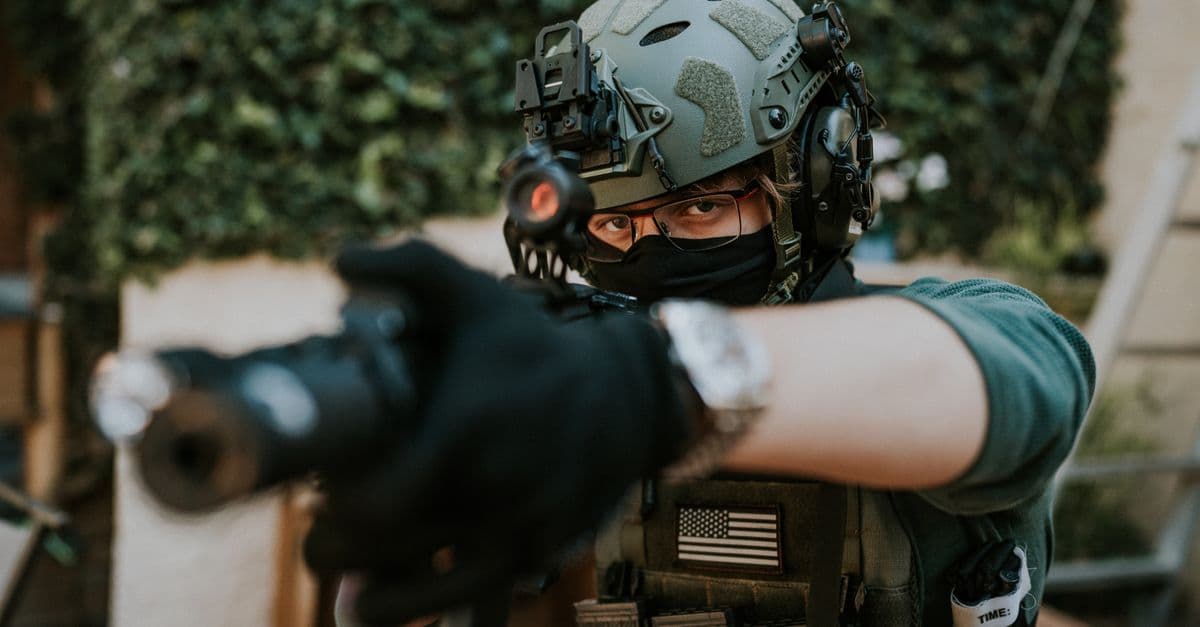
Photo: Amar Preciado / Pexels
A single special operations team has, on several occasions, changed the course of a conflict that conventional forces could not. The 1976 Entebbe rescue — 100 hostages freed from Uganda by Israeli commandos who flew 2,500 miles — was accomplished by fewer than 100 soldiers. The raid that killed Osama bin Laden required 79 operators for a 38-minute mission. Special forces represent a category of military capability that operates outside the arithmetic of mass: their value is not in numbers but in precision, training, and the ability to accomplish missions that no other instrument of state can perform. This ranking examines which countries field the world's most capable special operations forces — and why that matters in 2025.
A note on methodology: Special forces rankings cannot be resolved with objective data in the way that, say, GDP or army size can be. Much of what makes special forces capable is classified. Unit compositions, operational failures, training mortality rates, and ongoing mission details are not published. This ranking draws on: declassified mission histories, congressional testimony, credible defence journalism (SOFREP, Jane's, IISS), academic research on special operations doctrine, and the consensus assessment of analysts who have worked with or studied these forces. It should be treated as qualitative analysis, not a numerical league table.
Key takeaways
- The United States Special Operations Command (SOCOM) is the world's largest special operations enterprise — over 70,000 personnel established in 1987 following the operational failures of Operation Eagle Claw.
- SEAL Team 6 (DEVGRU) conducted the raid that killed Osama bin Laden in May 2011 — the most famous special forces operation in history, executed across the Pakistani border without host-nation permission.
- The British 22nd SAS Regiment pioneered many of the counterterrorism assault doctrines now used by every elite unit in the world, most visibly demonstrated during the 1980 Iranian Embassy siege.
- Israel's Sayeret Matkal operates in one of the world's most demanding environments — surrounded by hostile actors — and conducts covert operations at a frequency and operational tempo no other nation's special forces can match.
- Russia's Spetsnaz performed poorly in conventional assault roles in Ukraine but specialist units like Alpha and Vympel maintain genuine capability in their core counterterrorism and hostage rescue missions.
Methodology: What "Best" Means for Special Forces
Ranking special forces requires being precise about what is being measured, because "best" means different things in different mission sets.
Selection and training standards are the most measurable factor. Elite unit selection courses are deliberately designed to eliminate the majority of candidates — not to be brutal for its own sake, but because the missions require individuals who can function under extreme stress with minimal supervision. Delta Force's selection course has historically passed approximately 5–10% of applicants. British SAS selection across the Brecon Beacons mountains passes a similar fraction. Selection standards are a reasonable proxy for the quality floor of the resulting force.
Mission set breadth distinguishes the truly tier-one forces. A unit that can conduct hostage rescue, direct action against high-value targets, reconnaissance in denied areas, and foreign internal defence training is more capable than one optimised for a single mission type. The US Tier 1 units — Delta and DEVGRU — are the only forces with genuine breadth across all mission categories plus the supporting intelligence and aviation infrastructure that makes each mission possible.
Operational record provides the most direct evidence but is also the least accessible. Most significant special forces operations are classified for decades. What enters the public record is skewed toward successes and toward US/UK forces whose operations receive more coverage. Operations conducted by Israeli, French, or Australian forces that are equally impressive may not be publicly known.
Institutional support — the intelligence, aviation, logistics, and command and control infrastructure that supports operators — is as important as the operators themselves. The US advantage is not primarily in having better individual soldiers than the British SAS or Israeli Sayeret Matkal. It is in the depth of supporting infrastructure: the 160th Special Operations Aviation Regiment (Night Stalkers), the NSA intelligence feeds, the JSOC command structure, and the logistics that can sustain operations globally.
Source: US Congressional Research Service, Defense Primer: Special Operations Forces — congress.gov
Top 10 Countries With the Best Special Forces
| Rank | Country | Primary Elite Units | Mission Focus | Notable Operations |
|---|---|---|---|---|
| 1 | USA | Delta Force (CAG), SEAL Team 6 (DEVGRU), 75th Rangers, 160th SOAR | Full spectrum | bin Laden raid, Baghdadi raid, hostage rescue |
| 2 | UK | 22 SAS, SBS, SFSG | CT, direct action, reconnaissance | Iranian Embassy siege, Falklands, Gulf War |
| 3 | Israel | Sayeret Matkal, Shayetet 13, Shaldag, Yahalom | CT, direct action, intelligence | Entebbe, Iran sabotage, covert operations |
| 4 | Russia | Spetsnaz (Alpha, Vympel), GRU Special Forces | CT, direct action, sabotage | Moscow Theatre, Beslan, Ukraine operations |
| 5 | France | 1er RPIMa, GIGN, CPA 10, Commando Hubert | CT, hostage rescue, direct action | Mogadishu, Mali operations, hostage rescues |
| 6 | Germany | KSK, GSG-9, SEK | CT, direct action | Mogadishu 1977 (GSG-9), various CT |
| 7 | Australia | 2 SASR, 1st and 2nd Commando Regiments | Direct action, reconnaissance | Afghanistan, Iraq, various |
| 8 | Turkey | SAT, MAT, JÖH, ÖHD | CT, maritime, amphibious | Northern Syria, Azerbaijan support |
| 9 | South Korea | 707th SMB, UDT/SEAL, 1st SF Brigade | CT, direct action, unconventional war | Anti-piracy, North Korea contingencies |
| 10 | India | MARCOS, Para SF (21 Para), NSG | Maritime CT, direct action, hostage rescue | 26/11 Mumbai response, Kashmir operations |
This ranking is qualitative, not numerical. Positions reflect assessed overall capability and institutional depth, not a precise scoring formula.
Source: US Congressional Research Service Defense Primer; SOFREP (Special Operations Forces Report); IISS Military Balance; SIPRI; Declassified operation histories.
Where this data comes from
This ranking is qualitative, based on: declassified mission records and congressional testimony (bin Laden raid, Eagle Claw, Entebbe); peer-reviewed research on special operations doctrine; credible defence journalism (SOFREP, Jane's Intelligence Review, DefenseNews); institutional details published by special operations commands; and interviews with or writings by former operators. Because most current special forces activities remain classified, this ranking cannot be based on comprehensive quantitative data. Selection pass rates, training syllabi, and operational scope are used as proxies for capability where direct assessment is unavailable. The methodology explicitly acknowledges that rankings of classified military capability are inherently uncertain.
Why tier-one special forces concentrate in countries with integrated institutions
The countries that rank highest—the USA, UK, Israel—share a structural characteristic: they combine elite operator selection and training with integrated institutional infrastructure (intelligence, aviation, logistics, command structure) that multiplies operator effectiveness. The USA's advantage is not primarily that individual Delta Force operators are more skilled than British SAS operators (which is unknowable and likely false)—it is that Delta operates within SOCOM, which includes the 160th Aviation Regiment (Night Stalkers), NSA intelligence feeds, and JSOC command structure that enable globally deployable operations with helicopter insertion, intelligence packages, and immediate air support. The British SAS is arguably as well-trained but operates within a smaller organizational infrastructure with fewer resources. Israel's Sayeret Matkal achieves extraordinary capability-per-capita despite its small size because Israeli national strategic doctrine treats special operations as central, not peripheral, and integrates all supporting institutions around them. By contrast, Russia's Spetsnaz units, while elite, operate within an institutional structure that has been historically subordinated to conventional forces and lacks the same level of integrated intelligence and aviation support. France fields world-class special forces (1er RPIMa) but fewer opportunities for operational deployment at the global scale US forces see. The structural lesson is that special forces excellence depends as much on institutional support as on selection and training standards.
A Brief History of Modern Special Operations
Special operations forces as a formal institutional category are largely a 20th-century invention, though small-unit elite forces have existed in every military tradition.
The Second World War was the crucible. Britain's Special Operations Executive (SOE) conducted covert operations across occupied Europe. The SAS — founded by David Stirling in the North African desert in 1941 — pioneered the deep-penetration raiding concept. US Army Rangers and the Office of Strategic Services (OSS, forerunner of the CIA) developed American special operations doctrine. The German Brandenburg Division conducted some of the earliest special operations of the war in German uniform.
The Cold War created new requirements. Counterinsurgency — supporting or opposing guerrilla movements — required small teams with language skills, cultural knowledge, and the ability to train partner forces. The US Army's Green Berets were established in 1952 specifically for this unconventional warfare mission. The British SAS shifted focus from WWII-era raiding to counterinsurgency operations in Malaya, Borneo, Oman, and Northern Ireland.
The defining modern shift came from two failures. The 1972 Munich Olympics massacre — where German police's bungled rescue attempt resulted in the death of all 11 Israeli athletes held by Palestinian militants — demonstrated the catastrophic cost of having no dedicated hostage rescue capability. West Germany responded by creating GSG-9 in 1972. Israel created Yamam and improved Sayeret Matkal's counterterrorism capability. The US and UK reviewed their own arrangements.
Eight years later, the 1980 Operation Eagle Claw disaster — the failed attempt to rescue American hostages in Iran, which ended with eight dead US servicemen and no hostages freed after a helicopter collision in the Iranian desert — prompted congressional investigation and the Goldwater-Nichols reforms. SOCOM was created in 1987 specifically to ensure joint command, resource control, and doctrinal coherence across all US special operations forces.
Source: SOFREP — The Birth of SOCOM — sofrep.com
United States: The World's Special Operations Enterprise
SOCOM is not a single special forces unit. It is the command structure that integrates the most diverse and largest collection of elite capabilities ever assembled, established on April 16, 1987.
The command has grown from approximately 37,000 personnel in the 1990s to over 70,000 today — growth driven almost entirely by the post-9/11 counterterrorism demands in Afghanistan, Iraq, and more than 80 other countries where US special operations forces have been deployed at various points.
Delta Force (1st Special Forces Operational Detachment-Delta, or CAG — Combat Applications Group) is the Army's Tier 1 counterterrorism and direct action unit. Founded by Colonel Charles Beckwith in 1977, modelled on his experience serving with the British SAS, Delta has never been officially acknowledged by the US government — it operates under cover names. Selection involves a gruelling 24-day course in the mountains of West Virginia with a pass rate of approximately 5–10% of the several hundred soldiers who attempt it annually. Delta operators are trained across a portfolio that includes close-quarters battle, long-range sniping, explosive entry, hostage rescue, intelligence collection, HALO/HAHO parachuting, and combat diving — with individual operators typically specialising in several.
SEAL Team 6 (DEVGRU — Naval Special Warfare Development Group) is the Navy's Tier 1 equivalent. DEVGRU became globally known after the May 2, 2011 raid on Osama bin Laden's compound in Abbottabad, Pakistan — Operation Neptune Spear. Seventy-nine operators were inserted by helicopter across the Pakistani border without Pakistani government knowledge, the mission conducted at night, and completed in approximately 38 minutes from landing to extraction. One helicopter was lost to a hard landing and destroyed on site to prevent technology capture. bin Laden was killed and his body removed for identification. The operational planning, intelligence work, and execution across the Pakistani border, at night, with complete tactical surprise, represents a benchmark in special operations planning.
The 75th Ranger Regiment provides the "hard assault" infantry capability that Tier 1 units rely on for perimeter security, blocking positions, and sensitive site exploitation. Rangers are not Tier 1 in the same sense as Delta or DEVGRU — their selection and training, while extremely demanding, are oriented toward larger-scale assault operations rather than the small-team direct action of Tier 1. They are, however, significantly more capable than conventional infantry and have been deployed continuously since 2001.
The 160th Special Operations Aviation Regiment (Night Stalkers) provides the aviation support that makes modern special operations possible. Night Stalkers fly extensively modified MH-60 Black Hawks, MH-47 Chinooks, and MH-6 Little Birds equipped with terrain-following radar, FLIR, and electronic countermeasures that allow clandestine night insertion into defended areas. Their motto: "Night Stalkers Don't Quit." Without the 160th, the bin Laden raid, the Baghdadi raid, and hundreds of other operations would not have been feasible.
Source: USSOCOM official history — socom.mil
The British SAS: The Template That Every Unit Copies
The British 22nd SAS Regiment holds a unique position in special operations history: it is simultaneously one of the world's top operational units today and the institution whose doctrines have been copied, adapted, and built upon by nearly every other elite force in the world.
Founded by Captain David Stirling in 1941 in the North African desert, the SAS was built on a simple insight: a small number of highly skilled soldiers operating deep behind enemy lines could destroy aircraft, supply lines, and command posts more efficiently than conventional forces attacking from the front. The regiment conducted 400+ missions across North Africa in 1942 alone, destroying more enemy aircraft on the ground than the Royal Air Force destroyed in the air during the same period.
The SAS was disbanded after the war, reconstituted in 1947, and gradually developed from a WWII raiding force into a counterinsurgency and counterterrorism organisation through operations in Malaya (1950s), Borneo (1960s), Oman (1970s), and Northern Ireland (1970s–90s). The Northern Ireland deployment produced some of the most consequential development of surveillance and intelligence-gathering techniques in the unit's history.
The 1980 Iranian Embassy siege in London is the most famous SAS operation. On April 30, six Iranian Arab separatists took 26 hostages at the Iranian Embassy in Princes Gate. After six days, when a hostage was killed, the SAS was ordered to assault. In 17 minutes, operators entered through windows and an upper floor, placed explosive charges, and cleared the building. Five of six terrorists were killed; all but one of the remaining 25 hostages survived. The operation was broadcast live on BBC television, making it the first globally televised special forces action and establishing the SAS's reputation internationally.
The SAS's most significant contribution to global special operations may not be any single operation but the selection process it pioneered. The SAS Selection course — three phases across the Brecon Beacons mountains of Wales — has been studied and adapted by special forces worldwide. Its insight was that you cannot train someone to become an SAS operator from scratch; you can only select those who already have the physical and mental foundations and then refine them. This philosophy — intense selection followed by advanced training — is now universal among elite forces.
The Special Boat Service (SBS) — the Royal Marines' maritime special operations unit — operates alongside the SAS at equivalent capability levels in maritime environments. Together, the SAS and SBS form Britain's Tier 1 capability and have operated alongside US Tier 1 units as functional equals in Afghanistan and Iraq.
Source: Ministry of Defence, UK — gov.uk/government/organisations/ministry-of-defence
Israel: Precision Under Permanent Pressure
Israel's special forces operate under conditions that no other democratic country's forces face — a continuous, multi-front operational environment with no peacetime in any meaningful sense.
Since 1948, Israel has fought six major wars, conducted hundreds of covert operations, executed dozens of targeted killing campaigns, and maintained special operations activity simultaneously in Gaza, the West Bank, Lebanon, Syria, Iraq, and — according to widespread reporting — Iran. The cumulative operational experience of Israeli special forces, with no gaps for peacetime training cycles, is unmatched.
Sayeret Matkal (General Staff Reconnaissance Unit) is the IDF's Tier 1 force, modelled partly on the SAS. Its specific missions and current operational details are classified, but its publicly known history includes: Operation Thunderball (Entebbe, 1976); participation in multiple missions against Black September in the aftermath of the Munich massacre; and a continuous programme of intelligence collection inside hostile territory. Several Israeli prime ministers served in Sayeret Matkal, including Benjamin Netanyahu and Ehud Barak — the latter led the unit.
Operation Thunderball (July 1976) remains the most audacious hostage rescue operation in history by most measures. On June 27, a Palestinian-German militant group hijacked Air France Flight 139 with 248 passengers and diverted it to Entebbe Airport in Uganda, where President Idi Amin provided support. Israel flew eight transport aircraft approximately 4,000 kilometres (2,500 miles) to Uganda — navigating across hostile airspace by flying below radar with a Mercedes disguised as Idi Amin's motorcade at the front. The assault team landed, drove to the terminal, and freed 102 of the 106 hostages in approximately 90 minutes. Three hostages and one Israeli commander (Yoni Netanyahu, Benjamin's brother) were killed. The operation is still studied at military staff colleges worldwide.
Shayetet 13 is the Israeli naval special operations unit, comparable to the SBS or US Navy SEALs in maritime capability. It has conducted operations against weapons smuggling at sea and was involved in the 2010 flotilla interception — an operation that became controversial internationally.
Ongoing covert operations: Israel has reportedly conducted hundreds of airstrikes in Syria to prevent weapons transfers to Hezbollah. Multiple explosions at Iranian nuclear facilities — including the 2021 Natanz sabotage that used explosive devices concealed in equipment — have been widely attributed to Israeli intelligence and special operations, though not officially confirmed. The operational tempo of Israeli special operations is higher than any comparable country's forces.
Source: IISS Military Balance 2024 — iiss.org
France and Germany: Europe's Other Elite Forces
France maintains a comprehensive special operations structure that is the most active in Europe after the UK, reflecting France's extensive military commitments in Africa, the Middle East, and the Indo-Pacific.
1er RPIMa (1st Marine Parachute Infantry Regiment) is the French Army's Tier 1 direct action unit, conducting operations across France's former colonial sphere in Africa — particularly in the Sahel, where France operated for a decade fighting Islamist insurgencies in Mali, Burkina Faso, and Niger under Operation Barkhane and its predecessors. French special forces have conducted numerous hostage rescue attempts in Africa, with varying outcomes. The 2013 hostage rescue attempt in Somalia that resulted in two French soldiers killed and both hostages also dying illustrated the limits of even well-planned operations against motivated, prepared adversaries.
GIGN (National Gendarmerie Intervention Group) is France's primary counterterrorism unit — technically a gendarmerie (military police) unit rather than special forces proper, but operating at equivalent capability levels. GIGN's most celebrated operation was the December 1994 Air France Flight 8969 hijacking in Marseille: four Algerian militants seized the aircraft at Algiers, killing three passengers, with the stated goal of crashing the fuel-laden plane over Paris. GIGN stormed the aircraft on the tarmac at Marseille-Marignane airport, killing all four hijackers while sustaining injuries but no fatalities among the remaining 171 hostages and crew. The operation remains a benchmark for aircraft assault tactics.
Germany's KSK (Kommando Spezialkräfte) was formed in 1996 and has been deployed to Afghanistan and other operational theatres. The unit underwent a significant internal review after 2020 following concerns about extremist elements within its ranks — a genuinely unusual problem for an elite force — and temporarily suspended new recruitment while reforms were implemented.
GSG-9 (Border Protection Group 9), the Federal Police counterterrorism unit, achieved its defining operation in October 1977 during the Mogadishu hijacking. Palestinian militants hijacked a Lufthansa aircraft with 86 passengers, flying it across multiple countries while Germany negotiated. When the aircraft landed in Mogadishu, Somalia, GSG-9 assaulted with indirect assistance from two SAS advisors (who provided stun grenade technology). All four hijackers were killed or captured; all 86 hostages survived with minor injuries. The operation, combined with the context of the concurrent kidnapping of industrialist Hanns Martin Schleyer, defined West Germany's uncompromising counterterrorism policy.
Source: Jane's World Armies — janes.com
Australia: Punching Above Weight
Australia's Special Air Service Regiment (2 SASR) and Commando Regiments are widely considered among the best special forces in the world per capita — a remarkable achievement for a country of 26 million.
SASR selection mirrors the British SAS model — a brutal selection process through the Western Australian bush conducted over several weeks, with pass rates of approximately 10%. The regiment's operators serve closely alongside US and British Tier 1 forces in Afghanistan and Iraq and are assessed as equivalents in most mission categories.
Australia's recent special operations history has been complicated by the Brereton Report (2020), an Inspector-General of the Australian Defence Force inquiry that found credible evidence of 39 unlawful killings of Afghan civilians and detainees by Australian special operations personnel between 2005 and 2016. The report led to criminal referrals and significant institutional soul-searching. It also illustrated the institutional risks of special operations forces operating under intense pressure with inadequate oversight — a challenge that faces all special forces operating in protracted counterinsurgency conflicts.
The willingness of the Australian government to publicly investigate and publish this report — rather than classify it — was itself notable, and distinguishes Australia's institutional culture from those that would suppress such findings.
Source: Inspector-General of the Australian Defence Force Afghanistan Inquiry Report (Brereton Report) — defence.gov.au
Russia's Spetsnaz: Capability and Its Limits
Russia's special forces present a complex picture: genuine capability in certain mission areas, significant institutional weaknesses in others, and a performance gap in Ukraine that revealed limitations in the broader Russian military system.
Alpha Group and Vympel are Russia's premier counterterrorism and hostage rescue units, operating under the Federal Security Service (FSB) rather than the military. Alpha was founded in 1974 as a KGB counterterrorism unit. Its highest-profile operations include the Moscow Theatre siege (2002) and the Beslan school siege (2004) — both of which resulted in significant hostage deaths due to the use of incapacitating gas (Moscow) and tactical decisions that remain controversial. Both operations ended the sieges but at costs that most western special forces doctrines would consider unacceptable from a hostage protection standpoint.
GRU Special Forces (military intelligence special forces) conduct deep reconnaissance, sabotage, and the kind of "grey zone" operations — deniable interference in foreign countries — that Russia has deployed extensively in Ukraine, the Baltic states, and elsewhere. The alleged poisoning of Sergei Skripal in the UK in 2018, the assassination of Chechen exiles in Western Europe, and the manipulation of political processes in various countries have all been attributed to GRU units.
Ukraine performance: Russian special forces performed poorly in the initial phases of the 2022 Ukraine invasion. The assault on Antonov Airport (Hostomel) in the opening hours — intended to seize an airfield to allow direct military transport into Kyiv — failed, with Russian airborne assault troops sustaining heavy casualties from Ukrainian resistance. The deeper problem was integration: Russian special forces tactics require the kind of suppressed air defence, electronic warfare support, and operational security that the broader Russian military did not provide. Well-trained operators in a poorly coordinated combined arms operation face the same fundamental problems as conventional troops.
The lesson is general: special forces capability is not separable from the institutional context in which it operates. Delta Force without the Night Stalkers, NSA intelligence feeds, and JSOC command architecture would be dramatically less capable.
Source: Royal United Services Institute (RUSI) analysis — rusi.org
The Post-9/11 Transformation of Special Operations
The 2001 attacks on New York and Washington fundamentally transformed what special forces are used for and how extensively they are deployed.
Before 9/11, SOCOM maintained a force structure oriented toward Cold War contingencies — counterterrorism at home and abroad, training partner forces, and the specific scenario of a major conventional conflict requiring deep reconnaissance. Personnel numbered approximately 45,000. Operations were frequent but rarely continuous.
After 9/11, SOCOM became the primary instrument of the Global War on Terror. Under General Stanley McChrystal's command of JSOC (Joint Special Operations Command), special forces moved from a slow-tempo intelligence-gathering model to what McChrystal called an "industrial counterterrorism" model: targeting cycles compressed from weeks to hours, multiple raids per night in Iraq and Afghanistan, continuous intelligence integration between operators and analysts. JSOC's targeting process — from identification to kinetic action — was reduced from an average of 90 days in 2003 to 18 hours at peak tempo in 2007–2008.
This approach produced genuine tactical success — hundreds of high-value targets killed or captured, insurgent networks disrupted repeatedly. It also produced strategic ambiguity: Iraq and Afghanistan remained unstable despite years of intensive special operations activity, suggesting that killing insurgent leaders does not resolve the underlying conditions that produce insurgency. The debate within the special operations community about the appropriate balance between direct action (raids) and indirect action (building partner capacity, winning populations) continues.
Source: General Stanley McChrystal, Team of Teams (Portfolio/Penguin, 2015)
Special Forces in 2025: The Shifting Mission Set
Special operations forces in 2025 operate in a world shaped by several concurrent trends.
Great power competition has shifted some attention from counterterrorism to preparing for potential confrontation with China and Russia. US SOCOM has publicly stated that its planning priorities include supporting allies in the Indo-Pacific through foreign internal defence and information operations — the same missions Green Berets performed in Vietnam and Central America, now oriented toward deterrence of Chinese influence.
Grey zone and information operations have expanded as a special forces mission set. Deniable interference — the kind of operations attributed to Russian GRU units in Europe, or US military information support operations in various theatres — occupy a space between conventional military action and intelligence activity that special forces are increasingly asked to fill.
Ukraine has demonstrated both the value and limits of special forces in a high-intensity conventional conflict. Ukrainian special operations forces — trained and equipped with NATO assistance, including by US Green Berets and UK SAS teams in the years before 2022 — have been essential to Ukraine's reconnaissance and targeting operations. They have not substituted for conventional combined arms warfare, but they have enabled it.
Technology integration is changing the human-machine balance in special operations. Drone intelligence, AI-assisted targeting analysis, and real-time intelligence fusion are now part of every major special forces operation. The individual operator remains essential; the infrastructure surrounding them has become far more capable and more complex.
Frequently Asked Questions
Q: Which country has the best special forces in the world? A: The United States has the world's most capable and comprehensive special operations enterprise, with Delta Force (CAG) and SEAL Team 6 (DEVGRU) regarded as the world's top Tier 1 counterterrorism and direct action units. The British SAS, Israeli Sayeret Matkal, and Australian SASR are assessed as world-class at equivalent or better levels per capita in specific mission areas. This ranking reflects institutional depth and mission breadth, not a claim that individual US operators outperform British or Israeli operators at their specific specialisations.
Q: How many operators are in Delta Force? A: The exact size is classified. Delta is estimated to have approximately 1,000–2,000 personnel across assault squadrons, support elements, and associated intelligence and aviation detachments. Actual assault operators number in the hundreds. Delta is deliberately small — it is an elite force, not a mass force.
Q: What is the difference between special forces and special operations forces? A: In US military terminology, "Special Forces" (capitalised) refers specifically to Army Green Berets, who specialise in unconventional warfare, foreign internal defence, and working with partner militaries. "Special operations forces" is the broader category covering all elite units including Rangers, SEALs, Delta, Psychological Operations, and Civil Affairs. Outside the US, the terms are often used interchangeably.
Q: What is JSOC and how does it relate to SOCOM? A: JSOC (Joint Special Operations Command) is the component of SOCOM that commands the most sensitive counterterrorism missions — specifically the Tier 1 units including Delta, DEVGRU, and their aviation and intelligence support. SOCOM is the broader command covering all US special operations forces. Think of SOCOM as the entire enterprise and JSOC as the sharp end responsible for the most classified operations.
Q: Do special forces work together across countries? A: Yes, extensively. US, British, Australian, and Canadian Tier 1 units have operated in integrated teams on classified operations in Afghanistan and Iraq. The "Five Eyes" intelligence relationship enables deep operational collaboration. Israeli and US special forces share intelligence and some technology. NATO special operations forces train together regularly under NATO Special Operations Headquarters (NSHQ). Allied forces routinely embed liaison officers with each other's Tier 1 units.
Q: What is the failure rate of special forces selection courses? A: Selection courses for Tier 1 units are designed to pass a small minority. British SAS selection passes approximately 10% of those who attempt it. Delta Force selection passes approximately 5–10%. Australian SASR selection passes roughly 10%. These numbers reflect the standard: the course does not just test physical endurance but judgment, decision-making under stress, and the ability to operate independently. Units that compromise selection standards in response to operational demand for personnel typically see capability decline.
The Takeaway
The world's best special forces reflect the countries that have invested most deeply in the human capital, doctrine, and institutional infrastructure that make elite military capability possible. The United States leads by scale and resource depth — SOCOM at $14 billion per year is the largest organisation of its kind in history. But quality is broadly distributed: the British SAS created the template that everyone else follows; Israeli forces operate at a frequency and operational tempo that no other country matches; Australian SASR operators are peers with US Tier 1 forces in their mission areas. The most important finding for 2025 is that special forces cannot substitute for strategy: decades of intensive US special operations activity in Afghanistan and Iraq did not produce stable political outcomes. Small teams of extraordinary soldiers remain among the most valuable instruments any country possesses — but only for missions that can actually be resolved by precision military action.
Related Reading
Follow new articles
Add SciHub101 to your feed reader to see new science and technology stories.
About the Author
SciHub101 is an independent science and technology publication founded and edited by Buğra Sözeri, a software engineer and app developer based in Türkiye. AI tools assist with drafting and research. Source documentation in the existing archive is uneven, and articles are being reviewed and corrected. The Editorial Team byline identifies editorial responsibility; it does not certify specialist or independent human review. Where we compare products, anything built by our own team is labelled as such — see the editorial guidelines and About page for how corrections and disclosures work.
Related Articles
Countries With the Biggest Defence Budgets in the World (2025)
Global defence spending hit a record $2.72 trillion in 2024 and continues to climb in 2025. This ranking covers the top 20 biggest military budgets, their share of GDP, and what each country is actually buying with that money.

Best Countries to Live In: Quality of Life Index (2025)
Iceland, Norway and Switzerland top the UN's 2025 Human Development Index, and Nordic countries dominate the 2025 World Happiness Report. Here is how the main quality-of-life measures are built, where they agree, and where they disagree.
Countries Spending the Most on Military R&D (2025)
Military research and development determines which country dominates warfare in 20 years, not today. The United States spends over $140 billion annually on defence R&D — more than China's entire official military budget. This ranking covers the top 10 investors in military technology and the cutting-edge programmes they are funding.
Countries With the Most Aircraft Carriers (2025)
Aircraft carriers are the ultimate symbol of naval power projection. In 2025, only a handful of countries operate them, and the United States operates more than the rest of the world combined. This ranking covers every country with aircraft carriers, from American supercarriers to light carriers and helicopter carriers.
Countries With the Most Military Bases Abroad (2025)
Foreign basing is one of the clearest expressions of a country's global reach, but no two lists count it the same way. Here is what is documented for the United States, United Kingdom, France, Russia, China, Turkey, and others, and why the totals differ so much.
Countries With the Most Nuclear Weapons (2025 Rankings)
Nine countries possess nuclear weapons in 2025. Russia leads with approximately 5,580 warheads; the United States has 5,044. Together they hold over 87% of all warheads on earth. China is the fastest-growing nuclear power, having added roughly 100 warheads per year since 2023. And the arms control architecture that managed US-Russian competition for five decades has effectively collapsed.