Countries Spending the Most on Military R&D (2025)
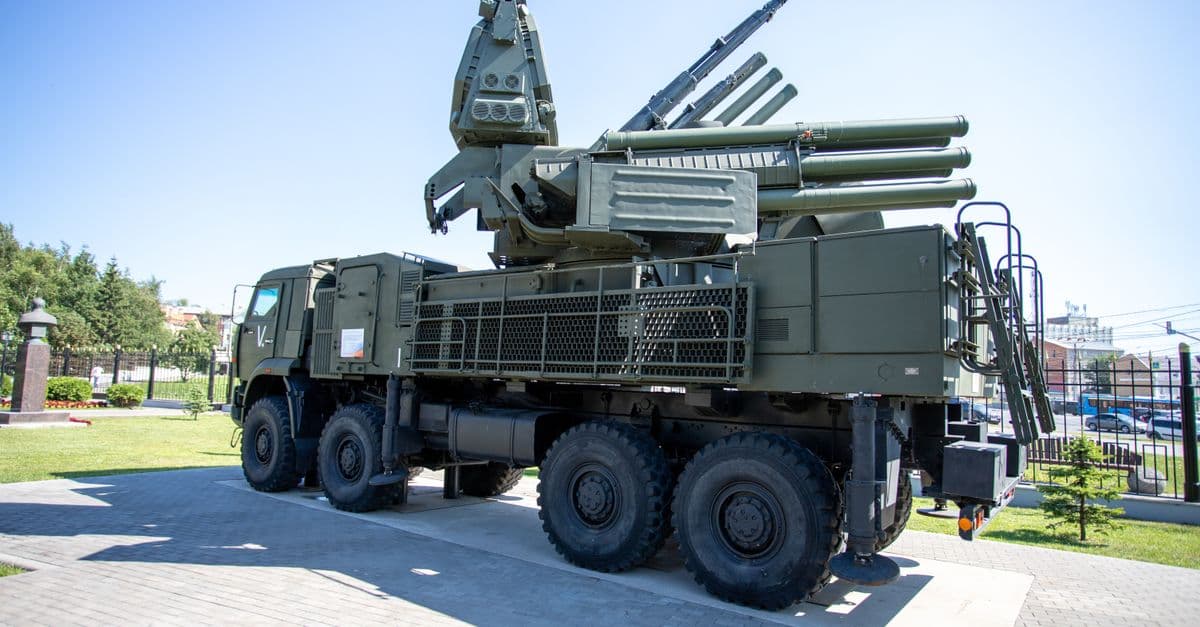
Photo: Михаил Крамор / Pexels
The weapons systems that will determine the outcome of the next major conflict are being designed, tested, and refined in laboratories and test ranges today. Military research and development is the long-duration competition: the investments made now lock in capability advantages that persist for decades, because a fighter aircraft or a submarine takes 15–20 years from first concept to operational deployment. Understanding who is spending what — and on which technologies — is the clearest available window into what 2040s warfare will look like.
What Military R&D Spending Actually Means
Before comparing numbers, it helps to understand what "military R&D" includes and what it doesn't.
In the United States, the figure tracked most closely is the Department of Defense's Research, Development, Test and Evaluation (RDT&E) budget. This covers everything from DARPA's blue-sky research into entirely new concepts through to final system development and testing of near-production systems. It explicitly excludes procurement (buying finished weapons), military pay, and operational costs.
In other countries, the boundary is less clean. Some nations report military R&D as a subset of total defence spending; others blend it with procurement. China's defence budget figures are partially opaque — the officially declared number excludes some categories that Western analysts consider military expenditure, including certain equipment procurement, paramilitary forces, and research programmes conducted through nominally civilian institutions. Estimates of Chinese military R&D therefore range considerably depending on methodology.
For consistency, where official RDT&E or equivalent figures are available, this article uses them. Where they are not, estimates from SIPRI's Military Expenditure Database and IISS Military Balance 2025 are used, with uncertainty ranges noted.
Source: SIPRI — Trends in World Military Expenditure, 2024 — Global military spending reached $2.7 trillion in 2024, the 10th consecutive year of growth, with the US, China, and Russia accounting for 51% of the total.
Methodology
Data draws primarily from the US DoD Budget Request FY2025 for US figures; SIPRI Military Expenditure Database 2024–2025 for comparative national figures; IISS Military Balance 2025 for force structure context; and official national defence budget documents where available. R&D figures are estimated as a proportion of declared defence budgets using defence ministry category breakdowns where published. All monetary figures are in current US dollars. China figures carry a ±30% uncertainty range due to off-budget items.
Top 10 Countries by Military R&D Spending (2025)
| Rank | Country | Est. Military R&D (2025) | % of Defence Budget | Key Focus Areas |
|---|---|---|---|---|
| 1 | USA | ~$140 billion | ~15% | Hypersonics, AI, stealth, space, quantum, nuclear |
| 2 | China | ~$30–50 billion | ~10–17% | Hypersonics, AI, directed energy, space, carrier tech |
| 3 | UK | ~$9 billion | ~12% | GCAP 6th-gen fighter, AUKUS submarine tech, AI |
| 4 | France | ~$7 billion | ~11.5% | SCAF 6th-gen fighter, naval tech, nuclear modernisation |
| 5 | Germany | ~$6 billion | ~9% | FCAS, electronic warfare, cyber, armoured vehicles |
| 6 | Japan | ~$5 billion | ~9% | F-X next-gen fighter, hypersonics defence, space |
| 7 | South Korea | ~$4 billion | ~8% | KF-21 Boramae, autonomous systems, guided munitions |
| 8 | Russia | ~$3–5 billion | ~3–5% | Hypersonics, nuclear delivery systems, electronic warfare |
| 9 | Israel | ~$3 billion | ~8% | AI, loitering munitions, missile defence, cyber |
| 10 | Australia | ~$2.5 billion | ~6% | AUKUS submarine tech, Ghostbat loyal wingman, cyber |
Sources: US DoD FY2025 Budget Request; SIPRI Military Expenditure Database 2025; IISS Military Balance 2025.
Historical Context: Seven Decades of Technological Competition
The modern military R&D system was born from World War II. Before 1939, weapons development was largely incremental — armies and navies evolved existing platforms rather than investing in systematic scientific research. The war changed this permanently. Radar, the atomic bomb, jet propulsion, penicillin, ballistic missiles, and the first computers were all either invented or dramatically accelerated by wartime military R&D investment.
The Cold War institutionalised this process. The United States and Soviet Union engaged in a 45-year technological arms race that produced the intercontinental ballistic missile, nuclear submarines, stealth aircraft, night-vision systems, GPS, the internet (through ARPANET), and the semiconductor industry as it exists today. The scale of US military R&D during this period was extraordinary — defence spending consistently represented 5–8% of GDP, and R&D was treated as central to national survival.
The Soviet Union's military R&D programme was different in character: centrally planned, extremely secretive, and effective in certain domains (ballistic missiles, nuclear weapons, electronic warfare, space launch vehicles) while neglecting others (computers, consumer electronics, logistics). The collapse of the Soviet R&D programme after 1991 left Russia with brilliant physicists and engineers but deteriorating infrastructure and shrinking budgets — a gap from which its military technology base has never fully recovered.
The post-Cold War "peace dividend" of the 1990s saw US military R&D spending decline significantly in real terms. The September 11 attacks redirected spending toward counterterrorism rather than high-technology peer competition. The consequence was a decade in which China and Russia advanced their military technology programmes while American investment was partially diverted — the delayed payment for which is now visible in the hypersonic weapons gap.
Source: SIPRI — Military Expenditure Database 2025 — US military expenditure totalled $997 billion in 2024, 3.2 times greater than China's $314 billion, the largest gap in absolute terms but a narrowing ratio compared to a decade ago.
The United States: R&D Dominance by Design
The US DoD RDT&E budget of approximately $140 billion in FY2025 is so large that understanding it requires breaking it into its component categories.
The six-category structure is: basic research ($2.7 billion) — university and national laboratory research not tied to specific applications; applied research ($6.2 billion) — research directed toward specific military problems; advanced technology development ($8.8 billion) — prototyping and feasibility demonstration; advanced component development and prototypes ($36 billion) — subsystem development and testing; system development and demonstration ($46 billion) — full-system integration and pre-production; and management support ($40 billion) — test infrastructure, facilities, and overhead.
DARPA — the Defence Advanced Research Projects Agency — operates within this structure with an annual budget of approximately $4 billion. DARPA's mandate is to pursue "high-risk, high-reward" research that would not be funded by traditional procurement processes or commercial investors because the probability of success is too low or the timeline too long. Its historical portfolio justifies the description: ARPANET (the precursor to the internet), GPS, stealth technology (the Have Blue programme that became the F-117), night-vision goggles, speech recognition, RNA into cells, instructing them to temporarily produce a viral protein that trains the immune system.">mRNA vaccine platform technology (co-funded with NIH), and autonomous vehicle research all trace substantial origins to DARPA funding.
DARPA operates with an unusual management model: programme managers are typically mid-career scientists or engineers hired on short fixed-term contracts, given a budget and a challenging technical goal, and told to pursue it without the bureaucratic overhead of a traditional procurement programme. The model accepts a high failure rate as the price of genuine breakthroughs.
Current DARPA programmes include the Collaborative Combat Aircraft programme (AI-piloted loyal wingman drones to fly alongside manned fighters), the LongShot programme (an air-launched drone that itself carries and fires air-to-air missiles), multiple hypersonic vehicle programmes, and classified work in directed energy, quantum sensing, and biotechnology.
Source: US DoD — FY2025 Defense Budget Request — The RDT&E request for FY2025 totalled approximately $143 billion across all military departments and defence agencies.
Why Military R&D Spending Spans Far Beyond Weapons
A common misconception treats military R&D as purely about weapons. The most transformative outputs of military R&D have often been technologies that changed civilian life more than warfare.
The internet is the canonical example. ARPANET, funded by DARPA in the late 1960s to create a communications network resilient to nuclear attack, became the structural basis for the global internet. GPS — developed by the US Air Force for precision navigation of military assets — now underpins ride-hailing apps, delivery logistics, agriculture, and financial transaction timestamping. Microwave ovens derive from radar research. Duct tape was a WWII military innovation. The canonical touchscreen technology that drives smartphones grew from research funded partly for military pilot interface applications.
This "spinout" dynamic — military research producing civilian breakthroughs — explains why military R&D investment has historically generated economic returns that substantially exceed its direct costs, even before considering the security benefits.
China: Closing the Gap Through Military-Civil Fusion
China's military R&D investment is more difficult to estimate than any other major power's because the boundary between military and civilian research is deliberately blurred by policy.
The "military-civil fusion" (MCF) doctrine, formalised under President Xi Jinping from 2015 onwards, explicitly directs civilian technology advances into military applications. Under MCF, civilian universities, private technology companies, and state research institutes are required to support military research requirements. This means that Alibaba's cloud computing infrastructure, Baidu's autonomous vehicle research, and DJI's drone development — all nominally civilian — contribute to military capability under MCF direction.
The official Chinese defence budget reached $314 billion in 2024 according to SIPRI, but analysts at IISS, RAND, and various Western intelligence services estimate that the effective military spending, including off-budget items and MCF-directed civilian research with military applications, may be 20–50% higher. This uncertainty makes precise R&D comparisons with China unreliable — the safe interpretation is that Chinese military R&D is substantially higher than the official figure but almost certainly still well below the United States in absolute terms.
Where Chinese military R&D is verifiably world-class: hypersonic glide vehicles (the DF-ZF and DF-17 programmes), directed energy weapons (ground-based laser systems fielded with the PLA), anti-satellite weapons (the SC-19 direct-ascent kinetic kill vehicle), and electronic warfare systems. In stealth technology, sixth-generation aviation, and nuclear weapons physics, China continues to close the gap with the United States but has not yet achieved parity.
Source: IISS — Military Balance 2025 — China's defence budget grew 7% in 2024 to reach $314 billion (SIPRI), with R&D estimated at 10–17% of declared spending.
The Hypersonic Race: The Most Urgent Competition
The hypersonic weapons race is the most consequential near-term military technology competition, and it involves a genuine capability gap that has alarmed US strategists.
A hypersonic weapon travels at Mach 5 (approximately 6,170 km/h or 3,836 mph) or faster. At those speeds, the weapon reaches any target on earth within minutes, not hours. More importantly, at Mach 5 and above, existing missile defence interceptors — designed to engage ballistic missiles on predictable parabolic trajectories — struggle to engage hypersonic glide vehicles that manoeuvre unpredictably at low altitude.
Russia claimed the first operational hypersonic weapon with the Kh-47M2 Kinzhal air-launched ballistic missile, declared operational in 2018 and used in Ukraine. Russia's Avangard hypersonic glide vehicle, mounted on ICBMs, entered service in 2019. The 3M22 Zircon hypersonic cruise missile entered service with the Russian Navy in 2023.
China fielded the DF-17 medium-range ballistic missile with a hypersonic glide vehicle payload, specifically designed to threaten US carrier groups operating in the Western Pacific. The threat calculation: a carrier battle group that cannot be reliably protected against hypersonic anti-ship missiles changes the risk calculus for carrier operations in contested waters.
The United States, despite pioneering much of the foundational physics of hypersonic flight in the 1960s X-15 programme, fell behind both Russia and China in operationalising hypersonic weapons. Congressional pressure led to significant funding acceleration. The Army's Long-Range Hypersonic Weapon (LRHW) delivered its first system to a unit in 2023. The Navy's Conventional Prompt Strike programme is targeting deployment in the late 2020s. The Air Force's AGM-183A ARRW was cancelled after testing difficulties; its replacement programmes continue in development.
The challenge for hypersonic systems is physics as much as engineering. At hypersonic speeds, air friction creates plasma around the vehicle that disrupts radar and communications. Thermal management — keeping the vehicle's structure intact under temperatures exceeding 1,600°C — requires advanced materials that are expensive and difficult to manufacture. The United States has the materials science and engineering base to solve these problems; the question is timeline.
Directed Energy: Zero Marginal Cost per Shot
Directed energy weapons — lasers and high-powered microwave systems — represent the most potentially cost-disruptive military technology in development. Unlike missiles, which cost $30,000–$3,000,000 each and are expended on every engagement, a laser weapon has essentially zero marginal cost per shot once powered. Against drone swarms — a threat that has become central to modern warfare, as demonstrated in Ukraine and the Middle East — this economic asymmetry is decisive.
The US Army's SHORAD (Short-Range Air Defence) programme has fielded laser weapons on Stryker vehicles capable of disabling small drones and defeating mortar rounds. The Navy has deployed the AN/SEQ-3 LaWS and subsequent generations of shipboard laser systems.
Israel's Iron Beam system reached operational deployment in 2024, marking the first confirmed operational use of a laser weapon in an active air defence role. Iron Beam engages short-range rockets, artillery shells, and drones at a cost of roughly $3.50 per intercept — compared to Iron Dome missile interceptors costing approximately $50,000 each. The economic case for directed energy against mass drone and rocket threats is compelling.
The persistent challenge is physics: high-powered lasers require enormous electrical power, and beam quality degrades in atmospheric humidity, dust, and smoke. For clear-sky, low-humidity environments against small targets, directed energy is increasingly operational. For challenging environments and hardened targets, conventional interceptors remain superior. The US Navy's goal of putting 150+ kilowatt laser weapons on surface combatants by 2030 would provide a meaningful layer of point defence against drone swarms and subsonic anti-ship missiles.
Source: IISS — Military Balance 2025 — Israel's Iron Beam achieved operational status in 2024, the first operational directed energy air defence system globally.
AI and Autonomous Systems: The Deepest Transformation
Artificial intelligence is changing military systems more fundamentally than any technology since the nuclear weapon — not because it creates a single decisive weapon but because it accelerates the tempo of warfare and reduces the human bandwidth required to operate complex systems.
The most immediate application is sensor fusion: combining data from satellites, aircraft, surface ships, submarines, ground sensors, and intelligence collection into a coherent operational picture faster than human analysts can process. The Pentagon's Joint All-Domain Command and Control (JADC2) programme aims to link sensors from all US military branches into a single network with AI algorithms helping commanders identify priority targets and coordinate response. Early implementations are operational in limited form.
The Collaborative Combat Aircraft (CCA) programme represents the most consequential near-term application of military AI. The US Air Force plans to procure over 1,000 AI-piloted drones to fly alongside its manned fighters — a force multiplier that could triple the number of shooters in a given engagement without requiring additional pilots. The CCA competes for weapons employment opportunities alongside manned jets but operates under human authorisation. Two companies, Anduril and General Atomics, were selected for CCA development contracts in 2024.
For Russia and China, AI-enabled warfare is equally central. China's PLA has published extensively on "intelligentised warfare" as the next military paradigm beyond informatised (networked) warfare. China invests heavily in AI-enabled autonomous submarine detection, drone swarm coordination, and decision-support systems for high-tempo conflict. The risk is that AI-enabled systems operating at machine speed may reduce the time available for human decision-making in escalating crises — a stability concern that no arms control framework currently addresses.
Germany and Japan: Re-emerging Powers
Two countries in this ranking deserve particular attention for how much their military R&D posture has changed in the past three years.
Germany's commitment to defence under the Zeitenwende ("turning point") policy announced in February 2022 included a €100 billion special fund for the Bundeswehr and an explicit commitment to sustained defence spending above 2% of GDP. Germany's military R&D budget has grown accordingly. Key programmes include Germany's contribution to the Future Combat Air System (FCAS), a joint European sixth-generation fighter programme with France and Spain; advanced electronic warfare systems; and next-generation armoured vehicle platforms. Germany's industrial base — Rheinmetall, KNDS, Airbus Defence — is expanding production capacity at a pace not seen since the Cold War.
Japan's transformation is equally significant. Its FY2023 defence budget included a five-year plan to double defence spending to 2% of GDP by 2027, explicitly citing China's military build-up and North Korea's missile programme. Japan's military R&D focuses on the F-X next-generation fighter (developed in collaboration with the UK and Italy under the Global Combat Air Programme, GCAP), a domestic hypersonic standoff missile programme, and expansion of Japan's space surveillance capabilities. Japan's Defence Acquisition Technology and Logistics Agency (ATLA) is funding more ambitious R&D programmes than at any point in the post-WWII era.
Israel: The Asymmetric Innovator
Israel's $3 billion military R&D budget achieves disproportionate output because of a unique ecosystem where military service, university research, and startup formation are tightly linked.
Israeli military technology has been shaped by a specific strategic problem: a small country facing adversaries that can absorb attrition it cannot. This drives innovation toward precision, autonomy, and asymmetric lethality. The Iron Dome missile defence system, the Trophy active protection system for tanks, the Spike family of precision guided anti-tank missiles, and the Harop loitering munition are all Israeli inventions that have been exported to dozens of militaries globally.
The loitering munition — a drone that can fly to a target area, circle for hours waiting for the right target, then dive and detonate — is among the most consequential weapons innovations of the past decade. Developed by Israel Aerospace Industries, the concept has been widely copied. Ukraine's use of Iranian-supplied Shahed loitering munitions (themselves derived from Israeli concepts) against Ukrainian infrastructure demonstrated how accessible this technology has become.
Israel's AI military research is particularly advanced in computer vision for target identification, cyber warfare (the NSO Group's Pegasus spyware began as military-adjacent technology), and electronic warfare. Unit 8200, the IDF's signals intelligence unit, functions as a talent pipeline for Israel's cybersecurity industry and has produced more startups than any comparable military unit globally.
Source: IISS — Military Balance 2025 — Israel's defence spending represented approximately 5.3% of GDP in 2024, among the highest proportions of any Western-aligned country.
The Nuclear Dimension
Every country in the top tier of military R&D spending that possesses nuclear weapons is also modernising its nuclear arsenal — and those modernisation programmes consume significant R&D resources.
The United States is undertaking the most expensive nuclear modernisation in its history: the Columbia-class ballistic missile submarine, the B-21 Raider strategic bomber, the Sentinel ground-based intercontinental ballistic missile, and the Long-Range Standoff Weapon (a new air-launched cruise missile) together represent a programme of record exceeding $1.7 trillion in lifecycle costs. The R&D component alone spans warhead physics, delivery system guidance, and nuclear command-and-control systems.
China is expanding its nuclear arsenal from an estimated 500 warheads in 2024 (Pentagon estimate) toward a force posture that US Strategic Command assesses could reach over 1,000 warheads by 2030. This build-up includes new ICBM silos, new submarine-launched ballistic missiles (the JL-3), and a road-mobile ICBM force — all requiring active R&D investment.
Russia's nuclear arsenal, despite its economic constraints, remains the world's largest by warhead count. Russia is developing novel nuclear delivery systems including the Poseidon nuclear-armed underwater drone (an autonomous torpedo designed to destroy coastal cities with a cobalt nuclear warhead) and the 9M730 Burevestnik nuclear-powered cruise missile — programmes that Western arms controllers view as particularly destabilising.
What People Get Wrong About Military R&D Spending
Several common misunderstandings distort how military R&D spending is interpreted.
The first is confusing input with output. High R&D spending does not guarantee fielded capability. The US spent heavily on the F-35 programme for over two decades before meaningful combat deployment, and the programme experienced significant cost overruns and delays. Russia has declared hypersonic weapons operational but independent analysts debate how reliably they perform. Dollars spent are not weapons fielded.
The second is assuming that classified programmes are not significant. Major powers reserve their most sensitive military R&D from public budgets. The United States' "black" budget — classified intelligence and military programmes — adds tens of billions beyond the declared RDT&E figure. China's military-civil fusion spending that does not appear in the official defence budget may represent the most important category of all.
The third is treating national R&D spending as zero-sum. Military technology diffuses between allies and adversaries faster than most governments prefer. US ITAR (International Traffic in Arms Regulations) attempts to limit diffusion, but talented scientists emigrate, academic publications are shared, and some technology flows happen regardless of export controls. China's military technology acquisition effort includes both direct spending and systematic collection of foreign technology through multiple channels.
Frequently Asked Questions
Q: How much does the United States spend on military R&D? A: The US DoD's Research, Development, Test and Evaluation (RDT&E) budget for FY2025 is approximately $140 billion — the largest military R&D investment in history. This includes DARPA's blue-sky research ($4 billion), programmes developing systems like the B-21 bomber and Virginia-class submarines, and hundreds of classified programmes.
Q: What is DARPA and what has it actually produced? A: DARPA — the Defence Advanced Research Projects Agency — operates with a $4 billion annual budget and funds high-risk, high-reward research unlikely to receive commercial or traditional military funding. Its verified historical outputs include ARPANET (the internet's predecessor), GPS, stealth aircraft technology, night-vision goggles, speech recognition systems, and foundational contributions to mRNA vaccine platform technology.
Q: Which countries lead in hypersonic weapons development? A: Russia and China have both deployed operational hypersonic weapons systems: Russia's Kinzhal and Avangard, and China's DF-17 and DF-ZF. The United States has been accelerating development after a period of under-investment, with the Army's LRHW in early fielding and several Navy programmes targeting the late 2020s. India is developing the BrahMos-II hypersonic cruise missile.
Q: How does China's military-civil fusion strategy affect R&D comparisons? A: Military-civil fusion deliberately blurs the line between civilian and military research in China, requiring civilian universities and companies to support military requirements. This means effective Chinese military R&D investment is higher than the official figure — by how much is genuinely uncertain, with analyst estimates ranging from 20% to 50% above declared spending.
Q: Is military R&D spending good for civilian technology? A: Historically, military R&D has produced enormous civilian benefits through spinout technologies: the internet, GPS, microwave ovens, jet aviation, and medical imaging all have significant military R&D origins. However, the proportion of military R&D that flows into civilian use has declined as defence and commercial technology development have become more specialised. Today's AI and semiconductor advances increasingly flow in the opposite direction — from commercial to military — reversing the historical pattern.
Q: Why did Russia fall in the military R&D rankings despite its historical strengths? A: Russia's military R&D budget has been severely constrained by sanctions imposed after 2022, declining oil revenues, and the enormous cost of the Ukraine war. The Defence Ministry has prioritised procurement of existing weapons over development of new systems. Some Russian R&D programmes remain world-class (nuclear weapons physics, electronic warfare), but the industrial and scientific infrastructure supporting them is degrading.
Sources
Source: SIPRI — Trends in World Military Expenditure, 2024 — Global military spending data, country comparisons, and long-run trend analysis.
Source: SIPRI — Military Expenditure Database 2025 — Country-level military spending figures in current and constant dollars.
Source: IISS — The Military Balance 2025 — Force structure, capability assessments, and defence spending breakdowns by country.
Source: US DoD — FY2025 Defense Budget Request — Detailed breakdown of US RDT&E spending by category and programme.
The Takeaway
Military R&D investment in 2025 reflects the conviction of major powers that technological superiority will determine the outcome of future conflicts. The United States' $140 billion annual investment maintains a significant current advantage, but it does not guarantee future dominance — particularly as China's military-civil fusion strategy directs civilian technology toward military applications at a scale that makes dollar comparisons misleading. Hypersonics, AI-enabled autonomy, directed energy, and nuclear modernisation are the four dimensions where the competition is most intense today, and the decisions made in laboratories right now will determine who holds the decisive military advantages in the 2030s and beyond.
Related Reading
Follow new articles
Add SciHub101 to your feed reader to see new science and technology stories.
About the Author
SciHub101 is an independent science and technology publication founded and edited by Buğra Sözeri, a software engineer and app developer based in Türkiye. AI tools assist with drafting and research. Source documentation in the existing archive is uneven, and articles are being reviewed and corrected. The Editorial Team byline identifies editorial responsibility; it does not certify specialist or independent human review. Where we compare products, anything built by our own team is labelled as such — see the editorial guidelines and About page for how corrections and disclosures work.
Related Articles

Top Countries That Export the Most Weapons (2025)
The global arms trade reached approximately $134 billion in 2023 and is growing. This ranking of the top 10 countries that export the most weapons covers market share, key systems exported, and the geopolitical alliances that define the global arms market.

Countries Spending the Most on Education: Data Ranked
Kiribati tops World Bank data on government education spending at 16.4% of GDP, yet that share equals only a few hundred dollars per resident. This ranking explains why share of GDP misleads and how spending relates to PISA results.
Countries With the Best Special Forces in the World (2025)
Special forces are the sharp edge of military power — small teams of elite soldiers who operate behind enemy lines, conduct hostage rescues, and execute missions that conventional forces cannot. This ranking of the top 10 countries with the best special forces covers the world's most elite units, their doctrine, and their most famous operations.

Countries With the Most Aircraft Carriers (2025)
Aircraft carriers are the ultimate symbol of naval power projection. In 2025, only a handful of countries operate them, and the United States operates more than the rest of the world combined. This ranking covers every country with aircraft carriers, from American supercarriers to light carriers and helicopter carriers.

Countries With the Most Military Bases Abroad (2025)
Foreign basing is one of the clearest expressions of a country's global reach, but no two lists count it the same way. Here is what is documented for the United States, United Kingdom, France, Russia, China, Turkey, and others, and why the totals differ so much.
Countries With the Most Nuclear Weapons (2025 Rankings)
Nine countries possess nuclear weapons in 2025. Russia leads with approximately 5,580 warheads; the United States has 5,044. Together they hold over 87% of all warheads on earth. China is the fastest-growing nuclear power, having added roughly 100 warheads per year since 2023. And the arms control architecture that managed US-Russian competition for five decades has effectively collapsed.