Countries With Hypersonic Weapons: The Global Race (2025)
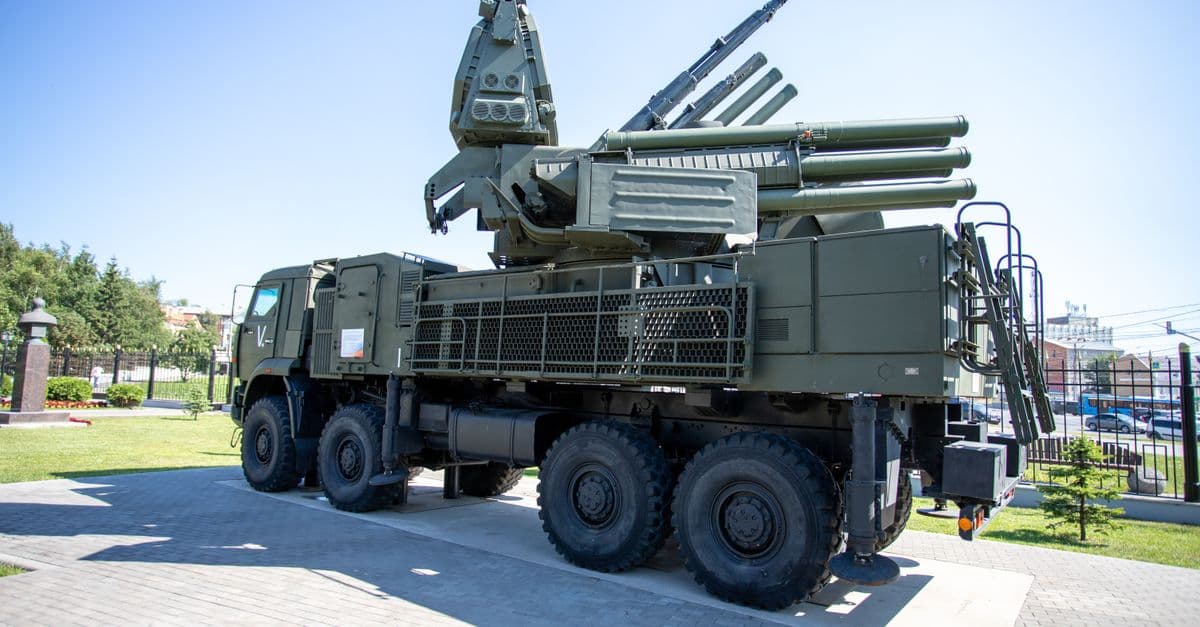
Photo: Михаил Крамор / Pexels
Hypersonic weapons are the defining military technology competition of the 2020s. Travelling at Mach 5 — roughly 3,800 mph (6,100 km/h) — or above while manoeuvring unpredictably in flight, they stress existing missile defence systems to their breaking point. A conventional ballistic missile follows a predictable parabolic arc that early warning radars can track and interceptors can engage hours in advance. A hypersonic glide vehicle flying at Mach 15 to Mach 20 at altitudes of 30 to 80 kilometres, executing lateral and vertical evasive manoeuvres, compresses that decision window from hours to minutes. The strategic implications are profound: high-value military targets that were previously protected by missile defence can be held at risk by conventional weapons.
The current race has produced a striking inversion of the usual hierarchy. Russia and China have both deployed operational hypersonic weapon systems, while the United States — which pioneered much of the fundamental science and held hypersonic test programmes as early as the 1960s — lagged in operationalising systems through the 2010s. That gap triggered enormous acceleration in American investment since 2018. The US remains behind its two primary rivals in the number of deployed systems but is advancing rapidly in underlying technology sophistication.
Methodology
This ranking draws on public reporting from the CSIS Missile Threat Project, the Congressional Research Service, open-source analysis from the James Martin Center for Nonproliferation Studies, and IISS Military Balance data. Hypersonic weapon capabilities are subject to significant classified information constraints; programme status, performance claims, and deployment numbers cited by governments cannot always be independently verified. Performance figures attributed to specific systems (Mach speeds, range) reflect official claims and open-source estimates, and may differ from actual tested performance.
Source: CSIS Missile Defense Project, Hypersonic Archive, 2025 | IISS Military Balance 2025
What Makes a Weapon "Hypersonic"?
The term technically refers to any object travelling at Mach 5 or above. By that definition, intercontinental ballistic missiles already travel at hypersonic speeds during their re-entry phase — the warheads of US Minuteman III ICBMs reach approximately Mach 23 at re-entry. The distinction between old ICBMs and new "hypersonic weapons" is not speed per se but the combination of hypersonic speed with sustained manoeuvrability.
Two technical categories dominate current programmes:
Hypersonic Glide Vehicles (HGVs) use a rocket booster to accelerate to high speed and altitude, then release a manoeuvrable warhead that glides back toward its target at hypersonic speeds. Unlike a ballistic warhead, an HGV can perform extensive lateral and vertical manoeuvres throughout its glide phase — changing course, pulling up or diving, and executing evasive patterns that defeat predictive intercept geometry. HGVs typically fly at 30 to 100 kilometres altitude, compared to 1,000 kilometres or more for standard ballistic trajectories, which reduces radar detection range and intercept warning time.
Think of the difference between throwing a ball in a predictable arc (a ballistic missile) and throwing a paper aeroplane in a gusty room — the aeroplane can deviate, swoop, and change direction in ways the ball cannot.
Hypersonic Cruise Missiles (HCMs) are air-breathing missiles powered throughout their flight by scramjet (supersonic combustion ramjet) or dual-mode ramjet engines. They fly at lower altitudes than HGVs and achieve sustained Mach 5 to Mach 10 flight. Maintaining combustion inside a scramjet engine is one of aerospace's most challenging engineering problems: the combustion must occur in approximately one millisecond inside an engine travelling at over a mile per second, with intake air at thousands of degrees Celsius. The practical result is that scramjet-powered HCMs remain harder to operationalise reliably than HGVs.
Source: CSIS, "Complex Air Defense: Countering the Hypersonic Missile Threat," 2022
Country Rankings: Hypersonic Weapons Programmes (2025)
Countries are ranked by estimated inventory of hypersonic weapons where estimates exist (China, then Russia, then the United States, whose deployment is limited), and then by programme maturity.
| Rank | Country | Operational Systems | Development Programmes | Assessment |
|---|---|---|---|---|
| 1 | China | DF-17/DF-ZF (Mach 5-10), suspected FOBS-HGV | Multiple MRBMs with HGV payloads | Largest estimated inventory (~600); most strategically focused programme |
| 2 | Russia | Kinzhal (Mach 10+), Avangard (Mach 20+), Zircon (Mach 8-9) | Tsirkon variants, further HGV work | Most operational system types; ~200-300 weapons estimated |
| 3 | United States | LRHW (limited IOC 2023) | CPS, HACM, OpFires | Strongest technology base |
| 4 | North Korea | Hwasong-8, Hwasong-16B (claimed) | Further HGV development | Unverified performance |
| 5 | India | BrahMos-II (development) | HSTDV demonstrator tested | Testing phase |
| 6 | Australia | SCIFiRE (development) | HASTE participation | Active R&D |
| 7 | France | ASN4G (development) | Future cruise/anti-ship | 2030s target |
| 8 | Japan | HGV programme (development) | Island-defence focus | 2030s target |
| 9 | Germany | NATO/EU participation | Limited independent R&D | Research stage |
| 10 | South Korea | Hycore HCM (unveiled 2024) | Active development | Emerging |
Source: CSIS Missile Defense Project Hypersonic Archive (2025), IISS Military Balance 2025, Congressional Research Service Hypersonic Weapons Background.
Where this data comes from
Hypersonic weapons rankings are based on three primary open-source databases: the CSIS Missile Defense Project (which maintains the most comprehensive public hypersonic archive), IISS Military Balance annual reports, and Congressional Research Service assessments. Programme status, deployment numbers, and performance specifications reflect official government statements, company announcements, and open-source analysis from defense intelligence specialists. A critical limitation: hypersonic weapon capabilities involve significant classified information. Performance claims (Mach speeds, ranges, manoeuvring capability) by governments cannot always be independently verified. Programme timelines for developmental systems are frequently delayed. China's estimated inventory of about 600 hypersonic weapons comes from a US Defense Intelligence Agency assessment (May 2025), not official Chinese disclosure. North Korea's hypersonic claims remain contested by international analysts.
Historical Context: The Roots of the Hypersonic Race
The scientific foundations of hypersonic vehicles were established by American and German aerospace engineers in the 1940s and 1950s. German research into high-speed aerodynamics during the Second World War, captured and absorbed by both American and Soviet programmes after 1945, seeded the basic understanding of aerothermodynamics — the science of how air heats and compresses at extreme speeds.
The United States conducted the most advanced early hypersonic vehicle research. The X-15 rocket plane, flown between 1959 and 1968, reached a maximum speed of Mach 6.7 (7,274 km/h) and altitudes above 107 km, making it the first winged aircraft to reach space under its own power. This programme generated engineering data on high-speed aerodynamics, heat shielding, and flight control at hypersonic speeds that underpinned subsequent work.
The Soviet Union pursued parallel research, and the conceptual foundations of hypersonic glide vehicles were developed by Soviet aerospace engineer Yevgeny Zababakhin and others in the 1950s and 1960s. The programme that ultimately produced the Avangard HGV drew on decades of classified Soviet and Russian research that never fully appeared in open literature.
The key strategic shift came in the early 2000s. The United States withdrew from the Anti-Ballistic Missile Treaty in 2002 and began expanding its national missile defence programme. Russia and China both concluded that this created a potential strategic imbalance — that US missile defences, however limited, could eventually degrade their second-strike nuclear deterrence. Hypersonic glide vehicles, capable of manoeuvring to defeat ground-based interceptors, became their answer.
The US made a different strategic calculation in the same period: stealth aircraft, precision-guided conventional munitions, and counter-terrorism operations were the immediate priority. Hypersonic weapons were researched but not developed into deployed systems. By 2018, when the Pentagon publicly acknowledged the gap in operational hypersonic capability relative to Russia and China, the divergence had accumulated over nearly 15 years.
Russia: The Widest Range of Operational Systems
Russia's hypersonic weapons programme leads the world in the number of distinct system types that have reached operational service (although its estimated inventory is smaller than China's), though the performance claims for some systems remain contested.
Avangard (Yu-74 / Object 4202)
Russia declared the Avangard hypersonic glide vehicle operational in December 2019. The system uses an intercontinental ballistic missile booster — initially the UR-100NUTTH (SS-19), now transitioning to the RS-28 Sarmat — to carry the HGV to high altitude and speed before releasing it to glide toward its target. Russian officials claim the Avangard glides at speeds of Mach 20 to Mach 27, making it essentially impossible to intercept with existing missile defence technology.
The Avangard is explicitly a nuclear delivery system. Its strategic purpose is to ensure Russia's second-strike nuclear deterrence remains credible regardless of US missile defence expansion — it provides a delivery vehicle that no current or near-term defensive system can reliably defeat. Russia has stated that at least two Avangard-equipped ICBM regiments are operational, with additional deployments planned.
Kh-47M2 Kinzhal ("Dagger")
The Kinzhal is more precisely an air-launched aeroballistic missile than a hypersonic glide vehicle — it is essentially a modified version of the ground-launched Iskander-M ballistic missile, carried aloft by MiG-31K Foxhound aircraft (and reportedly by Su-57 fifth-generation fighters and Tu-22M3 bombers). Russia claims it reaches speeds of Mach 10 and has a range of 2,000 km when launched from MiG-31K aircraft.
The Kinzhal achieved its first recorded use in combat in March 2022, when Russia announced it had used the missile against an underground Ukrainian ammunition depot. Subsequent Ukrainian claims of interception by American-supplied Patriot PAC-3 batteries — confirmed by US officials — generated significant debate about whether the Kinzhal qualifies as a true hypersonic weapon or whether its terminal-phase performance is more similar to a ballistic missile re-entry and thus within the engagement envelope of advanced interceptors.
Source: Reuters, "Ukraine intercepts Russian Kinzhal missile with US Patriot system," May 2023
This distinction matters strategically: if the Kinzhal can be intercepted by Patriot, Russia's claims of its invulnerability are overstated. If the intercept was achieved because the Kinzhal flew a relatively ballistic trajectory during terminal phase, it suggests that hypersonic glide vehicles with genuine sustained manoeuvrability remain significantly harder to engage.
3M22 Zircon (Tsirkon)
The Zircon is a genuine scramjet-powered hypersonic cruise missile, and among the first of its type to reach operational service. Russia declared it operational with the Russian Navy in January 2023. It is currently mounted on Admiral Gorshkov-class frigates and is intended for deployment on Yasen-class nuclear-powered submarines. Claimed performance: Mach 8 to Mach 9, range 500 to 1,000 km. The Zircon is the world's first ship-launched hypersonic cruise missile to enter operational service.
According to a May 2025 US Defense Intelligence Agency assessment, Russia currently fields approximately 200–300 hypersonic weapons across these three system types, with a projected inventory of approximately 1,000 by 2035.
China: The Strategically Focused Programme
China's hypersonic programme is first by estimated inventory and arguably first in strategic coherence. It is oriented almost entirely toward its "anti-access/area-denial" (A2/AD) strategy — making US carrier operations in the Western Pacific prohibitively dangerous.
DF-17 / DF-ZF
The DF-17 medium-range ballistic missile, carrying the DF-ZF hypersonic glide vehicle as its payload, was displayed publicly at China's October 2019 National Day parade and is assessed to have entered operational service with the PLA Rocket Force around 2019 to 2020. The DF-ZF glides at Mach 5 to Mach 10, with a range of approximately 1,800 to 2,500 km, and can manoeuvre laterally and vertically during its terminal phase.
The US Navy's carrier strike groups, which form the backbone of US power projection in the Pacific, depend on the ability to operate within range of potential adversaries. A carrier strike group operating within 2,500 km of Chinese territory would be within the DF-17's engagement range. Existing Aegis-based missile defence systems were designed against ballistic missiles on predictable trajectories; their ability to intercept a manoeuvring HGV at the DF-ZF's speeds and altitudes is uncertain.
A May 2025 US Defense Intelligence Agency assessment estimates China currently fields approximately 600 hypersonic weapons — substantially more than Russia — with a projected arsenal of approximately 4,000 by 2035. Analysts have cautioned that such projections may be overstated.
The Fractional Orbital Bombardment System (FOBS) Test
In August 2021, China reportedly tested a weapon combining a fractional orbital bombardment system with a hypersonic glide vehicle. A FOBS variant places a weapon into low Earth orbit — potentially completing a partial or full orbit — before releasing an HGV that approaches its target from any direction, completely defeating the geographic assumptions on which US early warning radar networks are based (which primarily face north, expecting Soviet-era ICBM trajectories over the Arctic).
US officials confirmed the test had occurred and stated it surprised American intelligence analysts. China denied the system was a weapon, describing it as a reusable spacecraft test. The military implications, if the reported capability is accurate, are significant: a FOBS-HGV combination could, in theory, approach the continental United States from the south, where early warning coverage is weakest.
United States: Closing the Gap
The US invented much of the fundamental science behind hypersonic vehicles. The X-43A scramjet demonstrator reached Mach 9.6 in November 2004, the fastest air-breathing vehicle ever flown. The X-51A Waverider tested sustained scramjet flight at Mach 5+ for over 200 seconds in 2013. But these were demonstrators, not weapon systems — and the gap between a research demonstrator and an operational weapon system is enormous.
LRHW (Long-Range Hypersonic Weapon)
The Army's LRHW, a ground-launched HGV system developed jointly with the Navy's Conventional Prompt Strike programme, achieved limited initial operational capability with the Army's 1st Multi-Domain Task Force in 2023, making it the first US hypersonic weapon fielded to operational units. The LRHW uses a Common Hypersonic Glide Body (C-HGB) boosted by a two-stage rocket. Range is classified but estimated at 2,775+ km.
Conventional Prompt Strike (CPS)
The Navy's CPS programme uses the same C-HGB glide body as the LRHW but launches from Zumwalt-class destroyers and Virginia-class submarines. Submarine-launched CPS would allow the US to bring hypersonic strike capability to range of any target from international waters, without the political complications of basing ground-launched systems on allied territory.
Hypersonic Attack Cruise Missile (HACM)
The Air Force's HACM, developed by Raytheon under a DARPA contract, is a scramjet-powered HCM in the tradition of the DARPA HAWC (Hypersonic Air-breathing Weapon Concept) demonstrator, which achieved successful Mach 5+ flight tests in 2021 and 2022. HACM is intended for internal carriage in the F-15, B-1, B-52, and potentially B-21 bombers.
The ARRW Cancellation
The AGM-183A Air-Launched Rapid Response Weapon (ARRW), the Air Force's most prominent hypersonic weapon programme, was cancelled in March 2023 after multiple test failures and programme delays. The cancellation was a setback for the Air Force's hypersonic timeline but redirected funding toward HACM and other programmes.
The US currently invests approximately $3–4 billion annually in hypersonic research and development. The scale of the underlying technology base — university research programmes, national laboratories, defence contractor capabilities — suggests the US will close the operational deployment gap with Russia and China within several years, even if it cannot replicate the number of deployed systems Russia and China have accumulated.
Other Nations: The Emerging Tier
India
India is developing the BrahMos-II, a joint programme with Russia that would produce a Mach 7 to Mach 8 hypersonic cruise missile successor to the already-formidable BrahMos supersonic cruise missile (Mach 2.8). The Hypersonic Technology Demonstrator Vehicle (HSTDV), a scramjet-powered vehicle developed by DRDO, conducted a partially successful test in September 2020 — the vehicle ignited its scramjet engine and flew at Mach 6 for approximately 20 seconds before losing control. DRDO has stated additional testing is underway.
India's motivation is both defensive (the PLA's DF-17 creates a direct threat to Indian military infrastructure) and status-related (membership in the hypersonic club signals great-power technological ambition).
North Korea
North Korea has conducted multiple tests of what it claims are hypersonic glide vehicles. The Hwasong-8, tested in September 2021, and the Hwasong-16B, tested in January 2024, have been claimed by Pyongyang to demonstrate hypersonic capability. Independent assessment is mixed — South Korean and US officials have questioned whether North Korea's tests achieved true manoeuvring hypersonic performance, or whether the claimed HGVs followed ballistic-like trajectories.
If North Korea does have functional hypersonic glide vehicles, even with limited range and accuracy, they complicate missile defence planning for South Korea and Japan significantly.
Australia
Australia is participating in the US-led AUKUS advanced technology programme, which includes hypersonic weapons. Domestically, Australia has developed the SCIFiRE (Southern Cross Integrated Flight Research Experiment) programme with the US Air Force, and is participating in the HASTE (Hypersonic and High-cadence Airborne Testing Tethered Experiment) programme. Australia's geographic position — with vast over-ocean test ranges — makes it a valuable partner for US hypersonic testing.
France and Japan
France is developing the ASN4G as the successor to the ASMP-A nuclear-capable cruise missile, targeting Mach 8+ performance for a 2030s service entry. Japan is developing a hypersonic glide vehicle optimised for island-defence — specifically for deterring amphibious operations against the Ryukyu island chain and Senkaku/Diaoyu islands. South Korea's Hanwha publicly unveiled the Hycore hypersonic cruise missile model in December 2024, confirming active development of an HCM capability.
Why Conventional Hypersonic Weapons Are Strategically Destabilising
The most consequential aspect of hypersonic weapons is not their utility for nuclear delivery — nuclear weapons are already more than adequate for that purpose. It is their potential as conventional precision strike weapons capable of threatening targets that were previously protected by missile defences.
A hypersonic weapon with a conventional warhead can, in theory:
- Strike an aircraft carrier at sea before it can launch defensive countermeasures
- Destroy air defence systems (Patriot batteries, THAAD) that currently protect high-value assets
- Hit command and control nodes deep in enemy territory before defensive dispersal can occur
- Eliminate ballistic missile launch sites in a crisis before missiles can be fired
Each of these capabilities compresses decision timelines in a crisis. If each side knows that the other can destroy its most valuable military assets in minutes, the incentive to "use them or lose them" during a crisis escalates. The classic problem of crisis stability — ensuring that both sides have time to assess situations, communicate, and stand down without either side facing catastrophic disadvantage from delay — becomes harder to manage when high-value targets can be destroyed at hypersonic speed.
Source: RAND Corporation, "Hypersonic Weapons and Strategic Stability," 2021
This is the true strategic significance of the hypersonic arms race: not that it changes the arithmetic of nuclear deterrence, but that it may change the stability of crises between nuclear-armed states.
What Current Missile Defence Can and Cannot Do Against Hypersonics
No existing missile defence system is designed to reliably intercept manoeuvring hypersonic glide vehicles at scale. The three systems most relevant to the discussion:
Patriot PAC-3 is a terminal-phase interceptor designed against ballistic missiles and aircraft. It has demonstrated the ability to intercept the Kinzhal in Ukraine — but the Kinzhal, as discussed, may fly a more ballistic terminal trajectory than a true manoeuvring HGV. Its intercept probability against a highly manoeuvring HGV entering the terminal phase at Mach 10+ is not established in combat conditions.
THAAD (Terminal High Altitude Area Defense) is designed for ballistic missile re-entry phase intercepts at high altitudes. Its geometry is poorly suited to HGVs flying at lower altitudes on non-ballistic trajectories.
SM-3 (Standard Missile-3) provides exo-atmospheric intercept capability against medium-range ballistic missiles. Its intercept geometry against manoeuvring HGVs is similarly constrained.
The US and its allies are developing next-generation intercept capabilities specifically for hypersonic threats — the Glide Phase Interceptor (GPI) programme. GPI is intended to intercept HGVs during their glide phase, before they enter terminal approach. It is in development with a target service date in the late 2020s to early 2030s.
Defence against hypersonic threats will likely never be perfect — the attacker will always have the advantage of choice of timing and axis. The strategic calculus will be whether defences can raise costs and introduce enough uncertainty to weaken an adversary's confidence in the mission success probability of a hypersonic strike, rather than providing an impenetrable shield.
Frequently asked questions
Q: Which country has the most advanced hypersonic weapons?
A: It depends on the measure. Russia has the most distinct operational system types: Kinzhal, Avangard, and Zircon all in active service. China has the largest estimated inventory (about 600 weapons versus 200–300 for Russia, per a May 2025 US DIA assessment) and the most strategically coherent programme, oriented toward countering US carriers in the Pacific. The United States has the most sophisticated underlying technology base but fewer deployed systems, a gap it is closing rapidly through acceleration of LRHW, CPS, and HACM programmes.
Q: Can existing missile defence systems stop hypersonic weapons?
A: Existing systems can engage some hypersonic weapons in some circumstances — Ukraine's Patriot has intercepted Kinzhal missiles. But Patriot was not designed for manoeuvring HGVs, and Kinzhal may fly more ballistic than claimed. Against true high-manoeuvring HGVs approaching at Mach 15+ from unpredictable angles, interceptors have very limited success probability. The Glide Phase Interceptor programme develops purpose-built capability for late 2020s deployment.
Q: Why did the US fall behind Russia and China?
A: The US made deliberate strategic choices in the 2000s–2010s to prioritise stealth aircraft, precision munitions, and counter-terrorism. Russia and China focused on hypersonic weapons as asymmetric responses to US carriers and missile defence. By 2018, this gap was publicly visible and triggered substantial reinvestment producing current results.
Q: Are hypersonic weapons just for nuclear warheads?
A: No. All three Russian operational systems carry nuclear or conventional warheads. US programmes (LRHW, CPS, HACM) are conventional-only. The ability to deliver conventional strikes against high-value targets with minimal intercept probability is what makes hypersonic weapons strategically transformative beyond nuclear utility.
Q: What is the difference between an HGV and a ballistic missile re-entry vehicle?
A: Ballistic re-entry vehicles are unpowered, following predictable gravity-determined trajectories. HGVs use aerodynamic lift to sustain flight and execute manoeuvres throughout glide phase. This manoeuvrability is the key distinction — it makes trajectory prediction for intercept purposes extremely difficult, compressing defender engagement timelines.
Q: How many hypersonic weapons does China have?
A: A May 2025 US Defense Intelligence Agency assessment estimates China currently has approximately 600 hypersonic weapons, projected to grow to 4,000 by 2035. These are intelligence estimates; actual numbers are classified.
The Takeaway
The hypersonic weapons race reflects a fundamental restructuring of the military technology hierarchy. For the first time in decades, the United States does not lead in the deployment of a class of weapons that directly threatens its most valuable military assets. China leads in estimated inventory, strategic coherence and projected scale; Russia leads in operational diversity. The US brings a deeper technology base and is closing the gap — but the gap exists, and the countries that accumulated operational experience with these systems earliest will have inherent advantages in doctrine, tactics, and production efficiency. The deeper stakes are not about which specific missiles are most impressive. They are about whether the world's three major military powers can manage strategic competition in a domain where decision timelines are measured in minutes and the line between conventional and nuclear delivery is deliberately blurred.
Related Reading
Follow new articles
Add SciHub101 to your feed reader to see new science and technology stories.
About the Author
SciHub101 is an independent science and technology publication founded and edited by Buğra Sözeri, a software engineer and app developer based in Türkiye. AI tools assist with drafting and research. Source documentation in the existing archive is uneven, and articles are being reviewed and corrected. The Editorial Team byline identifies editorial responsibility; it does not certify specialist or independent human review. Where we compare products, anything built by our own team is labelled as such — see the editorial guidelines and About page for how corrections and disclosures work.
Related Articles

Countries With the Most Immigrants (2025)
The UAE has the highest immigrant share of any country in the world — 88% of its population was born abroad. From Gulf states built on migrant labour to traditional immigration nations like Australia and Canada, this ranking reveals where immigrants are most concentrated and why.

Countries Spending the Most on Healthcare (2025)
The United States spent 16.7% of GDP and about $13,500 per person on health in 2023, by WHO data, far more than any other large economy. This ranking compares the top spenders by share of GDP and per capita, explains why the two measures disagree, and looks at what the extra money does and does not buy.
Countries With the Most Advanced Drone Programs (2025)
Drones have fundamentally changed warfare, surveillance, and geopolitics. This ranking of the top countries with the most advanced drone programmes in 2025 covers military UAV capabilities, commercial industries, and combat records — from the USA's Reaper to China's Wing Loong, Turkey's Bayraktar, and Iran's Shahed-136.
Countries With the Most Stealth Aircraft (2026 Update)
Only three countries build and field stealth combat aircraft at scale: the United States, China, and Russia. This ranking covers fleet sizes, how stealth works, which allies fly the F-35, and where the published numbers are shaky.

Countries With the Most Soldiers Per Capita (World Bank Data)
Which countries put the largest share of their population into uniform? A ranking of armed forces personnel per 1,000 residents, built from World Bank and IISS data, shows Eritrea and North Korea far ahead, then a mix of states facing neighbors they distrust, and explains why the figure says more about politics than about military strength.
Countries With the Strongest Air Forces in the World (2025)
Air dominance has defined every major military conflict since World War II. This ranking of the top 10 strongest air forces in 2025 covers total aircraft counts, fighter jet capability, stealth technology, and the pilots and infrastructure behind the machines.