Countries With the Most Stealth Aircraft (2026 Update)
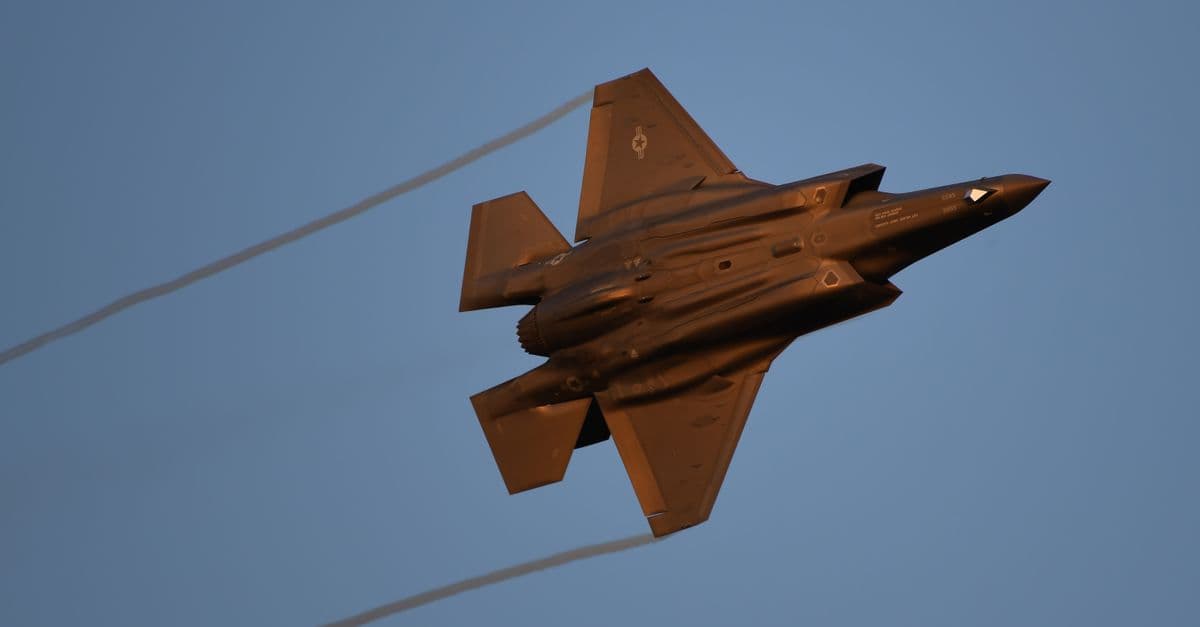
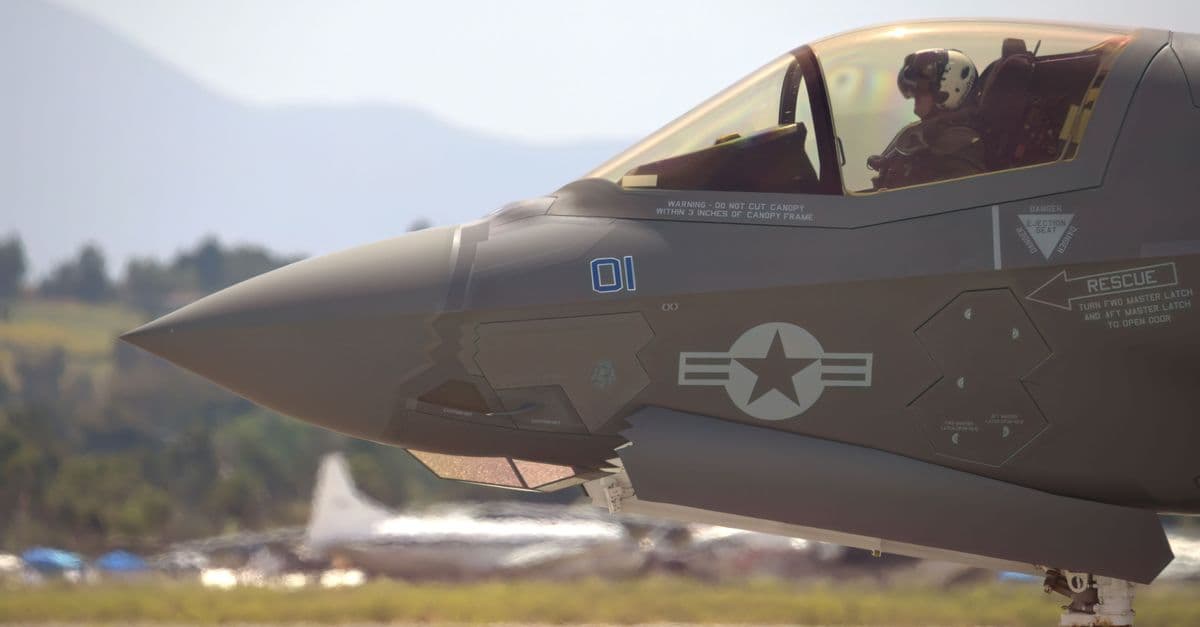
Photo: I Bautista / Pexels
The United States operates by far the most stealth aircraft of any country: the U.S. Government Accountability Office (GAO) counted "over 800" American F-35s in its June 2026 report, and the fleet also includes F-22 fighters and about 20 B-2 bombers. China is second, with J-20 estimates ranging from about 300 to 500 depending on the analyst and the date. Russia is a distant third. Beyond those three, more than ten allies fly the American F-35. This ranking sorts the numbers, explains what "stealth" physically means, and shows where the counts are soft.
Key takeaways
- The United States leads by a wide margin. GAO reported over 800 F-35s in the U.S. fleet by fiscal year 2025, up from about 450 in fiscal year 2021, with roughly 1,700 more planned by the mid-2040s.
- The F-22 Raptor is no longer in production. Lockheed Martin built 195 in total, 187 of them production aircraft and 8 test aircraft, and the last one was delivered on May 2, 2012.
- China's J-20 estimates rise with each analyst and year: at least 150 (IISS, early 2023), about 195 (Janes, mid-2024), about 300 in service (RUSI, late 2025), and about 500 delivered (an independent analyst, mid-2026).
- Russia's Su-57 has been built in very small numbers, with a listed total of 44 or more airframes including 10 test aircraft, and Moscow does not publish fleet totals.
- Stealth does not mean invisible. Detection range scales with the fourth root of radar cross-section, so cutting range by a factor of 10 requires cutting the radar return by a factor of 10,000.
- The B-21 Raider has not yet reached operational service. It is in testing and low-rate production, with first operational delivery targeted for 2027.
What makes an aircraft "stealthy"
Stealth, formally called low observable (LO) technology, is a bundle of design choices that reduce how easily an aircraft can be detected by radar, infrared sensors, sound, and its own emissions. Radar is the most important of these for a fighter, and the key number is radar cross-section (RCS): the size of a perfectly reflecting sphere that would return the same echo, expressed in square meters. RCS is not the aircraft's physical area. A flat metal plate facing a radar head-on can return an enormous echo, while the same plate tilted away returns almost none.
The radar is a flashlight, the aircraft is a mirror
An analogy helps. Imagine you are standing in a dark room with a flashlight, looking for a mirror. If the mirror faces you, the beam bounces straight back and you see it at once. If the mirror is tilted, the beam goes somewhere else and you see nothing. Stealth shaping works the same way: it tries to ensure that radar energy that hits the aircraft is bounced away from the radar that sent it.
According to the standard reference summary of the technique, designers do this in several ways. They avoid right-angle corners (a conventional tail forms one), so stealth designs tilt tail surfaces or drop the tail entirely, as on the B-2 flying wing. They align leading edges to a few common angles, as on the F-22, which sends reflections into narrow spikes pointed away from the radar. They bury the engines and hide the compressor blades behind curved air ducts, carry weapons internally, and coat the canopy with a thin conductor so that radar waves cannot reach the cockpit interior. Radar-absorbent material, applied as paint or in structure, turns some radar energy into heat.
Why fourth roots matter
The radar equation produces a counterintuitive result. Detection range is proportional to the fourth root of RCS, so reducing the range at which a radar can see you by a factor of 10 requires reducing RCS by a factor of 10,000. A stealth aircraft is therefore not undetectable. It is detectable only from much shorter distances, which shrinks the window in which an enemy can find, track, and shoot at it. Official RCS figures are classified. Public descriptions say modern stealth aircraft return echoes comparable to small birds or large insects, though the value varies by aircraft, angle, and radar frequency.
History in five dates
| Year | Event |
|---|---|
| 1962 | Soviet physicist Pyotr Ufimtsev publishes a method for computing how edges scatter radar waves; the U.S. Air Force translated it into English in 1971 |
| 1975 | Lockheed begins its F-117 contract, using those equations |
| 1976 to 1979 | The Have Blue demonstrator program runs |
| 1989 | F-117s see first combat in Panama |
| 2017 | China fields an operational stealth aircraft, the second country to do so |
Source: Wikipedia, "Stealth technology," timeline section.
Where stealth is weaker
Shaping helps most against the high-frequency radars used for targeting. Against long-wavelength radar, it helps much less: when the radar wavelength is about twice the size of a target, resonance can produce a strong return. Long-wave radars have limits of their own. They offer poor accuracy, and the installations are large and hard to move, so they can roughly locate a target but usually cannot guide a weapon to it. Stealth shaping also mainly avoids reflecting energy back at the source, so radar systems with separated transmitters and receivers (bistatic or multistatic radar) can sometimes do better against stealth targets. And rising computing power in radar signal processing gradually erodes the advantage of passive shaping.
Who has how many: the 2026 ranking
Two tables follow. The first compares the three producers of stealth combat aircraft. The second ranks F-35 operators by aircraft delivered, since that is how every other country gets access to the technology.
The big three
| Rank | Country | Aircraft | Count and source | Status |
|---|---|---|---|---|
| 1 | United States | F-35A/B/C | Over 800 in U.S. fleet, FY2025 (GAO, June 2026) | Operational; production continuing |
| 1 | United States | F-22 Raptor | 195 built, 187 production (Air & Space Forces, 2011; Wikipedia) | Operational; production ended |
| 1 | United States | B-2 Spirit | 21 built, 20 remaining (Air & Space Forces, 2019) | Operational |
| 1 | United States | B-21 Raider | Test aircraft only; first operational delivery targeted for 2027 (AIAA, February 2026) | Testing and low-rate production |
| 2 | China | J-20 Mighty Dragon | About 300 in service (RUSI, late 2025); about 500 delivered (Rupprecht, mid-2026) | Operational; production continuing |
| 2 | China | J-35 family | No reliable public count | Limited information |
| 3 | Russia | Su-57 Felon | 44 or more built including 10 test aircraft (Wikipedia, 2026) | Operational in small numbers |
The F-22 and B-2 counts date from older sources. The F-22 fleet was already 185 aircraft in 2011 after two crashes, and the B-2 count of 20 comes from a 2019 article, so the current numbers may be slightly lower. The ranking by country is not in doubt. The figures within each row are estimates of different quality, which is why the next section explains where they come from.
F-35 operators by aircraft delivered
| Rank | Country | Delivered (as of) | Ordered or planned |
|---|---|---|---|
| 1 | United States | Over 800 (FY2025) | 2,456 through 2044 |
| 2 | Australia | 72 (Dec 2024) | 72 |
| 3 | Norway | 49 (Apr 2025) | 52 |
| 4 | Israel | 48 (Jan 2026) | 100 |
| 4 | United Kingdom | 48 F-35B received; 47 operational after a 2021 loss | 48 first order; 138 over the program's life |
| 6 | Japan | 47 (Dec 2025) | 147 (105 F-35A, 42 F-35B) |
| 7 | Netherlands | 40 to 48 (figures differ by date) | 52 to 58 |
| 8 | South Korea | 40 (Jan 2022) | 65 |
| 9 | Italy | 38 (24 A and 8 B for the Air Force, Apr 2025; 6 B for the Navy, Sept 2024) | 75 A and 20 B for the Air Force; 20 B for the Navy |
| 10 | Denmark | 21 (Oct 2025) | 43 |
| 11 | Belgium | 12 (undated) | 34 planned |
| 12 | Poland | 8 (2025) | 32 ordered |
| 12 | Finland | 8 delivered early 2026 (training in the U.S.) | 64 ordered |
| 14 | Germany | 1 (Sept 18, 2026) | 35 ordered |
Source: Wikipedia's F-35 operator tables, which compile figures from national defense ministries and Lockheed Martin; the as-of date for each figure is shown. Figures lag actual deliveries and some are inconsistent between the table and body text, notably for the Netherlands and Norway. The U.S. count is from GAO.
Several more countries have ordered but not received aircraft. Canada ordered 88 in January 2023, Switzerland ordered 36 (reduced in December 2025), and Greece, the Czech Republic, Romania, and Singapore have orders in progress, per the same tables. Lockheed Martin's own list of program participants names 20 countries including the United States: Australia, Belgium, Canada, the Czech Republic, Denmark, Finland, Germany, Greece, Israel, Italy, Japan, the Netherlands, Norway, Poland, South Korea, Romania, Singapore, Switzerland, the United Kingdom, and the United States. Turkey, once a partner, was removed from the program in July 2019.
Where this data comes from, and why it is uncertain
Not all counts are equal. U.S. numbers are the best documented, because they appear in budget documents, GAO reports, and congressional testimony. Allied F-35 numbers come from national announcements and manufacturer statements, and they are specific but sometimes lag. Chinese and Russian numbers are estimates built from satellite imagery, serial-number analysis, and think-tank judgment, and they diverge.
The J-20 shows the problem clearly. Here is how the public estimates moved, per a timeline compiled by The War Zone:
| Date | Estimate | Source |
|---|---|---|
| End of 2019 | About 50 built (may include pre-production) | Western estimates |
| Late 2022 | At least 200 received | Defense News reporting |
| Early 2023 | At least 150 in the frontline fleet | IISS |
| Mid-2024 | About 195 in service | Janes |
| Late 2025 | About 300 in service, across at least 13 regiments | RUSI |
| Mid-2026 | About 500 likely delivered | Andreas Rupprecht |
The figures are not directly comparable. Some count airframes built, some count aircraft delivered to units, and some count what satellite imagery shows on ramps. The late-2022 "200 received" estimate sits above the early-2023 IISS figure of 150 frontline aircraft, which probably reflects those differences in definition rather than a drop in the fleet. RUSI also noted that the true total is likely higher than its number, because newly built aircraft may be awaiting delivery. The safest reading is a rising fleet of several hundred, with wide error bars.
The F-22 Raptor: air superiority, then the line closed
The F-22 was built for one mission, to win air superiority against the most capable adversaries. It first flew on September 7, 1997, and entered service in December 2005. Its two Pratt & Whitney F119 engines have thrust-vectoring nozzles, and it can cruise supersonically without afterburner, a trait called supercruise.
The planned fleet was far larger than the one that was built. The Air Force originally planned 750 aircraft, and funding pressure cut that repeatedly through the 1990s and 2000s until production was capped at 187 operational aircraft in 2009. The 195th and final aircraft, counting 8 test airframes, was delivered on May 2, 2012. The total program cost was about $67.3 billion, or about $360 million per production aircraft in then-year dollars.
Annual defense appropriations acts have barred the use of funds to approve or license F-22 sales to foreign governments since fiscal year 1998, so no ally has one. Its first combat use was in airstrikes in Syria in 2014. The relevant fact for this ranking is that the fleet is fixed. Whatever the U.S. wants beyond the F-22 must come from the F-35, the planned F-47, or other programs.
The F-35: stealth at industrial scale
The F-35 Lightning II comes in three variants: the F-35A for conventional runways, the F-35B for short takeoff and vertical landing, and the F-35C for aircraft carriers. Lockheed Martin's program page lists more than 1,375 delivered, and Wikipedia's infobox gives the same figure as of October 1, 2026. That makes it the most widely exported stealth aircraft by a large margin.
What it costs and how often it flies
The F-35 is the most expensive weapons program in history. Breaking Defense reported in April 2024 that the lifetime cost topped $2 trillion, including $422 billion in procurement and $1.58 trillion in sustainment, with the Pentagon planning to operate the jet through 2088. GAO's June 2026 report put U.S. sustainment cost at $1.6 trillion through 2088, as of 2024.
Fleet readiness is the weak spot. GAO found that the share of F-35s that were mission capable fell from 67 percent to 44 percent between fiscal years 2021 and 2025, and the share that were fully mission capable fell from 38 percent to 25 percent. The Joint Program Office's reset plan targets 80 percent and 65 percent by 2030. This matters for the ranking because a large fleet on paper is not the same as a large number of aircraft ready to fly. Flyaway unit costs listed for production lots 18 and 19 in 2026 dollars are $92 million for the F-35A, $121.4 million for the F-35B, and $110.8 million for the F-35C.
Israel's combat debut
Israel was the first country to publicly acknowledge combat use of the F-35. On May 22, 2018, Israeli Air Force commander Maj. Gen. Amikam Norkin said, "We are the first in the world to use the F-35 in operational activity." The IAF had declared its first F-35I "Adir" operational on December 6, 2017. The targets were not officially specified, and independent reporting at the time noted that it was unconfirmed whether the jets dropped weapons or performed electronic reconnaissance. Wikipedia's F-35 article lists later Israeli use over Gaza, Iraq, Iran (2025 and 2026), Lebanon, and Yemen, though without sortie counts.
Bombers: the B-2 and the B-21
Bombers are the other half of the U.S. advantage. The B-2 Spirit is a flying wing with a crew of two. Air & Space Forces reported in 2019 that 21 were built and 20 remained. In June 2025, B-2s from Whiteman Air Force Base in Missouri flew nonstop for 36 hours or more, covering more than 13,000 miles round trip, to drop 30,000-pound GBU-57 massive ordnance penetrators on Iranian nuclear sites in Operation Midnight Hammer, according to the Army's news service. Reporting differs on the number of bombs, with the Army article saying a dozen.
The B-21 Raider is the replacement, and it has not entered service yet. It first flew on November 10, 2023. A second test aircraft joined flight testing at Edwards Air Force Base on September 11, 2025. In 2026, the Air Force announced an agreement with Northrop Grumman to ramp up production, backed by $4.5 billion in reconciliation funding, to help deliver the bomber by 2027. Some summaries still say the B-21 reached initial operational capability in 2025. The sources above do not support that: the bomber is a test and low-rate-production aircraft, and no declaration of operational capability appears in them.
China: the J-20 and what comes after
The Chengdu J-20 first flew on January 11, 2011, and Chinese media reported its entry into service in March 2017. It uses a canard-delta layout, diverterless supersonic inlets, and a main internal weapons bay for medium- and long-range air-to-air missiles, with two smaller side bays for short-range missiles. It also has four wing hardpoints for external stores, which compromise stealth when used. Early aircraft used Russian-derived AL-31FM2 engines. Production aircraft from 2019 used the domestic WS-10C, and the more powerful WS-15 entered serial production around 2023, according to reports. The upgraded single-seat J-20A and the twin-seat J-20S both debuted publicly on September 3, 2025.
The sixth-generation prototypes
In late December 2024, images circulated of two new large tailless designs: the Chengdu J-36, publicly observed on December 26, 2024, and the Shenyang J-50, reported to have flown on December 20, 2024. Both remain largely unconfirmed. Information about them is limited, and no public figures exist for numbers built. The Shenyang J-35 descends from the FC-31 demonstrator, which first flew on October 31, 2012, and which the PLA Navy showed interest in as a carrier aircraft. No reliable public inventory number exists for the J-35. Treat any count you see as a guess.
Russia: the Su-57
The Sukhoi Su-57 first flew on January 29, 2010. A production aircraft crashed in December 2019, and the Russian Aerospace Forces received its first production aircraft in December 2020. A contract for 76 aircraft was signed in June 2019 with a 2028 delivery target, and output has run slower than planned, with 12 delivered in 2023.
The infobox for the type lists 44 or more built as of 2026, including 10 test aircraft, which implies roughly 34 production-standard airframes. That is an approximation derived from the listed total, not a published fleet count. Moscow does not publish fleet totals, so the number in service is unknown. Two prototypes were deployed to Syria in 2018 for combat trials, and the aircraft has reportedly been used sporadically in Ukraine since 2022, though some claimed kills lack independent confirmation. Algeria signed for 14 aircraft in December 2019, and the first two were reportedly delivered by late 2025.
The Su-57 is routinely described as less stealthy than the F-22 or F-35, particularly from the front. The type has also been held back by its engine program: the improved Izdeliye 30 engine, first flown on a prototype in December 2017, has had developmental difficulties and a slow test pace. A newer engine, the Izdeliye 177, reportedly first flew in December 2025.
Who is next: Turkey, sixth-generation programs, and Europe
Turkey's KAAN is the nearest additional country. In May 2026, Turkey's procurement agency and Turkish Aerospace signed a contract for 20 Block-10 aircraft to be delivered from 2028 through the end of 2030. At least six test aircraft are under construction.
The United States has moved to a sixth generation already. On March 21, 2025, the Air Force awarded Boeing the development contract for the F-47, worth more than $20 billion, with leaders intending to buy at least 185. As of the latest reporting, the F-47 has not flown, with first flight expected around 2028.
In Europe, the picture has changed since this article was first published. The Franco-German-Spanish Future Combat Air System (FCAS) collapsed in June 2026 when Germany announced its withdrawal on the eve of the ILA airshow, citing disagreement over workshare. Dassault, with Thales, is expected to proceed alone in France. Meanwhile the UK, Japan, and Italy continue the Global Combat Air Programme (GCAP), and EDR Magazine's coverage suggests Germany and Spain could join it. That remains a possibility, not an announced decision.
What stealth cannot do
Stealth is an advantage, not an invulnerability cloak. It does not defeat long-wavelength radar well, and it does not remove infrared, visual, or acoustic signatures. A stealth aircraft must also fly with its weapons inside, which limits payload, and it cannot be retrofitted onto an ordinary airframe. Maintenance is another cost: the surface coatings and tight tolerances that reduce radar returns demand specialized care, and the GAO readiness numbers above show how hard that can be at scale.
There is also a numbers problem. A fleet of 800 aircraft that is 44 percent mission capable can field far fewer jets on a given day than the headline suggests. And stealth is one element of survivability, not a replacement for electronic warfare, tankers, airborne radar, and networking. Our pieces on the strongest air forces and advanced drone programs cover the wider balance.
What people get wrong about stealth rankings
"Stealth means invisible." It means harder to detect at range. The fourth-root relationship means even a huge RCS reduction cuts detection distance by a much smaller factor.
"More aircraft always means more power." Readiness, weapons, training, bases, and the quality of supporting systems matter. GAO's mission-capable figures for the F-35 are the sharpest example.
"Only three countries have stealth aircraft." Only three have built operational stealth combat aircraft domestically. More than ten others operate the American F-35, and several more have orders.
"The numbers are official." Only some are. Chinese and Russian counts are estimates, and even Western figures lag. Check the date and the source on any number, including the ones here.
Frequently asked questions
Q: Which country has the most stealth aircraft?
A: The United States. GAO counted over 800 F-35s in the U.S. fleet in fiscal year 2025, and the country also fields F-22 fighters (195 built, 187 production) and about 20 B-2 bombers. China is second, with J-20 estimates from about 300 to 500.
Q: How many countries operate the F-35?
A: Wikipedia's operator tables list 12 countries operating it, including the United States: Australia, Belgium, Denmark, Israel, Italy, Japan, the Netherlands, Norway, Poland, South Korea, the United Kingdom, and the United States. Finland and Germany began receiving aircraft in 2026, and Lockheed Martin lists 20 program countries in total.
Q: Has the B-21 Raider entered service?
A: Not as of the latest sources. It first flew on November 10, 2023, is in testing and low-rate production, and the Air Force has targeted first operational delivery in 2027. The B-2 Spirit remains the operational American stealth bomber.
Q: How many J-20 fighters does China have?
A: Public estimates range from at least 150 (IISS, early 2023) to about 195 (Janes, mid-2024), about 300 in service (RUSI, late 2025), and about 500 delivered (one independent analyst, mid-2026). The estimates use different methods, so treat the latest as a range, not a precise count.
Q: Is the Su-57 a real stealth fighter?
A: It is a fifth-generation design in limited service, but it is generally assessed as less stealthy than the F-22 or F-35, especially from the front, and production has been slow. The listed total is 44 or more airframes including 10 test aircraft.
Q: Can radar detect stealth aircraft at all?
A: Yes. Stealth reduces detection range rather than eliminating detection. Long-wavelength radars, bistatic radars, and other sensors can detect stealth aircraft, though low-frequency radars usually cannot guide weapons precisely.
The takeaway
The ranking is lopsided, but the more interesting story is how much of it rests on estimates. The United States leads because it built the F-22 and then mass-produced the F-35 for itself and a growing list of allies, while China has put a domestic stealth fighter into series production and Russia has not managed the same. Yet the F-35's readiness problems, the unknown size of China's fleet, and Europe's collapsing FCAS program show that counting aircraft is only the first step. What decides outcomes is how many of those aircraft are ready to fly, supported by sensors and tankers, and survive against defenses that keep adapting. Treat any single fleet number as a snapshot with a date and a source attached.
Related reading
- Countries With the Most Advanced Drone Programs (2025)
- Countries With the Strongest Air Forces in the World (2025)
- Countries With Hypersonic Weapons: The Global Race (2025)
- Countries Spending the Most on Military R&D (2025)
- Countries With the Most Soldiers Per Capita (2025)
- Countries With the Biggest Defence Budgets in the World (2025)
- The Radar: How Bouncing Radio Waves Changed War and Weather
Sources
- GAO-26-108113, F-35 Sustainment (June 11, 2026)
- Lockheed Martin: F-35 global enterprise (program countries and aircraft delivered)
- Breaking Defense: F-35 program's lifetime price tag tops $2 trillion (April 15, 2024)
- Air & Space Forces Magazine: The B-2 at 30 (July 1, 2019)
- Air & Space Forces Magazine: final F-22 article (December 14, 2011)
- The War Zone: How many J-20 stealth fighters does China actually have?
- AIAA: Air Force boosts B-21 Raider production, targets 2027 delivery (February 24, 2026)
- U.S. Army: Historically successful strike on Iranian nuclear site was 15 years in the making (June 26, 2025)
- The Aviationist: Israel launching the world's first air strikes using the F-35 (May 22, 2018)
- EDR Magazine: ILA 2026, Germany pulls plug on FCAS (June 10, 2026)
- Aviacionline: SAHA 2026, Turkey signs contract to serially produce the KAAN (May 6, 2026)
- Wikipedia: Stealth technology, Lockheed Martin F-35 Lightning II, Lockheed Martin F-22 Raptor, Chengdu J-20, Sukhoi Su-57, J-XX, Boeing F-47
Follow new articles
Add SciHub101 to your feed reader to see new science and technology stories.
About the Author
SciHub101 is an independent science and technology publication founded and edited by Buğra Sözeri, a software engineer and app developer based in Türkiye. AI tools assist with drafting and research. Source documentation in the existing archive is uneven, and articles are being reviewed and corrected. The Editorial Team byline identifies editorial responsibility; it does not certify specialist or independent human review. Where we compare products, anything built by our own team is labelled as such — see the editorial guidelines and About page for how corrections and disclosures work.
Related Articles
Countries With the Most Submarines in the World (2025)
Submarines are the most feared weapons in any navy — invisible, long-range, and capable of delivering nuclear strikes or sinking entire carrier groups. This ranking of the top 15 countries with the most submarines in 2025 covers nuclear vs conventional fleets, strategic ballistic missile subs, and the future of undersea warfare.

Most Powerful Passports in the World (2026)
Singapore holds the world's most powerful passport in the July 2026 Henley Passport Index, with access to 192 destinations without a prior visa. Here is how the Henley and Arton indexes rank passports — and why they disagree.
Countries With the Most Advanced Drone Programs (2025)
Drones have fundamentally changed warfare, surveillance, and geopolitics. This ranking of the top countries with the most advanced drone programmes in 2025 covers military UAV capabilities, commercial industries, and combat records — from the USA's Reaper to China's Wing Loong, Turkey's Bayraktar, and Iran's Shahed-136.
Countries With Hypersonic Weapons: The Global Race (2025)
Hypersonic weapons travel at Mach 5 or above, manoeuvre unpredictably, and are extraordinarily difficult to intercept. Russia and China have deployed operational systems while the United States races to catch up. This ranking covers every country with a hypersonic weapons programme and explains why this technology is reshaping the global military balance.
Countries With the Strongest Air Forces in the World (2025)
Air dominance has defined every major military conflict since World War II. This ranking of the top 10 strongest air forces in 2025 covers total aircraft counts, fighter jet capability, stealth technology, and the pilots and infrastructure behind the machines.

Countries With the Most Soldiers Per Capita (World Bank Data)
Which countries put the largest share of their population into uniform? A ranking of armed forces personnel per 1,000 residents, built from World Bank and IISS data, shows Eritrea and North Korea far ahead, then a mix of states facing neighbors they distrust, and explains why the figure says more about politics than about military strength.