Countries With the Most Advanced Drone Programs (2025)
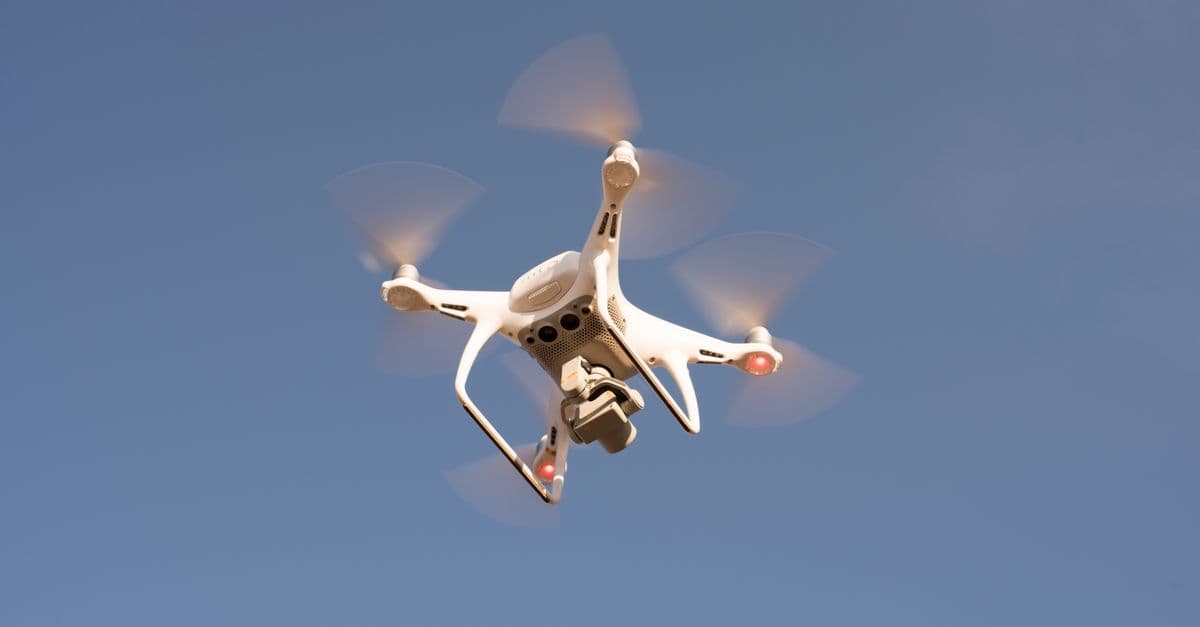
Photo: Daniel Reche / Pexels
No technology has altered the character of 21st-century warfare more fundamentally than the unmanned aerial vehicle. The distance between the first armed Predator strike in Afghanistan in 2001 and the saturation drone campaigns above Ukraine in 2024 to 2025 represents not an incremental improvement but a transformation in what war looks like, who can wage it, and what it costs. By 2025, the global military drone market is valued at approximately $14 billion annually and is projected to reach $47 billion by 2032. More significantly, drones are no longer the exclusive domain of a handful of technically advanced states: the Bard College Center for the Study of the Drone's last comprehensive survey found military drone programmes in over 100 countries, with 95 maintaining active drone inventories.
The ranking that follows assesses drone programme advancement on multiple dimensions: platform sophistication, depth of industrial base, combat-proven performance, AI and autonomy integration, and export capability. No single metric captures the full picture. China dominates commercial drone production; the United States dominates in platform diversity and classified capabilities; Turkey has achieved the most strategically significant cost-effective armed drone; Iran has had the most influence per dollar of drone investment through asymmetric proliferation.
Methodology
This ranking draws on open-source analysis from RUSI (Royal United Services Institute), IISS Military Balance 2025, the Bard College Center for the Study of the Drone Databook (last updated 2019, supplemented by subsequent open-source analysis), and reporting from Jane's Defence Weekly and Defense News. Commercial drone market data draws on industry research from MarketsandMarkets and drone industry trade sources. As with hypersonic weapons, classified capabilities constrain public assessment — the US programme in particular has capabilities that are not publicly disclosed.
Source: Bard College Center for the Study of the Drone Databook | IISS Military Balance 2025
Top Countries With the Most Advanced Drone Programs (2025)
| Rank | Country | Key Military Platforms | Commercial Capability | Export Status |
|---|---|---|---|---|
| 1 | USA | MQ-9 Reaper, RQ-4 Global Hawk, MQ-25 Stingray, RQ-170 Sentinel, XQ-58A Valkyrie | Skydio, Shield AI | FMS to allies, limited |
| 2 | China | Wing Loong II, CH-5, TB-001, Sharp Sword | DJI (~70% global market) | World's largest armed drone exporter |
| 3 | Turkey | Bayraktar TB2, Bayraktar Akinci, TB3 | Baykar, TAI | 30+ countries |
| 4 | Israel | Harop, Heron TP, Hermes 900, Harpy | Elbit, IAI, Rafael | Major exporter, 50+ countries |
| 5 | Iran | Shahed-136/131, Mohajer-6, Arash-2 | Limited | Exports to Russia, Yemen, Hezbollah |
| 6 | Russia | Orion, Lancet-3, KUB-BLA, Shahed (licence-produced) | Limited | Limited |
| 7 | United Kingdom | Protector RG1 (MQ-9B), Watchkeeper | BAE Mosquito (loyal wingman) | Limited |
| 8 | Australia | MQ-28A Ghost Bat, MQ-9B SkyGuardian | DEWC Systems | In development |
| 9 | India | Heron (licensed), TAPAS/Rustom-2, CATS Warrior | ideaForge (mini-UAV) | Emerging |
| 10 | South Korea | KUS-FS, RQ-4 Block 30 (leased), KAI NI Series | Korea Aerospace Industries | Emerging |
Source: Bard College Center for the Study of the Drone; IISS Military Balance 2025; RUSI Open-Source Analysis; Jane's Defence Weekly.
Where this data comes from
Military drone programmes are assessed through multiple open-source channels: official defence ministry announcements, defence industry press releases, satellite imagery of test facilities, open-source investigations (including analysis of photographs and test video), reports from defence think tanks (IISS, RUSI), investigative journalism (Jane's Defence Weekly, Defense News), and documented combat performance (particularly from the Ukraine conflict and Middle East operations). Commercial drone data comes from industry market research (MarketsandMarkets, Statista) and company financial reports. Classified capabilities — particularly those of the US and other major powers — are not publicly verifiable; this ranking emphasises publicly demonstrated or credibly reported capabilities. The table reflects known active programmes as of early 2025; emerging or rumoured programmes (like hypersonic air-breathing cruise vehicles) are noted separately. China's programmes are particularly difficult to assess with precision due to limited transparency, though satellite imagery of test facilities and periodic military demonstrations provide data points.
Drone programme advancement: what matters
The ranking ranks countries on multiple dimensions simultaneously: technological sophistication (sensor quality, endurance, range, autonomy level), platform diversity (ability to conduct ISR, strike, air-to-air, electronic warfare), depth of industrial base (capacity to produce at scale), combat-proven performance (demonstrated effectiveness in actual conflicts), export reach (number of countries operating a country's systems), and progress toward autonomy/swarm capability. No single metric captures advancement — China dominates commercial drone production and export numbers but lags in classified military capabilities; the US leads in classified capabilities but does not compete in commercial export volumes to the same degree. Turkey punches above its weight in cost-effectiveness and export success relative to technical sophistication. Iran's significance is asymmetric — limited absolute capability but high strategic effect through proliferation. This ranking attempts to balance all these dimensions.
Historical Context: From Reconnaissance Tools to Strategic Weapons
The drone's transformation from niche intelligence asset to central element of military power took approximately 25 years, driven by three waves of technological development.
The first wave (1990s–2000s): The ISR era. The Predator drone, developed by General Atomics, was first deployed by the CIA over Bosnia in 1995 for reconnaissance. Its ability to loiter for 24 hours over a target area, transmit live video thousands of miles to operators via satellite, and operate without risk to a pilot made it immediately valuable for persistent surveillance. The decision to arm the Predator — attaching Hellfire missiles — was made in the aftermath of 9/11, and the first armed Predator strike killed Mohammed Atef, Al-Qaeda's military chief, in November 2001.
The early Predator and its successor the Reaper defined the "MALE" (Medium Altitude, Long Endurance) category: drones operating at 15,000 to 30,000 feet altitude, capable of 20 to 30-hour sorties, carrying both surveillance sensors and precision weapons. This category remains the operational backbone of most advanced military drone programmes in 2025.
The second wave (2010s): Democratisation and proliferation. The combination of falling electronics costs, improvements in GPS accuracy, and Chinese investment in drone manufacturing brought drone technology within reach of much smaller militaries and non-state actors. China's DJI, founded in 2006, commercialised quadcopter drones to a degree that made sub-$2,000 surveillance drones available to anyone. The military implications were absorbed quickly: in Syria, Iraq, Yemen, and Libya, armed groups began using commercial drones to drop improvised munitions with precision previously achievable only by advanced militaries.
The third wave (2020s): Scale, attrition, and autonomy. The Russia-Ukraine war represents the most intense drone conflict in history, and it has restructured military thinking about unmanned systems in ways that are still being absorbed. Both sides deploy tens of thousands of small first-person-view (FPV) drones monthly — commercial quadcopters converted to carry grenades or small explosive charges. The cost is measured in hundreds of dollars per unit. The scale means that traditional air defences, designed to intercept missiles costing millions, face an economic equation they cannot solve: shooting a $500 drone with a $3 million missile is sustainable only for so long.
United States: Deepest Capability, Broadest Fleet
The United States operates the world's most capable military drone fleet measured by platform diversity, technological sophistication, and operational experience.
MQ-9 Reaper. The Reaper is the operational workhorse of US military drone operations. With a 27-hour endurance, ceiling above 50,000 feet, and the ability to carry Hellfire missiles, GBU-12 laser-guided bombs, and advanced surveillance systems simultaneously, it has accumulated more combat flight hours in more theatres than any other military drone. US Air Force and CIA Reapers have operated continuously in Afghanistan, Iraq, Syria, Somalia, Yemen, Libya, Niger, and other theatres since 2007.
RQ-4 Global Hawk. The Global Hawk strategic reconnaissance drone flies at 60,000 feet (above most weather and air defence threats) for sorties exceeding 30 hours. It provides wide-area surveillance using a combination of electro-optical, infrared, and synthetic aperture radar sensors that can image large areas in a single pass. The Block 40 variant carries the Multi-Platform Radar Technology Insertion Program (MP-RTIP) sensor, providing moving target indication for ground vehicles at strategic ranges.
RQ-170 Sentinel. The classified stealth reconnaissance drone became publicly known when an example was captured largely intact by Iran in December 2011 after a navigation malfunction over Iranian territory. The incident revealed that the US operated a flying-wing stealth drone with a radar cross-section comparable to a fighter aircraft, capable of overflying denied airspace without detection by conventional air defence systems. The Sentinel is assessed to have been used extensively over Iran, North Korea, and China.
MQ-25 Stingray. The Navy's MQ-25 Stingray, which entered service with USS George H.W. Bush's air wing in 2025, is the world's first carrier-based unmanned aerial refuelling aircraft. Its significance extends beyond its tanking mission: it demonstrates that unmanned aircraft can operate from carrier flight decks — the most demanding aviation environment in existence — in full carrier air wing operations. Future variants may incorporate ISR or strike capabilities.
XQ-58A Valkyrie and the CCA Programme. The Collaborative Combat Aircraft programme is developing AI-piloted drones specifically designed to fly alongside manned F-35s and F-22s in high-end combat. The Valkyrie, developed by Kratos Defense, is a low-observable (stealth) drone capable of supersonic speed that can be produced for approximately $3 million per aircraft — a fraction of the $100+ million cost of an F-35. The concept: instead of sending expensive manned aircraft into heavily defended airspace, swarms of AI-piloted CCAs fly ahead, suppressing air defences and exhausting enemy interceptors, while manned aircraft remain at standoff range. The US Air Force has contracted for up to 1,000 CCAs in its long-term force structure planning.
Source: US Air Force, Collaborative Combat Aircraft programme overview, 2024
China: Commercial Giant, Strategic Exporter
China's drone programme is unique in operating at dominant scale in both commercial and military markets simultaneously, and in being the world's largest exporter of armed military drones.
DJI and the commercial ecosystem. DJI, founded in 2006 by Frank Wang (Wang Tao) in Shenzhen, controls approximately 70% of the global commercial drone market. The DJI Phantom, Mavic, and Matrice product lines have essentially created the modern consumer and professional drone industry. This commercial success has a strategic dimension: DJI's technology is used in military applications worldwide, including extensively in Ukraine (where both sides use DJI Mavics for reconnaissance before other manufacturers developed dedicated military models). The US placed DJI on the Entity List in 2020, restricting its access to US technology components.
Military exports: Wing Loong and CH series. China's state-owned Aviation Industry Corporation of China (AVIC) produces the Wing Loong series, and the Chengdu Aircraft Corporation produces the CH (Caihong, Rainbow) series of armed MALE drones. These have been sold to Saudi Arabia, UAE, Iraq, Pakistan, Egypt, Ethiopia, Nigeria, and over a dozen other countries — making China by far the world's largest armed drone exporter by number of customer countries.
The Wing Loong II is roughly equivalent to the MQ-9 Reaper in capability category, with 20-hour endurance and the ability to carry up to 480 kg of weapons. China sells it where the US will not — the US restricts armed drone sales under MTCR (Missile Technology Control Regime) guidelines in ways that have limited its market, creating an opening China has aggressively exploited.
Advanced systems. The TB-001 "Twin-Tailed Scorpion" is China's most capable publicly known MALE drone. For stealth applications, China has displayed the Sharp Sword flying-wing drone demonstrator and is reportedly developing production variants. China is also investing heavily in drone swarm technology — the annual drone light shows in Chinese cities, featuring thousands of precisely coordinated drones, demonstrate the control algorithms applicable to military swarm operations.
Turkey: The Bayraktar Phenomenon
Turkey's rise from a country with no indigenous drone capability in 2005 to a major global drone power in 2025 is one of the most remarkable defence-industrial transformations of the era.
The Bayraktar TB2. The TB2, produced by Baykar Technology — a family-owned company led by Selcuk Bayraktar, son-in-law of Turkish President Erdogan — weighs 650 kg and costs approximately $1 to $2 million per unit, roughly one-thirtieth the cost of an MQ-9 Reaper. It carries MAM-L and MAM-C Smart Micro Munitions developed by Roketsan, and is controlled via encrypted data link over satellite or line-of-sight communication.
The TB2's battlefield debut in the 2020 Nagorno-Karabakh war was a turning point. Azerbaijan deployed TB2s against Armenian armoured columns, air defence systems, and logistics convoys with devastating effectiveness. The combination of loitering capability (27-hour endurance) and precision strike allowed Azerbaijani forces to destroy targets identified by TB2 surveillance feeds before Armenian forces could respond. The war ended in 44 days with Azerbaijan regaining most of its lost territory, and the TB2 received substantial credit.
Source: IISS, "The Nagorno-Karabakh Conflict 2020: A Case Study," 2021
In Ukraine's early stages (2022), TB2s sank the Moskva (the Russian Black Sea Fleet flagship, alongside Neptune anti-ship missiles) and destroyed dozens of Russian vehicles and air defence systems before Russian forces deployed sufficient electronic warfare jamming and air defence coverage to reduce their effectiveness. The TB2's operational limitations became apparent in a high-density EW environment — its data link can be jammed, its radar cross-section is detectable by advanced air defence systems, and it cannot operate in contested airspace with peer adversary air defences. This does not diminish its revolutionary significance against lower-end air defences.
Bayraktar Akinci. The Akinci is Turkey's step toward the upper tier of MALE/HALE drone capability. Weighing 5,500 kg (more than 8 times the TB2), it has a range of 7,500 km, can carry beyond-visual-range air-to-air missiles (making it capable of limited air combat), and has a 24-hour endurance. It incorporates a synthetic aperture radar and a more capable targeting system than the TB2. Turkey has exported Akincis to Azerbaijan, Pakistan, and several other customers.
Israel: Pioneer of Loitering Munitions
Israel's drone industry, built over 50 years, occupies a unique position: it pioneered the loitering munition concept (drones that circle a target area before striking), developed some of the world's most capable ISR UAVs, and has the most export-intensive drone programme relative to country size.
The Harop and the anti-radiation mission. The Harop, produced by Israel Aerospace Industries (IAI), is a loitering munition specifically designed to destroy enemy air defence radar systems. It can loiter for up to six hours, using its passive RF seeker to detect radar emissions, then diving onto the radar at high speed. Its anti-radiation seeker gives it an advantage over most air defence systems: any time the radar transmits, the Harop can find it. The Harop has been sold to India, Azerbaijan (which used it in Nagorno-Karabakh), and other customers. Azerbaijan's combined use of IAI Harop loitering munitions and Turkish TB2 strike drones proved particularly lethal against Armenian integrated air defence.
Heron TP (Eitan). The Heron TP is one of the largest military drones in operational service globally. With a 40-hour endurance, ceiling above 45,000 feet, and the ability to carry multiple interchangeable payloads (signals intelligence, synthetic aperture radar, electro-optical), it provides persistent strategic surveillance capability. The Israeli Air Force operates Heron TPs for long-range maritime patrol, strategic reconnaissance over Iran and Lebanon, and communications relay.
Hermes 900 and the export ecosystem. Israel's defence companies — IAI, Elbit Systems, and Rafael — collectively export to over 50 countries. The Hermes 900, a medium-sized ISR UAV, has been sold to Colombia, Brazil, Chile, Mexico, and multiple European and African customers. Israel's willingness to transfer technology and its reputation for battle-tested systems makes its drones particularly attractive to buyers who want proven capability.
Iran: Asymmetric Proliferation
Iran's drone programme is technologically behind the tier-one powers — its systems lack the sensor sophistication of American, Israeli, or Turkish equivalents. Yet Iran has had arguably the most geopolitically significant impact per dollar of any drone programme in the world, through a strategy of low-cost production and proliferation to proxy forces.
Shahed-136: The $50,000 strategic weapon. The Shahed-136 is a delta-wing loitering munition powered by a small piston engine, with a range of approximately 2,000 km and a warhead of approximately 50 kg. It is guided by GPS and inertial navigation to its target, where it dives into the target at roughly 180 km/h. It costs between $20,000 and $50,000 to produce — possibly less in mass production. Russia has used Iranian-supplied (and subsequently domestically manufactured under Iranian licence as the Geran-2) Shaheds against Ukrainian electrical infrastructure, power stations, and substations in mass attacks of 50 to 150 drones per wave.
The economic logic is devastating for defenders: intercepting a Shahed with a Patriot PAC-3 missile costs approximately $3 to $4 million. Intercepting with a Gepard anti-aircraft gun or NASAMS costs less, but gun-based systems have limited magazine depth. Ukraine has adapted by deploying mobile strike teams with heavy machine guns and vehicle-mounted autocannons for Shahed intercept — a cost-effective response but one that requires significant human resources and geographic coverage.
Source: RUSI, "Russia's Use of Iranian Drones in Ukraine," 2023
Iran's proxy drone network. Hezbollah in Lebanon, the Houthi movement in Yemen, and various Iraqi Shia militias all operate Iranian-supplied or Iranian-designed drones. Houthi drone and missile attacks on Red Sea shipping beginning in late 2023 — using Iranian-design weapons including the Shaheds — forced major shipping companies to reroute from the Suez Canal, adding 10 to 14 days and significant costs to Europe-Asia shipping. The economic disruption from a relatively small state actor using relatively unsophisticated drones was disproportionate to the cost of the weapons involved.
The Ukraine Laboratory: What the War Has Taught the World
The Russia-Ukraine war is the most intense drone conflict in history and is generating lessons that militaries worldwide are absorbing rapidly.
FPV drones have changed tactical warfare. First-person-view racing drones, modified to carry 40mm grenades or RPG warheads, are being deployed in quantities of tens of thousands per month by both sides. They cost between $300 and $1,000 per unit. Controlled by operators wearing FPV goggles, they can be guided precisely into vehicles, bunkers, or open-hatch positions on armoured vehicles. They have become the primary anti-vehicle weapon at tactical range, complementing or in some cases replacing traditional anti-tank guided missiles.
Electronic warfare determines survival. In the electromagnetic environment of the front lines, GPS jamming, radio frequency jamming, and drone detection radar are deployed continuously. TB2s that proved invulnerable in Libya and Nagorno-Karabakh became easy targets in the electronic warfare environment Russia deployed in eastern Ukraine. Drones that survive are those that can operate autonomously without data link (following pre-programmed routes), use frequency-hopping encrypted communications, or fly low enough to avoid radar detection.
Attrition at scale. Ukraine and Russia have both scaled domestic drone production dramatically. Ukraine's government goal of producing one million FPV drones in 2024 represents a shift from a traditional defence procurement model — large contracts for sophisticated platforms — to a mass-production consumer electronics model. The industrial implications for drone warfare doctrine are significant: future conflicts may involve drone campaigns measured not in sorties but in industrial production capacity.
The Next Frontier: AI-Directed Swarms
The most consequential near-future development in drone warfare is the autonomous swarm — dozens, hundreds, or thousands of drones operating cooperatively under AI direction without human oversight of individual actions.
The concept: rather than each drone being individually controlled by a human operator (the current model), a swarm is given a high-level mission objective and uses onboard AI to coordinate — allocating targets, maintaining formation, communicating between units, and adapting to losses and countermeasures in real time.
The scale of swarm attacks can overwhelm point air defences: if 500 drones approach a target simultaneously from multiple directions, no current air defence system can engage all of them. The challenge for the attacker is the autonomy requirement — in a GPS-denied, comms-jammed environment, the drones must make targeting and coordination decisions independently.
The US DARPA Gremlins programme and the US Air Force's Skyborg programme are developing autonomous drone wingman concepts. China's military has demonstrated swarms of over 1,000 drones in public displays, with implied military application. The regulatory and ethical questions around autonomous weapons that make targeting decisions without human approval — a category called LAWS (Lethal Autonomous Weapons Systems) — are being actively debated but have not produced binding international agreements.
Frequently Asked Questions
Q: Which country has the most advanced military drones in 2025? A: The United States has the most advanced military drone programme in terms of platform diversity, technological sophistication, and operational experience. The MQ-9 Reaper, RQ-4 Global Hawk, classified stealth reconnaissance assets, and the in-development Collaborative Combat Aircraft programme represent a capability range no other country matches. China leads in commercial drone technology and in the number of armed drone exports.
Q: How have drones changed modern warfare? A: Drones have democratised precision strike and persistent surveillance, making capabilities previously restricted to the wealthiest militaries available to smaller states and non-state actors. The Ukraine conflict specifically demonstrated that cheap tactical drones (FPV drones costing hundreds of dollars) have become a primary anti-vehicle weapon, that drone production capacity has become a strategic resource comparable to artillery shell production, and that electronic warfare — the ability to jam and counter enemy drones — is now a core requirement for every military unit.
Q: What makes Turkey's drone programme so significant? A: Turkey combined engineering ambition, government support, and a recognition that the market for affordable armed drones was being ignored by the US (which restricts exports) and not fully served by China (whose systems are capable but carry geopolitical baggage). The result — the TB2 — proved combat-decisive in multiple conflicts at a cost point that makes it viable for dozens of mid-tier militaries. Turkey is now the third-largest drone exporter in the world after the US and China.
Q: Can non-state actors really threaten major military powers with drones? A: The Houthi drone and missile attacks on Red Sea shipping demonstrated that a non-state actor armed with Iranian-design weapons could impose significant economic costs on global trade. The attacks diverted more than 50% of Suez Canal traffic, adding billions in shipping costs. Sophisticated military powers can defeat the drones themselves — the US Navy shot down hundreds of Houthi drones and missiles — but the cost of continuous interception at scale is significant, and the economic disruption from sustained campaigns exceeds the cost of the weapons inflicting it.
Q: Why doesn't the US sell armed drones to more countries? A: The US restricts armed drone sales under the Missile Technology Control Regime (MTCR), which limits exports of missiles and drones capable of delivering weapons above certain performance thresholds. Policy decisions have also restricted sales for human rights and strategic reasons. This has left a significant market gap that China has filled — selling Wing Loong and CH-series drones to countries the US would not supply. The Biden and Trump administrations have both considered loosening armed drone export restrictions to compete with Chinese sales, but implementation has been slow.
Q: What is a loitering munition and how is it different from a drone? A: A loitering munition (also called a "kamikaze drone" or "suicide drone") is a one-way weapon that carries its own warhead and is intended to destroy itself against the target. It differs from a reusable surveillance drone in that it is expendable by design. The distinction from a cruise missile is primarily in the duration of loitering — a loitering munition can circle a target area for minutes to hours, awaiting an optimal attack opportunity or operator command, whereas a cruise missile follows a pre-programmed course to its target. The Harop, Shahed-136, and Lancet-3 are all loitering munitions.
The Takeaway
The global drone programme ranking in 2025 reflects a technology that has diffused faster and more consequentially than almost any other military innovation of the past century. The United States remains the most capable military drone power but faces a critical test in whether it can develop and field AI-piloted autonomous combat drones before its adversaries do. China has leveraged its commercial drone dominance into a dominant armed drone export position that is reshaping the military capabilities of dozens of mid-tier militaries. Turkey's cost-effective armed drone success has demonstrated that the barrier to significant military drone power is far lower than the existing tier-one programmes suggest. And Iran has shown that even relatively unsophisticated drones, produced at sufficient scale and proliferated to motivated proxy forces, can generate strategic effects disproportionate to their technical sophistication. The drone era is not beginning — it is accelerating.
Related Reading
Follow new articles
Add SciHub101 to your feed reader to see new science and technology stories.
About the Author
SciHub101 is an independent science and technology publication founded and edited by Buğra Sözeri, a software engineer and app developer based in Türkiye. AI tools assist with drafting and research. Source documentation in the existing archive is uneven, and articles are being reviewed and corrected. The Editorial Team byline identifies editorial responsibility; it does not certify specialist or independent human review. Where we compare products, anything built by our own team is labelled as such — see the editorial guidelines and About page for how corrections and disclosures work.
Related Articles
Countries With the Most Aircraft Carriers (2025)
Aircraft carriers are the ultimate symbol of naval power projection. In 2025, only a handful of countries operate them, and the United States operates more than the rest of the world combined. This ranking covers every country with aircraft carriers, from American supercarriers to light carriers and helicopter carriers.
Countries With the Most Soldiers Per Capita (World Bank Data)
Which countries put the largest share of their population into uniform? A ranking of armed forces personnel per 1,000 residents, built from World Bank and IISS data, shows Eritrea and North Korea far ahead, then a mix of states facing neighbors they distrust, and explains why the figure says more about politics than about military strength.
Countries With Hypersonic Weapons: The Global Race (2025)
Hypersonic weapons travel at Mach 5 or above, manoeuvre unpredictably, and are extraordinarily difficult to intercept. Russia and China have deployed operational systems while the United States races to catch up. This ranking covers every country with a hypersonic weapons programme and explains why this technology is reshaping the global military balance.
Countries With the Most Stealth Aircraft (2026 Update)
Only three countries build and field stealth combat aircraft at scale: the United States, China, and Russia. This ranking covers fleet sizes, how stealth works, which allies fly the F-35, and where the published numbers are shaky.
Countries With the Strongest Air Forces in the World (2025)
Air dominance has defined every major military conflict since World War II. This ranking of the top 10 strongest air forces in 2025 covers total aircraft counts, fighter jet capability, stealth technology, and the pilots and infrastructure behind the machines.
Countries with the Largest Militaries (Ranked by Active Personnel)
China has the world's largest military by active personnel — approximately 2,035,000 active-duty service members as of 2024, according to IISS Military Balance estimates. India ranks second at roughly 1,476,000, the United States third at approximately 1,316,000. North Korea and Russia complete the top five. But personnel count is only one dimension of military capability: the United States spends more on defense than the next ten countries combined, and technology, doctrine, and logistics matter as much as headcount. This ranking covers the top 20 countries by active military personnel using IISS Military Balance 2024 and SIPRI data, with methodology, spending comparison, and caveats.