Countries With the Most Aircraft Carriers (2025)
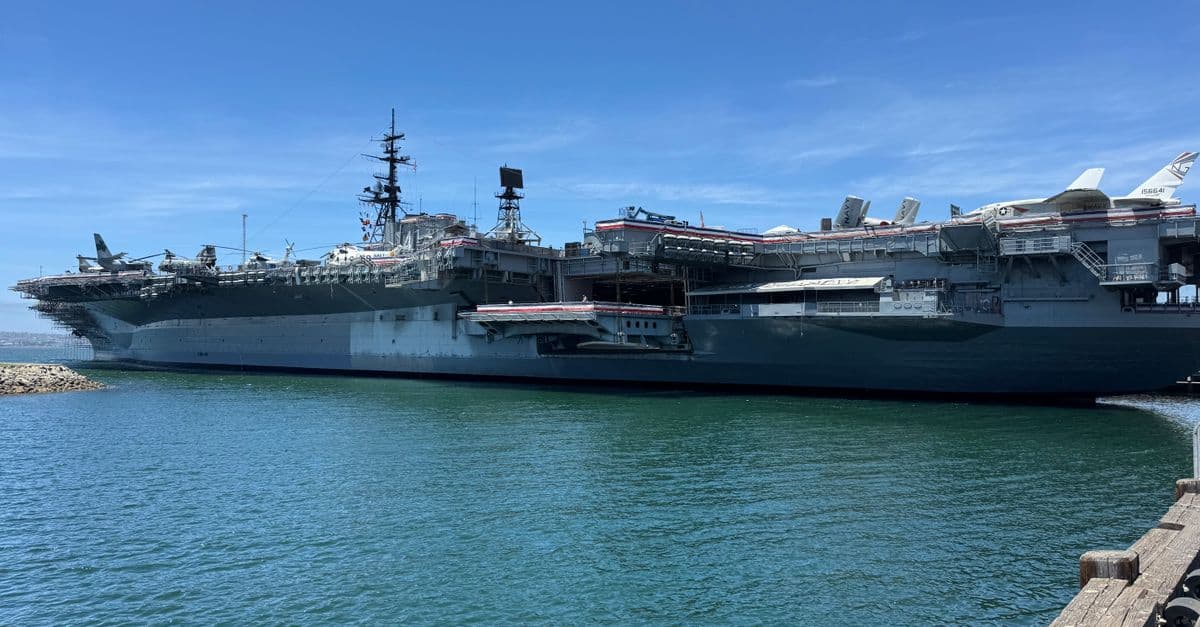
Photo: DC Productions / Pexels
The aircraft carrier is the single most capital-intensive conventional weapons platform ever built. It is simultaneously an airfield, a strike base, a command centre, a logistics hub, and a sovereign projection of national power — a floating fortress that can appear anywhere on earth's oceans within days and deliver air strikes without needing any foreign government's permission for basing rights. In 2025, the countries that operate aircraft carriers constitute an exclusive club whose membership defines the upper tier of global naval power. The United States leads overwhelmingly, with 11 nuclear-powered supercarriers. The rest of the world combined operates fewer.
What Counts as an Aircraft Carrier
The term "aircraft carrier" covers an enormous range of capability, and understanding the distinctions is essential for reading this ranking accurately.
A fleet carrier or supercarrier is what most people picture: a dedicated, large-deck vessel whose primary mission is operating fixed-wing combat aircraft. American Nimitz-class and Gerald R. Ford-class carriers displace over 100,000 tons and carry 60–70 aircraft including fighters, early warning aircraft, electronic warfare aircraft, and helicopters. They are the most powerful conventional weapons platforms ever constructed.
A conventional carrier with ski-jump launch uses a curved ramp at the bow to help aircraft gain altitude during takeoff, replacing catapults. This system is simpler and cheaper than catapults but limits the weight and payload of aircraft that can launch — no heavy early-warning aircraft, no maximum-payload tankers. China's first two carriers (Liaoning and Shandong), Russia's Kuznetsov, India's Vikramaditya, and India's domestically built Vikrant all use ski-jump systems.
An aircraft carrier with catapult launch (CATOBAR — Catapult Assisted Take-Off But Arrested Recovery) can launch the full range of carrier-capable aircraft. Only American carriers and France's Charles de Gaulle used steam catapults until China's Fujian, commissioned in 2024, introduced electromagnetic catapult launch — only the second country in the world to field this technology.
Light carriers and VSTOL carriers operate vertical/short takeoff and landing aircraft — primarily the F-35B Lightning II or, in older configurations, the AV-8B Harrier. These include the UK's Queen Elizabeth class, Italy's Cavour and Trieste, Spain's Juan Carlos I, and Japan's Izumo-class ships being converted for F-35B operations. They carry smaller air wings and have less total strike capacity than catapult carriers.
Large amphibious assault ships (LHDs and LHAs) capable of operating F-35Bs or other VSTOL aircraft function effectively as light carriers in certain configurations. Japan's Izumo-class and Australia's Canberra-class are classified as helicopter destroyers and amphibious ships respectively, but their conversion to operate fixed-wing aircraft blurs the line.
Source: IISS — The Military Balance 2025 — The primary source for carrier class specifications, operational status, and air wing data in this article.
Methodology
Rankings are drawn from IISS Military Balance 2025, US Naval Institute Proceedings, Jane's Fighting Ships 2024–2025, and official Navy communications. "Aircraft carrier" is defined as any commissioned warship with a primary mission of operating fixed-wing aircraft from a flight deck, including VSTOL-capable ships. Amphibious assault ships not yet certified for fixed-wing operations are noted separately. Russia's Admiral Kuznetsov is carried in the ranking with an asterisk reflecting its unresolved refit status. All figures reflect ships commissioned and operationally active or in refit as of early 2025.
Countries With the Most Aircraft Carriers (2025)
| Rank | Country | Total Carriers | Launch System | Class/Type | Typical Air Wing |
|---|---|---|---|---|---|
| 1 | USA | 11 | CATOBAR (steam/EM) | Nimitz (10) + Ford (1) | 60–70 aircraft |
| 2 | China | 3 | Ski-jump (2) + CATOBAR (1) | Liaoning, Shandong, Fujian | 36–40 aircraft |
| 3 | UK | 2 | STOVL | Queen Elizabeth class | 24–36 F-35Bs |
| 4 | Italy | 2 | STOVL | Cavour + Trieste (LHD) | 12–20 F-35Bs |
| 5 | India | 2 | Ski-jump | Vikrant + Vikramaditya | 20–26 aircraft |
| 6 | France | 1 | CATOBAR (steam) | Charles de Gaulle | 24–30 Rafale M |
| 7 | Spain | 1 | STOVL | Juan Carlos I (LHD) | 8–12 aircraft |
| 8 | Russia | 0–1* | Ski-jump | Kuznetsov (in refit) | 0 operational |
| 9 | Japan | 2 (converting) | STOVL (F-35B, in progress) | Izumo class (LHDs) | Up to 12 F-35Bs |
| 10 | Australia | 2 (LHDs) | Potential STOVL | Canberra class | F-35B potential |
Russia's Kuznetsov has been in extended refit since 2017; its return to operational service date remains uncertain.
Japan's Izumo-class conversions for F-35B operations were progressing as of 2025, with initial carrier qualification underway.
Source: IISS Military Balance 2025; Jane's Fighting Ships 2024-2025; US Navy Budget and Force Structure documents.
Where this data comes from
Aircraft carrier inventories come from the International Institute for Strategic Studies' annual Military Balance, supplemented by Jane's Fighting Ships (the reference standard for global warship specifications and commissioning dates) and official naval publications. For the US Navy, information comes from Congressional budget documents and US Naval Institute Proceedings. For China, data derives from open-source intelligence analysis, satellite imagery of shipyards, and statements from the US Department of Defense. For smaller navies, official navy announcements and maritime affairs ministry statements provide the primary source. Ship status (commissioned, in refit, operational capability) reflects information as of early 2025. Classification decisions (whether a particular ship counts as an "aircraft carrier" vs. amphibious assault ship) reflect operational reality: if it operates fixed-wing aircraft from a flight deck, it is counted here, regardless of official nomenclature — which is why Japan's "helicopter destroyers" and Italy's LHDs are included.
What the carrier rankings reveal about naval power
The distribution of carriers reflects global strategic competition. The United States maintains overwhelming carrier advantage because it calculates that power projection across the Pacific, Atlantic, and Indian Ocean simultaneously requires 11 hulls. China is building as rapidly as feasible because it seeks to compete with the US in its near seas and because carrier aviation is a credential of great power status. UK, France, and India operate carriers because they see regional naval presence as essential to geopolitical standing, not necessarily because carriers are optimal for their specific security environments. The absence of carriers from Russia, Germany, Japan, South Korea, and Brazil — despite their military spending levels — reveals that carriers are considered either unaffordable, strategically unnecessary, or politically sensitive (Japan's constitutional history, Germany's geographic constraints, Brazil's focus on submarine power). The next decade will test whether new carriers from China, a potential Japanese carrier capability, and possible South Korean or Turkish light carriers will fragment the current concentrated distribution or remain marginal relative to US dominance.
Historical Context: How the Carrier Became the Capital Ship
The aircraft carrier replaced the battleship as the capital ship of naval power during World War II — a transition completed with brutal clarity at Pearl Harbor and the Battle of Midway.
Before Pearl Harbor (December 1941), the battleship was the dominant naval platform. Battleships had been the decisive weapons of naval warfare since the Battle of Trafalgar in 1805. The pre-war naval treaties of the 1920s — Washington Naval Treaty (1922) and London Naval Treaty (1930) — limited battleship tonnage precisely because they were seen as the measure of naval power. Aircraft carriers were secondary vessels, useful for scouting and limited strike missions but not expected to determine fleet engagements.
Pearl Harbor demonstrated that carriers and their aircraft could destroy a battleship fleet before it ever came within gun range. Midway (June 1942) confirmed this: the battle was decided entirely by aircraft, with the opposing fleets never within sight of each other. Four Japanese fleet carriers were sunk in a single day; Japan never recovered offensive naval capability. The battleship became a support vessel — valuable for shore bombardment but no longer the decisive platform.
The Cold War carrier race between the United States and Soviet Union was less symmetrical than popular imagination suggests. The US built supercarriers; the Soviet Union largely did not, calculating that submarines, land-based aviation, and anti-ship missiles could destroy American carriers before they could strike Soviet territory. The Soviet naval doctrine — "sea denial" rather than "sea control" — shaped a weapons development programme centred on long-range anti-ship missiles (the P-700 Granit) and nuclear submarines, not rival carrier fleets.
The one Soviet carrier programme that did produce operational ships was the Admiral Kuznetsov class — designed as "aircraft-carrying cruisers" to avoid classification as carriers under Montreux Convention restrictions on carrier passage through the Turkish Straits. Only one was completed for Russia; a second hull, the Varyag, was sold incomplete to China after the Soviet collapse.
Source: IISS — The Military Balance 2025 — Comprehensive carrier fleet inventories including ship status, refit schedules, and air wing compositions.
The United States: Eleven Carriers, One Strategic Philosophy
The US Navy's 11 nuclear-powered aircraft carriers are the backbone of American global power projection, and their operational philosophy encapsulates the post-World War II US grand strategy: forward presence, escalation dominance, and the ability to deliver decisive force anywhere on earth within days.
The fleet consists of 10 Nimitz-class carriers (commissioned 1975–2009) and one Gerald R. Ford-class (USS Gerald R. Ford, CVN-78, commissioned 2017). Three more Ford-class carriers are in construction or planning: USS John F. Kennedy (CVN-79), USS Enterprise (CVN-80), and USS Doris Miller (CVN-81).
The Gerald R. Ford class represents the most significant carrier technology advance in 40 years. Its Electromagnetic Aircraft Launch System (EALS) replaces steam catapults with a variable-force electromagnetic system that is more reliable, quieter, and allows more precise control of launch energy — reducing stress on aircraft airframes. Its Advanced Weapons Elevators move ordnance from magazines to the flight deck three times faster than the Nimitz-class system. Its twin A1B nuclear reactors generate three times the electrical power of the Nimitz-class reactors — creating headroom for future directed-energy weapons. The Ford-class is designed for a 50-year service life, meaning current ships will still operate into the 2070s.
The carrier strike group (CSG) structure surrounding each carrier amplifies its capability enormously. A typical CSG includes the carrier, two guided-missile cruisers or destroyers, two attack submarines (which provide subsurface protection and independent strike capability), a supply ship, and two or three additional destroyers. The combined CSG can project air power over a 700 km (435 mi) radius, engage threats at over 1,600 km (1,000 mi) with standoff weapons, and track and engage submarines across a vast ocean area.
The 11-carrier fleet is calibrated to a specific strategic requirement: maintaining 2–3 carriers deployed in the Pacific, 1–2 in the Middle East/Indian Ocean, and 1 in or near Europe at any given time, while 2–3 are always in maintenance or overhaul and 1–2 are in training cycles. This "service life" mathematics explains why 11 is the number: going to 9 would mean periods when no carrier was available in critical regions.
Source: US Navy — FY2025 Budget Materials and Force Structure Assessment — Source for Ford-class technical specifications, construction programme status, and CSG composition doctrine.
Why American Carriers Are So Expensive — and Why They Continue to Be Built
Each Nimitz-class carrier cost approximately $4.5 billion to build in current dollars. Each Gerald R. Ford-class carrier costs approximately $13 billion to build. The full lifecycle cost of a Ford-class carrier over 50 years — including planned maintenance, overhauls, air wing procurement, and operating costs — is estimated to exceed $100 billion per hull.
This extraordinary cost raises a legitimate strategic question: is a single platform worth $13 billion at risk of being sunk by a $2 million anti-ship missile, a capability now within reach of many potential adversaries?
The US Navy's answer centres on layered defence, deterrence value, and flexible utility. A carrier strike group's defensive layering includes the carrier's own electronic warfare systems and close-in weapons, escort destroyers' Standard Missile (SM-6) intercept capability, attack submarines screening against subsurface threats, and airborne early warning aircraft providing extended detection range. No single $2 million missile reaches a carrier through all these layers without detection.
The deterrence argument is that a carrier strike group's presence in a region — even without firing a shot — changes adversary calculations. The ability to deliver 60 aircraft to any coastal nation within 24 hours is a diplomatic instrument as much as a military one.
The flexible utility argument is the most pragmatic: carriers have been used for humanitarian operations (Philippines typhoon relief in 2013, Haiti earthquake in 2010), for power projection displays in diplomatic crises, for sustained air campaigns in landlocked countries, and for conventional strike missions — a versatility no other platform matches.
China's Carrier Programme: The Methodical Build
China's three operational carriers represent a stunning pace of development for a country that had zero carriers until 2012.
The Liaoning was a refurbished Soviet Varyag hull that China purchased from Ukraine in 1998 for $20 million, officially described as a "floating casino." Completed after 14 years of work, Liaoning was commissioned in 2012 primarily as a training platform — more useful for teaching the PLA Navy carrier aviation than for combat operations. It operates the Shenyang J-15 Flying Shark, a carrier-adapted version of the Sukhoi Su-33 design.
The Shandong, commissioned in December 2019, was China's first domestically designed and built carrier — a significant milestone demonstrating that China could design, build, and commission a carrier without foreign assistance. Shandong is similar in concept to Liaoning but larger, with improved electronics, better aviation fuel systems, and slightly more hangar space. Both use the ski-jump launch system.
The Fujian, commissioned in 2024, is a qualitative leap beyond the first two carriers. Fujian uses an electromagnetic catapult launch system — only the second country after the United States to field this technology on an operational carrier. Electromagnetic catapults allow Fujian to launch the KJ-600 fixed-wing airborne early warning aircraft, which dramatically extends the carrier air wing's radar coverage and engagement envelope. Without AEW aircraft, a carrier's strike aircraft operate effectively blind beyond visual range without tanker or land-based radar support. With an organic AEW capability, Fujian gains a force-multiplying awareness advantage that the Liaoning and Shandong entirely lack.
A fourth carrier is widely reported by US DoD, IISS, and US Naval Institute Proceedings to be in planning or early construction. The expected configuration: nuclear propulsion, electromagnetic catapults, and a displacement approaching or exceeding the American Nimitz-class. If completed, China's first nuclear carrier would represent a strategic threshold — the ability to operate away from Chinese waters for extended periods without port refuelling stops.
Source: US DoD — Annual Report to Congress: Military and Security Developments Involving the People's Republic of China 2024 — Source for assessment of China's carrier programme status, J-15 air wing, and Fujian specifications.
The UK's Queen Elizabeth Class: A Return to Blue Water
The two Queen Elizabeth-class carriers — HMS Queen Elizabeth (R08) and HMS Prince of Wales (R09) — represent a remarkable return to fixed-wing carrier aviation for the Royal Navy after a 14-year gap. The UK decommissioned HMS Ark Royal in 2010, leaving Britain with no fixed-wing carrier aviation capability for over a decade, a capability gap that caused considerable diplomatic embarrassment during the Libya operations of 2011.
The Queen Elizabeth-class ships are 65,000 tons fully loaded — the largest warships ever built in Britain. They use a ski-jump launch and arrested recovery (STOBAR) configuration for F-35Bs rather than catapults, a design decision driven by cost and schedule concerns that has generated ongoing debate. The F-35B's short takeoff and vertical landing (STOVL) capability limits the ship to operating F-35Bs rather than the full range of carrier aircraft, meaning no organic fixed-wing early-warning aircraft and no carrier-based tankers.
The Royal Navy's F-35B fleet has expanded significantly since initial operating capability was declared in 2021. Operational carrier air wings now include 24–36 F-35Bs alongside Merlin HM2 anti-submarine warfare helicopters and Wildcat maritime attack helicopters. In multinational operations, additional F-35Bs from allied air forces (US Marine Corps and other partner nations) routinely embark, increasing the strike wing beyond what the UK could sustain alone.
The Queen Elizabeth class has deployed on high-profile operations including CSG21 — the 2021 Indo-Pacific deployment that demonstrated the UK's commitment to freedom of navigation in the South China Sea. Both ships are expected to serve until at least the 2060s.
India's Two-Carrier Navy
India is one of only four countries globally (alongside the US, UK, and Italy) currently operating two aircraft carriers simultaneously — a distinction that reflects India's sustained commitment to naval power projection across the Indian Ocean region.
INS Vikramaditya is a refurbished Soviet Admiral Gorshkov hull, purchased from Russia and delivered in 2013 after years of costly delays and extensive modifications at the Sevmash shipyard. It uses a ski-jump launch system and operates MiG-29K fighters, which despite their age remain capable aircraft within the Indian Ocean context.
INS Vikrant — commissioned in September 2022 — is the first aircraft carrier ever designed and built entirely in India, a milestone of industrial and engineering significance. Built at the Cochin Shipyard in Kerala, Vikrant is 45,000 tons fully loaded and uses a ski-jump system. Its air wing includes MiG-29Ks and, in future configuration, may include the Naval version of India's indigenous Light Combat Aircraft (LCA-N), though the LCA-N's carrier qualification has faced extended delays.
India's long-term carrier vision, as outlined in the Indian Navy's Maritime Capability Perspective Plan, includes a third carrier — likely nuclear-powered — to ensure that India always has one carrier available in the Indian Ocean and one capable of deployment. The Indian Navy's strategic calculus is explicitly about maintaining a competitive naval balance with China, which has deployed carrier strike groups into the Indian Ocean in recent years.
Source: Indian Navy — Maritime Capability Perspective Plan and IISS Military Balance 2025 — Source for INS Vikrant specifications, air wing plans, and India's long-term carrier programme outline.
France: The European Outlier
France's Charles de Gaulle (R91) is the only non-American nuclear-powered carrier outside of future Chinese plans, and it is the only European carrier with full catapult launch capability — making it the most capable non-American carrier in terms of air wing flexibility.
The 42,500-ton ship entered service in 2001 and has been France's most visible symbol of strategic autonomy since. Its K15 nuclear reactors require no refuelling for 25 years of service, unlike the diesel-powered carriers of most European navies. Its steam catapults can launch the full Rafale M fighter, the E-2C/D Hawkeye airborne early warning aircraft (making it one of only three carrier fleets with organic AEW), and the AS565 Dauphin helicopter.
France has announced a next-generation carrier, the Porte-Avions de Nouvelle Génération (PANG), to replace Charles de Gaulle when it reaches end of service around 2040. PANG will displace approximately 75,000 tons — larger than Charles de Gaulle but smaller than American supercarriers — and will use electromagnetic catapults, nuclear propulsion, and an air wing centred on the future New Generation Fighter (NGF) being developed under the SCAF programme. The PANG programme entered the design and development phase in 2021.
France uses Charles de Gaulle as a diplomatic and military tool within NATO and independently. It has participated in strikes against ISIS in Iraq and Syria, in operations in Libya, and in multiple NATO maritime exercises. Its nuclear propulsion and independent logistics make it capable of sustained deployment without the alliance support that most NATO carrier nations require.
Japan: Crossing the Carrier Threshold
Japan's Constitution, reinterpreted under successive post-2012 governments toward a more assertive self-defence posture, allows Japan to possess weapons systems that contribute to collective self-defence. Aircraft carriers were long considered constitutionally and politically impossible — too evocative of the Imperial Japanese Navy's carrier fleet that attacked Pearl Harbor and fought throughout the Pacific War.
The Izumo-class "helicopter destroyers" were the workaround. Both ships in the class — JS Izumo (DDH-183) and JS Kaga (DDH-184) — were built as helicopter carriers, ostensibly for anti-submarine warfare and disaster relief. Their 248-metre flight decks, island superstructures, and below-deck hangars were clearly designed with future conversion in mind.
Beginning in 2021, the ships began modification to enable F-35B operations: the bow section of the flight deck was squared off (replacing the angled bow that would have caused engine damage from F-35B exhaust), non-slip deck coating was applied, and necessary communications and electronics upgrades were installed. Initial F-35B touch-and-go carrier qualification flights were conducted by Japan Air Self-Defense Force F-35B pilots in 2022 and 2024. Full operational carrier capability with Izumo-class ships is expected to be established progressively through the late 2020s.
Japan's decision to acquire F-35Bs and convert the Izumo class represents a fundamental shift in Japanese defence posture — a country that once renounced offensive weapons acquiring the capability to project air power from the sea. It is directly linked to the threat assessment of North Korean ballistic missiles and China's naval expansion in the East and South China Seas.
Russia: The Ghost of Naval Ambition
Russia's Admiral Kuznetsov has been in dry dock since 2017 — the longest carrier refit in modern naval history — making Russia effectively a carrier-less naval power for eight years and counting.
The Kuznetsov's saga is a story of industrial decline. Commissioned in 1990 as the lead ship of its class (the second hull became China's Liaoning), the Kuznetsov was always plagued by unreliable propulsion systems, requiring tugboat escort on deployments as insurance against the risk of breakdown. It deployed to the Mediterranean in 2016–2017, conducting strikes in Syria, but two aircraft were lost in accidents — one when the arresting wire broke during landing — generating as much negative as positive publicity.
The planned refit, expected to take 2–3 years, has stretched to over seven years due to a floated dry dock accident (the PD-50 dock sank while Kuznetsov was in it, damaging the ship), chronic funding problems, and broader deterioration of Russia's naval industrial base under sanctions and war-related budget pressures. Whether Kuznetsov ever returns to operational service, and in what condition if so, remains genuinely uncertain.
Russia's broader carrier ambitions have been effectively shelved. Pre-2022 plans for a new-class carrier, sometimes called Shtorm or Project 23000E, required industrial capabilities that Russia's shipbuilding industry cannot currently deliver. The economic and sanctions constraints imposed after the 2022 Ukraine invasion have made large capital naval programmes unaffordable in the near term.
Italy, Spain, and the VSTOL Operators
Italy and Spain operate the smallest carriers on this ranking but have used them effectively within their Mediterranean regional roles and NATO alliance context.
Italy's Cavour (CVH-550), commissioned in 2008, is a 27,100-ton light carrier operating the F-35B since 2023, when the Italian Navy achieved initial operating capability with the F-35B. The Trieste (LHA-490), commissioned in 2023, is nominally an amphibious ship but has a flight deck configured for F-35B operations, effectively giving Italy two carriers. Italy's F-35B fleet will grow as additional aircraft are delivered under the Italian purchase contract for 30 F-35Bs.
Spain's Juan Carlos I (L-61), commissioned in 2010, is a 26,000-ton landing helicopter dock ship that doubles as a carrier for F-35Bs — which Spain has not yet acquired. Currently operating the AV-8B Harrier II, Spain has announced plans to acquire F-35Bs to replace the aging Harriers, but the acquisition timeline has been subject to budgetary uncertainty.
Thailand operates an aircraft carrier — the HTMS Chakri Naruebet — that has been effectively non-operational for years due to inability to fund maintenance and operating costs. The ship was acquired in 1997 and operated the AV-8S Harrier until those aircraft were retired in 2006. It now functions primarily as a training and disaster relief platform with no fixed-wing capability. Its inclusion in "carrier" counts is a definitional edge case rather than a meaningful military capability.
What People Get Wrong About the Carrier Rankings
The most common misunderstanding is treating carrier count as directly translatable to naval power in a specific conflict.
A US supercarrier operating in the Western Pacific faces a very different threat environment than it does in the Persian Gulf. China's strategy for defeating carrier operations in its near seas — the "anti-access/area denial" (A2/AD) strategy — is built around a combination of DF-21D and DF-26 anti-ship ballistic missiles (the first in the world specifically designed to hit moving ships at sea), long-range anti-ship cruise missiles, attack submarines, and fighter aircraft capable of striking beyond the carrier's air wing range. The question of whether US carriers can operate effectively within 1,000 km of the Chinese coast in a conflict is genuinely contested among analysts — which is why US carrier doctrine now emphasises standoff weapons and distributed operations rather than close-in strikes.
The second misunderstanding is equating carrier-building pace with near-term combat capability. China's Fujian is a more capable ship than Liaoning or Shandong, but its air wing — pilots who have trained for carrier operations, maintainers who can sustain aircraft at sea, the logistical pipeline for at-sea replenishment — takes a generation to develop. American carrier aviation culture, built over 80 years, represents an institutional and human capital advantage that hardware specifications do not capture.
The third misunderstanding is treating carriers as offensive-only weapons. Carriers are also powerful instruments of deterrence and presence. The deployment of a carrier strike group to a region in response to a crisis — as the US did in the South China Sea and the Eastern Mediterranean multiple times in 2023–2025 — communicates a level of commitment and threat credibility that no other platform replicates.
Trends: The Future of Carrier Power
Five trends will shape the carrier fleet rankings over the next two decades.
First, China will almost certainly reach 4–5 carriers by 2035, including at least one nuclear-powered ship. Whether China also develops the full carrier aviation ecosystem — tanker aircraft, organic AEW capability, proficient pilots and maintenance teams — will determine whether these are truly peer competitors with American CSGs or large warships that are individually capable but systemically limited.
Second, directed energy weapons will change carrier defence calculus. If the 150+ kilowatt laser weapons the US Navy is developing can reliably intercept anti-ship cruise missiles at ranges of several kilometres, the threat from salvos of relatively cheap cruise missiles is substantially reduced. Directed energy could lengthen the useful operational life of the carrier as a platform by solving the cost-per-intercept problem in a drone and missile-rich threat environment.
Third, unmanned carrier aviation is accelerating. The MQ-25 Stingray tanker drone, entering service with the US Navy, extends carrier aircraft range significantly. Future unmanned combat aircraft — some already in classified development — could perform the most dangerous strike and suppression missions without risking pilots, changing the risk calculus for carrier employment in contested airspace.
Fourth, hypersonic threats may push carriers further from contested shores. If adversaries field large numbers of hypersonic anti-ship missiles — which are very difficult to intercept with current systems — the operating radius within which carriers are acceptably safe shrinks. This would reduce carrier utility in near-peer conflicts unless effective hypersonic intercept capability is developed.
Fifth, new carrier nations may emerge. Turkey has commissioned the TCG Anadolu, an LHD originally designed for AV-8Bs but adapted after Turkey was denied F-35Bs following its purchase of Russian S-400 systems. Turkey has indicated interest in domestic VSTOL aircraft development. South Korea is studying a light carrier acquisition. The carrier club is unlikely to remain as closed as it has been historically.
Frequently Asked Questions
Q: Why does the United States have so many aircraft carriers? A: The US carrier fleet was designed to meet a specific strategic requirement: maintaining simultaneous carrier presence in the Pacific, Middle East, and Atlantic while keeping ships available for maintenance and training. With 2–3 ships always in refit and 1–2 in training, 11 hulls are needed to guarantee 6–7 deployable carriers at any time. Reducing to 9 would create periods with no carrier available in critical regions.
Q: What does it cost to operate an aircraft carrier? A: Operating a US carrier strike group costs approximately $6.5 million per day when deployed, including the full CSG. Over its 50-year lifespan, the total lifecycle cost of a Gerald R. Ford-class carrier — construction, overhauls, operating costs — is estimated to exceed $100 billion per hull.
Q: Which country is building the most aircraft carriers right now? A: China is expanding its carrier fleet at the fastest pace of any nation. The Fujian entered service in 2024, and a fourth carrier — reportedly nuclear-powered — is widely assessed to be in planning or early construction. No other country has matched China's carrier construction pace over the past decade.
Q: Could an aircraft carrier actually be sunk by a missile? A: In principle, yes — no warship is unsinkable. In practice, sinking a US carrier strike group would require penetrating multiple layers of defence: submarines, escort destroyers, shipborne air defence, the carrier's own electronic warfare systems, and the carrier's own combat air patrol. The layered defence makes a single-missile kill virtually impossible; saturating it with many missiles simultaneously is the strategy China and Russia have designed for, which is why the US spends heavily on anti-saturation defences.
Q: What is the difference between a carrier strike group and an expeditionary strike group? A: A carrier strike group (CSG) is built around a large-deck aircraft carrier and includes escort destroyers/cruisers, attack submarines, and a supply ship, with a primary mission of power projection via air strikes. An expeditionary strike group (ESG) is built around an amphibious assault ship (LHD/LHA) and includes amphibious ships for landing troops, with a primary mission of amphibious assault and humanitarian operations. The LHD at the centre of an ESG can also operate F-35Bs in a light carrier role.
Q: Why does Russia only have one aircraft carrier? A: Russia inherited only one carrier from the Soviet fleet — the Admiral Kuznetsov — and has never built a second. Soviet naval doctrine emphasised submarines and anti-ship missiles over carrier aviation, so the Soviet Union never invested in a large carrier programme. Since 1991, Russia's economic constraints and shipbuilding industry deterioration have precluded new carrier construction. The Kuznetsov has been in refit since 2017 with no confirmed return date.
Sources
Source: IISS — The Military Balance 2025 — Primary source for carrier fleet inventories, specifications, and operational status across all countries.
Source: US DoD — Annual Report on Military and Security Developments Involving the PRC 2024 — Source for China's carrier programme assessment and Fujian specifications.
Source: US Navy — FY2025 Budget Request and Force Structure Assessment — Source for Ford-class specifications, programme costs, and CSG doctrine.
Source: Jane's — Fighting Ships 2024–2025 — Reference for individual ship specifications, commissioning dates, and air wing compositions.
The Takeaway
The 2025 aircraft carrier ranking is, ultimately, a ranking of who takes global naval power projection seriously enough to invest extraordinary resources in carrier aviation. The United States leads by an enormous margin that no other country can realistically close within the decade: not just in hull count but in the aircraft, pilots, tactics, doctrine, and maintenance culture that make carriers effective rather than merely imposing. China is the most consequential challenger, building methodically from refurbished Soviet hulls through domestic conventional designs to catapult-equipped ships, and eventually toward nuclear power — a multi-decade programme that shows strategic patience. For the remaining nations, carriers serve regional deterrence and alliance signalling roles, projecting credibility in specific waters without challenging American global reach.
Related Reading
Follow new articles
Add SciHub101 to your feed reader to see new science and technology stories.
About the Author
SciHub101 is an independent science and technology publication founded and edited by Buğra Sözeri, a software engineer and app developer based in Türkiye. AI tools assist with drafting and research. Source documentation in the existing archive is uneven, and articles are being reviewed and corrected. The Editorial Team byline identifies editorial responsibility; it does not certify specialist or independent human review. Where we compare products, anything built by our own team is labelled as such — see the editorial guidelines and About page for how corrections and disclosures work.
Related Articles

Countries With the Longest Coastlines, Ranked and Explained
Coastline length is one of geography's most measurement-dependent numbers. This ranking shows which countries have the longest coastlines, why Canada leads by a wide margin, and why different datasets disagree.
Countries With the Most Advanced Drone Programs (2025)
Drones have fundamentally changed warfare, surveillance, and geopolitics. This ranking of the top countries with the most advanced drone programmes in 2025 covers military UAV capabilities, commercial industries, and combat records — from the USA's Reaper to China's Wing Loong, Turkey's Bayraktar, and Iran's Shahed-136.
Countries With the Most Powerful Navies in the World (2025)
Naval power defines a country's ability to control trade routes, project power across oceans, and deny adversaries access to the seas. This ranking of the top 10 most powerful navies in 2025 covers carrier fleets, submarines, surface combatants, and total tonnage.
Countries With the Most Submarines in the World (2025)
Submarines are the most feared weapons in any navy — invisible, long-range, and capable of delivering nuclear strikes or sinking entire carrier groups. This ranking of the top 15 countries with the most submarines in 2025 covers nuclear vs conventional fleets, strategic ballistic missile subs, and the future of undersea warfare.
Countries Spending the Most on Military R&D (2025)
Military research and development determines which country dominates warfare in 20 years, not today. The United States spends over $140 billion annually on defence R&D — more than China's entire official military budget. This ranking covers the top 10 investors in military technology and the cutting-edge programmes they are funding.
Countries With the Best Special Forces in the World (2025)
Special forces are the sharp edge of military power — small teams of elite soldiers who operate behind enemy lines, conduct hostage rescues, and execute missions that conventional forces cannot. This ranking of the top 10 countries with the best special forces covers the world's most elite units, their doctrine, and their most famous operations.