Countries With the Most Military Bases Abroad (2025)
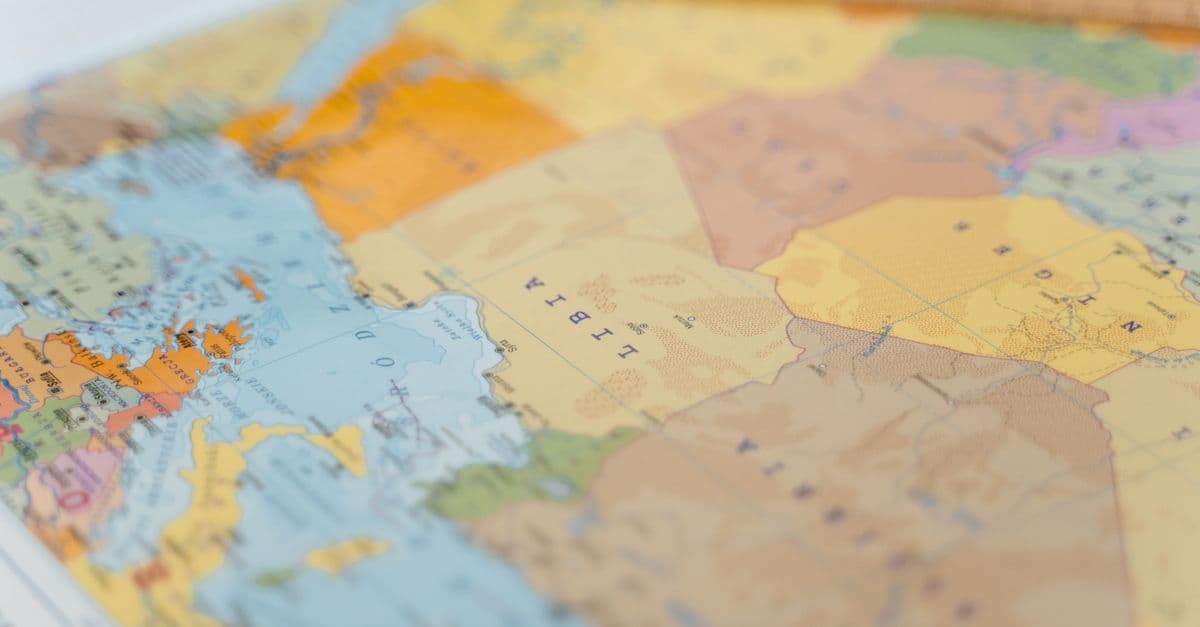
Photo: MART PRODUCTION / Pexels
The United States has more military bases abroad than any other country, but how many depends on what you call a base. One compilation counts at least 128 American bases outside US territory as of February 2025, while a narrower count of named bases with personnel found only 38 in 2014. This article ranks the countries with the largest overseas military footprints using documented figures, explains why counts vary so widely, and shows how France, Russia, China, Turkey, and the United Kingdom actually station forces abroad.
Key takeaways
- The United States has the largest overseas presence by a wide margin: DMDC data for June 30, 2025 show more than 160,000 active-duty personnel stationed outside the United States and its territories, with Japan (53,912), Germany (35,989), and South Korea (23,766) hosting the most.
- There is no single agreed number of "bases abroad." One compilation gives at least 128 US bases as of February 2025 under a Defense Department definition, while a narrower named-base count in 2014 found 38.
- Djibouti, a country on the Bab el-Mandeb Strait, hosts bases from the United States, France, Japan, Italy, and China.
- France has been handing back facilities in Africa: it completed its withdrawal from Mali on August 15, 2022, and began returning bases in Chad and Senegal in 2025.
- China's first overseas base opened in Djibouti in 2017; a renovated naval base at Ream, Cambodia reopened in April 2025, though Cambodia says it is not a Chinese base.
Why do base counts differ so much?
Imagine counting "restaurants" in a city. If you count only sit-down places with a street address and a liquor license, you get one number. Add food trucks, hotel kitchens, and airport kiosks, and the number triples. Military basing has the same problem, and each source quietly picks a definition.
At least four choices change the answer. A "base" might mean a named, large installation with its own commander, or any site where forces live, train, store equipment, or listen to radio signals. Counts may include only facilities a country owns or leases, or also those it shares inside a host country's base. Some lists include temporary deployments and training missions, while others require a permanent presence. And some include dual-use infrastructure, such as a commercial port that a navy can use, while others exclude it.
The same compilation of US overseas bases illustrates this: its own figures, 38 named bases with personnel in September 2014 and at least 128 bases in 2025, use different definitions, so they should not be read as a trend. Wide differences like this are normal in basing data, and a smaller number does not mean a smaller footprint.
The second reason: secrecy and politics
Governments disclose basing differently. The United States publishes detailed personnel counts by country, while many other countries treat locations, numbers, or even the existence of an agreement as sensitive. China and Cambodia offer an example discussed below, where reports of a secret agreement are denied by the host government. For that reason, lists that give a crisp number for every country should be treated with caution, and this article gives counts only where a source supports them.
Who has what: a comparison
Table 1 summarizes the documented overseas presence of the main powers. It avoids a numeric rank for countries other than the United States because no common definition exists, and instead states what has been reported and when.
| Country | What is documented | Notable locations | Caveats |
|---|---|---|---|
| United States | At least 128 bases abroad (February 2025 compilation); more than 160,000 active-duty personnel overseas (June 30, 2025) | Japan, Germany, South Korea, Italy, UK, Djibouti, Diego Garcia | Count depends on definition; personnel figures include some regions with US territory |
| United Kingdom | Permanent presence in 13 countries in one compilation, plus overseas territories | Cyprus (Sovereign Base Areas), Diego Garcia (shared), Belize, Brunei, Kenya, Oman, Qatar | Compilation gives no year for the total |
| France | Djibouti since 1957; forces being withdrawn from parts of the Sahel and West Africa | Djibouti, UAE, Gabon | About 1,450 troops in Djibouti by 2021; Mali exit completed August 2022 |
| Russia | Bases in several former Soviet states and in Syria | Armenia, Belarus, Kazakhstan, Kyrgyzstan, Tajikistan, Tartus (Syria) | Tartus status unclear after December 2024 |
| China | Djibouti base (2017); Ream Naval Base expansion in Cambodia | Djibouti, Cambodia (Ream) | Cambodia denies a Chinese base at Ream |
| Turkey | Presence in about 11 countries according to one compilation | Qatar, Somalia, Northern Cyprus, Iraq, Syria, Libya | Personnel figures are dated and come from press and government reports |
| Japan | One overseas base, opened 2011 | Djibouti | Hosts large US forces at home |
| Italy | Base in Djibouti (2013); presence in Niger in one compilation | Djibouti, Niger | Compilation gives no years for Niger |
Sources: Wikipedia compilations of government and press reports: List of countries with overseas military bases, US military deployments, Foreign military bases in Djibouti, Turkish Armed Forces.
Why foreign bases matter
Bases solve problems of time and distance. A carrier strike group may need days or weeks to reach a distant crisis, while a forward airfield with fuel, maintenance crews, and stored equipment can be useful within hours. That is the difference between flying to a fight and already being there.
They also act as signals. Stationing troops in an allied country makes any attack on that ally an attack on the stationing power's forces, which is meant to raise the cost of aggression before it starts. The logic is often compared to a tripwire: the soldiers on the ground matter less for what they can stop than for what an attack on them would trigger.
Finally, bases are listening posts and logistics hubs. A port that can resupply ships, an airfield that can host reconnaissance aircraft, or a communications station that can intercept signals extends a country's reach in ways that satellites alone do not. For how overseas bases relate to naval power, see countries with the most powerful navies and countries with the most aircraft carriers.
The United States: the largest overseas footprint
The United States is the outlier. The Defense Manpower Data Center (DMDC) reported more than 160,000 active-duty personnel stationed outside the United States and its territories as of June 30, 2025. Table 2 shows the largest host countries.
| Host country | US active-duty personnel (June 30, 2025) |
|---|---|
| Japan | 53,912 |
| Germany | 35,989 |
| South Korea | 23,766 |
| Italy | 12,571 |
| United Kingdom | 10,071 |
| Spain | 3,700 |
| Turkey | 1,717 |
| Belgium | 1,122 |
Source: DMDC data as of June 30, 2025, compiled at Wikipedia, United States military deployments.
These figures change as forces rotate, so they are a snapshot. They also exclude short-term deployments that may add thousands of troops in a crisis. The compilation lists 26 foreign locations in its regional tables, including some territories such as Greenland and Diego Garcia, but that is a count of places with stationed personnel, not a count of bases.
Camp Humphreys: the largest overseas base by area
Camp Humphreys in South Korea is described as the largest US overseas military base by area. It covers roughly 3,454 acres (1,398 hectares) according to one account, houses some 500 buildings, and was built up under a relocation plan agreed in 2004 that consolidated about 28,500 US troops in South Korea. The expansion cost about US$10.7 billion to US$11 billion, with up to 93% paid by South Korea under a 2014 Special Measures Agreement, according to the same compilation.
That example matters because it shows that basing is a two-way bargain. The host often pays a large share of construction and upkeep, and gets security and economic activity in return. For how these arrangements fit into overall defense spending, see countries with the biggest defence budgets.
Diego Garcia: a shared base in a disputed territory
Diego Garcia, in the British Indian Ocean Territory (the Chagos Archipelago), is owned by the Royal Navy and operated by the US Navy under a lease. It was built between 1971 and 1976, has been in use since 1976, and is described as providing logistic support to forces deployed to the Indian Ocean and Persian Gulf. A bilateral agreement announced in October 2024 would transfer sovereignty over the Chagos Islands to Mauritius while leasing the base back to the United Kingdom for an initial period of 99 years, so the long-term legal arrangement is changing even as the facility remains in use.
What is a status of forces agreement?
A status of forces agreement (SOFA) is an agreement between a host country and a foreign nation stationing forces there. It sets the rights and privileges of foreign personnel but is not itself a security arrangement. Typical topics are jurisdiction over crimes, how civil claims are paid, taxes, entry and exit, and employment of local workers.
Jurisdiction is the most contentious. US SOFAs typically give US courts jurisdiction over crimes between service members or committed in the course of duty, while the host nation handles other crimes. The arrangement has produced lasting controversies. In 2002 a US military vehicle killed two girls in South Korea, and a US court-martial acquitted the soldiers, which caused widespread outrage. In 2011, accusations against US personnel in South Korea led to a peninsula-wide curfew for US troops, and US authorities later allowed South Korean prosecution of US soldiers in some cases.
These disputes explain why a base can be both wanted and resented. A host government may value the security guarantee and the jobs, while local residents live with noise, accidents, or the perception that foreign personnel are treated differently.
Djibouti: the world's most crowded base neighborhood
If you want to see how basing works in one small place, look at Djibouti. It sits on the Bab el-Mandeb Strait, which links the Red Sea and the Gulf of Aden, a route for global shipping. With few natural resources, the country leases territory to foreign militaries, and base-related income has been estimated at about US$300 million a year, roughly 10% of its GDP, according to one compilation.
| Country | Facility | Opened |
|---|---|---|
| France | Air base 188 (Djibouti-Ambouli) and Heron naval base | 1957 (air base) |
| United States | Camp Lemonnier | Late 2001 |
| Japan | JSDF Base Djibouti, Japan's first overseas base | 2011 |
| Italy | Base Militare Nazionale "Amedeo Guillet" | 2013 |
| China | People's Liberation Army Support Base, China's first overseas base | 2017 |
Source: Wikipedia, Foreign military bases in Djibouti.
France's presence in Djibouti has shrunk from about 4,000 troops around independence in 1977 to about 1,450 by 2021. The US lease of Camp Lemonnier was extended in 2014, with rent of about US$63 million to US$70 million a year. Japan's base cost about US$30 million to establish, and China's is estimated to cost US$94 million a year to run. Saudi Arabia signed agreements in 2017 for a proposed base, but the source lists it as planned, not operating.
Each of these bases supports anti-piracy operations, counterterrorism, intelligence gathering, or peacekeeping. The arrangement also shows a quirk of modern basing: great powers whose militaries compete elsewhere all operate inside one small country, each paying rent to the same host.
The United Kingdom: a legacy of treaties and territories
The UK's overseas presence is a mix of sovereign territory, treaty rights, and agreements with partners. The clearest example is the Sovereign Base Areas of Akrotiri and Dhekelia in Cyprus. They were created when Cyprus became independent in 1960 under the Treaty of Establishment, dated August 16, 1960, with the UK keeping sovereignty so it could continue using its bases. The two areas cover 254 square kilometers, with Akrotiri covering 123 and Dhekelia 131. They host RAF Akrotiri, a British Army garrison, and a signals intelligence installation at Ayios Nikolaos.
One compilation lists UK presence in 13 countries: Belize, Bahrain, Brunei, Canada, Cyprus, Germany, Kenya, Nepal, Norway, Oman, Qatar, Singapore, and the United Arab Emirates. That list does not include the British overseas territories such as Gibraltar, the Falkland Islands, or Diego Garcia, which are sovereign British territory in a different category. Because the source gives no year for the total, it is best read as a pattern rather than a precise count.
France: shrinking in Africa
France has historically kept the most extensive African military presence of any former colonial power. That is now changing quickly. Operation Barkhane, France's counterinsurgency campaign in the Sahel, began on August 1, 2014 and formally ended on November 9, 2022. Troop levels reached 5,500 at their peak, according to the operation's summary. France began withdrawing from Mali on February 17, 2022 and completed the pullout on August 15, 2022, after which its operation shifted to Niger.
The withdrawals have continued in other countries. Chad ended a defense and security cooperation agreement dating from 1966 on November 28, 2024. The French fighter detachment began leaving on December 10, 2024, the Abéché base was returned to Chad on January 10, 2025, and handover of the last air base in Chad began on January 31, 2025.
In Senegal, President Bassirou Diomaye Faye called for French soldiers to leave in November 2024. France returned several facilities on March 7, 2025, handed over the Rufisque joint station on July 1, 2025, and announced it would return its remaining sites on July 18, 2025. Djibouti, where France has been present since 1957, is the notable exception, a base that continues to serve operations in the Red Sea and the Indian Ocean.
The French case is a reminder that basing depends on consent. A base exists only as long as the host agrees, and elected or military governments can end that agreement. For a view of the forces behind these decisions, see countries with the best special forces.
Russia: bases close to home, and one in the Mediterranean
Most of Russia's overseas military facilities are in former Soviet states, including Armenia, Belarus, Kazakhstan, Kyrgyzstan, and Tajikistan, according to a compilation of reported sites. Beyond that region, its most important facilities were in Syria. The naval facility at Tartus was set up by the Soviet Union under a 1971 agreement to support its Mediterranean fleet, and from 2011 it was described as the only remaining Russian naval base outside the former Soviet Union.
After the fall of Syrian president Bashar al-Assad in December 2024, ships were seen leaving Tartus on December 3, 2024, and the base was later confirmed empty. The Russian Navy's withdrawal was reported complete by early March 2025, though Russian vessels continued to use the base as a stopover and its final status remained unclear. In January 2025, Syria's provisional government reportedly rescinded a 2019 deal to redevelop the civilian port, and early reports that the naval treaty had ended were later clarified to concern only the commercial port lease. The naval treaty was described as suspended, not terminated, pending a likely renegotiation. On October 15, 2025, Russian president Vladimir Putin and Syrian president Ahmed al-Sharaa discussed the future of both Russian bases in Syria.
Tartus matters because warm-water access is scarce. A navy without a friendly port near the Mediterranean must sail much farther for repairs and resupply, so losing or downgrading the facility changes how far its fleet can operate.
China: from no bases to a small, debated network
China's first overseas military base opened in Djibouti in 2017, a break from a long-stated policy of not stationing forces abroad. It is described as the People's Liberation Army Support Base, a logistics hub for naval operations in the region, with annual costs estimated at US$94 million.
The most debated site is Ream Naval Base in Cambodia, on the Gulf of Thailand. In 2019, US officials said they had seen a secret agreement giving the Chinese navy exclusive access to about one third of the base for up to 30 years. Cambodian authorities denied the agreement existed, called the reports "fake news," and said any foreign military presence would be rotational rather than permanent, in line with the constitution. The base formally reopened after renovation on April 5, 2025, with Prime Minister Hun Manet attending, and Chinese-funded expansions were completed that month with a joint training center. Analysts at the Center for Strategic and International Studies said half the port facilities appeared allocated to Cambodian and Chinese use.
The Ream case shows why a count for China is difficult. Whether a facility is a Chinese base, a Cambodian base with Chinese help, or a dual-use port depends on agreements the public cannot see. The same compilation also lists Tajikistan (unofficial) and Laos as places with reported Chinese presence, again without confirmation of formal basing.
Turkey: many sites, mostly through operations and agreements
Turkey's overseas presence is large in personnel but unusual in form. One compilation lists Turkish military presence in about 11 countries, including Albania, Bosnia, Chad, Cyprus, Iraq, Kosovo, Libya, Qatar, Somalia, Sudan, and Syria. Reported figures include about 5,000 personnel at the base in Qatar, about 2,000 at Camp TURKSOM in Somalia, and 35,000 to 40,000 in northern Cyprus. In Iraq, the compilation reports more than 40 military and intelligence bases and in Syria 114 bases as of January 2022. As of February 2021, it said Turkey had at least 50,000 personnel stationed outside its territory.
These numbers come from press and government reports rather than a single official ledger, and many sites are tied to military operations rather than to long-term treaties. That is why Turkey is hard to place in a ranking: its footprint is large but fluid. For other measures of military capability, see countries with the strongest air forces.
Japan and Germany: hosts first, with limited overseas presence
Japan and Germany host some of the largest US contingents in the world, and neither maintains a large network of its own overseas bases. Japan has one overseas facility, the Self-Defense Force base in Djibouti, which opened in 2011 and is described as Japan's first overseas base. Germany appears in the compilation mainly as a contributor to multinational deployments, such as in Lithuania. Neither appears in a ranking by the size of its network, which is why they are best understood as host countries.
What the numbers hide
Any list of bases omits several kinds of presence. Temporary deployments, such as ships on rotation or troops sent for an exercise, move the real footprint up and down. Access agreements, where a country can use a partner's port or airfield without owning a base, are rarely counted. And "dual-use" infrastructure, from commercial ports to airstrips, blurs the line between civilian and military use, which is part of the reason the Ream debate is so heated.
Basing is also not the same as power. A country with many bases may have a large network of commitments but limited ability to use each of them in a crisis, while a country with few bases may have unmatched reach in a specific region. For readers interested in the weapons these bases support, see countries with the most nuclear weapons and countries that export the most weapons.
Five questions to ask about any "bases abroad" number
A ranking that lists a tidy number for each country should prompt a few quick checks. The answers often explain why two articles on the same topic disagree.
- Who counted? A government's own personnel report, a think tank, and a crowd-edited compilation will each capture different things. Personnel reports track people, not buildings.
- What counted as a base? The US example in this article shows the effect: 38 named bases with personnel in 2014 and at least 128 bases in 2025 are not a trend, because the definitions differ.
- What year is it? Chad, Senegal, and Syria all changed within months. Compilations often lag by several years, and a French troop figure from 2021 may be out of date by 2025.
- Is it owned, leased, or shared? Diego Garcia is owned by the Royal Navy and operated by the US Navy under a lease. Camp Humphreys is a US garrison built largely with South Korean money. Ownership and operation are not the same thing.
- Is it permanent? A rotational deployment, such as Cambodia describes at Ream, can look permanent from satellite images while being legally temporary.
Applied to a headline number, these questions usually shrink it, widen it, or both. They also show why the United States' lead is robust to definitions while the order of everyone else is not: under any reasonable definition, the US footprint is the largest, but whether Turkey, France, or the United Kingdom comes second depends on whether you count personnel, named bases, operations, or treaty areas.
What this means
The headline answer is easy: the United States has the largest overseas basing network, with more than 160,000 active-duty personnel abroad and at least 128 bases under one definition. After that, the picture is less tidy. The United Kingdom, France, Russia, China, and Turkey all station forces abroad, but in different forms and with documentation that varies widely, so there is no honest way to rank them by a single base count.
What is clear is the direction of change. France is handing back facilities in Africa, Russia's Syrian bases are uncertain, China is building a small network in places such as Djibouti and Cambodia, and the long-term arrangement for Diego Garcia is being rewritten. Basing is a matter of agreements that can be renegotiated or ended, not a permanent feature of the map. Anyone comparing countries should ask three questions about any number: who counted it, what counted as a base, and in what year.
Frequently Asked Questions
Q: Which country has the most military bases abroad? A: The United States. One compilation lists at least 128 US bases outside US territory as of February 2025, and DMDC data for June 30, 2025 show more than 160,000 active-duty personnel stationed abroad, mostly in Japan, Germany, and South Korea. Totals vary with how a base is defined.
Q: Why do different sources give different numbers? A: Because "base" has no universal definition. Counts may include only large named installations or every small site, may include shared or temporary facilities, and may or may not count dual-use ports. For the US, a compilation notes that its 2014 count of 38 and its 2025 count of at least 128 use different definitions.
Q: Which countries have bases in Djibouti? A: France (since 1957), the United States (Camp Lemonnier, established in late 2001), Japan (2011), Italy (2013), and China (2017). Saudi Arabia signed agreements in 2017 for a proposed base. Djibouti's income from hosting bases has been estimated at about US$300 million a year.
Q: What is a status of forces agreement? A: It is an agreement between a host country and a foreign nation stationing forces there. It covers matters such as legal jurisdiction, civil claims, taxes, and entry and exit. It is not itself a security treaty, and jurisdiction over crimes is its most contentious part.
Q: Is France leaving Africa? A: France is handing back many facilities. It completed its Mali withdrawal on August 15, 2022, and began returning bases in Chad in December 2024 and January 2025 and in Senegal from March 2025. It has been present in Djibouti since 1957, and about 1,450 troops were there in 2021.
Q: Does China have military bases abroad? A: China has a confirmed support base in Djibouti, opened in 2017. Ream Naval Base in Cambodia was reopened after Chinese-funded renovation in April 2025, but Cambodia says it is a Cambodian base with only rotational foreign presence, and reports of a secret agreement for exclusive Chinese access have been denied.
Sources
- Wikipedia. List of countries with overseas military bases. https://en.wikipedia.org/wiki/List_of_countries_with_overseas_military_bases
- Wikipedia (citing DMDC, June 30, 2025). United States military deployments. https://en.wikipedia.org/wiki/United_States_military_deployments
- Wikipedia. Foreign military bases in Djibouti. https://en.wikipedia.org/wiki/Foreign_military_bases_in_Djibouti
- Wikipedia. Camp Humphreys. https://en.wikipedia.org/wiki/Camp_Humphreys
- Wikipedia. Status of forces agreement. https://en.wikipedia.org/wiki/Status_of_forces_agreement
- Wikipedia. Operation Barkhane. https://en.wikipedia.org/wiki/Operation_Barkhane
- Wikipedia. France-Chad relations. https://en.wikipedia.org/wiki/France%E2%80%93Chad_relations
- Wikipedia. France-Senegal relations. https://en.wikipedia.org/wiki/France%E2%80%93Senegal_relations
- Wikipedia. Akrotiri and Dhekelia. https://en.wikipedia.org/wiki/Akrotiri_and_Dhekelia
- Wikipedia. Naval Support Facility Diego Garcia. https://en.wikipedia.org/wiki/Naval_Support_Facility_Diego_Garcia
- Wikipedia. Russian naval facility in Tartus. https://en.wikipedia.org/wiki/Russian_naval_facility_in_Tartus
- Wikipedia. Ream Naval Base. https://en.wikipedia.org/wiki/Ream_Naval_Base
- Wikipedia. Turkish Armed Forces. https://en.wikipedia.org/wiki/Turkish_Armed_Forces
Related Reading
Follow new articles
Add SciHub101 to your feed reader to see new science and technology stories.
About the Author
SciHub101 is an independent science and technology publication founded and edited by Buğra Sözeri, a software engineer and app developer based in Türkiye. AI tools assist with drafting and research. Source documentation in the existing archive is uneven, and articles are being reviewed and corrected. The Editorial Team byline identifies editorial responsibility; it does not certify specialist or independent human review. Where we compare products, anything built by our own team is labelled as such — see the editorial guidelines and About page for how corrections and disclosures work.
Related Articles
Countries That Border the Most Other Countries (2025)
China and Russia each share land borders with 14 other countries — more than any other nations on Earth. Brazil borders 10. This ranking examines how shared borders shape geopolitics, trade, conflict, and diplomacy — and what it means to be the world's most neighbour-rich countries.
Countries With the Most Michelin-Starred Restaurants (2025)
Japan has more Michelin stars than France — a fact that still surprises many. Tokyo alone has more Michelin-starred restaurants than Paris. This ranking of the top 15 countries by Michelin stars reveals where the world's finest dining is concentrated and how Asia's culinary rise has transformed the global fine-dining map.
Countries With the Most Nuclear Weapons (2025 Rankings)
Nine countries possess nuclear weapons in 2025. Russia leads with approximately 5,580 warheads; the United States has 5,044. Together they hold over 87% of all warheads on earth. China is the fastest-growing nuclear power, having added roughly 100 warheads per year since 2023. And the arms control architecture that managed US-Russian competition for five decades has effectively collapsed.
Countries with the Largest Militaries (Ranked by Active Personnel)
China has the world's largest military by active personnel — approximately 2,035,000 active-duty service members as of 2024, according to IISS Military Balance estimates. India ranks second at roughly 1,476,000, the United States third at approximately 1,316,000. North Korea and Russia complete the top five. But personnel count is only one dimension of military capability: the United States spends more on defense than the next ten countries combined, and technology, doctrine, and logistics matter as much as headcount. This ranking covers the top 20 countries by active military personnel using IISS Military Balance 2024 and SIPRI data, with methodology, spending comparison, and caveats.

Countries Investing the Most in AI: 2026 Rankings
The US leads global AI investment by a massive margin, but Saudi Arabia and UAE are now committing percentages of GDP that rival Silicon Valley.

Countries Leading AI Research and Development in 2026
The US and China dominate global AI R&D, but Europe and Asia-Pacific are closing the gap fast.