Countries With the Most Michelin-Starred Restaurants (2025)
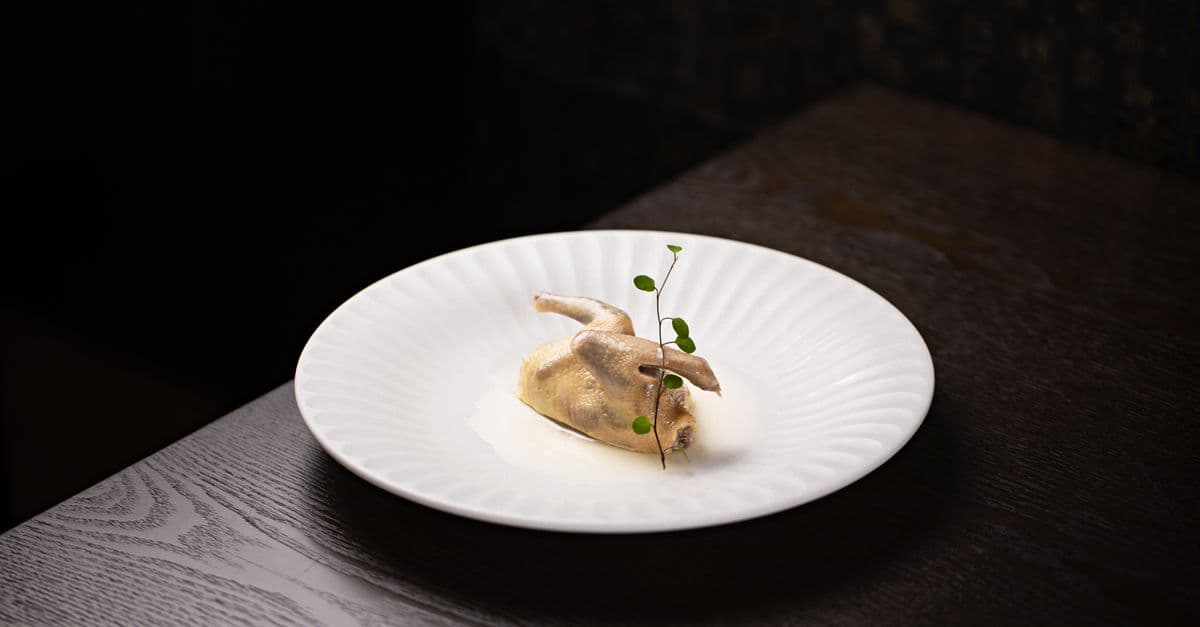
Photo: Change C.C / Pexels
The Michelin Guide is the world's most authoritative and consequential restaurant rating system. A single star can triple a restaurant's bookings. A three-star rating — awarded to restaurants "worth a special journey" — is the culinary equivalent of a Nobel Prize: career-defining, commercially transformative, and psychologically intense enough that multiple chefs have voluntarily returned their stars to escape the pressure. The Guide's global expansion since the 1990s has produced one of the most surprising redistributions of prestige in modern culture: Japan now holds more Michelin stars than France, and Asia as a continent outranks Europe. Here is what the data shows, why the shift happened, and what the distribution reveals about culinary power in 2025.
Methodology: how Michelin stars are assigned and counted
The Michelin Guide (Guide Michelin) publishes individual city and country editions. Inspectors are anonymous employees of the Michelin company who dine at restaurants without identifying themselves and pay for all meals. Their evaluations are standardised across five criteria: quality of the ingredients, mastery of cooking technique, harmony of flavours, personality of the chef expressed in the cuisine, and consistency across visits and across the menu. A restaurant must receive consistent assessments across multiple inspector visits before a rating decision is made.
The star categories are:
- One star: "A very good restaurant in its category" — notable cuisine worth stopping for.
- Two stars: "Excellent cooking, worth a detour" — exceptional cuisine, worth a significant detour.
- Three stars: "Exceptional cuisine, worth a special journey" — outstanding cuisine that justifies travelling specifically to eat there.
Bib Gourmand is a separate, non-starred category for restaurants offering "exceptionally good food at a moderate price."
Country-level totals in this ranking aggregate stars from all Guide editions active in each country. Star counts change annually with new awards and removals. The figures here reflect published Michelin Guide data as of the most recent editions available in 2025.
Source: Guide Michelin official website. https://guide.michelin.com
Limitations:
- Michelin does not publish guides for all countries. Restaurants in countries without a Guide cannot receive stars regardless of quality — this systematically undercounts culinary excellence in large parts of Africa, the Middle East, South and Central America, and Central Asia.
- The criteria for star-worthy cuisine reflect a French fine-dining tradition that emphasises technique, consistency, and formal presentation. This creates genuine questions about whether the system appropriately values culinary traditions that prize spontaneity, communal informality, or regional specificity over technical precision.
- Inspector numbers and coverage density vary between mature markets (France, Japan) and newer editions (Brazil, Colombia), meaning star densities may understate quality in recently covered markets.
Top 15 countries by total Michelin stars (2025)
| Rank | Country | Total Stars | 3-Star Restaurants | 2-Star | 1-Star |
|---|---|---|---|---|---|
| 1 | Japan | 612 | 13 | 57 | 542 |
| 2 | France | 580 | 30 | 88 | 462 |
| 3 | Italy | 396 | 12 | 38 | 346 |
| 4 | Germany | 328 | 10 | 42 | 276 |
| 5 | Spain | 262 | 12 | 38 | 212 |
| 6 | Hong Kong | 247 | 7 | 18 | 222 |
| 7 | USA | 200+ | 16 | 34 | 175 |
| 8 | South Korea | 156 | 6 | 22 | 128 |
| 9 | UK | 148 | 7 | 21 | 120 |
| 10 | Belgium | 132 | 1 | 20 | 111 |
| 11 | Singapore | 130 | 3 | 7 | 120 |
| 12 | Switzerland | 115 | 3 | 19 | 93 |
| 13 | Netherlands | 112 | 2 | 21 | 89 |
| 14 | Austria | 89 | 0 | 13 | 76 |
| 15 | Denmark | 71 | 2 | 10 | 59 |
Where This Data Comes From
The Michelin Guide publishes separate editions for each country and major city, each maintained by independent inspector teams using standardised evaluation criteria established in Paris. Star counts aggregate all active editions as of 2025 — the most recent annual publication cycle. Michelin does not publicly report inspection budgets or star-allocation algorithms, so the ranking reflects published awards rather than proprietary data.
Understanding this ranking requires recognising its structural bias: Michelin covers only 40+ territories globally, meaning culinary excellence in uncovered regions — Sub-Saharan Africa, Central Asia, most of the Middle East and South America — is systematically absent by design, not merit. Japan and France lead not only because of exceptional cuisine but because both have comprehensive, historically continuous Michelin coverage. A hypothetical Michelin Guide for Thailand, Mexico, Turkey, or Peru would likely produce dramatically different rankings. The US figure is particularly understated: starred restaurants concentrate in six city editions (New York, Los Angeles, San Francisco, Chicago, Miami, Washington DC) while major American culinary destinations like New Orleans and Seattle lack Guide coverage. France, by contrast, has had nationwide coverage since the Guide's inception. The rankings reveal Michelin's own global footprint as much as they reveal culinary excellence.
A tyre company that became the arbiter of global dining: the Michelin Guide's history
The Guide Michelin was not conceived as a restaurant guide. André Michelin, co-founder of the Michelin tyre company, published the first edition in 1900 as a practical handbook for French motorists — a free booklet distributed with Michelin tyres that listed petrol stations, mechanics, hotels, and places to eat along French roads. The logic was commercially explicit: more cars driving more miles wore out more tyres. A guide that encouraged motoring was a guide that sold rubber.
By 1920, the free distribution model was replaced by a paid guide, and the editorial focus shifted toward restaurant quality. The one-to-three star system for restaurants was introduced in 1931. By the mid-20th century, the Guide had become the definitive reference for French gastronomy — and French gastronomy was, by the consensus of the food world, the definitive reference for fine dining globally.
The Michelin Guide's expansion outside France began cautiously. Italy, Belgium, and Germany received editions by the mid-20th century. The United Kingdom edition launched in 1974. The landmark expansion was the 2007 Tokyo edition — the first Guide published outside Europe. When Michelin awarded 191 stars to Tokyo restaurants in that first edition — more than any single European city had ever received — it announced a redistribution of culinary power that the food world had not fully anticipated. The Tokyo Guide editor acknowledged that Japan's culinary culture had more qualified restaurants than inspector capacity to evaluate them.
Subsequent editions expanded to Hong Kong (2009), Macau, New York, Los Angeles, San Francisco, Chicago, Singapore, and later Seoul, Bangkok, Taipei, and Shanghai. Each new edition has generated both enthusiasm — from chefs and diners hoping for recognition — and controversy, primarily over whether the Guide's European aesthetic biases allow it to fairly evaluate non-European culinary traditions.
Source: Leschziner, V. (2015). At the Chef's Table: Culinary Creativity in Elite Restaurants. Stanford University Press.
Why Japan leads the world in Michelin stars
Japan's 612 total stars represent the single most dramatic redistribution of fine-dining prestige in modern gastronomy. Understanding why Japan leads requires understanding the concept of shokunin (職人).
Shokunin translates approximately as "craftsman" or "artisan," but carries a meaning closer to "a person who devotes their life entirely to the mastery of a single skill." A sushi shokunin spends years learning to prepare rice before being permitted to work with fish. A soba shokunin may make the same buckwheat noodle for 40 years, seeking incremental perfection in each batch. The concept is not unique to food — it applies to sword-making, lacquerwork, and pottery — but its application to food culture means Japanese restaurants pursue technical perfection in a way that aligns exactly with what Michelin inspectors are trained to evaluate.
The alignment is not coincidental. Michelin's five evaluation criteria — quality of ingredients, mastery of technique, harmony of flavours, personality expressed in the cuisine, and consistency — map almost precisely onto the shokunin philosophy. A Japanese ramen chef who has refined a single broth recipe for 20 years and produces it at precisely the same quality 300 times a day six days a week scores perfectly on consistency and technique. A French-trained inspector who has never encountered great ramen finds exactly the qualities they were trained to reward.
Tokyo's concentration of starred restaurants — over 200 as of 2025 — reflects additional structural factors. Tokyo is the world's most populous metropolitan area (37+ million people) with some of the highest average incomes of any city globally. The combination of enormous consumer density, extremely high food quality expectations from diners, intense competition between restaurants, and relatively lower real estate costs than cities like Manhattan creates the conditions for an extraordinary concentration of culinary talent and investment.
Beyond Tokyo, Osaka's dining culture has been described by food writers as even more obsessively focused on food quality than Tokyo's — reflecting the Osaka saying "kuidaore" (eat until you drop). Osaka's starred restaurants include tempura specialists, eel masters, and ramen shops operating at levels of technical perfection that Michelin inspectors have repeatedly recognised.
Source: Bestor, T.C. (2004). Tsukiji: The Fish Market at the Center of the World. University of California Press.
France: the historical heartland
France's 580 total stars and 30 three-star establishments represent the historical and philosophical foundation of the Michelin universe. France is where the Guide was born, where the three-star system was invented, and where the mythology of haute cuisine — French high cooking as a universal ideal — was constructed over three centuries.
The intellectual lineage runs from Marie-Antoine Carême (1784–1833), who codified French classical cooking and invented the brigade kitchen system, through Auguste Escoffier (1846–1935), who systematised it for the modern hotel restaurant, through Fernand Point (1897–1955) and the Lyon "mothers" of the early 20th century, to the nouvelle cuisine revolution led by Paul Bocuse, Michel Guérard, and the Troisgros brothers in the 1970s. Each generation redefined what French cuisine was while maintaining France's position at the centre of the global fine-dining conversation.
France's 30 three-star restaurants include historic houses: Guy Savoy (Paris), multiple establishments of Alain Ducasse, the Maison Troisgros (Roanne — a three-star since 1968, the longest continuously starred three-star restaurant in the world), Pierre Gagnaire (Paris), and Régis Marcon (Saint-Bonnet-le-Froid). France leads the world in three-star density and, on a per-capita basis, in total starred restaurants among large countries.
French fine dining is not static. The nouvelle cuisine revolution of the 1970s–1980s broke the rigid codification of Escoffier's classical French cooking. The current generation of French chefs increasingly experiments with international ingredients, Japanese techniques, and hyper-regional French identities. Young chefs like Alexandre Couillon (La Marine, Noirmoutier) and Alexandre Mazzia (AM par Alexandre Mazzia, Marseille) represent a more personal, less classical approach that Michelin's newer inspectors have rewarded with three stars.
Source: Ferguson, P.P. (2004). Accounting for Taste: The Triumph of French Cuisine. University of Chicago Press.
Asia's rise: Hong Kong, Singapore, and South Korea
The Michelin Guide's Asian expansion has been the most consequential development in the Guide's history since the three-star system was invented, because it has forced a reassessment of what kind of cooking deserves the highest recognition.
Hong Kong (247 stars) represents one of the most concentrated fine-dining ecosystems on Earth relative to population. The city's 7.5 million inhabitants support starred restaurants across categories that would have been unrecognisable to the Guide's European founders: dim sum specialists, roast goose masters, noodle shops. Tim Ho Wan — a tiny dim sum restaurant in a shopping mall in Sham Shui Po — became internationally famous when it received one Michelin star in 2010, serving outstanding har gow (shrimp dumplings) and char siu bao (barbecued pork buns) at prices under HK$30 per dish. The juxtaposition of Michelin recognition with shopping-mall informality crystallised the question of whether the Guide's expansion was genuinely broadening its definition of culinary excellence, or simply applying European criteria to formats that transcended them.
Singapore (130 stars) occupies a unique position as Asia's gastronomic crossroads, with Chinese, Malay, Indian, Peranakan, and Western culinary traditions all present at exceptional levels. Singapore's hawker food culture — informal outdoor food centres serving dishes like Hainanese chicken rice, laksa, and char kway teow — has been explicitly celebrated by Michelin since 2016, when Chan Hon Meng's Hong Kong Soya Sauce Chicken Rice & Noodle hawker stall received one star, the first street food vendor in the world to receive a Michelin star. In Bangkok, Jay Fai's crab omelette has held one star since 2018. These recognitions represent Michelin explicitly acknowledging that the highest culinary standards can be achieved at prices and in formats entirely outside the haute cuisine tradition.
South Korea (156 stars) represents the fastest rise from near-absence to significant Michelin presence of any country in the ranking. South Korea was not covered by the Michelin Guide until 2017; within eight years, it has accumulated 156 stars, including 6 three-star establishments. The rise reflects both the quality of Korean haute cuisine and the global explosion of interest in Korean food culture driven by the Hallyu (Korean Wave) — the international spread of Korean pop culture, television, and food. Restaurants serving modernist interpretations of hansik (traditional Korean food), emphasising fermented ingredients, seasonal vegetables, and soy sauces and doenjang (fermented soybean paste) aged for decades, have impressed Michelin inspectors. Chef Jungsik Yim, whose restaurants in Seoul and New York both hold stars, was instrumental in establishing Korean fine dining as an internationally recognised form.
Source: Guide Michelin Seoul, Hong Kong, Singapore official editions. https://guide.michelin.com
Italy, Germany, and the European tier
Italy (396 stars, ranked 3rd) presents a different model from France. While France has developed a centralised high-cuisine tradition with recognisable national characteristics, Italian culinary excellence is radically regional — the cooking of Naples is as different from the cooking of Bologna as the cooking of France is from the cooking of Germany. Michelin's Italian recognition reflects this regionalism: starred restaurants are distributed across 20 distinct regional culinary traditions, from the truffle-centric Piedmontese cooking of Enrico Crippa (Piazza Duomo, Alba) to the seafood-focused Sicilian cuisine of Ciccio Sultano (Duomo, Ragusa).
Germany (328 stars, ranked 4th) is Europe's most underrated fine-dining destination by most food media assessments. Germany has 10 three-star restaurants — more than Spain or Italy — including Aqua (Wolfsburg), Schwarzwaldstube (Baiersbronn), and the multiple establishments of Harald Wohlfahrt. German fine dining draws on Central European classical tradition and, increasingly, on influences from the Nordic culinary movement.
Belgium (132 stars, ranked 10th) is perhaps the most striking overperformer relative to population in the ranking. With 11.6 million people and 132 stars, Belgium's star density is extraordinary. Belgian cuisine draws on French technique, Dutch product quality, and local specialties (Belgian endive, Ardennes charcuterie, North Sea fish) to produce a culinary tradition that Michelin inspectors have consistently rewarded.
Source: Drouard, A. (2007). A History of French Gastronomy. Columbia University Press.
The Michelin effect: what a star actually does
The economic impact of a Michelin star on an individual restaurant is substantial and well-documented. A first star typically increases revenue by 30–100% — booking lead times extend from days to weeks or months, and previously quiet service periods fill as newly curious diners seek out the experience. A restaurant gaining its first star often needs to hire additional kitchen and front-of-house staff, source better ingredients, and potentially renovate to match diner expectations, simultaneously driving significant new costs alongside new revenue.
The pressure associated with maintaining stars is equally well-documented and has been the subject of sustained media and academic attention. Bernard Loiseau, one of France's most celebrated three-star chefs, died by suicide in 2003 amid reports that his restaurant was being considered for demotion. Michelin denied inspector visits had been conducted before his death; French food journalist François Simon disputes this. The circumstances crystallised a long-running debate about the psychological toll of the star system on chefs.
Multiple prominent chefs have voluntarily returned their stars:
- Marco Pierre White returned his three Michelin stars in 1999, stating that Michelin inspectors had "reduced him to tears" and that cooking without the pressure was "liberating." He was the first chef to voluntarily return three stars.
- Sébastien Bras (Le Suquet, Laguiole, France) requested removal from the Guide in 2017, explicitly citing the desire for "freedom" to cook for pleasure rather than for inspectors.
- French chef Marco Veyrat sued Michelin in 2020 after his restaurant was downgraded from three to two stars, a case that proceeded through French courts and highlighted the legal and emotional intensity attached to ratings that are, ultimately, the private commercial judgements of a tyre company.
The Bib Gourmand designation — for restaurants offering excellent food at moderate prices — represents Michelin's attempt to recognise culinary quality across a broader economic spectrum. Named after Bibendum, the Michelin mascot, Bib Gourmand is considered significant recognition that does not carry the same pressure as a full star.
Source: Karpik, L. (2010). Valuing the Unique: The Economics of Singularities. Princeton University Press.
What the ranking misses: the Guide's geographic blind spots
The Michelin Guide's country rankings have a structural limitation that any honest interpretation must acknowledge: Michelin does not publish guides for most of the world. Countries without an active Guide edition cannot appear in the rankings regardless of the quality of their restaurants.
There is no Michelin Guide covering most of Sub-Saharan Africa, Central Asia, the Middle East (with the exception of Dubai and Abu Dhabi, covered since 2022), or most of South America (Brazil was covered briefly and discontinued). This means that excellent restaurants in Lagos, Nairobi, Istanbul, Tehran, Buenos Aires, and dozens of other major cities with significant culinary traditions are structurally invisible to the ranking.
The Guide's expansion decisions reflect a combination of commercial viability assessments (will a Guide sell in this market?), partnerships with tourism authorities (several Asian editions are funded by local governments and tourism boards), and historical inertia. Critics have argued that Michelin's partnership model — in which Singapore, Seoul, and other Asian governments have reportedly contributed to Guide production costs — creates potential conflicts of interest in star allocation.
The ranking also systematically undercounts American culinary excellence relative to France. The US has Guide editions for New York, Los Angeles, San Francisco, Chicago, Miami, and Washington DC — but not for New Orleans, Houston, Seattle, Portland, or dozens of other American cities with outstanding restaurant scenes. France, by contrast, has comprehensive nationwide coverage. A direct star-per-capita comparison between France and the US is therefore misleading; the US star total reflects coverage gaps as much as culinary differences.
Source: Terroir Intelligence, "Michelin Guide Expansion Funding Analysis." 2022.
Q: How many Michelin inspectors are there worldwide?
A: Michelin employs approximately 120 inspectors globally, though the company has never confirmed the exact number. Inspectors are anonymous full-time employees who are prohibited from disclosing their profession in the course of their work. They are trained in Paris and evaluated against standardised assessment criteria. Each restaurant in an active Guide edition may receive multiple visits from different inspectors before a star decision is finalised.
Q: What is the difference between a Bib Gourmand and a full Michelin star?
A: The Bib Gourmand recognises restaurants offering "exceptionally good food at a moderate price" — defined as a complete meal (starter, main course, dessert) for under €35–40 in Europe, or market-appropriate equivalents in other regions. It is listed in the Guide with a distinctive symbol (a cartoon Bibendum face) rather than stars. Bib Gourmand is considered a meaningful recognition — particularly for casual and affordable restaurants — but is categorically separate from the star system. A restaurant cannot hold both a Bib Gourmand and a star simultaneously.
Q: Has Michelin ever starred a street food vendor?
A: Yes. Chan Hon Meng's Hong Kong Soya Sauce Chicken Rice & Noodle stall at a hawker centre in Singapore's Chinatown received one star in 2016 — the first street food vendor anywhere in the world to receive Michelin recognition. Jay Fai's crab omelette stall in Bangkok, Thailand, has held one star since 2018. These recognitions explicitly expanded the criteria for Michelin star eligibility from formal restaurant settings to include informal, non-service-table formats. Both vendors serve food at prices under $10 per dish.
Q: Why does Belgium have so many Michelin stars for a small country?
A: Belgium (11.6 million people, 132 stars) has an exceptional star-to-population ratio reflecting several converging factors: a sophisticated French culinary influence, extraordinary local product quality (Belgian endive, North Sea fish, Ardennes pork and game, premium chocolate and beer traditions), a consumer culture that takes food seriously enough to support fine dining at high prices, and Michelin guide coverage that has been comprehensive and long-standing. Brussels has one of the highest densities of starred restaurants of any European capital city relative to population.
Q: How do South Korea's cosmetic surgery and Michelin star cultures relate?
A: Both South Korea's plastic surgery dominance and its rapid Michelin star ascent reflect the same underlying cultural dynamic: an intense national investment in a specific form of aesthetic perfection — one physical, one culinary. South Korea's perfectionist streak, visible in its K-pop production values and its cuisine's multi-day fermentation protocols, shows up as three-star-level precision in both operating rooms and restaurant kitchens. See our countries with the most plastic surgery analysis for the aesthetic medicine parallel.
Q: Which country has the most Michelin three-star restaurants?
A: France leads with 30 three-star restaurants as of 2025 — nearly double the second-place Japan (13) and the United States (16). France's three-star dominance reflects both the depth of its haute cuisine tradition and the comprehensiveness of Michelin's French coverage, which has evaluated French restaurants continuously since 1931.
The takeaway
Japan's 612 Michelin stars represent the most dramatic redistribution of fine-dining prestige from Europe to Asia in the history of international gastronomy. The shift was not a concession by Michelin's inspectors — it was a recognition that the shokunin philosophy of total devotion to technical mastery, applied to food over decades, produces exactly the qualities Michelin's five criteria are designed to measure. France's 580 stars and 30 three-star establishments maintain its position as the historical heartland of the system: the country where the Guide was born, where haute cuisine was codified, and where the three-star mythology was created. The rankings reveal a world in which culinary excellence is no longer the preserve of European tradition — Japanese precision, Korean fermentation mastery, Singaporean hawker art, and Hong Kong dim sum expertise are all recognised as representing the highest levels of what human beings can do with ingredients, fire, and time.
Related Reading
Follow new articles
Add SciHub101 to your feed reader to see new science and technology stories.
About the Author
SciHub101 is an independent science and technology publication founded and edited by Buğra Sözeri, a software engineer and app developer based in Türkiye. AI tools assist with drafting and research. Source documentation in the existing archive is uneven, and articles are being reviewed and corrected. The Editorial Team byline identifies editorial responsibility; it does not certify specialist or independent human review. Where we compare products, anything built by our own team is labelled as such — see the editorial guidelines and About page for how corrections and disclosures work.
Related Articles
Countries With the Most Military Bases Abroad (2025)
Foreign basing is one of the clearest expressions of a country's global reach, but no two lists count it the same way. Here is what is documented for the United States, United Kingdom, France, Russia, China, Turkey, and others, and why the totals differ so much.

Countries With the Most Languages Spoken (2025)
Papua New Guinea hosts 840 distinct languages within its borders — more than 10% of all human languages on Earth. This ranking of countries by linguistic diversity reveals which nations are home to the greatest number of languages, why that diversity emerged, and what threatens it.
Who Invented the Fork? The Surprising History of a Scandalous Utensil
No one invented the fork. Large forks cooked and carved food for thousands of years, the personal table fork emerged in the Byzantine world, and Western Europe took it up slowly, with a Byzantine bride's 1004 marriage into Venice's ruling family as the best-known early anecdote. Resistance was moral, social, and practical, and the fork only became everyday tableware across Britain and North America between the 17th and 19th centuries.

Countries Investing the Most in AI: 2026 Rankings
The US leads global AI investment by a massive margin, but Saudi Arabia and UAE are now committing percentages of GDP that rival Silicon Valley.

Most Used AI Apps Worldwide in 2026: Usage Rankings
ChatGPT has 500 million monthly users, but it is far from the only massively-used AI app. Here is who the real winners are.

Universities Leading AI Research: Global Rankings for 2026
MIT, Stanford, and Carnegie Mellon dominate US AI research rankings. Tsinghua University now publishes more AI research than any US institution by volume. The field's geography has shifted fundamentally in a decade — and the compute gap between academic and industry frontier research is wider than it has ever been.