Countries With the Most Submarines in the World (2025)
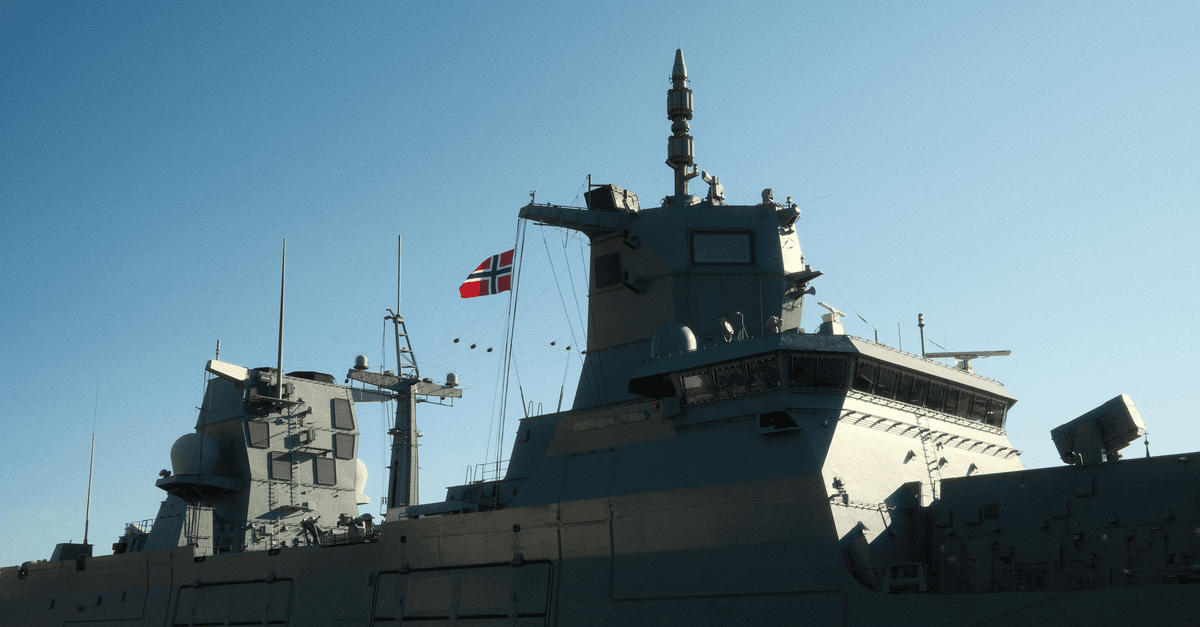
Photo: Dua'a Al-Amad / Pexels
Of all the weapons in a modern military's arsenal, the submarine is perhaps the most strategically significant per unit. A single nuclear-powered ballistic missile submarine (SSBN) carries enough destructive power to destroy 20 or more cities. A nuclear-powered attack submarine (SSN) can track and sink enemy carriers, sever undersea communications cables, deliver special forces, or cruise into an adversary's territorial waters undetected for weeks. Even a conventionally powered diesel-electric submarine is a formidable threat — quiet, patient, and capable of devastating surprise attacks on surface vessels in coastal waters. This ranking covers what the data actually shows, why raw vessel counts can mislead, and where undersea warfare is heading.
Methodology: what the data measures and where it stops
The primary source for this ranking is the IISS Military Balance, published annually by the International Institute for Strategic Studies. The Military Balance is the most authoritative publicly available assessment of national military capabilities, drawn from official government statements, defence budgets, satellite imagery analysis, and corroborating open-source reporting.
Key limitations:
- Operational status varies. A submarine that appears on a navy's order of battle may be undergoing extended maintenance, refit, or may be non-operational. The US Navy, for example, has faced periodic readiness challenges with its submarine fleet due to shipyard backlogs; reported totals may overstate truly deployable submarines at any given moment.
- Classification conceals detail. The precise capabilities of Chinese Type 096 SSBNs and North Korean submarine-launched ballistic missile (SLBM) programmes are not publicly verified; IISS estimates are best-available assessments, not confirmed facts.
- Small submarines and midget submarines are inconsistently counted across countries. North Korea operates a number of midget submarines (vessels under 150 tonnes) used for special forces insertion that are sometimes included and sometimes excluded from rankings, affecting where North Korea places.
For nuclear versus conventional classification: "nuclear-powered" means the submarine uses a naval nuclear reactor for propulsion (giving indefinite submerged endurance), not that it carries nuclear weapons. An SSBN is a nuclear-powered ballistic missile submarine (strategic deterrent role). An SSN is a nuclear-powered attack submarine. An SSK is a conventionally powered submarine.
Source: International Institute for Strategic Studies, The Military Balance 2024. Routledge, 2024. https://www.iiss.org/publications/the-military-balance
Top 15 countries with the most submarines (2025)
| Rank | Country | Total Submarines | Nuclear-Powered | Conventional | SSBN (Strategic) |
|---|---|---|---|---|---|
| 1 | USA | 68 | 68 | 0 | 14 |
| 2 | China | 60+ | ~12 | ~48 | 6 |
| 3 | Russia | 58 | 29 | 29 | 11 |
| 4 | North Korea | 36 | 0 | 36 | ~2 (SLBM capable) |
| 5 | Iran | 34 | 0 | 34 | 0 |
| 6 | South Korea | 22 | 0 | 22 | 0 |
| 7 | Japan | 22 | 0 | 22 | 0 |
| 8 | India | 20 | 2 | 18 | 2 |
| 9 | Turkey | 12 | 0 | 12 | 0 |
| 10 | UK | 11 | 11 | 0 | 4 |
| 11 | France | 10 | 10 | 0 | 4 |
| 12 | Germany | 6 | 0 | 6 | 0 |
| 13 | Australia | 6 | 0 | 6 | 0 |
| 14 | Israel | 5 | 0 | 5 | 0* |
| 15 | Pakistan | 5 | 0 | 5 | 0* |
Israel and Pakistan are believed to have nuclear-capable submarine-launched cruise missiles, but neither country officially confirms nuclear submarine capabilities.
Source: IISS Military Balance 2024, US Congressional Budget Office, US Department of Defense, Jane's Fighting Ships, Covert Shores.
Where this data comes from
Submarine fleet counts derive primarily from the IISS Military Balance, which compiles unclassified government reports, defence budgets, satellite imagery analysis, and corroborating open-source information. The US Navy's submarine inventory is well-documented through Congressional testimony and budget documents. Chinese submarine counts are estimates based on satellite imagery, defence think tanks, and occasional Chinese military announcements — actual counts of operationally ready vessels may differ from reported totals. Russian figures come from IISS assessments and Russian defence ministry statements. Smaller nations' submarine fleets are generally well-documented in naval registries. Specifications (depth rating, weapon payload, crew size) are derived from manufacturer data, naval historical records, and publicly released government specifications. Classified capabilities (exact acoustic signatures, weapons effects) are not available in public sources; assessments of comparative capability are open-source analyst judgments based on available evidence, not official confirmation.
A brief history of submarine warfare
The submarine's strategic significance was not apparent to military planners when the first practical designs emerged in the late 19th century. John Philip Holland's 1897 design — purchased by the US Navy as USS Holland (SS-1) in 1900 — was viewed initially as a coastal-defence curiosity rather than a weapon that would reshape naval power. The Royal Navy ordered five Holland-class submarines the same year, largely to prevent Britain from falling behind.
World War I demonstrated the submarine's potential and its horror simultaneously. Germany's Unterseeboot (U-boat) campaign against Allied Atlantic shipping sank 5,000 vessels and came closer to strangling Britain's supply lines than any other single weapon. The moral controversy of unrestricted submarine warfare — attacking merchant ships without warning — helped draw the United States into the war and shaped naval doctrine for decades.
World War II elevated submarines from a significant weapon to a war-winning one. American submarines in the Pacific sank 55% of all Japanese merchant tonnage lost in the war despite constituting only 2% of US naval personnel — the most cost-effective weapons system of the entire conflict. Meanwhile, German U-boats sank 3,500 Allied ships and 175 naval vessels in the Battle of the Atlantic, the longest continuous military campaign of the war. British and American anti-submarine warfare improvements — radar, sonar, depth charges, Enigma decryption — eventually turned the tide, but not before catastrophic losses.
The Cold War transformed submarine roles from commerce raiding and torpedo attacks to strategic nuclear deterrence. The development of submarine-launched ballistic missiles (SLBMs) in the late 1950s — the US Polaris missile, first successfully tested in 1960 — gave submarines the ability to deliver nuclear strikes from undetectable positions at sea. This created the concept of the second-strike guarantee: even if an adversary destroyed all land-based nuclear forces in a first strike, submarine forces at sea would survive to retaliate. The SSBN became the most survivable leg of the nuclear triad.
Source: Friedman, N. (1994). U.S. Submarines Since 1945: An Illustrated Design History. Naval Institute Press.
Nuclear versus conventional: the critical divide
The distinction between nuclear-powered and conventionally powered submarines is the most important qualitative divide in undersea warfare capability — more important than vessel count.
Nuclear submarines can remain submerged indefinitely, limited only by food stores and crew endurance (typically 70–90 days). They can sprint at high sustained speeds (25–35+ knots submerged) for extended periods without surfacing, and they can operate in any ocean in the world without needing to surface for air. This combination of endurance, speed, and global range makes nuclear submarines the only vessels capable of strategic deterrence patrols, open-ocean power projection, and sustained undersea operations far from home ports.
Conventionally powered diesel-electric submarines must surface or snorkel (raise a breathing tube to just below the surface) periodically to run their diesel engines and recharge batteries. Snorkelling creates acoustic and radar signatures detectable by aircraft and surface ships. Modern air-independent propulsion (AIP) systems — using fuel cells (most commonly hydrogen-oxygen proton exchange membrane cells) or Stirling cycle heat engines — can extend submerged endurance to two or three weeks at slow speeds without snorkelling. But even the best AIP submarine has a fraction of the endurance and top speed of a nuclear boat.
Think of the difference this way: a nuclear submarine is like a car with a nuclear-powered engine that never needs refuelling and can go anywhere. A diesel-electric submarine is like a hybrid that can run silently on battery power for limited periods but must occasionally stop to recharge. In shallow coastal waters — where that charging stop can be done in relative safety — the conventional submarine is competitive and often quieter than a nuclear one. In open-ocean warfare, the disparity is decisive.
The implication for rankings: the United States' 68 submarines are fundamentally more capable than their numbers suggest. Russia's 29 nuclear submarines are qualitatively in a different category from its 29 conventional ones. North Korea's 36 and Iran's 34 are almost entirely coastal-defence vessels whose strategic value is categorically different from even a single US Ohio-class SSBN.
Source: Polmar, N. & Moore, K.J. (2004). Cold War Submarines: The Design and Construction of U.S. and Soviet Submarines. Potomac Books.
The United States submarine force
The US Navy's 68 nuclear-powered submarines represent the world's most capable undersea force by most measurable dimensions.
The strategic deterrent backbone is 14 Ohio-class SSBNs. Each carries up to 20 Trident II D5 SLBMs with a range exceeding 11,000 km (6,800 miles) and carrying up to 8 independently targetable warheads per missile. The D5 LE (life-extended) version will remain in service into the 2040s. At any given moment, multiple Ohio-class submarines are on deterrence patrol — submerged, beyond detection, and capable of launching within minutes of receiving authorised orders. This is the "assured second-strike capability" that underpins US nuclear deterrence.
The 50 Virginia-class and Los Angeles-class SSNs (attack submarines) provide strike, intelligence gathering, special operations support, and anti-submarine warfare capability. The newest Virginia-class Block V submarines include a Virginia Payload Module — an additional hull section containing four large-diameter launch tubes capable of carrying 28 Tomahawk cruise missiles each, more than doubling the boat's land-attack capacity relative to earlier variants. A single Virginia Block V can carry more Tomahawk missiles than a guided-missile destroyer.
The US Navy is developing the SSN(X) — a next-generation attack submarine designed to be larger, faster, quieter, and more capable than the Virginia class, specifically to counter China's improving undersea capabilities. Preliminary design work began in the early 2020s; the class is expected to enter service in the late 2030s.
Source: US Congressional Budget Office, An Analysis of the Navy's Fiscal Year 2025 Shipbuilding Plan. 2024. https://www.cbo.gov
China's expanding submarine force
China's submarine fleet is the most rapidly growing in the world and represents the most significant development in undersea warfare since the Cold War.
The fleet's strategic deterrent rests on 6 Type 094A Jin-class SSBNs, each carrying 12 JL-2 missiles with a 7,200 km range. The JL-2 can reach parts of Alaska and Hawaii from patrol areas in the South China Sea; reaching the continental United States requires patrols further into the Pacific. A new Type 096 SSBN is believed to be in development and will carry the longer-range JL-3 missile, which is assessed to have sufficient range to reach the continental US from protected patrol areas closer to China's coast.
China's attack submarine fleet includes Type 093 Shang-class nuclear boats (approximately 6 in service, with improved Type 093B variants) and a large conventional fleet led by the Type 039A/B Yuan-class — an AIP-equipped submarine assessed as one of the most capable non-nuclear boats outside of German and South Korean products.
The qualitative gap between Chinese and American submarines remains significant at the nuclear-powered level. Chinese SSNs are generally assessed as louder (more detectable) than their US counterparts, reflecting the difficulty of replicating the pump-jet propulsion, vibration isolation, and reactor plant quieting technology that underpins US submarine stealth. China is investing heavily to close this gap, and the Type 096 is expected to achieve meaningfully lower acoustic signatures than its predecessors.
Source: Office of the Secretary of Defense, Military and Security Developments Involving the People's Republic of China 2023. US Department of Defense. https://www.defense.gov
Russia's nuclear submarine power
Russia's submarine force remains one of the world's most formidable strategic assets, though it has declined significantly from Soviet-era peaks when the USSR operated more than 350 submarines simultaneously.
Russia's strategic deterrent relies on 11 SSBNs — primarily 5 Borei-class (Project 955/955A) submarines and older Delta IV-class boats. The Borei-class is a modern, fourth-generation design with the Bulava SLBM, and represents a genuine advance in Russian submarine capability after a troubled development programme. Each Borei carries 16 Bulava missiles with a reported range of 8,000 km and multiple independently targetable warheads.
Russia's most capable attack submarine is the Yasen-class (Project 885, NATO designation: Severodvinsk-type) — a large fourth-generation nuclear attack submarine with a formidable land-attack and anti-ship cruise missile payload and reportedly good acoustic stealth. Only about 5 Yasen-class submarines are in service due to production delays and high costs; each is assessed as capable of threatening Western carrier groups and conducting long-range cruise missile strikes.
Russia's conventional submarine fleet — primarily Kilo-class and Improved Kilo-class (Project 636.3) vessels — has been prominently used in the Ukraine conflict for cruise missile strikes against Ukrainian infrastructure using Kalibr cruise missiles launched from the Black Sea. This demonstrated that conventional submarines equipped with land-attack cruise missiles have strategic utility well beyond their traditional anti-ship role.
Source: Sutton, H.I. (2020). World Submarines: Covert Shores Recognition Guide. Covert Shores Publishing.
North Korea and Iran: quantity without strategic depth
North Korea's 36 submarines are primarily aging Romeo-class vessels (Soviet-designed diesel-electric submarines from the 1950s–60s) and locally built Sang-O coastal submarines designed for coastal defence, mine-laying, and special forces insertion rather than open-ocean warfare.
The strategic picture changed in 2015 when North Korea test-launched a ballistic missile from a submarine — the first successful demonstration of an SLBM capability by North Korea. The submarine involved, the Gorae-class (Sinpo-class), is a small vessel purpose-built around one or two launch tubes rather than a true SSBN. Subsequent tests have been mixed in success, and the operational reliability and accuracy of North Korean SLBMs remains uncertain. A larger submarine reportedly under construction at Sinpo South Shipyard may represent a more capable SSBN programme.
Iran's 34 submarines are similarly coastal-defence oriented. The three most capable are Kilo-class submarines acquired from Russia in the 1992–1997 period — genuine ocean-going vessels that represent Iran's only blue-water submarine capability. The remainder of Iran's fleet consists of domestically produced small submarines (the Ghadir and Nahang classes) and midget submarines used primarily for mining and special operations in the Persian Gulf and Strait of Hormuz. Iran's submarine strategy centres on threatening tanker traffic through the Strait of Hormuz — through which approximately 20% of global oil flows — rather than open-ocean warfare.
Source: International Institute for Strategic Studies, The Military Balance 2024. London: Routledge.
Germany and Australia: small but elite
Germany's 6 Type 212A submarines are among the world's most capable conventional designs. Their AIP system — hydrogen-oxygen fuel cells producing virtually no acoustic or thermal signature — allows submerged endurance of up to three weeks at slow patrol speeds, making them exceptionally stealthy in coastal and littoral environments. Type 212A submarines are quieter than many nuclear boats when operating on AIP, because fuel cells have no moving parts and produce no combustion noise.
Germany has exported a related technology through the Type 214 (operated by Greece, South Korea, Turkey, Portugal, and Peru) and the newer Type 212CD designed for Norway and Germany. German submarine technology is genuinely world-leading in the conventional category, and HDW (now thyssenkrupp Marine Systems) is one of the two or three most significant submarine designers in the world.
Australia's 6 Collins-class submarines are facing imminent replacement under the AUKUS security agreement. The Collins class has had a troubled history — persistent noise and maintenance issues characterised the early vessels — but has been progressively improved and now provides a capable conventional submarine force for Australian waters.
Under AUKUS (announced September 2021), Australia will purchase 3–5 Virginia-class nuclear-powered attack submarines from the United States, with deliveries beginning approximately in the early 2030s, contingent on US shipyard capacity. Australia will then co-develop and build SSN-AUKUS — a new nuclear-powered submarine design based on UK concepts — with deliveries to the Royal Australian Navy beginning in the late 2030s. This deal will make Australia one of only seven countries ever to operate nuclear-powered submarines (the others being the US, Russia, UK, France, China, and India).
Source: Australian Department of Defence, AUKUS Nuclear-Powered Submarine Pathway. 2023. https://www.defence.gov.au/aukus
The Indo-Pacific undersea competition
The most strategically significant dimension of global submarine competition in 2025 is the contest for undersea dominance in the Indo-Pacific, primarily between the United States and China — with Japan, South Korea, India, and Australia increasingly relevant.
Japan's 22 Sōryū-class and Taigei-class submarines represent the world's largest fleet of domestically designed conventional submarines outside China. Japan does not operate nuclear-powered submarines due to post-war constitutional constraints and political sensitivities, but its conventional fleet is exceptionally capable. The Taigei-class, now entering service, uses a lithium-ion battery system rather than conventional lead-acid batteries, providing higher submerged speed and greater energy density than AIP systems on other submarine designs.
South Korea's 22 submarines include Son Won-il-class (Type 214 variants) and the domestically developed KSS-III Dosan Ahn Chang-ho-class — a 3,600-tonne vessel that includes ballistic missile launch tubes capable of firing cruise missiles or ballistic missiles. South Korea has publicly tested submarine-launched ballistic missiles. The KSS-III represents a significant capability upgrade that places South Korea's submarine force in a qualitatively higher tier than most conventional submarine operators.
India's 2 Arihant-class SSBNs represent the country's entry into the club of submarine-based nuclear deterrence. The Arihant (commissioned 2016) and its follow-on give India a credible sea-based second-strike capability against Pakistan and, at longer range, against China. India is developing follow-on SSBNs with longer-range SLBMs under the S5 programme.
Source: Khurana, G.S. (2022). "India's Submarine-Based Nuclear Deterrence." Journal of Indo-Pacific Affairs, 5(2), 14–31.
Trends shaping undersea warfare through 2035
Unmanned undersea vehicles (UUVs) are transitioning from experimental to operational. The US Navy's Orca Extra-Large UUV — a 26-metre diesel-electric unmanned submarine capable of carrying mines, torpedoes, or sensors — entered low-rate initial production in 2022. China has deployed smaller UUVs in the South China Sea. UUVs extend the reach of submarine forces without risking crews, and large UUVs capable of carrying significant payloads may eventually challenge some missions currently performed only by manned submarines.
Undersea sensing networks are becoming more comprehensive. The US Sound Surveillance System (SOSUS) of Cold War vintage has been supplemented by distributed undersea networks, aircraft-deployed sonobuoys, and surface-ship towed arrays that together make certain ocean areas increasingly transparent to anti-submarine warfare forces. This creates pressure on conventionally powered submarines, whose battery recharge requirements create periodic acoustic exposures. The competition between submarine quieting and ASW sensing is the central technical contest of 21st-century undersea warfare.
Hypersonic anti-ship missiles capable of defeating surface ship defences create a complementary threat that enhances the value of submarine-based undersea strike. China's DF-21D and DF-26 "carrier killer" ballistic missiles work in combination with submarine threat to complicate US carrier operations in the Western Pacific — forcing carrier groups to operate further from Chinese shores, reducing their effective air reach.
Naval fleets are only one measure of military capability; another ranking looks at the countries with the best special forces.
Source: Congressional Research Service, Navy Large Unmanned Surface and Undersea Vehicles: Background and Issues for Congress. 2024. https://crsreports.congress.gov
Q: Which country has the most submarines in 2025?
The United States has 68 submarines, all nuclear-powered, making it the largest fleet by capability. China is the closest competitor by vessel count with approximately 60+ submarines. By raw numbers, the US leads; by any capability-adjusted measure, the gap is larger still. North Korea ranks fourth by raw count but its fleet consists almost entirely of small, aging coastal-defence submarines.
Q: What is AUKUS and how will it change the submarine balance?
AUKUS is a trilateral security partnership announced in September 2021 between Australia, the United Kingdom, and the United States. Its submarine component — Pillar 1 — will provide Australia with nuclear-powered attack submarines. Australia is expected to purchase 3–5 Virginia-class submarines from the US beginning around 2033, then build a new SSN-AUKUS design jointly with the UK with deliveries starting in the late 2030s. The arrangement will make Australia one of only seven countries to have ever operated nuclear-powered submarines and will significantly strengthen allied undersea capabilities in the Indo-Pacific.
Q: Can conventional submarines threaten nuclear submarines?
In certain environments, yes. In shallow, coastal, littoral waters where nuclear submarines' speed and depth advantage is limited, a modern AIP-equipped submarine operating near its performance envelope can be difficult to detect even for nuclear-powered ASW forces. In 2005 during exercise JOINTEX, the Swedish Gotland-class submarine reportedly achieved multiple simulated attacks on USS Ronald Reagan and its carrier group — demonstrating that diesel-electric submarines remain genuine threats in confined waters. In open-ocean deep water, the nuclear submarine's endurance, speed, and depth capability decisively favour it.
Q: How do submarine fleets compare with surface navies in overall military power?
Submarines are the most strategically significant naval asset per unit, but surface navies provide capabilities submarines cannot: air defence of maritime task groups, amphibious operations, naval gunfire support, humanitarian assistance, and the visible power projection that shapes alliance commitments. The two force types are complements, not substitutes. The countries with the most powerful navies overall — the US, China, Russia, UK, France — are precisely those that invest in both capable submarine and surface fleets. See our countries with the most powerful navies for the surface picture.
Q: What role do submarines play in nuclear deterrence?
Submarine-based nuclear weapons are the most survivable leg of the nuclear triad (land-based missiles, bomber aircraft, submarine-launched missiles) because submarines at sea are essentially undetectable with current technology. This "second-strike capability" is the foundation of nuclear deterrence theory: an adversary cannot rationally launch a nuclear first strike if it cannot destroy the adversary's ability to retaliate. The 14 US Ohio-class SSBNs, 11 Russian SSBNs, and the SSBNs of China, France, UK, and India all serve this deterrence function. For countries that rely on a dyad rather than a triad — like France, which has phased out land-based missiles entirely — the SSBN is the primary nuclear deterrent.
The takeaway
The 2025 submarine ranking reveals a world of widening qualitative disparity beneath the surface numbers. The United States maintains a commanding lead through its all-nuclear fleet, its Virginia-class production programme, and decades of accumulated undersea operations experience. China's rapid quantitative and qualitative expansion is the most consequential development in undersea warfare since the Cold War — a trajectory that has prompted the AUKUS deal and accelerated Japanese and South Korean submarine investment. Russia's nuclear submarine capability remains real and dangerous despite overall force decline. And the emergence of UUVs, undersea sensor networks, and hypersonic anti-ship weapons is reshaping the tactical context in which all these submarines operate. The submarine competition of the 2020s and 2030s may prove as strategically consequential as the space race of the 1960s — and considerably less visible to the public watching from shore.
Related Reading
Follow new articles
Add SciHub101 to your feed reader to see new science and technology stories.
About the Author
SciHub101 is an independent science and technology publication founded and edited by Buğra Sözeri, a software engineer and app developer based in Türkiye. AI tools assist with drafting and research. Source documentation in the existing archive is uneven, and articles are being reviewed and corrected. The Editorial Team byline identifies editorial responsibility; it does not certify specialist or independent human review. Where we compare products, anything built by our own team is labelled as such — see the editorial guidelines and About page for how corrections and disclosures work.
Related Articles
Countries With the Most Tanks in the World (2025)
Russia officially lists over 12,000 tanks — but many are Soviet-era designs rusting in storage. China may now have the largest active armoured fleet. The US has the most capable tanks in large-scale service. Here's how the world's armoured forces actually compare in 2025, and what three years of war in Ukraine taught every army about armour.
Countries With the Most Stealth Aircraft (2026 Update)
Only three countries build and field stealth combat aircraft at scale: the United States, China, and Russia. This ranking covers fleet sizes, how stealth works, which allies fly the F-35, and where the published numbers are shaky.
Countries With the Most Aircraft Carriers (2025)
Aircraft carriers are the ultimate symbol of naval power projection. In 2025, only a handful of countries operate them, and the United States operates more than the rest of the world combined. This ranking covers every country with aircraft carriers, from American supercarriers to light carriers and helicopter carriers.
Countries With the Most Powerful Navies in the World (2025)
Naval power defines a country's ability to control trade routes, project power across oceans, and deny adversaries access to the seas. This ranking of the top 10 most powerful navies in 2025 covers carrier fleets, submarines, surface combatants, and total tonnage.
Countries Spending the Most on Military R&D (2025)
Military research and development determines which country dominates warfare in 20 years, not today. The United States spends over $140 billion annually on defence R&D — more than China's entire official military budget. This ranking covers the top 10 investors in military technology and the cutting-edge programmes they are funding.
Countries With the Best Special Forces in the World (2025)
Special forces are the sharp edge of military power — small teams of elite soldiers who operate behind enemy lines, conduct hostage rescues, and execute missions that conventional forces cannot. This ranking of the top 10 countries with the best special forces covers the world's most elite units, their doctrine, and their most famous operations.