Countries With the Most Nuclear Weapons (2025 Rankings)
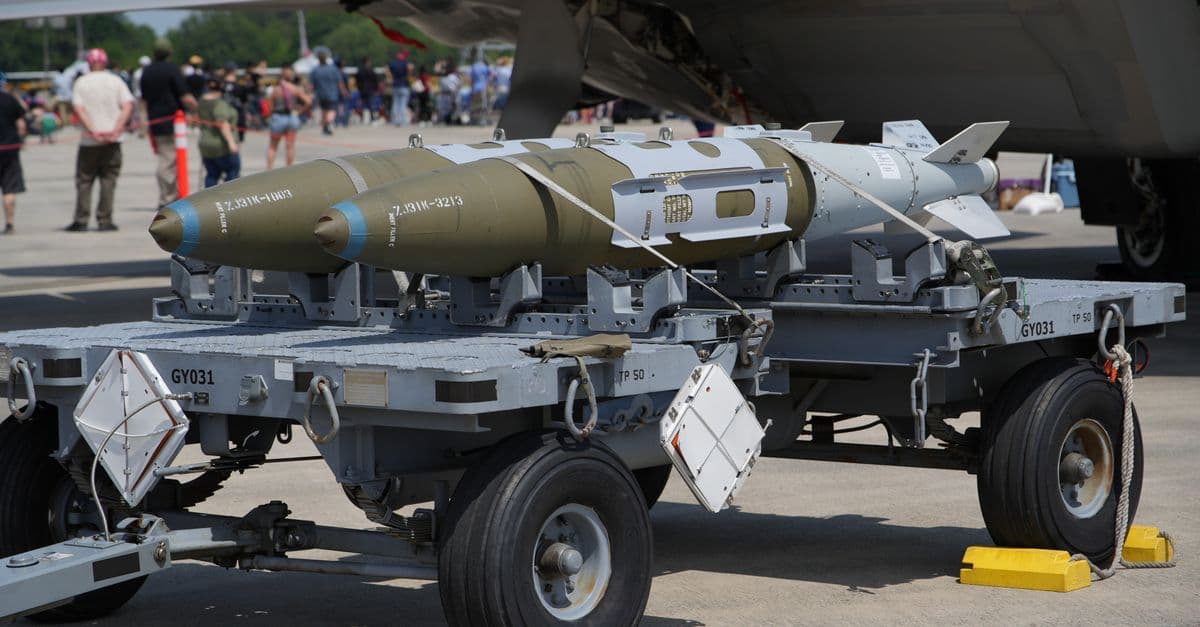
Photo: Jaxon Matthew Willis / Pexels
Nine countries possess nuclear weapons in 2025. The global stockpile stands at approximately 12,241 warheads according to the Stockholm International Peace Research Institute (SIPRI) 2025 Yearbook — down dramatically from the Cold War peak of roughly 70,300 warheads in 1986, but with weapons that are individually more sophisticated, more accurate, and carried by more diverse delivery systems than anything that existed during the nuclear arms race. The top two states — Russia (5,580 total warheads) and the United States (5,044) — hold over 87% of the world's nuclear weapons between them. Everyone else combined amounts to a rounding error by comparison. That asymmetry is the central structural fact of nuclear geopolitics, and it is slowly beginning to change.
How nuclear weapons are counted — and why the categories matter
Counting nuclear warheads is not straightforward. No country publishes a complete, independently verified inventory. The figures used by SIPRI, the Federation of American Scientists (FAS), and the Arms Control Association are estimates based on public declarations, treaty inspections where they apply, declassified records, and open-source analysis.
Warheads are typically categorised in three ways, and using the wrong category produces misleading comparisons:
Deployed strategic warheads: Warheads mounted on intercontinental-range delivery systems — ICBMs (land-based intercontinental ballistic missiles), SLBMs (submarine-launched ballistic missiles), and strategic bomber aircraft — that are operational and ready for use. These are the weapons covered by the New START treaty framework. Russia and the US each maintain approximately 1,550–1,700 in this category.
Total military stockpile: Deployed strategic warheads plus tactical nuclear weapons (shorter-range, battlefield-use weapons) plus reserve warheads held in storage but not currently mounted on delivery systems. This is the most commonly cited "total" figure. Russia: ~4,380 operational. United States: ~3,708 operational.
Total inventory including retired warheads: Operational weapons plus warheads that have been retired from service and are awaiting dismantlement but have not yet been physically destroyed. Russia's total of 5,580 and the US's 5,044 include these retired warheads.
The distinction between "deployed" and "total" is not academic. A country with 1,700 deployed warheads and an equal number in storage has a real second-strike capability — the ability to absorb a first strike and retaliate. The storage warheads represent reconstitution capacity: the ability to rapidly increase deployed numbers during a crisis.
Source: SIPRI Yearbook 2025, Chapter 6: World Nuclear Forces — sipri.org/yearbook/2025/06; FAS SIPRI nuclear weapons 2025 — fas.org/publication/sipri-yearbook-2025/
Complete ranking: countries with the most nuclear weapons
(January 2025 estimates, SIPRI Yearbook 2025 / FAS data)
| Rank | Country | Total warheads | Deployed strategic | Military stockpile | Notes |
|---|---|---|---|---|---|
| 1 | Russia | 5,580 | ~1,588 | ~4,380 | Largest arsenal; includes ~1,558 retired |
| 2 | United States | 5,044 | ~1,700 | ~3,708 | Triad modernisation underway |
| 3 | China | ~600 | ~350 | ~600 | Fastest growth; +20% in 2024 alone |
| 4 | France | 290 | ~280 | ~290 | Independent deterrent; sea + air |
| 5 | United Kingdom | 225 | ~120 | ~225 | Sea-based only (Vanguard submarines) |
| 6 | Pakistan | ~170 | 0* | ~170 | Stored separately from delivery systems |
| 7 | India | ~172 | 0* | ~172 | Growing submarine capability |
| 8 | Israel | ~90 | 0* | ~90 | "Nuclear ambiguity" policy; unconfirmed |
| 9 | North Korea | ~50 | 0* | ~50 | Production ongoing; ICBM tests confirmed |
*India, Pakistan, Israel, and North Korea do not maintain continuously deployed arsenals in the same way as the US and Russia. Warheads are typically stored separately from delivery systems.
Source: SIPRI Yearbook 2025; FAS Status of World Nuclear Forces (continuously updated) — Hiroshima for Global Peace reference pref.hiroshima.lg.jp
Where This Data Comes From
Nuclear warhead inventories are not independently verified because no country permits full public disclosure of its arsenal, and international inspection regimes exist only for countries that have signed treaties. The figures in this ranking come from three primary sources: SIPRI (Stockholm International Peace Research Institute), which publishes annual estimates based on public declarations, treaty documents, declassified records, and open-source analysis; FAS (Federation of American Scientists), which maintains continuously updated warhead status; and declarations from states party to arms control treaties like New START (for the US and Russia, when operational).
Russia and the US publish approximate figures for deployed strategic warheads under New START verification, though Russia's declarations since suspending treaty participation in 2023 are unverified. China does not publish warhead figures; SIPRI estimates are based on satellite imagery of silo construction, known fissile material production capacity, and weapons testing data. Pakistan and India publish general statements but not exact numbers. Israel maintains official ambiguity; Israel's arsenal estimates rely on technical analysis and leaked intelligence assessments. North Korea does not declare numbers; estimates are based on known plutonium production, uranium enrichment capacity, and test yields.
All figures are estimates with confidence ranges — the true totals may differ by ±20% or more for countries without treaty verification. The ranking reflects 2025 estimates and does not include warheads definitively retired and pending dismantlement.
A brief history: how we got to 12,241 warheads
The United States detonated the first nuclear weapon at Trinity, New Mexico, on July 16, 1945. Three weeks later, atomic bombs destroyed Hiroshima (August 6, ~70,000–80,000 immediate deaths) and Nagasaki (August 9, ~40,000 immediate deaths). The Soviet Union tested its first nuclear device in August 1949 — earlier than American intelligence had expected — triggering the nuclear competition that would define the Cold War.
The following decades saw a weapons buildup that now appears almost incomprehensible in scale. Both superpowers produced not just large bombs but tactical nuclear weapons — nuclear artillery shells, nuclear land mines, nuclear depth charges, nuclear air-to-air missiles — intended for battlefield use. At the 1986 peak, roughly 70,000 warheads existed globally. The United States alone deployed nuclear weapons in more than a dozen allied countries. The concept of "flexible response" NATO doctrine required enough warheads to respond to a Soviet conventional invasion without escalating immediately to strategic strikes.
Several treaties progressively reduced these numbers. The Intermediate-Range Nuclear Forces (INF) Treaty (1987) eliminated an entire class of weapons — ground-launched missiles with ranges of 500–5,500 km — and was widely credited with reducing the risk of a nuclear first strike in Europe. The Strategic Arms Reduction Treaties (START I, 1991; START II, 1993; New START, 2010) limited deployed strategic warheads bilaterally between the US and Russia. New START's limit of 1,550 deployed strategic warheads per side represented a reduction of roughly 30% from previous caps.
New START was the last remaining bilateral arms control treaty between the US and Russia. Russia suspended its participation in February 2023, citing the US refusal to allow Russian inspection of US facilities during the Ukraine war period. The treaty expired in February 2026 without a replacement, marking the first time since 1972 that no treaty limits have governed US-Russian nuclear arsenals. The arms control architecture built over five decades is, effectively, no longer functioning.
Source: Manhattan Project history — Atomic Heritage Foundation; INF Treaty — US State Department historical records; New START — Arms Control Association treaty text and status
Russia: the world's largest arsenal
Russia's nuclear arsenal is the direct inheritance of the Soviet military programme — built at enormous economic cost across five decades and maintained as the cornerstone of Russian military doctrine since the Soviet dissolution in 1991. With 5,580 total warheads and approximately 4,380 in its active military stockpile, Russia's nuclear forces are structured around a full triad of land, sea, and air delivery systems.
Land-based ICBMs. Russia operates approximately 310 ICBMs, including the RS-28 Sarmat (NATO designation: Satan II), which entered service in 2022 and can carry up to 15 independently targeted warheads (MIRVs — Multiple Independently targetable Reentry Vehicles) across a range exceeding 18,000 km (11,000 miles). The Sarmat replaces the Soviet-era R-36M2 (Satan) and is designed to penetrate US missile defences through a combination of payload capacity, manoeuvrability, and depressed-trajectory flight profiles.
Submarine-launched ballistic missiles. Russia operates 10–11 ballistic missile submarines (SSBNs), the most capable of which are the Borei-class boats, each carrying 16 Bulava missiles with up to six warheads each. Russian SSBN patrols in the Arctic and Atlantic provide a survivable second-strike capability.
Air-launched weapons. Russia's Tu-160 and Tu-95MS strategic bombers carry nuclear-armed air-launched cruise missiles (ALCMs), including the Kh-102 (range approximately 5,500 km/3,400 miles). The bombers are also capable of carrying hypersonic weapons including the Kinzhal missile, which has demonstrated nuclear delivery capability.
Novel systems. Russia has announced and partially tested several nuclear delivery systems specifically designed to defeat US missile defences: the Poseidon (Status-6), a nuclear-armed autonomous underwater torpedo with a reported range of 10,000+ km and a multi-megaton warhead; and the Burevestnik (Skyfall), a nuclear-powered cruise missile with theoretically unlimited range. Both systems appear designed to threaten coastal cities by arriving via unexpected trajectories that missile defences are not designed to intercept.
Doctrine. Russia's nuclear doctrine, revised in 2023, explicitly contemplates the use of nuclear weapons in response to a conventional attack that threatens the Russian state — a lower threshold than Soviet-era doctrine. The explicit threat of nuclear use in the context of the Ukraine war, made directly by President Putin on multiple occasions, represented the most significant nuclear coercion episode since the 1962 Cuban Missile Crisis.
Source: Russian nuclear forces — SIPRI Yearbook 2025; RS-28 Sarmat specifications — Russian Ministry of Defence public releases; Putin nuclear statements — Reuters reporting 2022–2023
The United States: second in quantity, first in capability integration
The United States has fewer total warheads than Russia (5,044 vs. 5,580) but maintains the most sophisticated nuclear C3 (command, control, and communications) infrastructure of any state, and is the only country with a fully modernised nuclear triad simultaneously replacing all three legs.
Land-based ICBMs. The US operates 400 Minuteman III ICBMs in underground silos across Montana, North Dakota, and Wyoming. The Minuteman III has been in service since 1970 and is being replaced by the LGM-35A Sentinel, a next-generation ICBM programme with a Congressional Budget Office lifecycle cost estimate exceeding $150 billion. The Sentinel was expected to achieve initial operational capability in the early 2030s.
Ballistic missile submarines. The US operates 14 Ohio-class SSBNs, each carrying up to 24 Trident II D5 SLBMs. The Trident II is widely considered the most accurate SLBM in the world. Each missile can carry multiple independently targeted warheads with sufficient accuracy to destroy hardened missile silos. The Ohio-class is being replaced by the Columbia-class SSBN, a programme with a projected cost of approximately $132 billion for 12 submarines.
Strategic bombers. The US operates B-52H Stratofortress and B-2A Spirit strategic bombers. The B-52H, remarkably, entered service in 1961 and is projected to operate until the 2050s with continuous upgrades. The B-21 Raider stealth bomber entered service in 2023 and is designed to replace both the B-2 and eventually the B-52 in the penetrating nuclear strike role.
Total modernisation cost. The Congressional Budget Office estimated in 2023 that the total cost of US nuclear forces modernisation would reach approximately $756 billion over the period 2023–2032, and exceed $1.7 trillion over 30 years. This is the most expensive military programme in US history by lifecycle cost.
Source: US nuclear forces — SIPRI Yearbook 2025; Columbia-class SSBN cost — CBO 2023 estimate; B-21 Raider — USAF official programme records
China: the fastest-growing nuclear power
China's nuclear modernisation is the most significant development in nuclear geopolitics over the past decade. The shift from a minimal deterrent maintained for decades at approximately 200–250 warheads to a rapidly expanding force reaching 600+ warheads by January 2025 represents a fundamental change in strategic intent.
China's nuclear expansion became visible to the outside world in July 2021, when commercial satellite imagery published by researchers at the Federation of American Scientists and the James Martin Center for Nonproliferation Studies revealed the construction of more than 300 new ICBM silos in the Yumen desert in Gansu Province — enough silos, if filled, to multiply China's ICBM capacity several times over. Subsequent satellite analysis identified additional silo fields at Hami (Xinjiang) and Hanggin Banner (Inner Mongolia), with each field containing approximately 100 silos.
SIPRI's 2025 Yearbook estimates China had approximately 600 warheads as of January 2025 — a 20% increase from the previous year and roughly a doubling from estimates of 300 warheads in 2021. The pace of approximately 100 warheads per year has been sustained since 2023. The Pentagon's 2024 China Military Power Report projected that China could have up to 1,500 warheads by 2035 if the current pace continues.
What is driving this expansion is debated. Possible explanations include: Chinese calculation that a larger arsenal is necessary to maintain credible deterrence against a US missile defence system that has improved in capacity; internal military bureaucratic pressures following decades of underinvestment; Xi Jinping's broader military modernisation goals; and a hedge against a deteriorating US-China strategic relationship. China has not publicly explained its nuclear posture changes.
The strategic implication for the United States is significant. American nuclear deterrence has been calibrated for two-party competition with Russia. The emergence of China as a near-peer nuclear power means the US may face simultaneous deterrence requirements against two major nuclear states — a scenario its forces were not designed for and its treaties were not built around.
Source: China nuclear expansion — SIPRI Yearbook 2025 Chapter 6; FAS silo construction analysis 2021; Breaking Defense China nuclear arsenal June 2025 reporting — breakingdefense.com; Pentagon China Military Power Report 2024
France and the United Kingdom: independent deterrents
France maintains an independent nuclear deterrent of 290 warheads as a core expression of national sovereignty — France withdrew from NATO's integrated military command in 1966 under de Gaulle, partly to maintain independent nuclear control, and only fully reintegrated in 2009. French doctrine holds that the deterrent is not subject to alliance decision-making and cannot be used on behalf of allies. This reflects a particular conception of nuclear weapons as expressions of national will rather than alliance resources.
France's arsenal is structured around two delivery systems: submarine-launched M51 ballistic missiles carried by four Triomphant-class SSBNs (one permanently on patrol at sea), and air-launched ASMP-A missiles carried by Rafale aircraft from both the Armée de l'Air and the Aéronavale. France is the only NATO nuclear state other than the US that maintains a fully independent nuclear force across two delivery modes.
The United Kingdom has 225 warheads and is the only nuclear power to have formally reduced its arsenal below 300 — a constraint imposed by the UK's 2015 Strategic Defence and Security Review and confirmed in subsequent reviews. The UK relies entirely on the sea-based leg: four Vanguard-class SSBNs operating on the continuous-at-sea deterrence (CASD) posture that the UK has maintained since 1969, meaning a nuclear-armed submarine has been on patrol every day for over 55 years.
The UK's warheads are made by AWE (Atomic Weapons Establishment) and use components co-developed with the US under the 1958 Mutual Defence Agreement, but are operationally independent. The Vanguard-class submarines are being replaced by the Dreadnought-class, a programme with an estimated cost of approximately £31 billion for four boats.
Source: French nuclear doctrine — French Ministry of Armed Forces; UK nuclear deterrence — UK Government Defence Secretary statements; Dreadnought cost — UK Parliamentary Budget Office
Pakistan, India, and the South Asian nuclear balance
Pakistan and India both tested nuclear weapons in May 1998 — Pakistan's Chagai tests and India's Operation Shakti — in a sequence of underground detonations that made the South Asian nuclear competition openly declared for the first time. Both nations had possessed nuclear capability before 1998, but the tests represented a formal crossing of the threshold.
India has an estimated 172 warheads as of 2025 and is the only nuclear state outside the NPT P5 to maintain a No-First-Use (NFU) doctrine — a formal declaratory commitment not to use nuclear weapons first in a conflict. India's delivery systems include land-based Agni-series ballistic missiles (the Agni-V has a range exceeding 5,000 km/3,100 miles, putting China's major cities within reach), submarine-launched K-4 and K-15 missiles carried on Arihant-class SSBNs, and aircraft-delivered bombs. India's acquisition of a submarine-based second-strike capability is significant: SSBNs are survivable in ways that land-based missiles are not, making India's deterrent more credible as its submarine fleet grows.
Pakistan has approximately 170 warheads. Unlike India, Pakistan explicitly rejects No-First-Use and has developed tactical nuclear weapons (battlefield nuclear weapons) specifically intended to respond to Indian conventional military superiority. Pakistan's Full Spectrum Deterrence doctrine means it would consider nuclear use earlier in a conflict than India's NFU posture implies — a source of considerable concern about the stability of South Asian deterrence in a crisis. Pakistan's delivery systems include land-based Shaheen-III missiles (range 2,750 km/1,700 miles, sufficient to reach all Indian territory) and aircraft-delivered weapons.
The Indian-Pakistani nuclear balance is the world's most operationally dangerous nuclear relationship, in the assessment of most security analysts. The two countries share a contested border, fought four conventional wars (1947, 1965, 1971, 1999), and have no strategic communications hotline comparable to the US-Russia nuclear hotline established after the Cuban Missile Crisis. Crises have escalated rapidly — the 2019 Balakot strikes and Pakistani response brought the two nuclear-armed states to the edge of an air war.
Source: South Asian nuclear balance — SIPRI Yearbook 2025; Stimson Center South Asia program; India No-First-Use doctrine — Indian government statements
Israel and North Korea: the outliers
Israel maintains what it calls a policy of "nuclear ambiguity" (amimut in Hebrew) — neither confirming nor denying the possession of nuclear weapons. Israel is the only nuclear-armed state that maintains this policy, which it has held since the 1960s. Estimates from SIPRI and FAS put Israel's arsenal at approximately 90 warheads, deliverable via Jericho III ballistic missiles (range ~4,800 km), F-35I aircraft, and possibly submarine-launched cruise missiles from German-built Dolphin-class submarines. The policy of ambiguity is deliberately maintained to avoid triggering formal acknowledgment that would create diplomatic and treaty obligations, while still achieving deterrence through the widely known open secret of Israel's capability.
North Korea has an estimated 50 warheads as of 2025 — a figure that has grown substantially from near zero before the 2006 nuclear test, through multiple subsequent tests in 2009, 2013, 2016 (two tests), 2017, and beyond. North Korea has produced both plutonium (from its Yongbyon reactor) and highly enriched uranium, giving it two independent fissile material pathways. North Korea's 2017 hydrogen bomb test produced a yield estimated at 100–300 kilotons, confirming thermonuclear capability.
North Korea has also tested multiple ICBM systems capable of reaching the continental United States — the Hwasong-14 (2017), Hwasong-15 (2017), and Hwasong-17 (2022), the largest ICBM ever tested by North Korea, with a theoretical range exceeding 15,000 km. Whether North Korea has mastered warhead miniaturisation (making the warhead small enough to fit on an ICBM reentry vehicle) is a key intelligence uncertainty, but US military assessments have assumed North Korea likely has this capability.
Source: Israel nuclear ambiguity — Arms Control Association; North Korea nuclear programme — SIPRI Yearbook 2025; IAEA North Korea reporting
The collapse of arms control: what it means
The arms control architecture built between 1972 and 2010 operated on a specific logic: bilateral US-Russian agreements, with mutual verification, that constrained the most dangerous categories of weapons and created transparency that reduced the risk of miscalculation. The framework included the ABM Treaty (1972, withdrew US 2002), the INF Treaty (1987, US withdrew 2019), the CFE Treaty (conventional forces in Europe), and the START series.
New START, the last functioning bilateral strategic arms control treaty, expired in February 2026. Russia suspended compliance in February 2023. No replacement negotiation is currently underway. China has declined to participate in trilateral arms control negotiations, arguing it will not negotiate while its arsenal is a fraction of the US and Russian totals.
The practical consequence is that for the first time in over 50 years, there are no treaty-mandated limits on the total strategic arsenals of the world's two largest nuclear powers. There are no required information exchanges about force structure, no on-site inspection rights, and no agreed counting rules. The transparency that reduced crisis risk for five decades is gone.
This matters because of the concept of the stability-instability paradox: strategic nuclear deterrence (the certainty that a nuclear exchange would be mutually devastating) can paradoxically enable lower-level conventional and nuclear risks by convincing each side that its nuclear deterrent is secure. When deterrence stability is uncertain — when one side is not sure the other believes in mutual assured destruction — incentives for pre-emptive action, arms racing, and nuclear brinkmanship increase.
The emerging three-way dynamic involving China changes the deterrence calculus further. The US has never had to simultaneously deter two near-peer nuclear adversaries. Deterrence theory and force planning developed for a two-actor competition does not straightforwardly generalise to three actors, and no academic or policy consensus exists on what a stable three-way nuclear deterrence equilibrium looks like.
Source: New START expiration — Arms Control Association (armscontrol.org); INF Treaty withdrawal — US State Department 2019; Stability-instability paradox — Glenn Snyder's foundational 1965 analysis
What people get wrong about nuclear weapons
"The stockpile has decreased so the risk is lower." Global warhead numbers are at their lowest since the 1950s — but the weapons that remain are more capable, the delivery systems more diverse, and the arms control framework that managed risk for five decades has effectively ended. Lower numbers without arms control frameworks does not straightforwardly mean lower risk.
"Nuclear weapons have never been used since 1945." Correct as a statement about physical use. Less accurate as a description of their role in international politics. Nuclear weapons have been used as instruments of coercion — in the form of explicit and implicit threats — many times since 1945. Russia's nuclear signalling during the Ukraine war from 2022 onward is the most recent prominent example.
"Small nuclear arsenals (Israel, North Korea, Pakistan) don't matter." Regional nuclear balances — particularly South Asia — are in some analyses more operationally dangerous than the US-Russia balance, because the two superpowers developed extensive crisis communication infrastructure, mutual verification regimes, and strategic stability doctrines that Pakistan and India have not. A nuclear exchange between Pakistan and India, even at a fraction of superpower arsenals, would produce regional catastrophe and potentially global climate effects through nuclear winter.
"Missile defences eliminate the nuclear threat." US missile defences (the Ground-based Midcourse Defense system, GMD) are designed primarily against limited attacks from states like North Korea — perhaps 50 interceptors against a handful of warheads. Against a Russian or Chinese first strike involving hundreds or thousands of warheads with decoys and countermeasures, current US missile defences are not credible. This is why Russia and China continue to regard US missile defences as destabilising — they don't threaten mutual assured destruction today, but they could theoretically complicate Russian or Chinese second-strike confidence if significantly expanded.
Frequently asked questions
Q: Which country has the most nuclear weapons in 2025? A: Russia has the most nuclear weapons in 2025, with an estimated 5,580 total warheads including approximately 1,588 deployed strategic warheads. Russia has maintained the world's largest nuclear stockpile since inheriting the bulk of the Soviet arsenal in 1991.
Q: Are there any international treaties currently limiting nuclear weapons? A: The primary bilateral treaty, New START, expired in February 2026 after Russia suspended participation in February 2023. The Nuclear Non-Proliferation Treaty (NPT) of 1970 remains in force and commits the five recognised nuclear states (US, Russia, UK, France, China) to eventual disarmament and prohibits other signatories from acquiring nuclear weapons — but it contains no enforcement mechanism and no timeline. The Treaty on the Prohibition of Nuclear Weapons (TPNW), adopted in 2017 and entered into force in 2021, prohibits nuclear weapons for its signatories but has been signed only by non-nuclear states.
Q: How are nuclear weapons tested? A: Nuclear weapons tests were conducted by detonating weapons underground, underwater, or in the atmosphere to verify yield, design reliability, and safety. The Comprehensive Nuclear-Test-Ban Treaty (CTBT) of 1996 prohibits all nuclear test explosions and has been signed by 187 states — but key states including the US, China, India, Pakistan, Israel, Iran, and Egypt have not ratified it. North Korea conducted its most recent nuclear test in September 2017. No other country has conducted a nuclear test since India and Pakistan's 1998 tests.
Q: What is a tactical nuclear weapon? A: Tactical nuclear weapons (also called non-strategic nuclear weapons) are designed for battlefield use at relatively short ranges and lower yields than strategic warheads. They range from artillery shells (now mostly retired) to short-range missiles. Russia has an estimated 1,558 tactical nuclear warheads — more than any other country — and its doctrine explicitly contemplates their use in conventional conflicts. The US has approximately 200 B61 gravity bombs deployed in Europe as tactical weapons under NATO nuclear sharing arrangements.
Q: What would happen if a nuclear weapon was detonated in a city? A: A single modern warhead detonated over a major city would produce effects in concentric circles from ground zero: a fireball and blast overpressure destroying all structures and killing essentially all people within approximately 1–2 km; severe blast, heat, and radiation effects killing most people within 5–10 km; fires potentially consuming tens of square kilometres; and a radiation fallout zone extending downwind for hundreds of kilometres depending on yield, altitude, and weather. A 150-kiloton warhead detonated over London, for example, would be expected to cause approximately 250,000–400,000 immediate deaths, with radiation casualties extending much further.
Q: What is nuclear winter? A: Nuclear winter is the climate effect predicted to follow a large-scale nuclear exchange. The mechanism is not the explosions themselves but the fires they ignite — burning cities would inject massive quantities of soot and particulates into the upper stratosphere, where they would block sunlight globally. Studies published in Nature Food (2022) estimated that a nuclear war between India and Pakistan (considered a "regional" nuclear exchange) could reduce global food production sufficiently to cause famine affecting 2 billion people. A full-scale US-Russia exchange would produce a more severe cooling effect lasting years, with temperature drops potentially comparable to the last major ice age in some regions.
The takeaway
The nuclear weapons landscape in 2025 is defined by three distinct tiers: Russia and the United States as the overwhelmingly dominant arsenals; China as a rapidly ascending third power that has doubled its arsenal in four years and may have 1,500 warheads by 2035; and six smaller states with arsenals ranging from 50 to 290 warheads. The arms control framework that managed US-Russian competition for five decades no longer exists — New START expired in 2026 with no replacement, and no framework exists to manage the emerging three-way US-Russia-China dynamic. China is the only nuclear power currently expanding its arsenal at significant pace. The total global stockpile, which had fallen from 70,000+ at the Cold War peak to approximately 12,000, may now begin rising for the first time in decades. For the first time since the early 1990s, the world's nuclear trajectory is moving toward greater risk, not less.
Related Reading
Follow new articles
Add SciHub101 to your feed reader to see new science and technology stories.
About the Author
SciHub101 is an independent science and technology publication founded and edited by Buğra Sözeri, a software engineer and app developer based in Türkiye. AI tools assist with drafting and research. Source documentation in the existing archive is uneven, and articles are being reviewed and corrected. The Editorial Team byline identifies editorial responsibility; it does not certify specialist or independent human review. Where we compare products, anything built by our own team is labelled as such — see the editorial guidelines and About page for how corrections and disclosures work.
Related Articles

Countries With the Most Powerful Navies in the World (2025)
Naval power defines a country's ability to control trade routes, project power across oceans, and deny adversaries access to the seas. This ranking of the top 10 most powerful navies in 2025 covers carrier fleets, submarines, surface combatants, and total tonnage.
Countries That Border the Most Other Countries (2025)
China and Russia each share land borders with 14 other countries — more than any other nations on Earth. Brazil borders 10. This ranking examines how shared borders shape geopolitics, trade, conflict, and diplomacy — and what it means to be the world's most neighbour-rich countries.
Countries With the Most Military Bases Abroad (2025)
Foreign basing is one of the clearest expressions of a country's global reach, but no two lists count it the same way. Here is what is documented for the United States, United Kingdom, France, Russia, China, Turkey, and others, and why the totals differ so much.
Countries with the Largest Militaries (Ranked by Active Personnel)
China has the world's largest military by active personnel — approximately 2,035,000 active-duty service members as of 2024, according to IISS Military Balance estimates. India ranks second at roughly 1,476,000, the United States third at approximately 1,316,000. North Korea and Russia complete the top five. But personnel count is only one dimension of military capability: the United States spends more on defense than the next ten countries combined, and technology, doctrine, and logistics matter as much as headcount. This ranking covers the top 20 countries by active military personnel using IISS Military Balance 2024 and SIPRI data, with methodology, spending comparison, and caveats.

Countries Investing the Most in AI: 2026 Rankings
The US leads global AI investment by a massive margin, but Saudi Arabia and UAE are now committing percentages of GDP that rival Silicon Valley.

Countries Leading AI Research and Development in 2026
The US and China dominate global AI R&D, but Europe and Asia-Pacific are closing the gap fast.