Top Countries That Export the Most Weapons (2025)
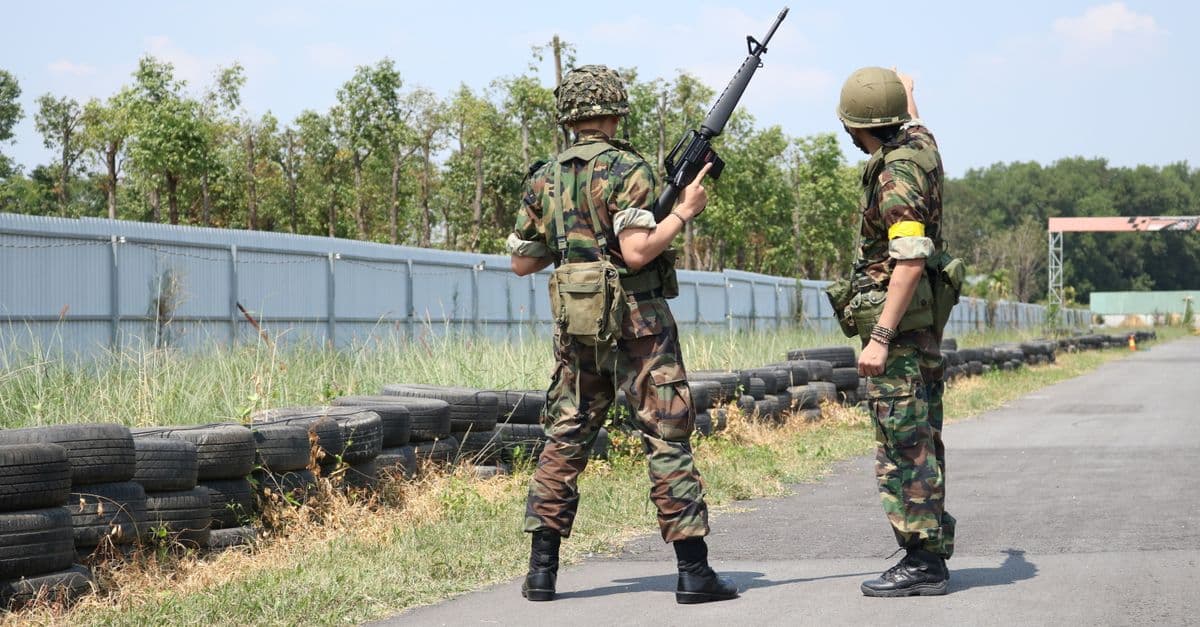
Photo: Thang Cao / Pexels
When a country sells a fighter jet or a missile battery to another nation, it is doing something more than signing a commercial contract. It is building a dependency, shaping a military doctrine, and acquiring a claim on a partner's strategic loyalty. The global arms trade is where foreign policy, industrial capacity, and geopolitical rivalry converge — and the ranking of countries that export the most weapons is one of the clearest maps of power in the modern world. According to SIPRI data for 2020–2024, the United States now controls 43% of all major arms exports, while five countries together account for roughly 72% of the global market.
Methodology: How Arms Exports Are Measured
SIPRI — the Stockholm International Peace Research Institute — tracks "major conventional arms" transfers using its Trend Indicator Value (TIV), a metric based on known unit production costs rather than contract prices. This approach captures military capability transferred rather than commercial value, which means a $20 million tank counts more than a $1 million communications system. All percentage shares in this article use SIPRI's 2020–2024 five-year rolling data, released in March 2025.
Contract values (such as the U.S. Foreign Military Sales figures) differ substantially from TIV: they include services, spare parts, training, and support packages. Both metrics are referenced where relevant, with the source noted.
Source: SIPRI Trends in International Arms Transfers, 2024, released March 2025.
Top 10 Countries That Export the Most Weapons (2020–2024)
| Rank | Country | Global Market Share (TIV) | Key Export Systems | Primary Customers |
|---|---|---|---|---|
| 1 | USA | 43% | F-35, F-16, Patriot, AH-64 Apache, M1 Abrams | NATO, Japan, South Korea, Israel, Gulf states |
| 2 | France | 9.6% | Rafale, Caesar howitzer, FREMM frigate | India, Egypt, UAE, Greece, Indonesia |
| 3 | Russia | ~7% | Su-35, T-90, S-400, Kalashnikov systems | India, China, Algeria |
| 4 | China | 5.9% | J-10C, JF-17, Wing Loong drones | Pakistan, Bangladesh, Nigeria |
| 5 | Germany | 5.6% | Leopard 2, Type 212 submarine, frigates | NATO, Ukraine |
| 6 | Italy | 3.5% | M-346, FREMM frigates, Centauro | Qatar, UAE, Egypt, Algeria |
| 7 | UK | 3.3% | Typhoon, AW159 helicopter, Brimstone missile | Saudi Arabia, Qatar, Kuwait |
| 8 | Spain | 3.0% | A400M, S-80 submarine, patrol vessels | Various |
| 9 | South Korea | 2.8% | K2 tank, K9 howitzer, FA-50, KF-21 | Poland, Australia, UAE |
| 10 | Israel | 2.3% | Spike ATGM, Harop drone, Iron Dome, Hermes UAV | India, Germany, Azerbaijan |
A Brief History of the Global Arms Trade
The modern arms export industry emerged from the rubble of World War II. The United States and Soviet Union rapidly understood that supplying allied and proxy nations with weapons served two purposes simultaneously: it equipped partners without deploying American or Soviet troops, and it created long-term dependencies that translated into political loyalty and basing rights. The Soviet Union supplied Egypt, Syria, Vietnam, Cuba, and much of the Non-Aligned Movement. The United States armed Western Europe, Israel, South Korea, Taiwan, and the Gulf states.
Through the Cold War, the five permanent members of the UN Security Council — the United States, Soviet Union, United Kingdom, France, and China — together controlled the overwhelming majority of global arms exports. That five-power concentration has never fully dissolved. What has changed is the internal hierarchy and the emergence of new suppliers from outside the P5, particularly South Korea, Turkey, and Israel.
The end of the Cold War produced a "peace dividend" slump in arms demand that lasted through the 1990s and early 2000s. The U.S.-led wars in Afghanistan and Iraq reversed this trend. Russia's annexation of Crimea in 2014 triggered the first wave of European rearmament. The full-scale invasion of Ukraine in February 2022 produced the sharpest acceleration in arms export demand since the Korean War — with the United States, South Korea, and France as the primary beneficiaries.
Source: SIPRI Arms Transfers Database, accessed May 2026.
Why Arms Exports Matter Beyond the Bottom Line
The political significance of arms sales runs deeper than revenue. Think of it like a software ecosystem: once a country's military is built on American aircraft, Russian tanks, or French frigates, switching suppliers means retraining pilots, rebuilding logistics chains, retooling maintenance depots, and replacing spare-parts inventories. The switching cost is enormous. Countries that buy American F-35s become, for at least a generation, structurally dependent on U.S. support for maintenance, software updates, and spare parts — which gives Washington real leverage over their foreign policies. For the most destructive category of arms, see countries with the most nuclear weapons.
Arms exports also carry industrial employment weight. The U.S. defense industry supports approximately 2.5 million direct and indirect jobs. French defense industry employment is estimated at 200,000. For South Korea, arms exports represent a breakout from automotive and semiconductor industries into a higher-status geopolitical product category. The domestic political economy of arms exports is therefore difficult to separate from the foreign policy rationale.
Intelligence sharing is a third dimension. Selling advanced weapons systems typically requires disclosing enough technical information for recipients to operate them — creating ongoing relationships between intelligence and military establishments that have their own geopolitical value.
The United States: Arms Exporter to the World
American dominance of the global arms export market is an extension of its overall military-industrial supremacy. The F-35 Joint Strike Fighter, manufactured by Lockheed Martin, is the centrepiece of U.S. arms sales: 17 countries have ordered the aircraft, and over 1,000 have been delivered globally as of 2025. The programme has become so internationally embedded that allied countries from Japan to the Netherlands contribute manufacturing components, creating industrial interdependencies that reinforce political alignment.
Beyond the F-35, U.S. arms exports are diversified across all categories. The Patriot air defence system is operated by 18 countries. The AH-64 Apache attack helicopter is in service with over 15 nations. The M1 Abrams tank has been sold to Australia, Egypt, Iraq, Kuwait, Morocco, Saudi Arabia, and Taiwan. The AIM-120 AMRAAM air-to-air missile is the most widely deployed beyond-visual-range air-to-air missile on earth.
Total U.S. arms export authorizations in fiscal year 2024 reached a record $318 billion — including both Foreign Military Sales (government-to-government deals) and Direct Commercial Sales. This headline figure represents orders rather than deliveries; annual delivery value is typically $50–80 billion. The surge reflects the Ukraine war's acceleration of allied rearmament demand, with Poland, Finland, Germany, and the Baltic states all placing large orders.
Source: U.S. Defense Security Cooperation Agency, FY2024 annual report.
Why the U.S. lead is structurally durable
The United States combines three advantages that no other country currently replicates simultaneously. First, it has the world's largest defense R&D budget — $140 billion in FY2025 — which means its export products are typically at the technological frontier. Second, its geographic and treaty relationships give it access to customers that others cannot reach: Israel, Taiwan, and the Gulf states all buy American for political as much as military reasons. Third, the depth of U.S. production capacity means it can actually deliver large orders in reasonable timeframes — a constraint that has hampered European exporters since 2022.
France's Rafale-Fuelled Rise to Second Place
The most striking shift in the SIPRI 2020–2024 data is France surpassing Russia to become the world's second-largest arms exporter, with 9.6% market share. This is largely the story of one aircraft: the Dassault Rafale.
After struggling to find export customers for decades — France's only export before 2015 was none — the Rafale signed deals with India (36 aircraft), Egypt (24, then 12 more), Qatar (36, then 12 more), Greece (18), Croatia (12), UAE (80), Indonesia (42), and Serbia (12). Each Rafale costs approximately $100–120 million per aircraft; the UAE deal alone was valued at €16 billion. What changed? Partly the aircraft's proven combat record in Mali, Libya, and Iraq. Partly France's willingness to offer technology transfer and industrial offsets that competitor countries would not. Partly geopolitics: countries wary of U.S. political conditions on arms sales (which can restrict their use) found the French sales model more permissive.
Beyond the Rafale, France exports the Caesar self-propelled howitzer — which demonstrated exceptional performance in Ukraine, generating significant additional orders — and FREMM frigates. The French defence export model involves substantial technology transfer, making French equipment attractive to countries building domestic defence industries.
Russia's Sharp Decline
Russia was the world's second-largest arms exporter throughout the 2000s and 2010s. Its position in the 2020–2024 period has collapsed. SIPRI estimates Russia's market share fell by approximately 64% between 2015–2019 and 2020–2024 — a decline without precedent in modern arms trade history for a major power in peacetime.
Three factors drive this collapse. First, the Ukraine war has consumed Russian domestic production capacity, causing cancellations and delays in foreign orders: India alone reportedly waited years for components of Russian S-400 systems. Second, combat performance has damaged Russian equipment's reputation: the high rate of T-72 and T-80 tank losses to relatively cheap Western anti-tank missiles in Ukraine raised serious questions among potential buyers about the effectiveness of Russian armour. Third, Western sanctions have disrupted Russia's supply chains for advanced components — many Russian weapons systems relied on Western electronics that are now embargoed.
India, Russia's largest historical customer, has been diversifying its procurement for over a decade and accelerated this after 2022. Algeria and Iran remain significant Russian customers, but these are not sufficient to offset the loss of Indian volume. China, while an early major buyer of Russian military technology, has largely achieved self-sufficiency.
Source: SIPRI Fact Sheet: Trends in International Arms Transfers, 2024, March 2025.
South Korea: The New Arms Export Power
South Korea's emergence as a major arms exporter is one of the most significant developments in the global defence market over the past five years. Korean defence exports surged from roughly $3 billion per year in 2020 to over $17 billion in signed contracts in 2022 — driven primarily by Poland's decision to make South Korea its primary arms supplier following Russia's invasion of Ukraine.
Poland's contracts cover 980 K2 Black Panther main battle tanks, 648 K9 Thunder self-propelled howitzers, 48 FA-50 light combat aircraft, and 288 K239 Chunmoo multiple rocket launch systems. The scale and speed of these deliveries stunned the European defence industry, which was struggling with multi-year backlogs. South Korea's defence industry can deliver rapidly because it maintains substantial excess production capacity — a legacy of producing for its own large standing military, which requires continuous procurement.
Romania has also ordered K9 howitzers. Australia selected the AS9 Redback infantry fighting vehicle over European competitors. Norway, Egypt, and several other nations are evaluating Korean systems. The K2 tank, K9 howitzer, and FA-50 jet are all world-class systems that typically come in at lower prices than European equivalents, with faster delivery timelines.
The strategic dimension is notable: South Korea's arms export success gives it relationships with Poland and Romania that translate into diplomatic capital within NATO, despite Seoul not being a NATO member.
China: Building Market Share in the Global South
China's approximately 5.9% market share understates its strategic footprint, because Chinese arms exports are concentrated in regions — South Asia, Southeast Asia, Sub-Saharan Africa, and the Middle East — where influence with developing countries matters most. Pakistan is by far China's largest customer, receiving fighters (JF-17, J-10C), submarines, frigates, and missile systems. The Pakistan relationship is effectively a strategic alliance expressed partly through arms supply.
Wing Loong and CH-4 armed drones have been sold to Nigeria, Iraq, Saudi Arabia, UAE, and Egypt — giving China a presence in the drone market that was previously dominated by the United States and Israel. The relative affordability of Chinese systems makes them attractive to countries that cannot afford American or European alternatives. Chinese arms sales also typically come without the political conditions that Western suppliers attach — no requirements about human rights, democratic governance, or third-party conflicts.
China's longer-term goal appears to be technology transfer and co-production relationships that embed Chinese military standards and interoperability requirements in partner nations' armed forces — replicating the strategic dependency model the United States has used for decades.
Israel: Niche Excellence at Scale
Israel's defence exports reflect a strategy of competing in specific high-value niches rather than across the full spectrum of military equipment. The Spike anti-tank guided missile family is the world's most widely exported ATGM, in service with over 40 countries including Germany, France, and the Netherlands. Israeli loitering munitions — the Harop and Harpy — have been used in combat by Azerbaijan against Armenia, demonstrating the effectiveness of Israeli drone technology in peer conflicts. Radar systems, electronic warfare, and intelligence/surveillance technology round out Israel's export portfolio.
Israel's arms export policies are complex. The October 2023 Hamas attack and subsequent Gaza war strained some relationships, with several European countries reducing arms transfers to Israel and a few cancelling contracts entirely. Despite this, Israel's sophisticated technology base ensures continued global demand.
Emerging Exporters Worth Watching
Turkey has built an export-focused drone industry almost from scratch. The Bayraktar TB2 drone, priced at approximately $1–5 million per unit (compared to $30+ million for the U.S. MQ-9 Reaper), has been sold to Ukraine, Poland, Albania, Qatar, Ethiopia, Morocco, and dozens of others. Turkey's drone success demonstrates that the arms export market has space for disruptive lower-cost entrants in specific categories.
India is making its first serious push into arms exports after decades of being the world's largest arms importer. The BrahMos supersonic cruise missile (a joint Indian-Russian venture) has been sold to the Philippines. The Tejas light combat aircraft is under evaluation by several countries. Indian arms exports remain modest — approximately $2.5 billion in fiscal year 2023-2024 — but the trajectory is upward under the government's "Make in India for the World" initiative.
Source: Indian Ministry of Defence, Annual Report 2023-24.
Key Trends Shaping the Next Decade
The Ukraine effect is structural. The war has validated certain weapons categories (self-propelled artillery, air defence, anti-drone systems, precision munitions) and challenged others (heavy main battle tanks without infantry escort). Countries revising their procurement priorities are generating sustained demand in the validated categories, benefiting suppliers who can deliver quickly.
Battery and drone technology are democratising certain arms export capabilities. Countries that could not previously compete in high-end systems — Turkey, India, Iran — can now export drones that are genuinely militarily useful. This is fragmenting the oligopoly that the traditional major exporters have maintained.
Western supply-chain stress is a constraint on European export growth. Germany, France, the UK, and Spain face multi-year order backlogs in artillery ammunition, certain missile types, and some platform categories. South Korea and the United States have benefited because they can actually deliver what customers are ordering.
China's export ambitions face a ceiling imposed by Western technology restrictions. Chinese-made fighters, ships, and high-end electronics rely on Western components that are now being restricted through export controls. This is constraining the quality ceiling of Chinese arms exports in the medium term.
Frequently Asked Questions
Q: Which country exports the most weapons in 2025? The United States, with approximately 43% of global major arms exports by SIPRI Trend Indicator Value for the 2020–2024 period. U.S. arms exports have increased significantly since 2022 as allies rush to rearm in response to the Russia-Ukraine war.
Q: Why has Russia's arms export market share declined so sharply? Russia's export share fell by an estimated 64% between 2015–2019 and 2020–2024, driven by three factors: the Ukraine war consuming domestic production capacity, combat exposure of Russian equipment's limitations, and Western sanctions disrupting components supply chains. Traditional customers like India have accelerated diversification away from Russian equipment.
Q: Which weapons systems are most in demand internationally? Air defence systems (Patriot, NASAMS), advanced fighter aircraft (F-35, Rafale), self-propelled artillery (K9, Caesar), and armed drones (Bayraktar TB2, Wing Loong, Harop) are the most sought-after categories in 2024–2025. The Ukraine war has made artillery, air defence, and anti-tank weapons particularly valued.
Q: How does France rank second when it has a much smaller economy than China? Arms export rankings by SIPRI TIV reflect military capability transferred, not economic size. France's Rafale deals — totaling hundreds of billions in contract value — represent high-value, high-capability transfers that score heavily on the TIV scale. China's exports are cheaper per unit and skewed toward less advanced systems.
Q: Do arms exports correlate with diplomatic influence? Consistently, yes. Countries whose weapons fill foreign arsenals gain maintenance relationships, training relationships, and intelligence-sharing relationships that create lasting influence. The United States' global arms export network is one of the structural pillars of its alliance system.
Q: Is South Korea's arms export surge sustainable? The immediate surge was driven by Poland's emergency rearmament orders. Sustaining that pace requires winning new customers — Romania, Australia, and Norway are potential markets. South Korea's cost-competitiveness and delivery speed are durable advantages, suggesting continued growth even if 2022-level contract volumes are not replicated every year.
Sources
- SIPRI Trends in International Arms Transfers, 2024 — SIPRI Fact Sheet, March 2025
- SIPRI Arms Transfers Database — 2020–2024 data
- SIPRI Yearbook 2025, Chapter 5: International Arms Transfers
The Takeaway
The 2020–2024 arms export rankings reflect a world in the middle of a sustained rearmament cycle. The United States retains an unrivalled position, but the landscape around it is shifting faster than at any point since the Cold War's end. France has displaced Russia from second place on the strength of one aircraft. Russia's decline is structural, not cyclical. South Korea has vaulted from minor player to top-ten exporter in a single contract cycle. The arms trade's gravitational logic — that selling weapons creates dependencies that create influence — remains constant. What changes is which country's weapons are filling the arsenals that will define the military balance of the 2030s.
Related Reading
Follow new articles
Add SciHub101 to your feed reader to see new science and technology stories.
About the Author
SciHub101 is an independent science and technology publication founded and edited by Buğra Sözeri, a software engineer and app developer based in Türkiye. AI tools assist with drafting and research. Source documentation in the existing archive is uneven, and articles are being reviewed and corrected. The Editorial Team byline identifies editorial responsibility; it does not certify specialist or independent human review. Where we compare products, anything built by our own team is labelled as such — see the editorial guidelines and About page for how corrections and disclosures work.
Related Articles

Countries That Produce the Most Wine in the World (2025 Ranked)
Italy, France, and Spain produce nearly half of all the world's wine. Global production reached 258 million hectolitres in 2023. China is now the world's fifth-largest wine producer. Here's who makes the most wine, how climate change is reshaping the wine map, and which new regions are rising.
Countries Spending the Most on Military R&D (2025)
Military research and development determines which country dominates warfare in 20 years, not today. The United States spends over $140 billion annually on defence R&D — more than China's entire official military budget. This ranking covers the top 10 investors in military technology and the cutting-edge programmes they are funding.

Countries Investing the Most in AI: 2026 Rankings
The US leads global AI investment by a massive margin, but Saudi Arabia and UAE are now committing percentages of GDP that rival Silicon Valley.

Countries Leading AI Research and Development in 2026
The US and China dominate global AI R&D, but Europe and Asia-Pacific are closing the gap fast.
Countries With the Biggest Defence Budgets in the World (2025)
Global defence spending hit a record $2.72 trillion in 2024 and continues to climb in 2025. This ranking covers the top 20 biggest military budgets, their share of GDP, and what each country is actually buying with that money.
Countries With the Most Military Bases Abroad (2025)
Foreign basing is one of the clearest expressions of a country's global reach, but no two lists count it the same way. Here is what is documented for the United States, United Kingdom, France, Russia, China, Turkey, and others, and why the totals differ so much.