Countries That Produce the Most Wine in the World (2025 Ranked)
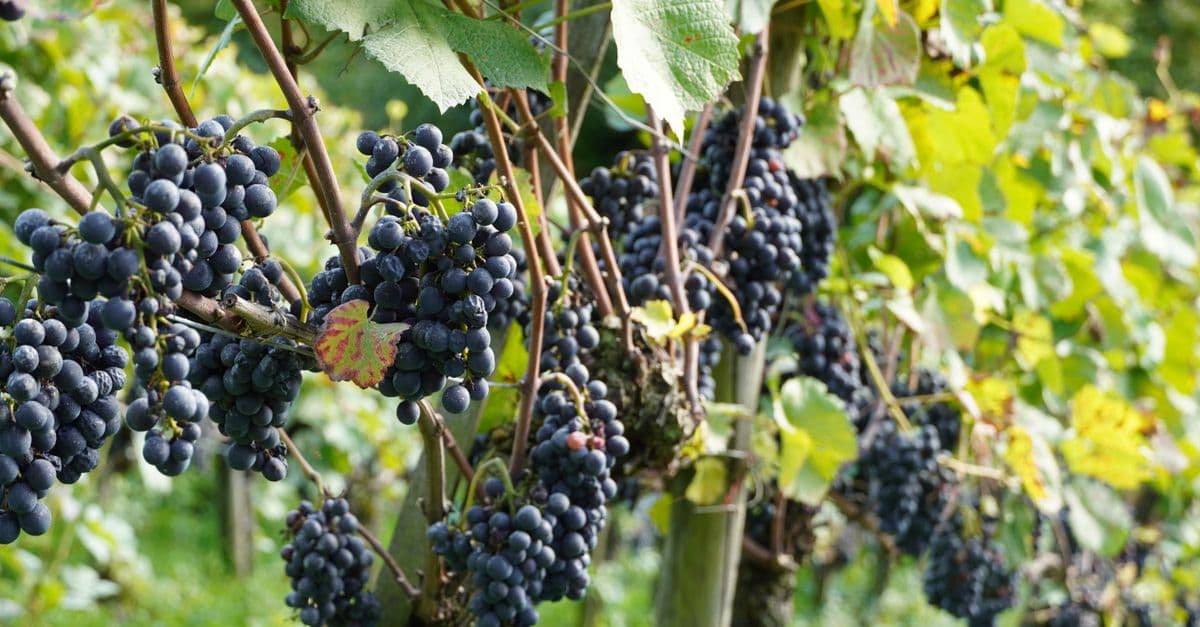
Photo: Ekaterina Swiss / Pexels
Wine is one of humanity's oldest agricultural products — with evidence of production dating back 8,000 years to the Caucasus region. Today, global wine production reached approximately 237 million hectolitres in 2023 (about 31.6 billion standard bottles), though 2024 saw a historic low of approximately 226 million hectolitres driven by extreme weather events across producing regions worldwide. The geography of wine is being reshaped by climate change, shifting consumer markets, and the emergence of wine industries in countries where viticulture was negligible a generation ago.
Key takeaways
- Italy (49.1 Mhl) and France (44.6 Mhl) trade the top position year by year — 2024 was the worst global harvest since 1961.
- The traditional "Old World" trio of Italy, France, and Spain accounts for approximately 51% of global wine production.
- China is now the world's fifth-largest wine producer — though domestic production has declined recently as Chinese consumers shifted preferences toward imported wine.
- Climate change is moving viable wine regions northward: England, Belgium, and southern Scandinavia are producing commercially serious wines; traditional Mediterranean regions face water stress and heat damage.
- Global wine consumption is declining in traditional markets (France, Italy, Spain) while growing slowly in the US and parts of Asia.
How wine production is measured — the methodology
The authoritative source for global wine production data is the International Organisation of Vine and Wine (OIV), an intergovernmental organisation founded in 1924 and based in Paris. Member states report production figures, which the OIV compiles and publishes annually in its State of the World Vine and Wine Sector report.
Production is measured in hectolitres (hl) of wine produced from harvested grapes, excluding juice and grape musts (unfermented grape juice, which some countries produce in large quantities). One hectolitre equals 100 litres, or approximately 133 standard 750 ml bottles. A million hectolitres is 133 million bottles.
Year-to-year variation is substantial — harvest conditions (rainfall, temperature, disease pressure) can shift a country's production by 20–40% in a single year. The 2024 season was globally exceptional: OIV's preliminary estimates put global production at 225.8 million hectolitres, a 4.8% decline from 2023 and the lowest since 1961, driven by frost in France and Spain, drought in Italy, and ongoing disease pressure across multiple regions.
The ranking table below uses 2023 data, which was itself a notably low year (237 Mhl versus the 258 Mhl average of the previous decade). Both figures are cited where relevant.
Source: OIV State of the World Vine and Wine Sector 2024 (April 2025 publication); OIV 2024 World Wine Production First Estimates (November 2024).
Countries that produce the most wine
(Million hectolitres, 2023)
| Rank | Country | Production (Mhl) | Notes |
|---|---|---|---|
| 1 | Italy | 49.1 | Most productive year by year; enormous variety |
| 2 | France | 44.6 | Highest value per litre; Bordeaux, Burgundy, Champagne |
| 3 | Spain | 40.9 | Largest vineyard area in the world (~970,000 ha) |
| 4 | United States | 22.3 | Primarily California (Napa, Sonoma, Central Valley) |
| 5 | China | 18.0 | Rapid growth since 1990s; Ningxia emerging |
| 6 | Australia | 12.0 | Barossa, Hunter, Margaret River |
| 7 | Argentina | 11.5 | Mendoza; Malbec global identity |
| 8 | Chile | 10.5 | Maipo, Casablanca, Bio-Bío valleys |
| 9 | South Africa | 10.1 | Stellenbosch; Cape Winelands |
| 10 | Germany | 8.2 | Riesling dominant; Rhine, Mosel |
| 11 | Portugal | 7.2 | Port wine; Douro Valley, Vinho Verde |
| 12 | Russia | 5.9 | Krasnodar region |
| 13 | New Zealand | 3.6 | Marlborough Sauvignon Blanc |
| 14 | Greece | 2.8 | Ancient winemaking tradition reviving |
| 15 | Austria | 2.7 | Grüner Veltliner, Riesling |
Source: OIV 2024 State of the World Vine and Wine Sector.
A brief history of wine production
Wine's origins predate recorded history. Archaeochemical analysis of pottery from the Caucasus region (present-day Georgia and Armenia) confirms grape fermentation dating to at least 6,000 BCE. The world's oldest known winery — discovered in Armenia's Areni-1 cave — dates to approximately 4,100 BCE.
Wine production spread westward through ancient Mesopotamia, Egypt, and Phoenicia, reaching Greece and Italy by 1,000 BCE. The Roman Empire standardised viticulture across its territories — the vine-growing regions that Rome established in France (Gaul), Spain (Hispania), and the Rhine Valley are, remarkably, still producing wine today.
The modern wine industry's structure was shaped by three transformations:
Appellation systems (20th century): France's Appellation d'Origine Contrôlée (AOC) system, formalised in 1935, legally tied wine quality claims to specific geographic origins. This created the "terroir" doctrine — the idea that a place's soil, climate, and topography are expressed in wine produced there — and gave French wine a regulatory framework that competitors could not easily replicate. Italy, Spain, Germany, Portugal, and eventually New World regions adopted versions of this system.
The New World wine revolution (1970s–1990s): California, Australia, New Zealand, Chile, and Argentina built modern wine industries with different assumptions — consumer-friendly grape variety labelling (Cabernet Sauvignon, Chardonnay, Merlot) rather than geographic designation (Bordeaux, Burgundy, Côtes du Rhône). This made wine accessible to consumers who were intimidated by the European appellation system and created mass markets that transformed global consumption.
The fine wine investment market (2000s–present): Top Bordeaux and Burgundy wines began trading as financial instruments. Château Pétrus, Romanée-Conti, and the five Bordeaux "first growths" now have secondary market prices tracked alongside equities. This financialisation has pushed the top tier of wine prices to extraordinary levels while creating a separating of the market between collectible investment wines and everyday consumer wines.
Source: Patrick McGovern, Ancient Wine: The Search for the Origins of Viniculture (Princeton, 2003); Jancis Robinson, Julia Harding, José Vouillamoz, Wine Grapes (Allen Lane, 2012).
Italy: volume and variety
Italy produces more wine than any other country in most years, achieving this with extraordinary geographic and varietal diversity: over 350 officially recognised indigenous grape varieties and 73 DOC/DOCG appellations spread across every region from the Alpine foothills of Alto Adige to the volcanic soils of Sicily.
Think of Italy's wine map as something like a continent within a country. The climate in Bolzano (Alto Adige, near the Austrian border) resembles Alsace; the climate in Pantelleria (between Sicily and Tunisia) is closer to North Africa. This range produces wines that no other single country can match for sheer variety.
Italy's output is roughly 60% red and 40% white by volume. Key export drivers:
Prosecco DOC/DOCG (Veneto): Italy's most exported wine by volume — the sparkling wine category that has grown from regional curiosity to global aperitivo-culture staple in under two decades.
Pinot Grigio: The dry white that defined "Italian white wine" for international consumers throughout the 1990s and 2000s. Primarily from Veneto and Friuli-Venezia Giulia.
Barolo and Brunello di Montalcino: Italy's two most prestigious reds — the "Barolo" appellation in Piedmont (Nebbiolo grape, minimum 38 months ageing) and Brunello di Montalcino in Tuscany (Sangiovese Grosso, minimum 5 years ageing for Riserva). Both produce wines that age for 20–40 years and command prices of $50–500+ per bottle.
Amarone della Valpolicella: Produced by drying grapes for 3–4 months to concentrate sugars, then fermenting dry — producing an unusually rich, high-alcohol (15–17%) red with 20–30 year aging potential.
Italy's wine exports earn approximately €7.7 billion annually — second only to France.
Source: Unione Italiana Vini export data 2024; Consorzio del Barolo annual report 2024.
France: prestige over volume
France produces slightly less than Italy but generates far more revenue per litre — French wine exports earn approximately €12 billion annually, more than any other country. This reflects the extraordinary premium commanded by French appellations built over centuries.
Champagne: The only sparkling wine that can legally bear that name, from a specific chalk subsoil region 150 km east of Paris. The Champagne appellation's legal protection is among the most commercially valuable in food and drink — attempts to use "Champagne" on wines from other regions (including the US, before a bilateral agreement) generate international trade disputes. Champagne wholesale prices range from €8/bottle for non-vintage Brut to €300–400 for Dom Pérignon and Cristal.
Bordeaux: The world's most economically significant wine appellation by total value. Bordeaux produces approximately 5–6 million hl per year, ranging from mass-market Bordeaux Supérieur at €5–8/bottle to the five "first growths" (Château Margaux, Latour, Lafite Rothschild, Haut-Brion, Mouton Rothschild) at €500–1,500+ per bottle retail. Bordeaux wines are classified by commune (Saint-Émilion, Pomerol, Pauillac, Margaux, Saint-Julien) and by an 1855 classification system that remains largely unchanged.
Burgundy: France's most complex and controversial wine region — tiny appellation boundaries, multiple ownership of single vineyards (a 1.8-hectare Romanée-Conti is owned entirely by one domaine; adjacent plots are shared among dozens of owners), and wines that range from affordable Bourgogne Blanc to Romanée-Conti (approximately €15,000–30,000 per bottle at auction for recent vintages).
France's wine power is built not on volume but on appellation law — geographic designation (AOC/AOP) that legally ties quality claims to specific places, enforces specific grape varieties and production methods, creates artificial scarcity, and builds brand moats that have compounded for 150+ years.
Source: CIVB (Bordeaux Wine Trade Council) 2024 annual report; CIVC (Comité Champagne) 2024 export data; Bureau Interprofessionnel des Vins de Bourgogne 2024.
Spain: most land, third most wine
Spain has the world's largest vineyard area (~970,000 hectares) yet ranks third in production, because Spanish vineyards often use low-density planting in semi-arid conditions that produce intentionally lower yields per hectare. Quality over volume is the operating philosophy across most premium Spanish appellations.
La Rioja: Spain's most internationally recognised wine region — Tempranillo-based reds aged in American or French oak at four tiers: Rioja, Crianza (1 year oak), Reserva (1 year oak + 2 years bottle), Gran Reserva (2 years oak + 3 years bottle). The labelling system makes wine ageing transparent in a way that Bordeaux's château classifications do not.
Ribera del Duero: Elevation at 700–1,000 metres (2,300–3,300 ft) above sea level produces Tempranillo with more structure and acidity than Rioja — Spain's answer to Bordeaux, with Vega Sicilia's Único sometimes commanding $300+ per bottle.
Priorat (Catalonia): The sleeper appellation that went from obscurity to top-tier international recognition in under 20 years. Garnacha and Cariñena from rocky llicorella (slate and quartz) soils. Álvaro Palacios's L'Ermita commands $1,000+ per bottle.
Cava: Spain's traditional-method sparkling wine (same production method as Champagne but from different grapes — primarily Macabeo, Xarel-lo, Parellada) produced mainly in Penedès, Catalonia. Dramatically underpriced relative to Champagne for equivalent quality, which makes it one of the world's great wine values.
Spain's old vines are its secret competitive advantage. Ungrafted pre-phylloxera vines over 100 years old survive in Priorat and Calatayud — producing concentrated, complex wines that new-world vineyards with young vines cannot replicate for decades.
Source: Wines from Spain / ICEX export statistics 2024; DOCa Rioja Consejo Regulador 2024.
New World rising: Argentina, Chile, New Zealand
The "New World" wine regions — Americas, Australia, South Africa, New Zealand — grew dramatically from the 1970s, transforming wine from a European product into a global one.
Argentina's Malbec transformation: Malbec was originally a Bordeaux blending grape considered inferior to Cabernet Sauvignon and Merlot — it was declassified from some Bordeaux classifications in the 1950s. In Mendoza's high-altitude vineyards (700–1,500 m / 2,300–4,900 ft), however, Malbec found conditions that coaxed out deep colour, soft tannins, and plum-and-violet aromatics that Bordeaux Malbec never exhibited. Argentine producers, particularly those around the Luján de Cuyo subregion, created a global market for a variety that European producers had largely abandoned.
New Zealand's Marlborough Sauvignon Blanc: Described (politely) by wine writer Jancis Robinson as "gooseberry, nettle, and passion fruit" and (impolitely by a New Zealand winemaker) as "cat's pee on a gooseberry bush" — Marlborough's intensely aromatic, high-acid Sauvignon Blanc created an entirely new consumer category in the 1990s. Cloudy Bay's 1985 vintage is often credited as the catalyst. Today Marlborough produces approximately 77% of all New Zealand wine, with Sauvignon Blanc representing the dominant variety.
Chile's geographic advantages: Chile's wine country sits in a natural laboratory — the Atacama Desert to the north prevents most viticultural diseases; the Andes provide altitude cooling and meltwater irrigation to the east; the Pacific provides cool maritime influence from the west. The country's combination of low disease pressure, water availability, and diverse climatic zones allows it to produce exceptional value across multiple varieties at price points that Old World regions structurally cannot match.
South Africa's Stellenbosch: The Cape Winelands region around Stellenbosch and Franschhoek has a wine-making tradition dating to 1659, making it the "Old World" of the New World. Chenin Blanc (locally called "Steen") is South Africa's most planted variety; Pinotage (a Pinot Noir x Cinsault cross bred in South Africa in 1925) is its unique contribution to the world's wine vocabulary.
Source: Wines of Argentina 2024 export statistics; New Zealand Winegrowers Annual Report 2024; Wines of South Africa 2024 industry data.
Climate change: wine's map is shifting
Climate change is the defining structural challenge for wine production over the next 30 years — simultaneously creating new opportunities in previously unviable regions and threatening the character, consistency, and viability of established ones.
Winners: regions becoming viable
England's sparkling wine industry is the most compelling example of climate-driven new opportunity. The South Downs chalk subsoil is geologically identical to Champagne's — the same Cretaceous chalk formation runs under both. Historically, England's climate was too cool and wet to ripen Champagne's grape varieties (Chardonnay, Pinot Noir, Pinot Meunier) reliably. Climate warming has changed that calculation. Producers including Nyetimber, Ridgeview, and Chapel Down are producing English sparkling wines that win blind tastings against mid-range Champagne. English sparkling wine production has grown from negligible to approximately 12 million bottles annually — still tiny but growing at 15–20% per year.
Denmark, southern Sweden, and Belgium are producing small but commercially viable quantities of still wine from cold-hardy varieties. Canada's Okanagan Valley in British Columbia is expanding its growing season. Higher-elevation sites everywhere — in Italy's Alps, Spain's Sistema Central mountains, Argentina's high-altitude Andean foothills — are becoming optimal where they were previously too cool.
Losers: traditional regions under stress
Southern Spain and southern Italy face increasing temperatures, declining water availability, and earlier harvests that produce wines with high alcohol (above 15–16%) and low acidity — characteristics that reduce freshness and ageing potential. Irrigation, where not already practised, is becoming necessary in regions that have traditionally dry-farmed.
Bordeaux's climate has shifted measurably. Historical Bordeaux style was built on the unpredictability of the Atlantic climate — "great vintages" were years when heat arrived late enough to preserve acidity. Recent vintages (2018, 2019, 2020) have been consistently warm — producing wines with excellent commercial scores but losing the tension and freshness that distinguished great Bordeaux from New World equivalents. Some estates have begun experimental plantings of heat-tolerant varieties (Marselan, Touriga Nacional) not traditionally associated with Bordeaux.
Australia's Murray-Darling irrigation district — the country's highest-volume wine production zone — faces increasing water allocation constraints as the Murray-Darling river system experiences declining flows.
Source: OIV State of the World Vine and Wine Sector 2024 climate section; Wine Australia Climate Change Adaptation Research 2023; CIVB Bordeaux climate change strategy 2024.
Global wine consumption trends
Wine consumption globally reached approximately 221 million hectolitres in 2023 — below the decade's average and notably below the 2018 peak of 247 Mhl. The OIV's 2024 report described 2023 as a year of "historic lows" in both production and consumption.
The trend lines vary dramatically by market:
| Market | Consumption trend (2010–2024) |
|---|---|
| France | Down ~35% per capita |
| Italy | Down ~30% per capita |
| Spain | Down ~25% per capita |
| Germany | Roughly flat |
| United States | Slight decline since 2020 peak |
| China | Volatile; fell significantly 2020–2023 |
| UK | Stable to slight decline |
| Japan | Slow growth |
The long-term structural decline in traditional European wine-drinking markets reflects generational change (younger French and Italian consumers drink less wine than their parents), health awareness, drink-driving enforcement, and competition from craft beer and spirits.
China's market trajectory is the most closely watched by wine producers globally. Chinese wine consumption grew dramatically from 2010–2018, then fell sharply through 2020–2023 driven by economic uncertainty, government anti-extravagance campaigns reducing luxury gifting, and shifting consumer preferences toward baijiu (traditional Chinese spirit) and domestic alternatives. Australia's wine export to China collapsed entirely after 2020 tariffs (since removed in 2023) — a geopolitical shock that forced Australian producers to rapidly diversify their export markets.
Source: OIV State of the World Vine and Wine Sector 2024; Wine Australia export data 2024.
Frequently asked questions
Q: Which country drinks the most wine per capita? A: Luxembourg consumes approximately 60+ litres per person per year — the highest globally — but this is partly a statistical artefact: Luxembourg imports large volumes that are consumed by cross-border workers and re-exported. Among major producing nations, Portugal (~52 litres/person/year) and France (~46 litres/year) lead genuine domestic consumption. French per-capita wine consumption has fallen by approximately half since the 1970s.
Q: What is the most expensive wine ever sold? A: A bottle of 1945 Romanée-Conti sold at Sotheby's New York in 2018 for $558,000 — the highest price ever paid for a standard 750 ml bottle. At that price it works out to $744,000 per litre. Top Bordeaux first-growth Jeroboam (3-litre) bottles from exceptional vintages have also sold for over $1 million. These prices reflect wine as a financial asset and trophy collectible rather than a beverage.
Q: What is the difference between Old World and New World wine? A: "Old World" wines (France, Italy, Spain, Germany) traditionally emphasise terroir — the idea that a specific geography's soil, climate, and aspect are expressed in the wine, so labels indicate place rather than grape. "New World" wines (US, Australia, Argentina, New Zealand) traditionally emphasised the grape variety and winemaker technique, making wines more accessible to consumers unfamiliar with European geography. This distinction has blurred substantially as New World producers adopt appellation systems and Old World producers acknowledge grape variety on labels.
Q: Is natural wine actually better? A: Natural wine — made with minimal intervention, no added commercial yeasts, minimal or no sulphites as preservatives, no fining or filtration — is a cultural and aesthetic movement rather than a quality guarantee. Natural wines can be extraordinary or badly flawed; without sulphites, oxidation and bacterial spoilage risk increases, particularly in bottles shipped long distances at variable temperatures. The movement has driven valuable transparency about winemaking practices, but the assertion that "natural = better" is not supported by blind tasting evidence and is contested by most serious oenologists.
Q: Why was 2024 such a bad year for wine production? A: The OIV estimates 2024 global production at approximately 225.8 Mhl — the lowest since 1961. The causes were geographically distributed: late spring frosts destroyed significant portions of French and Spanish harvests; drought reduced yields in Italy; disease pressure continued in multiple regions. The 2024 shortfall is the second consecutive below-average year (2023 was 237 Mhl versus the decade's average of ~258 Mhl), raising questions about whether structural climate shifts are making weather extremes — and therefore production volatility — the new normal.
Q: Is wine investment a good financial strategy? A: Fine wine has produced returns competitive with equities over some time horizons — Liv-ex's Fine Wine 1000 index averaged approximately 7–8% annual returns over the 2000–2020 period. However, wine investment involves substantial costs: storage, insurance, broker commissions (10–15% at auction), authentication risk (fine wine counterfeiting is a significant industry), and illiquidity. It is a strategy for sophisticated collectors with genuine wine knowledge, not a general-purpose alternative asset class.
The takeaway
Wine is a $300+ billion global industry built on the intersection of geography, history, regulation, and culture. Italy, France, and Spain dominate by volume and value, sustained by appellation systems that legally protect quality claims built over centuries. The New World transformed global consumer markets by making wine accessible and grape-driven. Climate change is now redrawing the production map faster than traditional appellations can adapt — creating commercial opportunities in England and Canada while putting the heat, drought, and disease pressure on Mediterranean heartlands whose wine identity is inseparable from their climate. The next decade will determine whether established appellations can change their practices without losing the terroir identity that justifies their price premiums.
Related Reading
Follow new articles
Add SciHub101 to your feed reader to see new science and technology stories.
About the Author
SciHub101 is an independent science and technology publication founded and edited by Buğra Sözeri, a software engineer and app developer based in Türkiye. AI tools assist with drafting and research. Source documentation in the existing archive is uneven, and articles are being reviewed and corrected. The Editorial Team byline identifies editorial responsibility; it does not certify specialist or independent human review. Where we compare products, anything built by our own team is labelled as such — see the editorial guidelines and About page for how corrections and disclosures work.
Related Articles

Digital Nomad Visa Countries Compared (2026 Data)
More than 50 countries now sell some form of remote-work visa, and the income tests range from about $24,000 a year to more than $60,000. Here is what 14 popular programs required in 2026, how the thresholds are calculated, and where the published figures disagree.

Top Countries That Export the Most Weapons (2025)
The global arms trade reached approximately $134 billion in 2023 and is growing. This ranking of the top 10 countries that export the most weapons covers market share, key systems exported, and the geopolitical alliances that define the global arms market.

Countries with the Best Food (2025 Ranked)
Italy, Japan, and Mexico top most global food rankings. France invented fine dining. China has the world's most diverse cuisine. But 'best food' is culturally contested — here's what the data on Michelin stars, UNESCO food heritage, and culinary tourism actually shows about the world's greatest food cultures.
Countries That Waste the Most Food (2025 Ranked)
Australia wastes 312 kg of food per person per year — the most in the world. The US wastes 80 million tonnes annually. Globally, one-third of all food produced is lost or wasted — enough to feed every hungry person on Earth twice over. Here's the full picture of global food waste and what the most effective interventions are.

Countries with the Most Tourist Arrivals (Ranked)
France received more international tourists than any other country in 2024 — approximately 102 million arrivals, making it the first country in history to surpass the 100 million annual mark. Spain ranked second with 93.8 million, the United States third with 72.4 million. Turkey and Italy round out the top five. But raw arrival numbers obscure important distinctions: the United States earns more tourism revenue than any other country despite ranking third in arrivals. This ranking covers the top 20 countries by international tourist arrivals using UN Tourism (UNWTO) 2024 data, with methodology, historical context, and revenue analysis.
Why Coffee Could Disappear — The Science of Climate Change and Your Morning Cup
Coffea arabica survives in a narrow climate band that is shrinking fast. Here is the science behind why your morning cup is under threat — and what the coffee industry is racing to do about it.