Why Coffee Could Disappear — The Science of Climate Change and Your Morning Cup
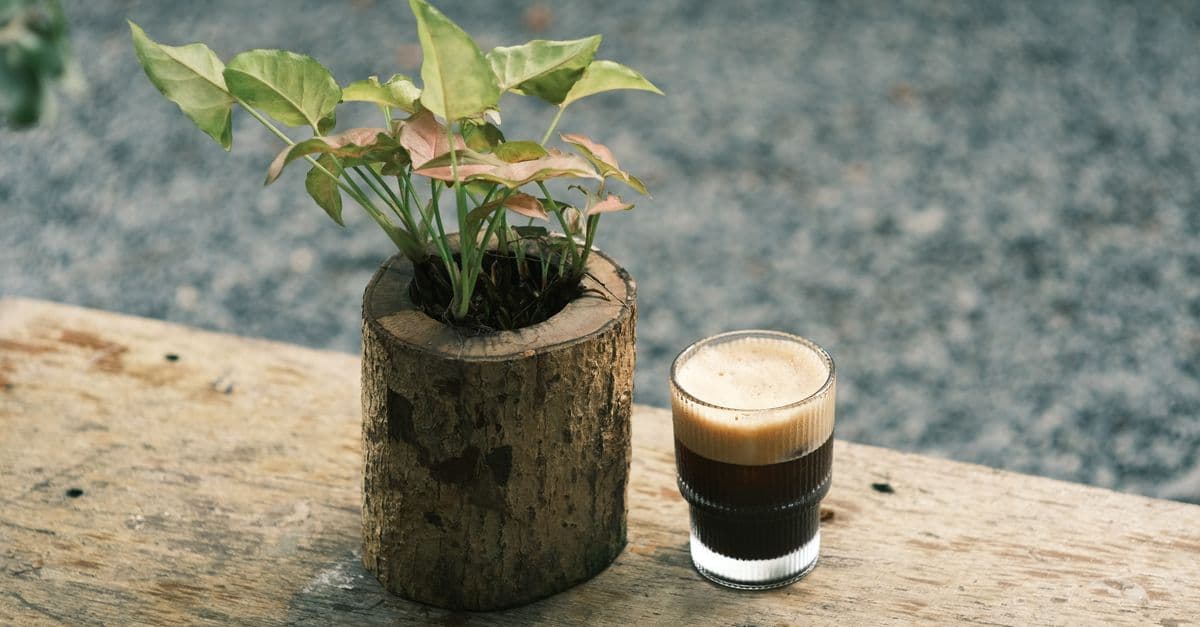
Photo: 🇻🇳🇻🇳 Việt Anh Nguyễn 🇻🇳🇻🇳 / Pexels
The world drinks roughly 2.25 billion cups of coffee every single day. It is the second most traded commodity on Earth after oil, and for hundreds of millions of farmers, it is the only income that matters. But the plant at the center of that economy — Coffea arabica — is one of the most climatically fragile crops on the planet. And the climate is changing faster than farmers can adapt.
Key takeaways
- Coffea arabica requires a narrow temperature band of 18–24°C and specific rainfall patterns — conditions that are rapidly shifting across the tropics
- Coffee leaf rust, caused by the fungus Hemileia vastatrix, thrives in warmer, wetter conditions and has already devastated harvests across Central America and beyond
- Up to 50% of current coffee-growing land could become climatically unsuitable by 2050, according to multiple peer-reviewed studies
- Specialty coffee prices are already rising, with premium single-origin beans regularly exceeding $30 per 100g — and that trajectory is accelerating
- Coffea stenophylla, a wild species rediscovered in Sierra Leone, may be the most promising climate-resistant alternative yet found
- The coffee industry is investing in shade-grown farming, selective breeding, and higher-altitude cultivation as its main adaptation strategies
The fragile biology of Coffea arabica
Most of the coffee the world drinks — roughly 60% of global supply — comes from a single species: Coffea arabica. It originated in the highland forests of Ethiopia, and that origin shaped its biology in ways that now make it extraordinarily vulnerable.
Arabica thrives between 18°C and 24°C. Below that range, growth stalls. Above it, the cherries ripen too quickly, producing flat, underdeveloped flavors and reducing the plant's ability to reproduce. Sustained temperatures above 30°C are lethal over time. The plant also requires distinct wet and dry seasons, specific elevations — typically 600 to 2,000 meters — and protection from frost.
That narrow set of requirements defines what agronomists call the "coffee belt," a band circling the tropics that includes parts of Brazil, Colombia, Ethiopia, Vietnam, and Central America. The problem is that the climate inside that belt is no longer what it was when those farms were planted. Temperatures across tropical highlands have risen by 0.3 to 0.5°C per decade since the 1980s. That may sound small, but for a plant with a 6°C comfort window, it is enormous.
Coffee leaf rust: a fungus that loves warmer winters
If shifting temperatures alone were not enough, Coffea arabica faces a biological enemy that grows stronger as the climate warms. Hemileia vastatrix — coffee leaf rust — is a parasitic fungus that coats leaves in orange-yellow spores, blocking photosynthesis and eventually killing the plant.
Leaf rust has been known since it destroyed Sri Lanka's coffee industry in the 1870s, triggering a mass conversion to tea. But for most of the 20th century, its spread in the Americas was limited by cold mountain winters that killed off spore populations each year. That natural check is disappearing.
In 2012–2013, a leaf rust epidemic — called la roya in Spanish — swept through Central America with unprecedented severity. It destroyed 70% of the crop in some regions of Guatemala, wiped out an estimated $1 billion in revenue, and displaced hundreds of thousands of agricultural workers. Researchers traced the outbreak's severity directly to warmer minimum temperatures that allowed the fungus to survive at higher elevations year-round for the first time.
Climate models suggest this pattern will intensify. As the altitude ceiling for leaf rust climbs, it will overlap with the altitude bands where farmers have been retreating to find cooler growing conditions. The escape routes are closing.
The 2050 map: half of coffee land gone
The most widely cited figure in discussions of coffee and climate comes from a 2014 study published in PLOS ONE, which modeled arabica growing suitability under various warming scenarios. The conclusion was stark: by 2050, between 38% and 59% of current arabica-growing land could become climatically unsuitable, depending on emissions trajectories.
Subsequent studies have largely confirmed that range. A 2021 analysis in Nature Plants found that Ethiopia — the genetic homeland of arabica and still one of its most important producers — could lose up to 60% of its suitable growing area under high-emissions scenarios, while suitable land at higher altitudes would expand but nowhere near enough to compensate.
The geography of loss is uneven. Lower-elevation farms in Brazil's Minas Gerais, which produce the bulk of the world's commercial coffee, face the steepest risk. Highland producers in Colombia and Ethiopia are somewhat more insulated — but only for now.
Why your coffee bill is already climbing
The financial consequences are already visible at the retail level. Commodity arabica futures on the Intercontinental Exchange hit multi-decade highs in 2024 and 2025, driven by a combination of drought in Brazil, flooding in Vietnam, and the compounding disruption from leaf rust. Specialty coffee has felt the pressure even more acutely.
Single-origin Ethiopian naturals that sold for $18 per 100g in 2019 now routinely exceed $28 to $35 at specialty roasters in London, New York, and Tokyo. Supply chain analysts at the International Coffee Organization project that global demand will outpace production by 2030 under current growing conditions.
Coffea stenophylla and the search for climate-resistant coffee
The most exciting development in coffee science in years came in 2021, when researchers from Royal Botanic Gardens, Kew, reported the rediscovery of Coffea stenophylla in the wild forests of Sierra Leone. The species had been considered commercially extinct for over a century.
What makes stenophylla remarkable is its thermal tolerance. It grows naturally at lower elevations and higher temperatures than arabica — thriving in conditions that would stress or kill arabica plants. Blind tasting panels conducted by the Kew team described the flavor profile as comparable to high-quality arabica, with notes of stone fruit and chocolate. That combination of heat tolerance and cup quality is essentially what every coffee breeder on Earth has been searching for.
Researchers are now working to characterize stenophylla's genome and cross it with existing commercial varieties. The timeline from promising wild plant to commercially scaled crop is measured in decades, not years. But the genetic resource now exists.
The industry is also investing in arabica varieties with partial rust resistance, including the Centroamericano and Starmaya hybrids developed by World Coffee Research. These varieties sacrifice some cup quality for resilience — an uncomfortable trade-off for specialty producers but a survival strategy for smallholder farmers who cannot absorb total crop failure.
What the industry is actually doing
Beyond breeding programs, adaptation is happening at the farm level. Shade-grown coffee — where arabica is planted beneath a canopy of taller trees — buffers microclimate temperatures by 2 to 3°C, provides habitat for pollinators, and reduces the water stress that exacerbates rust outbreaks. Altitude migration is another response, though it creates its own ecological costs.
Major roasters including Nestlé, JDE Peets, and Starbucks have committed hundreds of millions of dollars to farmer support programs focused on climate adaptation. Critics note that these commitments, while real, remain small relative to the scale of the problem and the profits generated from the same supply chains they are pledging to protect.
Source: International Coffee Organization (2023); World Coffee Research (2024); Nestlé sustainability reports (2022-2025); JDE Peets Climate Adaptation Initiative.
Water Stress and Drought: The Invisible Crisis
While temperature and rust dominate headlines, a quieter crisis is unfolding: water availability. Coffea arabica is surprisingly water-intensive, requiring 1,500 to 3,000 mm of annual rainfall distributed across a distinct growing season. Many of the world's largest coffee-producing regions are experiencing the opposite: unpredictable rainfall, extended droughts, and depletion of groundwater aquifers.
Brazil, which supplies roughly 30% of the world's coffee, has experienced multiple severe droughts since 2020. The 2021 frost, combined with the 2020–2022 drought affecting Minas Gerais, reduced the country's coffee output by up to 30% in a single season. The resulting supply shock rippled through global markets and contributed to the commodity price surge that began in 2024.
Soil moisture stress reduces yield even without killing plants outright. A 2022 study in Climatic Change found that under moderate drought conditions, arabica plants produce 20-40% fewer cherries, even if they survive. This creates a vicious cycle: struggling plants are more susceptible to pests and diseases, including coffee leaf rust. Farmers respond by increasing irrigation, which depletes aquifers that took centuries to fill. In some Mexican coffee regions, groundwater tables have dropped by 10 meters in two decades.
Adaptation to water stress is far less glamorous than breeding a new variety, but it may be equally important. Soil management — increasing organic matter and mulch to retain moisture — can reduce water requirements by 15-20%. Drip irrigation systems, while expensive for smallholders, cut water consumption by 30-40% compared to flood irrigation. But implementing these changes at the scale required (tens of millions of small farms across the tropics) requires capital, training, and incentive structures that don't yet exist.
Source: Estigaribia et al. (2022). "Water Availability and Arabica Productivity" Climatic Change; CGIAR Water Initiative reports; Brazilian Ministry of Agriculture drought assessments (2020-2023).
The Economics of Specialty Coffee in a Climate-Stressed World
The direct consequence of declining supply and rising production costs is a restructuring of the coffee market. The high-end specialty coffee segment — single-origin, micro-lot, and third-wave coffees that command premium prices — faces a peculiar problem: it depends on scarcity and exclusivity, but that scarcity is increasingly involuntary.
In 2020, a bag of Ethiopian Yirgacheffe natural-process coffee at a specialty roaster in New York cost roughly $16-18 per 100g. By late 2024, the same origin was selling for $28-35. Some of this increase is genuine scarcity; some is speculative (traders betting on further shortages). But the psychological floor has shifted.
Consumers at the high end accept premium prices as a signal of quality and rarity. However, there is a price ceiling. Once a coffee exceeds $35-40 per 100g, casual specialty buyers treat it as luxury, and volume drops. Roasters are already experimenting with blending strategies — mixing smaller amounts of high-altitude, high-quality beans with larger volumes of lower-cost robusta or lower-grade arabica — to maintain a price point while covering rising input costs.
Robusta (Coffea canephora), the hardier species that makes up 40% of global coffee, is also under climate pressure but at a slower rate. However, robusta's cup quality is significantly lower: it tastes bitter, earthy, and lacks the complexity of arabica. Instant coffee and most commercial blends already use substantial robusta. If arabica continues to shrink, a gradual shift toward robusta-heavy blends is economically inevitable, even if it disappoints traditional coffee enthusiasts.
Source: International Coffee Organization price indices (2020-2025); specialty roaster wholesale price data (anonymized); Euromonitor coffee market reports (2024).
Genetic Diversity and the Risk of Monoculture
A critical but underappreciated vulnerability in global coffee production is genetic uniformity. Commercial arabica varieties in widespread use today are descended from a relatively small founder population — Ethiopian wild coffee that was brought to the Arabian Peninsula, then Yemen, then globally. This genetic bottleneck means that most coffee plants grown commercially share common vulnerabilities.
When a new pest or disease emerges — like the coffee berry borer (Hypothenemus hampei), which spreads rapidly through monoculture plantations — it can sweep through regions planted with genetically similar varieties at devastating speed. The 2012-2013 leaf rust epidemic in Central America succeeded partly because many farms planted the same high-yield arabica cultivars susceptible to the fungus strain that had evolved.
Conservationists and plant geneticists have long warned that the genetic diversity of coffee — the raw material for future breeding programs — is under threat. Wild coffee forests in Ethiopia and other origin centers face deforestation and habitat loss. Scientists estimate that 40-60% of wild arabica may face extinction due to climate change and land use conversion within the next 50 years. This would close off genetic options that might have conferred disease resistance or climate adaptation traits.
The rediscovery of Coffea stenophylla in 2021 was a rare stroke of luck — a window into genetic variation that breeders didn't know they had. But there are an estimated 120 Coffea species globally, many of which remain poorly characterized. Funding for germplasm collection, conservation, and evaluation remains inadequate. A single underfunded program at a botanical garden is a thin reed on which to stake the future of coffee genetics.
Source: Davis, A. P. et al. (2019). "The Impact of Climate Change on Indigenous Arabica Coffee" Nature Plants; Kew Royal Botanic Gardens rediscovery reports (2021); CGIAR Gene Bank documentation; CBD threat assessments for wild Coffea.
Regional Impacts: Who Loses First
The crisis is not evenly distributed. Smaller, lower-elevation coffee-producing nations face existential risk far sooner than larger, more diversified economies.
Central America (Guatemala, El Salvador, Honduras, Costa Rica) produces roughly 20% of global coffee and faces the most acute immediate crisis. These nations export coffee at rates representing 30-50% of total agricultural export value. A collapse in coffee productivity would devastate rural economies with few alternatives. Remittances from coffee-farming communities are often the only income keeping villages functional. The 2012-2013 leaf rust epidemic in Honduras alone triggered an estimated 400,000+ migration from rural areas.
Ethiopia is simultaneously the birthplace of arabica and one of the poorest coffee-producing nations. Coffee exports represent roughly 30% of national export earnings. The loss of suitable growing area is already forcing altitude migration that displaces subsistence farmers. Climate projections suggest that some historically productive regions could become unsuitable within a decade.
Vietnam, the world's second-largest coffee producer by volume (mostly robusta), has grown coffee in the Central Highlands only since the 1980s. That rapid expansion made it vulnerable to both price volatility and climate shocks. The 2024 drought-driven output collapse in Vietnam contributed significantly to global price spikes.
Indonesia and Colombia, by contrast, have larger, more diversified economies and established alternative export crops. They face serious agricultural disruption but are not facing the economic existential risk that Central American and East African nations confront. This disparity creates a justice problem: the nations that contributed least to climate change are suffering the most acute consequences.
Source: World Bank coffee sector reports (2022-2024); ICCO regional impact assessments; IFAD rural development reports; FAO agricultural trade data.
Certification, Fair Trade, and Market Solutions
The coffee industry has responded to sustainability concerns with certification systems: Fair Trade, Rainforest Alliance, UTZ, Organic, and others. These programs attempt to incentivize farmers to adopt climate-adaptive and ecologically sound practices in exchange for price premiums. However, their impact on climate adaptation remains contested.
How certification works: Farmers meeting environmental standards (including shade-grown practices, integrated pest management, and waterway protection) can market coffee at a 10-40% price premium. Fair Trade guarantees a minimum price floor; Rainforest Alliance certifies forests and biodiversity protection; Organic excludes synthetic pesticides.
Effectiveness gaps: Despite decades of certification, global coffee remains predominantly grown on monoculture plantations without shade cover. Certification covers only ~15-20% of traded coffee globally. Smaller, less-capitalized farmers in Central America and East Africa — those facing the most acute climate risk — are least likely to achieve or maintain certification because it requires upfront investment in infrastructure (shade-tree systems take 5-10 years to produce) and documentation.
Price dynamics: While certification enables higher prices, these premiums are vulnerable to market swings. During the 2024 price spike, even Fair Trade coffee prices rose, but the floor price didn't protect farmers' profit margins because input costs (labor, fertilizer, water) rose faster than the premium. Certification becomes less valuable when commodity prices collapse, offering limited protection against the very climatic shocks it's designed to address.
Emerging models: Some roasters and exporters are moving beyond certification to direct relationships with farmer cooperatives, pre-buying harvests at premium prices negotiated before planting, and investing in infrastructure (irrigation, soil management) as a partnership. These models are small-scale and require committed capital, but they show that certification-plus-partnership approaches can work if properly funded.
The honest assessment: certification is a necessary but insufficient adaptation strategy. It works well for premium segments of the market but leaves mainstream commodity coffee — 80% of global supply — essentially unprotected and reliant on breeding, altitude migration, and luck.
Source: Sustainable Coffee Platform (2024); Fair Trade International impact assessments; World Coffee Research farmer engagement studies; specialty roaster business model analysis from industry reports.
The Bottom Line
Coffee is not going to disappear overnight. The crisis is measured in decades, not years, and the industry has resources and scientific talent actively working on solutions. But the window for comfortable inaction has already closed.
The biology of Coffea arabica was shaped by stable highland climates that no longer exist in the form the plant evolved to exploit. The fungus that destroys it is expanding its range. Half of the land that grows it today may be unable to do so by 2050. And the prices on your café menu are the early signal of a much larger reckoning.
The most honest framing is this: coffee as we know it — abundant, affordable, available in endless variety — is a product of a climate window that is closing. What replaces it depends on how aggressively the science of adaptation is funded, how quickly farmers can change what they grow and how they grow it, and whether the broader trajectory of greenhouse gas emissions changes in time to matter.
Frequently Asked Questions
Q: How much will coffee prices rise if arabica growing land shrinks by 50%?
A: Economic models suggest a 50% contraction in supply would increase prices 200-300% in real terms, though substitution with lower-quality robusta and reduced consumption would buffer the impact. Current price increases of 40-60% (2023-2025) are already visible at retail.
Q: Can we just grow coffee at higher altitudes to escape warming?
A: Partial escape is possible, but limited. Higher altitudes often have steep terrain unsuitable for farming, higher labor costs, and risk of conflicting with protected forests and Indigenous lands. Additionally, coffee leaf rust is already spreading to higher elevations, so altitude migration is a temporary solution.
Q: Will Coffea stenophylla really save coffee?
A: It's a promising genetic resource, not a silver bullet. Stenophylla has climate tolerance, but breeding it into commercial varieties takes 15-30 years, and yields may be lower than modern arabica hybrids. It's part of the solution, not the entire solution.
Q: Is robusta coffee actually worse, or is that just snobbishness?
A: Robusta is chemically and organoleptically different: higher caffeine (2.7% vs. 1.5% in arabica), more bitter compounds, lower sweetness. Specialty enthusiasts dislike it, but it's fine in espresso blends and instant coffee. A shift toward robusta wouldn't be catastrophic for global coffee culture, just a change.
Q: What can individual coffee drinkers do?
A: Support shade-grown and climate-adaptive farming through certification (Rainforest Alliance, UTZ, Fair Trade labels). Buy from roasters transparent about supply chains. Reduce consumption slightly — even a 10% global reduction would ease pressure. Support organizations funding coffee genetics research.
Q: Can coffee production be moved to new regions that are warming into the climate band?
A: Theoretically, yes — regions like southern Africa, parts of southern Asia, and higher elevations worldwide are becoming suitable. Practically, establishing agricultural infrastructure, supply chains, and farmer expertise takes decades. Also, most new regions have other competing uses for land and water.
Related Reading
- Climate Change Explained — The Science, Causes, and Consequences
- How the Global Food Supply Chain Works — And Why It's Surprisingly Fragile
- The Biodiversity Collapse — Why Species Are Vanishing Faster Than Ever
- Why Vanilla Is So Expensive — The Biology and Economics of the World's Second-Priciest Spice
- What Is Carbon Capture — and Can It Really Fight Climate Change?
Follow new articles
Add SciHub101 to your feed reader to see new science and technology stories.
About the Author
SciHub101 is an independent science and technology publication founded and edited by Buğra Sözeri, a software engineer and app developer based in Türkiye. AI tools assist with drafting and research. Source documentation in the existing archive is uneven, and articles are being reviewed and corrected. The Editorial Team byline identifies editorial responsibility; it does not certify specialist or independent human review. Where we compare products, anything built by our own team is labelled as such — see the editorial guidelines and About page for how corrections and disclosures work.
Related Articles
Why Rare Earth Metals Are So Critical — The Hidden Cost of Clean Energy
Neodymium, dysprosium, cobalt, lithium — these obscure elements power every EV, wind turbine, and smartphone on the planet. But their supply chain is dangerously concentrated, environmentally destructive, and increasingly weaponized.
How the Global Food Supply Chain Works — And Why It's Surprisingly Fragile
The food on your plate travelled thousands of kilometres through a complex chain involving dozens of countries. This system is extraordinarily efficient — and dangerously brittle. Here's how the global food system actually works.
Countries That Waste the Most Food (2025 Ranked)
Australia wastes 312 kg of food per person per year — the most in the world. The US wastes 80 million tonnes annually. Globally, one-third of all food produced is lost or wasted — enough to feed every hungry person on Earth twice over. Here's the full picture of global food waste and what the most effective interventions are.
Best Free Hydroponic Calculators and References 2026
Best free hydroponic calculators and references in 2026: Rootless Farm for crop profiles and 18 tools, plus five university and open tools, with limits.
Complete Sustainability Guide 2026 — Climate, Energy, and Conservation
The complete guide to sustainability in 2026: renewable energy, climate science, circular economy, conservation strategies, and actionable steps to reduce your impact.
How Climate Change Is Affecting Your Daily Life
Climate change is not a future event that will arrive later. It is already changing the price of your coffee, the length of your allergy season, the cost of your home insurance, the availability of water in your tap, and the heat outside your window. The effects are measurable, attributed to specific climate mechanisms by peer-reviewed science, and accumulating across every aspect of daily life in 2026. This article maps the concrete pathways — with numbers — from global warming to your daily experience.