Why Rare Earth Metals Are So Critical — The Hidden Cost of Clean Energy
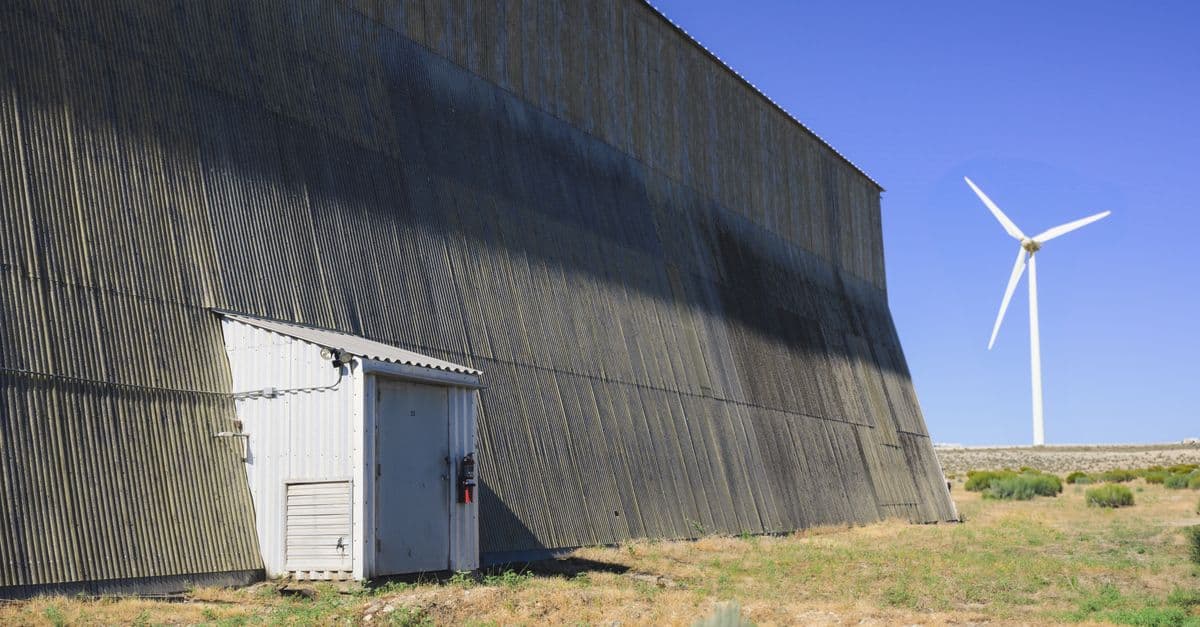
Photo: Brett Sayles / Pexels
The electric vehicle in your driveway, the wind turbine on the horizon, the smartphone in your pocket — none of them exist without a handful of obscure metallic elements most people have never heard of. Neodymium. Dysprosium. Cobalt. Lithium. Together, they form the hidden skeleton of the clean energy economy. And the world's grip on them is precarious in ways that should make every policymaker, investor, and consumer pay close attention.
Key takeaways
- Rare earth elements are not actually rare by abundance — they are rare because economically viable, concentrated deposits are geographically scarce
- China controls roughly 60–80% of global rare earth mining, processing, and refining, giving it enormous geopolitical leverage
- Neodymium and dysprosium are essential for the permanent magnets used in EV motors and wind turbines; no credible substitute currently exists at scale
- Cobalt and lithium are critical for rechargeable batteries — the heart of every EV and grid-scale energy storage system
- Mining rare earths generates radioactive waste, toxic runoff, and widespread ecosystem destruction — a serious environmental paradox at the heart of "green" tech
- Recycling and substitution research are accelerating, but neither is anywhere near ready to break the current supply chain dependency
What "rare earth" actually means — and why the name is misleading
The term "rare earth metals" covers 17 elements on the periodic table — the lanthanide series, plus scandium and yttrium. Geologically speaking, they are not particularly rare. Cerium, for example, is more abundant in Earth's crust than copper. Neodymium is more common than gold by a wide margin.
The "rare" in the name refers to something more economically meaningful: these elements almost never concentrate into rich, mineable deposits. They scatter through rock in tiny quantities, bonded with other minerals, making extraction expensive, technically complex, and environmentally messy. Finding a deposit worth mining is genuinely uncommon. Turning that deposit into a refined, usable product is even harder.
That complexity is exactly why the global supply chain bottlenecked so severely in one place.
The four metals driving the clean energy transition
Not all rare earths are equal. Four in particular have become structurally essential to the technologies at the core of the energy transition.
Neodymium is the star of the show. Alloyed with iron and boron, it produces the most powerful permanent magnets ever created — neodymium-iron-boron (NdFeB) magnets. These magnets are what make direct-drive wind turbines spin efficiently and what give EV motors their extraordinary power-to-weight ratio. A single offshore wind turbine can contain up to two tonnes of neodymium. A high-performance EV motor requires several kilograms.
Dysprosium is neodymium's essential partner. On its own, NdFeB magnets lose their magnetic properties at high temperatures — a fatal flaw in motors that run hot. Adding dysprosium stabilizes the magnet's performance across a wide temperature range. Without it, EV motors would demagnetize under normal operating conditions.
Lithium is the foundational element of modern battery chemistry. Lithium-ion batteries — the dominant technology in EVs, grid storage, and consumer electronics — depend on lithium for their ability to store and release energy efficiently. Global lithium demand is projected to increase tenfold by 2050 relative to 2020 levels as EV adoption accelerates.
Cobalt stabilizes the cathode chemistry in lithium-ion batteries, dramatically improving energy density and cycle life. While battery manufacturers have made progress reducing cobalt content (Tesla's LFP cells, for instance, use none), cobalt remains critical in the high-performance battery chemistries used in premium EVs, aircraft, and defense applications.
China's grip on the supply chain — and how it got there
Here is the uncomfortable truth at the center of the rare earth story: China does not just mine a large share of these materials. It dominates virtually every stage of the supply chain, from ore extraction to refined oxide to finished magnet.
China accounts for approximately 60% of global rare earth mining output, but that figure understates its real leverage. It processes and refines roughly 85–90% of the world's rare earth oxides. It manufactures the overwhelming majority of NdFeB permanent magnets. For dysprosium in particular — the most geopolitically sensitive of the rare earths — Chinese production is near-total.
This dominance was not accidental. Starting in the 1980s, China made a deliberate strategic decision to develop its rare earth industry, subsidizing production, tolerating the environmental costs that Western nations would not, and systematically acquiring processing expertise. By the time the rest of the world recognized the dependency, China had already built an industrial moat that is extraordinarily difficult to replicate.
The leverage is real. In 2010, China temporarily restricted rare earth exports to Japan during a territorial dispute. Prices spiked globally. In 2023 and 2025, China imposed export controls on gallium, germanium, and several rare earth processing technologies — a signal that it is increasingly willing to use supply chain dominance as a geopolitical instrument.
The environmental paradox hiding inside "green" technology
There is a deep irony embedded in the rare earth supply chain that rarely gets discussed in clean energy promotion. Mining and processing these elements is, by any honest accounting, an environmental catastrophe.
Rare earth ores are frequently found alongside thorium and uranium — naturally occurring radioactive materials. Processing rare earths means separating those radioactive byproducts, generating large volumes of radioactive tailings that must be stored indefinitely. At Bayan Obo in Inner Mongolia — the world's largest rare earth mining complex — a tailings lake stretches across dozens of square kilometers, leaching heavy metals into groundwater.
Beyond radioactivity, rare earth processing requires enormous volumes of chemical solvents, generating toxic wastewater. In countries with less stringent regulations, that wastewater frequently contaminates local rivers and agricultural land. Cobalt mining in the Democratic Republic of Congo — which supplies roughly 70% of global cobalt — has been extensively documented to cause severe ecosystem destruction and serious public health crises in surrounding communities.
The clean energy transition genuinely requires these materials. That does not make the mining clean. It is a trade-off that climate policy has largely avoided confronting directly.
Geopolitical risks and the scramble to diversify
Governments have begun treating rare earth supply chains as a national security issue — because that is what they are.
The United States, European Union, Japan, Australia, and Canada have all launched programs to develop domestic rare earth supply chains or secure allied sources. The U.S. Department of Defense has funded rare earth processing facilities. Australia's Lynas Rare Earths — the only significant producer of separated rare earths outside China — has attracted strategic investment from multiple Western governments. The EU's Critical Raw Materials Act, passed in 2024, sets explicit domestic sourcing benchmarks for the first time.
Progress exists, but the scale gap is enormous. Building a vertically integrated rare earth supply chain from scratch — mine, concentrator, separation plant, magnet manufacturer — takes a decade or more and billions of dollars. China built its current infrastructure over forty years. The West is trying to compress that timeline dramatically under significant cost pressure.
Recycling and substitution — the long game
The most durable solution to rare earth dependency is not finding new mines. It is closing the loop on materials already in circulation and engineering around the bottlenecks where possible.
Rare earth recycling technology exists and is improving rapidly. End-of-life EV motors, wind turbine generators, and hard disk drives all contain recoverable neodymium and dysprosium. Urban mining — recovering materials from electronic waste — is becoming economically viable as material prices rise. Several European and Japanese companies are scaling rare earth recycling operations.
On substitution, researchers are actively developing ferrite and other magnet chemistries that require less or no rare earth content. Some axial-flux motor designs reduce magnet mass significantly. Solid-state batteries may reduce or eliminate cobalt dependence entirely. None of these alternatives are ready to fully displace the current dominant technologies — but the direction of travel is clear.
The bottom line
The clean energy transition is real, necessary, and accelerating. But it carries a supply chain dependency that the world has not yet honestly reckoned with. A handful of elements — neodymium, dysprosium, cobalt, lithium — sit at the foundation of every major green technology, and their extraction and processing are neither clean nor geographically secure.
China's dominance is not simply a manufacturing story. It is a leverage story. And as the energy transition accelerates demand for these materials by factors of five, ten, or twenty over the next two decades, that leverage only grows unless Western governments, companies, and researchers execute on diversification strategies far more urgently than they have to date.
The physics of clean energy require these materials. The politics of the 21st century will be shaped by who controls them.
Related Reading
- Why Coffee Could Disappear — The Science of Climate Change and Your Morning Cup
- Grid-Scale Battery Storage — The Missing Piece of the Energy Transition
- The Biodiversity Collapse — Why Species Are Vanishing Faster Than Ever
- Countries With the Most Electric Buses (2025)
- Countries That Run on the Most Renewable Energy (2025)
Follow new articles
Add SciHub101 to your feed reader to see new science and technology stories.
About the Author
SciHub101 is an independent science and technology publication founded and edited by Buğra Sözeri, a software engineer and app developer based in Türkiye. AI tools assist with drafting and research. Source documentation in the existing archive is uneven, and articles are being reviewed and corrected. The Editorial Team byline identifies editorial responsibility; it does not certify specialist or independent human review. Where we compare products, anything built by our own team is labelled as such — see the editorial guidelines and About page for how corrections and disclosures work.
Related Articles
Climate Change Explained — The Science, Causes, and Consequences
Climate change is happening, it's caused mainly by human emissions, and the evidence comes from thousands of independent measurements. Here's the science, the consequences, and the realistic path forward.

Why Coffee Could Disappear — The Science of Climate Change and Your Morning Cup
Coffea arabica survives in a narrow climate band that is shrinking fast. Here is the science behind why your morning cup is under threat — and what the coffee industry is racing to do about it.
How to Choose the Best Electric Vehicle in 2026: A Practical Guide to Range, Charging, Battery, Cost, and Use Cases
Choosing an electric vehicle in 2026 requires evaluating six factors: daily driving distance versus battery range (a mismatch makes ownership difficult), charging infrastructure availability in your region (home charging access is critical), total cost of ownership over five years (including electricity, maintenance, and depreciation), vehicle type and use case (SUV vs. sedan vs. truck), battery warranty and degradation expectations, and BEV (battery electric) versus PHEV (plug-in hybrid) tradeoffs. A 200-mile-range EV costs $35,000–$55,000 and can operate in virtually any climate with proper charging planning; a 300+ mile range vehicle adds $5,000–$15,000 but eliminates range anxiety. This guide walks through the practical evaluation framework and provides a comparison table of 2026 models across five vehicle categories.
Countries with the Most Hydropower (Ranked by Installed Capacity)
China leads the world in hydropower with 435.95 GW of installed capacity — more than three times that of second-place Brazil at 110 GW. Hydropower is the world's largest source of renewable electricity, accounting for roughly 40 percent of global renewable generation. This ranking covers the top 15 countries by hydropower installed capacity using IHA and IRENA 2024 data, with methodology, historical context, and caveats about what capacity figures do and do not tell you.
Countries with the Most Electric Vehicles (Ranked)
China dominates global EV adoption: of the nearly 58 million electric cars on the world's roads at the end of 2024, China accounts for more than half. Chinese buyers purchased over 11 million new EVs in 2024 alone — more than were sold globally just two years earlier. Norway leads in EV penetration, with 29% of all cars on its roads now electric. This ranking covers the top countries by total EV stock, new sales, and market share, sourced from the IEA Global EV Outlook 2025.

How EV Batteries Work: Lithium-Ion Explained
How EV batteries work: lithium-ion cell chemistry, pack design, battery management, charging, aging, and where solid-state and sodium-ion cells stand.