Grid-Scale Battery Storage: The Missing Piece of the Energy Transition
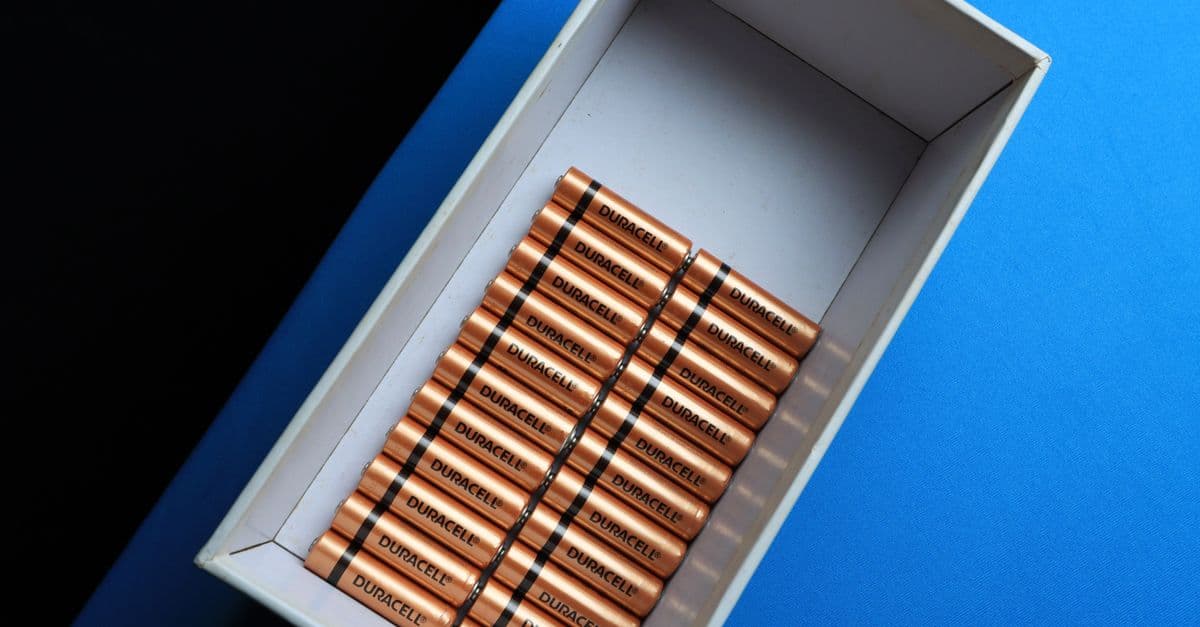
Photo: Ramesh Kambattan / Pexels
Solar panels stop producing at sunset, and wind turbines idle when the air is still, yet the grid has to match supply to demand every second. Grid-scale battery storage closes part of that gap by soaking up cheap midday power and returning it in the evening. The International Energy Agency (IEA) reported that battery storage capacity added worldwide more than doubled in 2023, to 42 gigawatts (GW). This article explains how the systems work, what they cost, what Australia and California learned from early projects, and why days-long storage remains unsolved.
Key takeaways
- Batteries shift power by hours. Most grid batteries are designed for one to four hours at full power. Lithium-ion is described as well suited to storage under eight hours.
- Costs fell about 90%. The IEA says lithium-ion battery prices fell from about USD 1,400 per kilowatt-hour (kWh) in 2010 to under USD 140 per kWh in 2023.
- Deployment is accelerating. The IEA counted about 85 GW of battery storage in use in the power sector at the end of 2023, and US utility-scale capacity grew 66% in 2024, per the US Energy Information Administration (EIA).
- Batteries do more than store energy. They respond to grid frequency problems in tens to hundreds of milliseconds, far faster than a gas turbine.
- Long-duration storage is the open problem. Covering days or weeks of low wind and sun needs other technologies, and several are still early.
Why variable power needs storage
A power grid is a balancing act with no buffer. If generation exceeds demand even briefly, frequency rises, and if demand exceeds generation, it falls. Equipment is designed to run within a narrow band around 50 or 60 hertz, so operators have to correct imbalances within seconds.
Fossil and nuclear plants can be told when to produce. Solar and wind produce when the sun shines and the wind blows, which is why their output is called variable. The mismatch shows up most clearly in California, where the grid operator coined the term "duck curve" in 2012 for the shape of the electricity demand left after solar has done its work. Wikipedia's summary of CAISO data notes that in 2020 the afternoon "neck" of the curve required a ramp of 10 to 17 GW over three hours, which flexible generation had to supply.
Think of the grid as a bathtub with the drain always open and the tap controlled by the weather. Storage is a second tank beside the tub: you fill it when the tap runs hot and use it when the tap runs dry. A bigger tank covers a longer dry spell, which is the essential difference between a battery that shifts solar by four hours and one that covers a week of still winter air.
How much storage is enough?
The answer depends on how much of the grid runs on variable sources. The Wikipedia summary of grid energy storage reports that at about 80% variable renewables, medium-duration storage of 4 to 16 hours becomes necessary, and above 90%, long-duration storage is required. These are modeling results rather than laws of nature, and different regions will land in different places depending on their weather, demand, and transmission.
The IEA's 2024 report on batteries and energy security argues that tripling renewable capacity by 2030 requires global storage capacity to grow about sixfold. In its Net Zero Emissions scenario, global energy storage reaches about 1,500 GW by 2030, and batteries make up about 90% of that growth, rising about 14-fold to roughly 1,200 GW.
How a grid battery works
A grid battery is a stack of familiar parts at an unfamiliar scale.
- Cells store the energy chemically. The dominant grid chemistry today is lithium iron phosphate (LFP), a close cousin of the cells in electric vehicles and laptops.
- Modules and racks group cells together with thermal management, so the system holds a safe temperature.
- A battery management system (BMS) is software and sensors that watch every cell's voltage and temperature, balance their charge, and shut things down if something drifts out of range.
- Inverters convert the direct current (DC) that a battery stores into the alternating current (AC) the grid uses, and convert it back when charging.
- Grid connection equipment such as transformers and switchgear ties the system into the transmission or distribution network.
The cell chemistry is not the only distinction that matters. Engineers describe a system by two numbers: power (megawatts, MW), which is how fast it can deliver energy, and energy (megawatt-hours, MWh), which is how much it holds. A 100 MW / 400 MWh system can deliver 100 MW for four hours. Duration is simply energy divided by power, and it determines what jobs a battery can do.
One analogy helps with the difference. Power is the width of the faucet, and energy is the size of the tank. A wide faucet on a small tank empties fast, which is ideal for correcting frequency but useless for powering a city overnight.
A worked example of one day
The numbers below are hypothetical, chosen to show the logic rather than any real market. Suppose a 100 MW / 400 MWh battery sits next to a solar-heavy grid. At midday, wholesale power sells for USD 20 per MWh because solar is abundant. At 7 p.m. it sells for USD 80 per MWh because the sun is gone and demand is high.
The battery charges with 400 MWh at midday, spending USD 8,000. Round-trip losses mean it cannot return all of that. If the system returns 85% of the energy (an assumed figure), it discharges 340 MWh in the evening and earns USD 27,200. The gross margin for the day is about USD 19,200, before operating costs, degradation, and the cost of capital.
Two things follow. First, the business depends on the price spread, not the price level, which is why solar-rich grids with deep midday price dips are the best markets. Second, every additional battery narrows the spread it feeds on, because charging at midday lifts the midday price and discharging at night lowers the evening price. Early batteries earn the most, and later ones have to find other income, such as the frequency and reserve services described below.
How many batteries are on the grid, and how fast that grew
Counts depend on the source and on what is included, so the table below keeps each number tied to who reported it.
| Measure | Figure | Source |
|---|---|---|
| Battery storage added worldwide, 2023 | 42 GW, more than double the previous year | IEA, April 2024 |
| Battery storage in use in the power sector, 2023 | About 85 GW | IEA, April 2024 |
| US utility-scale battery capacity, end of 2024 | More than 26 GW, up 66% in the year | EIA |
| US additions in 2024 | 10.4 GW, second only to solar | EIA |
| US additions planned for 2025 | 19.6 GW | EIA |
| China, end of 2024 | 62 GW / 141 GWh | Wikipedia summary of Chinese data |
| Global grid battery capacity, 2025 | 267 GW / 610 GWh, of which 104 GW / 257 GWh added in 2025 | Volta Foundation, as cited on Wikipedia |
| Pumped hydro, 2023 | 181 GW | Wikipedia summary of grid energy storage |
Sources: IEA; EIA; Wikipedia: Battery storage power station; Wikipedia: Grid energy storage.
Two points stand out. First, the IEA says China accounts for over half of all batteries in use in the energy sector, and almost 85% of global battery cell production capacity, a figure that covers all batteries, not only storage. That concentration matters for supply chains. Second, the table shows why power and energy are not interchangeable. Pumped hydro, the oldest form of grid storage, had 181 GW in 2023, and Wikipedia's battery article cites the International Hydropower Association for about 200 GW and 9,000 GWh of pumped storage worldwide in 2025, against 267 GW and 610 GWh for batteries. Batteries now match pumped hydro in power but hold far less energy, because a reservoir is a very large tank.
Check dates and definitions whenever you see a storage statistic. Sources differ on whether they count utility-scale systems only, include behind-the-meter home batteries and mini-grids, or report power (GW) or energy (GWh), and the figures above are not directly comparable row to row.
How fast costs fell
The IEA reports that lithium-ion battery prices fell from about USD 1,400 per kWh in 2010 to under USD 140 per kWh in 2023, a decline of about 90%. It projects global average lithium-ion costs to fall a further 40% from 2023 to 2030, and utility-scale battery project upfront costs to fall 40% by 2030 in its Stated Policies Scenario.
| Item | Figure | Source |
|---|---|---|
| Lithium-ion battery price, 2010 | About USD 1,400/kWh | IEA |
| Lithium-ion battery price, 2023 | Under USD 140/kWh | IEA |
| Average world storage system price, 2025 | About USD 120/kWh | Volta Foundation, as cited on Wikipedia |
| Installation cost in Europe, 2024 | EUR 300 to 400/kWh | Wikipedia, citing a European source |
| Levelized cost of storage, 2020 | USD 150/MWh | Wikipedia summary of cost studies |
| Levelized cost of storage, 2023 | USD 117/MWh | Wikipedia summary of cost studies |
| Cost halving time, 2014 to 2024 | 4.1 years | Wikipedia summary of cost studies |
A few cautions apply. Battery price is not the same as the price of a finished system, which includes inverters, land, grid connection, installation, and profit, so the numbers in the table measure different things. The levelized cost of storage (LCOS) spreads a system's lifetime cost over the energy it delivers, which lets you compare a battery that cycles daily with one that cycles rarely. And installed costs vary widely by country, so a single global average hides a lot.
The cost drop has a cause. Electric vehicles created a mass market for cells, and manufacturers learned by building more. Wikipedia reports that lithium-ion cell prices fell 99% since 1991 and about 19% for each doubling of cumulative production. Grid storage benefited without having to fund most of that learning, which is a recurring pattern: a technology developed for one market makes a second market affordable. The same story runs through how lithium-ion batteries work and the history told in the lithium-ion battery article.
What Hornsdale showed in South Australia
The project that changed the conversation was the Hornsdale Power Reserve, built by Tesla near Jamestown, South Australia. It connected to the grid on December 1, 2017, with a rating of 100 MW / 129 MWh, then the largest lithium-ion battery in the world. A 2020 expansion raised it to 150 MW / 193.5 MWh.
What mattered was not its energy but its speed. On December 14, 2017, Loy Yang Power Station unit A3 tripped, losing 560 MW. Frequency fell to 49.8 hertz within about 20 seconds, and the battery injected power while the next generator was still ramping.
| Hornsdale fact | Figure |
|---|---|
| Original rating | 100 MW / 129 MWh, December 2017 |
| Expanded rating | 150 MW / 193.5 MWh, September 2020 |
| Response time | About 100 milliseconds, versus 6,000 milliseconds under earlier contingency agreements |
| Contingency frequency control cost | Fell about 91%, from USD 470/MWh to USD 40/MWh |
| Estimated grid cost savings, 2019 | About USD 116 million |
| Share of South Australia's frequency control services after six months | 55% |
Source: Wikipedia: Hornsdale Power Reserve, summarizing grid-operator data and an Aurecon study. The savings figure is a model-based estimate, not a metered outcome.
The lesson is that batteries earn their keep by doing jobs gas turbines do poorly. The Wikipedia entry notes that frequency control services were the project's main revenue source, with about 70 MW held for ten minutes under a government contract and 30 MW for three hours used for energy arbitrage (buying power when it is cheap and selling when it is dear).
California and the duck curve
California is the clearest case of batteries reshaping a daily load pattern. Wikipedia reports that about 3,300 MW of grid batteries had been added since the August 2020 rolling blackouts, as of a September 2022 news report, and that capacity doubled about every 1.2 years from 2014 to 2024. As of 2022, up to 6 GWh per day was being shifted from low-price to high-price periods, and by 2024 large battery systems had substantially reduced the curve's severity and lessened reliance on gas peaker plants.
The mechanism is straightforward. Midday solar produces more than California needs, so wholesale prices fall and some output is curtailed. Batteries charge during those hours. As the sun sets and demand climbs, they discharge, reducing how much gas generation has to ramp up. The price gap between noon and evening is what pays for the batteries. Our explainer on how solar panels work covers the generation side of the curve.
Across the United States, the EIA reports that utility-scale battery capacity exceeded 26 GW at the end of 2024, about 2% of the 1,230 GW of total utility-scale generating capacity. That is small by share, but battery additions were the second-largest category of new capacity in 2024 after solar.
Chemistries compared
Different storage technologies trade off cost, duration, efficiency, and safety. The table keeps to figures reported in the sources reviewed for this article.
| Technology | Typical duration | Round-trip efficiency | Notes |
|---|---|---|---|
| Lithium iron phosphate (LFP) | Up to about 8 hours | Not reported in sources reviewed | About 80% of new battery storage in 2023 (IEA); 2,000 to 6,000 cycles |
| Lithium nickel manganese cobalt (NMC) | Up to about 8 hours | Not reported in sources reviewed | Higher energy density, more used in vehicles; about 3,500 cycles |
| Sodium-ion | Short duration (a 2-hour grid battery installed in China in 2023) | Not reported in sources reviewed | CATL's Naxtra cell rated at 175 Wh/kg; mass production planned for December 2025 |
| Vanadium flow | 4 to 8 hours, up to multi-day | 60 to 75% | Energy capacity set by tank size |
| Iron-air | Multi-day, about 100 hours | Not reported in sources reviewed | Form Energy; developer claims under one-tenth the cost of lithium-ion |
| Pumped hydro | Many hours | 75 to 85% | Largest form of grid storage by capacity |
| Compressed air (advanced) | Medium to long | 60 to 80% | Uses underground caverns or tanks |
| Green hydrogen | Long, seasonal | About 41% | Large losses in conversion |
Sources: Wikipedia: Grid energy storage; Wikipedia: Sodium-ion battery; Wikipedia: Form Energy; IEA.
Why LFP took over
The IEA reports that LFP reached about 80% of new battery storage in 2023 and about 40% of EV sales. LFP gives up some energy density compared with nickel-based cells, which hardly matters on a fixed site where weight and volume are cheap. In return it uses no cobalt or nickel, and Wikipedia describes it as a major chemistry for large storage because of its safety and longer lifetime. For the same reason, a battery tuned for an electric car is not necessarily the right battery for a substation.
Sodium-ion and its trade-offs
Sodium is abundant, especially in seawater, and many sodium-ion designs avoid cobalt, copper, and nickel. The IEA says sodium-ion production costs can be 30% lower than LFP. At the same time, the Wikipedia summary reports that by 2025 sodium-ion packs were still about 30% more expensive than LFP because of limited scale, which shows how a lower potential cost does not turn into a lower price until factories exist. BYD invested about USD 1.4 billion in 2023 in a Xuzhou sodium-ion plant planned for 30 GWh a year, and CATL launched its Naxtra sodium-ion cell in April 2025.
Sodium-ion's lower energy density, typically 75 to 175 watt-hours per kilogram versus 175 to 200 for LFP in the Wikipedia comparison, is not a problem for stationary use, where weight is irrelevant. Whether it undercuts LFP on price at scale is an open question.
Iron-air and the long-duration gap
Form Energy's iron-air battery works by reversible rusting: discharging turns iron into rust, and charging turns it back into iron. It targets about 100 hours of storage, and the company claims less than one-tenth the cost of lithium-ion, which is a developer claim rather than an independent measurement. Per Wikipedia, Xcel Energy announced two 10 MW systems in January 2023, each able to provide 10 MW for up to 100 hours (1 GWh), and Google has a supply agreement for a Minnesota data center designed to deliver 300 MW for 100 hours (30 GWh).
Iron-air illustrates the trade: slow, cheap storage with lower efficiency suits rare events such as a multi-day lull. It is not meant to replace lithium-ion for daily cycling. For the rest of the long-duration menu, including hydrogen, see how green hydrogen is made.
What batteries do besides shift energy
Storing midday solar for the evening is the headline use, but it is not the only revenue source.
- Frequency regulation. Wikipedia notes batteries can go from standby to full power in under a second, and response times can be as short as 10 milliseconds. Hornsdale's 100 millisecond response compares with 6,000 milliseconds under earlier agreements.
- Operating reserve. Capacity held back to cover a plant failure, which gas turbines have traditionally provided by running part-loaded.
- Peak shaving. Discharging during the few hours of highest demand to avoid starting expensive generators.
- Transmission support. Easing congestion on lines that are full at certain hours.
- Pairing with renewables. Placing a battery at a solar or wind site so the plant can sell steady output.
These stacked services help the finances. A battery that earns from several markets can pay for itself with smaller price spreads than energy arbitrage alone would require. The details of how those markets work vary by country and are changing quickly, so a business case that works in South Australia may not apply elsewhere.
What is still unsolved
Days and weeks of storage
Batteries sized for four hours cannot ride through a week of low wind. The US Department of Energy launched its Long Duration Storage Shot on July 14, 2021, with a goal to cut the cost of grid-scale long-duration storage by 90% within the decade, defining long duration as systems that store energy for more than 10 hours at a time. Our companion piece on why grid storage is hard goes deeper into the economics of that gap.
Materials and manufacturing
Scaling to the IEA's scenarios requires large increases in cell production, and the IEA notes that China holds almost 85% of global battery cell manufacturing capacity. Supply chains for lithium, graphite, and other inputs have to grow in step, and recycling will matter more as early systems age. Sodium-ion and iron-based chemistries ease the pressure on some materials, since many sodium-ion designs avoid cobalt, copper, and nickel. The broader materials story is covered in the rare earth metals article under Related Reading below.
Battery aging
Cells lose capacity with every cycle and every year. A grid battery cycling daily will run through thousands of cycles in its life, which is why cycle life matters as much as cost. See why lithium-ion batteries age for the mechanisms.
Fire safety
Grid battery fires are uncommon but serious when they happen. On January 16, 2025, a fire began in the Phase 1 building (300 MW / 1,200 MWh) of the Moss Landing facility in California. Authorities evacuated about 1,200 residents, and the fire flared again in February. According to Wikipedia, about 80% of that battery section burned, the suppression system failed to put it out, and the cause remained undetermined. California adopted new fire safety standards for battery storage facilities, and some local authorities restricted projects.
The wider record is less alarming than a single event suggests. The Wikipedia summary cites an EPRI analysis that battery energy storage incidents have stayed at about 10 to 20 a year even as the installed fleet has grown, mostly in the first two or three years of operation, so the failure rate has decreased. Earlier incidents include a Tesla Megapack fire in Geelong, Australia, in July 2021, and module fires at 23 battery farms in South Korea between 2017 and 2019. The lesson is that safe design, spacing, monitoring, and emergency planning matter, and that the public will judge the technology by its worst events.
Policy and economics
Governments have subsidized storage heavily. In the United States, federal tax credits for stand-alone storage since the 2022 Inflation Reduction Act improved project economics, and the rules have been revised since, so anyone evaluating a project should check current law. Similar support exists in China, the EU, and elsewhere.
The IEA's concern is the pace needed to meet climate goals: it says required growth to 2030 averages about 25% per year, and in a "Low Battery Case," about 500 GW of the solar PV needed for the tripling goal would be at risk, because solar without storage hits limits as its share rises. Governments and utilities also face an interaction with electric vehicles, which can compete with grid storage for cells but could eventually supply flexibility; see our article on electric vehicles and the power grid. On the generation side, the countries that run on the most renewable electricity, ranked under Related Reading below, are the ones where storage and flexibility questions arise first.
Common misconceptions
"Batteries just move emissions around." Manufacturing a battery has a carbon cost, but a battery paired with renewable generation displaces fossil generation over thousands of cycles. The net effect depends on what the battery displaces and what electricity charges it. Lifecycle studies are the right tool, and results vary by grid.
"We need a new chemistry before this works." Lithium-ion, mostly LFP, is already being deployed at scale. New chemistries matter for cost reduction, supply security, and long duration, not for proving the concept.
"Storage is backup power." Most grid batteries cycle daily or even more often. They are an everyday operating tool, not an emergency reserve.
"Pumped hydro made batteries unnecessary." Pumped hydro remains the largest form of grid storage, at 181 GW in 2023, but it needs particular geography, with suitable terrain and water. Batteries are modular and can be sited more flexibly. Our ranking of countries with the most hydropower shows where the water assets sit.
"Battery storage is just for the rich world." The IEA notes that solar PV paired with four-hour batteries is already competitive with new coal in India, and that mini-grid electricity costs with solar and batteries roughly halve by 2030.
Frequently asked questions
Q: How long can a grid battery supply power? A: Most grid batteries are designed for one to four hours at full rated power, and lithium-ion is described as well suited to under eight hours. Recent large projects reach 6.5 to 7 hours. Longer durations need other technologies, such as flow batteries or iron-air, which targets about 100 hours.
Q: Are home batteries useful? A: They provide backup during outages, and the economics of daily savings depend on local electricity prices and net-metering rules. The IEA counts behind-the-meter batteries in its capacity totals, but home systems face different economics from utility projects.
Q: Can renewables run a grid alone? A: Modeling summarized in the grid storage literature suggests that around 80% variable renewables needs 4 to 16 hours of storage, and beyond 90% needs long-duration storage. Real grids also use transmission, demand response, and other generation to bridge gaps, so the answer depends on the region.
Q: Are grid batteries safe? A: Incidents are rare relative to the number of installations but serious when they occur, as the January 2025 Moss Landing fire showed. EPRI data summarized on Wikipedia show about 10 to 20 incidents a year with a falling failure rate. LFP is favored in part for its safety profile.
Q: Will lithium run out? A: That depends on how fast mining, refining, and cell manufacturing scale. The IEA flags concentration as a supply-chain risk, noting that China holds almost 85% of global battery cell production capacity. Sodium-ion and iron-based chemistries reduce dependence on lithium, cobalt, and nickel for stationary storage.
Q: What did Hornsdale prove? A: That a battery can respond to a grid emergency in about 100 milliseconds and lower the cost of frequency control. Its 2017 response to the Loy Yang outage and the later cost reductions in South Australia are the standard case study.
Q: How do batteries compare with nuclear? A: They do different jobs. Nuclear plants provide steady output, while batteries provide flexibility and fast response. Low-carbon grids can include both, and the mix depends on cost and local resources.
The takeaway
Grid-scale batteries have moved from a pilot technology to routine infrastructure in a decade, helped by a roughly 90% fall in lithium-ion prices. They do two things well: shift energy across a few hours and respond to grid disturbances faster than any turbine. Hornsdale showed the second, and California's duck curve showed the first. What they have not yet done is cover a week of calm, overcast weather, and that is where the next decade of research, including iron-air, flow batteries, and hydrogen, will be tested. A grid that is mostly wind and solar will need batteries for the hours and something else for the days.
Sources
- International Energy Agency, "Batteries and Secure Energy Transitions" (World Energy Outlook Special Report, April 25, 2024).
- US Energy Information Administration, "U.S. battery capacity increased 66% in 2024."
- US Department of Energy, "Secretary Granholm Announces New Goal to Cut Costs of Long-Duration Energy Storage 90% Within the Decade" (July 14, 2021).
- Wikipedia summaries used for secondary figures: Battery storage power station, Hornsdale Power Reserve, Moss Landing Power Plant, Duck curve, Energy in California.
Related Reading
- Why Coffee Could Disappear — The Science of Climate Change and Your Morning Cup
- Countries That Run on the Most Renewable Energy (2025)
- What Is Green Hydrogen — and Could It Replace Fossil Fuels?
- How Do Wind Turbines Work — and Can They Power the World?
- Why Rare Earth Metals Are So Critical — The Hidden Cost of Clean Energy
Follow new articles
Add SciHub101 to your feed reader to see new science and technology stories.
About the Author
SciHub101 is an independent science and technology publication founded and edited by Buğra Sözeri, a software engineer and app developer based in Türkiye. AI tools assist with drafting and research. Source documentation in the existing archive is uneven, and articles are being reviewed and corrected. The Editorial Team byline identifies editorial responsibility; it does not certify specialist or independent human review. Where we compare products, anything built by our own team is labelled as such — see the editorial guidelines and About page for how corrections and disclosures work.
Related Articles
How Do Wind Turbines Work — and Can They Power the World?
A modern wind turbine is a 200-metre engineering marvel that converts moving air into electricity. Here's how they work, where they fit in the energy transition, and the realistic limits.

The Plastic Pollution Crisis Explained
We produce 400 million tonnes of plastic per year. Most ends up in landfills, in the ocean, or as microplastics in our food. Here's the science of plastic pollution and what's actually being done.
Renewable Energy Explained — Solar, Wind, and Beyond
How solar panels and wind turbines work, why their costs fell about 90%, how fast they are spreading, and what storage and grids must still solve.
Countries That Produce the Most Solar Power (Ranked)
China installed 278 GW of new solar capacity in 2024 alone — more than the entire installed base of the United States. With 888 GW of total solar PV capacity, China now hosts nearly half of all solar power on Earth. This article ranks the top solar nations by installed capacity and explains how the global solar revolution became so geographically concentrated.
Countries with the Most Wind Power Capacity (2025 Ranked)
China has about 641 GW of installed wind capacity, nearly half of the world's roughly 1,291 GW. The United States, Germany, India, and Brazil follow. Denmark ranks 17th by capacity but gets about 59% of its electricity from wind. Here is the 2025 ranking, what it measures, and what it leaves out.
What Is Green Hydrogen — and Could It Replace Fossil Fuels?
Green hydrogen is made by splitting water with renewable electricity, so burning it releases only water. It is promising for industries that cannot easily electrify, but it is costly and wasteful elsewhere.