How EV Batteries Work: Lithium-Ion Explained
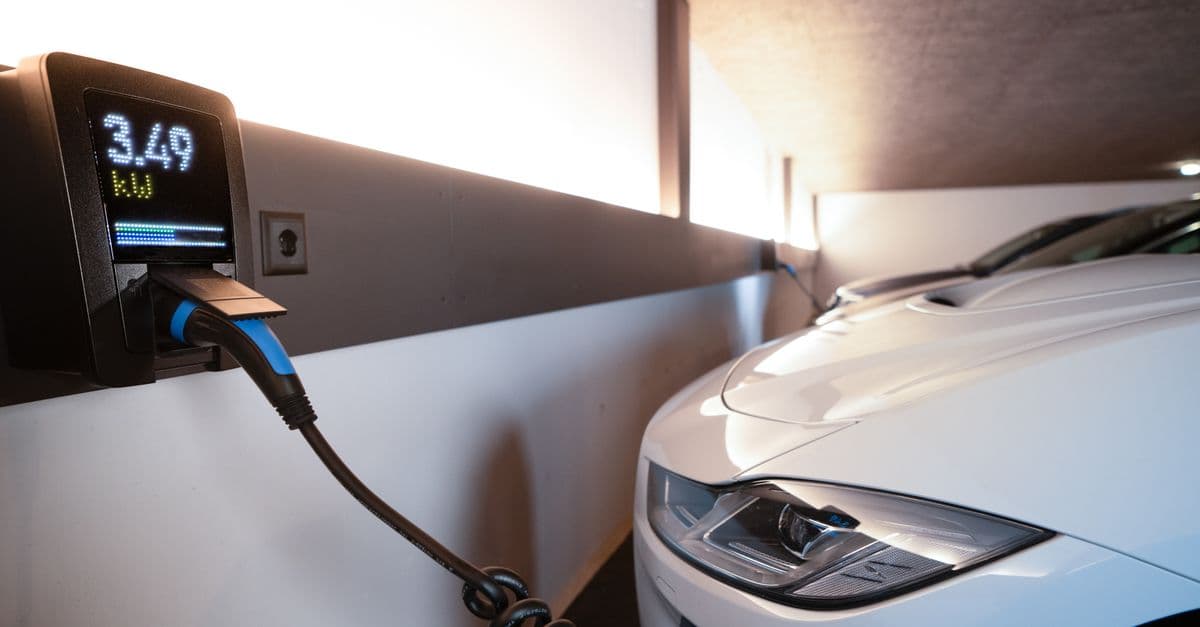
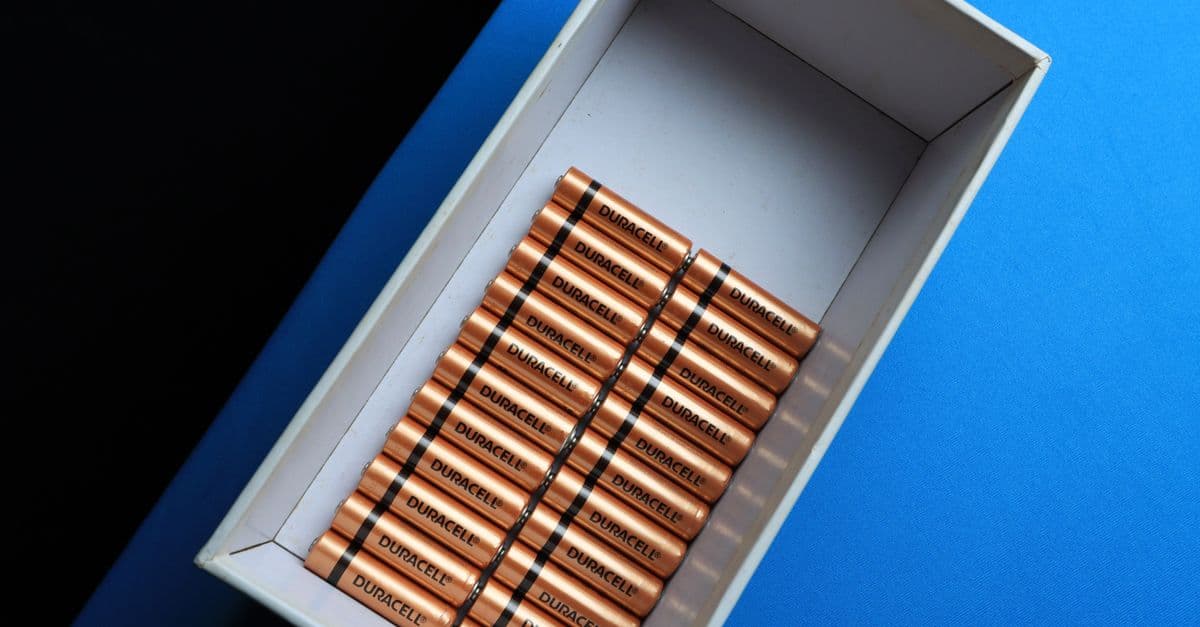
Photo: smart-me AG / Pexels
The battery in an electric car is one of its most expensive parts, and it decides how far the car goes, how fast it charges, and how long it lasts. Inside, EV batteries are not exotic. They rest on the same lithium-ion principle as phone and laptop cells, multiplied many times over and wrapped in a layer of cooling, wiring, and software. This article follows the energy from one cell to a full pack, then looks at charging, aging, and the chemistries that may replace today's.
Why lithium-ion beat the older chemistries
The lead-acid battery, invented by Gaston Planté in 1859, was the first rechargeable battery and is still the one under the hood of many cars. Its weakness is weight. Wikipedia's summary lists its specific energy at 35 to 40 watt-hours per kilogram, and its lifespan at fewer than 500 deep cycles. Lithium-ion cells, first sold commercially by Sony in 1991 and honored with the 2019 Nobel Prize in Chemistry (Whittingham, Goodenough, and Yoshino), store roughly 160 to 300 watt-hours per kilogram in standard cells according to Wikipedia's summary (other sections of that page give a lower range, so treat the figure as approximate), with up to 450 in specialty designs.
A quick calculation shows why that matters for a car. The average EV battery in 2023 held about 80 kilowatt-hours (a range of 21 to 123), according to Wikipedia's summary of industry data. Storing 80 kilowatt-hours at 35 to 40 watt-hours per kilogram would take 2,000 to 2,300 kilograms of lead-acid cells before adding any wiring or housing. At 150 watt-hours per kilogram, an assumption in the range of lithium-ion packs, the same energy weighs about 530 kilograms. Typical passenger-car packs weigh 300 to 1,000 kilograms.
| Property | Lead-acid | Lithium-ion |
|---|---|---|
| Specific energy | 35 to 40 Wh/kg | 160 to 300 Wh/kg standard, up to 450 in specialty cells |
| Cycle life | Fewer than 500 deep cycles | 400 to 1,200 cycles typical, 2,500 or more for LFP cells |
| First commercial use | 1859 invention | 1991, Sony |
| Main automotive role today | Starting and auxiliary loads | Traction battery |
Sources: Wikipedia, "Lead-acid battery," "Lithium-ion battery," and "Lithium iron phosphate battery"; U.S. Department of Energy, Alternative Fuels Data Center.
Cost matters as much as weight. Wikipedia reports that lithium-ion costs fell by about 99 percent between 1991 and 2024, and that global demand passed 1 terawatt-hour per year in late 2024. BloombergNEF's 2023 survey put the average pack price at $139 per kilowatt-hour, with EV packs averaging $128 per kilowatt-hour. The International Energy Agency (IEA) reported that in 2024 battery pack prices fell by about 30 percent in China and by 10 to 15 percent in Europe and the United States, as global electric car sales exceeded 17 million, over 20 percent of all car sales.
What happens inside one cell
A lithium-ion cell has four working parts: an anode, a cathode, an electrolyte, and a separator. A good mental image is a rocking chair, or better, a hotel with two wings. The lithium ions are the guests, and they move back and forth between the wings, the anode and the cathode, through a corridor, the electrolyte. They never stay in the corridor. The electrons, meanwhile, are not allowed through the corridor at all, so they have to take the outside route through the motor. That detour is the electric current.
During discharge, lithium ions leave the graphite anode, cross the electrolyte, and settle into the cathode. Electrons travel the same direction through the external circuit and drive the motor. During charging, the charger pushes everything back the other way. Nothing is consumed in the way that a flashlight battery is consumed. If the cell were perfect, it could be cycled indefinitely, and the reason real cells age is the topic of a later section. For a deeper walk through the underlying chemistry, see how lithium-ion batteries work.
The anode: a graphite shelf
In most EV cells the anode is graphite, a layered form of carbon. Lithium slips between the layers, a process called intercalation. Fully loaded, graphite holds one lithium atom for every six carbon atoms (LiC₆), a theoretical capacity of about 372 milliamp-hours per gram. Anode makers mix silicon into graphite to raise capacity, because silicon can host far more lithium per gram, but silicon swells strongly as it fills, and the swelling cracks the structure over many cycles. Managing that expansion is one of the main engineering problems for higher-energy cells.
The first charge also builds a thin protective film on the graphite, the solid electrolyte interphase (SEI). Ethylene carbonate in the electrolyte helps form it. A stable SEI is useful, because it keeps the electrolyte from continuing to react with the anode. A thick one is a problem, because it consumes lithium for good.
The cathode: where the chemistry choices live
The cathode is a lithium metal oxide or phosphate whose crystal structure acts as the second shelf. Its composition sets most of what a buyer cares about: energy density, safety margin, cost, and cycle life. The next section compares the three main families.
The electrolyte and the separator
Almost all commercial cells use a lithium salt, lithium hexafluorophosphate (LiPF₆), dissolved in a mix of organic carbonates. It conducts ions well and is stable enough to use, but it is moisture sensitive. Even traces of water, at concentrations as low as 10 parts per million, start catalyzing degradation products in the cell, and water also reacts with the salt to form hydrofluoric acid, which is why cells are made in very dry rooms. The solvents are flammable, and that is the reason battery safety gets so much engineering attention.
The separator is a thin porous membrane that keeps the anode and cathode from touching while letting ions through. It is the only barrier against an internal short circuit. Lithium dendrites, spiky metal growths that can form during harsh charging, can pierce it, and some separators are built to shut down their pores when the cell overheats.
Choosing a cathode: NMC, LFP, and NCA
Three cathode families dominate EV batteries. NMC is lithium nickel manganese cobalt oxide, NCA is lithium nickel cobalt aluminum oxide, and LFP is lithium iron phosphate. Each makes a different trade.
| NMC | LFP | NCA | |
|---|---|---|---|
| Nominal voltage per cell | 3.7 V, charged to 4.2 V | 3.2 V, charged to about 3.6 V | 3.6 to 3.7 V |
| Cell energy | Best cells exceed 300 Wh/kg | 95 to 172 Wh/kg typical; 180 to 205 Wh/kg in newer cells | Nickel-rich, high capacity |
| Cycle life | About 1,000 to 2,300 cycles | 2,500 to over 9,000, depending on conditions | Higher nickel raises the risk of faster aging |
| Contains cobalt | Yes | No | Yes |
| Typical use | Widely used in cars from many makers | Standard-range cars, buses, stationary storage | Tesla cells from Panasonic (Model 3 and Model X per Wikipedia) |
Sources: Wikipedia, "Lithium iron phosphate battery," "Lithium-ion battery," and "Lithium nickel cobalt aluminium oxides."
A few points are worth spelling out.
LFP has gone from niche to mainstream. Tesla used it in standard-range Model 3 and Model Y cars built after October 2021. Wikipedia's summary of market-tracker figures for 2025 puts LFP's share of passenger and light-vehicle battery capacity at 79 percent in China, 13 percent in Europe, and 5 percent in North America. The reasons are cost and life. A 2020 U.S. Department of Energy report found LFP storage cells about 6 percent cheaper per kilowatt-hour than NMC, with about 67 percent more cycles, and BloombergNEF found LFP cells in 2023 were 32 percent cheaper than NMC cells, at an average of $95 per kilowatt-hour.
The price of LFP is lower energy per kilogram. Wikipedia lists CATL's LFP cell at a claimed 205 watt-hours per kilogram (2024) and BYD's at 150, against more than 300 for the best NMC cells. For a given range, an LFP pack is heavier or larger.
NCA pushes energy and thermal risk together. The NCA chemistry used in Tesla's cells is nickel-rich, roughly LiNi₀.₈₄Co₀.₁₂Al₀.₀₄O₂. More nickel raises voltage and capacity but also raises the risk of thermal breakdown and premature aging, and aluminum is added to improve stability at the cost of some capacity.
None of these is simply better. They are answers to different questions: how far, how often, and how cheaply.
From cells to pack
One cell is about 3 to 4 volts and stores a few watt-hours. A car needs several hundred volts and tens of kilowatt-hours, so the pack has to join thousands of cells (or fewer, bigger ones) in series and parallel. Series connections add voltage; parallel connections add capacity.
A worked example
Take an illustrative cylindrical cell of 5 amp-hours at 3.6 volts, which is roughly the size and capacity class of a 21700 cell. It stores 5 × 3.6 = 18 watt-hours. An 80 kilowatt-hour pack needs 80,000 ÷ 18, about 4,400 cells. For a 400-volt system, 400 ÷ 3.6 gives about 111 cells in series. The remaining 4,400 ÷ 111 comes to about 40 in parallel. That is the arithmetic behind packs with several thousand cells, though prismatic and pouch designs reach the same energy with far fewer, larger cells.
Formats: cylindrical, prismatic, pouch
Cells come in three physical formats: cylindrical, prismatic (rectangular), and pouch. Cylindrical cells are named by their dimensions in millimeters. A 2170 cell is 21 millimeters across and 70 long, and a 4680 is 46 by 80. A quick volume calculation shows that a 4680 has about 5.5 times the volume of a 2170, so each cell can hold several times the energy. Fewer, larger cells mean fewer connections and a simpler pack.
Modules and the pack
Cells traditionally group into modules of a dozen to a few dozen, which are easier to build, cool, and replace. Some designs skip the module layer and place cells directly in the pack, a layout called cell-to-pack, to save weight and volume. The finished pack adds the housing, cooling, wiring, contactors, and electronics, and it often forms part of the vehicle floor, which lowers the center of gravity.
The pack also carries safety hardware: a main fuse that limits current in a short circuit, relays that are normally open so the high-voltage circuit stays dead unless commanded closed, and a service plug that splits the pack into two electrically isolated halves for maintenance (Wikipedia, "Electric vehicle battery").
Thermal management
Cells are happiest in a moderate temperature band. Wikipedia lists the best charging range as roughly 5 to 45 °C, with reduced current at 0 to 5 °C, and notes that electrolyte decomposition begins around 70 °C. Packs therefore need both cooling and warming. Many use liquid coolant plates between cell groups, and the same loop can warm the pack on a cold morning. Heating the battery before fast charging is not a luxury, because cold cells are prone to lithium plating, which is the permanent deposition of metallic lithium on the anode surface rather than inside it.
The battery management system
The battery management system (BMS) is the pack's supervisor. It reads voltage and temperature from every cell group, estimates how much charge remains, controls the main relays, and talks to the rest of the car. A few jobs deserve explanation:
- State of charge. The fuel gauge. The BMS cannot measure the charge directly, so it combines voltage, current, and temperature into an estimate.
- State of health. How much capacity the pack has lost compared with when it was new. Makers commonly define end of life as 80 percent of rated capacity.
- Cell balancing. Cells are never identical, and in a series string the weakest one limits the rest. The BMS bleeds or shuffles charge so that no cell is pushed past its limits while others lag.
- Protection. It cuts or limits power for overvoltage, overcurrent, or temperature extremes. The upper limit matters in particular, because charging above 4.2 volts per cell in an NMC cell can start lithium plating.
You can think of it as a conductor who watches each section of the orchestra and slows the whole piece when one player flags.
Charging, in kilowatts and hours
Charging is described in levels. Power times time equals energy, so a rough charging time is the energy to add divided by the power.
| Level | Supply | Typical power | Illustrative time for 60 kWh |
|---|---|---|---|
| Level 1 | Standard 120 V outlet (North America) | About 1.5 kW | About 40 hours |
| Level 2 | 240 V (230 V in Europe) | About 7 to 14 kW | About 4 to 9 hours |
| DC fast charging | Roadside or highway station | 150 kW or more at the high end | About 25 to 30 minutes for 10 to 80 percent |
Sources: Wikipedia, "Electric vehicle battery"; fueleconomy.gov; arithmetic (60 kWh ÷ power) for the time column.
The arithmetic: 60 kilowatt-hours at 1.5 kilowatts takes about 40 hours, and at 7 kilowatts about 8.6 hours, ignoring conversion losses. Going from 10 to 80 percent adds 42 kilowatt-hours, which takes roughly 25 minutes at an average of 100 kilowatts. The U.S. Department of Energy's fueleconomy.gov says a full recharge can take 3 to 12 hours, while a fast charge to 80 percent takes about half an hour. Wikipedia's summary adds that a charger of 150 kilowatts or more can add up to about 300 kilometers of range in a typical 30-minute stop.
C-rate: charging speed relative to size
Engineers measure charging speed against the battery's own size, a ratio called the C-rate. A 1C rate would fill or empty the pack in one hour, which for a 60 kilowatt-hour pack means 60 kilowatts. Charging that pack at 120 kilowatts is 2C. High C-rates push more current through the same material and generate more heat, which is why stations do not hold their peak power for long.
Why it slows down near the top
Fast chargers taper their power as the battery fills. Part of the reason is protection: as the cells approach their upper voltage limit, about 4.2 volts for NMC, the BMS must reduce current, because going above that voltage can start lithium plating. Heat and temperature limits also play a role, which is why a station's headline power applies only to part of a session.
The IEA reports that public chargers doubled over two years to 2024 and that ultra-fast chargers (150 kilowatts and above) grew about 50 percent in 2024. For the national picture, see which countries have the most electric vehicles, and for the power system on the other side of the plug, electric vehicles and the grid.
Cold, heat, and range
Range is not a fixed number. The American Automobile Association (AAA), working with the Automotive Club of Southern California, tested five EVs with an EPA-rated range of at least 100 miles on a dynamometer in a climate-controlled cell. At 20 °F with the cabin heater running, average range fell by 41 percent. At 95 °F with the air conditioner on, it fell by 17 percent. These were older, shorter-range cars, so the figures are best read as an illustration of the size of the effect rather than a prediction for a current model.
Two things cause the loss. Cold slows ion movement in the electrolyte, which raises internal resistance and limits how much power the cell can deliver and accept. And in a car with no engine, the cabin heat has to come from the battery. A heat pump moves heat instead of generating it and can cut that draw, a principle explained in how heat pumps move heat efficiently.
How and why batteries age
All lithium-ion cells lose capacity. Two processes run in parallel.
Calendar aging happens with time, even with the car parked. It is driven mostly by side reactions at the electrodes, chiefly growth of the SEI layer. Wikipedia notes that SEI thickness grows roughly with the square root of the time spent in the charged state, and that storage at high temperature accelerates it.
Cycle aging comes from use. Each charge and discharge expands and contracts the electrode structures, and over many cycles that causes cracking and loss of electrical contact. Charging at high rates or at low temperatures can start lithium plating, which locks lithium away permanently.
The same logic is explored from a phone-sized angle in why lithium-ion batteries age.
What fleet data show
The most useful evidence comes from large fleets of real cars. Geotab, a telematics company, analyzed over 22,700 EVs across 21 make-models in its 2025 study and found an average loss of 2.3 percent per year, which projects to about 81.6 percent capacity remaining after eight years. Its earlier analyses found 2.3 percent per year (2020) and 1.8 percent per year for 11 common models (2023), so the figure moves with the models studied.
| Factor in Geotab's 2025 data | Annual degradation |
|---|---|
| DC fast charging in under 12% of sessions | About 1.5% per year |
| DC fast charging above 12%, with fewer than 40% of fast sessions over 100 kW | About 2.2% per year |
| DC fast charging above 12%, with more than 40% of fast sessions over 100 kW | About 3.0% per year |
| Hot climate (more than 35% of days above 25 °C) | About 0.4 percentage points faster than mild climates |
| Spending over 80% of time at extreme charge levels | About 2.0% per year |
Source: Geotab, EV battery health analysis (2025).
Those are associations in fleet data and not a controlled experiment, since drivers who fast-charge a lot also tend to drive a lot. Still, the direction is clear: heat, heavy high-power charging, and long periods at extreme states of charge are linked with faster loss.
How long is long enough
The Alternative Fuels Data Center reports that studies indicate an EV battery may retain at least 70 percent of its original capacity at end of life if it has not failed or been damaged, and that this may suffice for stationary storage for 10 or more years afterward. The Department of Energy's fueleconomy.gov cites a study suggesting batteries may last 12 to 15 years in moderate climates and 8 to 12 in severe climates. Warranty terms vary by manufacturer and region, so check the specifics for any particular car.
When things go wrong: thermal runaway
The failure mode that shapes most safety design is worth understanding. Overheating, overcharging, mechanical damage, or an internal short can start thermal runaway, a self-feeding sequence in which heat triggers reactions that release more heat. Internal temperatures can exceed 500 °C, according to Wikipedia's summary. Lithium plating and dendrites, which fast charging and low temperatures make worse, can start the process by piercing the separator.
Defenses are layered: current interrupt devices in cells, separators that close their pores when hot, the BMS watching every cell group, and pack designs that slow heat spreading from one cell to the next. Chemistry is part of the defense. Wikipedia notes, for example, that a typical NCA cell heated to 180 °C can enter thermal runaway, and that higher nickel content raises the risk of thermal breakdown.
Where solid-state and sodium-ion stand
Two alternatives get most of the attention.
Solid-state
A solid-state battery replaces the liquid electrolyte with a ceramic, glass, or polymer solid. The hoped-for advantages are higher energy density, no flammable solvent, and faster charging. The difficulties are well documented: high resistance at the boundary between solid electrolyte and electrode, lithium dendrites that can short a cell, volume changes that open gaps, and the need for high pressure and tight manufacturing control.
Wikipedia's review states that, as of January 2026, many companies that announced solid-state batteries had not commercialized them, and the market had "yet to reach scalability and commercialization." Toyota said in June 2023 that it would not use commercial solid-state batteries until at least 2027. Honda planned a demonstration production line, and Nissan has said it aims to launch an EV with its own all-solid-state cells by fiscal 2028. Treat any date as a target and not a delivery.
Sodium-ion
Sodium-ion cells replace lithium with sodium, which is abundant, and Wikipedia's EV battery summary notes that they avoid critical minerals. They are less energy dense: Wikipedia lists roughly 75 to 200 watt-hours per kilogram. CATL's Naxtra is rated at 175 watt-hours per kilogram, compared with 185 for an LFP cell in the same comparison. CATL claims it retains 93 percent capacity at minus 30 °C, which is a company claim, and sodium-ion packs were still about 30 percent more expensive than LFP in 2025 because of scale. The technology is in early commercialization, mostly in China, in light vehicles and stationary storage. Many of the figures come from manufacturer announcements and not from independent testing.
What happens to a battery after the car
When a pack falls to roughly 70 to 80 percent of its capacity, it is no longer ideal for a car but is still valuable. The Alternative Fuels Data Center describes two routes. Second use means redeploying the pack for stationary storage, a market that links directly to grid-scale battery storage. The economics are still developing, because testing, transport, remanufacturing, and installation all cost money.
Recycling recovers the metals. The three main methods are smelting, chemical leaching, and direct recycling, and most approaches include mechanical processing to make "black mass," a powder rich in electrode materials. Designs that are easier to take apart would help. In Europe, the Batteries Regulation (EU) 2023/1542 entered into force on August 17, 2023, and has applied since February 18, 2024. Among other things it sets minimum shares of recovered cobalt, lead, lithium, and nickel for EV batteries. For why storage at grid scale is hard in its own right, see why grid storage is hard.
Common confusions
- "Lithium-ion batteries have a memory effect." They do not in the way old nickel-cadmium cells did, so partial charges are fine. The reasons to avoid extremes are the stress of heat and extreme states of charge, as the fleet data above show.
- "Charging to 100 percent always damages the battery." It depends on chemistry and on how long the car sits there. Geotab's data link long time at extreme charge levels to faster loss, but the effect is moderate. Follow the manufacturer's guidance for the specific chemistry.
- "Fast charging ruins batteries." Fleet data show heavy reliance on fast charging, especially at high power, goes with faster degradation, while light use is associated with the lowest loss rates.
- "EV range is a property of the battery alone." Temperature, speed, cabin heating, and tires all matter, as the AAA test showed.
- "Solid-state batteries are about to arrive." Announcements outnumber deliveries. As of early 2026 the technology had not reached scalable production.
For a buying perspective that puts range, charging, and battery together, see how to choose the best electric vehicle in 2026, and for how the battery fits with the motor and drivetrain, how electric cars actually work. The units used here (volts, amps, watts) are explained in how electricity works.
Frequently asked questions
Q: How long do EV batteries last? A: Fleet data from Geotab show an average capacity loss of about 2.3 percent per year across 21 make-models in 2025, which projects to roughly 81.6 percent remaining after eight years. The U.S. Department of Energy cites a study suggesting 12 to 15 years in moderate climates and 8 to 12 in severe ones. Individual results vary with climate and charging habits.
Q: Does fast charging damage an EV battery? A: Heavy use is associated with faster degradation. In Geotab's data, cars that used DC fast charging in under 12 percent of sessions lost about 1.5 percent per year, while those with more than 40 percent of fast sessions above 100 kilowatts lost about 3.0 percent. Occasional use shows a much smaller effect.
Q: Why does cold weather reduce EV range? A: Cold slows ion movement in the electrolyte and raises internal resistance, and cabin heating draws energy from the battery. AAA's test of five EVs found a 41 percent range drop at 20 °F with the heater on, and 17 percent at 95 °F with air conditioning. Older, shorter-range cars were tested, so current figures may differ.
Q: What is the difference between LFP and NMC batteries? A: NMC cells pack more energy per kilogram (the best exceed 300 watt-hours per kilogram) and use nickel, manganese, and cobalt. LFP cells use iron phosphate with no cobalt, hold less energy (95 to 172 watt-hours per kilogram typically), and last longer in cycles and cost less. LFP is now widely used in standard-range cars.
Q: What is a C-rate? A: It is charging or discharging speed relative to battery capacity. At 1C a battery fills or empties in one hour, so a 60 kilowatt-hour pack at 1C moves 60 kilowatts. Charging that pack at 120 kilowatts is 2C. Higher C-rates produce more heat and stress the cells.
Q: Can EV batteries be recycled? A: Yes. The main methods are smelting, chemical leaching, and direct recycling, usually preceded by mechanical processing into black mass. Retired packs with about 70 to 80 percent of their capacity can also serve in stationary storage first. The EU Batteries Regulation sets minimum recovered-material shares for cobalt, lead, lithium, and nickel.
The takeaway
An EV battery is a layered system. The chemistry at the bottom, ions moving between a graphite shelf and a metal-oxide or phosphate shelf, sets how much energy fits in a kilogram. The pack above it turns thousands of small cells into one machine, and the software above that decides, moment by moment, how hard the machine may be pushed. Almost every question an owner asks, from range in winter to how fast charging damages cells, comes down to heat, voltage, and time.
The next steps are likely to come from the chemistries already in use before they come from anything exotic. LFP's share keeps growing because it is cheap and lasts, sodium-ion is entering production though it is still pricier than LFP, and solid-state remains a promise whose delivery date keeps being revised. The fleet and Department of Energy figures suggest many packs will still hold most of their capacity after eight years, which makes their second life, in another vehicle or on the grid, the next question to answer.
Sources
- Geotab, EV battery health analysis (2025): geotab.com/blog/ev-battery-health
- International Energy Agency, Global EV Outlook 2025, executive summary: iea.org/reports/global-ev-outlook-2025/executive-summary
- U.S. Department of Energy, Alternative Fuels Data Center, electric vehicle batteries: afdc.energy.gov/vehicles/electric-batteries
- U.S. Department of Energy, fueleconomy.gov, all-electric vehicles: fueleconomy.gov/feg/evtech.shtml
- AAA Newsroom (2019), cold weather reduces electric vehicle range: newsroom.aaa.com/2019/02/cold-weather-reduces-electric-vehicle-range
- BloombergNEF (2023), lithium-ion battery pack prices: about.bnef.com/blog/lithium-ion-battery-pack-prices-hit-record-low-of-139-kwh
- Wikipedia, "Lithium-ion battery", "Lithium iron phosphate battery", "Lithium nickel cobalt aluminium oxides", "Electric vehicle battery", "Lead-acid battery", "Solid-state battery", and "Sodium-ion battery", used for specifications and for the primary references each page cites.
- Regulation (EU) 2023/1542 on batteries and waste batteries: eur-lex.europa.eu/eli/reg/2023/1542/oj/eng
Related Reading
Follow new articles
Add SciHub101 to your feed reader to see new science and technology stories.
About the Author
SciHub101 is an independent science and technology publication founded and edited by Buğra Sözeri, a software engineer and app developer based in Türkiye. AI tools assist with drafting and research. Source documentation in the existing archive is uneven, and articles are being reviewed and corrected. The Editorial Team byline identifies editorial responsibility; it does not certify specialist or independent human review. Where we compare products, anything built by our own team is labelled as such — see the editorial guidelines and About page for how corrections and disclosures work.
Related Articles
Renewable Energy Explained — Solar, Wind, and Beyond
How solar panels and wind turbines work, why their costs fell about 90%, how fast they are spreading, and what storage and grids must still solve.

Ocean Acidification Explained: What Lower pH Changes
Ocean acidification changes seawater chemistry as carbon dioxide dissolves. Learn what pH means, how shells are affected, and why local conditions matter.
How to Choose the Best Electric Vehicle in 2026: A Practical Guide to Range, Charging, Battery, Cost, and Use Cases
Choosing an electric vehicle in 2026 requires evaluating six factors: daily driving distance versus battery range (a mismatch makes ownership difficult), charging infrastructure availability in your region (home charging access is critical), total cost of ownership over five years (including electricity, maintenance, and depreciation), vehicle type and use case (SUV vs. sedan vs. truck), battery warranty and degradation expectations, and BEV (battery electric) versus PHEV (plug-in hybrid) tradeoffs. A 200-mile-range EV costs $35,000–$55,000 and can operate in virtually any climate with proper charging planning; a 300+ mile range vehicle adds $5,000–$15,000 but eliminates range anxiety. This guide walks through the practical evaluation framework and provides a comparison table of 2026 models across five vehicle categories.
Countries with the Most Electric Vehicles (Ranked)
China dominates global EV adoption: of the nearly 58 million electric cars on the world's roads at the end of 2024, China accounts for more than half. Chinese buyers purchased over 11 million new EVs in 2024 alone — more than were sold globally just two years earlier. Norway leads in EV penetration, with 29% of all cars on its roads now electric. This ranking covers the top countries by total EV stock, new sales, and market share, sourced from the IEA Global EV Outlook 2025.

Why Rare Earth Metals Are So Critical — The Hidden Cost of Clean Energy
Neodymium, dysprosium, cobalt, lithium — these obscure elements power every EV, wind turbine, and smartphone on the planet. But their supply chain is dangerously concentrated, environmentally destructive, and increasingly weaponized.
Grid-Scale Battery Storage: The Missing Piece of the Energy Transition
Solar and wind are cheap but not dispatchable. Grid-scale battery storage fills the gap for hours, not weeks. This article covers how the systems work, how fast costs fell, what Hornsdale and California showed, and where batteries still fall short.