Countries With the Most Electric Buses (2025)
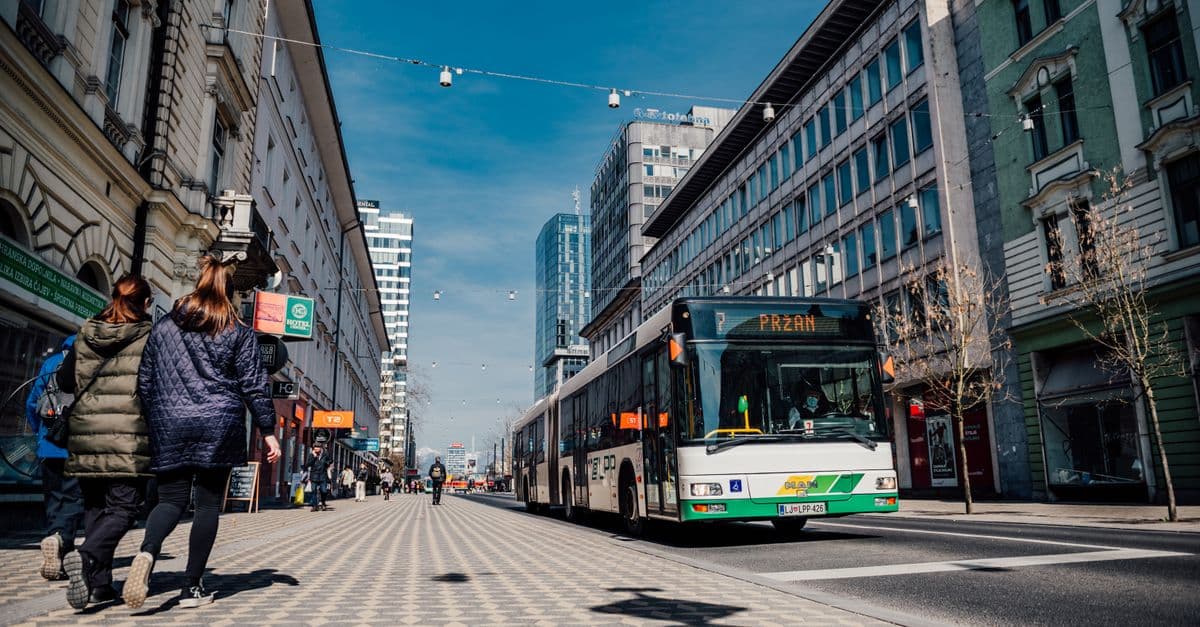
Photo: Alexander Nadrilyanski / Pexels
China runs more electric buses than the rest of the world combined, and the gap is so wide that the interesting questions start after the first row of the ranking. The International Energy Agency (IEA) counted more than 680,000 electric buses in China at the end of 2024. Everywhere else, the story is told city by city: Santiago, Bogotá, London, Tashkent. This article ranks what can be compared, flags what cannot, and explains why the leaders got there.
Key takeaways
- China had more than 680,000 electric buses at the end of 2024, according to the IEA's Global EV Outlook 2025.
- China's share of global electric bus sales fell from about 99 percent in 2017 to under 70 percent in 2024, as other markets grew.
- India's electric bus stock rose from under 3,000 in 2020 to more than 11,500 by the end of 2024, making it the second-largest national market by 2024 sales.
- Santiago, Chile, reported 2,555 electric buses in May 2025, and London had 2,937 battery-electric buses in March 2026.
- Denmark, Finland, the Netherlands, and Norway each had electric shares above 40 percent of bus sales in 2024.
What can and cannot be ranked
A clean "top 15 countries by electric buses" table does not exist, and anyone who shows one is mixing definitions. Three problems keep national ranking from being reliable.
Stock and sales answer different questions. The stock is how many electric buses are on the road. Sales are how many were bought in one year. China dominates the stock because it bought early and in huge volume, so most of its fleet dates from before 2020. A country that bought 3,000 buses last year can look small in the stock and large in the sales table.
Definitions differ. Some counts include only battery-electric buses. Others add plug-in hybrids, trolleybuses, hydrogen fuel-cell buses, or school buses. The IEA reports that plug-in hybrid buses have almost vanished from the market: in China their sales share peaked at about 60 percent in 2014 and was close to zero in 2024, so recent figures are nearly all battery-electric. School buses matter too. In the United States, school buses made up about half of the electric bus stock in 2024, according to the IEA, which is a different market from city transit.
Data is often city-level. For Chile, Colombia, and the United Kingdom, the best public figures describe one city system (Santiago, Bogotá, London), not the country. This article labels each row with its coverage so you can see which is which.
The data also gets revised. The IEA's 2024 edition put the global electric bus stock at roughly 635,000 at the end of 2023, with almost 50,000 buses sold that year. The 2025 edition counted more than 680,000 in China alone at the end of 2024. Those figures cannot both be taken at face value without allowing for revisions in the underlying counts, so use the numbers below as orders of magnitude, with the year and source attached.
Electric bus fleets: the best available figures
The table lists the fleets for which a named source gives a figure with a date. It is not complete, and it mixes national and city coverage, as the right-hand column shows.
| Place | Electric buses | Coverage | Date | Source |
|---|---|---|---|---|
| China | more than 680,000 | National, battery-electric | End of 2024 | IEA, Global EV Outlook 2025 |
| India | more than 11,500 | National | End of 2024 | IEA, Global EV Outlook 2025 |
| Santiago, Chile | 2,555 | One city system (Red Movilidad) | May 2025 | electrive, citing the system's current fleet |
| Bogotá, Colombia | 1,485 planned | One city system, contracted for end of 2022 | February 2022 | Bogotá city government |
| London, UK | 2,937 battery-electric plus 20 hydrogen | One city, of 8,982 buses | March 2026 | Transport for London audit, as reported on Wikipedia |
| Shenzhen, China | 16,359 (all of its buses) | One city | End of 2017 | World Resources Institute |
Sources: IEA; electrive, May 2025; Bogotá government, February 2022; Buses in London, Wikipedia; WRI.
Two cautions apply. The Bogotá figure is a planned total from a 2022 announcement, in which the mayor said the city would have the largest electric bus fleet outside China by the end of that year. That is a political projection, not an independent ranking, and the page does not confirm whether the target was met. The IEA also gives no stock figure for Europe. It says only that Europe has the second-largest regional fleet, with electric buses making up about 2 percent of its bus stock, against 30 percent in China.
Who bought the most in 2024
Annual sales reveal momentum better than stock. The IEA reports that more than 70,000 electric buses were sold worldwide in 2024, about 30 percent more than the previous year, driven by renewed growth in China. Sales outside China grew only about 5 percent, though they are almost three times their 2020 level.
| Market | 2024 electric bus sales | Note |
|---|---|---|
| Global | more than 70,000 | Up about 30% year on year |
| China | under 70% of global sales | Down from around 99% in 2017 |
| India | more than 3,200 | Second-largest national market, ahead of the US |
| South Korea | more than 2,800 | Overtook the US as the third-largest market |
| United Kingdom | almost 2,000 | About 20% of European sales, up more than 40% |
| Italy | almost 1,200 | Most in the EU, helped by incentives |
| Germany | almost 900 | |
| Latin America | more than 2,000 | Up from around 600 in 2020 |
| United States | down about 40% from 2023 peak | Supply chain problems cited |
Source: IEA, Global EV Outlook 2025, trends in heavy-duty electric vehicles. Figures are as published by the IEA and rounded as the agency rounds them.
China's exports are part of this picture. The IEA says Chinese manufacturers exported more than 15,000 electric buses in 2024, over 25 percent more than in 2023. In Latin America, Chinese manufacturers including BYD and Foton supplied more than 80 percent of the electric buses in the regional stock. Yutong has been Europe's best-selling electric bus brand for three consecutive years, and Tashkent in Uzbekistan signed for 2,000 BYD buses, with 1,000 due by the end of that year.
Which countries electrify the largest share of new buses
A country can have a small fleet and a near-total electric market. The table below shows shares of sales or fleet, not counts, and each row has a different denominator.
| Market | Electric share | Year | What the share measures |
|---|---|---|---|
| Denmark, Finland, Netherlands, Norway | above 40% each | 2024 | Share of bus sales |
| Europe overall | above 13% | 2024 | Share of bus sales |
| EU city buses | 60% zero-emission | 2025 | Share of city bus market (BloombergNEF) |
| China | about 60% | Roughly 2017 to 2024 | Share of bus sales, "hovering" per the IEA |
| Mexico | close to 8% | 2024 | Share of bus sales, up from just above 1% in 2023 |
| Qatar | about 70% of public bus fleet | 2021 to 2023 | Share of fleet electrified |
| Santiago, Chile | about 60% after planned additions | 2025 | Share of city fleet |
Sources: IEA Global EV Outlook 2025; BloombergNEF Electric Vehicle Outlook 2026, as reported by Sustainable Bus; electrive. BloombergNEF also reported that more than 20 countries had electric buses above 50 percent of municipal bus sales in 2025.
The electrive article on Santiago gives two figures for the share after planned additions: about three in five buses in its text and 68 percent in its lead. Treat the share as roughly 60 to 68 percent and look for the operator's latest data before quoting it.
How China got here, and why its lead is shrinking
China's position is the result of a long, subsidized build-out. According to Wikipedia's summary of China's plug-in vehicle market, the national program began in 2009, and by September 2013 the central government offered up to US$81,600 for an electric bus. The effect on the stock was dramatic. About 385,000 electric buses were in service by the end of 2017, over 99 percent of the global total on that account, and the stock passed 500,000 in 2019 with a share near 98 percent. BloombergNEF's 2017 count put electric buses at about 13 percent of the roughly three million city buses worldwide that year, nearly all of them in China.
Subsidies were then cut step by step. Central and local standards were cut by 20 percent in 2018, and the national subsidy program ended on December 31, 2022. New purchases in China slowed, and the IEA reports that almost 70 percent of China's more than 680,000 electric buses were deployed before 2020. China's electric share of its own bus sales has stayed near 60 percent, which means most new buses there are electric, but the market is now about replacement and fleet growth, not first-time conversion. In January 2025, the IEA notes, China announced a national city bus scrappage scheme to speed up replacement.
The result is a shrinking share of global sales. China made around 99 percent of electric bus sales in 2017 and under 70 percent in 2024, because other places started to buy. The fleet lead remains huge, since stock changes slowly, but the direction is clear.
Shenzhen: the proof of concept
Shenzhen is the case that every other city cites. At the end of 2017 it announced that all 16,359 of its buses were electric, a fleet that was, at the time, larger than the combined electric bus fleets of New York, Los Angeles, New Jersey, Chicago, and Toronto, according to the World Resources Institute. The WRI notes that diesel buses account for about 0.5 percent of a city's vehicles but 20 percent of its transport emissions, because they drive far more than private cars. Shenzhen met its air quality goals in 2016 and 2017.
The operational details matter more than the headline. A common Shenzhen electric bus charges in about five hours for 250 kilometers (155 miles), nearly a full day of service. Because range is shorter than a diesel bus, Chinese cities typically need about 100 percent more electric buses than diesel buses to run the same schedule, a cost Shenzhen almost entirely offset by optimizing operations and charging. Charging outlets are shared at a ratio of one outlet per three buses, and the stations are open to private cars, which helps their finances. Buses charge fully overnight when power is cheap and top up at terminals during off-peak hours.
The cost question: are electric buses cheaper?
The honest answer is "close, and it depends." The best-documented data comes from Shenzhen. A World Bank and Global Environment Facility study reported by the WRI estimated the eight-year lifecycle cost of an electric bus in 2016, including purchase, energy, and maintenance, at $375,457, against $342,855 for a diesel bus.
| Item | Electric bus | Diesel bus |
|---|---|---|
| Eight-year lifecycle cost (Shenzhen, 2016) | $375,457 | $342,855 |
| Upfront price | 2 to 4 times a diesel bus | Baseline |
| Subsidized electric bus price | about $90,000 to $120,000 | Not stated |
| Pre-2016 subsidy for a 12-meter electric bus | $150,000, more than half the price | None |
Source: WRI, citing a World Bank and Global Environment Facility study, April 2018. The electric lifecycle cost was about 9.5 percent higher than diesel in this study (our arithmetic), even with large subsidies and lower operating costs.
That result is a snapshot from a specific city, year, and subsidy regime, and it should not be read as a global verdict. It does show where the money goes. Electric buses cost two to four times as much to buy, and the WRI notes that batteries must be replaced at least once in a bus's life, at nearly half of a vehicle's price. Lower energy and maintenance costs claw most of that back over the vehicle's life.
Two forces are shifting the balance. First, battery prices have fallen. BloombergNEF reported that average lithium-ion pack prices fell 14 percent in 2023 to a record low of $139 per kilowatt-hour, and projected $80 per kilowatt-hour by 2030, which is a forecast. By simple arithmetic, every 100 kilowatt-hours of battery costs about $13,900 at the 2023 average, so a drop in pack prices cuts the premium most for the large-battery buses used on long routes. Second, financing models spread the upfront cost. In Shenzhen some operators lease buses from manufacturers, and manufacturers provide lifetime warranties on vehicles and batteries, so they carry the replacement risk. The IEA notes that leasing in Santiago, and innovative financing models in São Paulo, have the same purpose.
The IEA's 2025 report has no bus total cost analysis of its own, and its cost modeling covers trucks only. Readers who see a single figure for "the" lifecycle cost of an electric bus, without a city and a year, should be skeptical.
Latin America: leasing and Chinese supply
Latin America is the clearest case of a region leapfrogging. The IEA reports that electric bus sales there rose from around 600 in 2020 to more than 2,000 in 2024, almost 40 percent of sales outside China, Europe, and the other markets named in its report. Mexico's electric share of bus sales rose to close to 8 percent in 2024, from just above 1 percent in 2023.
Santiago, Chile is the largest example. Electrive reported 2,480 electric buses in operation in the city's Red Metropolitana de Movilidad in August 2024, citing the Chilean government, and 2,555 by May 2025, with the May 2025 article saying 1,800 electric buses would be deployed by the end of 2025 (it does not say whether that figure is additional to the 2,555). Yutong supplied 214 of the buses delivered in 2024, and BYD also supplies the city. The system relies on leasing arrangements that reduce the upfront cost to bus operators, which the IEA identifies as a significant barrier elsewhere. Santiago's numbers are for one city system, not Chile as a whole. Some press coverage calls it the largest electric bus fleet outside China, but the articles cited here do not make that claim, so it is not repeated as fact.
Bogotá, Colombia followed with its own concession model. In February 2022 the city said 172 electric buses had entered service, bringing the total to 655, with 830 more due that year for a planned total of 1,485, supplied by BYD. The mayor described that as the largest electric bus fleet outside China by year end. Later orders continue to add buses, but the cited sources do not give a verified in-service total for 2024 or 2025.
Why Latin America? The IEA's explanation emphasizes financing and incentives: leasing in Santiago and innovative financing in São Paulo, which move the upfront cost away from bus operators, together with a deep supply of Chinese-built buses. The sources cited here do not measure the role of air pollution or tender design, so this article does not rank those causes.
Europe: fast in the north, uneven elsewhere
Europe's electric bus fleet is the second largest region in the IEA's data, but still small next to China's. Sales grew almost 15 percent in 2024, and the electric share exceeded 13 percent. The spread between countries is wide: Denmark, Finland, the Netherlands, and Norway each had electric shares above 40 percent of bus sales, while larger markets lag.
Within the EU, the BloombergNEF outlook reported that zero-emission buses reached 60 percent of the city bus market in 2025, and that about one quarter of the total bus market, including coaches, was electrically chargeable. Those are shares of new sales, not shares of the existing fleet, which turns over slowly.
The Netherlands has a clear policy timeline. Under an agreement made in 2015 by public transport authorities, as summarized on Wikipedia, the country committed to buying only emission-free buses from 2025 and to a fully emission-free fleet by 2030.
Italy led the EU in electric bus sales in 2024, helped by EUR 50 million in incentives, according to the IEA. Milan's public transport operator has stated a plan for a fully electric fleet by 2030, according to Wikipedia. Germany sold almost 900 electric buses in 2024, a modest number for the largest economy in the EU.
London gives the clearest city-scale picture. As of March 2026, Transport for London reported 2,937 battery-electric and 20 hydrogen buses out of 8,982, with 3,668 hybrids, and a mayoral aim of a zero-emission fleet by 2037. A year earlier the audit listed 1,951 battery-electric buses, so the electric fleet grew by about 1,000 vehicles in twelve months. Two figures in the source differ slightly (a June 2026 announcement says "over 3,000"), which shows how quickly the count moves.
India: the fastest-growing large market
India's stock rose from under 3,000 in 2020 to more than 11,500 at the end of 2024, according to the IEA, and 2024 sales above 3,200 made it the second-largest national market that year, ahead of the United States. The IEA reports several government programs: the National Electric Bus Programme, which targets 40,000 more buses by 2027; the PM E-DRIVE scheme, which could support 14,028 more buses and prioritizes replacing old public buses; and a forthcoming Bharat Urban Megabus Mission that aims for 100,000 electric buses in cities of more than one million people. These are government targets, not delivered buses.
For context on how India compares in electric cars rather than buses, see our ranking of countries with the most electric vehicles.
The United States: school buses and a sales dip
US electric bus sales fell about 40 percent in 2024 after peaking in 2023, partly because of supply chain problems, according to the IEA. School buses made up about half of the US electric bus stock in 2024. The Clean School Bus Program had funded about 8,100 electric school buses by mid-June 2025, using roughly $3 billion of the $5 billion allocated for fiscal years 2022 to 2026. New York City has a legally binding target to electrify its 10,000-bus fleet by 2035, but it had deployed fewer than 50 at the time of the IEA report.
That gap between a binding target and the vehicles actually on the street illustrates a pattern. Targets are easy to set, and the hard part is procurement, depots, and power.
What limits electric bus adoption
Charging infrastructure and the grid. A depot with 100 buses charging overnight is a large new electrical load. Utilities must connect it, and cities need space to build it. Our explainer on how mass EV adoption reshapes electricity demand covers the grid side of this problem, and the cleanliness of the power matters for climate benefits, as shown in our ranking of countries by renewable electricity share.
Upfront cost and financing. Cheap capital matters more than the vehicle's price. The cities in this article that moved fastest used leasing, long-term contracts, or subsidies to move the upfront cost off the operator's balance sheet.
Batteries. Range and lifetime depend on cell chemistry and thermal management. Our guide to how lithium-ion batteries work explains why batteries degrade and why pack prices have fallen.
Supply concentration. The IEA's export figures show how much of the world's supply comes from China. That brings low prices, but it also exposes buyers to trade policy and to one country's industrial decisions.
Alternatives. Hydrogen fuel-cell buses, such as London's 20, remain a small part of the picture. For how the fuel is produced, see our explanation of green hydrogen.
Outlook: where the ranking is heading
BloombergNEF expects electric and fuel-cell buses to make up about 60 percent of global bus sales by 2030, and most markets could reach fully zero-emission city bus sales by 2040, with the Nordic countries earlier. Under its Economic Transition Scenario, the global electric bus fleet could reach about 4 million by 2050. Those are projections, and they depend on policy, financing, and battery costs staying favorable.
The ranking in the next few years is likely to look different. China's stock will still dwarf everyone else's, but the sales race now has several contenders: India, South Korea, the UK, Italy, and Latin American cities. Qatar and Uzbekistan show that fast conversions can happen in places that are not usually on the electric vehicle map. For other rankings on the energy transition, see countries that produce the most solar power and countries with the most wind power capacity.
Frequently asked questions
Q: Which country has the most electric buses? A: China, by a wide margin. The International Energy Agency counted more than 680,000 electric buses in China at the end of 2024, and almost 70 percent of them were deployed before 2020.
Q: Why does China have so many electric buses? A: A national subsidy program started in 2009, and by 2013 the central government offered up to US$81,600 per electric bus. Large purchases followed, and the national subsidy ended on December 31, 2022. Shenzhen electrified all 16,359 of its buses by the end of 2017.
Q: Which country is second after China? A: There is no single reliable answer, because most countries do not publish comparable national stock figures. India had more than 11,500 electric buses at the end of 2024 and was the second-largest national market by 2024 sales. Europe holds the second-largest regional fleet.
Q: Are electric buses cheaper than diesel buses? A: Not always. A World Bank and Global Environment Facility study found that in Shenzhen in 2016 an electric bus cost about $375,457 over eight years, against $342,855 for a diesel bus, even with subsidies. Costs vary with electricity prices, subsidies, battery prices, and how many kilometers each bus runs.
Q: Which European countries lead on electric buses? A: By share of 2024 bus sales, Denmark, Finland, the Netherlands, and Norway each exceeded 40 percent, according to the IEA. By volume, the UK sold almost 2,000 electric buses in 2024, Italy almost 1,200, and Germany almost 900.
Q: What is the biggest barrier to adopting electric buses? A: The IEA identifies upfront cost as a significant barrier and highlights leasing in Santiago and innovative financing in São Paulo as ways around it. Charging infrastructure and grid connections also take time to build.
The takeaway
The electric bus ranking is lopsided at the top and fluid below it. China's fleet is the result of more than a decade of subsidies, and its share of annual sales has fallen as India, South Korea, Europe, and Latin American cities buy in volume. The best evidence that electrification works at city scale comes from Shenzhen, Santiago, and London, and the best evidence that it is not automatic comes from New York's binding target and fewer than 50 buses. Before trusting any ranking, ask whether it counts stock or sales, one city or a whole country, and which year.
Sources
- IEA, Global EV Outlook 2025: Trends in heavy-duty electric vehicles.
- IEA, Global EV Outlook 2024: Trends in heavy electric vehicles.
- World Resources Institute, How Did Shenzhen, China Build World's Largest Electric Bus Fleet? (April 4, 2018).
- Sustainable Bus, BloombergNEF Electric Vehicle Outlook 2026 coverage and BNEF 2017 electric bus report coverage.
- BloombergNEF, Lithium-ion battery pack prices hit record low of $139/kWh.
- electrive, 214 electric buses delivered to Santiago (August 28, 2024) and 300 new electric buses arrive for Santiago's Red Movilidad (May 14, 2025).
- Bogotá city government, Bogotá electric bus fleet announcement (February 15, 2022).
- Wikipedia, Buses in London, Electric bus, and Plug-in electric vehicles in China, used for figures that they attribute to Transport for London, BloombergNEF, and Chinese ministries.
Related Reading
Follow new articles
Add SciHub101 to your feed reader to see new science and technology stories.
About the Author
SciHub101 is an independent science and technology publication founded and edited by Buğra Sözeri, a software engineer and app developer based in Türkiye. AI tools assist with drafting and research. Source documentation in the existing archive is uneven, and articles are being reviewed and corrected. The Editorial Team byline identifies editorial responsibility; it does not certify specialist or independent human review. Where we compare products, anything built by our own team is labelled as such — see the editorial guidelines and About page for how corrections and disclosures work.
Related Articles

Countries With the Most Forest Cover (2025)
Forests cover 4.14 billion hectares, about 32% of the world's land, per FAO's 2025 assessment. Russia, Brazil, Canada, the United States and China hold more than half. Ranked by area and by share of land, with what the numbers miss.

Countries With the Most Biodiversity (2025)
Biodiversity is not evenly spread across the planet. Seventeen 'megadiverse' countries, most of them tropical, hold a large share of Earth's known species. This ranking uses IUCN Red List endemism data and explains why counting species country by country is so hard.
Countries With the Most Renewable Energy Capacity (2025)
China had 1,827 GW of renewable power capacity at the end of 2024, 41% of the world total, per IRENA. See the top 20 countries by installed gigawatts and why capacity is not the same as generation.

Countries with the Most Hydropower (Ranked by Installed Capacity)
China leads the world in hydropower with 435.95 GW of installed capacity — more than three times that of second-place Brazil at 110 GW. Hydropower is the world's largest source of renewable electricity, accounting for roughly 40 percent of global renewable generation. This ranking covers the top 15 countries by hydropower installed capacity using IHA and IRENA 2024 data, with methodology, historical context, and caveats about what capacity figures do and do not tell you.
Countries That Run on the Most Renewable Electricity (Ember Data)
A handful of countries already generate essentially all of their electricity from hydro, wind, solar, geothermal and bioenergy. This ranking uses Ember's generation data, with the year for every row, and explains why most leaders are hydro countries and what that means for everyone else.
Why Rare Earth Metals Are So Critical — The Hidden Cost of Clean Energy
Neodymium, dysprosium, cobalt, lithium — these obscure elements power every EV, wind turbine, and smartphone on the planet. But their supply chain is dangerously concentrated, environmentally destructive, and increasingly weaponized.