Countries With the Youngest Populations (2025)

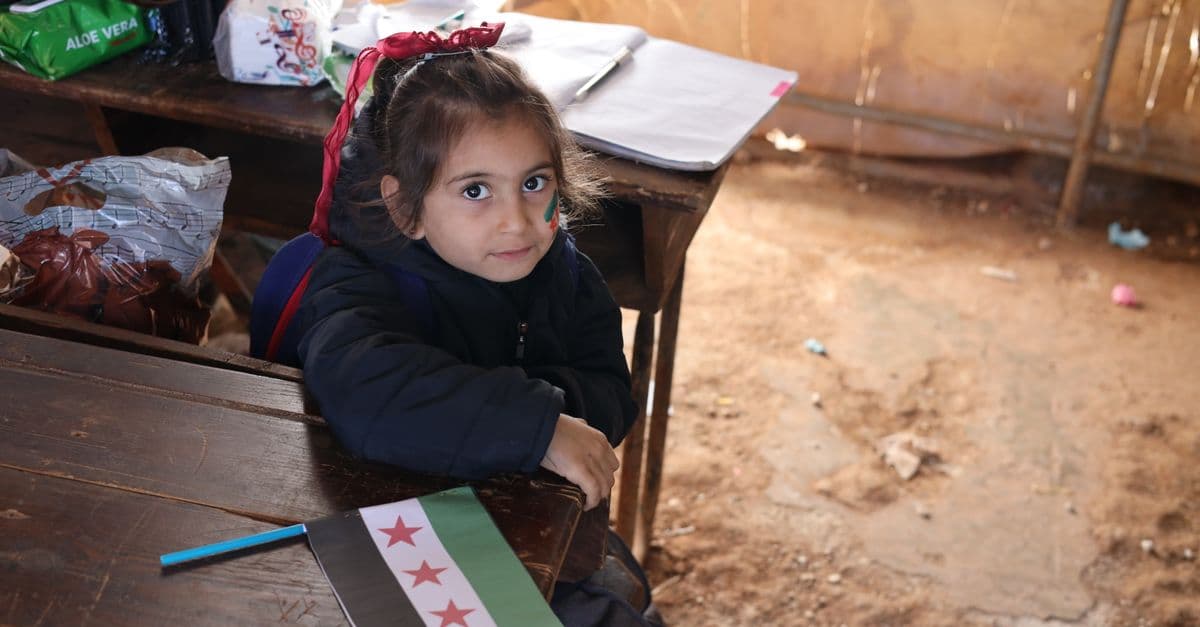
Photo: Pavel Danilyuk / Pexels
Median age is one of the most informative single statistics in demography. It tells you the age at which exactly half a population is younger, and half is older — a clean read of whether a country is growing fast or aging quietly. In 2025, the global median age is approximately 31 years. But the countries at the youngest end of the spectrum tell a radically different story: median ages between 15 and 20 years, fertility rates of 4–7 children per woman, and populations that will double within two decades. Their demographic trajectories will reshape the global labour force, migration flows, and consumer markets for the rest of the 21st century.
What Median Age Actually Measures
Median age is not the same as average age. The median is the midpoint: in a country with a median age of 15, exactly half the population is younger than 15 and half is older. This matters because a very young age distribution is shaped more by high birth rates than by low death rates — it reflects not just that people are being born but that they are being born fast enough to keep the population overwhelmingly young despite deaths.
A useful analogy: compare the age distribution of a country to the shape of a pyramid. A young population has a wide base (many children) narrowing sharply toward the top (few elderly). An aging population like Japan or Germany has a more column-like distribution — each age cohort is roughly the same size. The countries in this ranking have extremely wide-base pyramids, with each younger cohort larger than the one above it.
The total fertility rate (TFR) — the average number of children a woman would have over her lifetime at current fertility rates — is the primary driver of median age. Replacement-level fertility is 2.1 children per woman in most contexts. Countries with TFRs of 4–7 are growing rapidly; their populations are automatically young because children are always a large share of the total.
Source: UN DESA — World Population Prospects 2024 — The WPP 2024 is the primary source for median age, fertility rate, and population projection data used throughout this article.
Methodology
Rankings are drawn from the UN Department of Economic and Social Affairs World Population Prospects 2024 (WPP 2024), published in July 2024. Median age and fertility rate figures reflect 2025 estimates using WPP 2024 projections, as WPP is updated every two years and 2025 is an interpolated year. Population figures are mid-2025 estimates. Countries are ranked by median age (lowest first). All figures should be understood as estimates with uncertainty ranges, particularly for countries with limited civil registration data.
Top 20 Countries With the Youngest Median Ages (2025)
| Rank | Country | Median Age (years) | Total Fertility Rate | Population (mid-2025) |
|---|---|---|---|---|
| 1 | Niger | 15.0 | 6.7 | 26,200,000 |
| 2 | Mali | 16.3 | 5.9 | 24,000,000 |
| 3 | Chad | 16.8 | 5.7 | 18,300,000 |
| 4 | Angola | 16.9 | 5.4 | 36,600,000 |
| 5 | Uganda | 17.0 | 4.8 | 48,600,000 |
| 6 | Somalia | 17.1 | 6.1 | 17,600,000 |
| 7 | Burkina Faso | 17.3 | 4.9 | 22,500,000 |
| 8 | Mozambique | 17.4 | 4.6 | 33,400,000 |
| 9 | DR Congo | 17.6 | 5.7 | 102,000,000 |
| 10 | Zambia | 17.9 | 4.5 | 20,600,000 |
| 11 | Benin | 18.0 | 4.8 | 13,300,000 |
| 12 | Guinea | 18.2 | 4.6 | 13,500,000 |
| 13 | Malawi | 18.4 | 3.9 | 20,900,000 |
| 14 | Tanzania | 18.5 | 4.6 | 65,500,000 |
| 15 | Senegal | 18.7 | 4.2 | 17,800,000 |
| 16 | South Sudan | 19.0 | 5.0 | 11,000,000 |
| 17 | Afghanistan | 19.5 | 4.4 | 42,200,000 |
| 18 | Ethiopia | 19.6 | 4.0 | 126,500,000 |
| 19 | Gambia | 20.0 | 4.4 | 2,700,000 |
| 20 | Sudan | 20.1 | 4.1 | 46,100,000 |
Source: UN DESA World Population Prospects 2024, 2025 estimates.
Where this data comes from
Median age, fertility rate, and population data come from the UN Department of Economic and Social Affairs (UN DESA) World Population Prospects 2024, the gold-standard global demographic dataset. UN DESA collects population data from national census records, civil registration systems (births and deaths), and demographic surveys. For countries with limited civil registration (common in sub-Saharan Africa), the UN uses demographic methods to estimate fertility and mortality from indirect sources: the Demographic and Health Surveys (DHS) programme, census data on children ever born, and retrospective birth histories. TFR figures represent the average number of children a woman would have at current age-specific fertility rates. Projections through 2050 incorporate assumptions about future fertility decline based on observed transition patterns, education expansion, and urbanisation trends.
Why top countries lead in youngest populations reflects the simple mathematics of high fertility combined with young-age population structure. All top 20 countries are in sub-Saharan Africa or Afghanistan — regions where TFRs of 4–7 children per woman mean every age cohort is substantially larger than the one older than it, creating age structures where 40–50% of the population is under age 15. Niger leads (median age 15.0) because its TFR of 6.7 combined with 26 million residents means a half-doubling every 18 years. Mali (15–19 median) and Chad follow through similar TFRs (5.9–5.7). The concentration in sub-Saharan Africa reflects the region's slower fertility transition compared to East Asia (where comparable TFRs in 1970 fell to 1.5–2.0 by 2000) or Latin America (where fertility fell from 6+ to 2–3 in the same period). This slower transition is attributable to documented factors: lower female education levels, less comprehensive family planning services, higher child mortality reducing the incentive for smaller families, and structural economic factors. Afghanistan's entry at rank 17 reflects conflict-disrupted development and recent-decade restrictions on female education. The ranking therefore reflects which countries have experienced the slowest fertility transitions rather than which have the highest absolute fertility — countries that might have high-fertility rates but that have been declining faster (like Ethiopia or Senegal) rank lower.
Historical Context: How Africa's Demography Diverged
Sub-Saharan Africa's demographic trajectory diverged from the rest of the developing world in the second half of the 20th century in ways that continue to shape the present.
In the 1960s and 1970s, most of the developing world — Latin America, South and Southeast Asia, North Africa, and sub-Saharan Africa — had similarly high fertility rates of 5–7 children per woman. The difference was in what happened next. Starting in the 1960s, East and Southeast Asian countries — South Korea, Taiwan, Thailand, Indonesia, Vietnam — began a rapid fertility transition driven by rising female education, urbanisation, and deliberate family planning policies. By the 1980s and 1990s, their TFRs had fallen to near-replacement levels, producing the demographic conditions for the economic "miracles" that followed.
Latin America followed a similar trajectory, slightly delayed. Mexico's TFR fell from 6.8 in 1970 to 2.1 by 2005. Brazil's fell from 5.8 to 1.8. The demographic transition transformed Latin American economies from young, labour-surplus societies into middle-income, aging-beginning societies within a generation.
Sub-Saharan Africa's fertility transition began later and has proceeded more slowly. Average TFR for the region was approximately 5.1 in 2025, down from 6.7 in 1975 — a decline of roughly 1.6 children per woman over 50 years, compared to declines of 3–4 children per woman in the same period in Asia and Latin America. The reasons are multiple and contested: lower levels of girls' secondary education, weaker healthcare infrastructure, limited access to family planning services in rural areas, high child mortality that historically incentivised larger families as insurance, and cultural and economic norms around family size.
The consequence of this slower transition is the demographic structure visible in the table above. Niger, Mali, and Chad have populations where over 50% of residents are under 18. These are not simply young countries — they are countries locked in a demographic regime that, without significant policy intervention, will produce enormous populations within decades.
Source: UN DESA — World Fertility 2024 — Sub-Saharan Africa's total fertility rate remained above 4.5 in 2024, the highest of any world region, with over one in ten countries globally having fertility rates of four or more births per woman.
Niger: The World's Youngest Country
Niger's median age of 15.0 years is not simply a demographic statistic — it is the central organising fact of political and economic life in one of the world's most materially poor countries.
With a TFR of 6.7 children per woman, Niger's population doubles approximately every 18 years. The country had 3 million people in 1960. It reached 10 million in 1997. It has 26 million today and is projected by UN DESA to reach 68 million by 2050 — an increase of 42 million people in 25 years, larger than the entire current population of South Korea.
The pressure on education is staggering. Niger's student-to-teacher ratio in primary schools averages over 40:1, with some rural schools recording 70–80 students per classroom. The government allocates a significant share of GDP to education, but the denominator — the number of school-age children — grows faster than the system can keep pace. Adult literacy stands at approximately 35%, one of the world's lowest. Without a literate adult population, the next generation of teachers, nurses, engineers, and administrators cannot emerge at scale.
Niger's government has made reducing fertility rates an explicit national priority. Investment in girls' secondary education — the single most powerful lever for fertility reduction identified by demographic research — has expanded, though coverage remains limited in rural areas. Access to family planning services has improved modestly. The evidence from comparable countries suggests that sustained investment in female education produces fertility declines within a generation; the challenge is that Niger faces this long-run policy horizon while managing immediate crises in food security, political stability, and climate stress.
Niger is also the world's seventh-largest uranium producer by reserves, and uranium exports have historically provided state revenue. The military coup of July 2023 disrupted diplomatic relationships and uranium export agreements with France and other partners, reducing fiscal resources available for development investment at precisely the moment demographic pressure is most acute.
Source: UN DESA — World Population Prospects 2024 — Niger's population is projected to reach approximately 68 million by 2050, growing from 26 million in 2025 — a 162% increase in 25 years.
The Sub-Saharan African Demographic Picture
The concentration of very young populations in sub-Saharan Africa reflects a fertility transition occurring later and more slowly than in any other major world region. But averages conceal important variation in how different countries are progressing.
Ethiopia represents the most instructive trajectory on this list. In 1990, Ethiopia's TFR was 7.0. By 2025 it has declined to approximately 4.0, and the median age has risen to 19.6. Ethiopia's economy was among the fastest-growing in Africa over the period 2005–2019, and demographers link this partly to the early stages of the fertility transition. The country has built a substantial primary health care extension programme, expanded female education, and seen significant rural-to-urban migration. Ethiopian fertility is still well above replacement, but the direction of travel is clearly positive.
Senegal (rank 15, TFR 4.2) shows a similar, if slower, transition. Urban Senegalese women have a TFR of around 2.5, close to replacement level; rural women average 5.5. This urban-rural divide — common across the region — means that urbanisation itself is a fertility transition mechanism: as people move to cities, they have fewer children, partly because urban housing is costly, partly because urban women access education and employment at higher rates.
Angola and Mozambique represent cases where oil and mineral wealth has not translated into demographic transition. Angola's oil revenues funded an urban construction boom and significantly elevated average incomes in Luanda, but did not produce the broad-based educational and healthcare investment that drives fertility decline. The resource curse in demographic form.
The Democratic Republic of Congo (rank 9) is perhaps the most consequential entry on this list in absolute terms. With a population of 102 million and a TFR of 5.7, the DRC could reach 200 million or more by 2050. It is already the most populous Francophone country in the world. Its trajectory matters enormously for Central Africa's stability, for global migration patterns, and for the continent's aggregate demographic direction.
The Demographic Dividend: The Opportunity Hiding in the Data
The "demographic dividend" concept is essential for understanding why young populations are not simply a burden — they contain the seeds of a potential economic transformation.
The mechanism works like this. As a country transitions from high to low fertility, a large cohort of young adults enters the workforce while the number of young dependants (children) is still declining but the number of elderly dependants has not yet grown. For a period of typically 20–40 years, the working-age share of the population is unusually high relative to total dependants. More workers supporting fewer non-workers means more savings, more investment, and faster economic growth — if the institutional conditions exist to convert labour supply into productive employment.
East Asia's economic miracle of the 1960s–1990s was substantially a demographic dividend. Economists estimate that 25–40% of East Asia's exceptional growth rate during this period was attributable to the demographic transition. South Korea went from a median age of 19 in 1960 to 44 today — and from a per-capita income similar to Ghana to over $35,000. The demographic transition was not the only cause, but it was the necessary enabling condition.
For Africa to realise a comparable dividend, three conditions must be met. Fertility rates must continue declining, reducing the flow of young dependants into the system. Education systems must produce a workforce with the skills required by a modernising economy — not just literacy but secondary and tertiary education, technical skills, and the adaptability required in a technological era. And economies must create productive employment for the growing working-age population: jobs that generate income, tax revenue, and savings rather than subsistence survival.
The UN Population Division projects that Africa's working-age population will surpass 1.5 billion by 2050. That cohort is the largest potential growth story in 21st-century economics. Whether it becomes a dividend or a destabilising force is a policy question, not a demographic inevitability.
Source: UN DESA — World Population Prospects 2024 — Africa is projected to account for over 50% of global population growth between 2025 and 2050, with the working-age population (15–64) growing to exceed 1.5 billion by mid-century.
Education Infrastructure Under Demographic Pressure
No sector is more directly strained by young populations than education. The challenge is not simply building schools — it is building them at a speed that matches the expanding cohort of school-age children while simultaneously improving quality.
Tanzania has added over 14,000 primary schools since 2000 and still struggles to maintain enrolment pace with population growth. Uganda's education budget consumes a significant share of total government expenditure, yet the teacher vacancy rate remains above 20% because the expansion of trained teaching cadres cannot keep up with the number of schools needed. Classroom size and teacher quality — the inputs most strongly linked to learning outcomes — decline when a system is perpetually building capacity rather than deepening it.
The data on learning outcomes tells a sobering story. The World Bank's Human Capital Project finds that in many low-income countries, children complete primary school without achieving functional literacy or numeracy. In Niger, the share of 10-year-olds who cannot read a simple sentence is among the world's highest. This learning poverty — acquiring education certificates without acquiring skills — means the demographic dividend cannot be collected even if fertility rates decline, because the workforce that emerges will not have the human capital required for productivity.
The digital dimension offers a partial solution. Mobile internet penetration across sub-Saharan Africa has grown from near zero in 2010 to over 40% in 2025. Several countries have launched digital learning programmes that can reach children in rural areas where building conventional schools is impractical. Kenya's National Digital Literacy Programme, Rwanda's national ICT curriculum, and various private EdTech platforms targeting African learners demonstrate the possibilities. But digital learning requires device access, electricity, and pedagogical infrastructure that remain unevenly distributed.
Climate Vulnerability and Young Populations: A Compound Risk
The countries at the top of this ranking are disproportionately located in some of the world's most climate-vulnerable regions — and the intersection of demographic pressure with climate stress is a compound risk that development institutions have been slow to address at the required scale.
The Sahel — the semi-arid belt stretching across sub-Saharan Africa from Senegal to Sudan, encompassing Mali, Niger, Chad, and Burkina Faso — is experiencing accelerating climate change. Rainfall is becoming more variable, not simply lower. Extreme heat events are lengthening. The Lake Chad Basin, which provided water and livelihoods for approximately 40 million people in four countries, has shrunk by approximately 90% since the 1960s due to climate change and upstream water extraction. The advancing desert front is reducing agricultural land in regions where 70–80% of populations depend on subsistence farming.
In Niger, where 80% of the population depends on agriculture, the combination of a growing population and a deteriorating resource base creates a gap between population and food production capacity that widens year by year. The country periodically faces food crises when rainfall fails. The Famine Early Warning System (FEWS NET) has classified parts of Niger as being at crisis or emergency food insecurity levels multiple times in the past decade.
What development economists call the "demographic-climate squeeze" operates through a simple mechanism: rapid population growth expands the number of people dependent on natural resources, while climate change simultaneously shrinks the productive capacity of those resources. Neither problem is solved by addressing only the other, and both are harder to address together than separately.
Uganda and Tanzania face a different climate risk: intensifying rainfall variability affecting the East African Rift system and highland farming areas, combined with increasing pressure on Lake Victoria — the continent's largest lake and a primary water and protein source for over 40 million people across Uganda, Kenya, and Tanzania. Population growth around the Lake Victoria basin is among the fastest in the region, and the lake's fisheries and water quality are under severe stress.
Source: FEWS NET — East and West Africa Food Security Outlook, 2025 — Multiple countries in the Sahel and Horn of Africa experienced food security crises or emergencies in 2024–2025, with climate variability a primary driver.
Afghanistan: The Non-African Entry
Afghanistan's appearance at rank 17 (median age 19.5, TFR 4.4) reflects a distinct set of demographic drivers from the African pattern.
Afghanistan's young age structure results from decades of conflict-interrupted development, extremely limited female education and labour force participation, and restricted access to family planning services — particularly under Taliban governance since August 2021. The Taliban's closure of girls' secondary schools and universities, and restriction of women's employment in most sectors, has effectively removed the two most powerful drivers of fertility decline: female education and female labour force participation.
Demographic projections for Afghanistan under the current governance model are concerning. The evidence from multiple countries shows that fertility rates stop declining — or reverse — when girls' education and female autonomy are curtailed. If Afghanistan's female education restrictions persist for a full generation, the demographic transition that was underway in the 2000s and 2010s (Afghanistan's TFR was approximately 6.6 in 2000) will stall or reverse, locking the country into high-fertility, high-poverty demographics for decades.
The population implication is significant: Afghanistan could approach 65–70 million people by 2050 under high-fertility scenarios, creating labour force pressures in an economy already unable to provide formal employment for its current working-age population.
Per-Country Trajectories: Who Is Moving and How Fast
The table below suggests where movement is occurring — countries where fertility decline has begun and is progressing meaningfully, versus those where it has stalled.
Fastest-declining fertility (within this list): Ethiopia (from 7.0 in 1990 to 4.0 in 2025), Malawi (from 7.6 in 1990 to 3.9), Zambia (from 6.7 in 1990 to 4.5), and Senegal (from 6.7 in 1990 to 4.2). These countries are moving through the transition, however slowly by East Asian standards.
Stalled or slow transitions: Niger (from 8.0 in 1990 to 6.7 in 2025 — the smallest absolute decline on this list), Chad (from 7.1 to 5.7), and Mali (from 7.4 to 5.9). In these countries, demographic momentum is building faster than structural change is occurring.
The difference between the fast-moving and slow-moving cases correlates most strongly with girls' education levels and access to family planning services, followed by urbanisation rates and women's labour force participation. Policy and institutional variables, in other words — not geography or culture in some immutable sense, but the practical outcomes of government decisions and development investment.
Trends: What Happens Next
Three trends will define the demographic future of the world's youngest-population countries.
First, continued urban growth will accelerate fertility decline. As sub-Saharan Africa urbanises — and it is urbanising faster than any other world region — fertility rates in the growing cities will pull national averages downward, even if rural rates remain high. Kinshasa, Lagos, Dar es Salaam, and Nairobi are among the world's fastest-growing cities; their expanding urban populations are having smaller families.
Second, mobile technology is changing the information environment around family planning. Younger Africans — the current 15–24 cohort — are disproportionately connected to mobile internet, exposed to global culture and information, and have different aspirations around family size than their parents. Survey data from multiple African countries shows that younger cohorts report desired family sizes of 3–4 children, below current actual fertility rates. Closing the gap between desired and actual fertility, primarily by improving access to modern contraception, is achievable within a decade.
Third, migration will intensify. When young, educated people cannot find employment in their home countries, they move. African migration to Europe, North America, and intra-African destinations has grown steadily over the past two decades. Remittances now represent significant shares of GDP in Senegal, Mali, and other countries in this ranking. Migration is not simply an economic pressure valve — it also transfers knowledge, skills, and aspirations back to home communities, potentially accelerating development.
Frequently Asked Questions
Q: What does a very young median age mean for a country's economy? A: A very young median age typically means a high dependency ratio — many children consuming resources without yet producing them economically. It strains schools, healthcare systems, and family finances. However, if fertility rates subsequently decline, the resulting "demographic dividend" can fuel decades of economic growth, as it did in East Asia from the 1960s to the 1990s.
Q: Why do African countries have such high fertility rates? A: Multiple factors interact: lower rates of girls' secondary and tertiary education, limited access to contraception in rural areas, high child mortality rates that historically incentivised having more children as insurance, low female labour-force participation, and in some cases, economic structures where more children represent more agricultural labour or old-age security. These factors are changing, but the pace varies significantly by country.
Q: Will Africa's young populations create economic growth or instability? A: Both outcomes are possible depending on policy choices. Countries that invest heavily in education quality, female empowerment, and job creation have the ingredients for a demographic dividend. Countries that fail on any of these fronts face youth unemployment, political instability, and migration pressure. The WPP 2024 projects that the outcome depends primarily on education and health investment in the next decade.
Q: Has any African country successfully achieved the demographic dividend? A: Botswana, South Africa, and Morocco have partially experienced it. Rwanda — with a median age rising toward 24 and fertility falling to approximately 3.8 — is considered the African country currently best positioned to capture it in the near term. Ethiopia's trajectory is encouraging but is complicated by internal conflict and food insecurity.
Q: What is the demographic dividend and how long does it last? A: The demographic dividend is the economic boost that occurs when falling fertility rates create a period where working-age adults are proportionally high relative to young and elderly dependants. It typically lasts 20–40 years before the older end of the large working-age cohort reaches retirement age and a new dependency — elderly dependency — builds up. East Asia's dividend ran roughly from the 1960s to the 2000s.
Q: What will the world's population look like in 2100? A: The UN median projection (WPP 2024) is approximately 10.3 billion people in 2100, but with a wide range. Africa is projected to reach 3.9–4.2 billion, potentially 40% of global population. Europe and East Asia are projected to decline in absolute population size. The outcome depends significantly on whether sub-Saharan Africa's fertility transition accelerates in the next two decades.
Sources
Source: UN DESA — World Population Prospects 2024 — Primary source for all median age, fertility rate, and population projection data in this article.
Source: UN DESA — World Fertility 2024 — Detailed fertility trend analysis including sub-regional breakdowns for sub-Saharan Africa.
Source: World Bank — Human Capital Project 2024 — Source for learning poverty data and education quality assessments in low-income countries.
Source: FEWS NET — Food Security Outlook 2025 — Source for food insecurity and climate-related crisis data across Sahel and Horn of Africa countries.
The Takeaway
The world's youngest populations are concentrated in sub-Saharan Africa, where median ages between 15 and 20 reflect fertility rates that remain among the world's highest. These demographics represent simultaneously the world's greatest development challenge and its most significant long-run opportunity. The 1.5 billion-plus working-age Africans projected by 2050 will either power one of the largest economic transformations in history or generate instability on a scale the global system is not prepared to manage. The difference will be determined by what governments, international institutions, and communities decide to do about girls' education, healthcare access, and job creation in the next decade — not in 2050, when the cohort has already been born.
Related Reading
Follow new articles
Add SciHub101 to your feed reader to see new science and technology stories.
About the Author
SciHub101 is an independent science and technology publication founded and edited by Buğra Sözeri, a software engineer and app developer based in Türkiye. AI tools assist with drafting and research. Source documentation in the existing archive is uneven, and articles are being reviewed and corrected. The Editorial Team byline identifies editorial responsibility; it does not certify specialist or independent human review. Where we compare products, anything built by our own team is labelled as such — see the editorial guidelines and About page for how corrections and disclosures work.
Related Articles

Most Populous Countries in the World (2024 Data)
India overtook China as the world's most populous country in 2023, according to UN projections. This ranking covers the 20 largest countries with World Bank figures for population, growth, fertility, and age structure, plus what the UN projects for the rest of the century.

Countries With the Strongest Air Forces in the World (2025)
Air dominance has defined every major military conflict since World War II. This ranking of the top 10 strongest air forces in 2025 covers total aircraft counts, fighter jet capability, stealth technology, and the pilots and infrastructure behind the machines.

Countries With the Oldest Populations, Ranked by Median Age
Monaco's median age is 54.4 years, the highest on Earth, and Japan follows at 49.0. Here is the 2023 ranking of the world's oldest countries, why they got there, and what aging does to pensions, labor, and health care.

Countries with the Highest Birth Rates (2025 Ranked)
Chad and Somalia have the world's highest birth rates at approximately 6.0 children per woman. Sub-Saharan Africa dominates the top 20. Meanwhile Europe and East Asia face demographic contraction below 1.5. The gap between the world's fastest-growing and fastest-shrinking populations is the largest in recorded history — with consequences for migration, economics, and geopolitics that are only beginning.

Countries Where Women Live the Longest (2023 Data)
Women in Monaco, Hong Kong, and Japan live longest, at 87 to 88.5 years on average. Here is how the ranking is built, why the leaders lead, and what the data cannot tell you.
Countries With the Most Immigrants (2025)
The UAE has the highest immigrant share of any country in the world — 88% of its population was born abroad. From Gulf states built on migrant labour to traditional immigration nations like Australia and Canada, this ranking reveals where immigrants are most concentrated and why.